

"We live now in a modern world. Things are going quite fast, but we still have the same brain as we had 10,000 years ago."
Aptly explains Iselin, a young teacher, to a group of nervously excited teenagers at the Pasvik folkeskole (Folk High School) situated in the northeastern locale of Norway, wedged between Finland and Russia.
Having finished their formal high school studies, many teenagers in Norway have a "gap year" before taking the plunge into the workforce or further studies.
For some, this gap year involves long nights of shenanigans on Khao San Road or early morning dips at Bondi. For others, they ditch the overseas bazaars and beaches and head to one of the many folk high schools.
A sort of mash-up between an American community college and a finishing school, these originated back in the 1840s with the rather noble aim of offering rural populations free education.
With now more than 400 spread out over Scandinavia, they offer the chance to learn a range of life skills before young adults pass into the "real world."
Admittedly, some of the folkeskole focus on skills that are, how shall we say, rather eclectic, including circus tricks or how best to survive the modern Arctic using ancient Viking skills (count all of us from The Viking Herald in for this one!).
Yet surely none of these folkeskole are more remote, nor more bucolic, than the one in Pasvik.
Located more than 320 kilometers (200 miles) above the Arctic Circle in the Norwegian fylke (province) of Finnmark, this is exactly where you would want to bring a group of young adults who, despite their youth, have their own crosses to bear and are navigating modern life's complexities and confusions.
This setting is the focus of Folktales, a new documentary by Heidi Ewing and Rachel Grady, which follows a group of young adults through nine months at the Pasvik folkeskole.
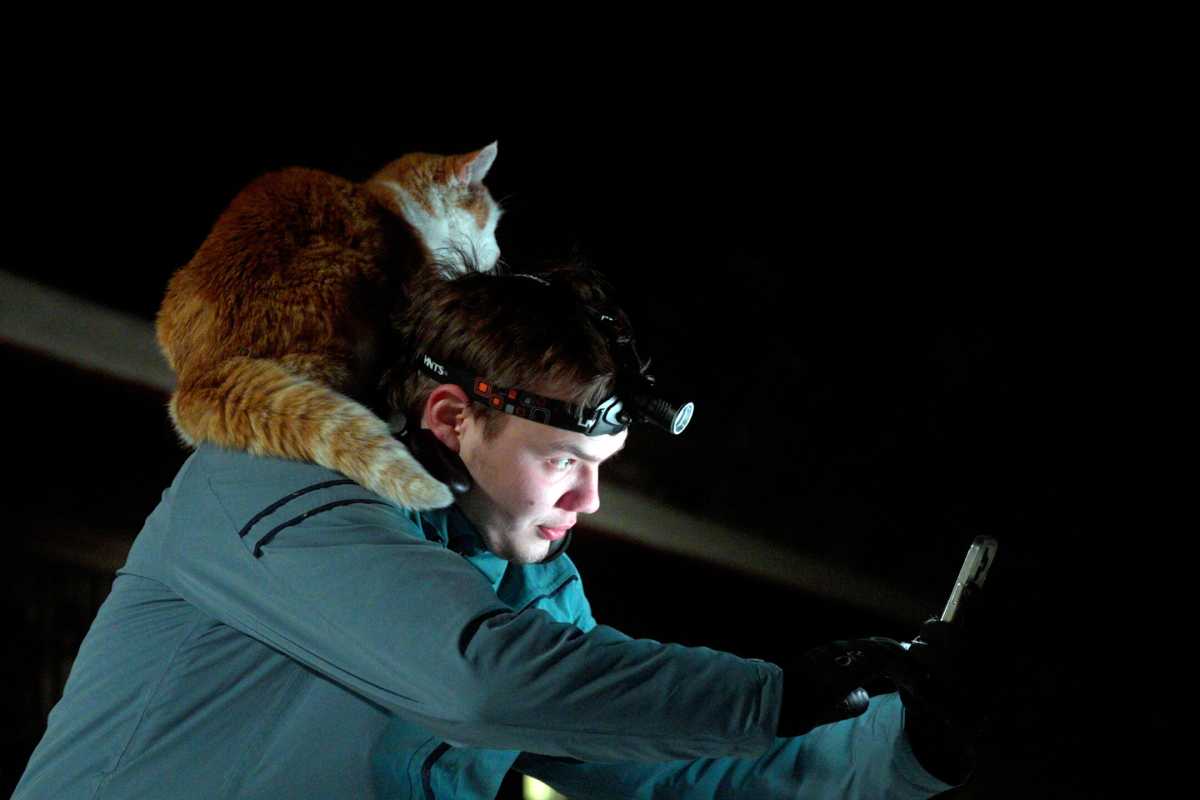
The film shows how cold nights and shared effort can help young people find direction. Source: Loki Films / 42West
Finding direction and meaning in a confusing world at a confusing stage of life
One of these young adults is Hege, who, like other young women, finds life to be, she admits, "chaos." Hege comes to Pasvik with a memory of her father, who recently and tragically passed away.
She remembers a simple car ride with him—one of the everyday activities that has been robbed from her by his untimely passing—where they passed a car laden with dogs going to undertake sled training.
It was through word of mouth that Hege heard about Pasvik and felt something like a gentle push from her father to attend this particular folkeskole.
Just a daughter trying to reconnect with her lost father, another young adult seeking meaning and direction in a confusing and crazy world.
Along with Hege, directors Heidi Ewing and Rachel Grady invite us to witness a cohort of Norway's future best and brightest as they spend nine months learning as much about themselves as about any Arctic skills or dog sledding techniques.
As one of the teachers, Thor-Atle, admits, the dogs are just a method to teach self-reliance. Aside from Hege, each of the young adults has their own crosses to bear—the social anxiety of Romanin, from the Netherlands, or the yearning for friendship that Bjorn Tore strives for.
Directors Ewing and Grady follow many of the young adults through the trials, tribulations, and triumphs of their time at Pasvik and offer a sympathetic view of how frustrating and scary it is to be at the threshold of the adult world.
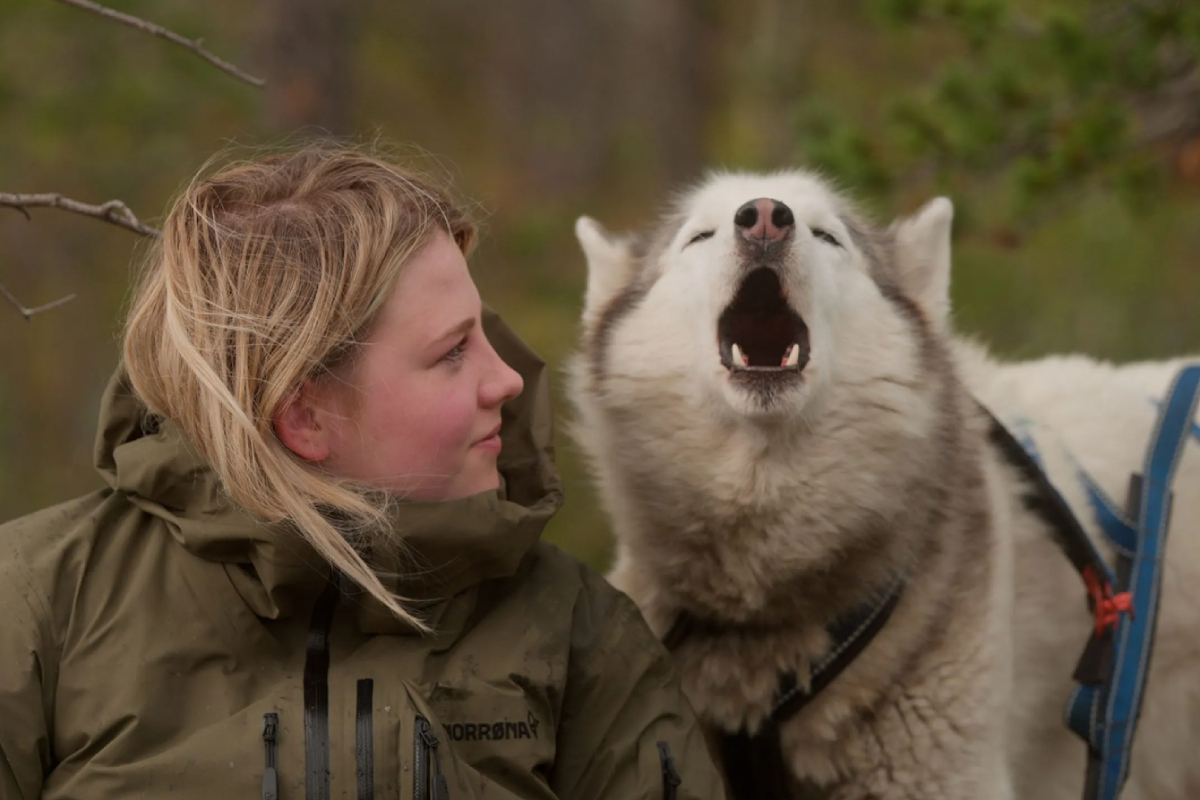
However, humans are not the only characters on the screen, and you will fall in love with the sled dogs. Whilst the dogs are there to teach the cohort, it is ultimately the cohort who are responsible for the dogs, and we can see, as the documentary progresses, how this responsibility instills self-confidence in each young adult.
Surely some of the most beautifully shot and joyous (hats off to the cinematographer) scenes involve the first time the cohort goes sledding in the pristine snow with a setting sun. The close-up camera shots reveal, for the first time, sheer, unbridled happiness and joy, lifting—however temporarily—many of the cohort from their perturbations.
This is mixed with moments of immense anxiety, sadness, and pathos, such as when the cohort struggles to fend for themselves for two nights alone in the Arctic wilderness.
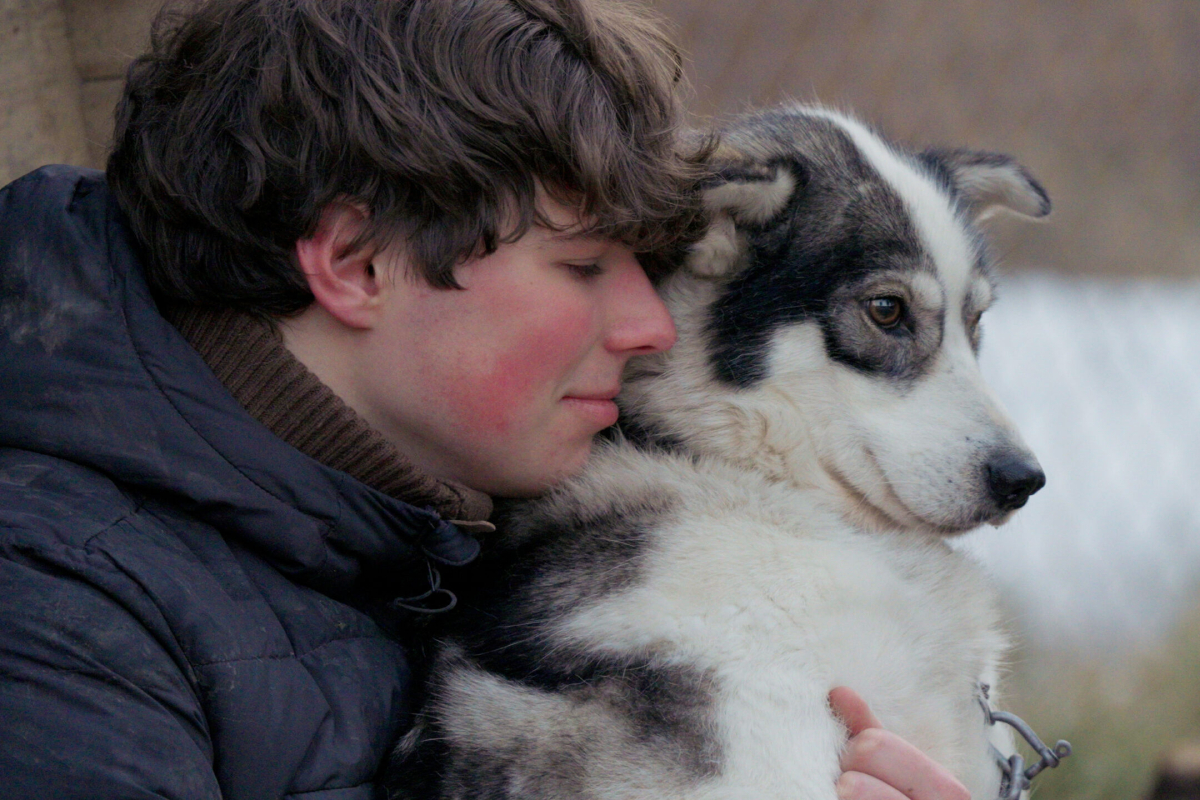
In a place where nature is harsh but beautiful, the film shows how outdoor life helps people feel more human. Source: Loki Films / 42West
Simple, 10,000-year-old pleasures
As Iselin explains to the cohort, the entire point of their time in Pasvik is to awaken their "10,000-year-old" brain through a connection not only with the dogs but also with nature.
For those who have lived in Norway, you will understand how friluftsliv (literally "open air living," but encompassing spending quality time in nature and a connection to the natural world) is an intrinsic part of the culture and perhaps explains why Norway is among the best places to live in the world.
As the old Norwegian expression goes, "ut på tur aldri sur," which equates to something akin to "time spent outside lightens your mood."
We can see how a connection with lovable dogs, as well as time spent in the spectacular (albeit, one can imagine, mind-numbingly freezing) remote wilderness of northern Norway, is the perfect antidote to modern life.
Handled with attention to detail, empathy, and care, Folktales is a smart tale about the transforming power of animals and nature. There are, for all you Viking fans out there, multiple references to the rich tapestry of Norse mythology, and these tales are used to gently form a narrative flow.
As the documentary progresses, we are invested in the growing confidence and maturity of each of the Pasvik cohort, and, by the end, we revel in their new outlook and optimistic view of their future.
In fact, by the time the credits roll, you will want to jump on the next plane and head to Pasvik to spend time with Billy, Diamond, and friends. Who knows what they'll be able to teach you?
Folktales teaches us that one of the best ways to find meaning in this confusing modern world is to focus on simple connections with fellow humans, animals, or nature, that humans have enjoyed for about 10,000 years or so.
The production company responsible for the documentary, Loki Films, has more information on this brilliant film here.
We get to provide readers with original coverage thanks to our loyal supporters. Do you enjoy our work? You can become a PATRON here or via our Patreon page. You'll get access to exclusive content and early access.
Feel free to reach out to discuss potential stories that may be in the public interest. You can reach us via email at [email protected] with the understanding that the information you provide might be used in our reporting and stories.