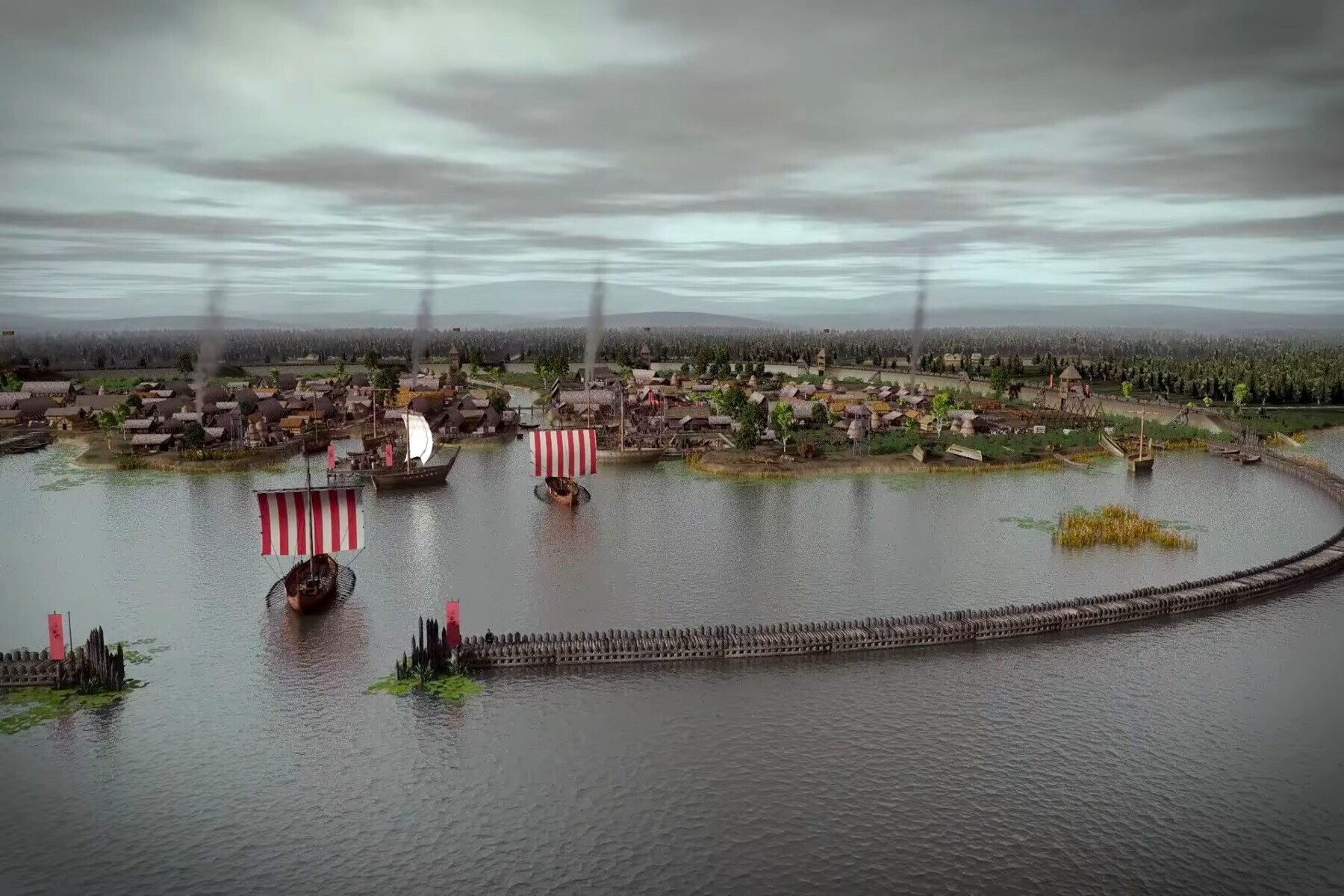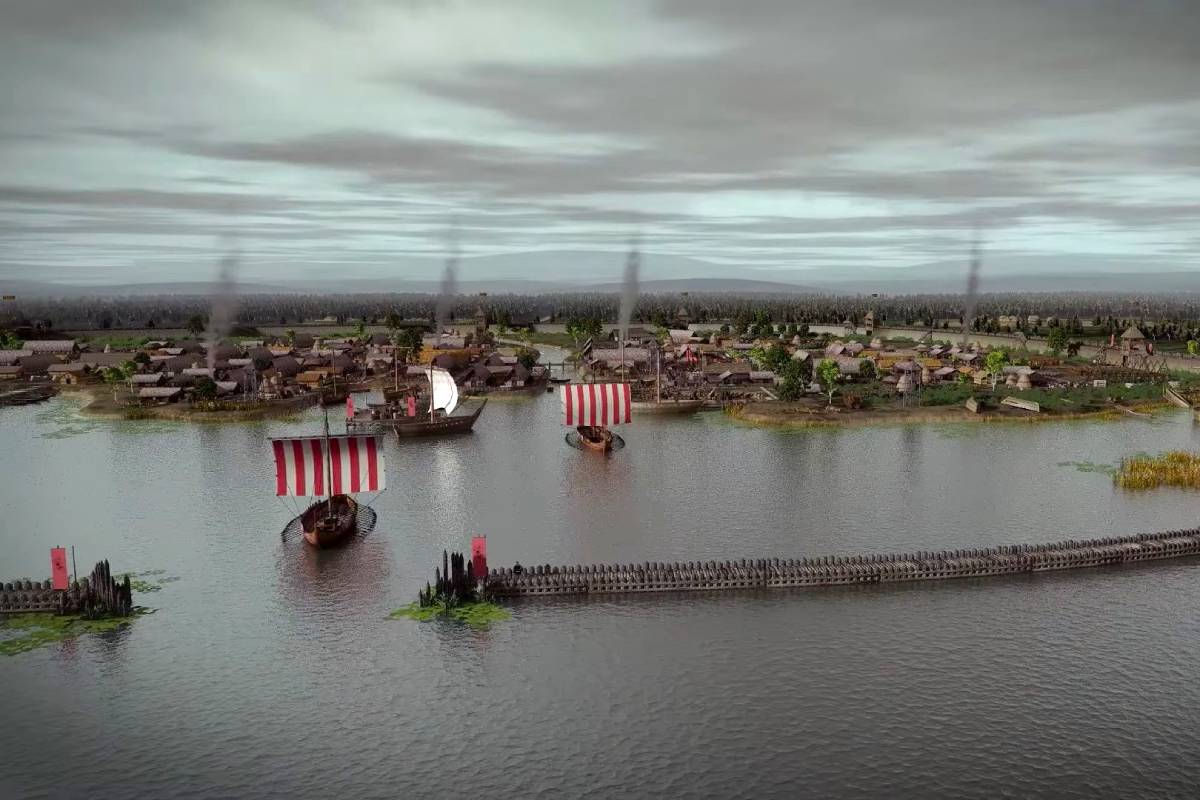


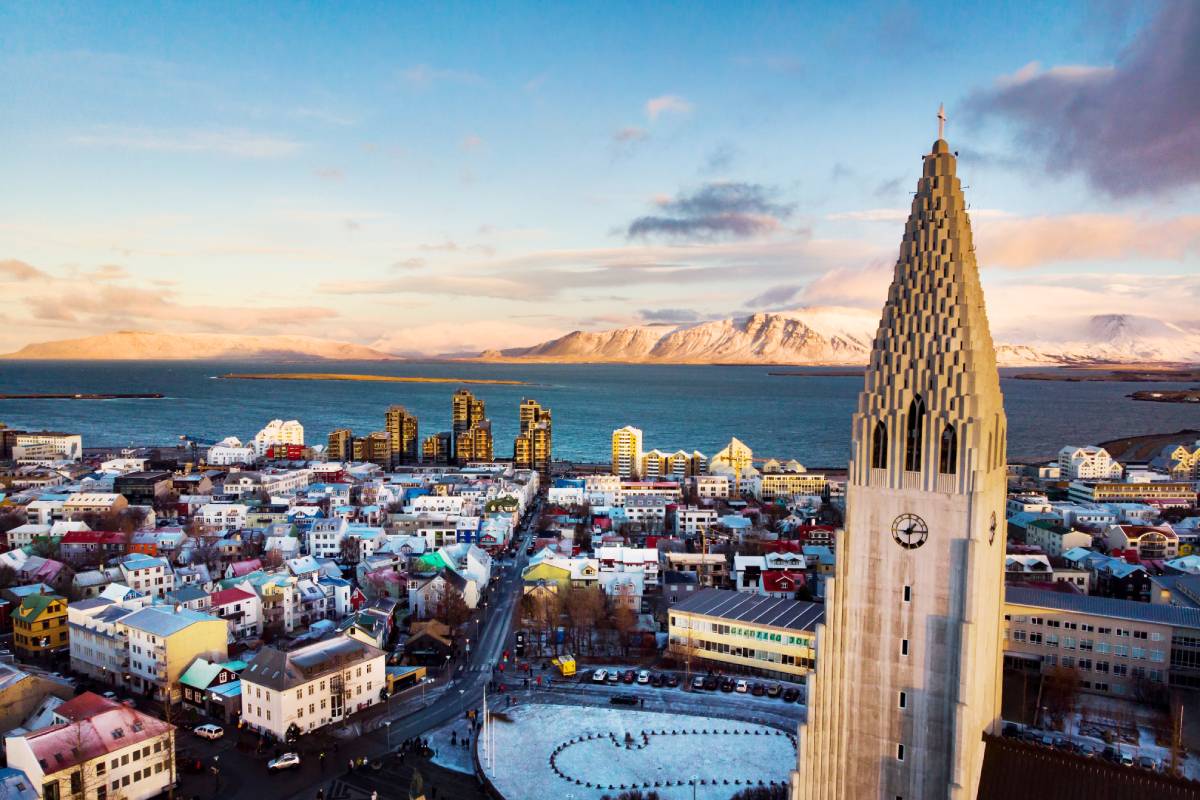
Whilst the Vikings are synonymous with Scandinavia, they expanded outward into the early medieval world to raid, trade, and settle.
Let us venture away from the Viking heartland to see five of the most important Viking settlements across the seas.
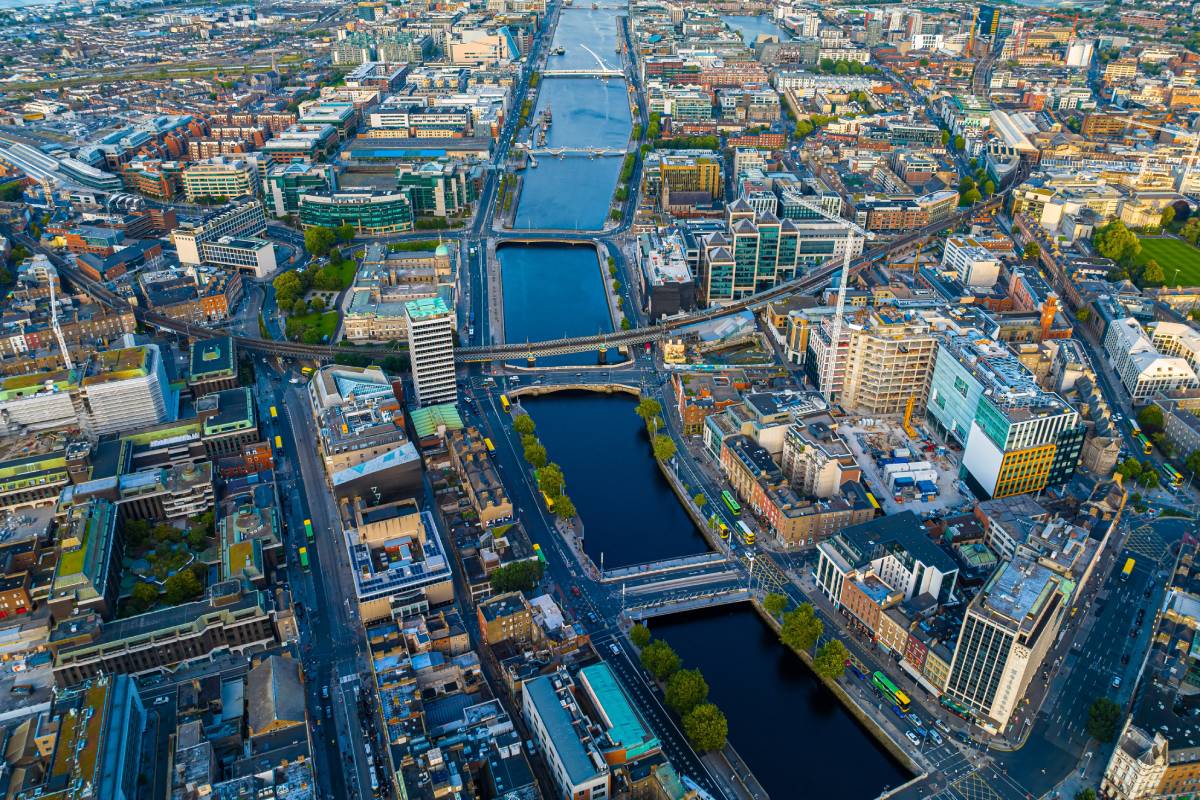
Dublin was founded by Vikings in the 9th century and became a major settlement in Ireland. Photo: Alexey Fedorenko / Shutterstock
Dyflin (modern-day Dublin, Republic of Ireland) c. 841 CE
The capital of the Emerald Isle, Dublin, is nowadays a modern, multicultural, and progressive-thinking city that is home to a large chunk of Europe's IT and finance sectors.
However modern Dublin may look today, with all the shiny new buildings down at the East Wharf, it is steeped in Viking history.
Its very foundation harks back to the first phase of Viking expansion in the first half of the 9th century when predatory Viking raids soon took a more permanent turn.
In 837, more than 60 Viking ships laid waste to a rudimentary settlement around the mouth of the River Liffey. However, they returned a few years later and established a camp to overwinter during their attacks throughout the island of Ireland.
This would eventually see people from Viking societies flock here to establish a trading town, which only grew in importance with the trade in human bondage.
Untold numbers of the local Gaelic population were captured, enslaved, and passed through Viking Age Dublin.
By 853, the Vikings had established a monarchy that would last until well into the late 12th century CE, long after the last Viking ship ever sailed.
Tradition states that the Viking-era settlement was largely defended by a stronghold which, following the Norman invasions, would be the foundation of Dublin Castle, which still dominates the city's skyline today.
Dublin's official tourism website has more information on the city's Viking past here.
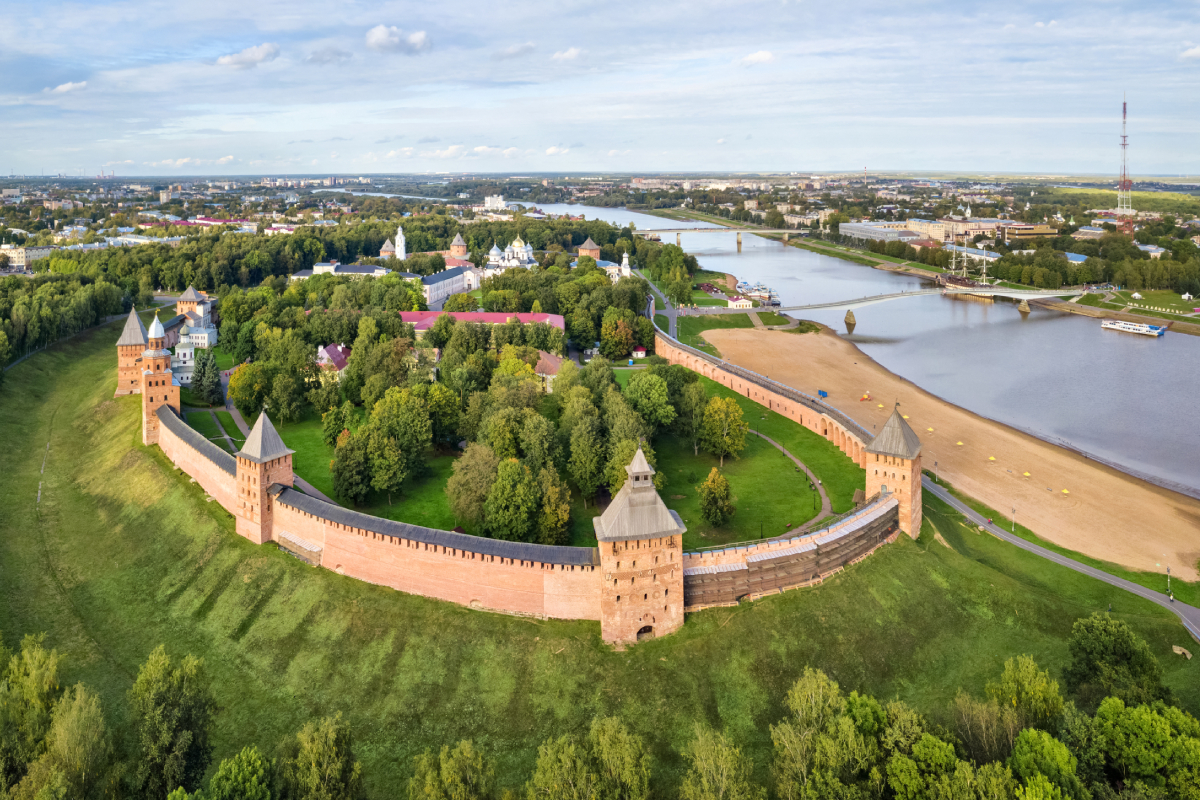
Holmgård, now Veliky Novgorod, became a Viking settlement in the 9th century. Photo: Sergey Dzyuba / Shutterstock
Holmgård (modern-day Veliky Novgorod, Russia) c. 859 CE
Despite the current war in Ukraine, the cultural and historical bonds of much of Eastern Europe hark back to the early medieval period.
Whilst so much of the traditional story of the Viking expansion deals with a westward push across the Norwegian Sea to the British Isles and the Frankish realms, eastward exploits were just as important.
As Dr. Cat Jarman discusses in her groundbreaking 2021 book, River Kings: A New History of the Vikings from Scandinavia to the Silk Roads, the eastern adventures of people from Viking societies, from the early 9th century, saw them quickly dominate a huge swathe of Eastern Europe, between the Baltic and the Black Sea.
It was in this area that a Viking settlement was established where many eastern Slavic tribes had once grouped.
According to later medieval Russian chronicles, Novgorod was initially founded by one of three Viking warriors and brothers.
It was said to be founded by the same Viking warrior, Rurik, who would go on to establish not only this trading town, which soon grew rich by trade with the Byzantine Empire, but also a royal dynasty that would rule huge swathes of Eastern Europe until the 17th century CE.
Following the Viking period, the town became an important part of the burgeoning Kievan Rus state that would eventually form much of what is now Belarus, Russia, and Ukraine.
For more information on the Viking origins of Russia, visit the BBC here.

Vikings captured York in the 9th century, renamed it Jórvík, and made it a key trading hub. Photo: David Ionut / Shutterstock
Jórvík (modern-day York, England) c. 866 CE
Whilst people from Viking societies were not responsible for the foundation of modern-day York, they certainly left an indelible legacy upon it.
This is a city that is, as Peter V. Addyman wrote in his 1980 article in the journal Scientific American, "witness to 2,000 years of British history."
Following the withdrawal of Rome from the British Isles, the Roman-founded town of Eboracum soon became an important part of the Anglo-Saxon Kingdom of Northumbria.
However, by the mid-9th century, after decades of Viking raids and attacks, the city was captured by Vikings and transformed into Jórvík, which would become arguably the greatest town in that huge swathe of Anglo-Saxon England that fell under direct Viking rule.
The town was then transformed by the steady stream of Viking ships sailing across the Norwegian Sea to become Jórvík.
Excavations and archeological research undertaken since the 1970s have uncovered a bustling Viking Age metropolis.
Although Jórvík was a center of Viking power in England, the Vikings had a surprisingly loose grip on the town, which was eventually reclaimed by the Anglo-Saxons.
However, it would be Eric Bloodaxe who would write a bloody coda on the town's Viking legacy, crowning himself king and reigning until 954 CE.
Following his death at Stainmore, a Viking would never rule in these parts again, and all vestiges of Viking influence were gone within a century, surpassed by a new invading overlord—the Normans.
For more information on the Coppergate excavations that uncovered much of Viking Age York, visit the Jorvik Viking Centre here.
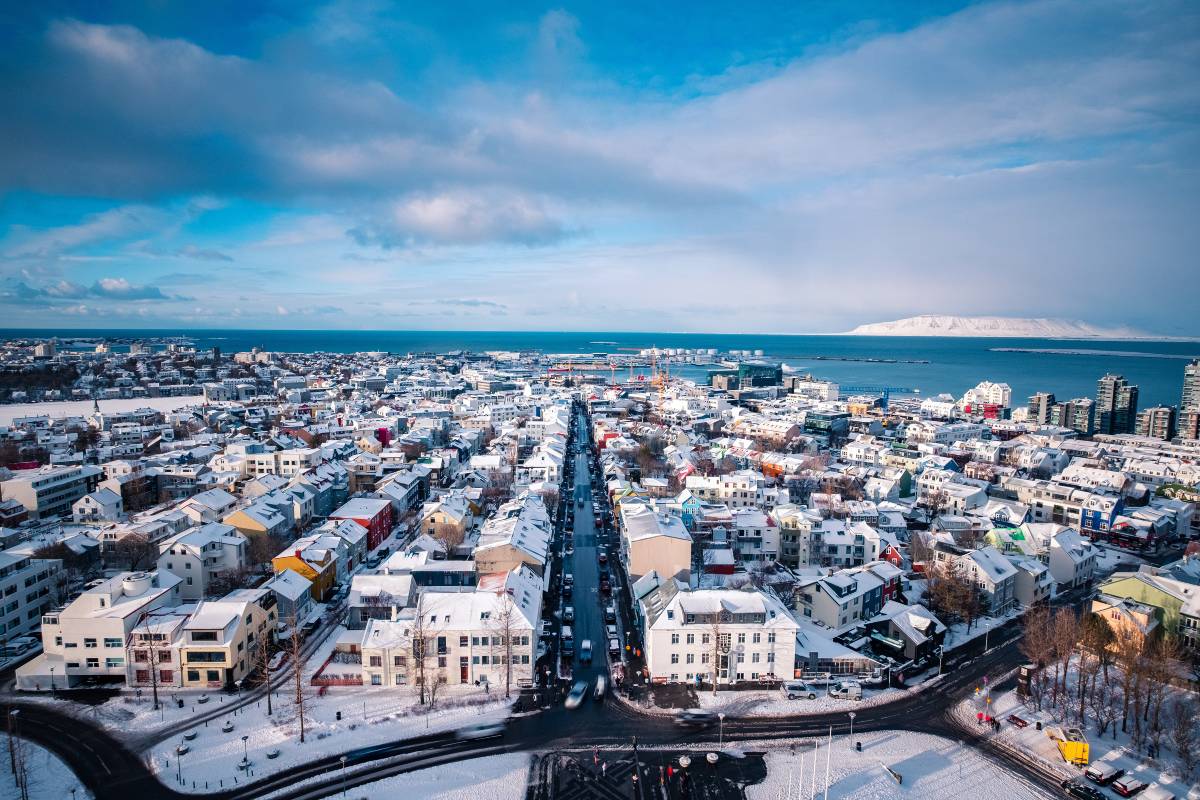
Vikings settled in Reykjavík around 870 CE, marking the beginning of Iceland’s human settlement. Photo: 1tomm / Shutterstock
Reykjavik, Iceland c. 870 CE
For many whose primary language is English, the capital of Iceland is perhaps one of the trickiest capital cities to pronounce. However, the name's origins—like the city itself—can be traced back to the early medieval period, when Vikings roamed.
The Norse sagas say that it was Ingólfr Arnarson who established the first permanent settlement in the "Land of Fire and Ice" in about 870 CE.
In a highly unusual act, Arnarson tossed a pair of ornamental oars overboard and declared that wherever they washed up would be the place to settle.
Unfortunately, two of his slaves were tasked with actually finding the pieces of wood after they were tossed overboard. It took them two years, but they were discovered in a scenic bay, and the town of Reykjavik was founded.
The first 60 years of human settlement in Iceland—when countless people from Viking societies in Scandinavia flocked there—are known as the "Age of Settlement."
Despite this occurring over a millennium ago, we know many of the names and stories of the people who braved the cold North Atlantic Ocean to reach this new world, thanks to the Norse sagas.
This period traditionally ends with the founding of the Althingi, to which the modern Icelandic parliament traces its ancestry. What followed was more than three centuries of growth, as the island became the Icelandic Commonwealth.
In 1262 CE, Iceland fell under the control of the Norwegian crown. Despite its subjugation, this sparked a remarkable period of literary blossoming in the form of the compilation of older Viking-era myths, legends, and stories—what we now know as the Norse sagas.
The city's official tourism website has more information on its Viking origins here.

Vikings settled in Normandy in 911, and Rouen became one of their most important towns. Photo: Sergii Figurnyi / Shutterstock
Normanni (modern-day Normandy, a northwest region of France) c. 911 CE
Sometimes, to win a war, you must lose a battle. This was very much the case for Vikings, who had constantly raided, fought, and battled the Franks since the late 8th century.
By the early 10th century, the Frankish realms had been devastated by more than a century of Viking attacks. A new direction was needed.
Following a siege of Chartres led by the Viking leader Rollo, Charles the Simple, King of West Francia, knew a different strategy was necessary.
Despite having technically won the battle, Charles understood that any further military action was futile. He had but an early medieval army that mostly marched on foot, while Vikings could sail upstream or strike a coastal community with lightning pace.
The result of this shift in thinking was one of the most consequential treaties in European history.
The Treaty of Saint-Clair-sur-Epte, in 911 CE, ceded a portion of West Francia to Rollo and his followers, between the rivers Loire and Seine, in return for allegiance to the Frankish king and conversion to Christianity.
This region soon saw large numbers of people from Viking societies settle there, and it became known as the land of the Northmen—or, in Frankish Latin, Normanni.
By the later medieval period, Vulgar Latin had morphed into medieval French, and the region became known as Normandy.
Part of the treaty turned Rollo from a Viking rogue into a medieval count. Normandy soon saw the deadly fusion of Viking martial ethos and Frankish resources, turning Viking descendants into the Normans.
Rollo's successors later conquered much of the British Isles and southern Italy.
The French History Podcast has an entire episode dedicated to the Viking conquest of Normandy here.
We get to provide readers with original coverage thanks to our loyal supporters. Do you enjoy our work? You can become a PATRON here or via our Patreon page. You'll get access to exclusive content and early access.
Feel free to reach out to discuss potential stories that may be in the public interest. You can reach us via email at [email protected] with the understanding that the information you provide might be used in our reporting and stories.