

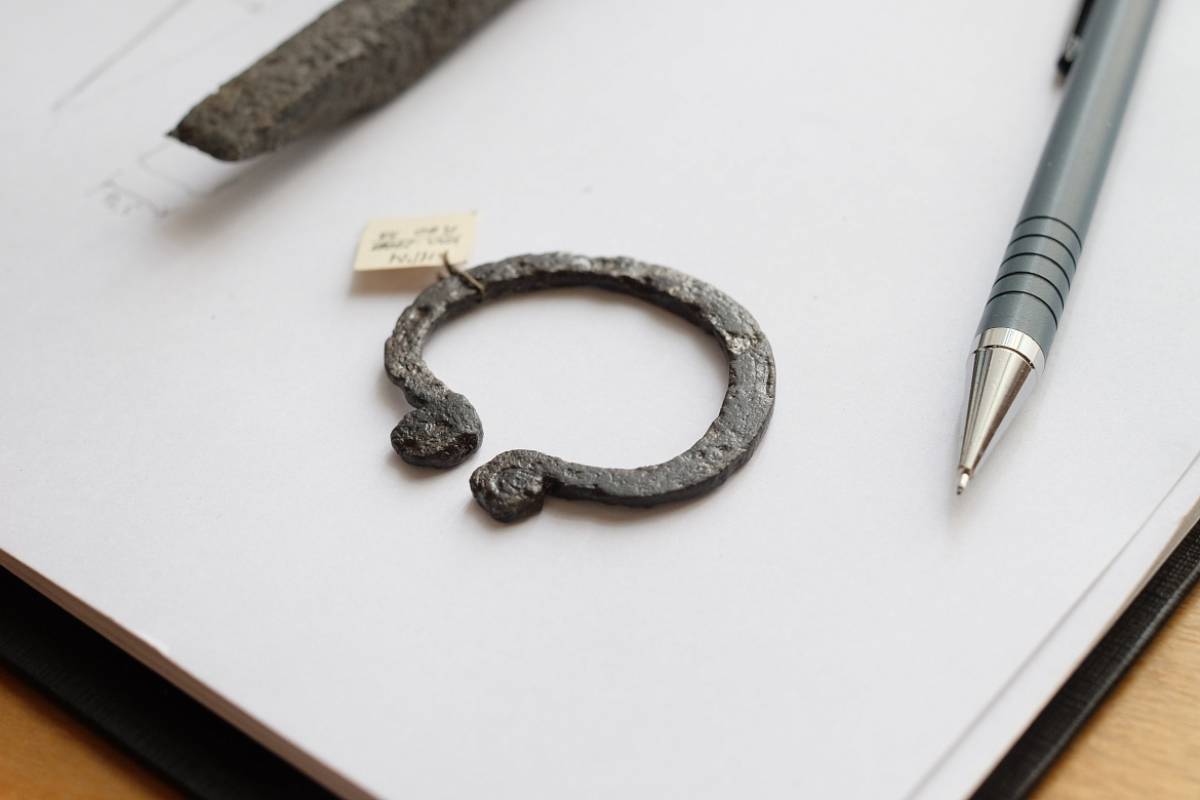
Novgorod State University has presented two unique artifacts with links to the era of the Kievan Rus.
One, a horseshoe-shaped brooch, is thought to be of Norse origin. Although the finds were discovered nearly 50 years ago, a new study suggests they may have been brought to the region after the destruction of the settlement of Supruty.
The fort of Knyazhya Gora
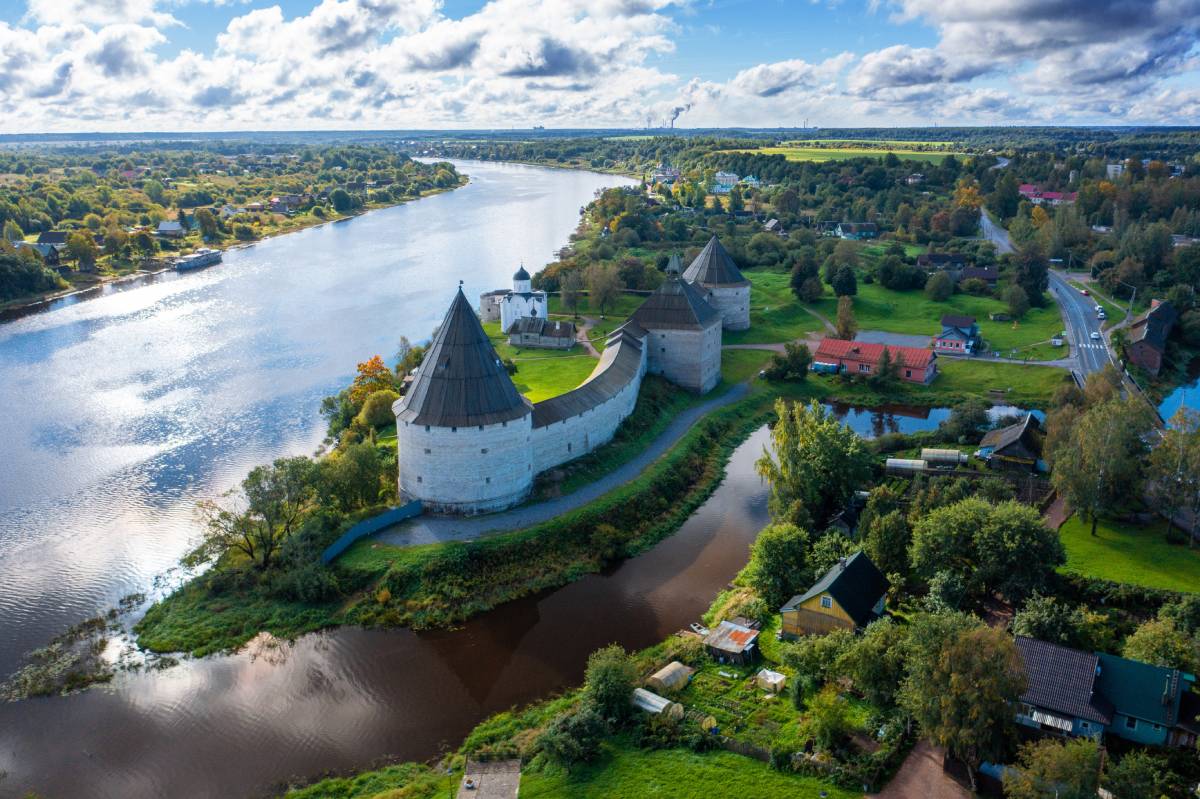
Knyazhya Gora is a strategic fortified settlement situated on the banks of the Lovat River in Russia.
The fortress has been linked to the nearby historic town of Demyan, which in the medieval period was an important strategic center in the south of the Novgorod region, held by the Rus.
The fort of Knyazhya Gora was used in two main periods, from the 9th to the 10th century and the 12th to the 16th century.
Since the first excavation in 1902, some 1,400 finds have been identified on the site. Almost all of them are consistent with the historical and local context.
There are two exceptions, however: a C-shaped spiral temple ring and a horseshoe-shaped iron object. These two finds were both unearthed during a 1976 expedition headed by Sergei Orlov.
The press release notes that both items were found in a 10th-century complex, but also suggests the artifacts themselves can be dated to the 6th–7th centuries.
Now, Novgorod State University archeologists have reexamined these artifacts to try to identify their origin and purpose.
- READ MORE: What you need to know about the Kievan Rus
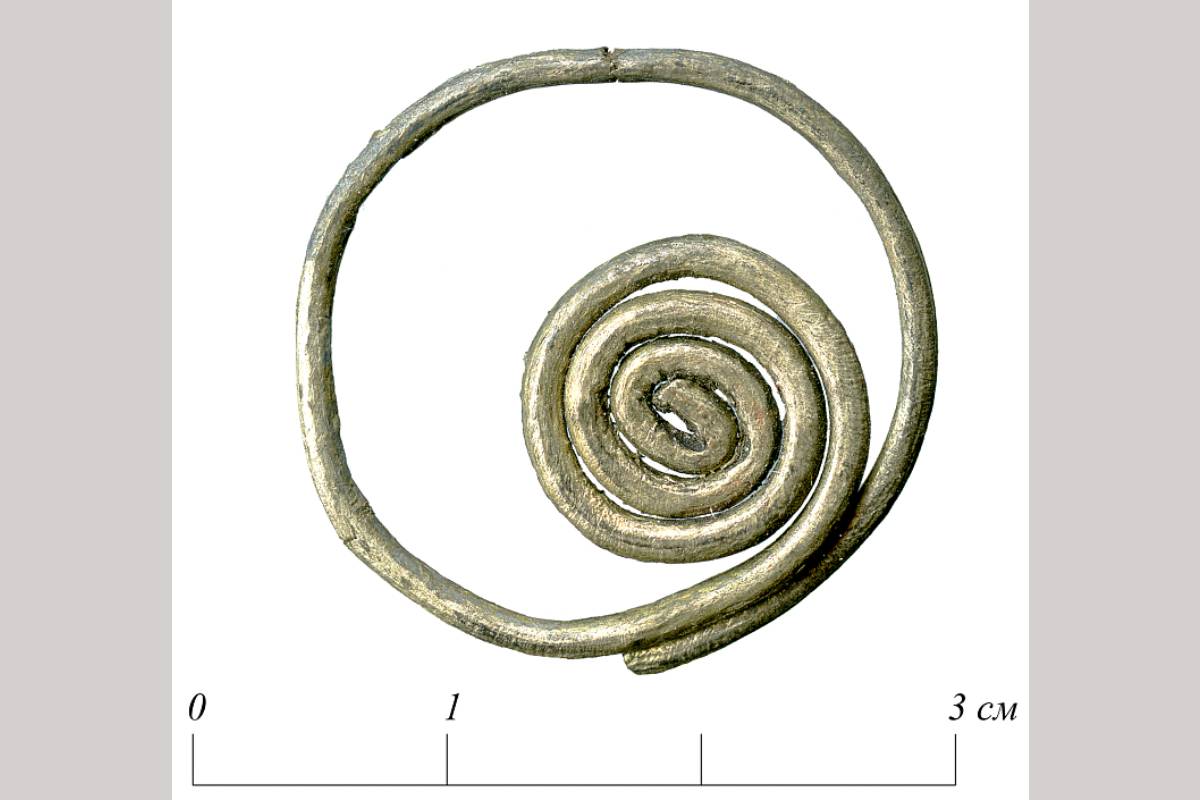
A spiral temple ring with a 3 cm scale, one of the unusual finds linked to Knyazhya Gora. Source: Novgorod State University
The spoils of war
"Besides the chronological gap, the Knyazhya Gora find is visually distinct from the 'severyanka' temple rings of the 11th–12th centuries," the archeologist Sergei Toropov explained in a recent press release.
In other words, it is not typical of this particular region. "Such rings are S-shaped rather than C-shaped, larger in size, and have less dense spiral coils," Toropov added.
"In the north-west section, a single similar piece of jewelry was found in the cultural layer of Izborsk. These are not typical for Northern Rus. Such finds, which do not fit into the cultural context of the studied area and era, may indicate ethnocultural and socioeconomic ties, or attest to specific events."
One possible theory suggests that the tradition of making and wearing such jewelry spread throughout Rus after the military campaigns of the early 10th century.
During this period, it is known that ancient Russian warriors from the Upper Volga region destroyed a key point on the Don trade route, the fortified settlement of Supruty.
The warriors may have then brought their spoils, including the jewelry, back to Knyazhya Gora.
The Norse connection
The second artifact, a horseshoe-shaped iron object, appears to have a direct Viking link. Although similar items have been uncovered in the past, very few have been found in the local region.
This artifact has unique outward-spiraling ends. It was initially mistaken for a common fastener or bracelet. However, its specific cross-section and the dating of the complex rule out standard classifications.
The archeologists now believe that the artifact is part of a ring-shaped pin that is more synonymous with clothing from Northern Europe in the Viking Age than that of Eastern Europe.
Indeed, while similar pins have appeared in major Norse trading hubs like Hedeby, they are virtually unknown in the region where Knyazhya Gora is located.
The ruling dynasty of the Kievan Rus has many Scandinavian links. Novgorod, meaning "New City," was the primary northern power center of the Rus, and served as the gateway between the Baltic Sea and the interior of Eastern Europe.
It is possible, therefore, that the pin was brought to the area after a military campaign or through trade.
Both finds underscore Knyazhya Gora's role as a vital military and trade center, and link the Novgorod lands to broader interregional Norse networks.
We get to provide readers with original coverage thanks to our loyal supporters. Do you enjoy our work? You can become a PATRON here or via our Patreon page. You'll get access to exclusive content and early access.
Feel free to reach out to discuss potential stories that may be in the public interest. You can reach us via email at [email protected] with the understanding that the information you provide might be used in our reporting and stories.