

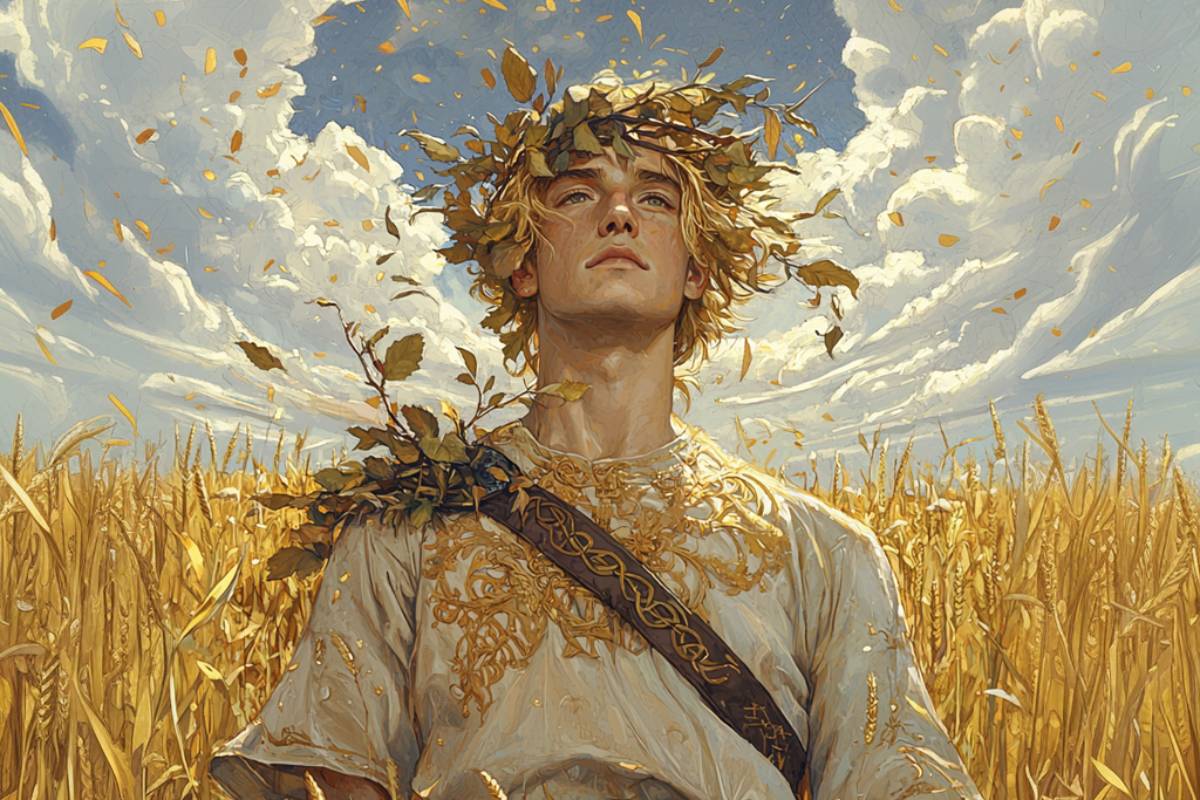
For those of us who are lucky enough to have siblings, there is nothing unluckier than being mistaken for them.
How often has your grandma's next-door neighbor mistaken you for your older sister? Or maybe the man at the supermarket bagging your groceries who thought you were your younger brother?
Well, if you have suffered that mortal shame, then fear not because there is nothing particularly modern about it. This has happened to countless generations before you.
Now imagine, for example, that you are a twin. How many times throughout your childhood and beyond must you have been mistaken for your other half?
This has not just happened to us mere mortals – it has happened to deities too.
For those who love all things Viking, we can turn to the Æsir, one of the two pantheons of the Norse gods, to find such an example.
The Norse god Freyr, associated with fertility, prosperity, and peace, often lives in the shadow of his twin sister, Freyja.
Yes, Freyja, the Viking Venus, who, as William Reaves describes in his 2008 article in the journal Germanic Mythology, was "…associated not only with procreation and childbirth, but also with death and the afterlife, completing the full circle of the life cycle."
Unlike her relatively obscure brother – known only to academics and the most die-hard fans of all things Viking (present company included) – Freyja has remained a popular figure down through the ages, thanks in part to her association with fertility, love, and a cat-drawn sky chariot.
This has led not only to thousands of Scandinavian parents naming their daughters after her but also to one of Norway's most popular (and, dare I say, delicious) brands of chocolate taking her name.
It is time, then, to push aside Freyja, with all her popularity and fanfare, and examine her twin brother, Freyr.
Let us wind the clock back to the early medieval period to see why Freyr was just as important to people in Viking societies as his godly twin sister.
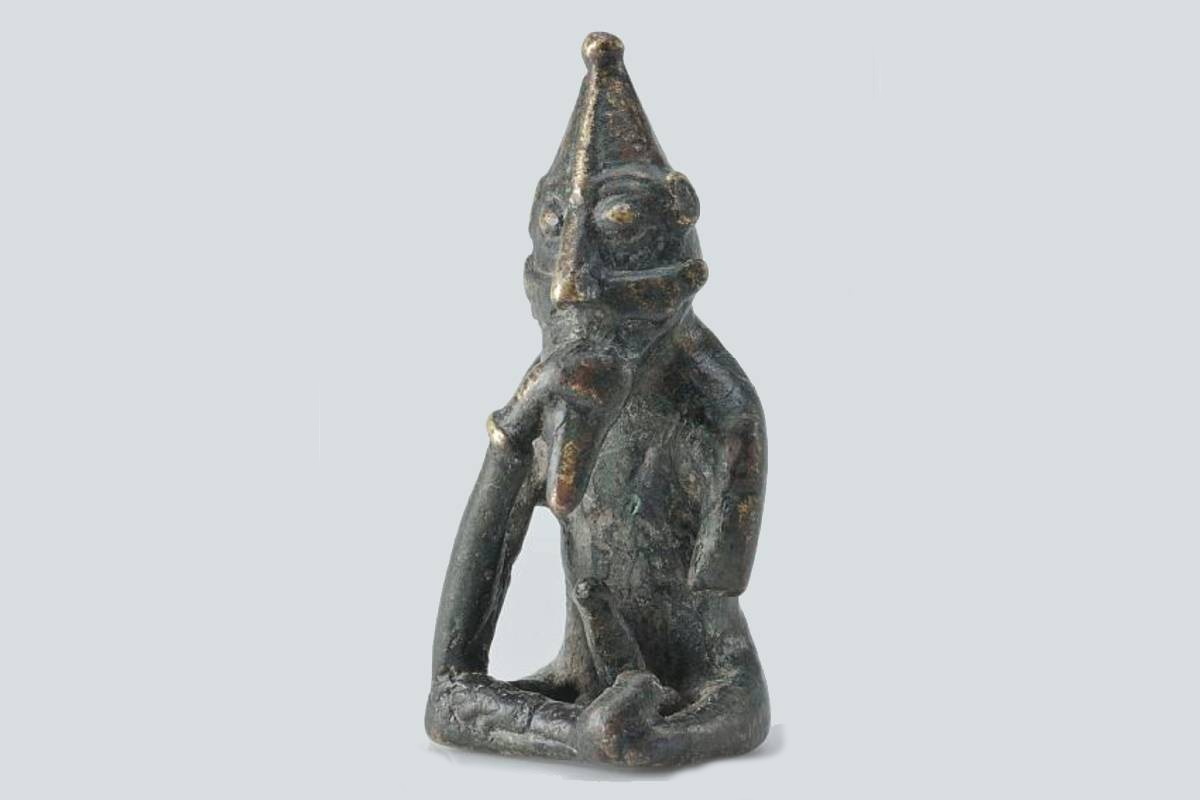
This 9th-century Viking Age statuette from Rällinge, Sweden, is widely interpreted as a depiction of Freyr. Source: The Swedish History Museum (CC BY-SA 2.5)
Ancient origins, Viking evolution
What we here at The Viking Herald like to call "the Old Norse religion" is, to be fair, a little bit of a misnomer.
It wasn't technically a singular religion like we think of Christianity, Islam, or Judaism today.
It was more like a diverse spiritual belief system that encompassed vast differences throughout the Nordic region during the entire early medieval period.
However, a belief in deities was one common thread that linked this system of beliefs for people in Viking societies.
When we talk of the "Old Norse religion," we talk of a system of beliefs that had evolved over countless centuries, drawing on more ancient practices and forms of worship.
We know that Viking societies evolved from earlier Germanic societies, and thus, many aspects of the "Old Norse religion" – including some of the gods they believed in – drew on far more ancient traditions than the early medieval period.
Freyr is a classic example of the ancient origins of the Old Norse religion.
Whilst he was worshipped during the early medieval period as a Norse god of kingship, prosperity, and peace, he was also associated with fertility, fair weather, and a good harvest.
He can be seen as an early medieval continuation of the ancient fertility gods that the ancestors of people in Viking societies had worshipped since the dawn of time.
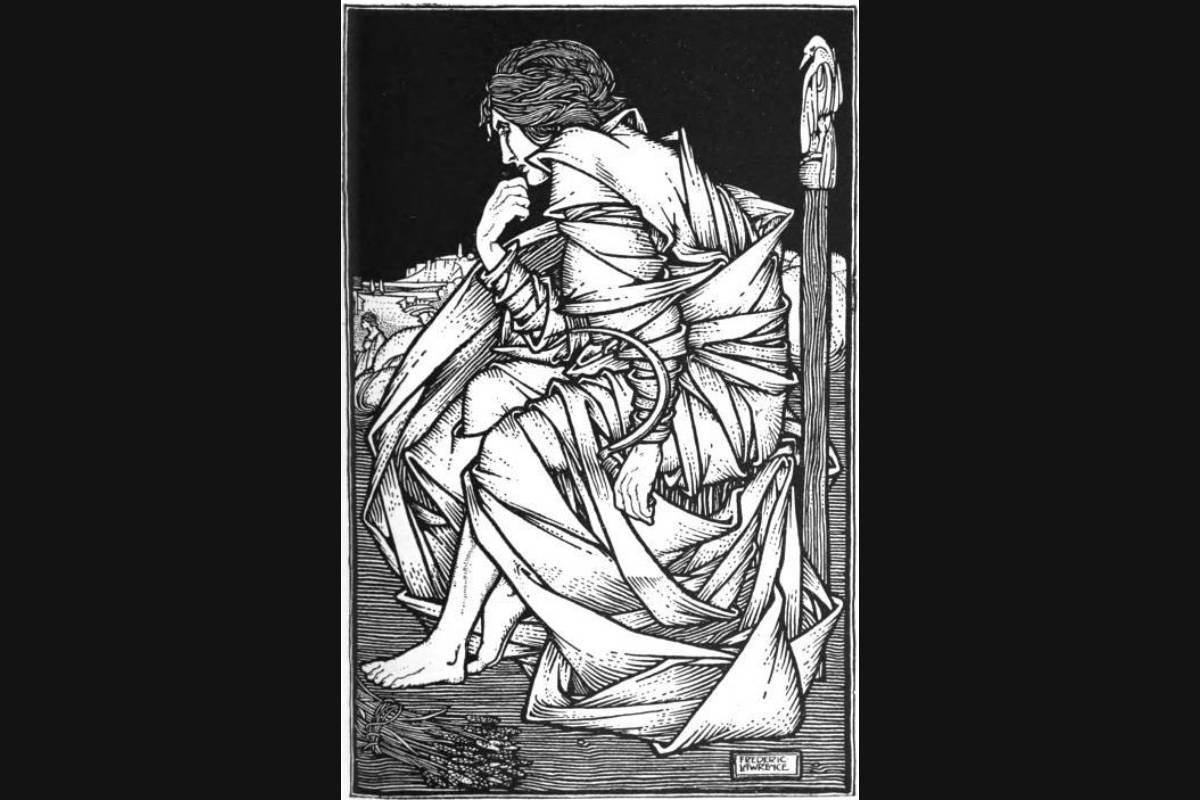
This 1903 illustration depicts Freyr seated on Odin’s throne, Hliðskjálf, gazing into the distance. Source: Frederic Lawrence
Famous family
It is slightly ironic that so much of what we now know about Freyr comes from sagas and stories that were compiled centuries after his worship.
As the golden rule of all things Viking goes, when curious about any aspect of Norse mythology, the first step is always to look to the sagas.
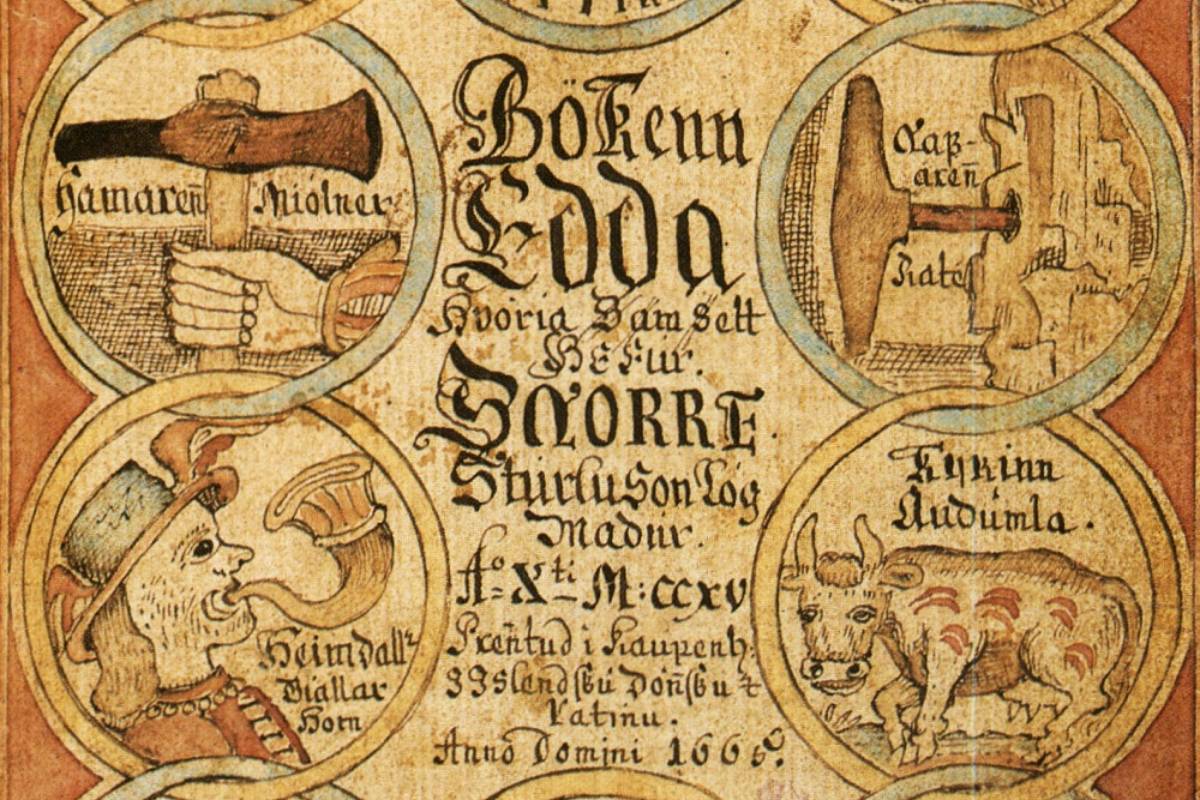
We are indebted to the 13th-century Icelandic poet and politician Snorri Sturluson, who compiled many of the oral stories and sagas that had been told since the time Vikings roamed.
In the Gylfaginning section of his famous tome, the Prose Edda, Sturluson introduces us to Freyr. Using the 1916 English translation by Arthur Gilchrist Brodeur, we can see that Sturluson writes of the famous family of Freyr:
"Njörðr in Nóatún begot afterward two children: the son was called Freyr, and the daughter Freyja; they were fair of face and mighty. Freyr is the most renowned of the Æsir; he rules over the rain and the shining of the sun, and therewithal the fruit of the earth; and it is good to call on him for fruitful seasons and peace. He governs also the prosperity of men."(Section XXIV)
We know of his popular twin sister, but it is also worth noting that Freyr's father was the Norse god associated with the sea, Njörðr.
A famous family indeed – perhaps part of the reason why he was celebrated as one of the most important members of the Æsir.
So, we can see that Freyr perhaps should be the one who basks in the historical and cultural spotlight, as he was said to be one of the most important Norse gods.
If we look at the other stories that were told of Freyr, we find that he – like his more famous sister – also had a pet ride.
This was in the form of a golden boar, Gullinbursti, said to be fashioned by dwarves. He was also said to be the owner of the magical ship Skíðblaðnir, which not only always caught a favorable wind but was also able to be folded up and fit into one's pocket.
Using either of these two possessions would ensure that Freyr always had a memorable means of transport!
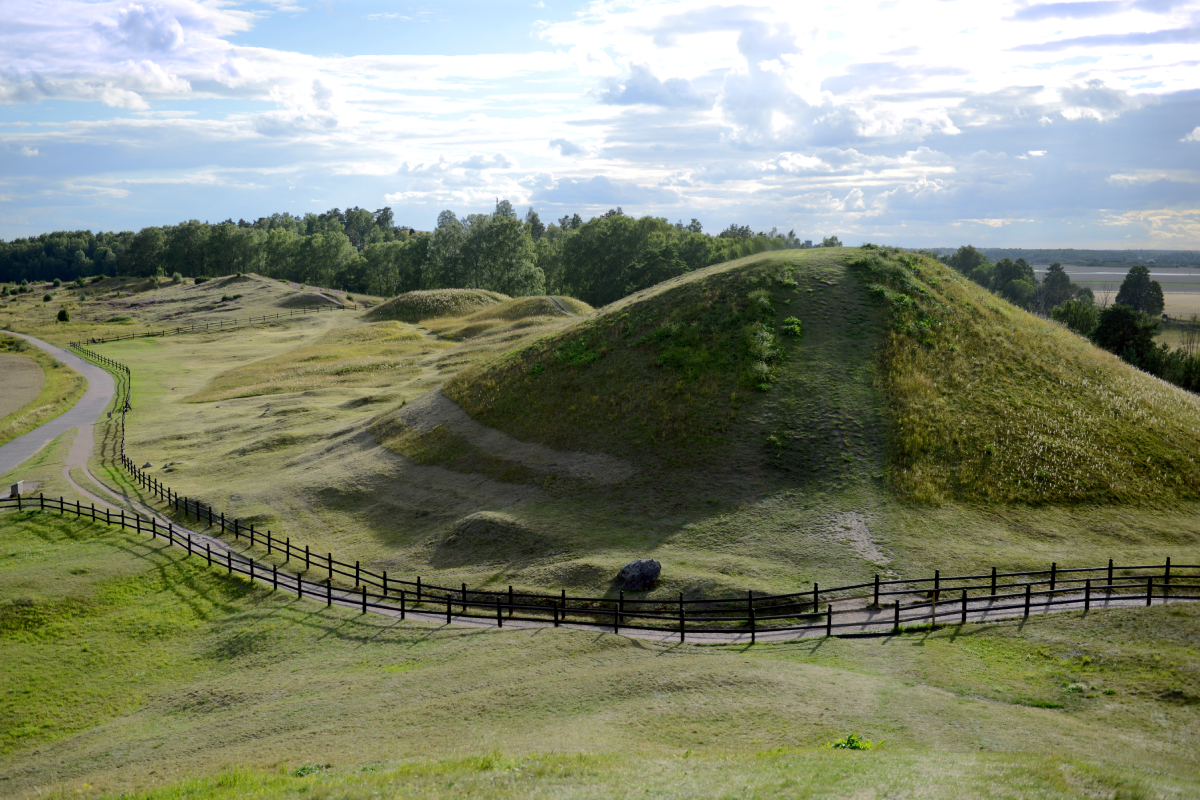
Adam of Bremen's account of the temple at Uppsala describes Freyr as one of three gods worshipped there, alongside Odin and Thor. Source: Jpiks / Shutterstock
Adam of Bremen and the temple at Uppsala
Stepping out of the tales of Norse literature and mythology, we find a roughly contemporary account of the worship of Freyr.
The German priest and chronicler Adam of Bremen wrote an account of the great temple at Uppsala (in modern-day Sweden) that was, in his eyes, pagan.
Whilst this is one of the only descriptions of this sacred place – said to draw believers from all over the Viking world – it is not without bias.
Adam of Bremen was a medieval Christian monk and had a vested interest in presenting elements of the Old Norse religion as barbaric and in as bad a light as possible.
Regardless of this bias, he writes that Freyr was one of three giant statues in the temple – alongside Odin and Thor.
What separates Freyr's statue from the others is that it was said to have a very graphic representation of a giant phallus. This helped link Freyr to, as mentioned, earlier fertility gods.
The link between fertility, prosperity, and sex was not unique to Viking societies.
He also states that every time a marriage was to be celebrated, a sacrifice was to be offered up to Freyr. He was, after all, both a fertility god and overseer of peace – both seen as integral for a good union of man and wife in the early medieval period.
We can see that whilst he may not be so widely known today, back in the early medieval period, Freyr was said to be one of the most revered Norse gods worshipped by people in Viking societies.
For centuries, Freyr has lived in the shadow of his twin sister, Freyja. However, looking at the sagas and chronicles, we can see that for people in Viking societies, he was a widely revered and respected figure.
It is high time he stepped out of the obscure mists of time and historical darkness into the spotlight.
For more information on some of the other Norse deities, visit BBC History Extra here.
We get to provide readers with original coverage thanks to our loyal supporters. Do you enjoy our work? You can become a PATRON here or via our Patreon page. You'll get access to exclusive content and early access.
Feel free to reach out to discuss potential stories that may be in the public interest. You can reach us via email at [email protected] with the understanding that the information you provide might be used in our reporting and stories.