

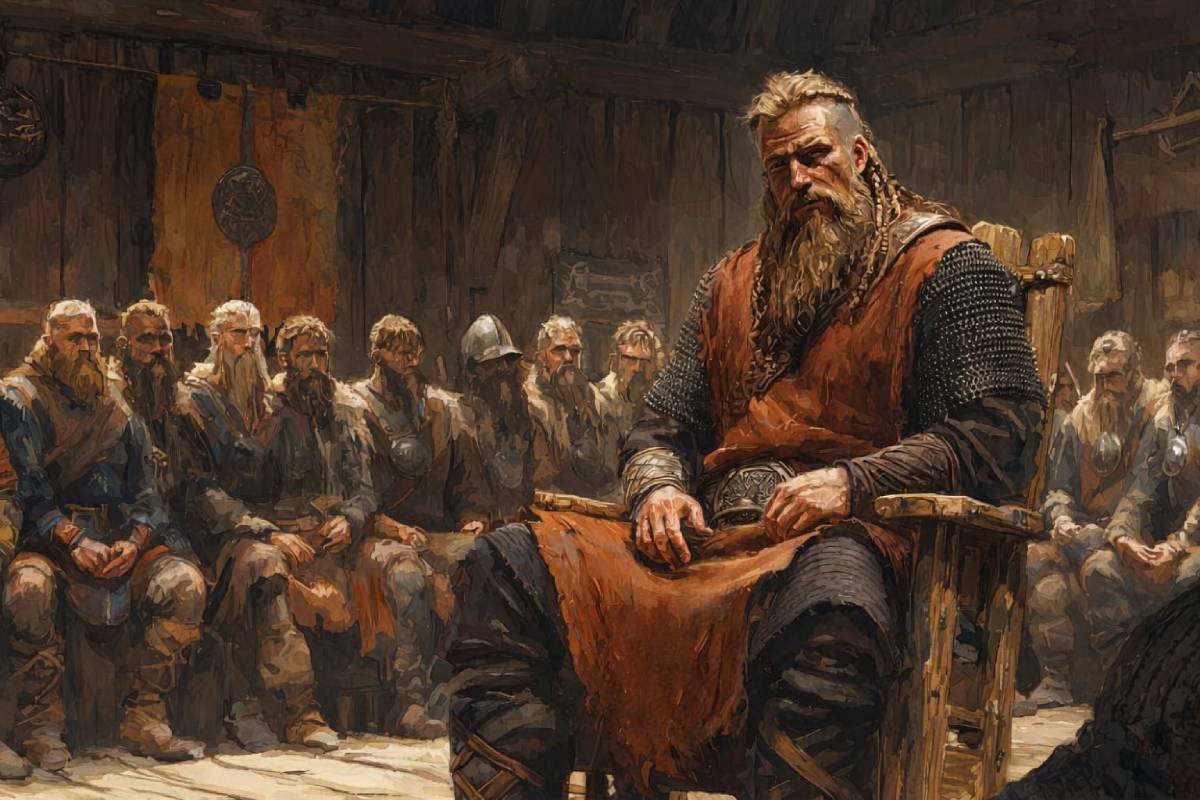
With a life spanning roughly the latter half of the 10th century CE, Haakon Sigurdsson, also known as Haakon Jarl (a title akin to an Earl in medieval England), had one of the most dramatic lives in medieval Norway.
He was the last pagan ruler of Norway, and his death ended the Old Norse religion's grip on power in the nation.
Since his death, every single monarch of Norway has not only been a Christian, with most crowned in Nidaros Cathedral, but also, since the Reformation onwards, the head of the Church of Norway.
Haakon Sigurdsson is a bridge between two historical periods in Norwegian history, between the great pagan past, which saw the rise of Viking warriors, and the Christian medieval nation that Norway would become by the end of the early medieval period.
Sigurdsson is also a bridge between the two great political players in early medieval Norway, the powerful northern barons, the Jarls of Lade, and the monarch.
Whilst he was not crowned as a King, he was the de facto ruler of Norway for more than two decades. He successfully forged his own independent path, keeping bigger fish, like the Holy Roman Emperor Otto II or Danish King Harald Bluetooth, at bay.
Sigurdsson's life was at the very intersection of politics, power, and religion, of seismic political and social change in this northern kingdom.
Let us wind back the clock and dive right into the 10th-century Viking world.
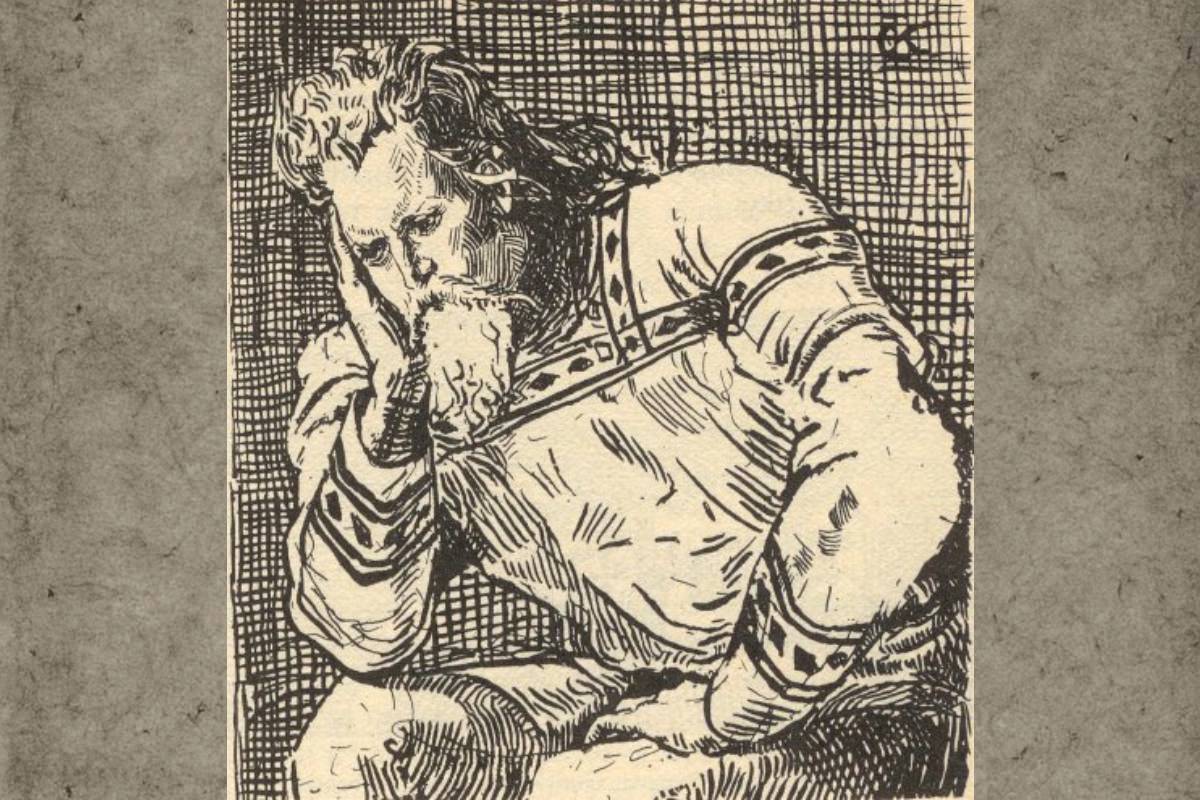
A late 19th-century depiction of Haakon Sigurdsson, whose rule marked the final flourishing of pagan power in Norway. Author: Christian Krohg (1852–1925)
The Jarls of Lade
One of the amusements of learning about the Viking Age (c. 750 – 1100 CE) is a realization that people in Viking societies had the best – dare we say most badass – nicknames.
Diving deep into this world, we come up for air in the early 960s CE. The Norwegian kingdom had only been unified for a few decades and – some would argue – was not unified at all.
We have a king on the throne named Harald Greycloak, who is powerful, but his power does not extend all throughout the modern borders of this nation.
In the far north, the powerful Jarls of Lade control the northern trade routes and with that a great deal of influence.
We find a young-ish man, in his mid-20s, the son of the Jarl of Lade. He finds himself suddenly thrust into power as Greycloak's stooges murder his father in order to squash this northern nuisance.
The new Jarl of Lade is suddenly all alone without his father to guide him. He continues to take the fight to Greycloak but is forced to flee his home and seek refuge in the Danish court, under the protection of King Harald Bluetooth.
Now, the Danish crown had long gazed across the Skagerrak and thought that much of this northern country should be brought under its control.
Bluetooth then supplied Sigurdsson with hope. The two hatched a scheme whereby they would lure Greycloak to Denmark and then kill him in a meeting in 971 CE.
Not only did Sigurdsson avenge his father, but his new mentor, Bluetooth, essentially gave him a free hand in Norway, nominally as a vassal.
From being forced to flee for his life, Sigurdsson returned to Norway as a force in his own right. Not for the first time in his life, he had skillfully navigated the treacherous waters of international diplomacy and manipulated regional players into fulfilling his ambitions.
- READ MORE: A Viking history of Norway (part 1)
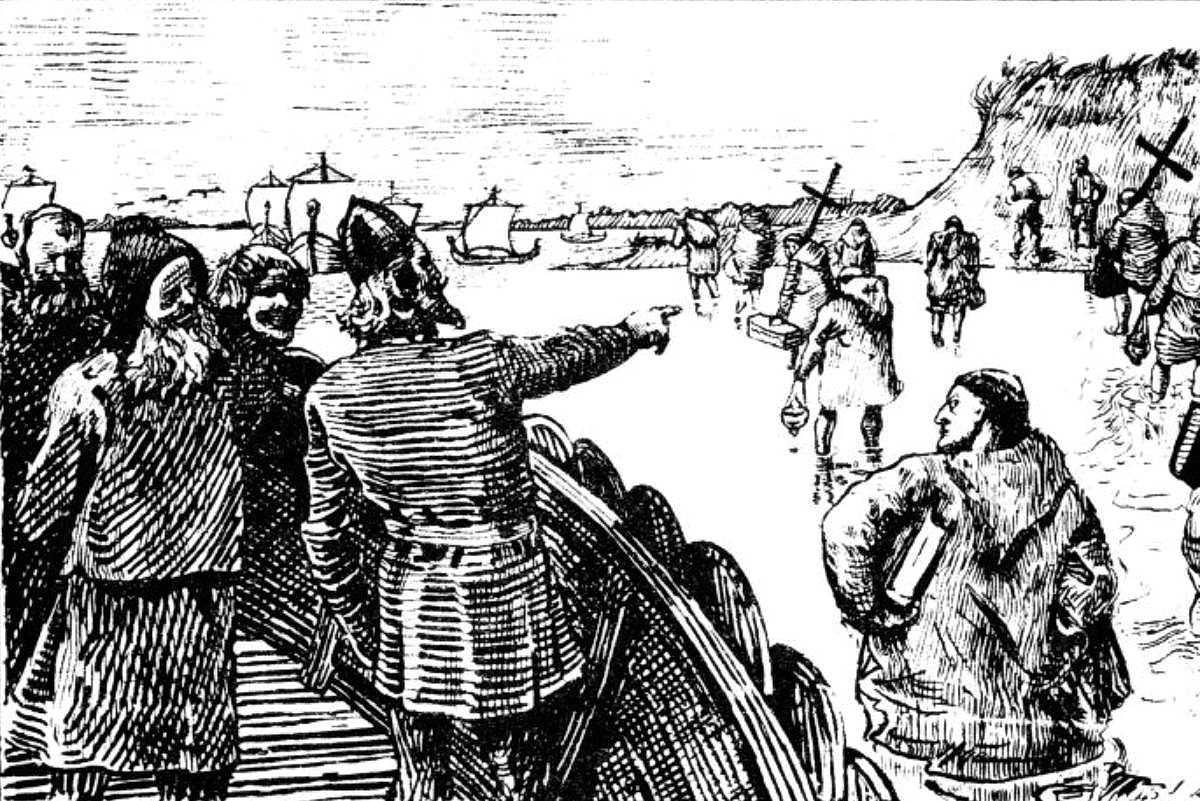
Haakon Sigurdsson, Norway’s de facto ruler, is shown here ordering Christian clergymen to return ashore. Author: Christian Krohg (1852–1925)
The Holy Roman Emperor, military defeat, and a forced baptism?
It is now that we turn, as we often do here at The Viking Herald, to the sagas to give us more detail and color of the story of Haakon Sigurdsson.
The Heimskringla, a later medieval chronicle of many Viking Age rulers compiled by 13th-century CE Icelandic poet and politician Snorri Sturluson, provides us with some of the events surrounding Sigurdsson's political machinations and religious choices.
Turning to the saga now, we use a 2009 online English translation that was edited by Douglas B. Killings and David Widger.
It all kicks off with a great battle between the Christian Holy Roman Emperor Otto II and Sigurdsson's Danish benefactor, King Harald Bluetooth. According to the Heimskringla, we see Sigurdsson make a return to Denmark in 975 CE.
"...The Emperor Otta (Otto) was at that time in the Saxon country, and sent a message to King Harald, the Danish king, that he must take on the true faith and be baptized, he and all his people whom he ruled; "otherwise," says the emperor, "we will march against him with an army."...He sent a message also to Earl Hakon in Norway to come to him early in spring, and with as many men as he could possibly raise. In spring (A.D. 975) Earl Hakon levied an army over the whole country which was very numerous, and with it, he sailed to meet the Danish king. The king received him in the most honorable manner..." [Section 24]
Yet despite the combined efforts, Emperor Otto II would effectively smash the Viking forces. Well, in the fallout from that battle, we see Emperor Otto II oversee the forced baptism of Sigurdsson's benefactor, Bluetooth.
According to the Heimskringla, it was Sigurdsson's turn next:
"...King Harald, while he was in Marsey, had sent a message to Hakon that he should come to his succour; and the earl had just reached the island when the king had received baptism. The king sends word to the earl to come to him, and when they meet the king forced the earl to allow himself also to be baptized. So Earl Hakon and all the men who were with him were baptized; and the king gave them priests and other learned men with them, and ordered that the earl should make all the people in Norway be baptized. On that they separated; and the earl went out to sea, there to wait for a wind..." [Section 27]
We know that Bluetooth is credited with being the ruler who helped bring Christianity into the Danish kingdom, as he is also the one who erected two great runestones at Jelling, loudly proclaiming this feat.
Despite this baptism, Sigurdsson remained steadfastly devoted to the old ways. In fact, the "priests and other learned men" accompanying Sigurdsson back to Norway didn't even make it off the Danish coast.
Legend has it that Sigurdsson ordered them off the boat and back onshore before casting off.
Returning to Norway, in the mid-970s CE, with his benefactor politically boxed in by the Holy Roman Empire, and thus in a weakened position, we see Sigurdsson assert more and more independence in thought and deed.
Having carefully navigated two larger political players and asserted himself as the de facto ruler of Norway, we see Sigurdsson at the very pinnacle of power. Once you've reached the top, however, the only way is down.
Part 2 of our look at Haakon Sigurdsson can be found here.
For more information on how the legacy of the Old Norse religion has shaped modern Norway, visit Science Norway here.
We get to provide readers with original coverage thanks to our loyal supporters. Do you enjoy our work? You can become a PATRON here or via our Patreon page. You'll get access to exclusive content and early access.
Feel free to reach out to discuss potential stories that may be in the public interest. You can reach us via email at [email protected] with the understanding that the information you provide might be used in our reporting and stories.