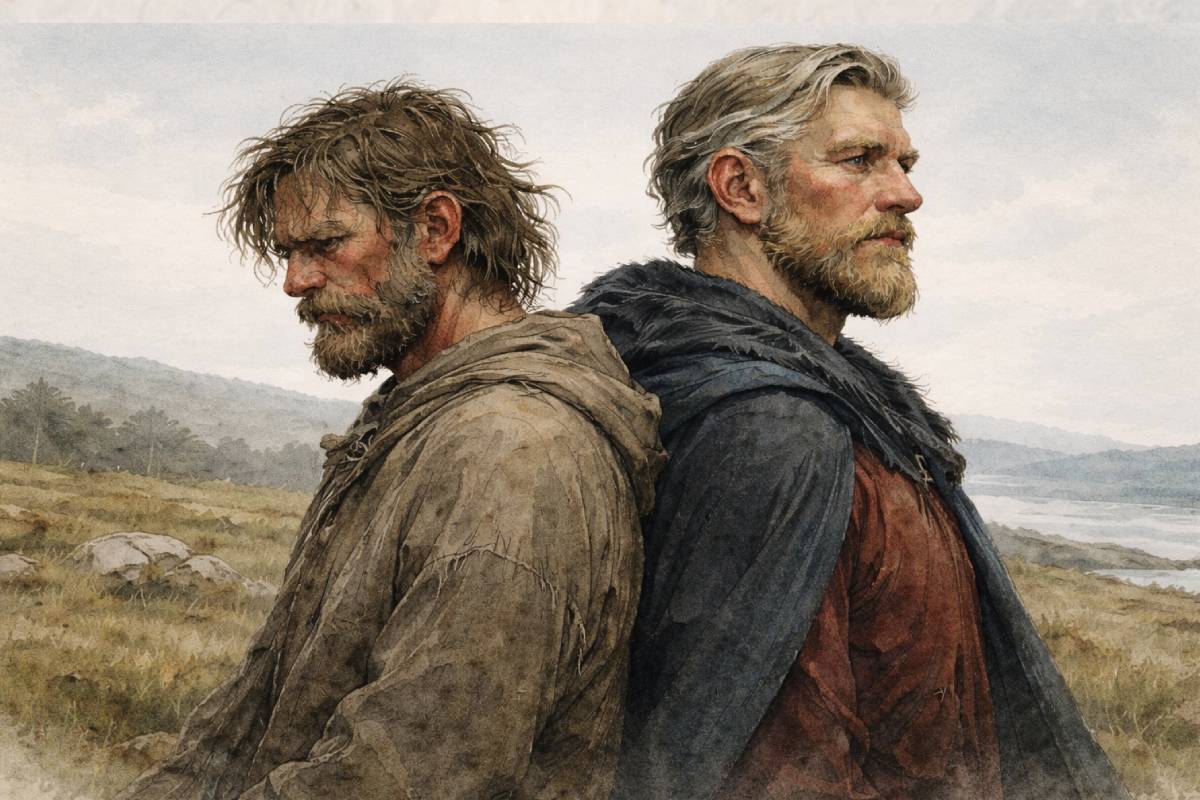


As much as we love the rich tapestry of the Norse sagas, full of all the essential things that turn pages—gore, sex, and violence, with a sprinkle of longships and Odin thrown in for good measure too—the Roman Catholic Church's hagiographies are as colorful, as violent, and as problematic, historically speaking, of course.
Now, far be it from us to poo-poo the finer details of whether St. Columba rescued a fellow Christian from the jaws of the Loch Ness monster or exactly how many arrows were fired into St. Sebastian.
These colorful anecdotes, especially of what has been called the "Early Christian Martyrs" (c. 35–400 CE), were instrumental in the spread of Christianity throughout Late Antiquity and into the early medieval period in Europe and its surrounds.
Despite their vivid color and often adrenalin-inducing adventures, these hagiographies—though they might provide some historical "flavor" of the saint or the times in which they lived—are extremely problematic when it comes to historical authenticity.
The simple answer is, like so much else of the early medieval period, we simply cannot say for sure whether what has been recorded truly occurred as recorded.
Add to this the obvious bias that these hagiographies had, as they were said to be sources of inspiration and morality for all those good Christian souls facing a problem or two, and we are left with entertaining but ultimately historically questionable accounts.
Somewhat surprisingly, the Viking era was a rich breeding ground for Christian saints, even though for much of this era, much of the population, at best, were believers in the Old Norse gods and, at worst, actively hacking Christians to pieces with an axe.
When we came across the life of Saint Hallvard, a Drammen boy who did (heavenly) good, well, then we had to scrutinize his life a little closer.
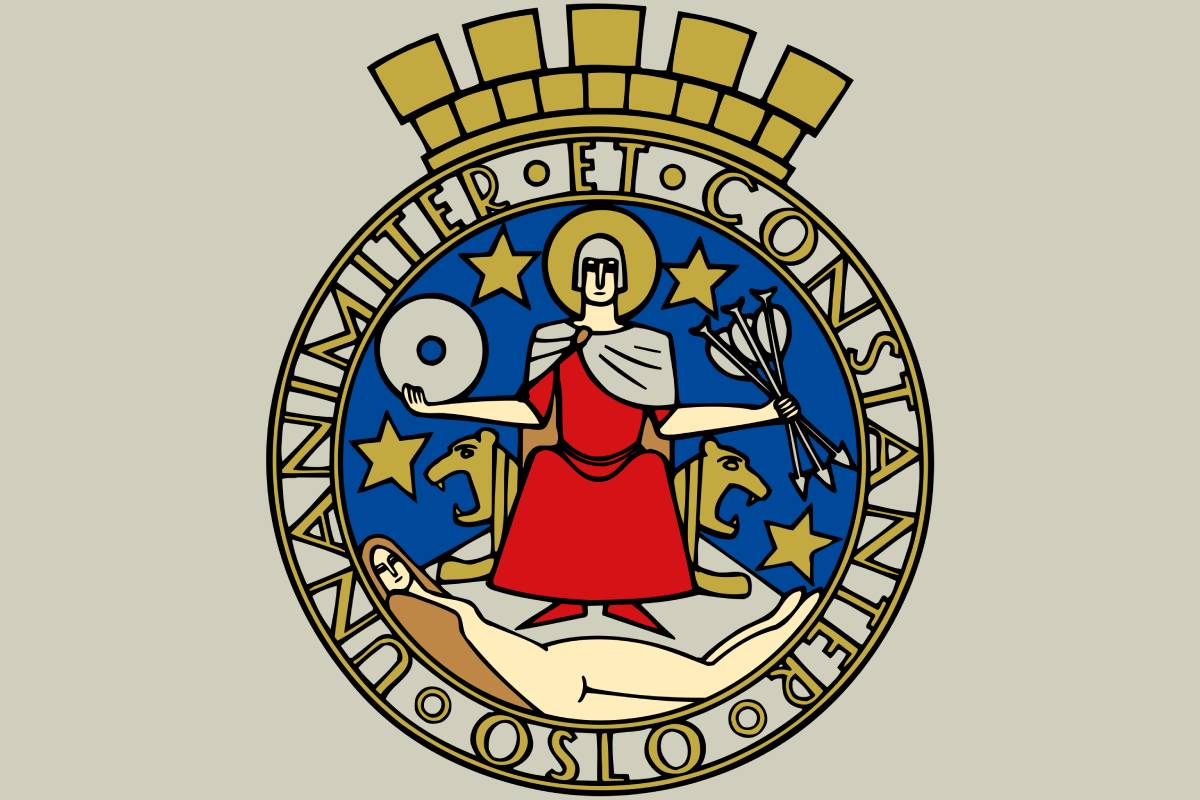
The coat of arms of Oslo features Saint Hallvard seated with a millstone and arrows in his hands, and the woman he defended lying beneath him. Source: Public domain
A farmer's life for me
Think of Oslo sometime in the first half of the 11th century CE. Whilst humans had settled around what is now Oslo for millennia, the city itself had not yet been officially founded when a young Hallvard was said to be born around 1020.
Historical sources date the founding of Oslo as a town to around 1040 CE, and it would not become a bishopric until 1070.
Like so many other people living in what is now Norway during the early medieval period, Hallvard was born into agriculture, as his parents were said to have owned a farm somewhere near what is now Drammen, just outside of Oslo.
Now, country life may not be for everyone, but that was the reality for the majority of people living in and around what is now Oslo during this period of Norwegian history.
Whilst young men may have gone off on Viking raids and expeditions by the early 11th century CE, the spread of Christianity had already begun to reshape society.
In what is now the east side of Oslo, archeologists have concluded that the burgeoning settlement had at least two stave churches, which within a century would make way for a shiny new cathedral: St. Clement's.
The ruins of this can be found today behind the Barcode Project, Oslo's new shiny center of commerce and capitalism.
So, young Hallvard found himself born into a Viking society in which Christianity was gaining supremacy over the hearts and minds of the inhabitants of the Kingdom of Norway.
As W. G. Collingwood wrote in a
in the journal Antiquity, the presence of Christianity for centuries in the Viking world "softened their [people in Viking societies] manners as time went on, long before their general conversion to organized Christianity."
Oslo at the time was an emerging trading center, but the nation's political and religious heart lay further north, in Nidaros—modern-day Trondheim.
It is near Trondheim that we turn next. By the time young Hallvard was ten, one of his mother's relatives suffered a tragic but historically consequential death at Stiklestad.
This was where Olaf Haraldsson fought and died—later to be canonized as a saint and granted the title Rex Perpetuus Norvegiae (Eternal King of Norway) in the later 12th century.
Whether Hallvard was related to Olaf Haraldsson remains doubtful, but if this was the case, their family was surely one of the most pious and virtuous in Norwegian history.
- READ MORE: A Viking history of Oslo
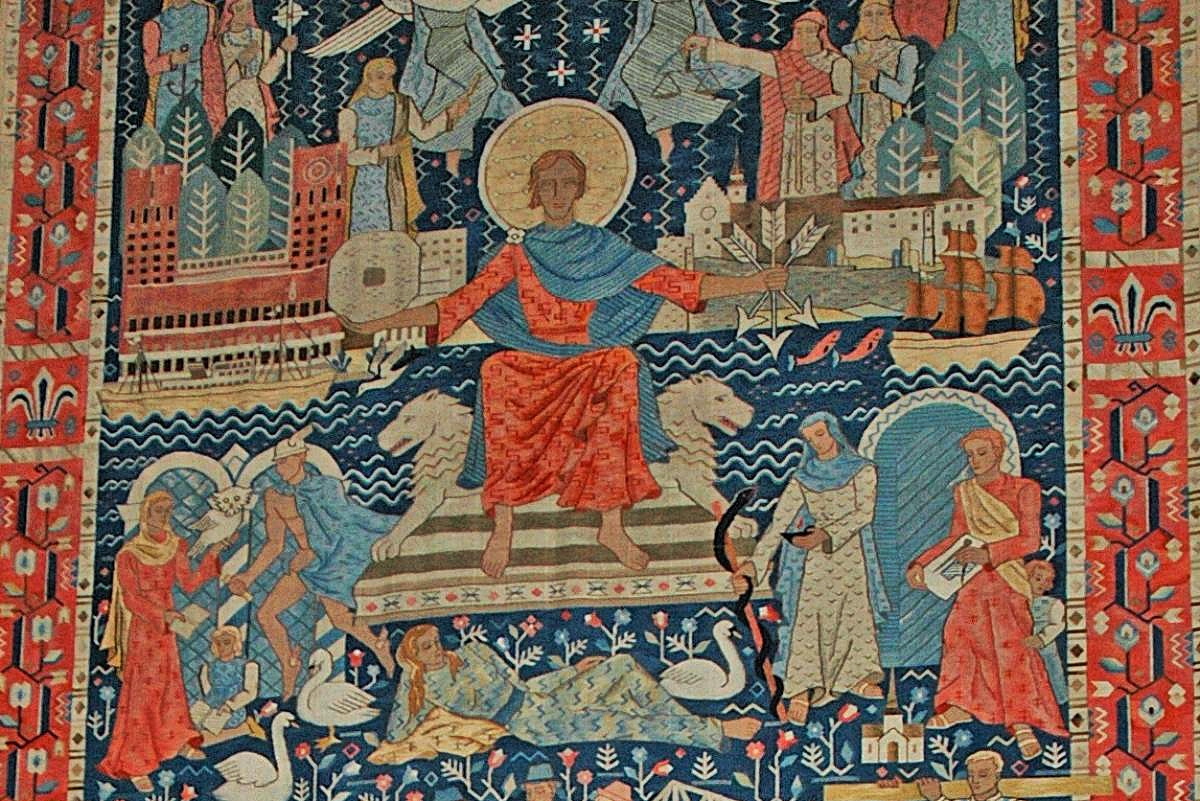
In Oslo City Hall's official meeting room, a tapestry by Else Poulsson and Else Halling depicts the story of St. Hallvard. Photo: Kjetil Bjørnsrud (CC BY-SA 3.0)
Saving a thrall but not his own life
We have little detail of the early life of Hallvard, but we can imagine him living a comfortable life, as his parents' farm was prosperous.
Enslavement was a common practice at the time, and we might imagine that, upon his parents' farm, enslaved people toiled away—perhaps shipped to Norway via some of the important slave markets in Viking Dublin, Byzantine Constantinople, or Abbasid Baghdad.
As Stefan Brink discusses in his 2021 book Thralldom: A History of Slavery in the Viking Age (available on Amazon here), Norway at the time saw widespread "exploitation of slaves on a large scale, usually in farming..."
It was Hallvard's interaction with one assumed slave that would change his life and Norwegian history forever.
According to later medieval religious sources, Hallvard was aged about 23 and was said to have come across a woman, presumed to be a thrall, who had been accused of theft.
Hallvard gave her refuge on his boat, perhaps somewhere around the Oslofjord, in a bid to help her escape her accusers.
He must have believed she was innocent—a mere helpless pawn caught up in the, to us moderns, deeply violent, sexist, and misogynistic society of the Viking Age.
Seeing this thief escape with the help of a young man (could these men have known him?
Could they have been his social inferiors or even have worked in his family's fields?) enraged these men, and they launched a series of arrows at the boat and managed to kill both Hallvard and the thrall.
They were said to have dragged the boat ashore and quickly buried the woman on the beach. As she was a thrall, no one of importance would mourn for her.
Hallvard, however, was a man of privilege and some status. His body proved trickier to dispose of, and the men thought the best way was to destroy all evidence by getting his body to the bottom of the Drammensfjord.

Ruins of St. Hallvard's Cathedral, Oslo's earliest cathedral, built in the early 12th century and used until around 1655. Photo: Vidariv (CC BY-SA 3.0)
A miraculous millstone
The actions that the men undertook next seem to point to their employment in agriculture, perhaps even on the farm of Hallvard.
They quickly got a millstone—a huge stone used to grind wheat and other grains—and placed it around his neck, using it as an anchor to drop the body into the bottom of the sea.
However, despite this massive chunk of stone, Hallvard's body miraculously did not sink at all. The body refused to submerge, and ultimately, the long arm of the law caught up with the three men, and their heinous crimes were discovered.
A local villager was said to have buried Hallvard in a Christian manner, and he soon became considered a martyr for that faith.
He died a young man, around 23 years old, in 1043. This was the era in which the Viking Age would soon reach its bloody climax on the battlefields of England.
Drammen 1 – 0 Oslo
So, even though Hallvard grew up around what is now Drammen, and his body was attempted to be submerged at the bottom of the Drammensfjord, the people of Oslo quickly took up his veneration.
A cathedral was constructed in his honor in the east of Oslo and remained the city's most important ecclesiastical, religious, and spiritual center until the mid-17th century CE.
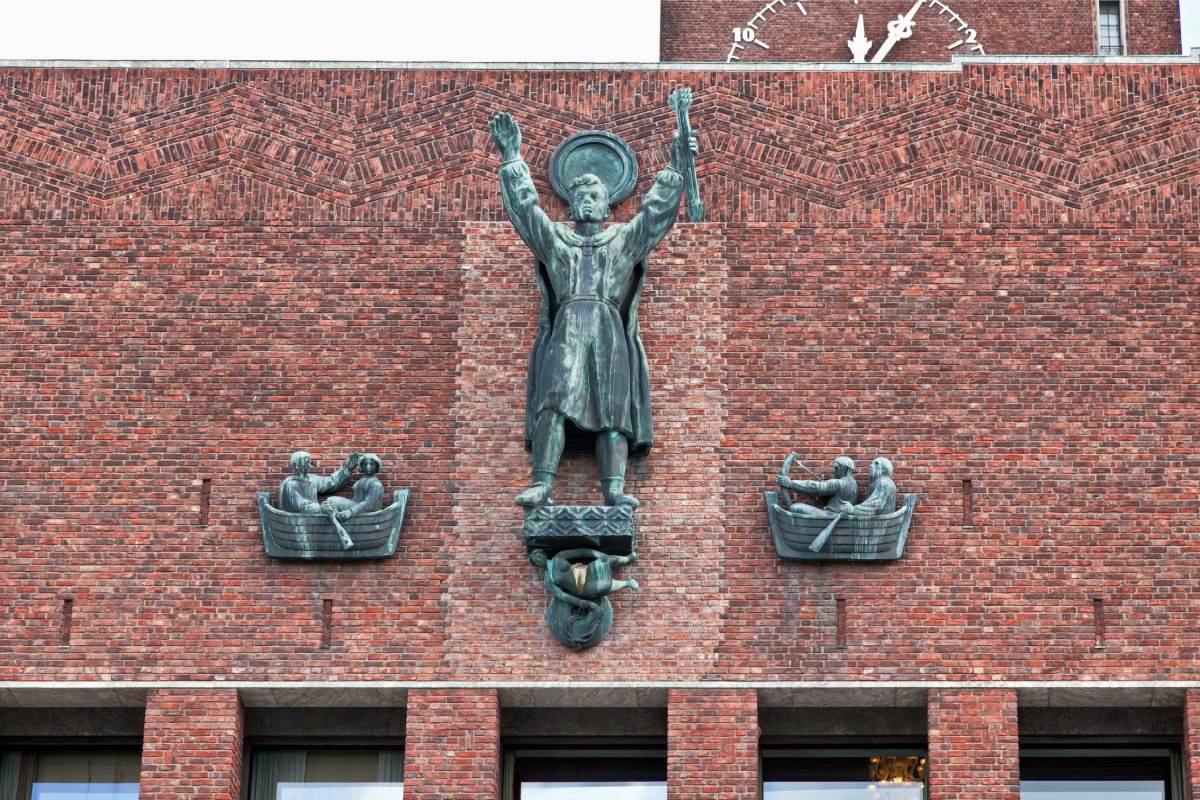
Since 1924, Hallvard has taken pride of place in the center of the City Seal of Oslo, holding the arrows and millstone associated with his death. Underneath him is the naked woman whom he was trying to defend and assist.
The city of Drammen is often the butt of jokes from Osloites, seen by many—especially those who reside in the west of Oslo—as a bit of a cultural backwater and a step down upon the social ladder.
However, it is best to remind those snobs that, despite all the jokes, the man they revere and worship—and who is emblazoned upon the city's many flags, seals, and letterheads—is, in fact, a Drammen boy.
He is also an example of how the early medieval period, when Vikings roamed, still impacts the modern world today.
For more information on the ruins of St. Hallvard's Cathedral, check out Visit Oslo here.
We get to provide readers with original coverage thanks to our loyal supporters. Do you enjoy our work? You can become a PATRON here or via our Patreon page. You'll get access to exclusive content and early access.
Feel free to reach out to discuss potential stories that may be in the public interest. You can reach us via email at [email protected] with the understanding that the information you provide might be used in our reporting and stories.