

A few years ago, when this current author was in the prime of his life (that sweet spot between 25 and 30, old enough to get respect but young enough not to be plagued by constant lower back pain), I enjoyed a party or two.
During one of my nights out with friends, we came across a herbal liqueur with a very Viking name, Valhalla.
Now, we here at The Viking Herald always encourage the responsible consumption of alcohol. However, on this particular night, my friends and I may have overindulged in one too many of these (shots were a thing back in the 2010s, kids, ask your parents).
My friends and I woke up the next day and all told each other how we felt a fate worse than death: a terrible hangover that simply would not quit. Now, all joking and shenanigans aside, a hangover is about the worst fate that many of us, especially in the gilded Western world, can suffer.
Yet wind the clock back a millennium or so, to a time when Vikings roamed and raided, and fate (wyrd in Old Norse) was seen as guiding one's life. It was so powerful and pervasive that even the Norse gods had to follow it!
For the small warrior minority that made up any Viking society, a fate worse than a hangover was not entering Valhalla, Odin's Hall of the Slain.
We know that people from Viking societies were a militant and defiant bunch, as they had plenty of opportunities to battle and brawl throughout the early medieval period, from the British Isles to the Baltic Sea down to the Byzantine Empire.
How, then, did a warrior gain entry to that eternal feast in the afterlife, Valhalla?
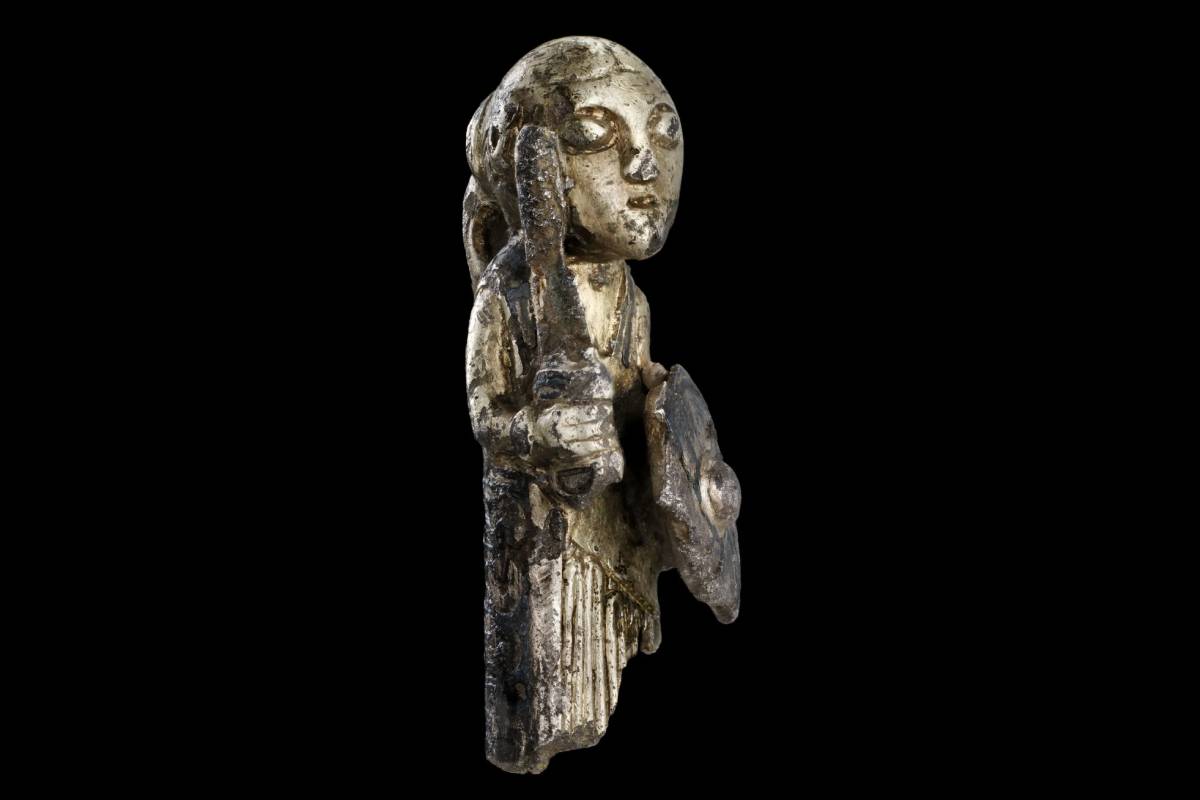
Discovered near Hårby, Denmark, the gilded silver figurine likely represents a Valkyrie guiding warriors to Valhalla. Photo: John Lee / Nationalmuseet (CC BY-SA)
Die a brave death and be selected for it
We have written about what Valhalla is before, so we won't delve into too much detail about exactly what this feast is.
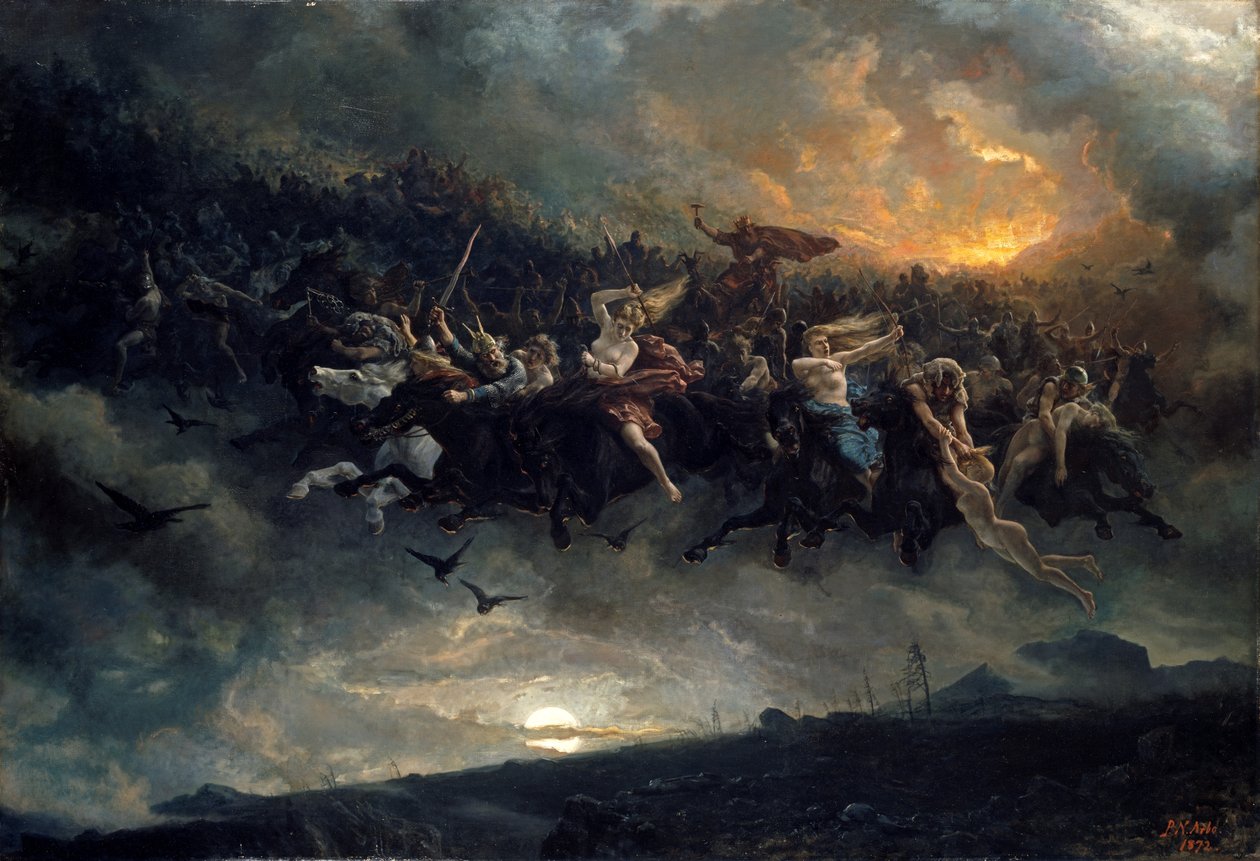
Let us just say that it is Odin's hall, where only the bravest warriors enter, as selected by the famous Valkyries following their glorious death during battle. These chosen warriors are known as the Einherjar, the army of the dead, who feast and train in Valhalla until Ragnarök.
As Heather O'Donoghue writes about in her 2008 book, From Asgard to Valhalla (available on Amazon here), this was a place of "fighting and feasting," very much the "otherworld home" of Odin. Here, these heroes feast, fight, and train in preparation for Ragnarök.
The first criterion to enter Valhalla was a brave death. Given that Odin was training an eternal army to fight in the apocalyptic events of Ragnarök, this was not a place for yellow-bellied warriors.
Only the bravest could enter Valhalla, and this meant not only being a warrior but also dying a brave death.
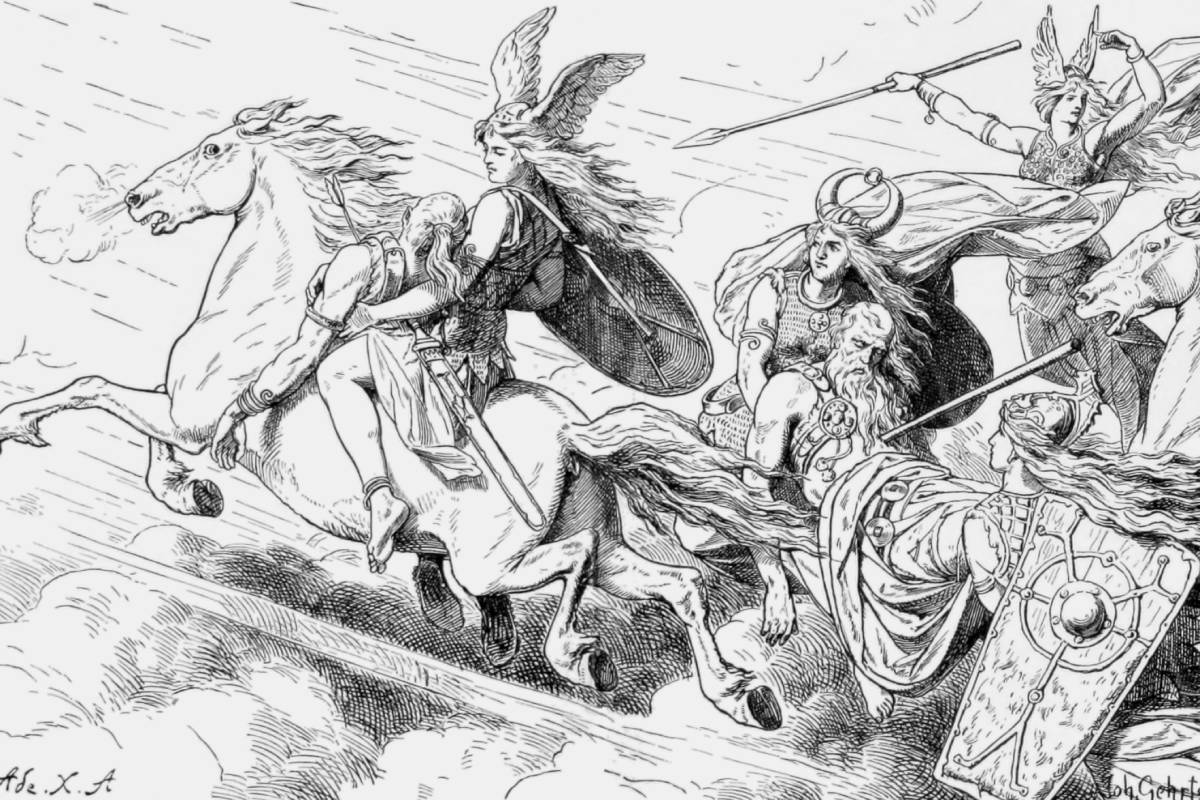
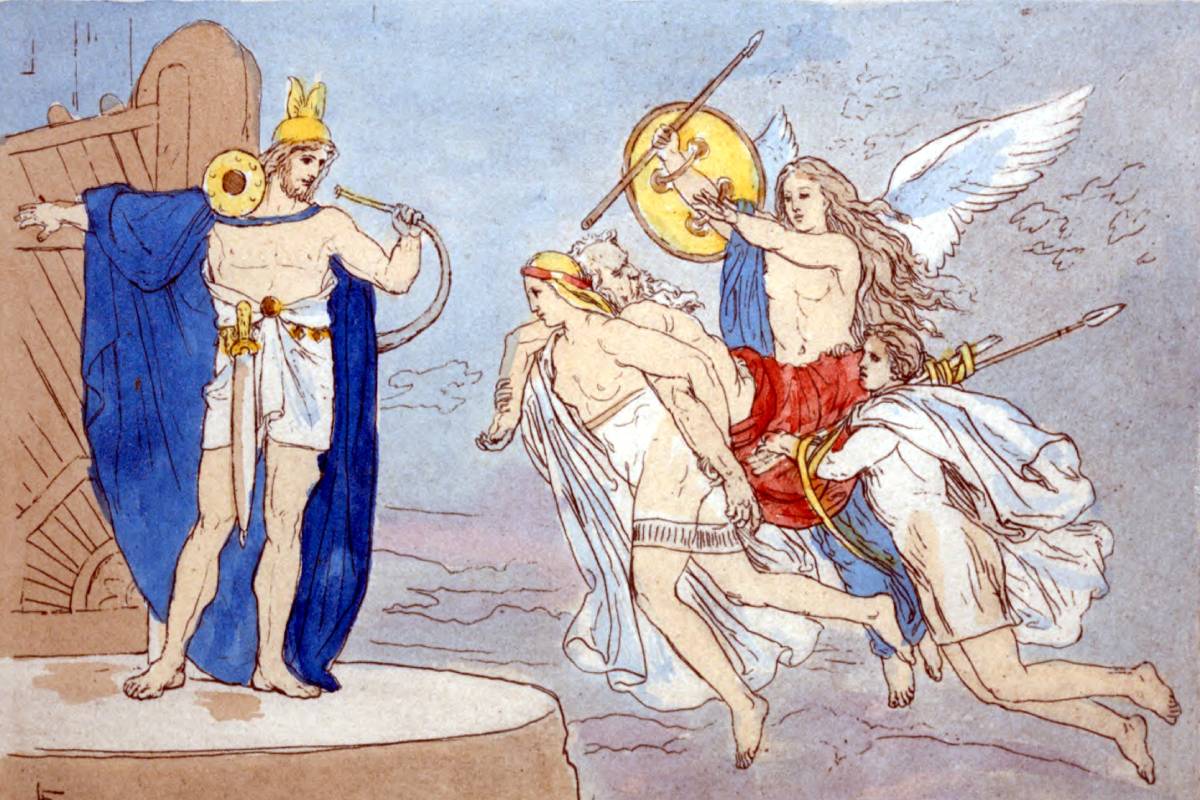
Those who did die a brave death were then selected by Valkyries. These mythical female warriors would swoop down from above and bring these fallen heroes up into the sky to Valhalla.
Probably the easiest way to get there, as Uber wasn't quite a thing in the early medieval period.
One wonders whether the famous Viking warrior Ragnar Lothbrok, who died being cast into a pit of snakes, enters Valhalla despite his famous deeds.
More than probably, however, the "Thunderbolt of the North," Harald Hardrada, whose death at Stamford Bridge, allegedly cut down by a spear from underneath the bridge, traditionally ends the Viking Age, or Olaf II Haraldsson, hacked to pieces in Stiklestad, would have been selected by the Valkyries.
- READ MORE: What happens after Ragnarök?
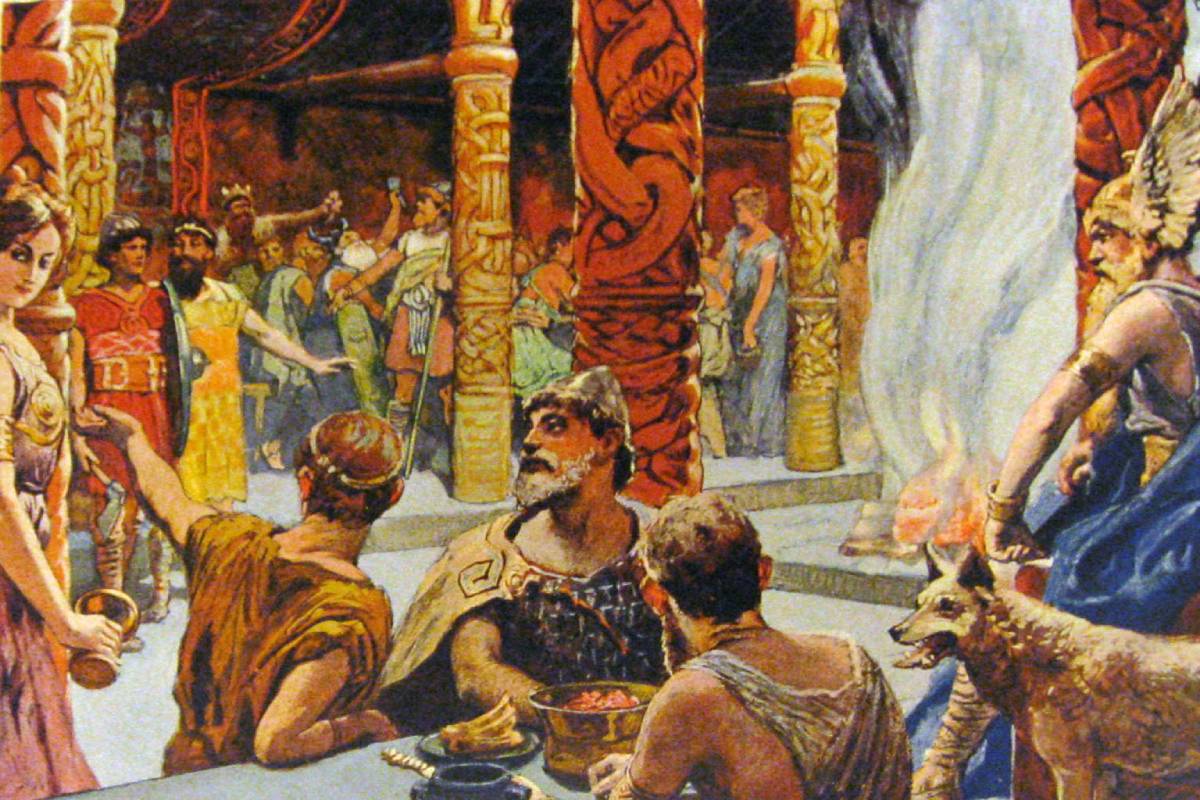
Odin sits in Valhalla beside one of his wolves as Valkyries attend to the Einherjar in this scene from 1905. Illustration: Emil Doepler (1855–1922)
Honor, loyalty, and a love of a good feast and fight
We have countless stories from the Norse sagas of the value that people in Viking societies placed upon honor and loyalty. Honor was an intrinsic—though unseen—everyday aspect of Viking life, and it was very much a life-or-death matter.
A slight against one's honor, be it personal, familial, or even community-wide, could lead to a bloody spiral of violence in the form of blood feuds.
Honor to one's lord or leader, be it a Viking chieftain or a later medieval monarch, was also a key condition for entry into Valhalla. Given that Odin was seen as the mighty All-Father of the Viking world, only those warriors who were honorable and loyal could make it into the eternal feast.
Now, speaking of feasting, those who didn't like the good times were not selected. One had to enjoy the simple pleasures of feasting and merrymaking.
Adding to this was the love of a good brawl. We know the hyper-macho culture, by our standards, of Viking societies and their love of a good battle, brawl, or dustup.
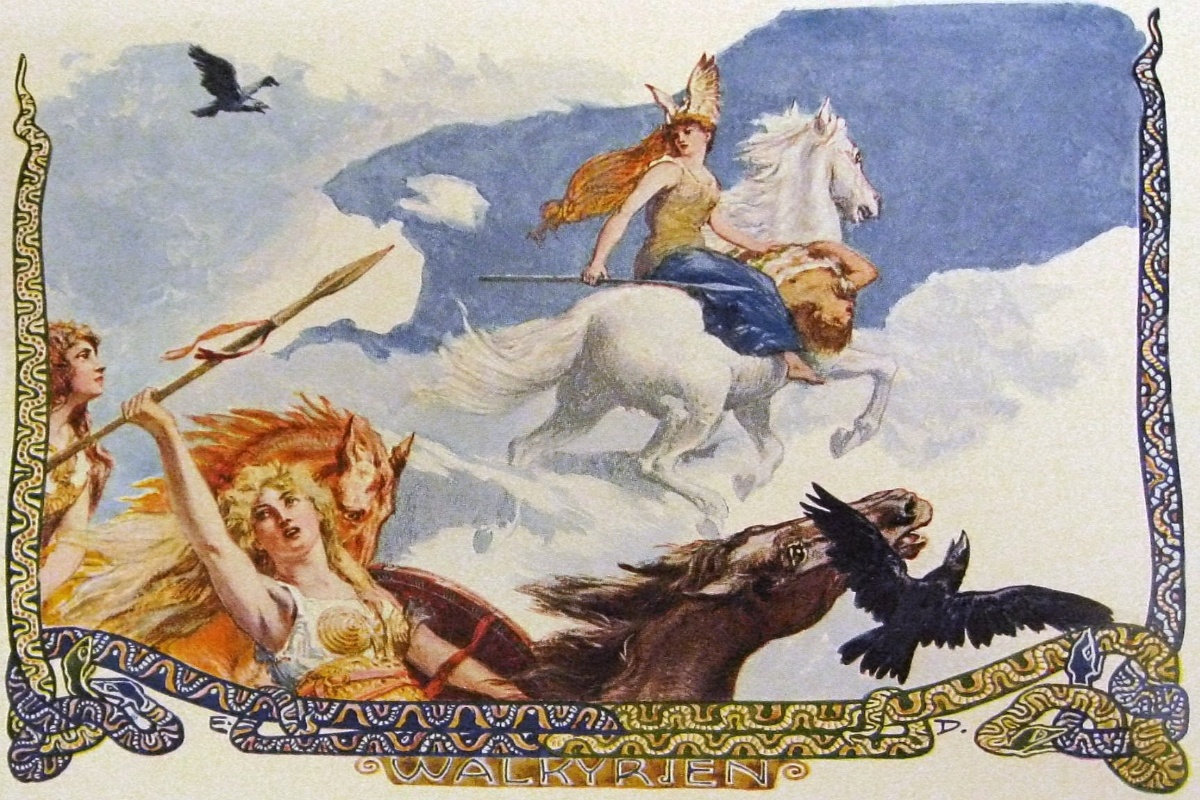
A 1905 illustration showing Valkyries carrying a dead warrior on horseback. Illustration: Emil Doepler (1855–1922)
Only the best and bravest
Ok, so if all of the above sounds like you (perhaps maybe the whole dying gloriously on a battlefield part), don't get too cocky. Remember that Odin only wanted the absolute elite warriors to join him.
Let's face it, the overwhelming majority of us, present writer included, simply want to live as long a life as possible. What we see as a great final act of our life (dying of old age surrounded by loved ones) would have automatically barred us from Valhalla.
In fact, for many Vikings, this was a shameful death, perhaps explaining why they were so ferocious: they had a vested interest in trying to be as brave and glorious a warrior as possible on the battlefield by killing as many foes as possible.
If a warrior didn't take up arms, lost their nerve in battle, or was simply killed in a non-glorious way, no Valkyrie would ever select them.
Those lucky enough to be chosen find a voice in Helgi, a fallen warrior in one of the poems of the Poetic Edda. As he says in Carolyn Larrington’s 2014 English translation of Helgakviða Hundingsbana II:
We ought to drink precious liquors,
though we have lost our love and our lands;
no man should sing a lament for me,
though on my breast wounds can be seen.
Whilst such an afterlife might not appeal to us today, it embodied the ultimate reward for many in Viking societies.
Read The Guardian’s report on the Viking Age Valkyrie figurine found near Hårby, Denmark, and its display at the British Museum here.
We get to provide readers with original coverage thanks to our loyal supporters. Do you enjoy our work? You can become a PATRON here or via our Patreon page. You'll get access to exclusive content and early access.
Feel free to reach out to discuss potential stories that may be in the public interest. You can reach us via email at [email protected] with the understanding that the information you provide might be used in our reporting and stories.