

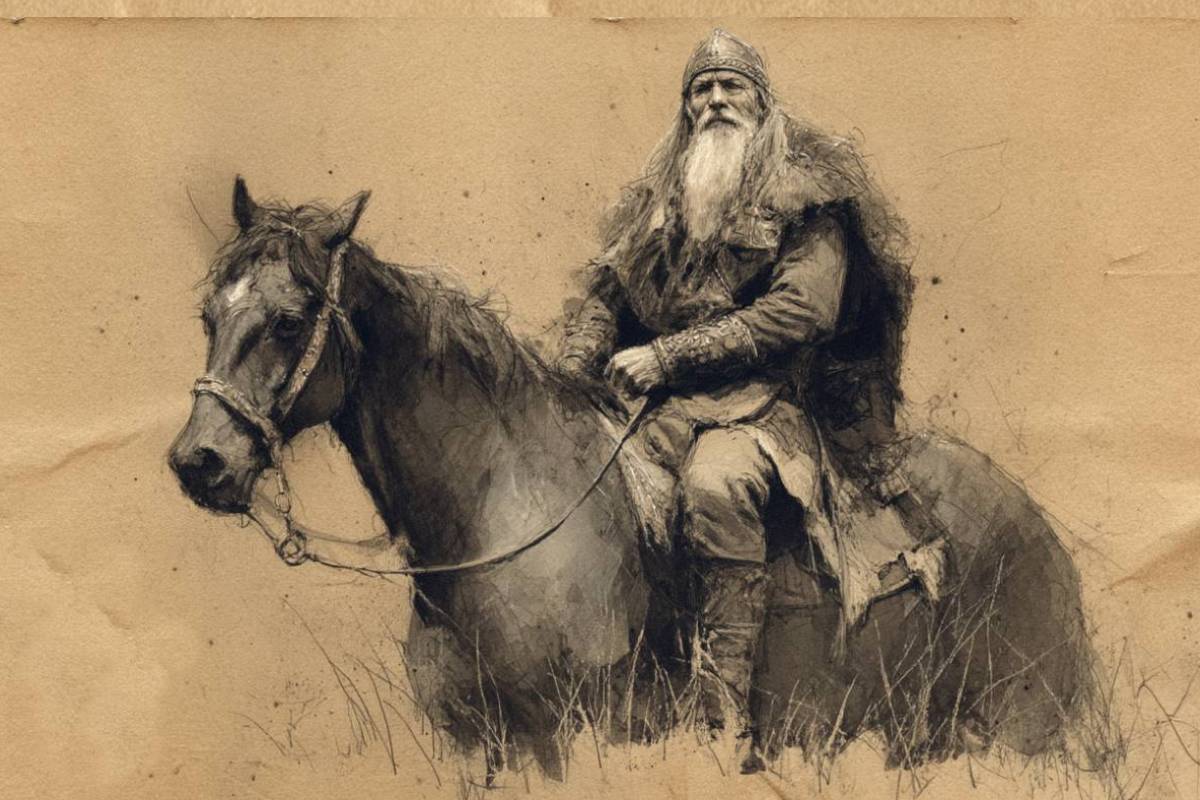
Surely one of the most important pieces of early medieval literature is the tale of Beowulf. Set in the darkness of 6th-century CE Scandinavia and its surroundings, the great Old English epic offers us more than one legendary hero.
Whilst the titular character, Beowulf, gets much popular attention, there is a shadowy figure on the periphery of the Danish and Geatish courts that carries much significance in Scandinavia.
Hroðulf is introduced as the nephew of the Danish king, Hroðgar, the same ruler who not only builds a great mead hall but also knows a thing or two about heroes, as he summons Beowulf to fend off the monster he is plagued by.
His name also appears in several forms, including Hrothulf, Hrólfr, Hrólfr Kraki, Rolfo, Roluo, Rolf Krage, and Rolf Krake.
Whilst Hroðulf is only a shadowy bit-part player in this epic tome, in later Scandinavian traditions, the very same character appears as Hrólfr Kraki, said to be one of the semi-legendary kings of early medieval Scandinavia.
As Tom Shippey talks about in his essay in the 2010 book, Making History: Essays on the Fornaldarsögur, "...there is no doubt that its hero Hrólfr is to be identified with the enigmatic and unspeaking figure of Hrothulf, mentioned twice in the much older Old English epic..."
To understand more about this legendary king, we turn now to the sagas.
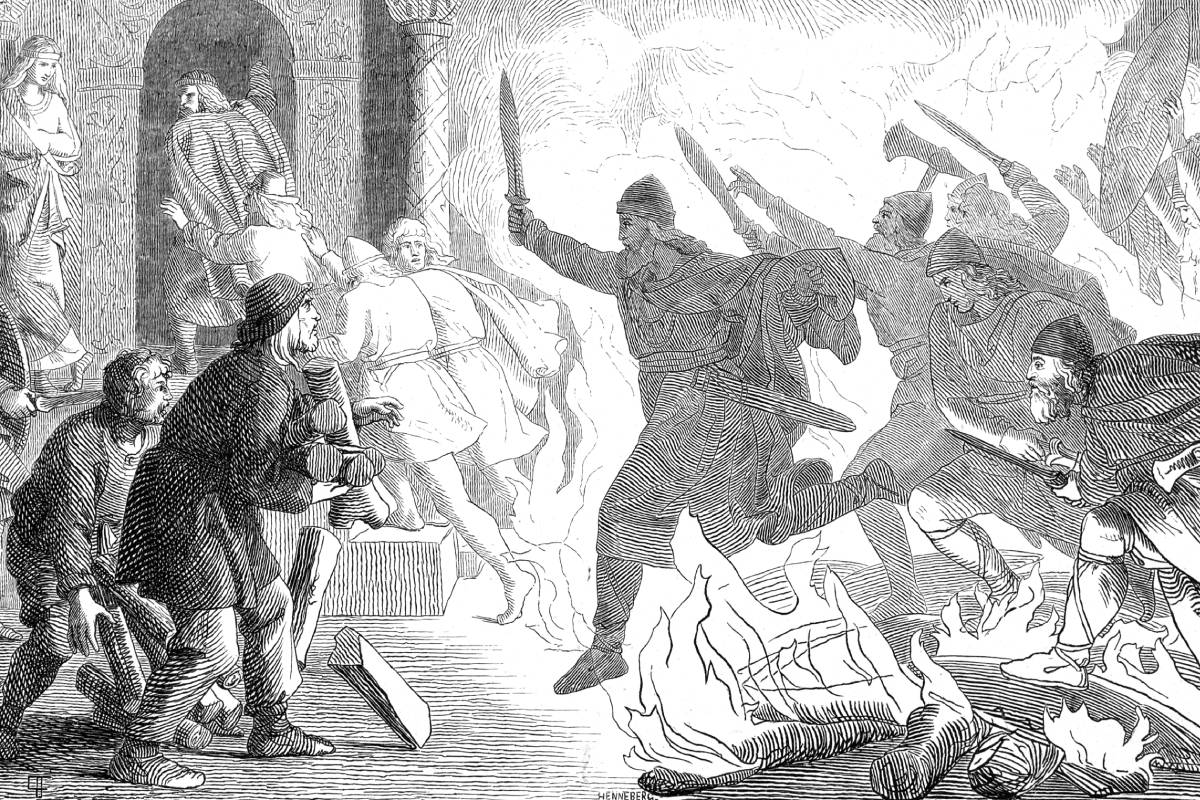
Illustration of Hrólfr Kraki jumping over the fire, based on a sketch by Lorenz Frølich from 1852. Author: H.C. Henneberg (1826–1893)
The later invention of a legend?
Nostalgia is a heady drug. One look at the current world today and you'll see a huge proportion, from a variety of different cultures and countries, yearning for a supposed glorious past, a golden age of bygone years.
This love affair with the past is no modern invention. The rich tapestry of Norse sagas, whilst it may draw on stories known in Viking societies, was really transcribed and compiled by their later medieval ancestors, especially in 13th-century CE Iceland.
These people were trying to hark back to a glorious age when Vikings sailed the seas, and heroes were bound by honor and kinship.
One of the sagas believed to have been transcribed in the later medieval period was Hrólfs saga kraka (The Saga of King Hrolf Kraki), which, like Beowulf, described events in the much earlier medieval period, perhaps around the turn of the 6th century CE.
Similar to Beowulf, much of the action is set in Scandinavia but specifically in Denmark, and concerns the titular character who was said to be a ruler of the famous Scylding clan, who in later legend were said to have held sway across wide parts of the North Sea world, prefiguring their later Viking descendants.
It is his characterization in this saga, as well as possible echoes of the historical record, that we turn our attention to now.
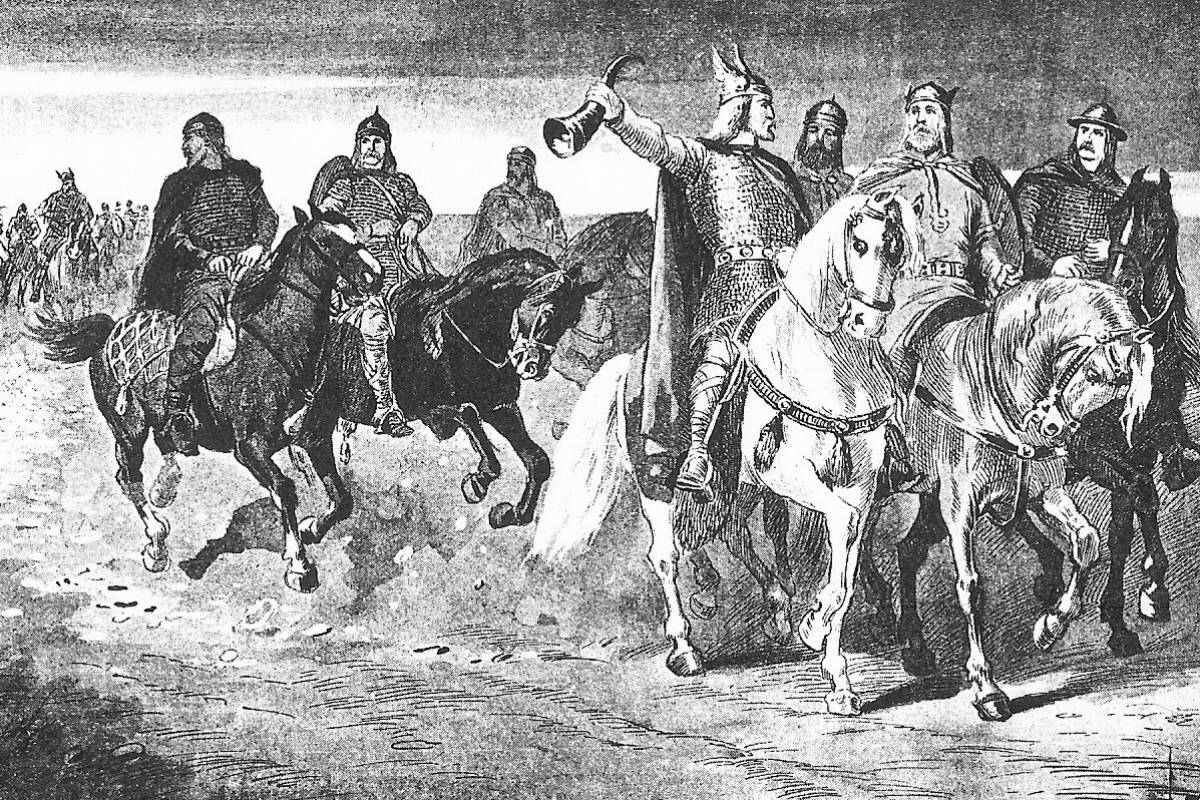
Hrólfr Kraki and the scattering of gold on Fyrisvellir, a well-known episode in the saga tradition. Author: Jenny Nyström (1854–1946)
Power and honor
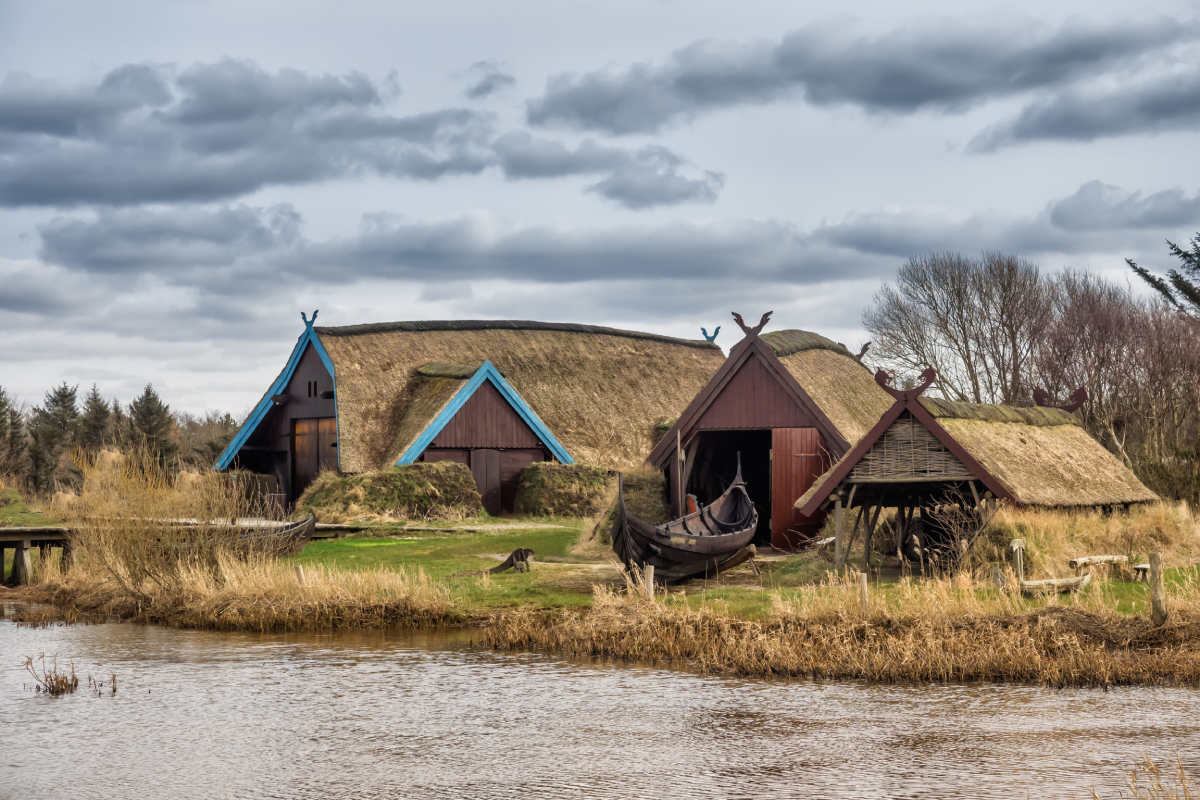
In this saga, Hrolf is depicted as ruling from Lejre, in Denmark, a site with a long association with royal power and prestige in that nation, viewed in a similar light to Gamla Uppsala in Sweden.
Archeological evidence suggests that this location functioned as a regional hub of elite power, especially during the very early medieval period in which the saga is set, which at least fits the possibility of a ruling clan operating from there.
Much of the saga paints Hrolf's character, and indeed his rule, endowed with qualities that almost beggar belief.
He is painted in the sagas as a brave, fearless, generous, and just ruler, very much the epitome of how a ruler (especially one during the late medieval period when many of these sagas were transcribed) should operate.
Whether there was a historical ruler with as much moral fiber and valor as this is questionable, but we are optimists here at The Viking Herald and thus like to believe so.
It must be noted, however, that despite his golden personality, there is a deep strain of darkness in his saga, caused by and involving his family.
He may have unwittingly committed incest with his mother, and his downfall was orchestrated by his half-sister, Skuld, with a seiðr-inspired surprise attack involving a horde of magical beings, including elves and norns.
Whilst this entertaining saga may have elements of historical truth in it, many of the themes are familiar literary tropes found throughout medieval literature, such as his idealization of a generous and just ruler and the motif of familial betrayal leading to a violent death.
Later sources and legacy
Due to the semi-legendary status of Hrólfr Kraki, we know little of his historicity, life, or rule other than what we find in Anglo-Saxon and Scandinavian sources.
Aside from his brief appearance in Beowulf, mentioned as the nephew of the Danish king Hroðgar, and his tragic exploits in his titular saga, he is also mentioned in later medieval sources like Gesta Danorum.
Despite our best literary digging, Hrólfr Kraki, supposed scion of the Scylding clan – the legendary rulers of early medieval Denmark – remains a shadowy and secretive figure at best, albeit one with his own saga.
However, whether he was a verifiable historical figure in his own right or, like other characters found throughout the rich tapestry of the sagas, a pastiche of several figures during the early medieval period – should not detract from his epic life and lore, which continues to entertain today.
For more information on a recent excavation of an early medieval gravesite in Denmark, visit Archaeology Magazine here.
We get to provide readers with original coverage thanks to our loyal supporters. Do you enjoy our work? You can become a PATRON here or via our Patreon page. You'll get access to exclusive content and early access.
Feel free to reach out to discuss potential stories that may be in the public interest. You can reach us via email at [email protected] with the understanding that the information you provide might be used in our reporting and stories.