

American metal detectorist Loren Lemcke has discovered a Viking Age sword in the forests of Finland. The sword has been provisionally dated to around the 10th century, though a complete analysis is expected to take two to three years.
The Viking Herald speaks to Loren about this thrilling discovery and his passion for metal detecting.
Beyond the hilt
Loren found the sword on July 29 of this year, close to his home in the municipality of Kemiönsaari, Southwest Finland.
"I was out metal detecting, randomly wandering the forest," Loren tells us. "Until that point, I had only found garbage like bottle caps and nails. I was just about ready to give up when I got a large iron signal."
"Usually, this means some junk – an old saw blade or farming equipment – so I wasn't even sure whether to dig it out or not," Loren admits.
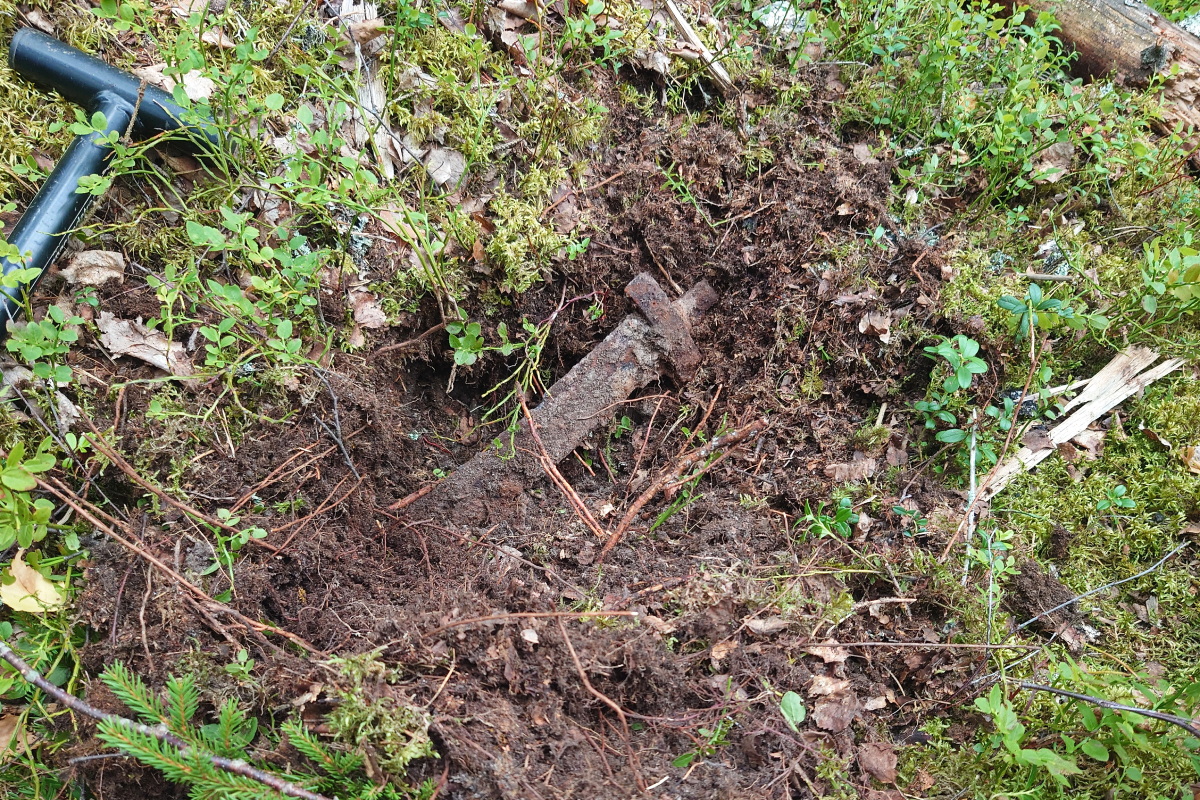
"But I stuck my shovel in, levered the object out, and up came the hilt. Straight away, I knew it was a Viking sword. It has this dotted pattern on the hilt, and I recognized it immediately."
As the subsequent recording Loren posted on TikTok shows, his excitement was palpable. "My brain didn't believe what I was looking at."
"The first thing I did was to take out my camera and start recording a video. I was totally freaking out, and I sent videos to my friends and family. I also sent some pictures to the archeologists."
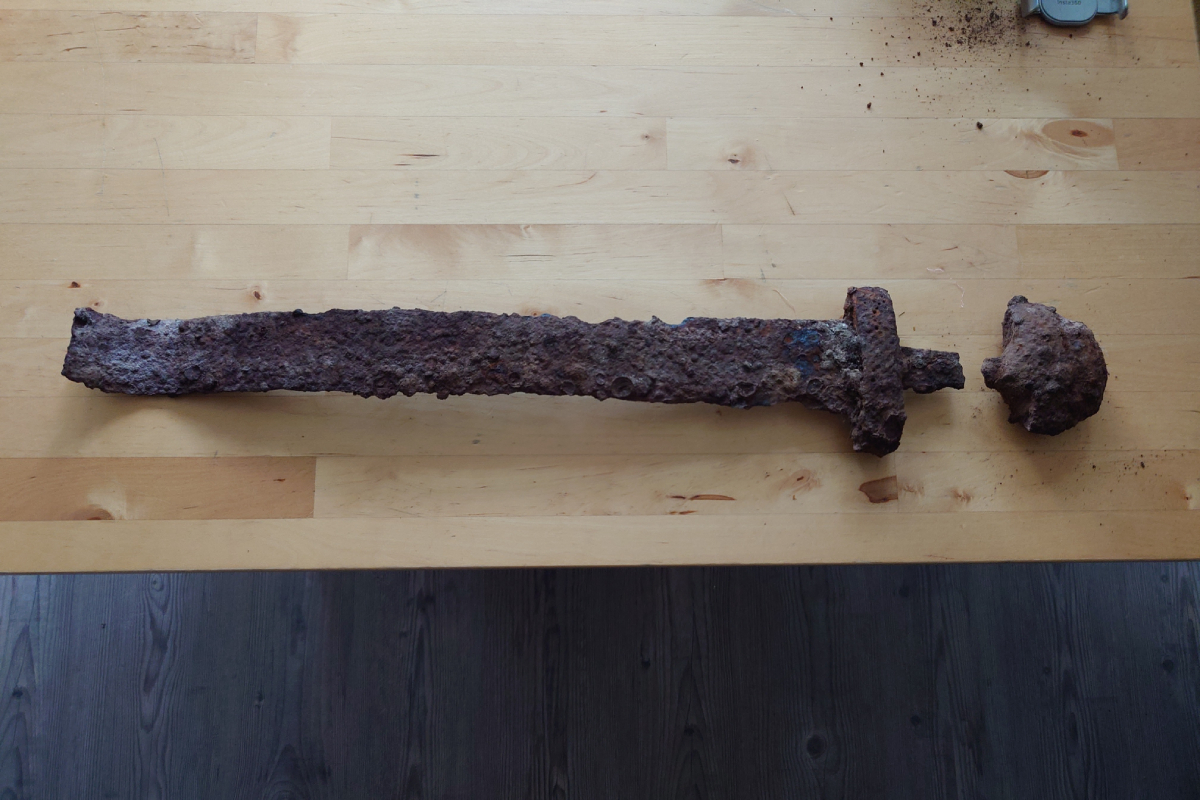
The sword’s bent blade and missing tip suggest it may have been intentionally broken before burial as part of a ceremonial practice. Photo: Loren Lemcke
An ancient weapon
One of those archeologists was Jere Leppänen, who studies at the University of Turku. Over the next few weeks, he would help Loren examine the find and carefully place it in context.
The weapon is now with Museovirasto, the Finnish Heritage Agency. "The pommel was also in the hole, though we didn't find the tip of the sword," Loren explains.
"It's a Frankish sword, about 1000 to 1200 years old. It's known as a Peterson E1 type – this is determined by looking at the hilt, handle, and pommel."
"The end of the sword was bent. This could have occurred after it was buried, but it may also have been part of a ritual where they 'decommissioned' the sword by intentionally breaking or bending it to remove its magic."
However, Loren is hesitant to refer to the artifact as definitively a Viking sword.
"It was found in the Finnish Archipelago, so we don't know if it belonged to a local Finn, a Swedish Norseman, or someone else."
"In fact, there are lots of comments on my TikTok with people arguing about whether there were any Vikings in Finland at this time or whether Finnish people counted as Vikings or not!"
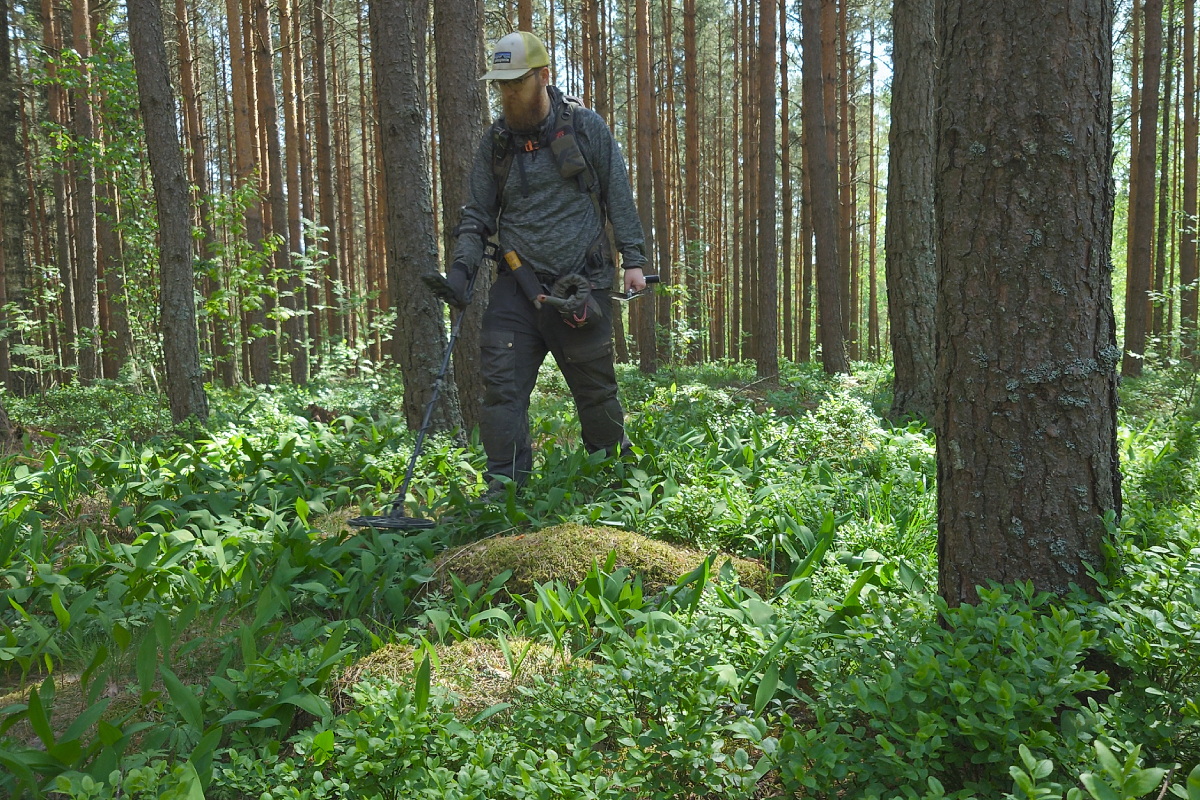
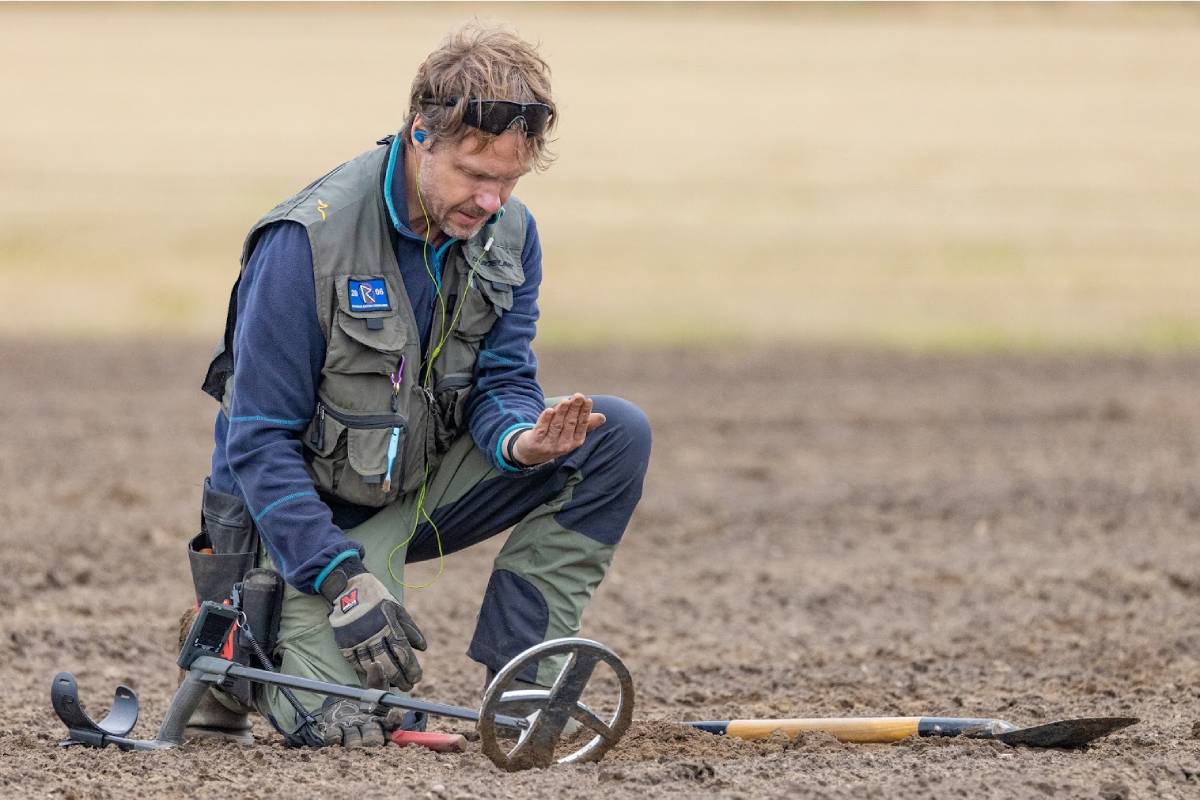
After relocating to Finland to join his wife, Loren Lemcke’s interest in metal detecting grew, and so did the quality of his finds. Photo: Loren Lemcke
A passion for discovery
As he explores his lifelong passion for metal detecting, Loren tells The Viking Herald that Jere's mentorship and the help of other archeologists have been invaluable.
"Jere frequently works with metal detectorists like me and has given me a lot of tips. He'll try to coach you and teach you how to really help the archeologists."
"I grew up in Tucson, Arizona, and got into metal detecting as a child. At that point, however, it was mostly just a toy to play with."
"I mainly found old bullets and rusty nails, though occasionally there was some cool stuff like a few coins and some Native American arrowheads. I was also into fossil hunting – I just love going outside and finding things."
Loren became more serious about metal detecting when he moved to Finland to be with his wife. Gradually, his efforts have begun to yield some impressive finds.
"I've unearthed several Iron Age artifacts, including a complete set of trade weights," he says. "I have also found a Merovingian shield boss, a spear tip, Viking Age silver coins, and Arabic dirham coins from the Volga trade route."
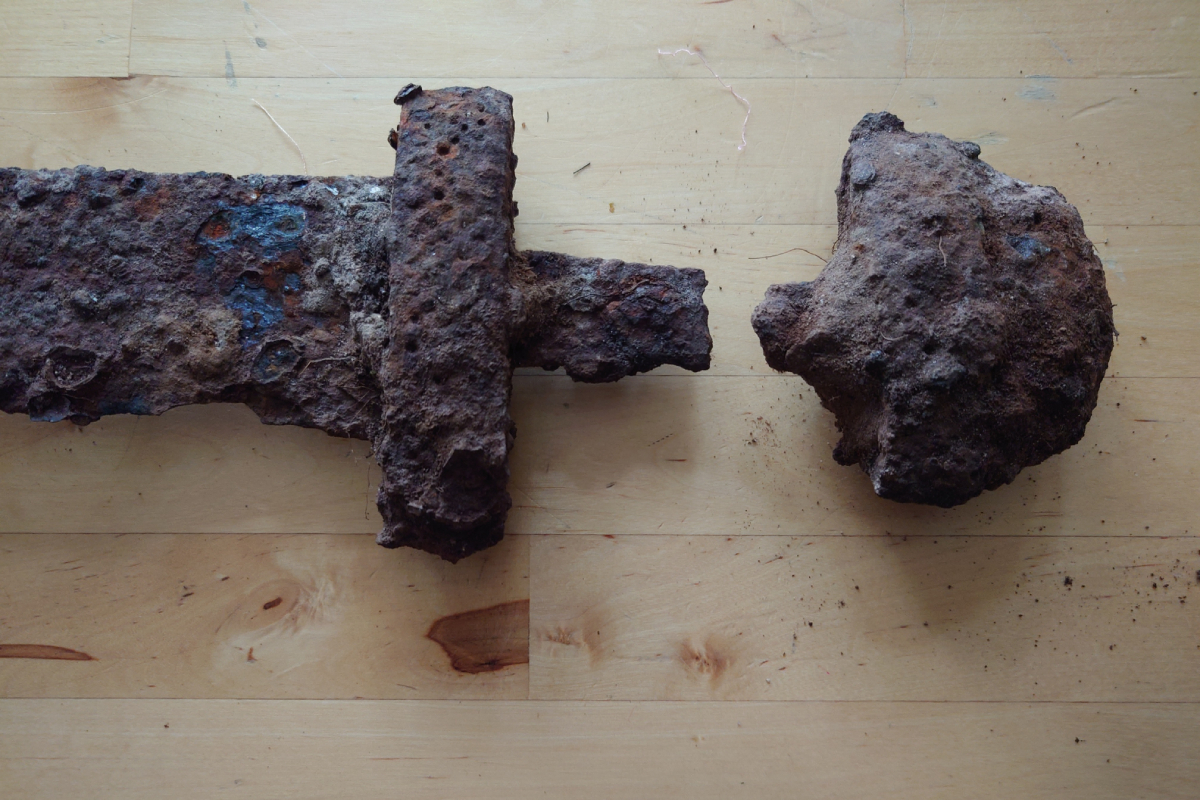
The Finnish Heritage Agency has taken the Viking sword for detailed analysis, with experts estimating a two- to three-year timeframe for the results. Photo: Loren Lemcke
The hard yards pay off
Loren admits that uncovering Viking Age artifacts has helped him appreciate the magic of Finland's history.
"The journey of finding something new, not knowing what it is, and then identifying it and learning about it – that's what's so cool to me."
"It's maybe the best part of metal detecting. You get to go down this rabbit hole of discovery – there's just so much to learn."
He also highlights the importance of hard work and research. "The biggest factor that determines whether you're going to find something is location," Loren tells us.
"Beginners tend to find mostly garbage for the first two or three years until they start to figure out how to find good locations – that's 99% of metal detecting."
"I've spent a ton of time doing research, looking at Iron Age sites – looking at the type of land, the geology, and what the soil is like. After many years, it's finally starting to produce good results."
"There's a lot of history here, but I would still say that for every one good find, I have to dig up 100 pieces of trash."
"Finding a Viking sword was on my bucket list, but I had to dig up countless pieces of discarded modern equipment first. Still, finding something valuable is a realistic goal."
"Persistence is definitely the most important quality – just never give up!"
We get to provide readers with original coverage thanks to our loyal supporters. Do you enjoy our work? You can become a PATRON here or via our Patreon page. You'll get access to exclusive content and early access.
Feel free to reach out to discuss potential stories that may be in the public interest. You can reach us via email at [email protected] with the understanding that the information you provide might be used in our reporting and stories.