

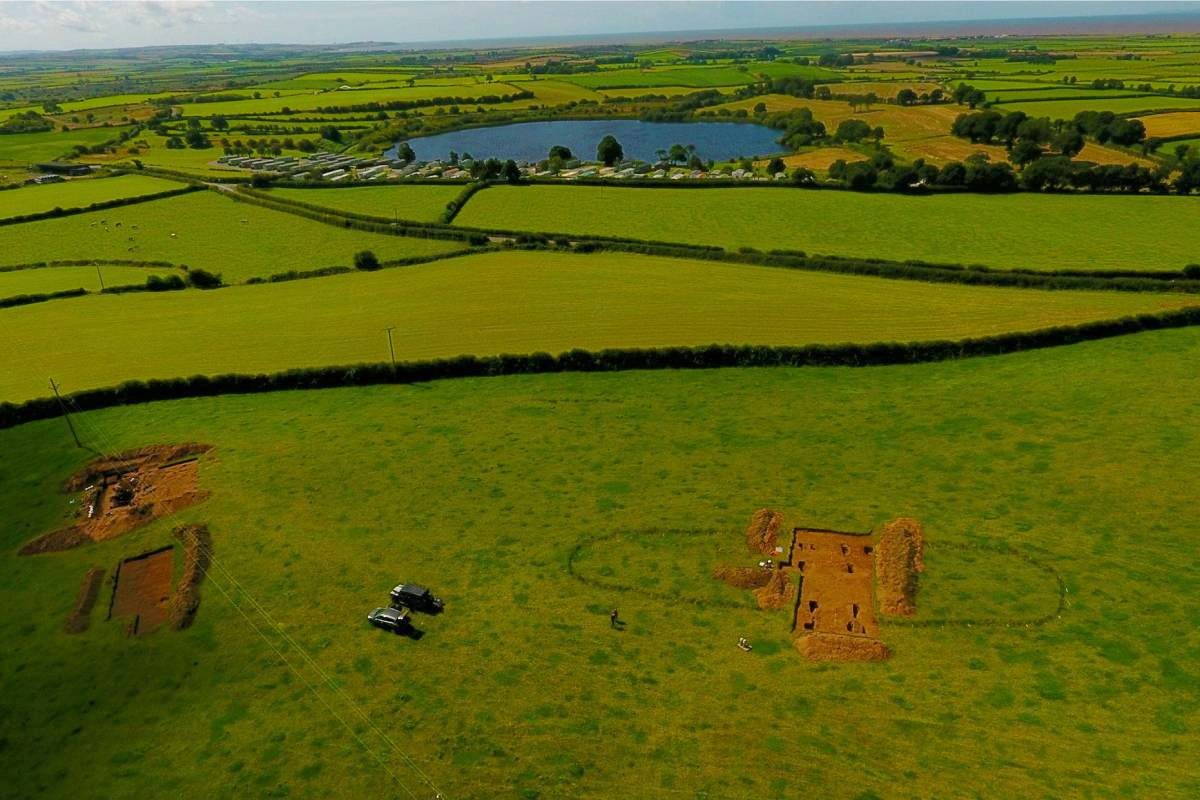
Last summer, a team of archeologists and volunteers working in Cumbria, England, excavated the remains of a large Viking Age hall that could rewrite the history of the county.
The Viking Herald speaks to Mark Graham of Grampus Heritage about Google rabbit holes, community archeology, and the chance to solve an age-old mystery.
The power of curiosity
As Mark explains to The Viking Herald, the house was discovered at a major archeological site at High Tarns Farm in the county of Cumbria in northwestern England.
Previous work at the site had revealed a monastery built by the Cistercians, a Catholic religious order of monks and nuns.
"This was a long-running research project," Mark tells The Viking Herald. "We have looked at not only the monastery itself but also the outlying landscape and how the Cistercians improved the land."
"They came to our region in 1150 and made a huge impact on the landscape, right through to dissolution in the 1500s."
"We also know from documentary records that the Cistercians established a farm and a grange at Tarns by 1200."
It was during an idle moment at work, however, that Mark first suspected the history of Tarns could stretch back even further.
"I was a bit bored in my office one day," he admits to The Viking Herald. "I should have been doing spreadsheets, but instead, I went down the Google Earth rabbit hole."
"I ended up looking at open-source aerial images of the area of Tarns to see if I could detect any evidence of agricultural activity. Eventually, I came across an image of a crop mark that showed a very clear footprint of a large timber building."
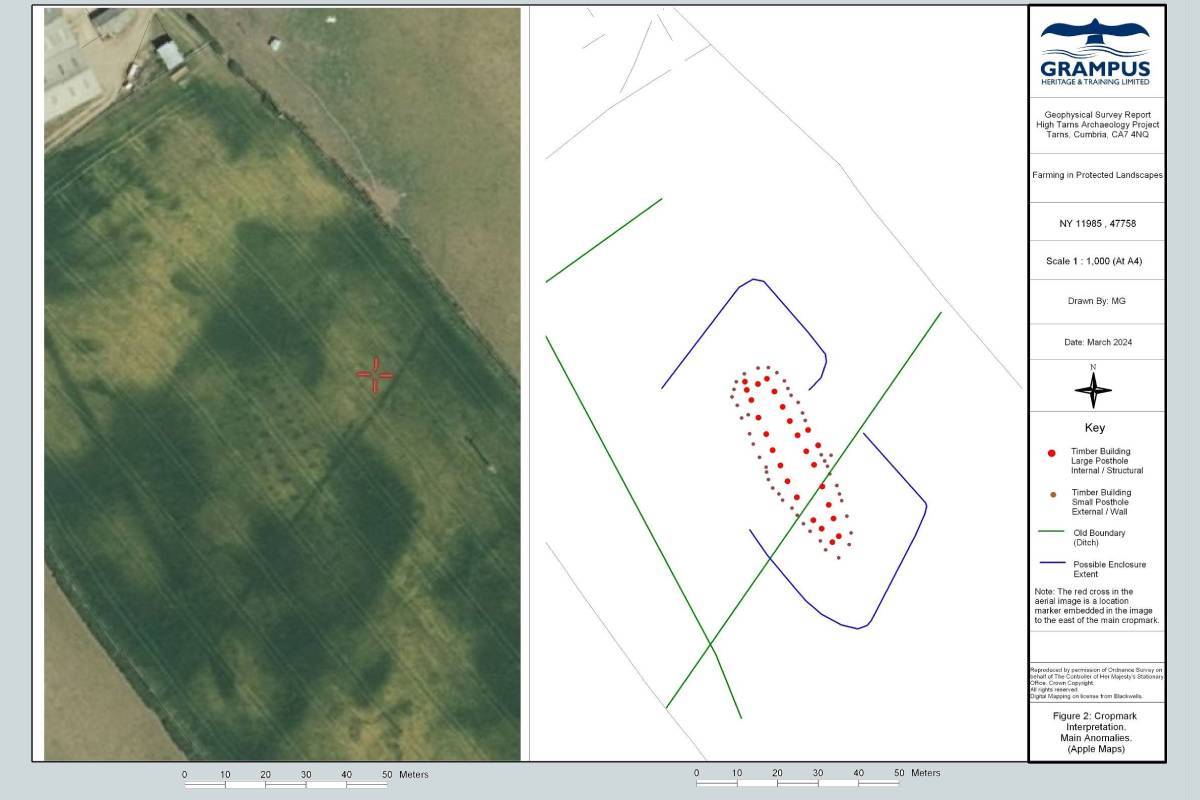
Aerial imagery revealed a crop mark at Tarns, leading archeologists to suspect the presence of a Viking Age hall. Photo: Grampus Heritage
Could it be?
Mark was soon able to georeference the image, determine its location, and sketch out its size.
"The crop mark was so clear that we could draw a post-hole arrangement of the building that was 50 meters long by 15 meters wide," Mark tells us.
Post-holes signify where the poles used to support wooden buildings were placed.
If an archeologist is able to identify a series of post-holes in a landscape that fit a logical or geometric pattern, this provides a strong indication of the historical presence of a building.
Mark had previously worked on the reconstruction of the Manor Farm Hall in Ribe and a Saxon longhouse in Germany.
Looking at the layout of the post-holes, he immediately suspected it could be a Viking hall. To find out more, however, the team decided to conduct an extensive geophysical survey.
"In archeology, we need evidence, of course," Mark says. "With the survey, we could see that the landscape around this timber building did have a considerable amount of archeology going on."
"It didn't look high-Cistercian to me, but we thought it could have been a grange farm or perhaps a large barn for storage."
The next step, of course, was to start digging.
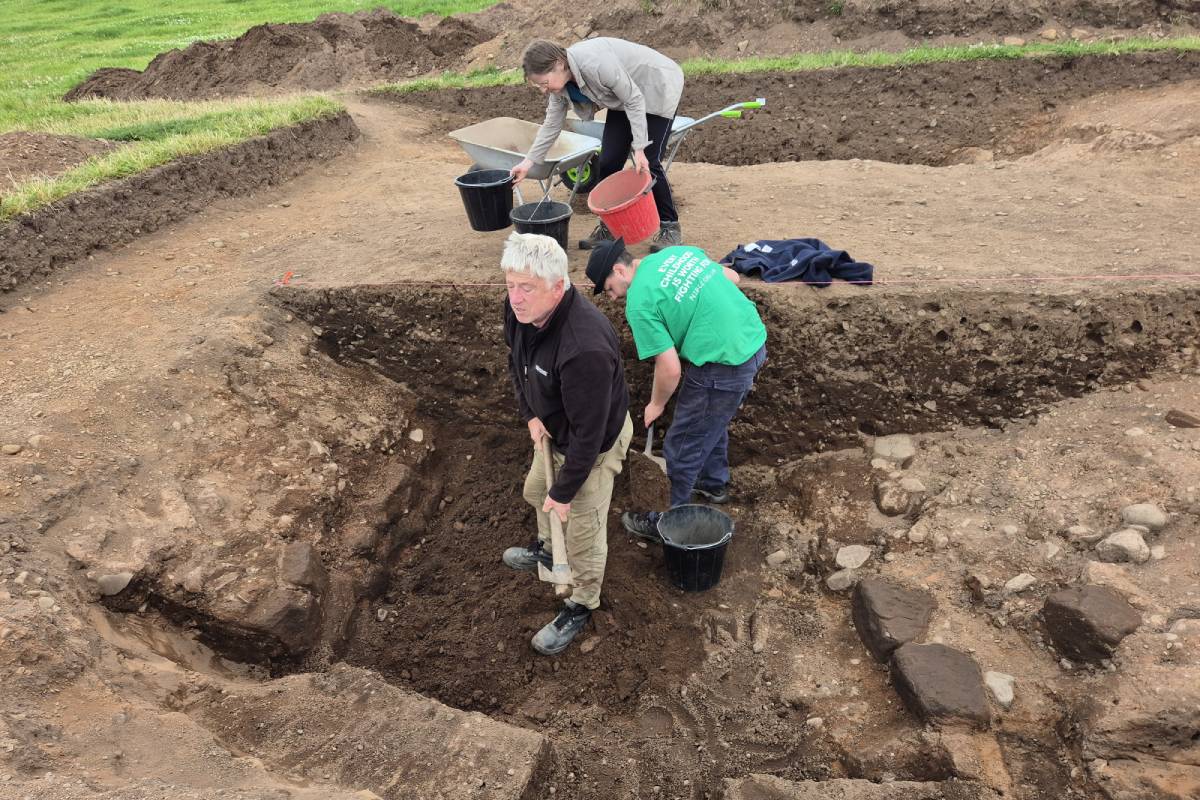
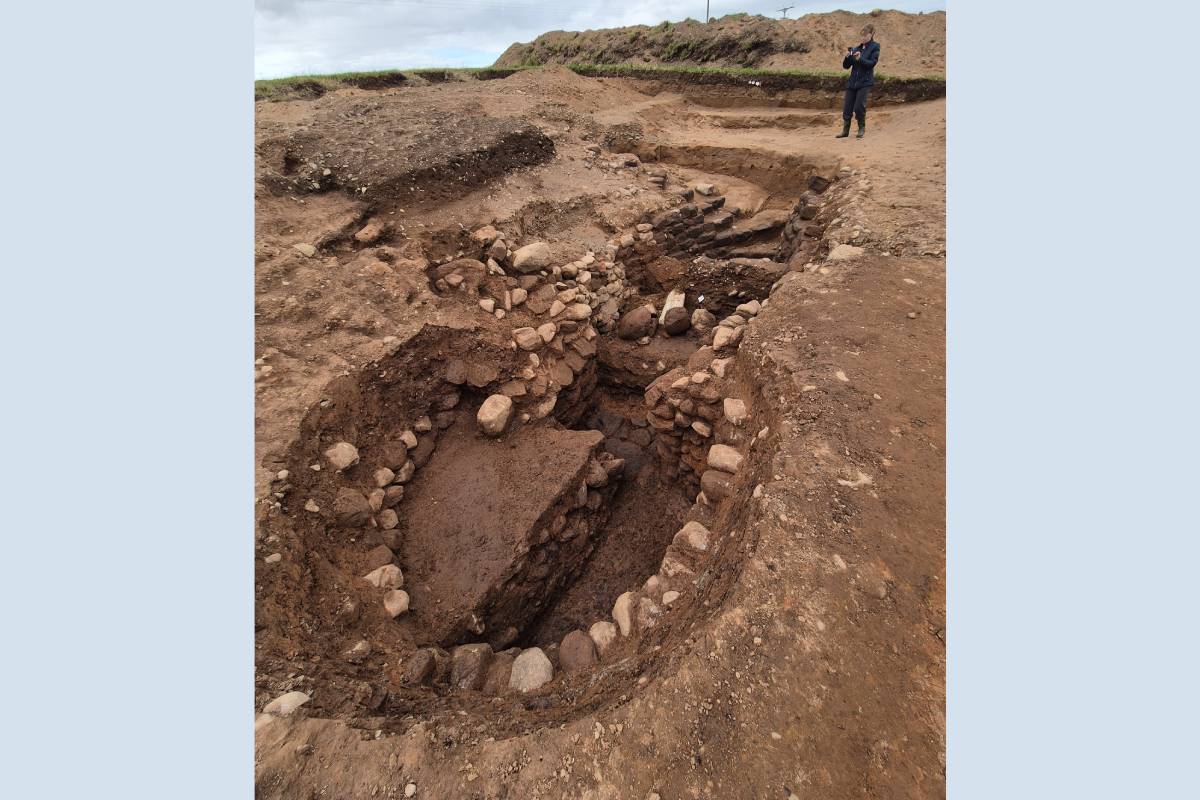
Archeologists expected Cistercian remains but instead found a Viking Age structure with a medieval grain dryer. Photo: Grampus Heritage
Digging deep
"We received funding for a three-week excavation at the site," Mark tells The Viking Herald.
"Naturally, we decided to target the timber building. We found ten post-holes almost exactly where we had georeferenced from the aerial image."
"This meant we were able to say, 'Yes, it's a timber building.' At the same time, we didn't have that 'aha moment' – a diagnostic artifact, like a brooch or a bead – something that could date it."
What they did find, however, was an unusual stone chamber deeper in the ground that appeared to be a kiln for drying grain.
"A seven-meter-long, substantial stone-built corn dryer in the medieval period in Cumbria was actually unparalleled," Mark tells us.
"But it did tell us that whoever was using that corn dryer had a well-developed agricultural system."
"When we were pressed, both my colleagues and I sensibly concluded the most likely responsible people in our known archeological record would be the Cistercians."
Yet these initial assumptions were confounded when some of the material from the post-holes was sent for carbon dating.
"The dates threw everything on its head," Mark tells us. "The analysis showed that the post-holes were built in 990 to 1040 CE, at 94% certainty."
"A charcoal production pit was dated to 990 to 1160 CE, and then the bottom of the chamber of the corn dryer – showing its very last use – was dated to 1040 to 1180 CE."
In other words, the building was of the Viking Age.
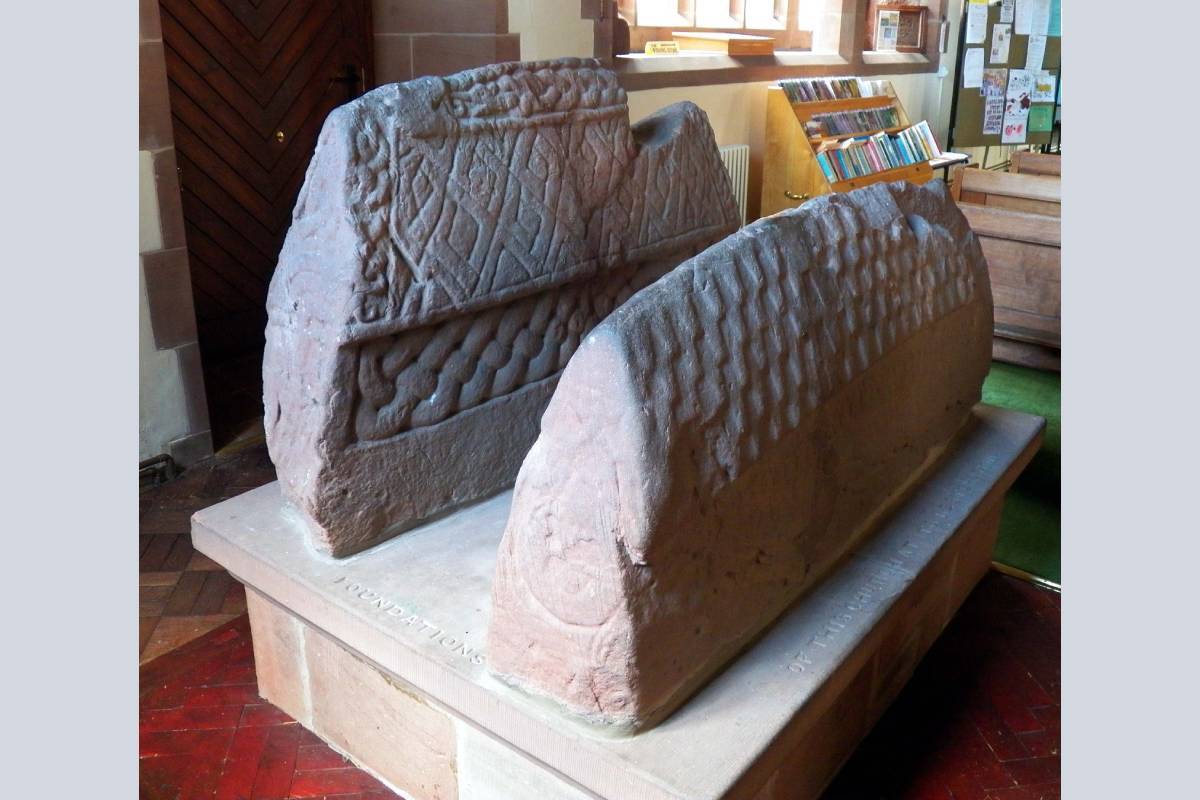
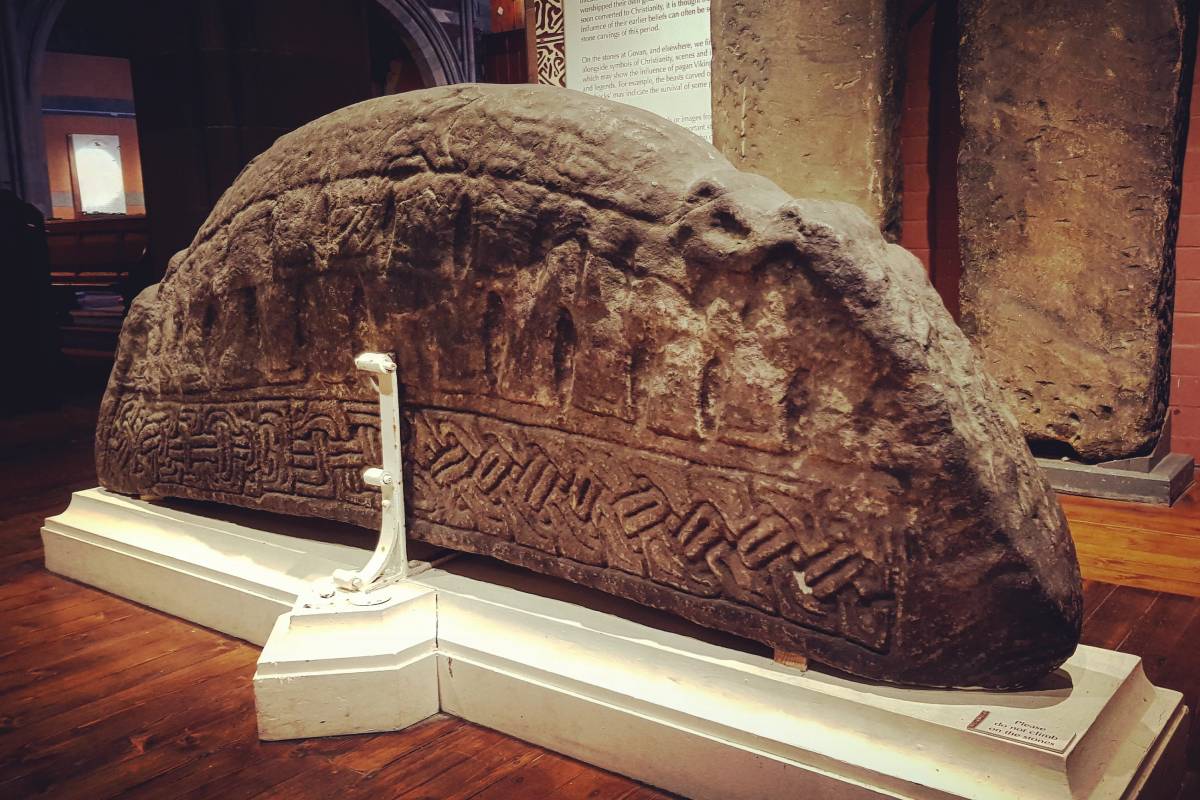
Hogback stones, long thought to be symbolic, now appear to reflect actual Viking Age halls in Cumbria. Photo: Doug Sim (CC BY-SA 3.0)
Joining the dots
But was the hall built by Vikings?
"The Viking Age in Cumbria is actually well documented in cultural artifacts and in sculpture," Mark tells The Viking Herald.
"You can also see the Norse influence in the local dialect and the place names. People were using runes here until the 12th century, and there is a Viking Age warrior grave just down the road from the site."
There was another clue that further convinced the team. "There is something called hogback stones in Cumbria," Mark explains.
"They are stone-carved representations of Viking Age halls and are a real feature of our part of the region. They have been dated to the 10th or 11th century, and there is even one in a church just six miles down the road from the excavation."
"People have never quite understood what they depicted, however. Some people thought they were representations of Valhalla or harking back to the ancestral lands," Mark continues.
"Now, for the first time, it seems we can say that the people who carved the hogback stones also saw such halls in the Cumbrian landscape. That is quite a thing."
"There aren't many excavations where you find post-holes of a building, and then six miles down the road, you find a stone-carved model of such a building. It's remarkable."
A 12th-century document granting land rights to Thorfynn MacThore suggests a possible owner of the Tarns hall. Photo: Grampus Heritage
Thorfynn MacThore and community spirit
"Thorfynn mac Thore shall be free in respect of all things that are Gospatric's in Allerdale, Cumberland, and that the men dwelling with Thorfynn at Cardew and Cumdivock shall be free."
(Gospatric's Writ, available online)
There was one final discovery to be made. As Mark tells us, people kept asking who might have owned the hall – usually an impossible question to answer.
"I didn't think we would ever know," Mark tells The Viking Herald. "But I decided to just have a look anyway, and we found a document – Gospatric's Writ."
"Gospatric was an earl of Northumberland. In the document, he grants multigenerational rights to a man called Thorfynn MacThore for an area very close to Tarns," Mark explains.
"So it's not impossible that the hall belongs to Thorfynn MacThore or that the person who lived in the hall would have known him."
The team plans to return to Tarns for further excavations, where once again they will rely on the assistance of local people to complete the work.
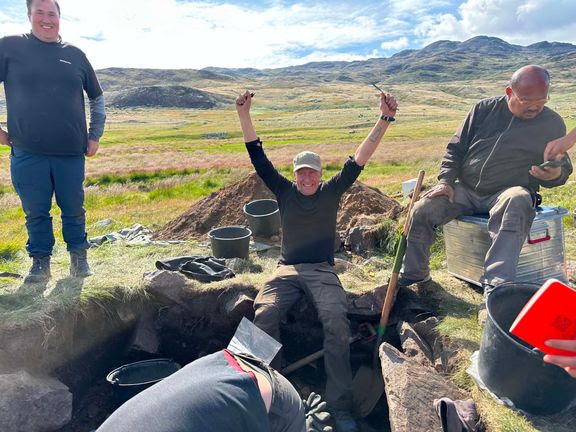
"It's really important to stress that all of this work is carried out by a team of really committed and enthusiastic local volunteers coming out in the fields and learning our history together," Mark says.
"They are passionate about finding out about local history, and we all enjoy it. It's a social gathering – we have lunch together, and we make up theories."
"We consider the site, the archeology, and the landscape together. That is a hugely important part of this process."
"We can look at the landscape and transport ourselves a thousand years back in time. It's the kind of thing that can give you tingles."
You can view a 3D image of the hogback stone here.
We get to provide readers with original coverage thanks to our loyal supporters. Do you enjoy our work? You can become a PATRON here or via our Patreon page. You'll get access to exclusive content and early access.
Feel free to reach out to discuss potential stories that may be in the public interest. You can reach us via email at [email protected] with the understanding that the information you provide might be used in our reporting and stories.