

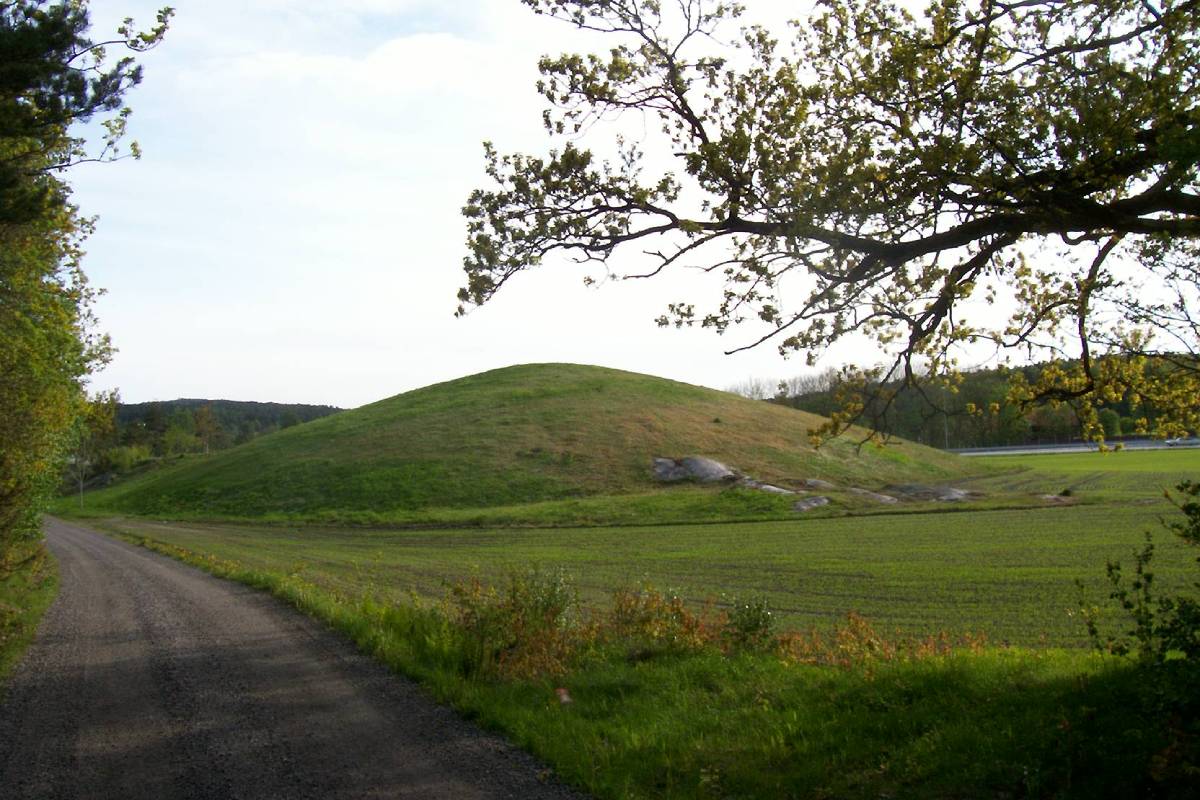
Archeologists in Norway have recently completed an in-depth exploration of Jellhaug, thought to be the country's second-largest burial mound.
The investigations have revealed a complex history that appears to stretch back to the beginning of the Common Era and extend to the Viking Age.
To find out more, The Viking Herald speaks to the archeologist Rebecca J S Cannell, who helped lead the investigation.
A thousand-year settlement
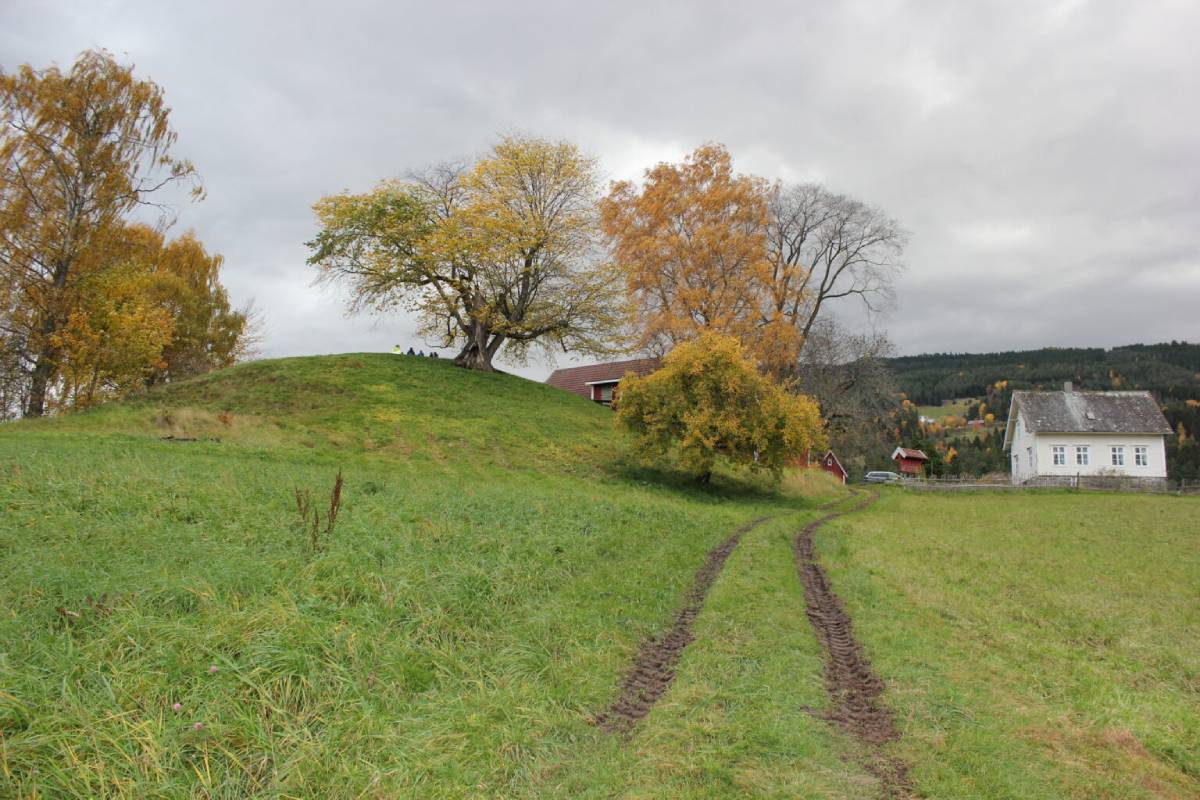
The Jellhaug mound is found close to the town of Halden in southeast Norway. A prominent local landmark, Jellhaug has attracted speculation and intrigue in the archeological community for decades.
"It is often cited as the second largest grave mound in Norway," begins Rebecca, who works for the Norwegian Institute for Cultural Heritage Research. "It is more than 70 meters in diameter, and is now over 10 meters in height, after a reconstruction in the late 1980s."
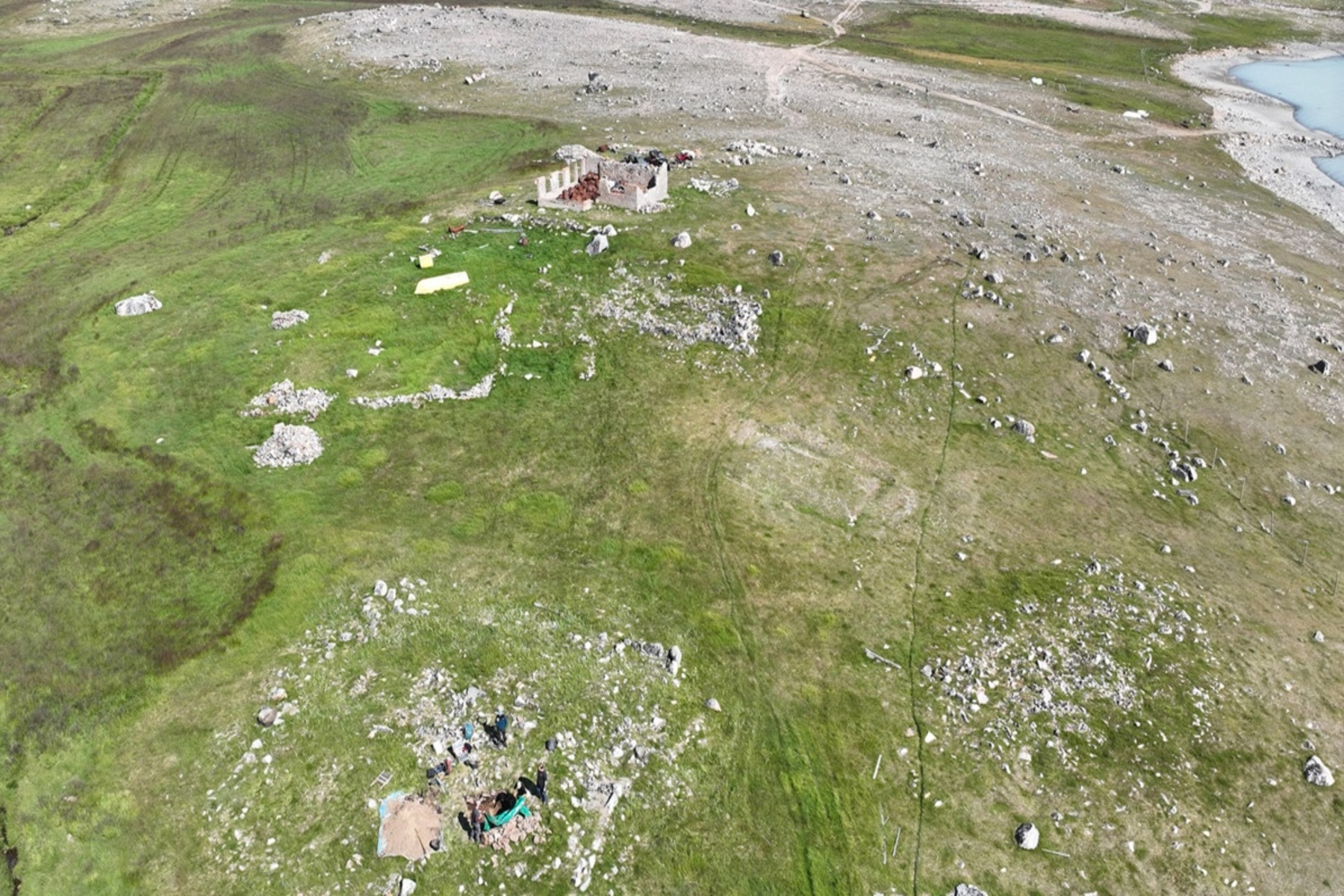
The mound is believed to be part of a larger settlement area that also includes the site of Gjellestad, the first Viking ship burial found in Norway in over a century.
Working as part of the Viking Nativity project, a team of archeologists has looked to deepen our understanding of the site as a whole. "The project has used georadar over a large area," Rebecca tells The Viking Herald.
"We found that there is a mound cemetery surrounding the larger Jellhaug mound. There are also settlement traces in the form of house foundations as post-holes and trenches."
In other words, it seems the Jellhaug mound likely belonged to a thriving settlement. "The evidence spans from the Roman Iron Age (1–400 CE) to the Viking Age," Rebecca adds.
"With this busy archeological landscape, it seemed that understanding Jellhaug was essential to being able to piece together the history of the area."
"Before this project, Jellhaug itself was poorly understood—the records from a trench dug across it in the late 1960s, for example, are incomplete. So we started the investigation with the question of trying to understand what Jellhaug is and was."
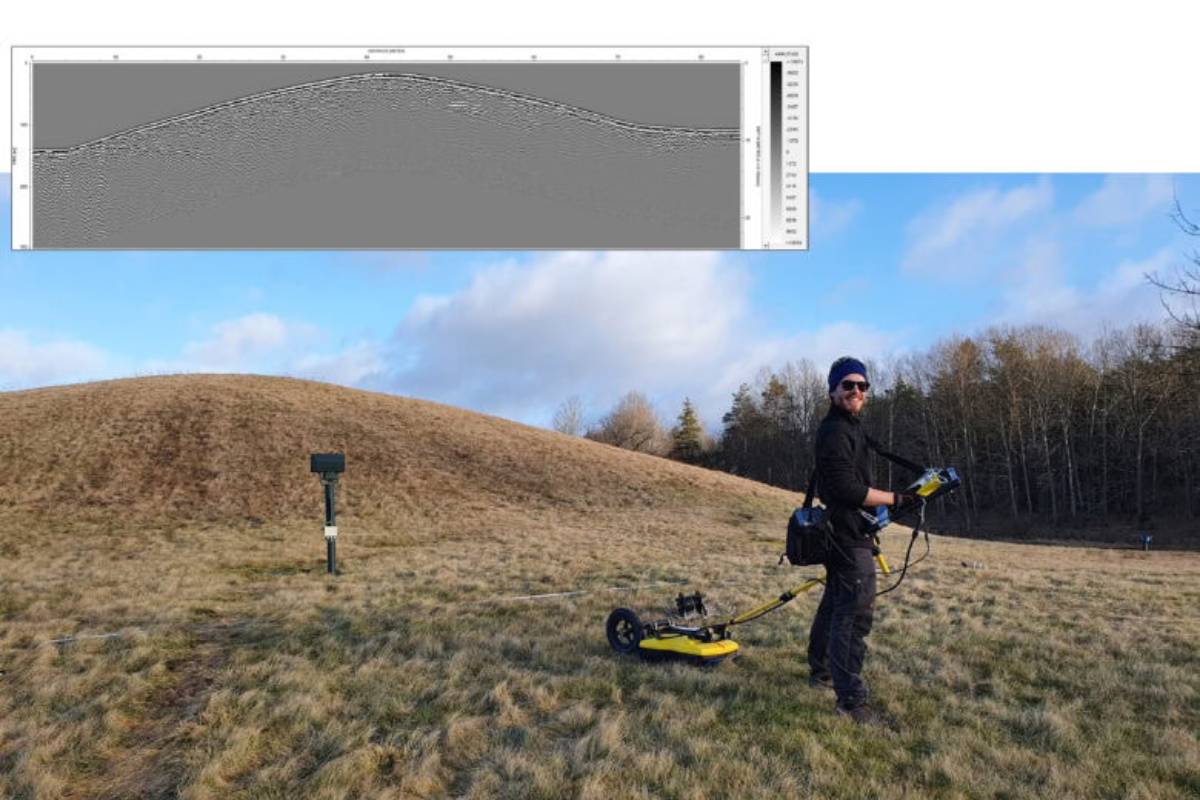
The team employed georadar and soil coring to explore the Jellhaug mound without disturbing its surface. Photo: Lars Gustavsen / NIKU
Non-invasive exploration
The team had to work with certain restrictions, however, given the importance of the landscape.
"Preservation is essential for such iconic monuments," Rebecca points out. "The methods we used were minimally intrusive, involving georadar and coring."
Georadar, otherwise known as ground-penetrating radar, is a non-invasive technique that uses radar pulses to build images of the subsurface. Coring, on the other hand, is a method used to extract cylindrical samples of soil or sediment so that researchers can analyze the soil without having to carry out extensive excavation.
"The intention was to see if we could identify phases in the mound construction and find out what it looked like before the reconstruction," Rebecca continues.
"We wanted to see how Jellhaug related to both the environment around it and the other archeological features. The georadar data allowed us to trace the bedrock under the mound and see where layers might be best preserved."
<
"Cores were taken to get material for environmental analysis and radiocarbon dating, as well as to assess how much the mound composition varied."
A possible center of trade
While the analysis is not yet complete, the team is expanding their understanding of the site.
"The analysis of the data is ongoing and will be published in full next year," Rebecca tells us. "But what has become clear from our research and analysis is that Jellhaug might well be a multiperiod construction."
"We have a wide date range from our results—we have found different layers of sediments in the mound that suggest the mound was built in more than one phase."
"We also have evidence which shows the reconstruction that created the shape it has today wasn't true to its past form."
With these investigations, the team has already formed a more comprehensive picture of not only Jellhaug but also the wider area.
"In the Viking Age, the site would have been near the shoreline and a sheltered cove," Rebecca tells The Viking Herald. "This means the landscape setting was comparable to other places with ship burials, like Gokstad."
"It is true that at Gokstad, the trading site of Heimdalsjordet was better preserved, as the outlines of parcels of land and a road were found."
"At Gjellestad, we only have objects found with metal detecting from the area of the Viking shore. These objects, such as weights, could also indicate trade."
"This means that the area as a whole—with the ship burial, mound cemetery, and settlement traces—could have been an important place in the late Iron Age."
- READ MORE: A Viking history of Norway – Part 1
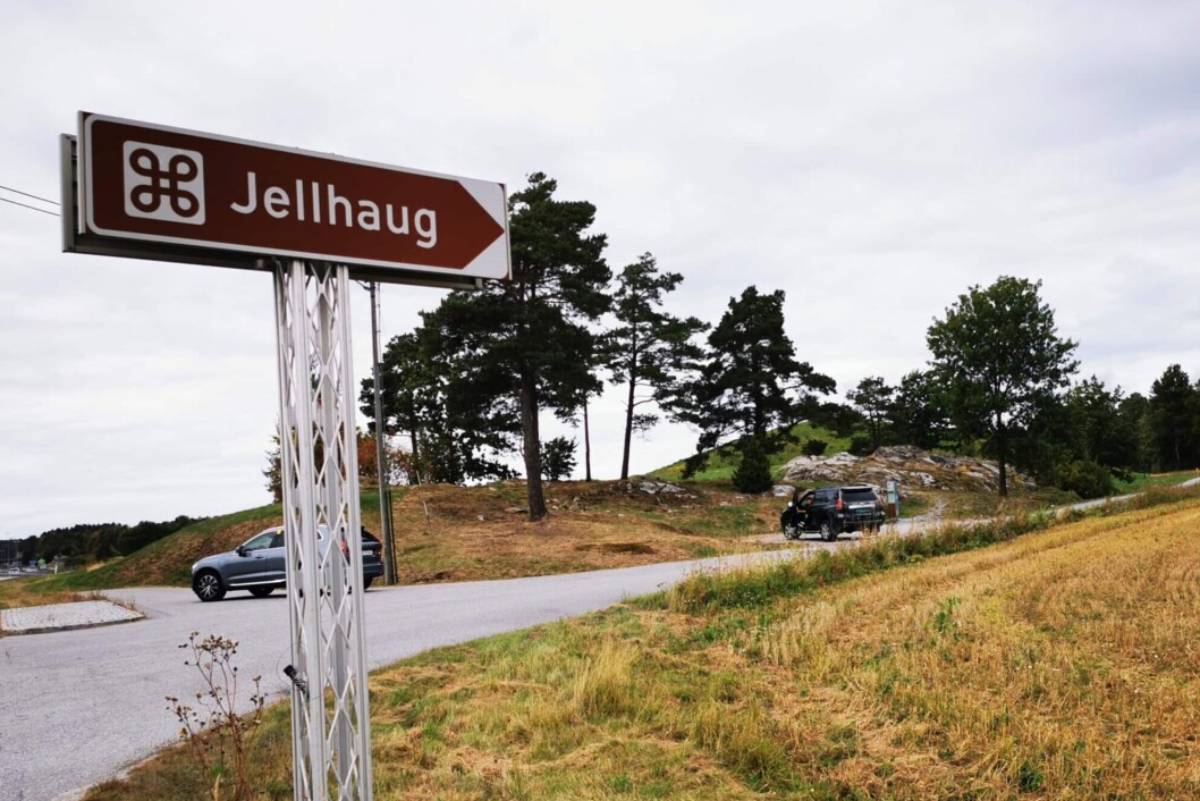
New analysis suggests that Jellhaug and similar mounds in Norway may have served ritual or symbolic roles rather than funerary ones. Photo: Sara Langvik Derrick / NIKU
A burial mound with no burial
Interestingly, one emerging factor is that Jellhaug is not necessarily a burial mound at all.
"Jellhaug has similarities to other large mounds from the late Iron Age in Norway, in that no evidence of human burial has been found," Rebecca explains.
"Raknehaugen, the biggest mound in Norway, also has no evidence of burial, nor do some of the mounds at Borre and Halvdanshaugen in Ringerike."
"They are so large, and none have been totally excavated. We cannot rule out human burials, Rebecca admits. "But given that we have so many cases like this, we should also start considering alternative interpretations."
"Earlier research has suggested the materials used in the construction of the mound are carefully selected and handled. This indicates a ritual significance to the mound itself, and the act of building it, which may not have always been connected to memorializing someone who died."
In other words, while some Scandinavian mounds—including Oseberg, in Norway—do appear to contain the remains of prominent individuals, the meaning of the mound structure in Norse culture was likely more multifaceted.
"Rituals, beliefs, and narratives were clearly embedded in everyday life in the late Iron Age, including the Viking Age," Rebecca tells us.
"By approaching it differently, we can think more about how rituals created shared experiences and bonds, and how mound building fits into this."
Still searching for answers
Although the on-site work for the Viking Nativity project is now complete, the team will continue to investigate the findings and their implications.
It is hoped the research will also provide further insight into the nature and function of the mounds that were so common throughout Norway in the Iron Age and Viking Age.
"We are working on a detailed analysis of the georadar data, combined with the core data, to see if we can make a model of the layers within the mound," Rebecca informs us.
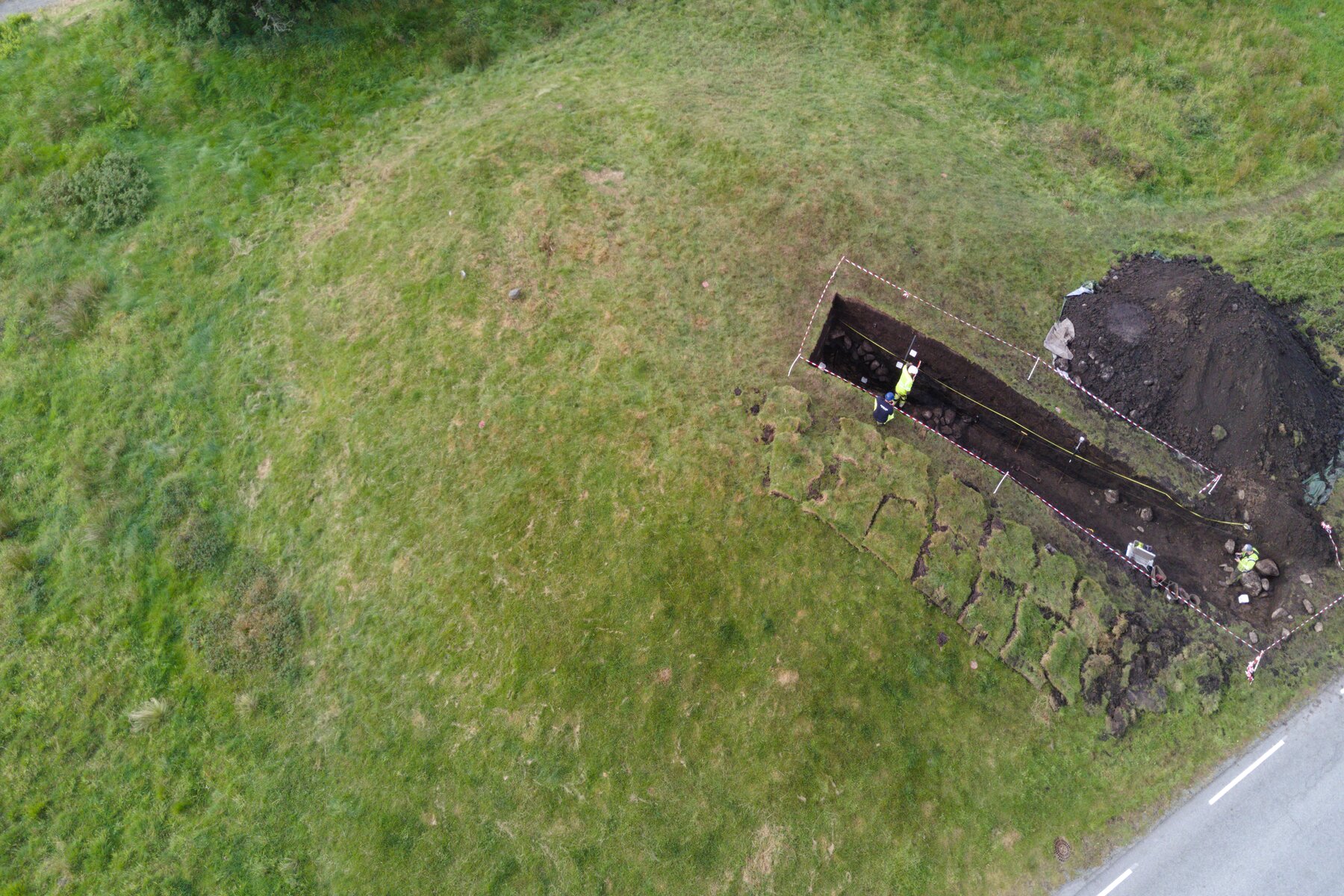
"We have also excavated some of the settlement features near the mound. We hope to get the radiocarbon dating results back soon, as well as environmental data that should help us understand what kind of settlement activities took place here."
"This area to the north of Jellhaug has produced Viking Age dates, and the hall building is unusually large."
"We are hoping for more precise dating information so we can tie the different activities in the area into a better chronological framework."
"The project is also researching the connection between mounds and the past landscape to see if we can understand what the environment was like," Rebecca concludes.
"We would like to see how people used it both economically, to get the resources they needed, and perhaps how mound construction fits into how people interacted with their environment."
To read more about the Viking Nativity project, you can find its open-access book. The final results will be published in a second volume next year.
We get to provide readers with original coverage thanks to our loyal supporters. Do you enjoy our work? You can become a PATRON here or via our Patreon page. You'll get access to exclusive content and early access.
Feel free to reach out to discuss potential stories that may be in the public interest. You can reach us via email at [email protected] with the understanding that the information you provide might be used in our reporting and stories.