


For those who love history, as we do here at The Viking Herald, historiography, that is, the study of how we tell history, is a fascinating subject.
The way we analyze, interpret, and narrate the past has changed, evolved, and shifted through the ages.
For much of the past, especially in the West, it was dominated by the "Great Man" theory – the idea that history was shaped primarily by influential individuals, usually powerful white men ... who are long dead.
However, over the past century, this perspective has shifted dramatically. We now pay much more attention to underlying trends and forces – be they cultural, economic, or social – and how they influence individuals and societies.
The medieval tome, Heimskringla, is a historical collection of the early medieval rulers of Scandinavia compiled by 13th-century CE poet and politician Snorri Sturluson. It is indeed a great read (albeit one with limited historicity but nevertheless great entertainment value).
However, we know that the Viking expansion of the early medieval period wasn't just down to figures like the Haralds (Fairhair or Hardrada, take your pick), but was also down to underlying economic trends and, yes, the profit motive.
There was a blurred line between Viking warriors and traders for the entire early medieval period, as raiding and trading were inexorably linked.
In this period, commerce and conflict either preceded or followed the other, in a continuous cycle that helped define much of what we now call the Viking Age (c. 750–1100 CE).
This expansion saw people from Viking societies forge new, and rebuild old, trade networks that linked Scandinavia with regions as far afield as the Iberian Peninsula, what is now Canada, and Central Asia.
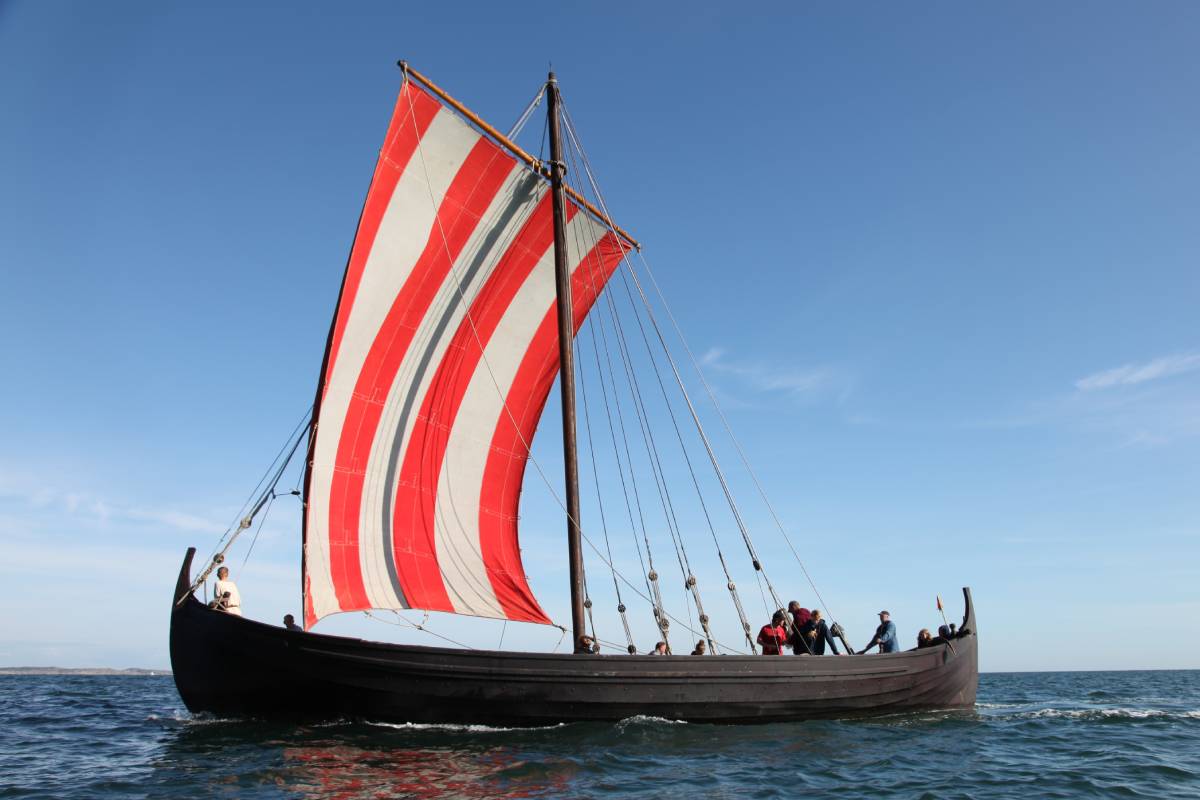
Much of this burgeoning trade and commerce was done through maritime routes, thanks to a particular type of Viking ship, the knarr.
- READ MORE: All you need to know about Viking ships
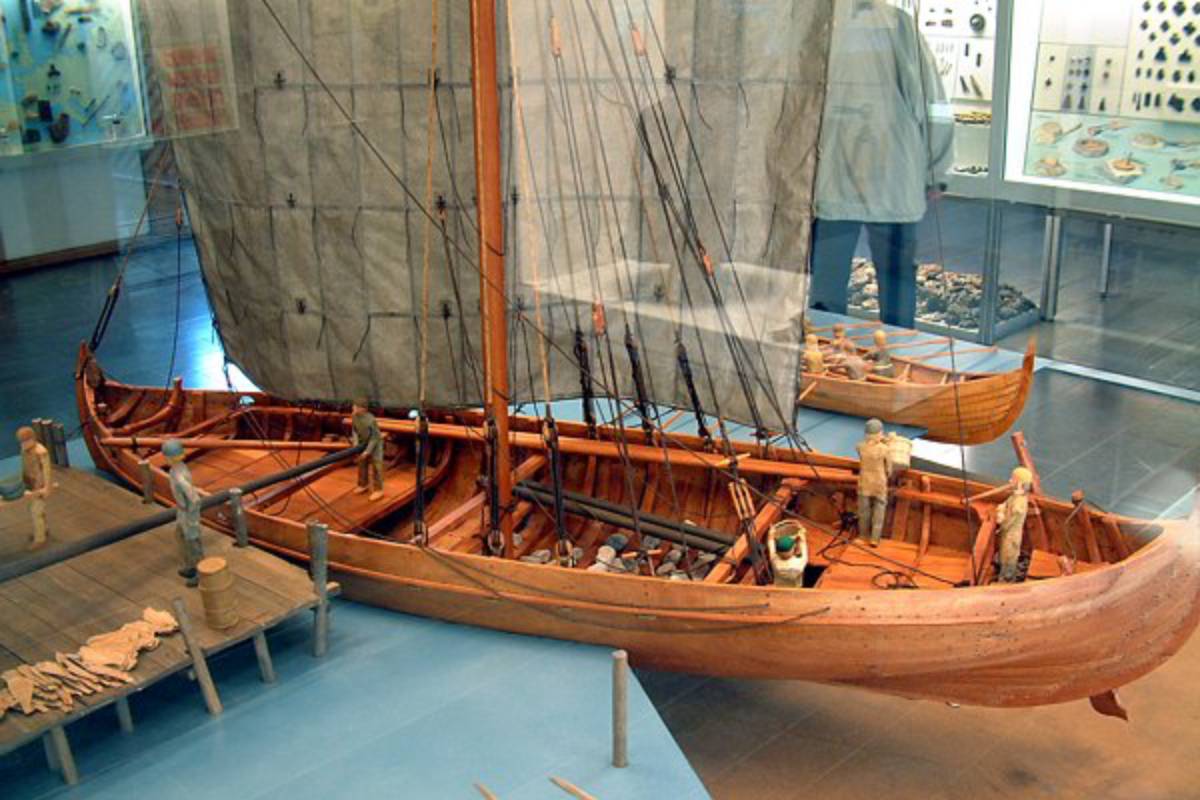
A scale model of a Viking Age knarr at the Hedeby Viking Museum in Germany. Photo: Europabild (CC BY-SA 3.0)
The knarr: The engine of Viking trade
The engine of Viking trade and commerce was not the sword but the ship. We know that people from Viking societies were some of the most skilled seafarers and shipbuilders in early medieval history, and their expansion throughout much of Europe and its surroundings was down to their mighty vessels.
Take a look at the Scandinavian Peninsula, surrounded by sea and with a spine of great mountains dominating its northwestern flank, and you will see that sailing is a necessity for any contact with the wider world, and it was also the most efficient and effective form of travel for much of the Viking Age.
For the merchants and traders of Viking societies, the knarr was an instrumental vessel for their economic exploits.
The etymology of the word knarr is largely unknown, lost to the tides of history, but a popular theory links it with the sound of creaking boards on the ship.
Like most other Viking vessels, it was constructed of oak, plentiful in southern Scandinavia, which provided great durability and flexibility.
Built to be large – around 16 meters (53 feet) – it had a deeper bow and a wider beam than other Viking ships, making it perfect for longer voyages away from the shores of Scandinavia.
This larger size meant it could hold up to about 27 tonnes (30 tons) of goods, a significant amount for a single ship to hold during the early medieval period.
Finally, it was fitted with a sail and thus needed only a small crew of six to sail.
Whilst the sight of a Viking ship was a toe-curling moment for many coastal and river-bound communities during the early medieval period, the knarr was different from the vessels of war.
As Njord Kane talks about in his 2019 book, History of the Vikings and Norse Culture (available on Amazon here), sighting a knarr was easy (and a great relief) for these communities, as they "...didn't have shields on the sides or war pennants or dragon ornaments..." that signified the deadlier Viking warships.
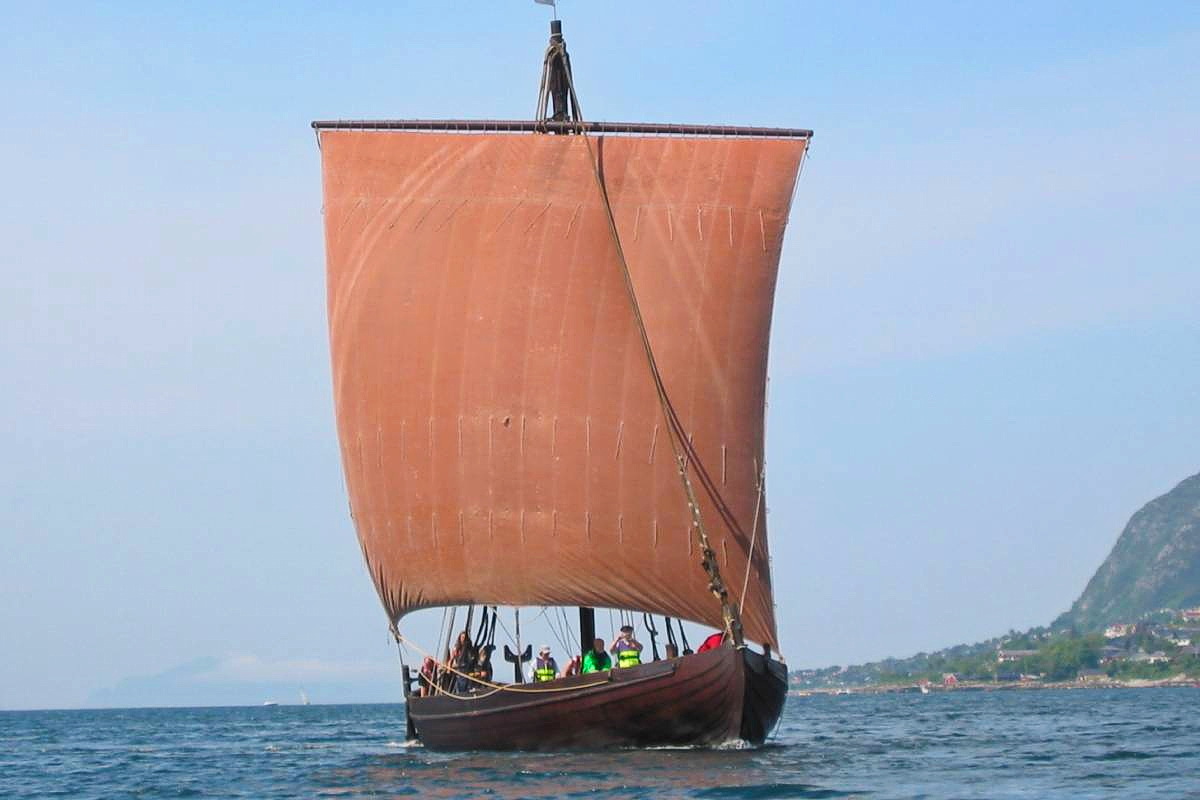
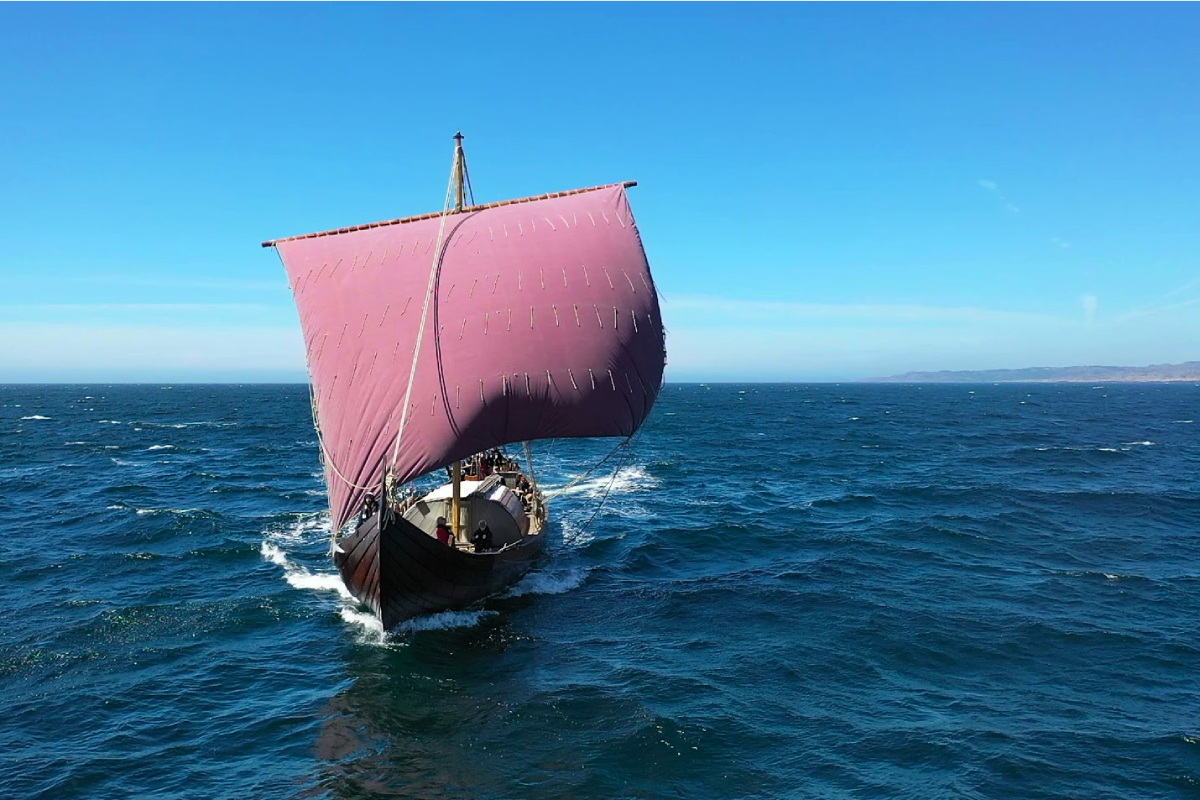
Borgundknarren, a reconstruction of the Skuldelev 1 knarr whose remains were found in Roskilde Fjord, Denmark. Photo: Andreasv (CC BY-SA 4.0)
New economic ventures and communities
For Viking traders, these vessels proved invaluable to ferry goods, resources, and people (free or enslaved) across long oceanic voyages.
From their base in Scandinavia, we know that Viking merchants needed vessels that could secure their cargo over large stretches of the ocean to and from a variety of places, including Constantinople, the Caspian Sea, Iceland, and the Iberian Peninsula.
Enslaved people, amber, timber, and livestock were ferried in exchange for commodities ranging from Byzantine silk and Frankish swords to more humble fare like grains or pigs.
Adding to its versatility was the ability to navigate both open seas and inland waterways.
It could be sailed far upstream, reaching regions previously beyond the reach of earlier trade networks, for example, deep into the river systems of what is now Russia.
This helped people in Viking societies open up new communities and markets to the wider commercial world and further gain new commodities and resources for trade.
- READ MORE: 5 surprising places the Vikings reached
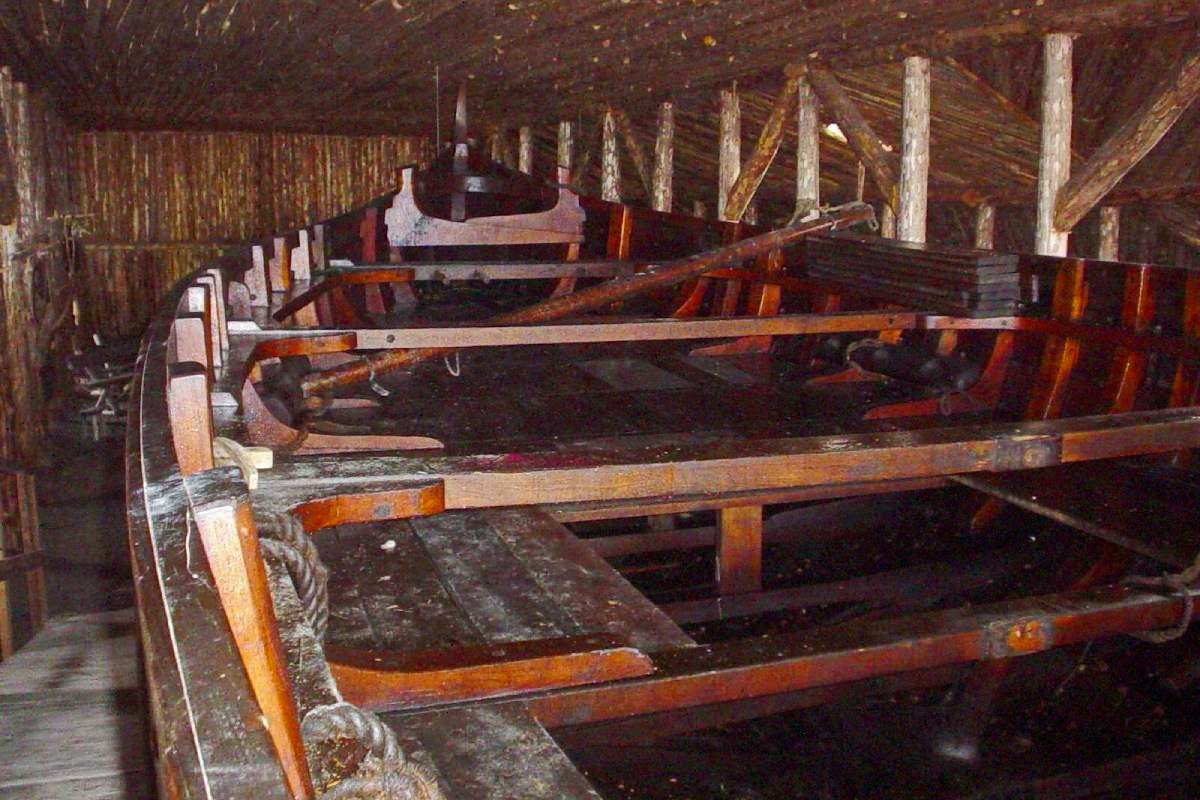
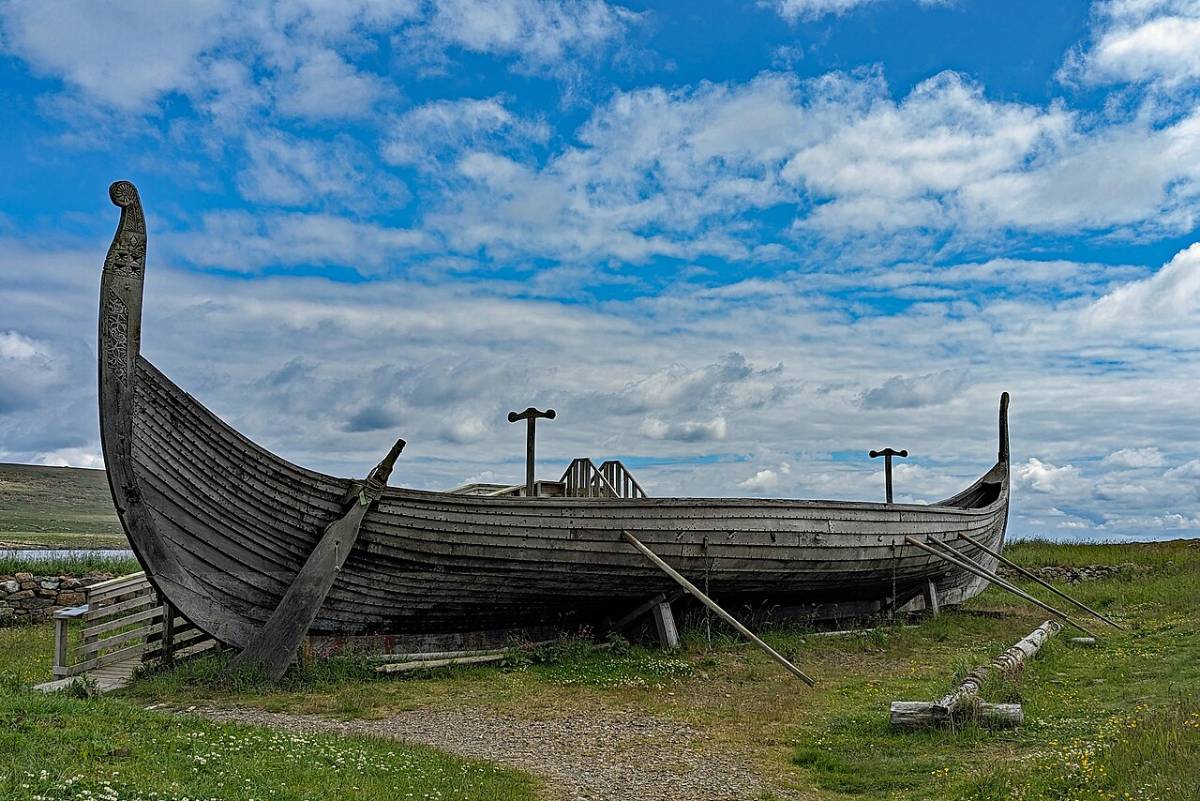
Snorri, a knarr replica displayed at Norstead near L’Anse aux Meadows, Canada. Photo: André Carrotflower (CC BY-SA 2.0)
Transatlantic transport
Flick open any page of the sagas, and you will probably come across the appearance of a knarr or two.
Think of the people from Viking societies who sailed across the seas, first to settle Iceland, then onward to Greenland, and, further west still, to the very edges of the North American coastline.
These epic voyages, made from Scandinavia across the northern fringes of the choppy Atlantic Ocean, were likely made in a knarr.
Not only did these boats have to transport whole new communities across the oceans, but they also had to transport all the material and resources required for such a large endeavor. This was done with ease thanks to the construction and design of the knarr.
Resources found there could then be ferried back to the Viking homeland in Scandinavia, as The Saga of the Greenlanders recounts. In this, we find numerous references to the resources procured in Vinland being loaded onto ships, surely knarrs, and sent back to Scandinavia.
Using an online version based on the 1890 English translation by Arthur Middleton Reeve, we find in Chapter 8 that the settlers in Vinland:
"...now made ready for the voyage and carried away with them many goods, vines and grapes and pelts. They sailed out upon the high seas..." Whilst in the next chapter, Freydis, a famed Viking matriarch, "...had trees felled to load her ship."
Here, the knarr was instrumental not only in facilitating commerce and trade but also in opening whole new settlements and societies and linking them with the wider world.
None of the economic expansion of people in Viking societies could have taken place in this period were it not for the sturdy knarr.
Archeological remains and legacy
For the first time in Scandinavian history – but by no means the last – a ship, the knarr, became the driving force of economic transformation, connecting what Byzantine and Islamic contemporaries regarded as a remote northern frontier to the thriving networks of the wider medieval world.
If this has piqued your interest, then consider heading to the Viking Ship Museum in Roskilde, Denmark.
Here, you will find the remains of two knarrs (Skuldelev 1 and Skuldelev 3), which were discovered, along with three other ships, during maritime construction in the 1960s. They had been, it is believed, deliberately sunk as a defensive measure sometime in the late Viking period.
For more information on Viking ships, please visit the Viking Ship Museum in Roskilde's website here.
We get to provide readers with original coverage thanks to our loyal supporters. Do you enjoy our work? You can become a PATRON here or via our Patreon page. You'll get access to exclusive content and early access.
Feel free to reach out to discuss potential stories that may be in the public interest. You can reach us via email at [email protected] with the understanding that the information you provide might be used in our reporting and stories.




.jpg)