

Lejre Land of Legends, first opened on April 1, 1965. Now, this unique living history site is looking forward to celebrating 60 years of education, experimentation, and entertainment.
To find out more, The Viking Herald speaks to Tania Lousdal Boelskift, the chief communication and sales officer for Land of Legends.
Evidence of royalty
"Lejre Land of Legends is quite an amazing place. We are a center of experimental archeology as well as a cultural and tourist attraction," Tania informs The Viking Herald.
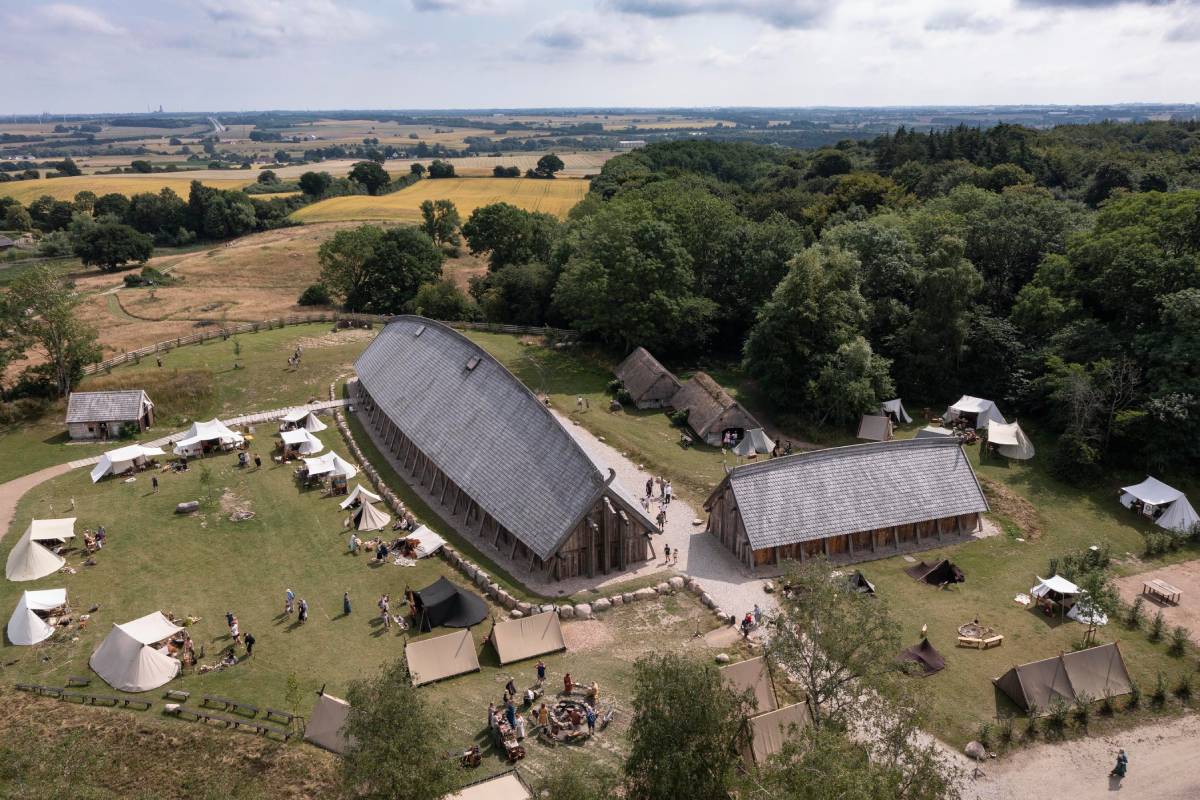
"We work with living history. We have a natural area of 43 hectares, with four living historical environments, including an Iron Age village, 19th-century smallholder farms, and a Stone Age campsite."
"Then there is the Viking area. Here you will find a Viking marketplace and the star of the show: a reconstruction of the King's Hall," Tania adds.
"The hall takes its inspiration from the remains of a Viking Age building found at the Lejre archeological site, just two and a half miles down the road."
"From approximately 500 to 950 CE, Gammel Lejre was home to a seat of power that would spread its influence throughout Denmark and beyond."
"At the beginning, it would have been a chieftain's hall," Tania admits. "But then it morphs into what archeologists and historians believe to be the first king's hall in Denmark."
"This means there was a king who ruled his lands and lived off the proceeds, as opposed to a chieftain, who would have his own production sites, animals, and fields."
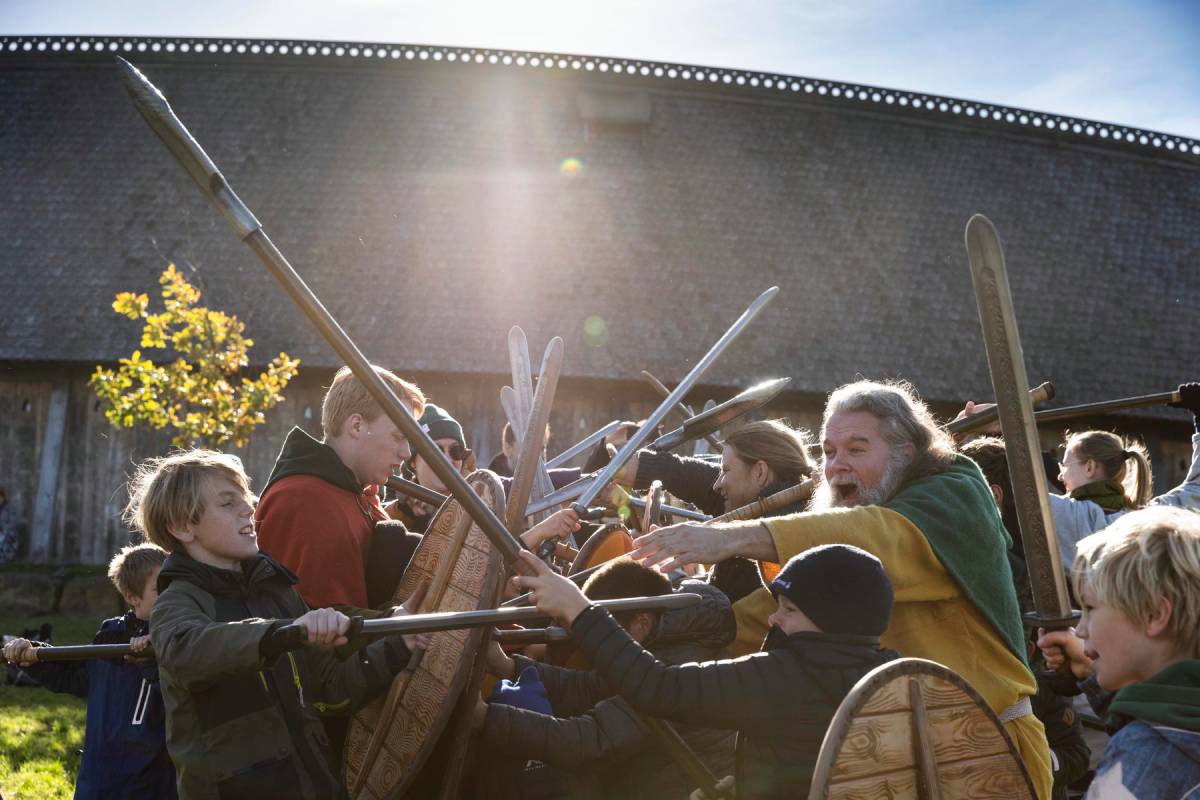
Archeologists and visitors at the site reconstruct the past, testing ancient techniques to understand how historical objects functioned. Photo: Lejre Land of Legends
Hands-on history
As Tania informs The Viking Herald, Lejre Land of Legends is devoted to living history.
"We have historical workshops and an activity area where you can go sailing in Stone Age canoes and 19th-century rowing boats," Tania says.
"You can also chop wood with an Iron Age axe or grind flour and make it into biscuits that you can then bake and eat. Then we have things like archery, warrior training, and various crafts you can try your hand at."
In fact, not only visitors but also staff members are actively involved at the site. "We have a philosophy that you learn more by experiencing and doing things yourself," Tania tells us.
"A Viking building, for example, doesn't last hundreds of years. Instead, we have to look at what the archeological remains tell us and then recreate it."
"We have an old saying: I hear and I forget, I see and I remember, I try and I understand. That's the moment you really learn about past life and also the life that you lead today. That's the beauty of it."
"A lot of my co-workers, myself included, are archeologists," Tania adds. "We try to find out new things about past life by reconstructing stuff, to recreate the past to figure out how it worked."
"This is always the question: if we build an object, will we find an intuitive way in which it might have been used?"
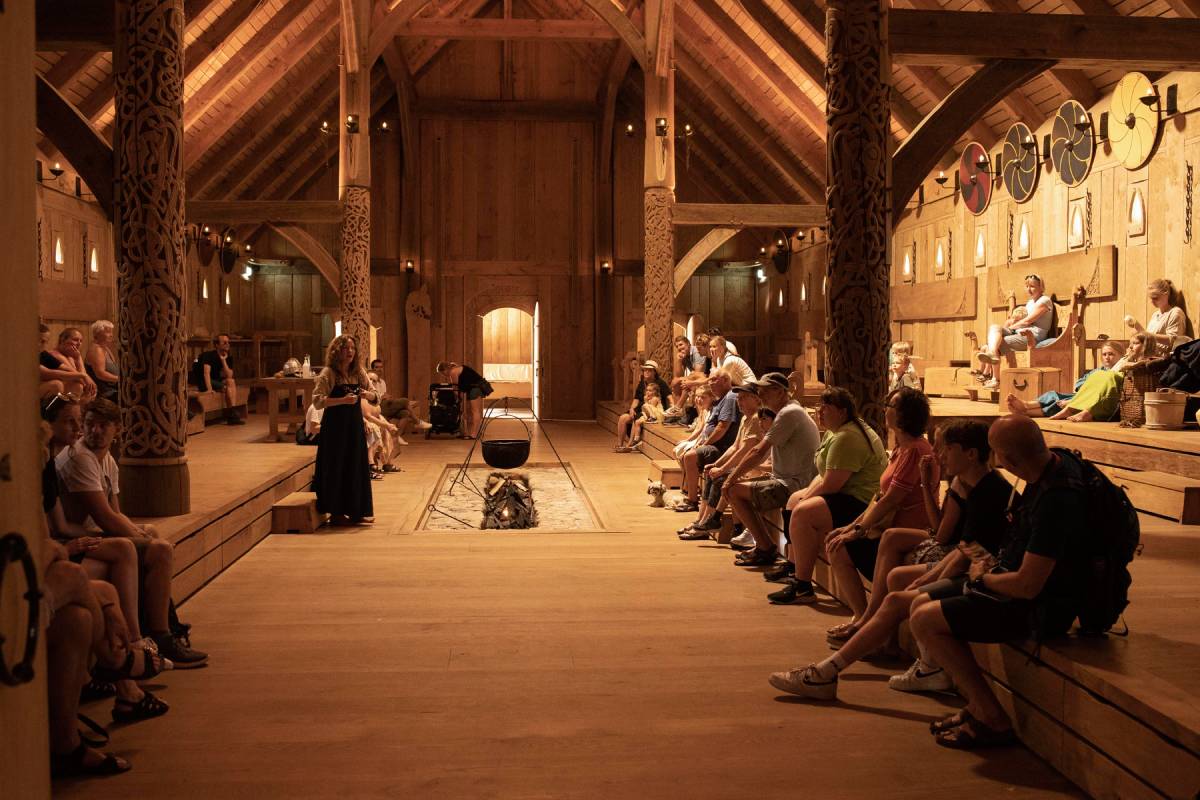
The King's Hall reconstruction tested Viking Age building techniques without modern tools. Photo: Lejre Land of Legends
Experimental archeology in action
Indeed, the team here is deeply committed to experimental archeology, something that was especially important when it came to the construction of the enormous King's Hall, the largest known residence of its kind in Denmark.
"The hall is very geometrically precise," Tania notes. "It has walls that bend around, and the roof is curved in two ways."
"There are no straight lines. So the question was: how would you place this in a landscape without blueprints and computer models to aid you?"
By analyzing the positions of the posts in relation to both the outside and center of the building, the team came up with a theory: each set of two posts was placed at a specific distance apart from the center and wall.
These distances varied to create the curve, but the same fraction of difference was used in each set, as well as for the roof.
"We said to our architects, 'Can we do that? Can you make some calculations and build it using the same proportions?'" Tania informs The Viking Herald.
"They looked rather strictly at us and said, 'Well, we can try! But we will not build you something that will not last and cannot stand against the Danish climate.'"
Remarkably, the architects found that the plan would work. What's more, the angle of the roof for the model would be just below 45 degrees – today, widely considered the optimal roof angle for the Danish climate.
"So we got our way," Tania tells us. "That's how the roof was built."
"It means that from the process of trying to recreate this building, we found out something we didn't know about the past, about how they put this into the landscape. And that is the heart of Land of Legends."
- READ MORE: Exploring the Viking longhouse
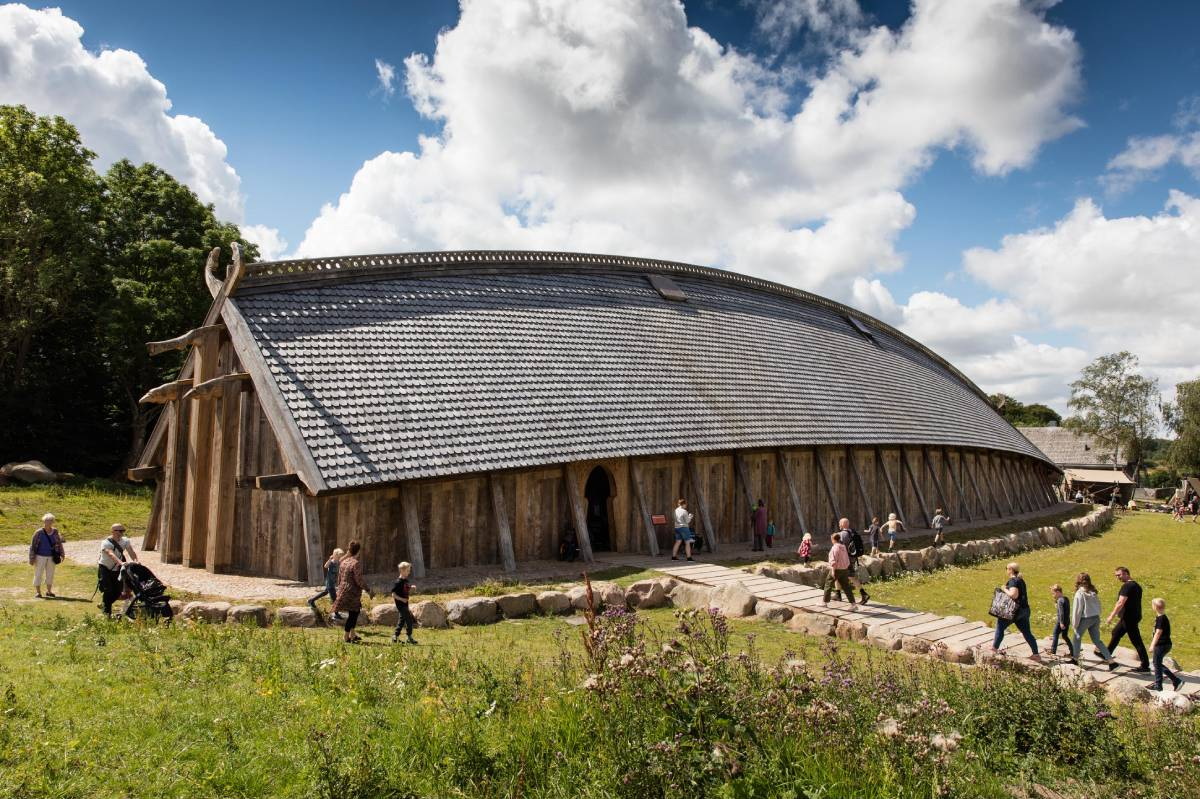
The 60th anniversary will include Viking era activities, expanded exhibits, and the opening of the Wild Path walkway. Photo: Lejre Land of Legends
Six decades of success
So what can people look forward to if they visit the Land of Legends?
"They can expect to be blown away," Tania says simply. "The reconstruction of the King's Hall is truly impressive. It's 61 meters long, 12 meters wide, and has around ten meters to the ceiling."
"You will also have the chance to meet Vikings. We have skilled interpreters in historical garb who tell you about life in the Viking era, both of the ordinary people and that of the kings and queens."
The team is also planning some special events for the 60th anniversary.
"We opened our doors on April 1, 1965, and this year, 60 years on, we will once again be opening on the same day, April 1," Tania confirms.
"Among other things, we are currently building the Wild Path, a 330-meter-long walkway that will take you up six meters above the fields and across the areas where the animals are. We have wild boars, sheep, goats, and cattle bred to look like aurochs."
While Lejre Land of Legends was long known only in Denmark and Scandinavia, Tania has noted a definite uptick in the number of international arrivals since the King's Hall was completed in 2020 and welcomes their fresh perspectives.
"Our knowledge about the past is not static at all," she asserts. "We can always learn something new, and visitors can help us."
"We tell them what we know, but if there is something we are not sure about, we ask them what they think. That dialogue can be incredibly useful to us."
We get to provide readers with original coverage thanks to our loyal supporters. Do you enjoy our work? You can become a PATRON here or via our Patreon page. You'll get access to exclusive content and early access.
Feel free to reach out to discuss potential stories that may be in the public interest. You can reach us via email at [email protected] with the understanding that the information you provide might be used in our reporting and stories.