

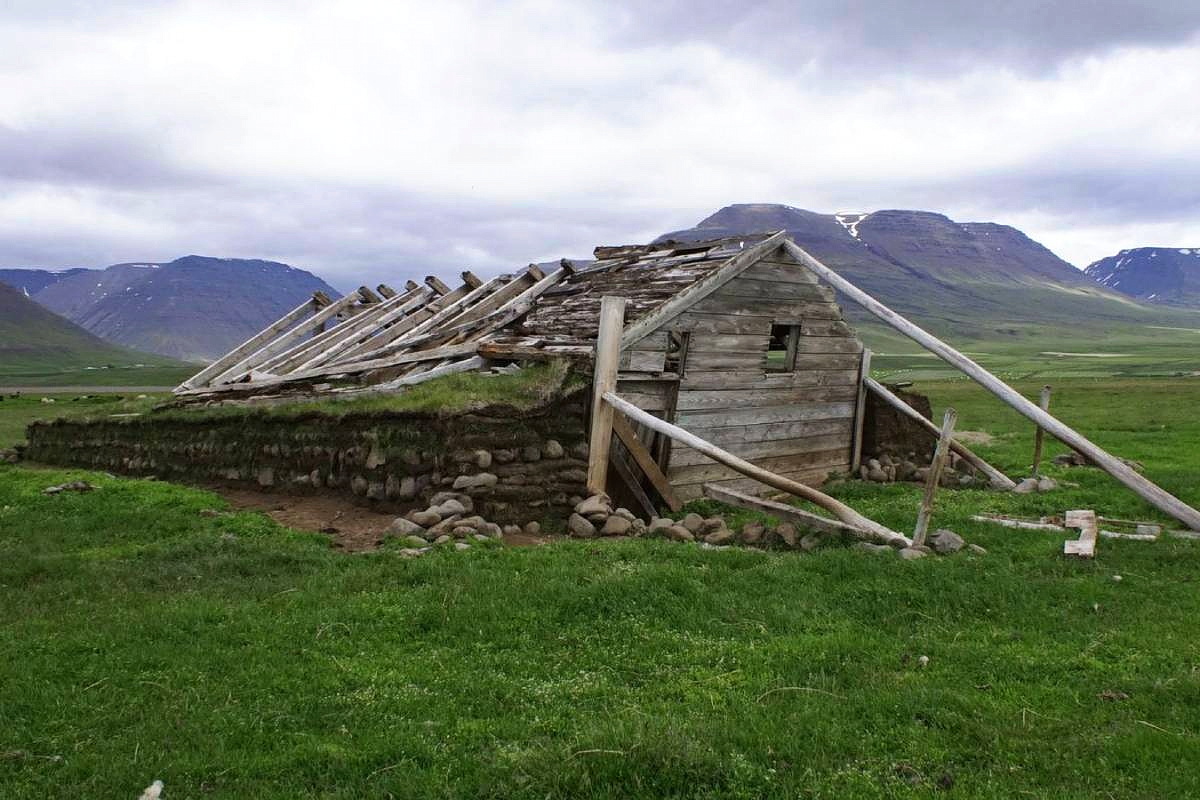
The Icelandic turf house has become an evocative symbol of the country's period of settlement during the Viking Age. Beyond its iconic status, however, the turf house also has much to teach us about the sustainable nature of Viking buildings.
Alex Casteel, a Ph.D. student at the University of California, Los Angeles (UCLA), is currently exploring the history of turf houses and their potential role in present-day sustainable architecture.
The Viking Herald speaks to him about Scandinavian innovation, changing notions of permanence, and what it's like to build a real turf house.
"I had a lot of questions"
As he explains to The Viking Herald, Alex detected a slight analytical imbalance when completing part of his master's degree at the University of Iceland.
"We would talk about so many things that were based on texts like the Icelandic manuscripts," Alex says. "There was a sense that these written records shape the entire prehistory of Iceland."
"It's true that archeology did start to become a more dominant component over the course of the 19th century, but still, we never situated things in a place," Alex points out.
"We did visit turf houses, and there's obviously some reconstructions of longhouses in Iceland. But even then, the relationship between what we read, what we thought about in terms of the history, and the actual longhouse spaces just never really made sense. I felt that there's a gap there."
Alex was also intrigued by just how different the Viking Age buildings were in Iceland in comparison to Scandinavia.
"It is significant that in Iceland, they were building everything with turf, and in Norway and Denmark they were doing something completely different. I felt no one was talking about it as much as it perhaps deserved. I had a lot of questions."
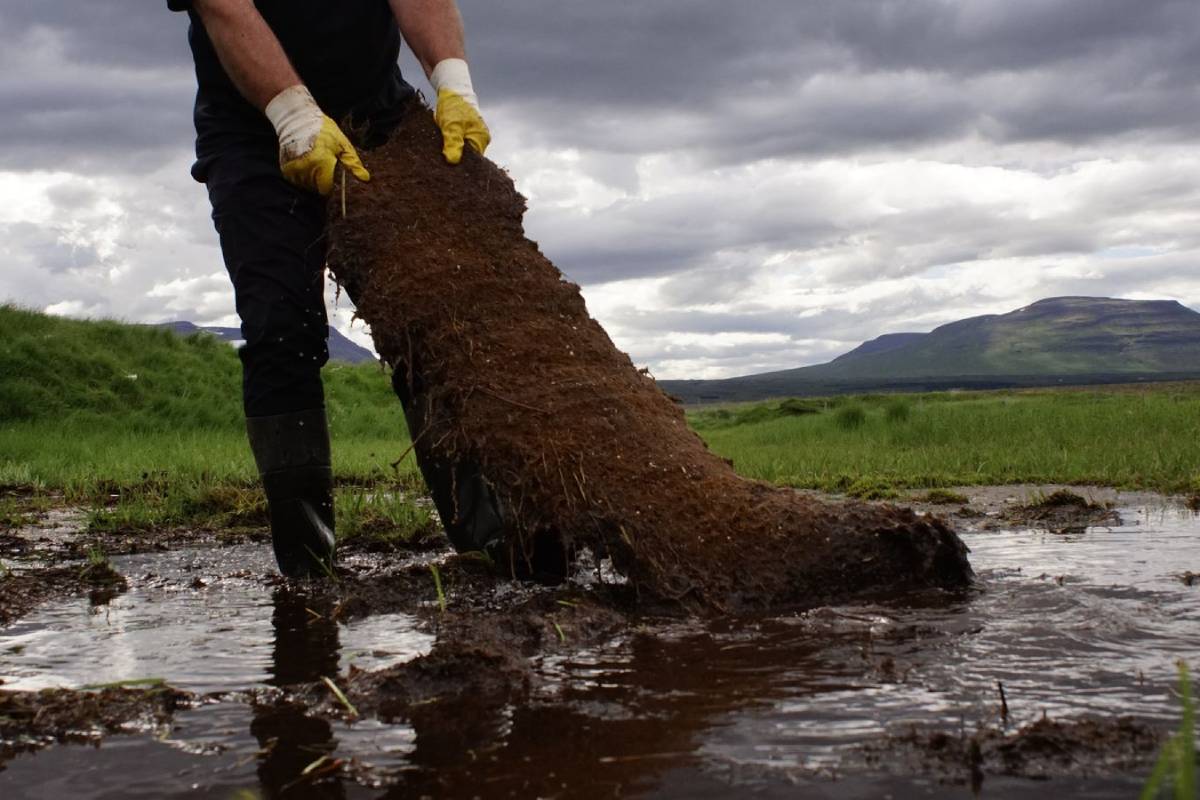
A close view of how turf was harvested for building materials. Photo: Alex Casteel
Into an unfamiliar world
The story of Icelandic turf houses dates back to the very foundation of the country itself.
The records tell us that it was towards the end of the 9th century that groups of Scandinavians began sailing west to settle in the new land.
When they arrived at this remote North Atlantic island, however, they were faced with an unfamiliar landscape and sometimes inhospitable climate.
As the settlers struggled to survive and build a workable colony, they almost immediately made use of a uniquely well-suited local resource: turf, i.e., the surface layer of earth held together by the roots of grass.
"It's worth pointing out that there's nowhere else like Iceland in the North Atlantic," Alex adds.
"It would be remarkable if the settlers had known immediately how to manage themselves on a completely new terrain like that. But from a pedological (soil science) perspective, you can also see that the soils here are completely different from anywhere else."
"There is a high ratio of clay minerals and carbon," Alex explains. "You also have sedge grass roots, which start to grow really robustly and densely if there is a lack of phosphorus."
"The volcanic soils in Iceland are very deprived of phosphorus in general, so the sedge grass roots grow really strongly there—this strengthens the soil even more."
As Alex explains, the practice of laying strips of turf over the roof to help repel moisture was already common in both Denmark and Norway. In Iceland, however, we see a clear evolution.
"It was the very first time they used block forms of turf to construct the walls," Alex tells The Viking Herald. "They probably started to experiment. They saw what they needed to do, and then developed tools to do it."
- READ MORE: The Viking history of Iceland – A primer
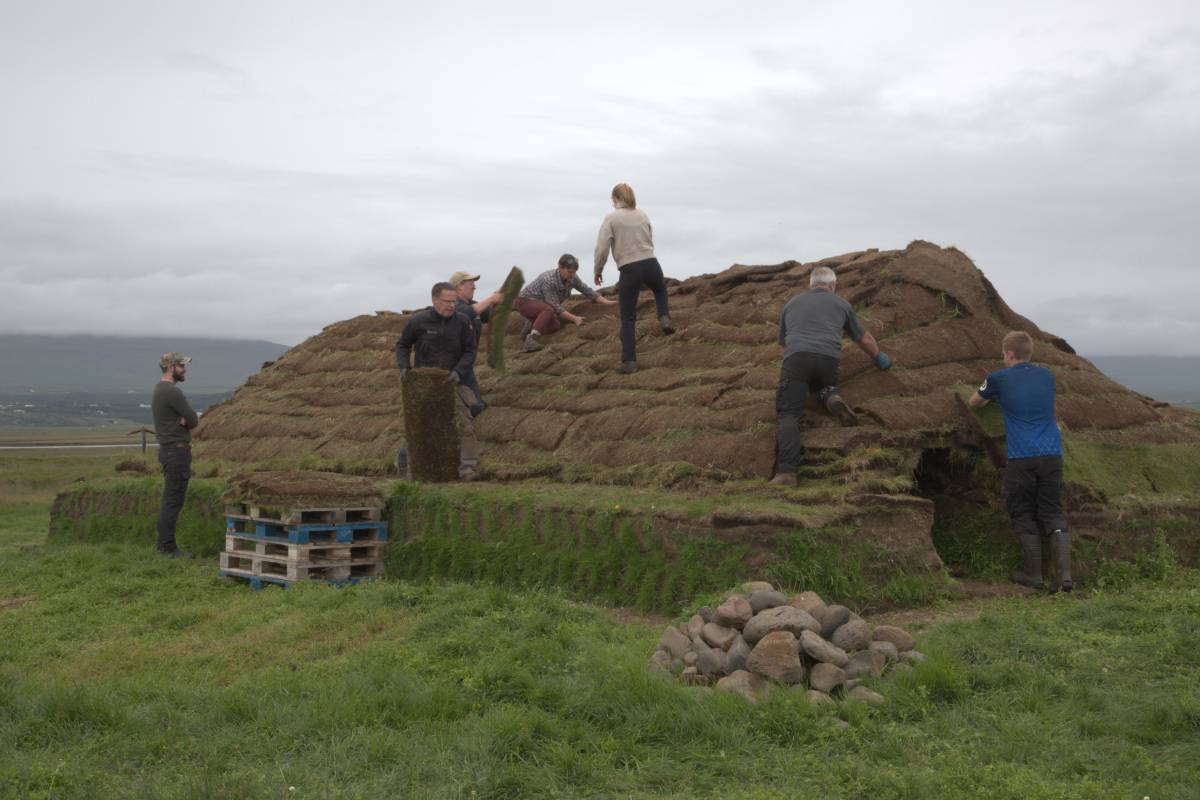
A turf house under construction with layered grass and soil blocks. Photo: Alex Casteel
Building a turf house
To understand the building process for turf houses, Alex has spent time working alongside Helgi Sigurdson, Iceland's foremost expert in the field.
"First, you go out and cut the blocks and strips you want to build your wall fabric with," Alex tells The Viking Herald.
"The settlers would have had a specific set of tools. This would have included wooden spades, while you can cut turf strips with certain types of curved scythes."
In addition to collecting the blocks and strips of turf, the settlers would also construct a wooden frame for the house.
"You then need to build the walls up, just like you would with stone," Alex continues. "You have to build very thick walls—usually one or two meters wide. The roof was constructed with wood and strips of turf."
"The walls were generally curved, at least in the Viking Age. In most cases, you would have two wall faces of alternating courses of blocks and strips."
"You also have to fill the wall with an earthen infill and turf. These are scraps from the process of cutting turf and everything else, and you just kind of throw them in and compact them down."
"Today, we usually get kids up there to come and stomp everything down to compact it, and it was probably the same in the Viking Age, too."
"There are about a dozen different known kinds of turf houses, with tons of little variations of those—almost infinite variations."
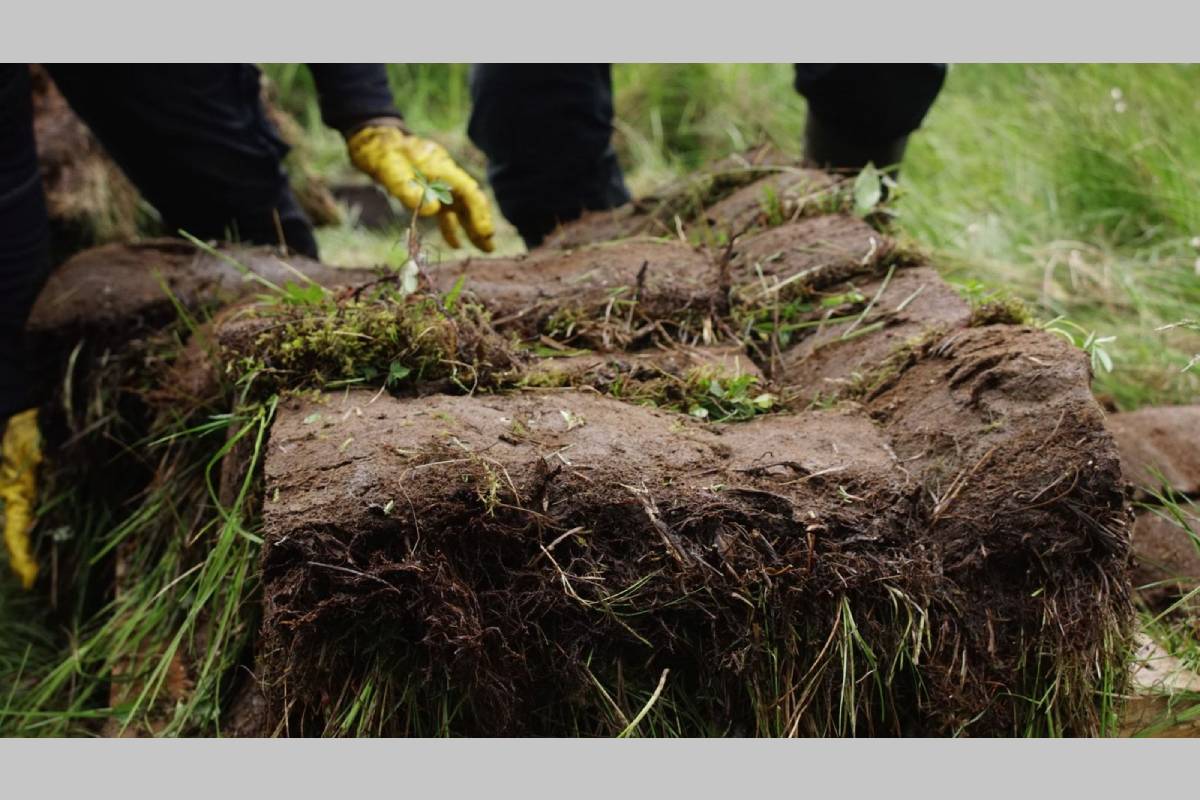
Grass-rooted turf stacked and drying after harvest. Photo: Alex Casteel
Blended influence and adaptation
While turf houses are usually seen as typically Norse, Alex believes the Scandinavians may also have been influenced by other settlers from the British Isles, where buildings were made in a similar manner but using large blocks of stone rather than turf.
"The Viking diaspora has a momentum to it. It's not linear," Alex points out.
"As networks increase, as exchange keeps building and building, there are more and more ideas going around. They're building on that kind of momentum and knowledge, especially on masonry knowledge, most likely from the British Isles."
Alex adds that while the lack of lime in Iceland to make mortar meant that stone was never a realistic option, it would also have been impractical.
"Living in a stone building in medieval Iceland would have been horrific—it would have been super cold," Alex notes.
"Icelandic turf, on the other hand, is a remarkable material. It is so good for building walls."
"It's extremely easy to do, and it's the most insulating material imaginable. It stops all sound, and it can hold moisture completely—it really is perfect."
"It's also worth noting that turf architecture also enabled Europeans to go to North America for the first time," Alex adds.
"The only other place you see block forms of turf is in Greenland, and that's surely because the first settlers were from Iceland."
"It's true that blocks weren't used in Newfoundland, only strip forms. But, still, it's clear that turf enabled the Vikings to cross the Atlantic for the first time."
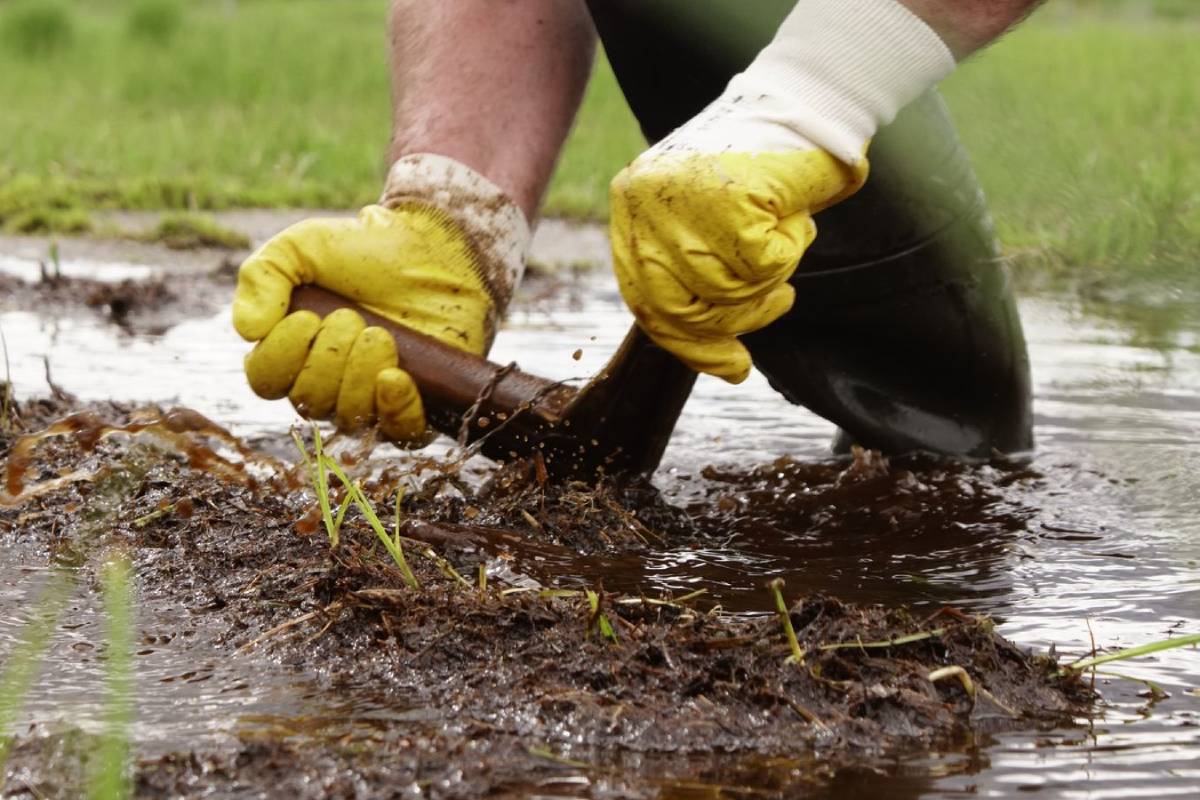
A section of turf sliced cleanly from the ground. Photo: Alex Casteel
Questioning permanence
There is perhaps one aspect of turf houses, however, that might not appeal to many people today.
"Turf housing can last two or three generations, but by and large, you need to replace the blocks in something like 30 to 50 years," Alex informs The Viking Herald.
"In the past, buildings like these were seen as unplanned. They were considered architecture of survival. This is not true—they are planned from the very first moment."
"Everything about them is planned—before you even cut the forms of turf that you're going to use, you have to plan out the entire shape of the walls and building."
Indeed, as Alex points out, it is notable that even the most powerful Viking rulers, who had access to tremendous wealth and resources, chose to build in wood and turf, not stone.
This appears to indicate that they were content to use readily available resources that could be easily replenished in time.
"If you have enough people to help, a turf house can be made relatively quickly. There has even been an argument made that the longhouse was often linked to a particular ruler," Alex points out.
"So if they died or their rule ended, you would just burn it down and build a new one.
"In Iceland, it seems like the settlers repeatedly chose to favor renewability over permanence because it's sustainable."
"This is really interesting, because it goes completely against the earlier narrative of the early settlement being very destructive to the Icelandic environment."
"People have also pointed out that the early Vikings didn't use stones to prevent posts from rotting—there is an assumption that they were just stupid, or ignorant. But it's far more likely that they just didn't care—it was never about permanence."
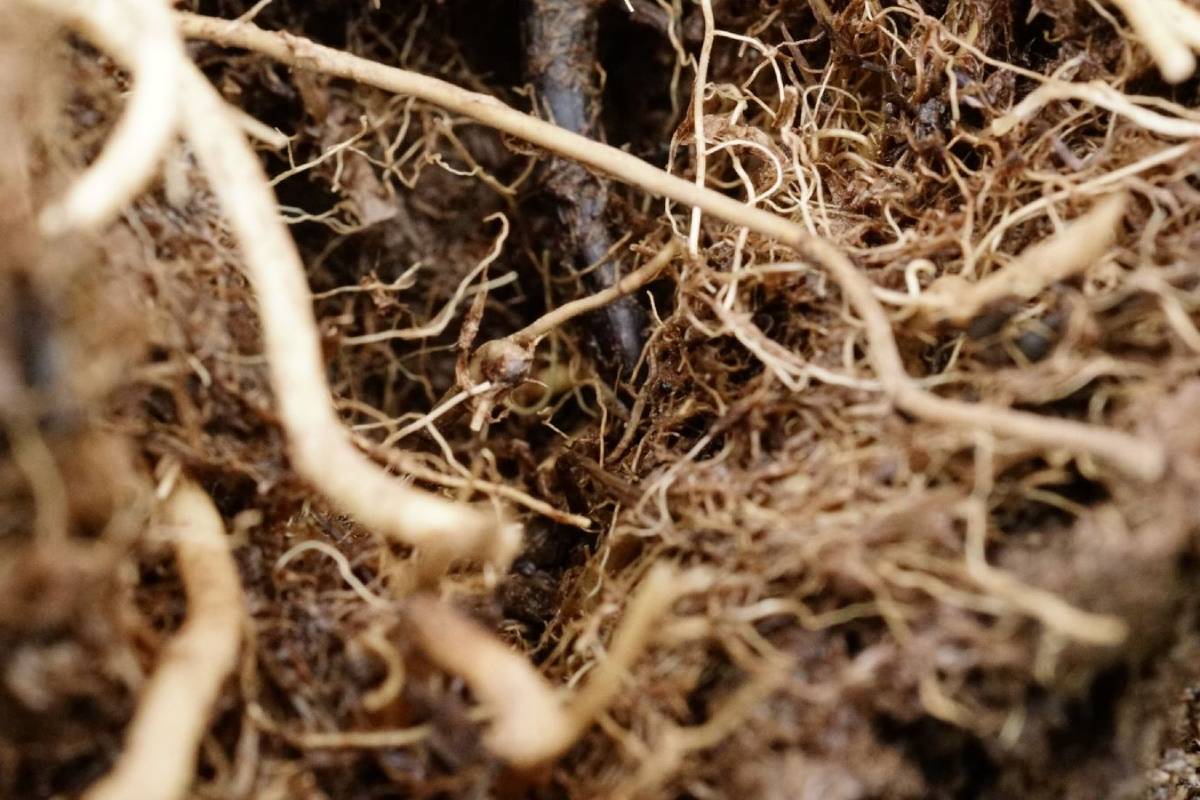
In the absence of forest or quarried stone, Icelanders turned to root-dense turf as their most reliable material. Photo: Alex Casteel
Turning away from turf
Turf houses were popular far beyond the Viking Age and were commonly used in Iceland until the end of the 19th century.
"The building traditions of working with turf have survived ever since the settlement of Iceland in the ninth century, which is wildly remarkable," Alex says.
"In the last hundred years or so, however, they have been under attack. Iceland was very quick to try to modernize in the early 20th century."
"At that time, Iceland wanted to have an architecture of concrete and steel, like the rest of Europe."
"Just as an example, there was a human zoo at the Danish National Exhibition of 1909. Icelandic turf houses were placed next to dwellings from Indigenous Greenlanders, and the people of Iceland were upset at this juxtaposition and made protests."
"They did not want to be associated with what they considered to be 'backwards and primitive architecture.'"
"By the 1940s and 1950s, almost all the turf houses in Iceland had been destroyed, and people were no longer really building them. And by the 1960s, only very few people were living in them anymore."
The move was not universally popular, however. "There are actually some very interesting stories in Iceland from this time," Alex informs The Viking Herald.
"Although the Icelanders were told that turf houses were not healthy to live in, there were some people who were not really sold on this idea."
"There are stories of Icelanders who moved to modern houses and hated the experience. The houses were miserably cold, difficult to heat, and some people even moved back to a turf house."
Finding the right path
Today, however, you would be hard pressed to find an Icelandic person who lives in a house made solely from wood and turf.
At the same time, Alex believes we may once again be ready to consider this kind of sustainable architecture.
"Turf could certainly have a future as a sustainable, renewable material in construction, particularly in Iceland."
"It could also be possible in other northern latitudes that could produce a comparable turf—Indigenous circumpolar peoples are also building with a similar material."
"Of course, society and the people who build it would have to get over the idea of permanence," Alex admits. "Usually, when you build a house, you want it to be permanent. It's an investment, and you want it to last."
"With turf and any similar renewable material, you have to change your thinking. You also have to become comfortable with the idea of maintenance."
"But it's worth noting that something like concrete, for example, is not really a permanent solution either, particularly in certain areas. In Peru, and in the Amazon in general, for instance, it starts cracking very quickly."
"Today, there are so many people all over the world who are interested in a more sustainable life, including sustainable architecture," Alex states.
"Personally, I would say that the idea that we always need permanent architecture everywhere was never a good idea to begin with. Finding local solutions that are renewable may be a better idea, even if it's not a new one."
"There are some houses in Iceland today that hybridize modern materials like concrete and steel with turf," he adds. "These are really interesting and could provide a good case study going forward."
"But if there is an infrastructure for cutting and transporting turf, building turf walls in the 21st century could be a very smart thing to do. Your house would be extremely warm and comfortable."
We get to provide readers with original coverage thanks to our loyal supporters. Do you enjoy our work? You can become a PATRON here or via our Patreon page. You'll get access to exclusive content and early access.
Feel free to reach out to discuss potential stories that may be in the public interest. You can reach us via email at [email protected] with the understanding that the information you provide might be used in our reporting and stories.