


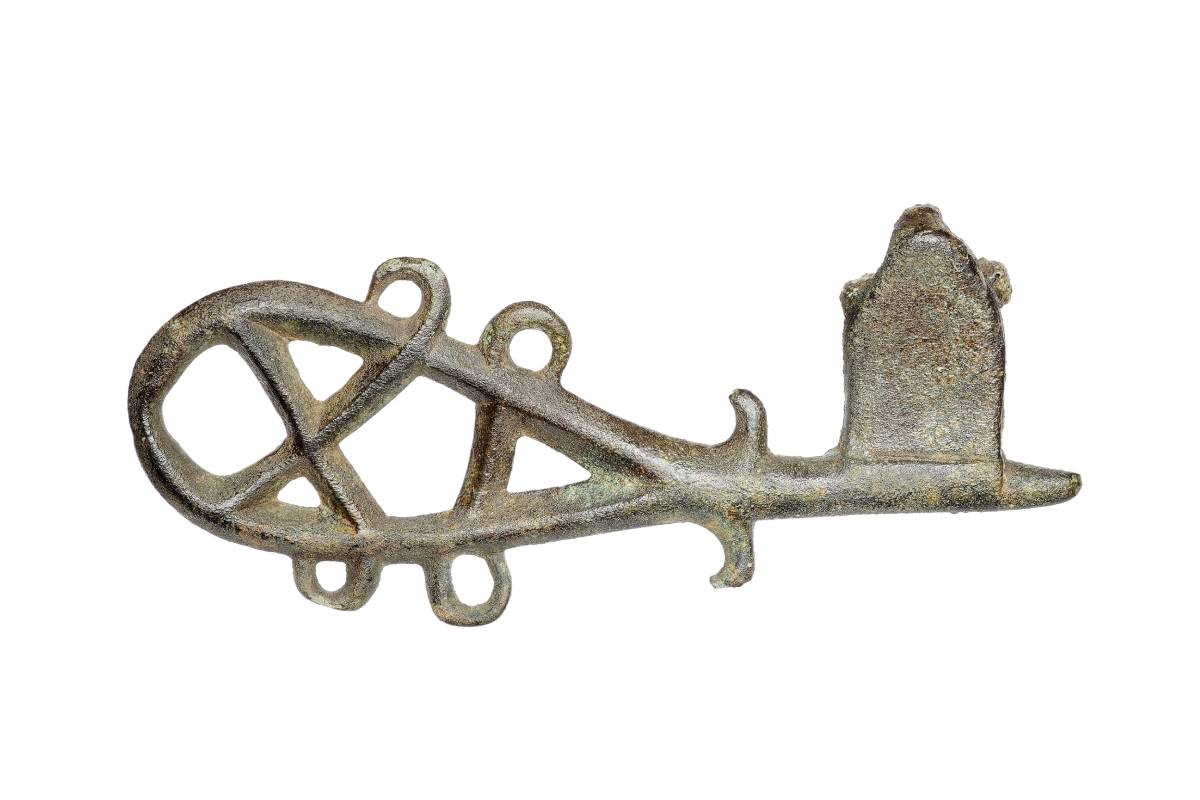
Popular imagination paints Vikings as raiders more than hoarders. However, we here at The Viking Herald want to use our website to push back against such narrow-minded views of Viking warriors.
We have constantly written about the untold wealth, the magnificent hoards, that have been buried all over the former Viking world, everywhere from southern Scotland to the shores of Estonia.
Yes, people from Viking societies, and especially their warriors, have that dual crown of history's greatest raiders and hoarders. Having looted a monastery or two, sure, digging a hole in the ground is one way of securing your treasure.
A better way, in the opinion of us humble writers here at The Viking Herald (albeit with limited raiding experience), would be to transport that loot back to the safety of your community and home, back in the Viking heartland of Scandinavia.
Well, I hear you say, that's all well and good, but what about when you're back home? A warrior who made a small fortune on a raid lived in a society full of, well, Vikings, didn't they?
They also lived in an era before any sort of police force to protect personal belongings and property rights, and in an era where might made right, the powerful took from the weak.
One way to ensure that your property, whether it be ill-gotten gains from a raid or legitimately bought goods earned through blood, sweat, and tears, was then, as now, to lock it up.
Yes, a lock is certainly no modern invention. Despite popular imagination casting the early medieval period as a kind of civilizational (and technological) backslide, Norse communities developed ingenious ways to keep their households and their contents secure, including personal belongings.
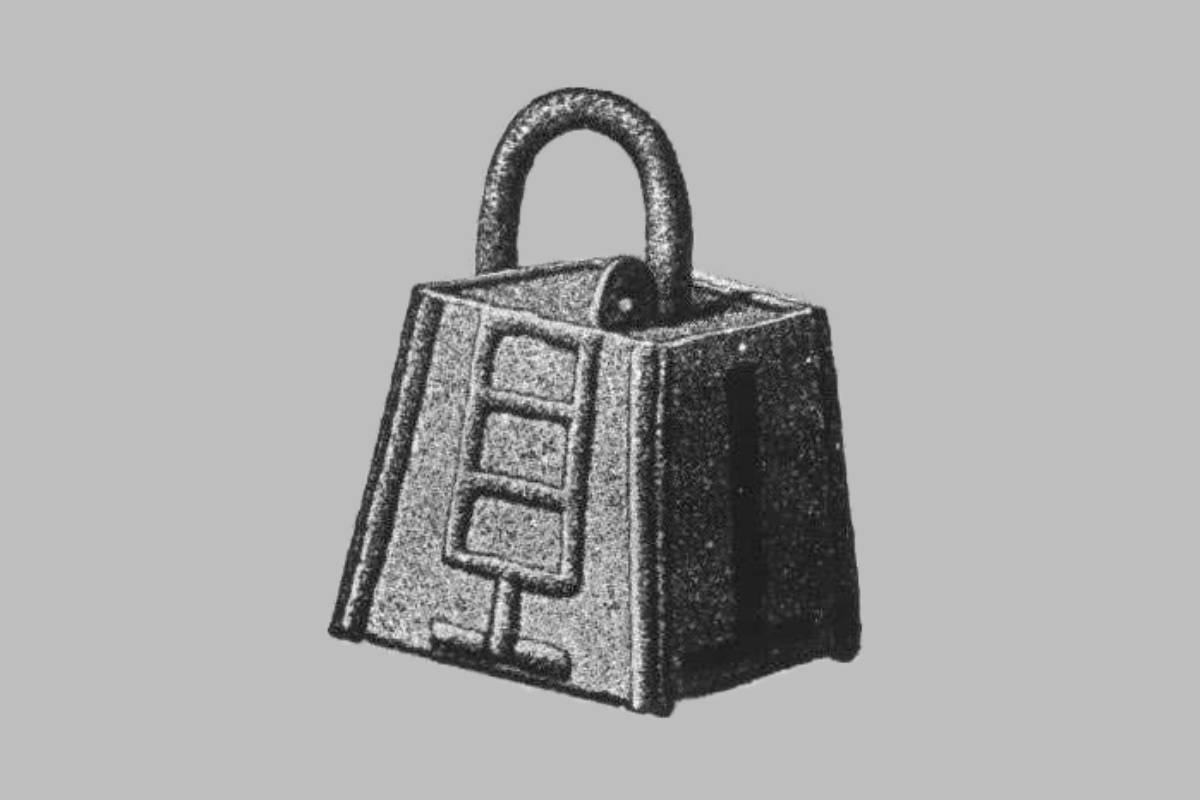
Padlock from Viking Age Birka, Sweden, evidence that portable locks formed part of everyday security. Source: Nordisk familjebok (1917), vol.26
Sweden's first trading town
We first turn to the spiritual birthplace of Swedish economic entrepreneurship, Birka. Despite its current inland position, the archeological UNESCO World Heritage Site at Birka was once a thriving waterborne metropolis.
Here, the steady stream of merchants and traders helped establish arguably Sweden's first trading outpost, with goods traded here from as far abroad as the Byzantine Empire, the Islamic World, and possibly even East Asia.
Aside from goods and people flowing, lock technology did too.
As Augustus Henry Lane Fox Pitt-Rivers writes about in his 1883 book, On the Development and Distribution of Primitive Locks and Keys, this "evidence of commercial relations" between Scandinavia and the other cultures and civilizations to the south and east, in places like Birka, shows that "ample facilities existed for the spread of early forms of locks and keys."
Due to Birka's multicultural and mercantile nature, the site has bequeathed us a wealth of archeological treasure, including a variety of locks.
Amongst them have been Viking-era padlocks, constructed with a spring mechanism, keys, and a separate shackle. These were heavy-duty locks used to secure a trader's wares or their gains.
These locks also show the surprising technological advancement made by people from Viking societies. Some of the locks discovered had ward springs. This made them more secure and harder to pick or pry open, since the key had to compress the spring to open the lock.

The Mästermyr tool chest from Gotland, found in 1936, held 200+ Viking Age tools, plus locks and keys. Photo: The Swedish History Museum, Stockholm (CC BY-SA 2.0)
An archeologist's treasure chest
Turning further south from Birka, we find ourselves in a muddy field near the Swedish village of Hemse.
As common sense tells us, never judge a book by its cover, and it was here, in a drained bog, that the Mästermyr chest was uncovered in 1936.
This Viking-era chest contained one of the largest caches of Viking-era tools ever uncovered, with more than 200 items. Amongst them were tools for locksmithing, three heavy padlocks, and a variety of locks, springs, and keys.
Some also echo Roman-era designs, and some lock forms appear to draw on Roman precedents, a reminder that older tool forms and ideas traveled far beyond the former Roman world.
This find not only represented an archeologist's treasure trove but also shed light on a little-thought-about aspect of Viking society, that of locksmithing.
The chest also seems to show us that people from Viking societies had an interest in the care, maintenance, and repair of Viking Age locks, signifying both their cost and importance.
Away from the heroic deeds of the battlefield, the locksmithing found in Hemse illustrates a less adrenaline-filled view of daily life in a Viking society.
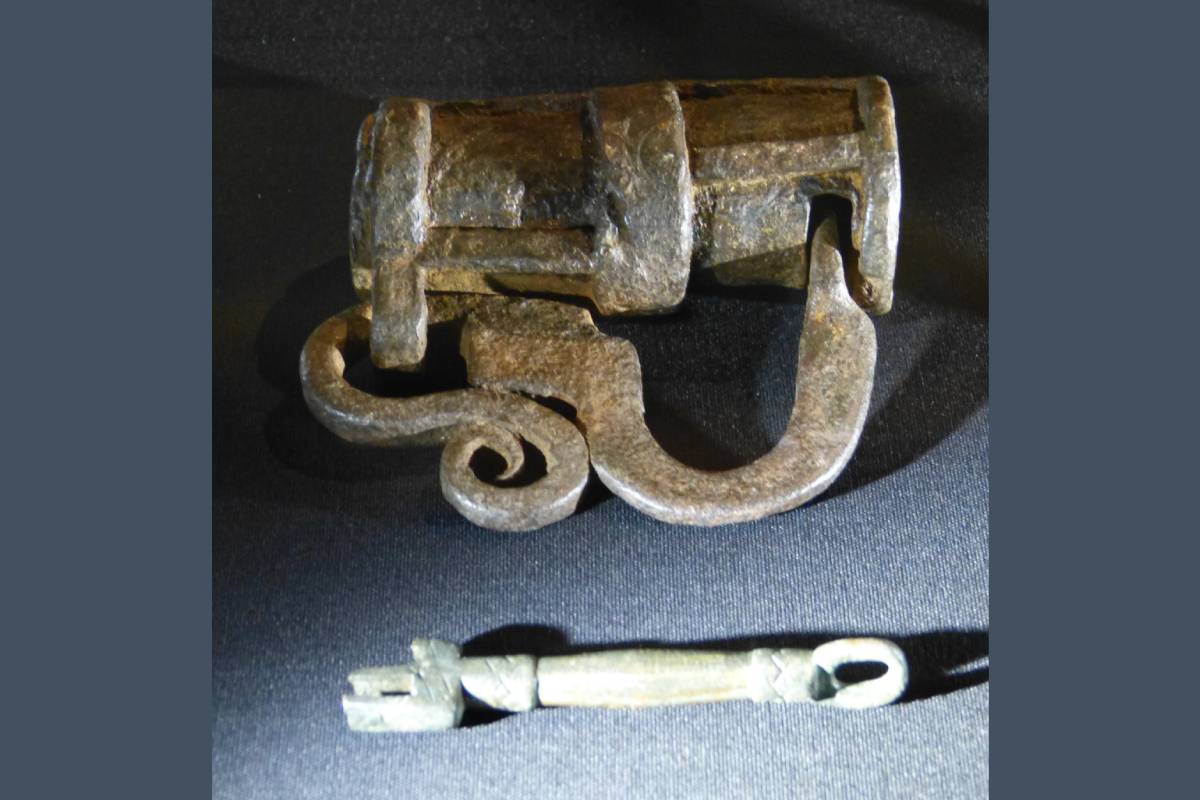
A lock and key for a slave chain from Viking Age Sweden, held by Lund University Historical Museum. Photo: Wolfgang Sauber (CC BY-SA 4.0)
Community reliance and busy households
Aside from locking things up, how else was household security provided for people in Viking societies?
We know that people in Viking societies had a much more visible sense of community than we largely do in many countries today.
Given the harsh climatic conditions of much of the Viking world (think Scandinavia and northern Europe), friends, family, and fellow community members had to be relied on. This means that neighbors often looked out for and after each other.
We also know that many people in Viking societies had farms, which required larger families, and indeed slaves, to work them.
It was rare for a house to be left empty, as there was almost always a member of the household, free or enslaved, there to keep a watchful eye on items and personal goods.
Much has been made of the special relationship that people in Viking societies had with animals, meaning an extra layer of security for a house involving perhaps several dogs for companionship and security.
Finally, law and custom set real consequences for theft, from fines and compensation to outlawry in serious cases. In small communities, the risk of legal penalty, loss of reputation, and retaliation often did as much as any lock to deter would-be thieves.
Overlooked aspect of Viking life
An overlooked area of everyday life in a Viking society, the security of a household as well as the personal items therein, was a serious business.
The archeological record shows the surprising amount of technological innovation with locks and the need for their construction, maintenance, and repair. Finally, friends, family members, slaves, and even pets ensured a degree of security around a Viking-era household.
For more information on Viking households, visit The Conversation here.
We get to provide readers with original coverage thanks to our loyal supporters. Do you enjoy our work? You can become a PATRON here or via our Patreon page. You'll get access to exclusive content and early access.
Feel free to reach out to discuss potential stories that may be in the public interest. You can reach us via email at [email protected] with the understanding that the information you provide might be used in our reporting and stories.



.jpg)
