


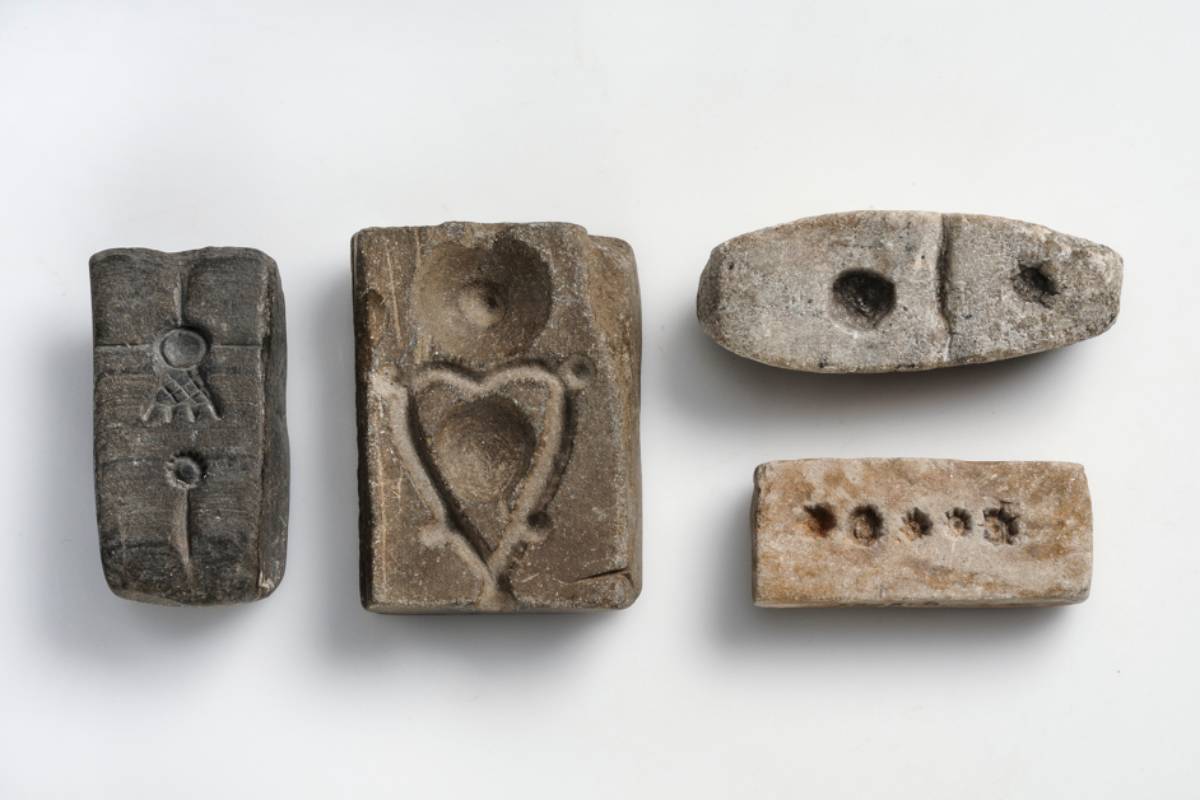
Whilst Viking warriors are infamous for their pillaging and plundering, the reality of early medieval life in a Viking society was far more mundane.
Viking warriors only ever constituted a small minority of society and, even then, only for the duration of a raid or a battle.
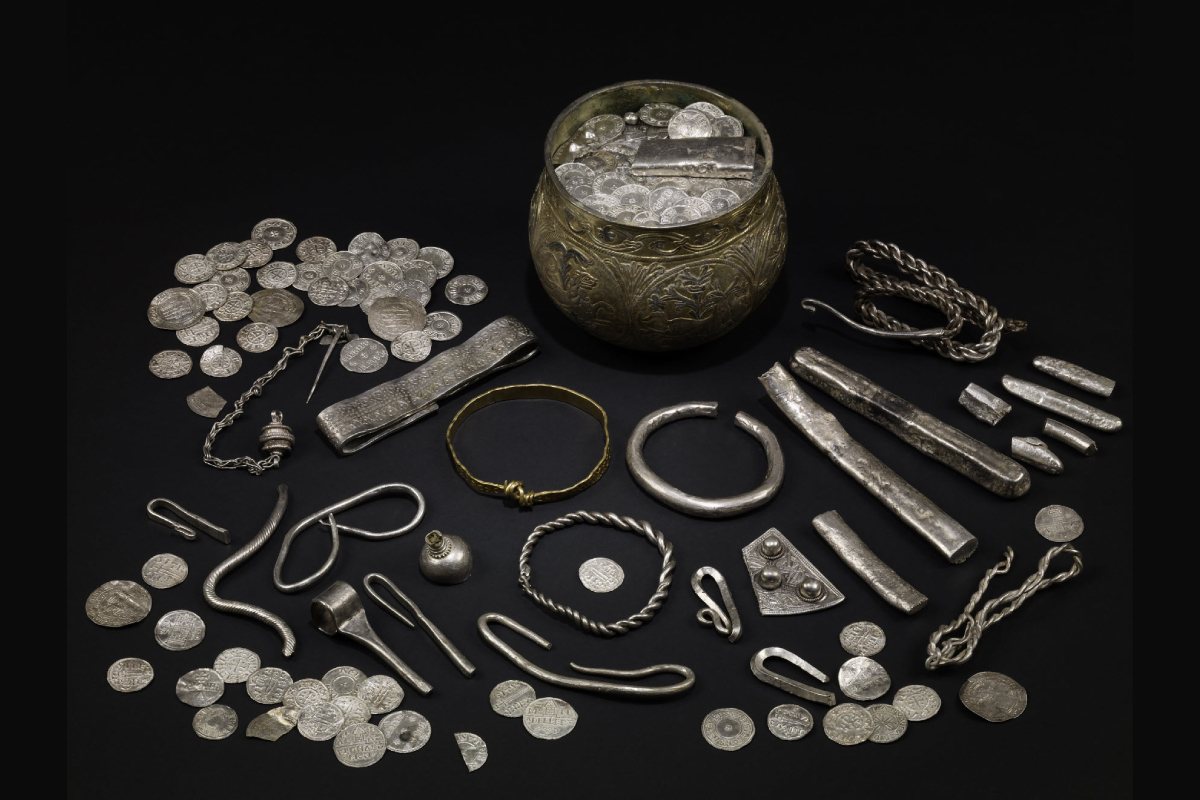
Whilst archeologists have uncovered some spectacular Viking buried treasure (one even live on television!), Viking trade went far beyond everything that glittered and was golden.
For we moderns to understand the economic story of Viking societies, we must look not to precious jewels but to everyday, practical items.
This story revolves around an economy that was underpinned by persistent trade in everyday goods, including those fashioned out of soapstone and the highly prized nature of Viking whetstones.
These everyday items not only crisscrossed communities but also spanned vast oceanic distances, with regional economies in Viking settlements becoming nodes in a surprisingly advanced medieval supply network.
Before we cross oceans, however, let us look at some of the everyday items that quietly underpinned life in Viking societies.
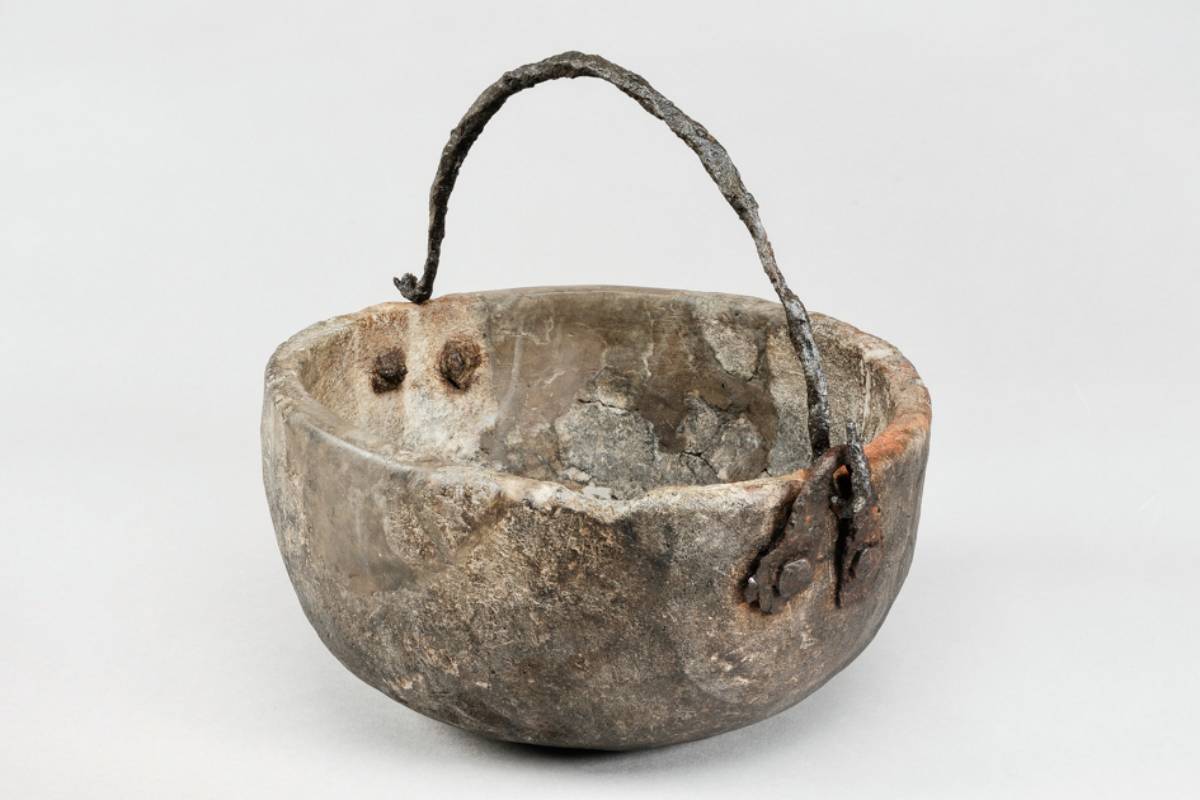
A Viking Age hanging vessel made from soapstone with an iron handle, from a grave find at Birka. Source: The Swedish History Museum (CC BY-SA 2.0)
Easily manipulated and durable
Where would we, in the modern world, be without that most versatile of synthetic materials: plastic? It is so much a part of our everyday life that we are almost oblivious to its omnipresence.
Wind the clock back a millennium or so, and there was another omnipresent material that permeated daily life: soapstone.
This is a soft, malleable type of metamorphic rock that is both relatively non-porous and low-absorbent. In other words (sorry, we forgot for a moment that this is actually The Viking Herald and not the Geology Gazette), this means that it is easy to fashion and carve but it is also durable and heat-resistant.
It was the perfect material for the pragmatism of everyday early medieval life.
Found especially on the western coast of Norway, people from Viking societies identified exposed outcrops and cut chunks out directly with iron tools.
It was easiest to manipulate when freshly cut and then was fashioned and shaped, with tools, to a variety of different sizes and shapes. Adding to its practicability, soapstone hardens slightly after heating and thus becomes exponentially more durable.
This made it a perfect material to be carved into cooking utensils (think cooking pots) or shaped into a lamp fueled by animal fat or oil. We know that cooking was serious business in Viking societies, and the use of lamps was vital to survive those chilly, dark, and long Nordic nights.
Its heat resistance and durability were highly prized in an era long before cheap cookware or electricity.
Items fashioned from soapstone have been discovered across much of the former Viking world. This speaks to how it was everyday items, like cooking pots, that underpinned much of the Viking expansion, including settlement, throughout the early medieval period.
Wherever new Viking settlements emerged (or were established by conquest), these items would follow in order to sustain life.
Even in the most remote Viking settlement, at L'Anse aux Meadows (in what is now Newfoundland, Canada), archeologists have uncovered, as Erik Wahlgren writes in his 1980 article in the journal Swedish-American Studies, "...the most interesting objects...[including] a soapstone spindle whorl..."
This surely points to the importance of soapstone as an everyday item crucial for survival in a brave new world.
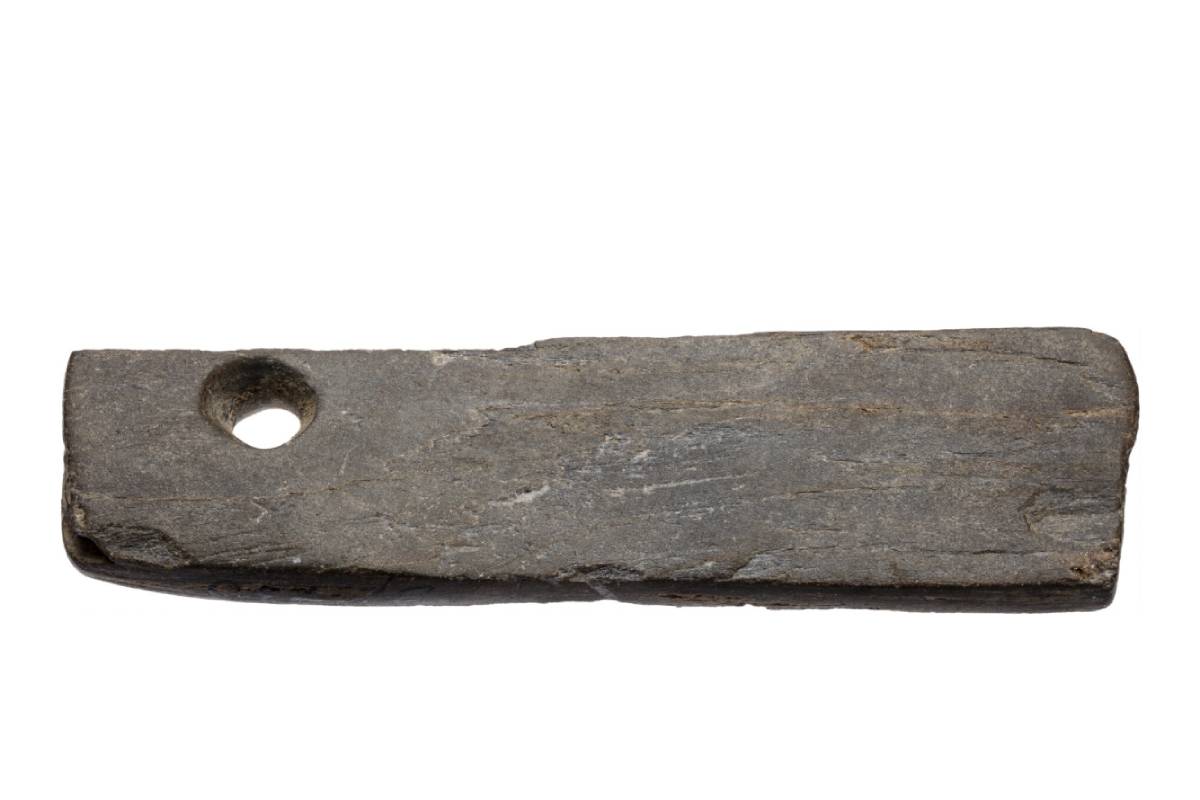
A small slate whetstone pendant from Birka, made for everyday tool and knife care. Source: Jens Mohr, Historiska museet/SHM (CC BY 4.0)
Sharpening edges in an era of iron
We now turn our attention to whetstones.
As people in Viking societies operated in what we call the Nordic Iron Age, featuring a range of iron tools (think swords, axes, knives, and sickles), keeping one's blade shape could be the difference between life and death, feast and famine.
We know that whetstones were one of the most traded items throughout Viking societies, as they were needed not only by Vikings to help plunder and pillage but also by people engaged in agricultural or craft work.
Many of these whetstones appear to have originated from quarries around the Telemark region of Norway, flowed over oceans and down rivers, and were prized, not for their luxurious appeal, but because they were simply better quality than any locally produced items.
A recent study has shown just how mobile these vital items were, as Viking-era whetstones have been uncovered all over the former Viking world, turning up in areas dominated by people in Viking societies (northern France) as well as those that weren't (what is now Belgium), and even in the graves of Anglo-Saxon elites.
Whetstones, though hardly glamorous or golden, were vital for everyday life in Viking societies as they helped keep tools sharp in carpentry, farming, shipbuilding, and warfare.
Without such a vital item, one wonders whether the Viking expansion, during the early medieval period, would have ever occurred.
Vast supply and trade networks
Whilst some of you, dear readers, may be skeptical about the importance of these two rather mundane items to the economic life of Viking societies, it is precisely their ordinariness that is revealing.
Sure, they don't capture the public's imagination like the glitz and glamor of a Viking horde, and you'll rarely find them the centerpiece of museum exhibitions, but these two Viking-era items were integral to daily life in the early medieval period.
The everyday mechanics of Viking society, from cooking food, harvesting crops, to constructing longships that would fish, raid, and trade, were underpinned by soapstone and whetstones.
The economics of Viking societies were dominated by interconnected trade networks.
There has been archaeological evidence of the presence of items fashioned out of soapstone as well as several whetstones discovered across the former Viking world, including as far away as Iceland and the settlements on Greenland.
Their presence scattered across the Viking world speaks to the regional trade networks that underpinned much of the economic life of early medieval Europe. It was their everyday nature, their utilitarianism, that made them highly prized and thus highly traded items.
As many historians may agree, it is sometimes looking at the ordinary, the most mundane items, from which we can glean the most insight into a past society.
For more information on Viking whetstones, visit Science Norway here.
We get to provide readers with original coverage thanks to our loyal supporters. Do you enjoy our work? You can become a PATRON here or via our Patreon page. You'll get access to exclusive content and early access.
Feel free to reach out to discuss potential stories that may be in the public interest. You can reach us via email at [email protected] with the understanding that the information you provide might be used in our reporting and stories.



.jpg)