

A new paper has offered a reinterpretation of a key line of the Forsa Ring, a Viking Age artifact that sets out a system of fines in runes.
The analysis was carried out by Rodney Edvinsson, Professor of Economic History at Stockholm University, who spoke to The Viking Herald about his findings.
New meaning for an ancient artifact
The Forsa Ring, known as the "Forsaringen" in Swedish, was discovered in the province of Hälsingland in central Sweden.
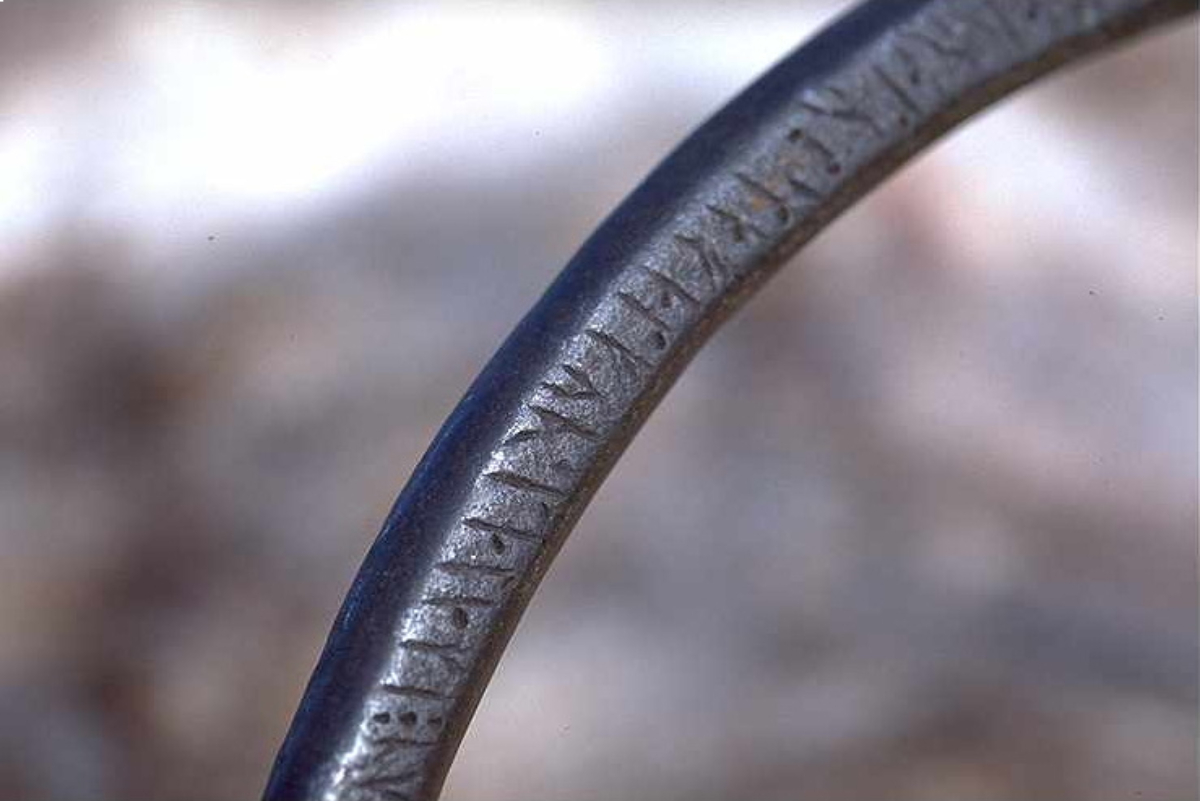
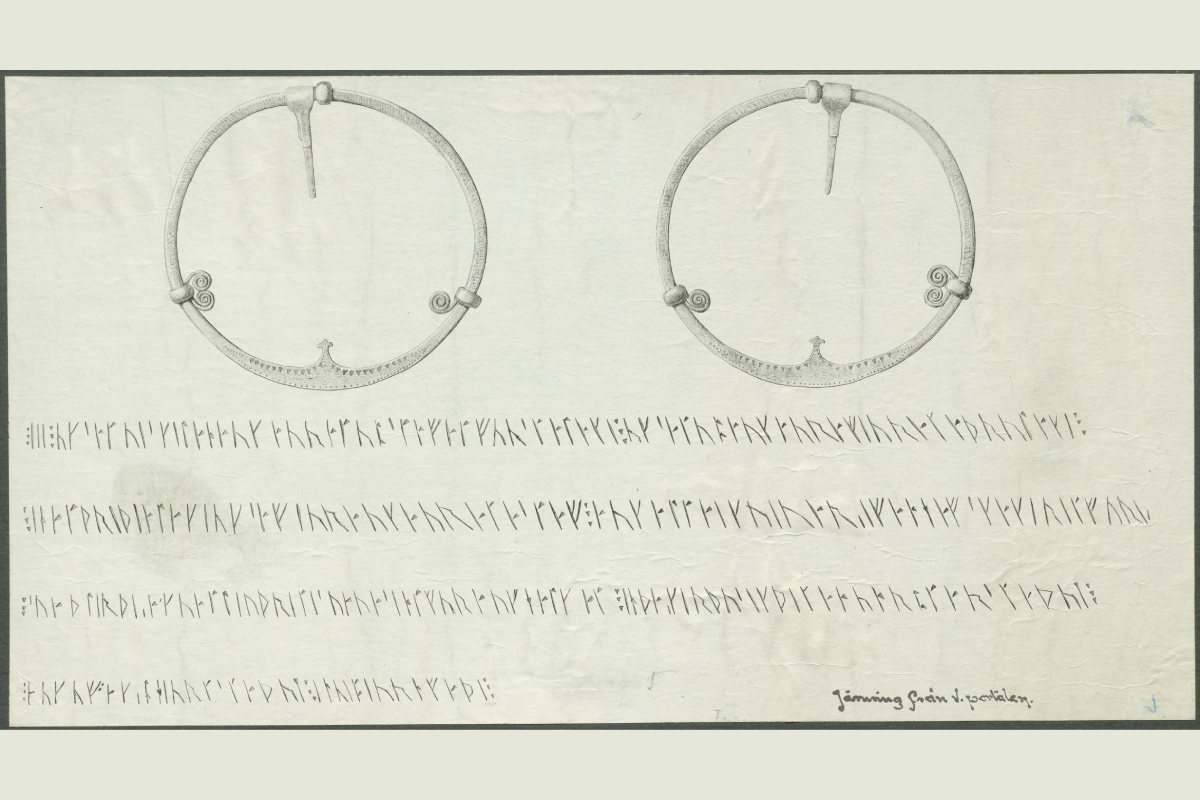
Made of iron and measuring 45 centimeters in diameter, the ring is thought to have once been attached to the door of Forsa Church.
The ring contains a runic inscription that appears to mandate fines paid in oxen and öre – a silver unit of weight. The Forsa Ring has been described as Scandinavia's earliest written law.
Until now, there has been a general assumption that the inscription outlined fines that should be paid with a combination of oxen and öre.
According to the most common interpretation of the text, the runes describe a levy of an ox and two öre of silver imposed for the first violation, with penalties doubling for subsequent offenses:
uksa tuiskilan auk aura tuo staf at fursta laki (ox double-worth and öre two staff for first time)
uksa tuo auk aura fiura at aþru laki (ox two and öre four for second time)
in at þriþia laki uksa fiura auk aura ata staf (but third time ox four and öre eight staff)
In other words, in the community where the Forsa Ring was created, people who committed an (unspecified) crime or offense would be expected to pay a combination of silver and oxen as compensation for their transgression.
The Forsa Ring is a Viking Age iron artifact from central Sweden, thought to have been attached to the door of Forsa Church. Source: Lars Kennerstedt / Kulturmiljöbild
A valuable relationship
Professor Edvinsson, however, believes the current understanding of the word "auk" in the text may be an error.
"I believe 'auk' should not be translated literally as 'and,' given that conjunctions likely functioned differently among the Vikings," Professor Edvinsson explains.
"A more accurate translation might be 'also' or 'or.' This changes the entire interpretation of the Forsa Ring."
"If payment is described as an ox and two öre, the value relationship between the two is unclear – an ox could be worth ten times more than an öre, or vice versa."
"However, if we interpret it as an ox also/or two öre, a value relationship becomes apparent."
In other words, if it is possible to pay the fine with either one ox or two öre, and the second fine with either two oxen or four öre, then we can assume that, in economic terms, one ox is equivalent to two öre.
"To cross-check, I investigated the value of an ox in England at the time and discovered that it was worth approximately two öre in silver," Professor Edvinsson says. "This finding significantly strengthens my hypothesis."
A more developed economy?
Professor Edvinsson is primarily interested in exploring historical price movements and trying to understand why there are periods of greater price stability and other periods when prices change dramatically.
These periods of greater fluctuation are typically indicators of deep-seated social and economic change.
"We have previously reconstructed a consumer price index for Sweden dating back to 1290," Professor Edvinsson tells us.
"However, sources become increasingly scarce before the 13th century. Even England lacks a continuous price series prior to 1160."
"Runic inscriptions offer limited examples of currency units, revealing that the medieval units of öre and mark were in use during the Viking Age."
"However, once we have more insights into the price levels in Viking society, we can conduct various comparisons."
"Price levels are indicative of how integrated an economy is with the international economy – high prices typically signify more developed economies, while low prices suggest peripheral ones."
"This relationship persists today, with a high GDP per capita correlating with high prices and vice versa."
- READ MORE: What did the Vikings trade?
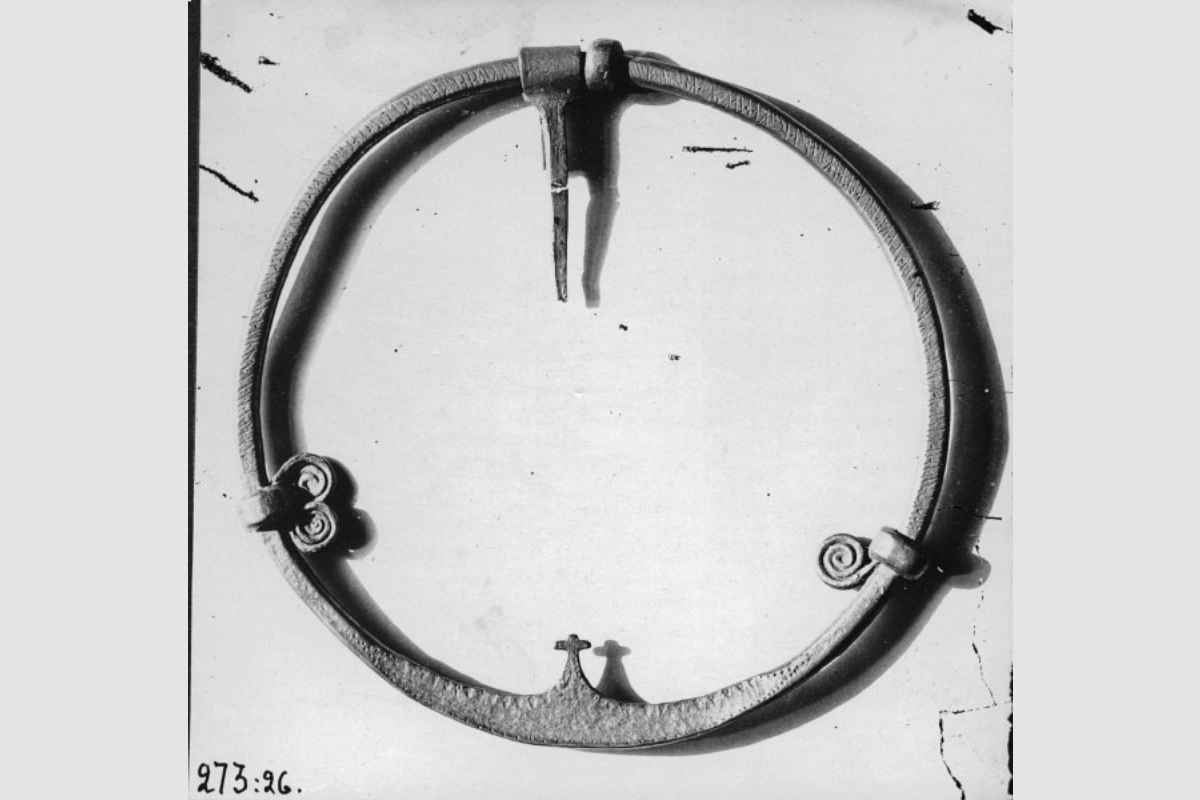
The 45 cm Forsa Ring carries a runic inscription that mandates fines in oxen and öre, a silver weight unit. Source: Carl Fredrik Lindberg
In search of economic understanding
Our current understanding of the economic system in Viking Age Scandinavia is limited.
Professor Edvinsson, however, believes historical artifacts, like the Forsa Ring, can form a basis for further, more sophisticated analysis.
"The price level in Sweden, even in the northern regions, appears comparable to other parts of Western Europe," he adds.
"This may indicate a high level of economic integration during this period, though prices were much higher in Byzantium and the Muslim world. By establishing a price level for Sweden, we can assess the economic profitability of activities such as exporting slaves."
Professor Edvinsson will use the information from the Forsa Ring and other sources in an attempt to form a greater understanding of pricing in this era.
"My plan is to conduct a comparative study of the Nordic monetary system during the Viking Age and subsequent centuries (800–1300). We still know little about various monetary terms used in sagas and early provincial laws from the 12th and 13th centuries," he says.
"Currently, I am focusing on analyzing a monetary unit called the 'penny blue,' mentioned around 1150, which was used to value grains," Professor Edvinsson adds.
"I hypothesize that prices rose significantly in the late 10th century and then again in the 13th century. These movements would be comparable to the better-known Price Revolution of the 16th century."
We get to provide readers with original coverage thanks to our loyal supporters. Do you enjoy our work? You can become a PATRON here or via our Patreon page. You'll get access to exclusive content and early access.
Feel free to reach out to discuss potential stories that may be in the public interest. You can reach us via email at [email protected] with the understanding that the information you provide might be used in our reporting and stories.