


According to a recent study published in the Journal of Anthropological Archaeology, Norwegian society during the Viking Age may have been more violent than that of Denmark.
Conversely, the research indicates Danish society was potentially more advanced and had a higher level of social stratification.
The research was carried out by analyzing several key indicators, including skeletal trauma and weapon frequency – to ascertain the level of violence – and runestones and monumental constructions, which provide evidence of the steepness of the social pyramid.
Shifting perspectives
While the Vikings have long held a reputation as fearsome warriors and ruthless fighters, the focus in recent decades has shifted.
Today, much of the academic research related to the Viking Age is centered more on exploring their abilities and achievements in areas such as trade, shipbuilding, and cultural influence.
However, the paper Violence as a Lens to Viking Societies: A Comparison of Norway and Denmark appears to suggest that the characterization of the Vikings as violent may have had some basis in fact, at least when it comes to Norway.
The analysis, which was carried out by an international team of researchers headed by Jan Bill of the Norwegian Museum of Cultural History, also suggests there was significant variation concerning different Norse societies during the Viking Age.
- READ MORE: A Viking history of Norway (Part 1)
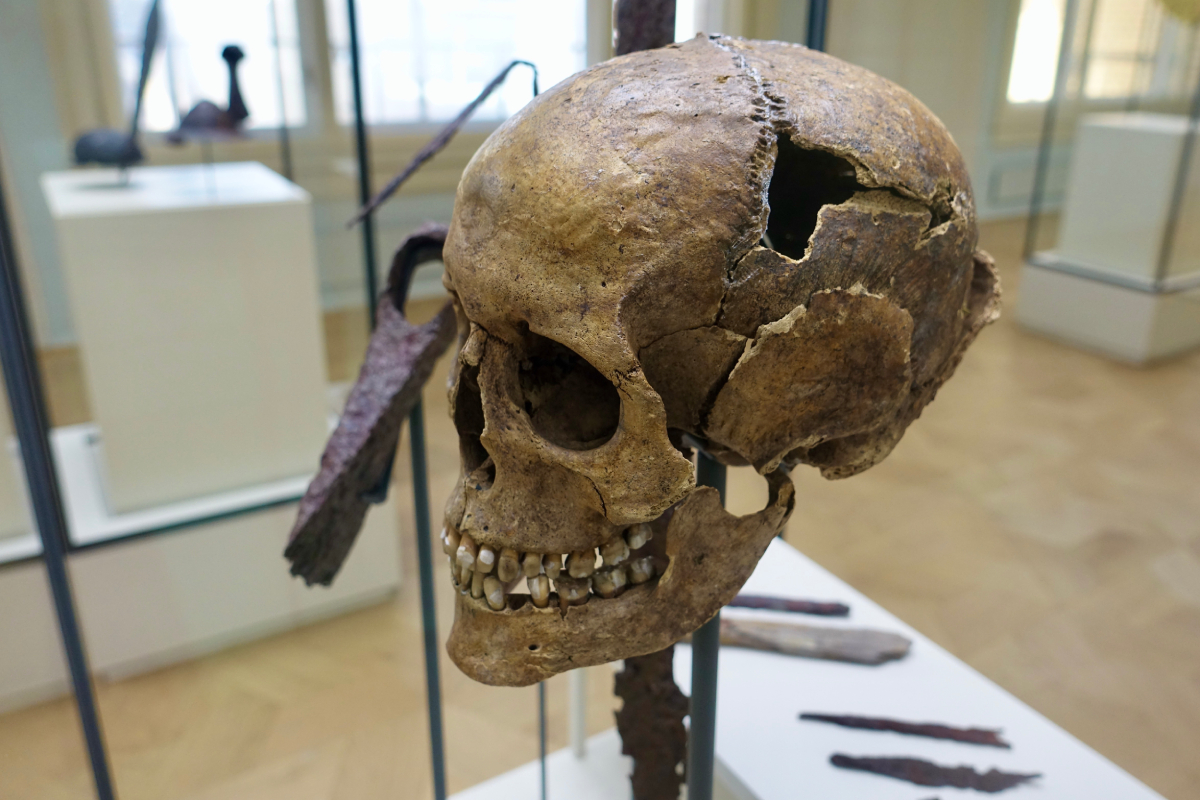
Analysis of Viking Age skeletons revealed that 60% of Norwegian remains displayed signs of violent injuries, compared to only 6% of Danish remains. Source: Wolfmann (CC BY-SA 4.0)
Steeped in violence?
In particular, the paper indicates that while there were relatively few differences between Norwegian and Danish societies during the Iron Age, Norway appeared to become a much more violent society than Denmark as the two regions moved into the Viking era.
To reach these conclusions, the team analyzed the amount of blunt trauma suffered by skeletons from the Viking Age that have been found in Norway and Denmark, and also assessed the number of swords found from this period in the two countries.
The researchers found that blunt trauma was much more common in Norway during the Viking Age than in Denmark.
Overall, of the 30 Norwegian skeletons analyzed, 18 individuals (60%) had some form of sharp, blunt, or penetrating injuries, including 14 with injuries to the cranium.
Of the 30 skeletons analyzed, approximately a third are believed to have suffered a violent death.
Conversely, of the 82 Danish skeletons examined, only five individuals (6%) had experienced some "perimortem sharp or penetrating force trauma."
The researchers also noted that while there is evidence that six of the Danish individuals likely died from some form of violence, five of these appeared to have been planned executions.
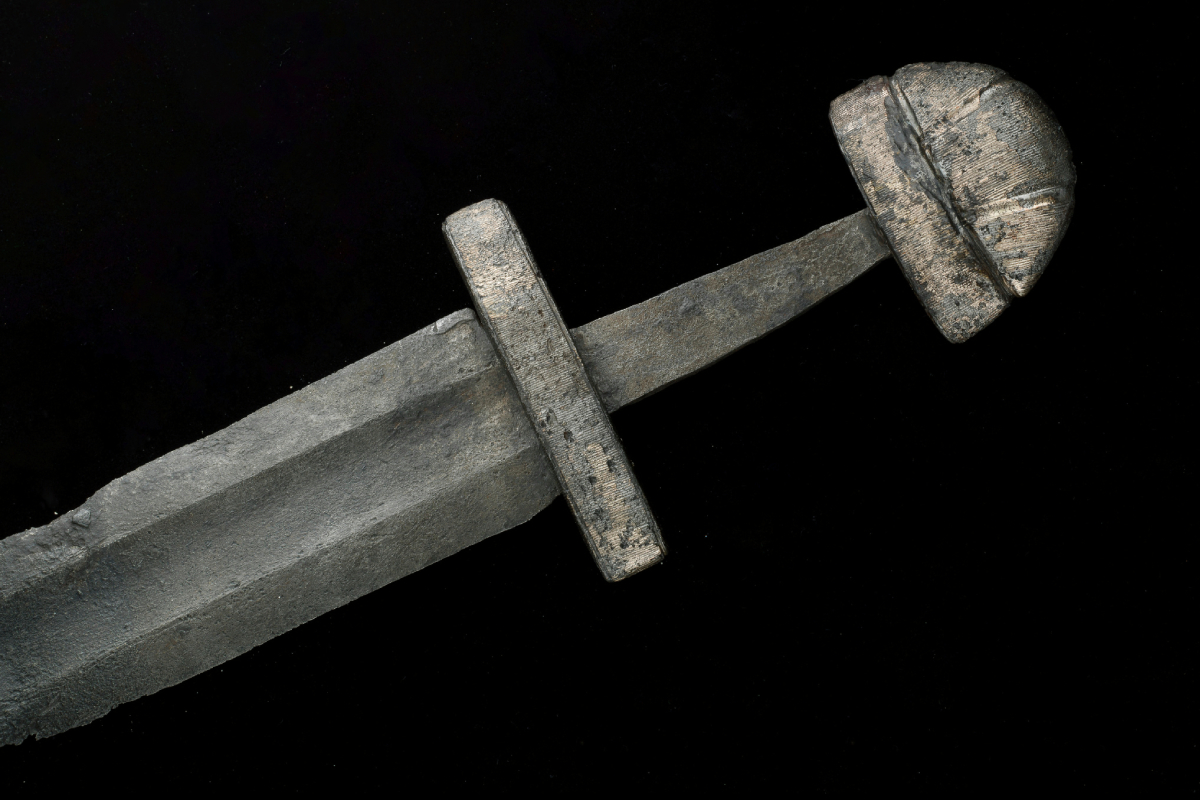
Researchers found over 2,000 Viking Age swords in Norway, whereas only 80 were found in Denmark. Source: NTNU University Museum
Weapons more prevalent
The researchers also recorded the number of swords found in the two countries.
Although these were primarily preserved as grave goods, the experts note that a greater number of swords is considered a good indicator of the propensity for violence in a given society.
The researchers consulted the databases of the five archeological museums in Norway and found more than 2,000 swords from the Viking Age.
In Denmark, the team identified only 80 swords distributed across 77 different grave sites. In both countries, the researchers found a higher number of swords per kilometer in areas with a high population density.
The authors concede that the greater prevalence of swords in Norwegian graves does not in itself prove beyond doubt that the use of swords was more common in the general population.
At the same time, they assert that carrying weapons may have been more integral to the individual identity in Norway than in Denmark and that swords were clearly a meaningful part of everyday life.
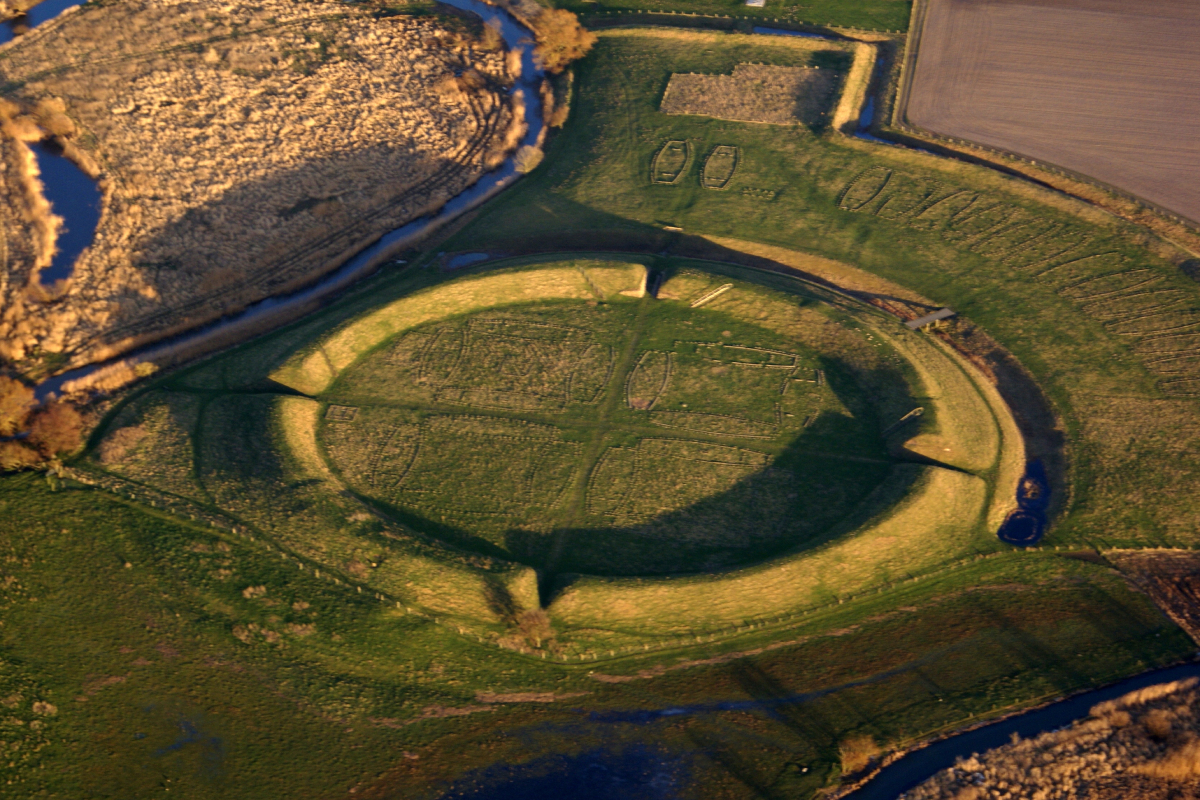
The study found that Denmark had a more stratified society and more robust centers of authority during the Viking Age. Source: Thue C. Leibrandt (CC BY-SA 3.0)
Greater concentration of power
The team also identified significant differences in the make-up of society between the two neighbors.
By analyzing runestones and earthworks from the Viking Age in the two countries, the researchers found that Denmark was more stratified than Norway, with more robust centers of authority.
Although the researchers noted a number of large earthworks in both countries in the preceding Iron Age, there appeared to be a notable decline in these constructions in Norway during the Viking Age itself.
In Denmark, on the other hand, there was an increase in these works that peaked during the reign of Harald Bluetooth.
This development suggests a more notable concentration of power and the ability to muster significant human resources.
The runestones also displayed more titled ranks in Denmark than in Norway, again indicating a society that was becoming increasingly stratified.
The researchers noted that these differences could also help to explain why violence was apparently more common in Norway than in Denmark in this era.
As the authors comment in their paper, centralized political authority is closely associated with "internal pacification."
Conversely, a more diffuse concentration of power is often associated with higher levels of violence on a domestic level.

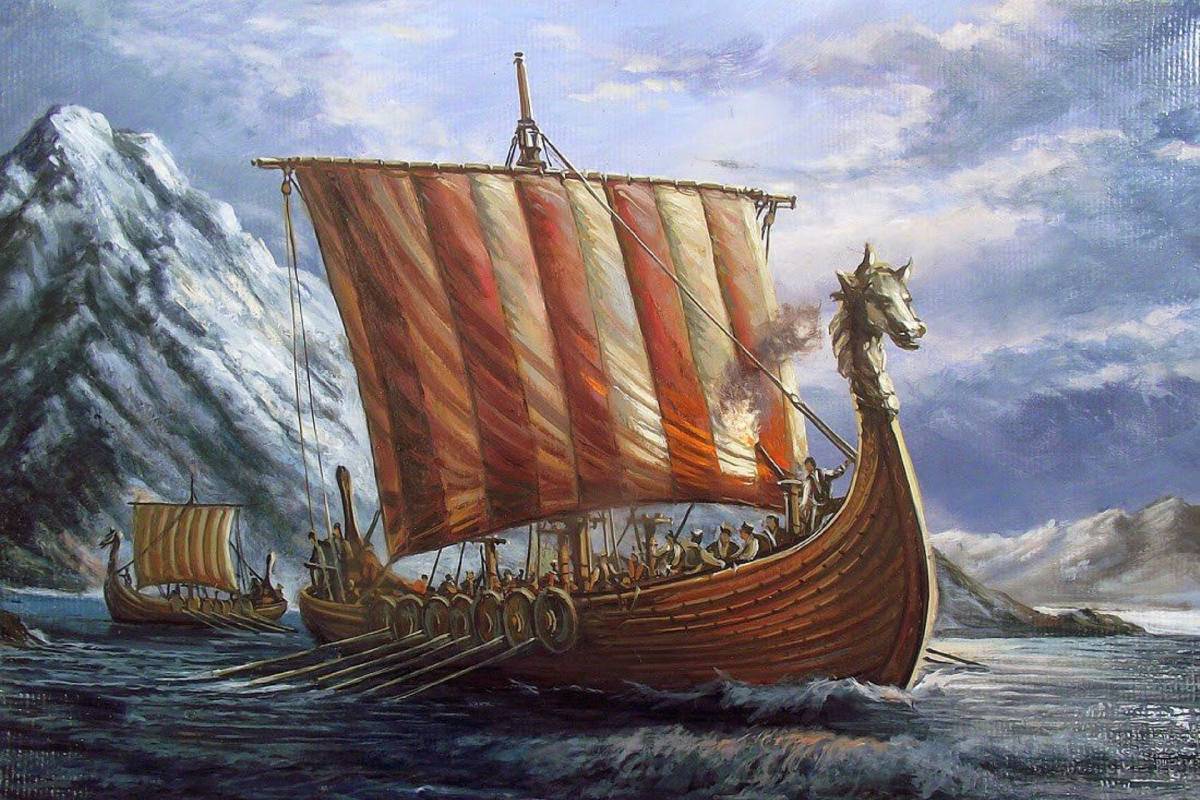
Researchers noted a significant societal upheaval during the Viking Age in Scandinavia, marked by a transition from paganism to Christianity. Source: The National Museum of Denmark (CC BY-SA 2.0)
Changing times
The researchers suggest that the evidence indicates a difference in terms of emphasis between the two countries.
In Norway at this time, the focus remained primarily on the family and the clan, and violence between smaller groups was more common.
In Denmark, on the other hand, there was more emphasis placed on the interests of society as a whole.
Naturally, both Norway and Denmark – just like the other countries in Scandinavia – were at this time in a state of tremendous flux; nothing was static.
The Viking Age was marked by societal upheaval as Norse communities moved away from small fiefdoms and family feuds to larger kingdoms and, eventually, nation-states.
Simultaneously, the personal beliefs of the populations were also shifting from traditional Norse pagan values to the tenets of modern Christianity.
Still feared in distant lands
Yet, while the study suggests violence at home may have been more common in Norway, this does not mean that Danish Vikings were less fearsome in battle.
Indeed, some of the most memorable military campaigns and achievements of the Viking Age, from the establishment of the Danelaw in Great Britain to the Battle of Assandun, were fought by the Danes.
It should also be noted that two of the most famous Danes – Harald Bluetooth and Cnut the Great – both also ruled Norway for a period.
Perhaps it could be said that the average domestic Norwegian Viking may have been the better fighter in the period in question, but their Danish counterparts had the greater vision.
We get to provide readers with original coverage thanks to our loyal supporters. Do you enjoy our work? You can become a PATRON here or via our Patreon page. You'll get access to exclusive content and early access.
Feel free to reach out to discuss potential stories that may be in the public interest. You can reach us via email at [email protected] with the understanding that the information you provide might be used in our reporting and stories.



_Museum_Oslo._VIKINGR_Norwegian_Viking-Age_Exhibition_14_Grave_find_Nordre_Kj%C3%B8len,_Sol%C3%B8r._Sword_Spear_Axe_Arrows_Skull_(woman_155_cm_18-19_years_old._Female_warrior%3F_Kvinnelig_kriger%3F)_Late_10th_c._4747.jpg)
