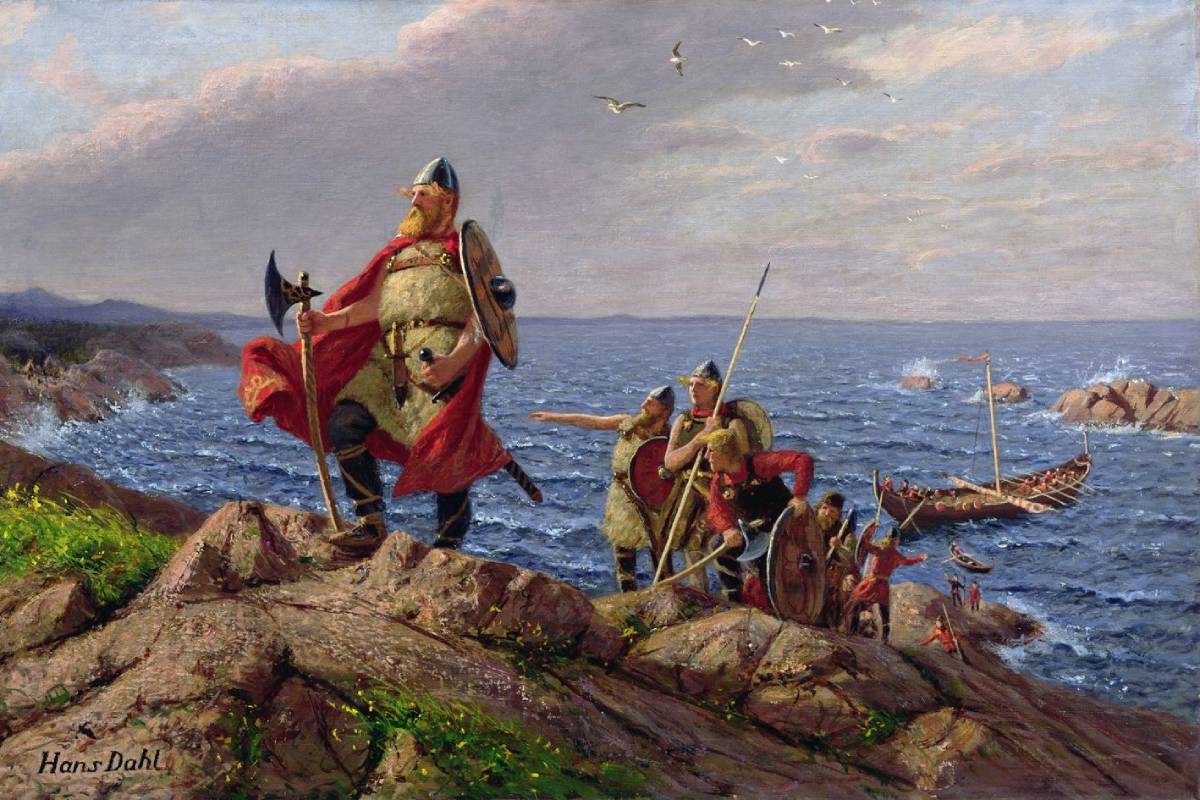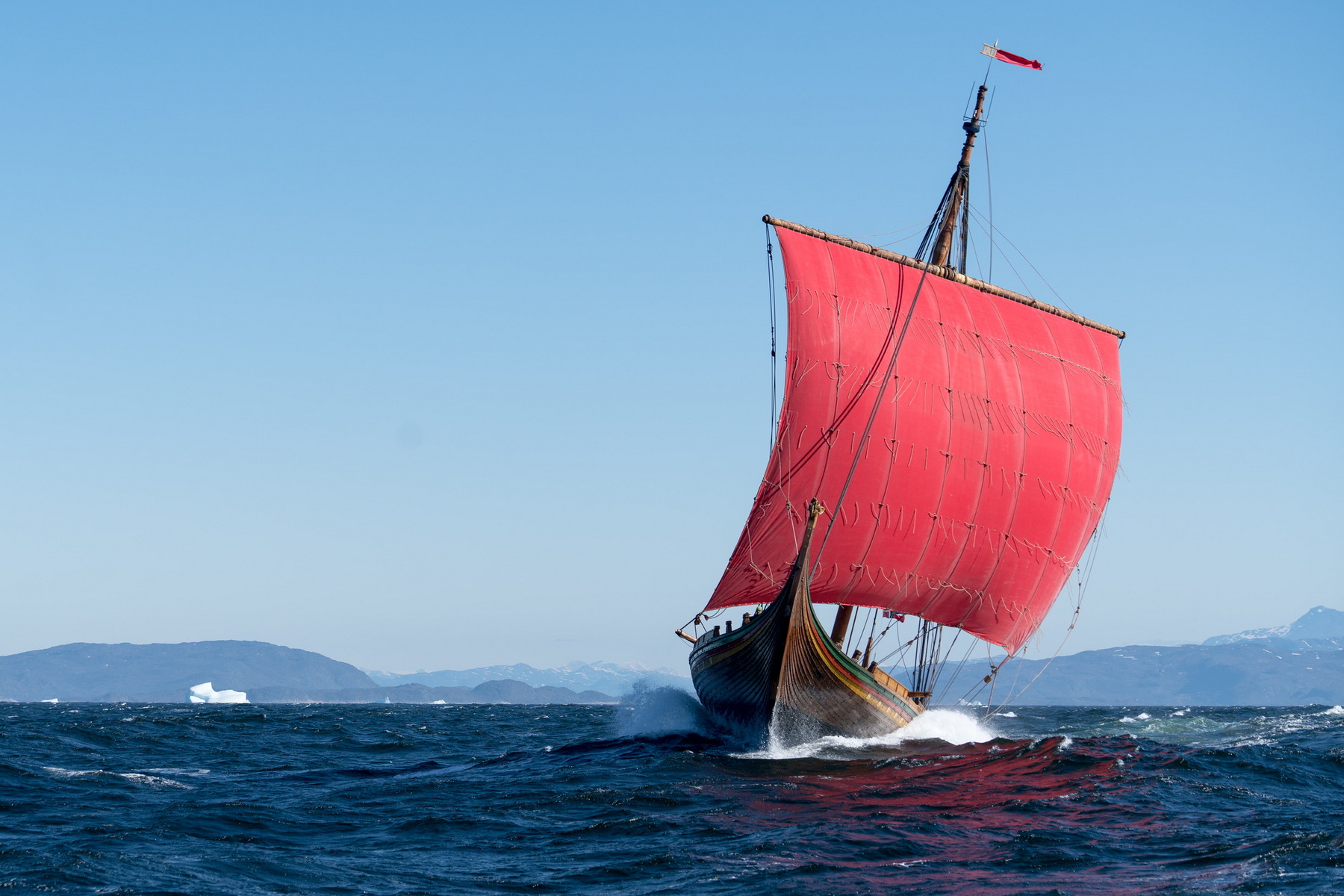


Can you imagine our delight, at The Viking Herald, when Viking-era history found itself at the center of a national furor in Norway?
So how did a painting made for the Chicago World Fair in 1893, about eight centuries after the last Viking raid occurred, become the battleground for the ongoing "culture wars"?
The tip of the iceberg in Oslo's recent cultural flowering
It only seemed like yesterday that Norway's newly opened Nationalmuseet (National Museum) was the toast of the town.
Taking pride of place at the entrance to Oslo's gentrified harbor district, the USD 650 million new Nationalmuseet was opened last June to almost universal fanfare.
The new museum has combined the collections of several former galleries and museums. It includes diverse pieces ranging from Edvard Munch's angst-ridden painting Skrik to a wall of reindeer skulls and a whole room dedicated to Scandinavian design (move over, Ikea!).
The new museum is not only the Nordics' largest but surely is a sign of a new cultural flowering in the "Tiger City" that started more than 20 years ago with the opening of the sleek Opera House and has continued, in recent times, with the newly constructed temple of Edvard Munch (The Munch Museum, Munchmusset – it may be billed as the world's largest museum to a single artist, but many locals have compared its design to that of a tombstone) and the award-winning Deichman Library.
Yet despite all the fanfare that the new Nationalmuseet has received since its opening last June, it was this week that the museum, along with its board of directors, sailed into a storm of controversy over one painting that wasn't even on display...
Above the staircase
As someone who grew up in the cultural backwaters of the world (apologies to all fellow West Australians out there, but Perth isn't exactly the Left Bank of the Seine), you can imagine my sheer joy – as a self-professed history nerd – when I entered the old National Gallery Museum, just off the city's main drag, Karl Johans Gate, for the first time, back in 2013.
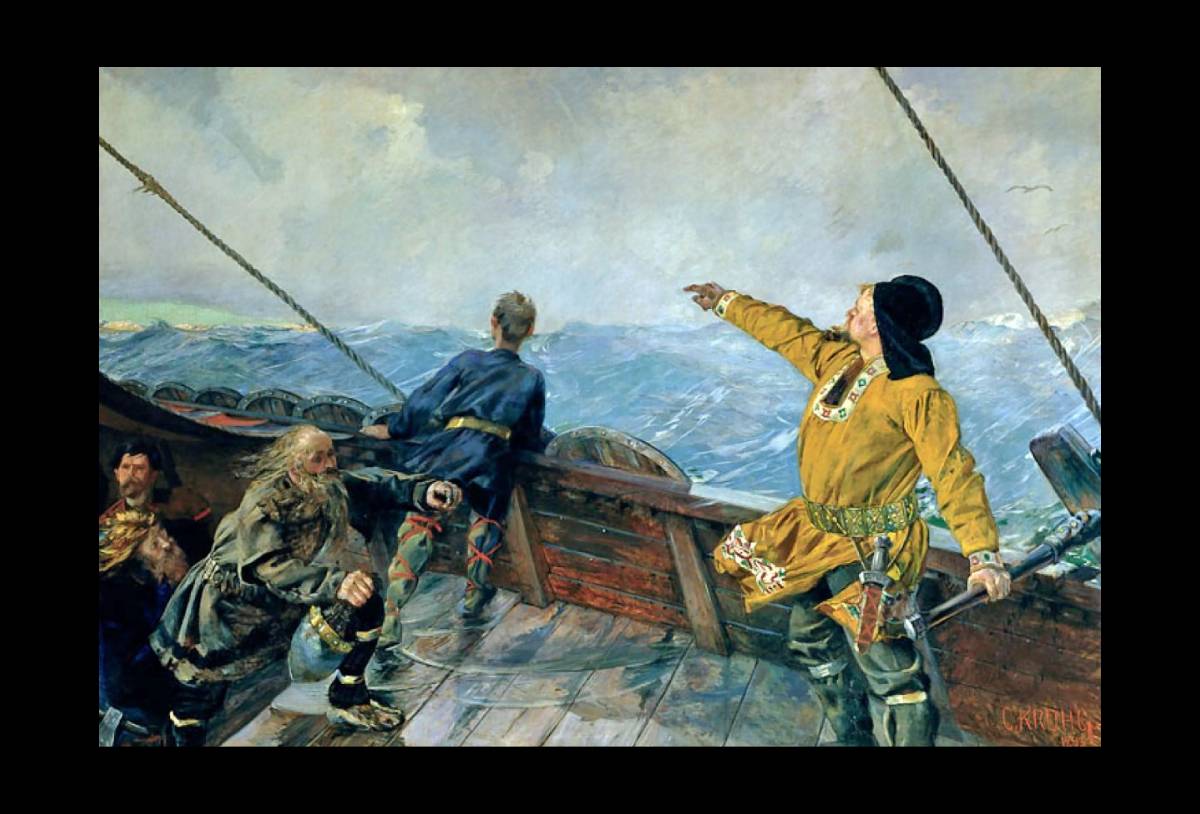
As I bought my ticket and walked in to soak up the cultural ambiance and sophistication, one painting caught my eye. Perched high above the gorgeous old 19th CE wooden staircase was the epic Leiv Eirikson oppdager Amerika (Leif Erikson discovers America).
This painting, by the doyen of the Norwegian realist art movement, Christian Krohg, was commissioned by the Leif Erikson Memorial Association in Chicago (a group of mostly recent Norwegian immigrants to the United States) in time for the 1893 World's Fair.
It depicts a scene from one of the Icelandic sagas in which Lief Erikson, a Viking-era explorer, was said to have first sighted the American landmass more than five centuries before Christopher Columbus.
The painting was as much a nod to the Viking era exploration, and settlement, of the North American landmass (which was only conclusively confirmed with the discovery, in the 1960s, of an early 11th-century Norse settlement in Newfoundland at L'Anse aux Meadows) as to the recent trend of thousands of Norwegian immigrants who left dire poverty to start a new life in the United States during the second half of the 19th century.
Yet not everyone was as captivated by the painting as I was when I first gazed up at it more than a decade ago.
Krohg canceled?
In an interview with the newspaper Aftenposten, the Nationalmuseet's Director of Collections, Stina Högkvist, explained why the Krohg painting had been removed from the public's view.
The painting was, in Hokvist's opinion, "colonialistic" and "romanticized Norwegians who went to America." The response was unheralded in Norway. Hogkvist, unfortunately, copped it from all angles.
From the left, Hogkvist was blasted by members of Norway's artistic and cultural community whilst as a sign of censorship, whilst, for many on the right, the decision to "cancel" the painting smacked of the long-heralded arrival of "woke culture" into the country.
The furor over the painting also entered the Norwegian halls of power, Stortinget (Norwegian parliament), with a parliamentary committee on culture demanding an explanation from the Board of Directors of the National Museum, headed by Director Karin Hindsbo.
It also helped unite the political spectrum, with one Conservative Party (H) politician apparently gagging on his morning cup of joe when he read the interview, while a far-left MP disagreed that the painting was "colonialistic."
Since the original Aftenposten interview, Högkivst was backtracked and said she never claimed it was "colonialistic," whilst the Director of the Nationalmuseet, Karin Hindsbo, went further to state that Christian Krogh, one of the most important artists in Norwegian history, had not been "canceled."
It will now, for the next month, be hung up near the museum's entrance, in a nod to its former place at the old National Gallery.
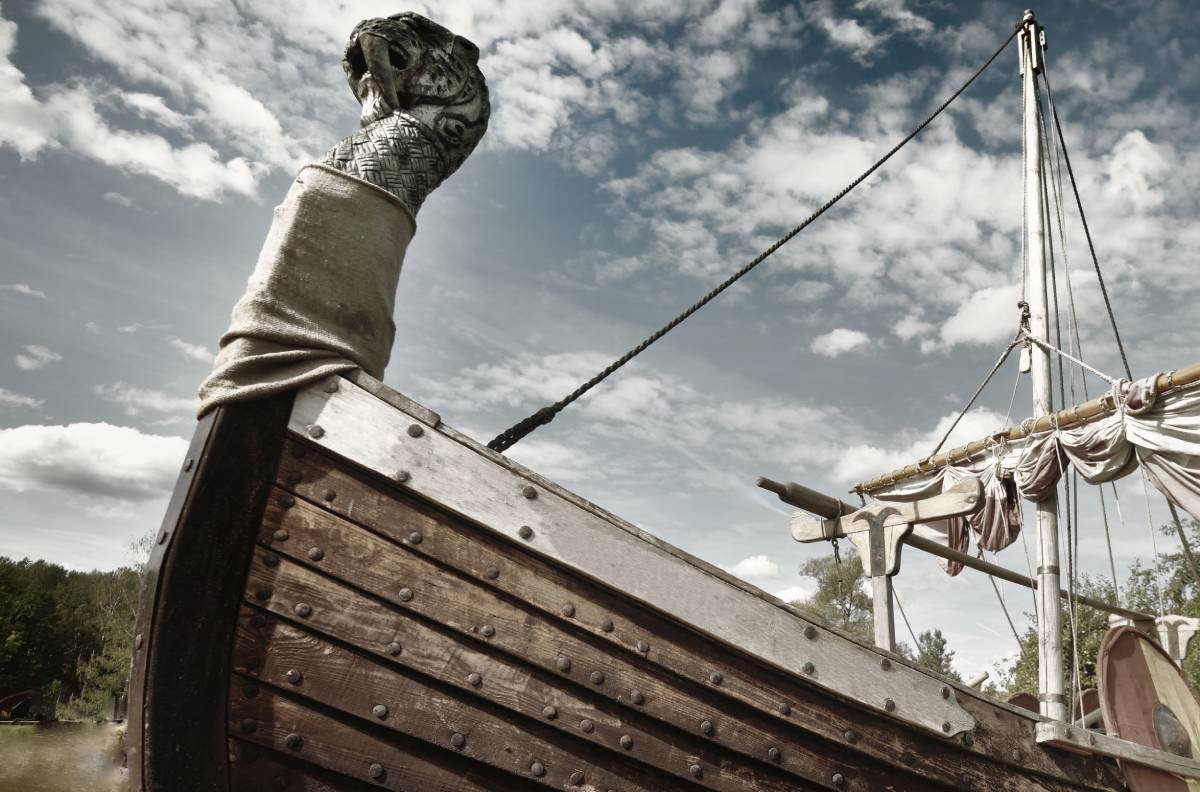
The Viking expansion spelled doom for many local populations. Photo: Aastels / Shutterstock
Norway and its own reckoning with a "colonialistic" history
Taking a step back (and a deep breath) from all the kerfuffle over a painting, let us look at the context.
There has been an underlying message, from all sides of Norwegian society, that they are, unlike their British or American friends, slightly more (dare I say) intellectual.
Many in Norway can look at a controversial piece of art and understand it is a product of its time and place. Context, as they say, is everything.
Norway is not a nation that topples statutes or cancels art. In fact, it does the very opposite by building huge, taxpayer-funded temples to culture and the arts and using this art to try and understand the past, warts and all.
Whilst the history of Norway, during the early modern period, did not include the sort of mass slave trade that blighted many other parts of Europe, it is not without sin.
Norway, as a part of the personal union of the Norwegian and Danish crowns (from 1524 to 1814), was part of a transatlantic slave trade that saw Africans captured, especially around what is now the country of Ghana, and shipped to the Caribbean ports of St. Croix and St. Thomas.
It has been estimated that Denmark-Norway was responsible for shipping more than 85,000 Africans to become slaves between 1660 and 1805.
Whilst the modern Norwegian state, unlike its English, Dutch, Spanish, or American counterparts, wasn't necessarily built on slavery, its medieval ancestor was.
The Viking expansion, which saw Norse peoples head outward, from Scnadinavia, to the four corners of the globe, spelled doom for many local populations, from the Baltic to the Black Sea and the British Isles.
Slavs, Anglo-Saxons, Franks, and countless other peoples were forcibly captured and enslaved or, even worse, raped, violated, and mutilated.
Whilst the Vikings were not alone, in the early medieval period, in creating a network of human bondage, they were, perhaps, the most successful Europeans doing it.
Unlike many countries that are dealing with a reckoning over their past, Norway is leading a healthy debate on its more dark periods of history.
Surely if a painting depicting a 19th-century interpretation of an Icelandic saga can be "canceled," what next?
Would the thousands of Viking-era artifacts on display be canceled as they came from a society that directly benefitted from human suffering and slavery?
Luckily, this would never happen as, unlike many in the Anglophone world, Norwegians are a bit more pragmatic and a bit less hysterical, except when it comes to a painting not being hung. In the opinion of this humble author, that is totally understandable.
What has it taught us?
So what has this whole sorry lesson taught us? Well, firstly, the Nationalmuseet has sailed through a storm of controversy and, somehow, managed to survive... with a huge amount of backtracking.
It now wants to use the painting – as it originally should have been hung to do – to talk more broadly about interpretations of history.
Is the painting colonialistic? Probably not. Does it show a Eurocentric view of history? Yep. Is this a bad thing? Well, yes, but the painting is over 120 years old. A product of its time and place.
Let us also remember that, in 1893, Norway was suffering under its own "colonial" period... it was in the last phase of being tossed between Denmark and Sweden, a situation that had been going on for about 500 years and was to stop in 1904 with final independence.
As for the painting itself, a cynic may say that this is the sort of controversy that will see the coffers of the Nationalmuseet bulge with many more people planning a visit to see the now controversial piece of art.
Surely the media storm has also piqued the interest and curiosity of many Norwegians, especially those of the TikTok generation, who knew little of Leif Erikson, the Icelandic sagas, or the Norse exploration and settlement of North America to find out more. In the opinion of this author, that is surely a good thing.
To read the Aftenposten interview with Stina Högkvist, click here (in Norwegian) whilst the Smithsonian Magazine has published an article on the latest scientific findings from the Norse settlement of L'Anse aux Meadows, available to read here.
We get to provide readers with original coverage thanks to our loyal supporters. Do you enjoy our work? You can become a PATRON here or via our Patreon page. You'll get access to exclusive content and early access.
Feel free to reach out to discuss potential stories that may be in the public interest. You can reach us via email at [email protected] with the understanding that the information you provide might be used in our reporting and stories.