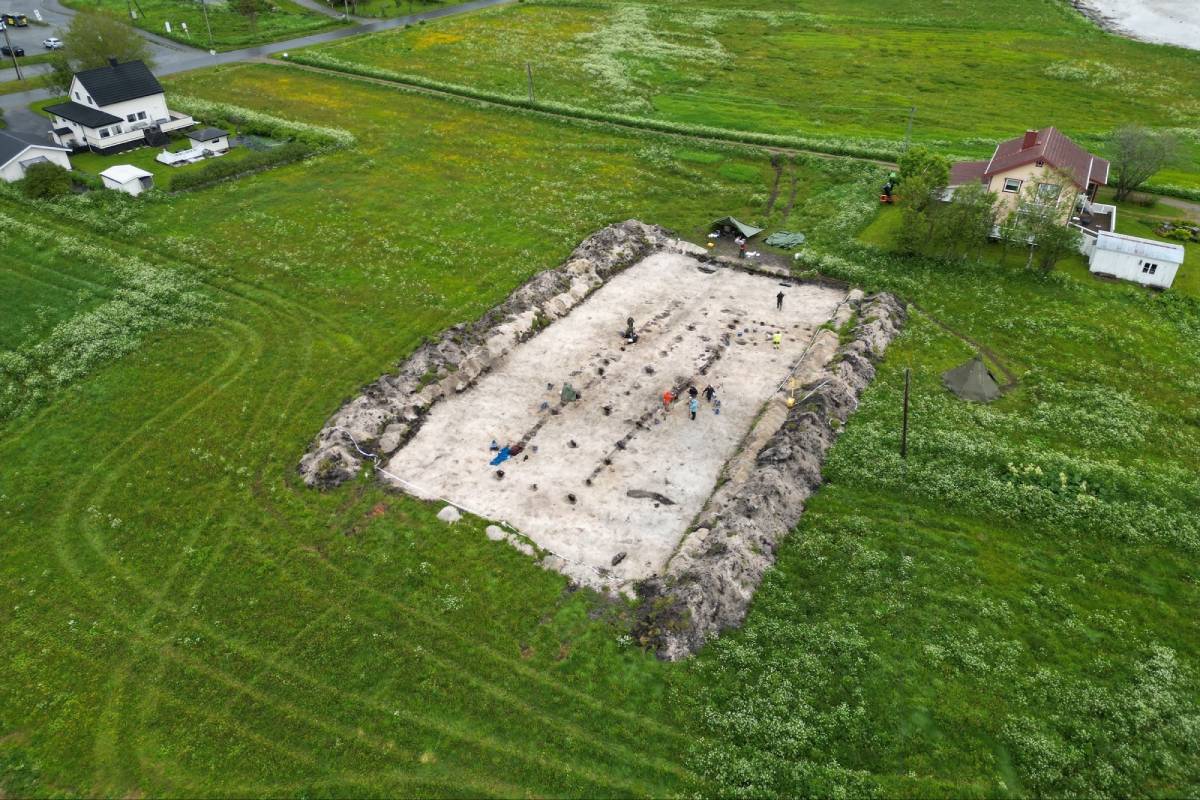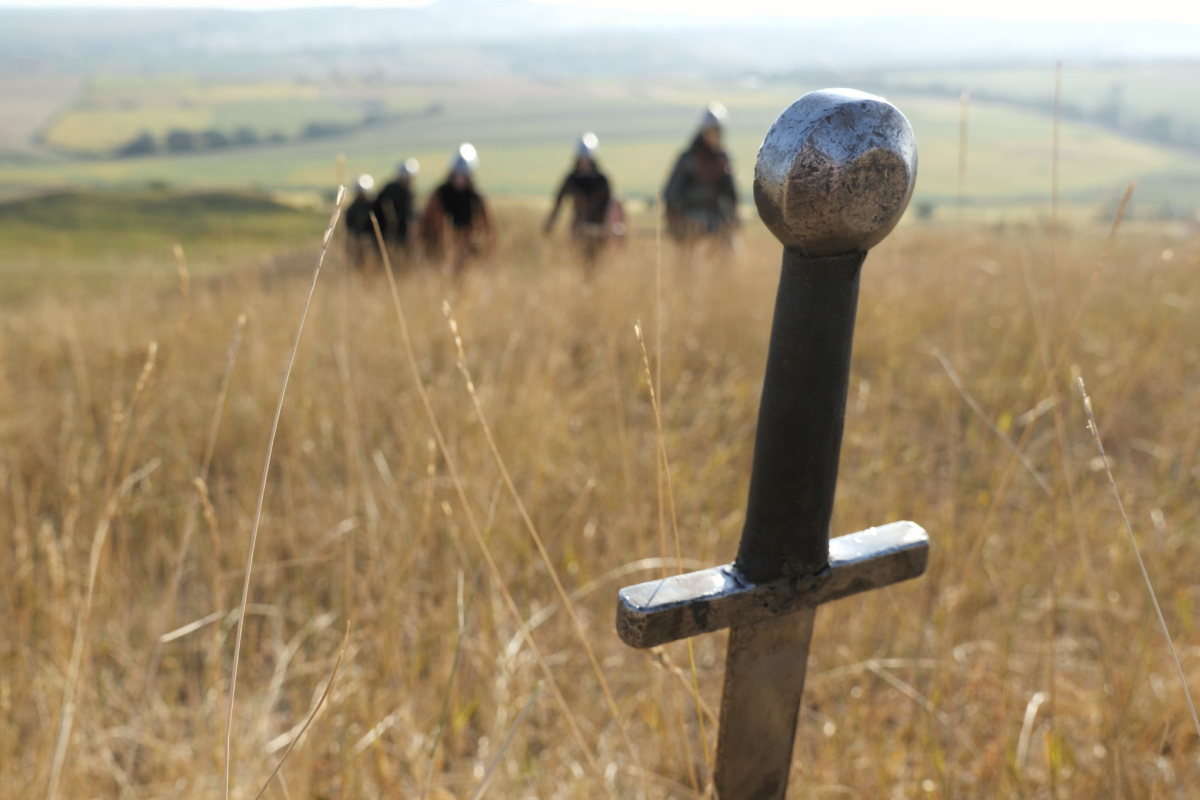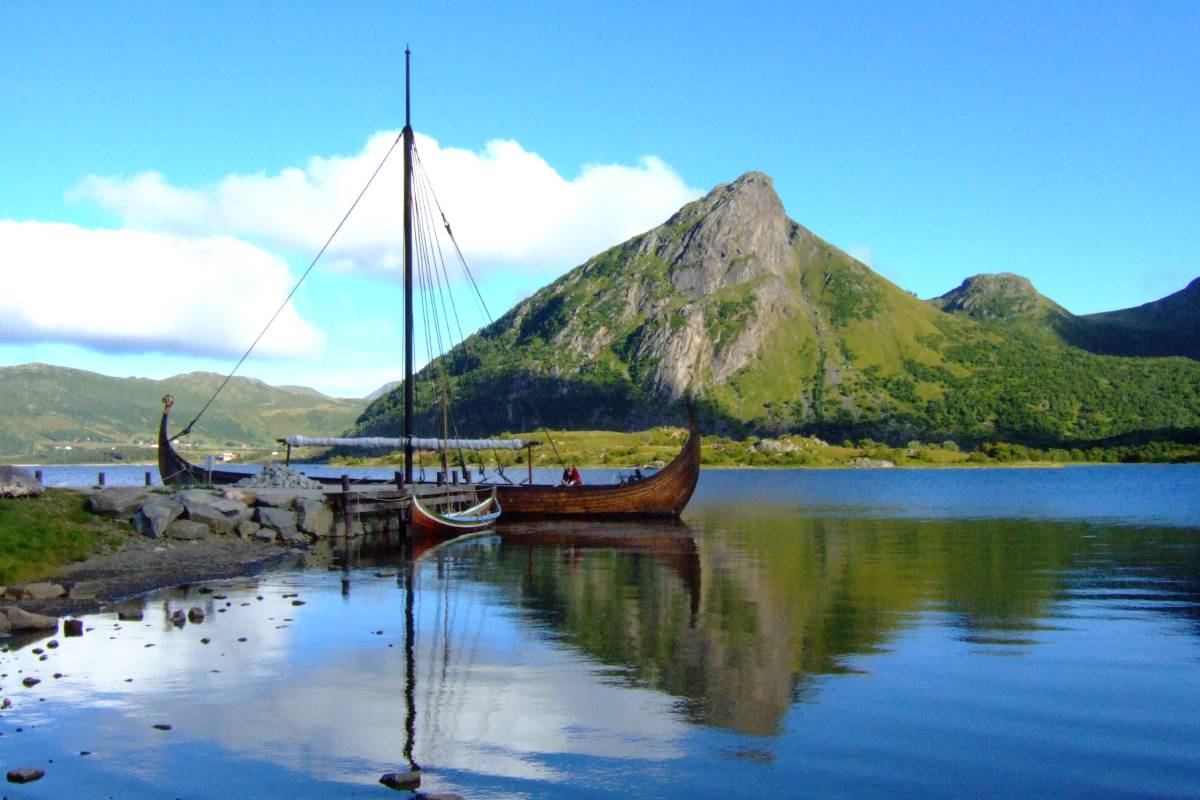


When, in season four of the hit television series Vikings, Ragnar Lothbrok exhorts his fellow Norsemen to pull their ships out of the water and over the hills to attack Paris, it seems like an impossible feat – made for TV.
Certain written records, however, suggest that the act of dragging a ship across land – known as portage – is not so outlandish.
Both the 10th-century Byzantine text De Administrando Imperio and the 12th-century Rus text Nestor Chronicle describe instances of Vikings hauling ships over land. Now, a study taking place in Scotland could be about to provide further confirmation of this seemingly remarkable feat.
A tempting shortcut
Under the Norse and the Sea Project, archeologists are investigating whether the Vikings may have dragged ships and smaller boats across land in western Scotland, according to the BBC.
The project is being led by the University of the Highlands and Islands' Institute for Northern Studies and also involves a small team of German archeologists.
It is thought that portage was employed by the Vikings to save on travel time and to evade the most dangerous waters.
In Scotland, the team is looking at whether the Vikings moved their ships across land to avoid traveling by sea around the 40-mile (64-km) Kintyre Peninsula.
The most likely site for this to have occurred is thought to have been close to the present-day village of Tarbert, near the base of the peninsula.
Here, there is a narrow isthmus that would have provided an ideal crossing point, enabling the Vikings to access the western islands and the North Sea in one direction, and the Scottish mainland in the other.
It has been speculated that the Norse could have moved their ships by hauling them over logs of wood.
- READ MORE: All you need to know about Viking ships
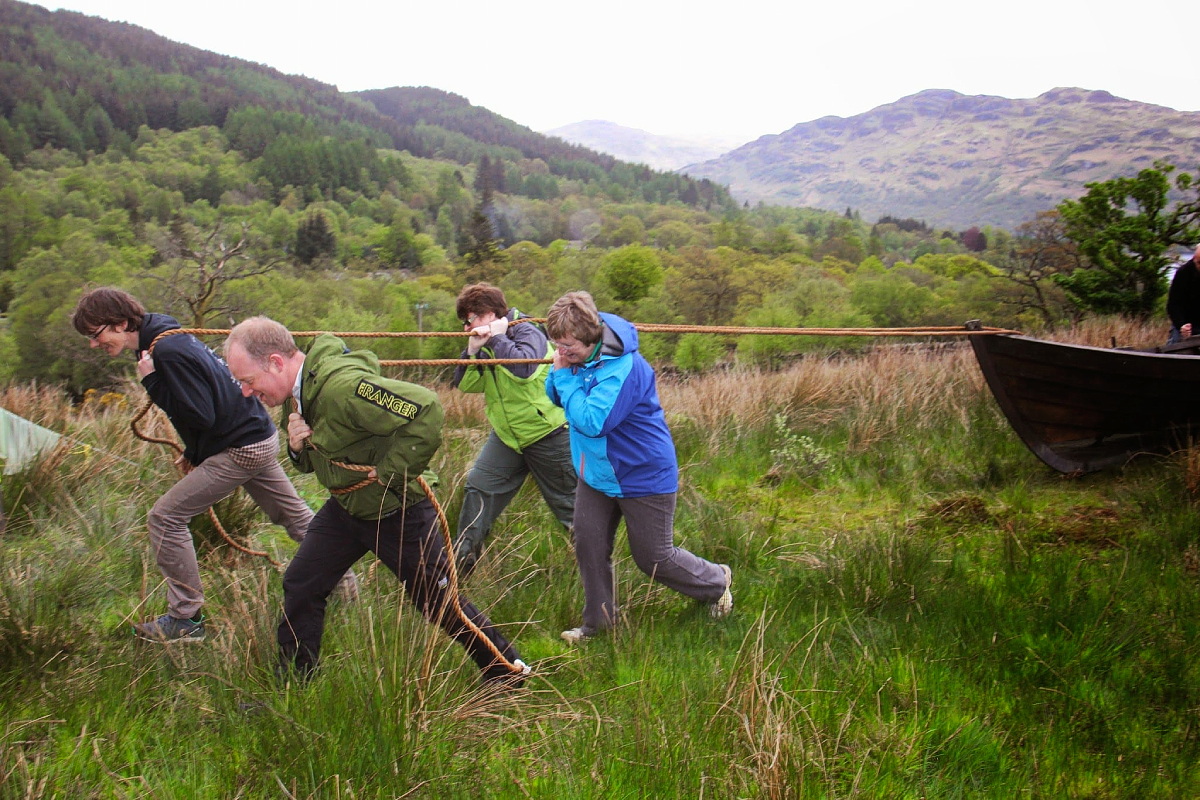
Volunteers in Scotland tested smaller boat portage with a Shetland "yoal" across the isthmus between Arrochar and Tarbet. Photo: Norse and the Sea Project
Historical hints
King Magnus held northward, along the coasts of Scotland, and messengers to him from Malcolm, the King of Scots, came to ask for peace. They said that the King of Scots was willing to give him all the islands lying west of Scotland, between which and the mainland he could pass in a vessel with the rudder shipped. Thereupon, King Magnus landed in Satiri (Kintyre), had a boat drawn across the neck (isthmus) of Satiri, he himself holding the helm, and thus he gained possession of the whole of Satiri... on the land side, there is a narrow isthmus, across which vessels are frequently drawn.
This section of The Orkneyinga Saga describes the actions of Magnus Barefoot, who reigned as king of Norway from 1093 until his death in 1103 and helped extend Viking rule in the west of the British Isles.
Although it is not a contemporary account, researchers believe the description of hauling ships across an isthmus could have its basis in historical reality.
The islands west of Scotland referenced in the saga include Islay and Gigha of the Inner Hebrides, both of which are known to have been raided by the Vikings.
In addition, a 2022 study of the population of Islay confirmed that many of its residents retained a significant amount of Viking DNA, suggesting that the Norse also established a permanent presence on the island.
Travel between these islands and the mainland would likely have been a common occurrence, and being able to "escape" the perilous journey around the peninsula would have held clear advantages.
Another clue lies in the name of the village of Tarbert itself, which in Gaelic translates as "over bringing," potentially referring to the carrying of boats.
There is also a second village named Tarbert on the island of Gigha. This settlement has a standing stone that is visible from the sea and may well have been used to guide the ships.
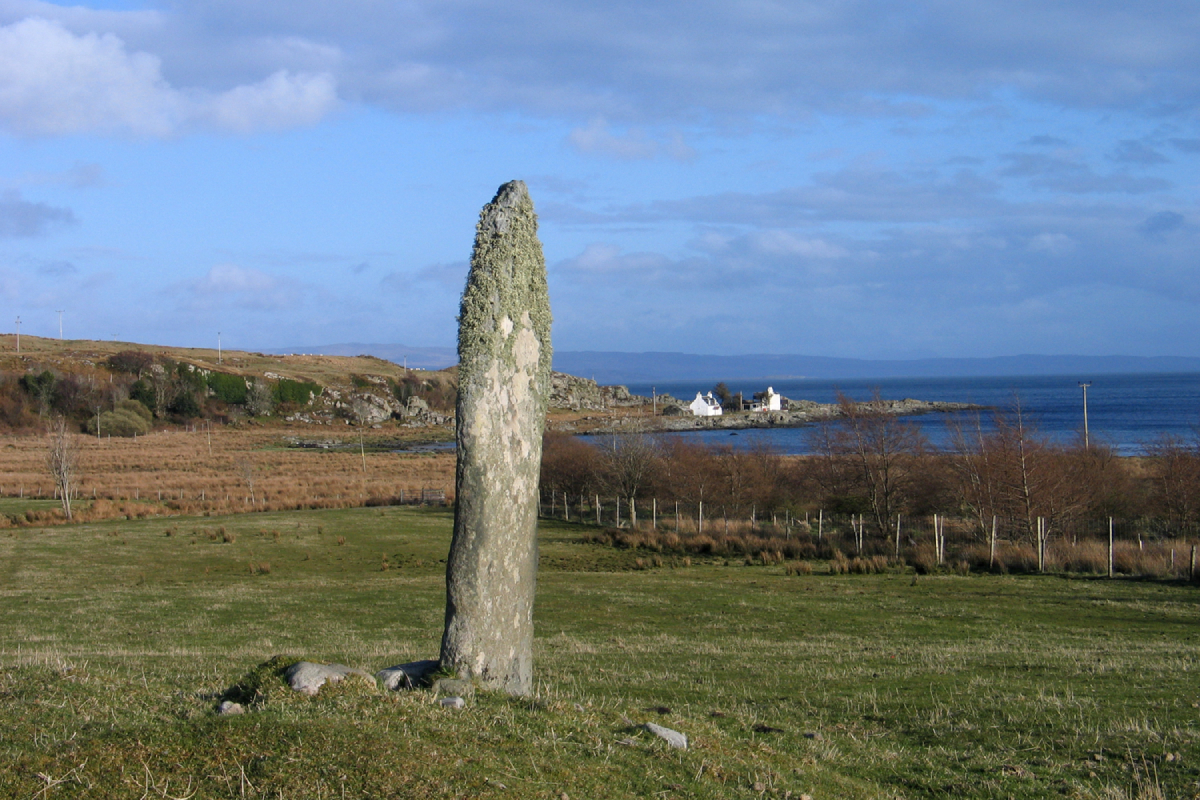
Archeologists suggest that the standing stone at Tarbert on Gigha, which can be seen from the sea, may have served as a Viking navigation marker. Photo: Trevor Littlewood
Experiments in archeology
Yet even if the stories of portage do have some truth to them, it is unclear whether the practice refers to the carrying of larger ships or only small boats.
Although several experimental attempts have been made to recreate the enormous feat of transporting full-size Viking ships, many have met with tremendous difficulty.
A crew in Denmark in 1996, however, was able to successfully maneuver the two-ton Helge Ask – a replica of the Viking warship Skuldelev 5 – across a 300-meter strip of land with the help of wooden runners smeared with grease and oil.
With the aid of four Icelandic ponies, 18 volunteers were able to pull the ship across the land in just 12 minutes.
Nevertheless, some experts believe it was more likely that portage involved pulling the smaller boats that were carried along with the ships and could have been used for less onerous trips.
This theory was tested in another archeological experiment as part of the Hidden Heritage Project.
Here, local volunteers were able to pull a Shetland "yoal," a kind of smaller boat still in use today, across the isthmus from Arrochar to Tarbet.
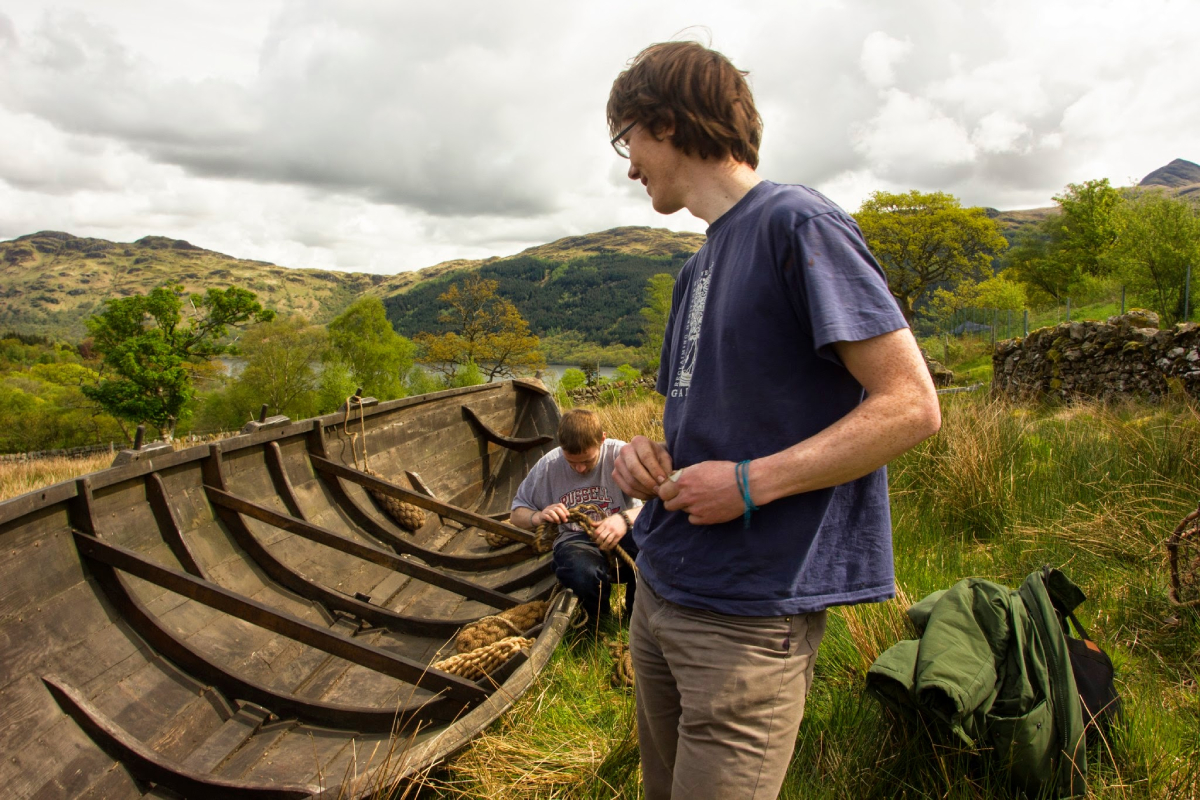
According to Professor Alex Sanmark, despite the effort involved, portage likely offered Vikings a safer and faster alternative to sailing Scotland's treacherous waters. Photo: Norse and the Sea Project
Awaiting confirmation
With the current Norse and the Sea Project, one potential lead comes from several pieces of ancient wood unearthed by a farmer in the 1990s.
The project team now intends to analyze and subject these artifacts to carbon dating to determine if they originated in the Viking Age.
Members of the team have also been investigating Viking use of inland waterways in Scotland.
Speaking to the BBC, Professor Alex Sanmark of the University of the Highlands and Islands' Institute for Northern Studies said there would have been clear value in moving boats across land at this location.
"The seas can be wild and the boats were rowed or sailed, and in Scotland the tides are very strong," he explained.
"Even though a portage may have taken a few hours to do and at great effort – you had to get everything out of the boat and then put it back in – in terms of safety and time saving, that seemed to have been worth it."
The results of the research are expected to be published next year.
We get to provide readers with original coverage thanks to our loyal supporters. Do you enjoy our work? You can become a PATRON here or via our Patreon page. You'll get access to exclusive content and early access.
Feel free to reach out to discuss potential stories that may be in the public interest. You can reach us via email at [email protected] with the understanding that the information you provide might be used in our reporting and stories.