

Whilst we moderns like to think we have a monopoly on moaning about the end of times – with escalating war in the Middle East and the world suffering due to a combination of climate change and overpopulation – we are not the first civilization to fret about our existential end.
Throughout history, countless civilizations, cultures, and religions have all thought deeply about their inevitable end: a cosmos-wide collapse that would signal the true end of times.
From the Christian Book of Revelation to the bloody events of the Hour in Islam, to the planetary restoration of Shambhala in Buddhism, to the dramatic image of Vishnu astride a white horse riding in to save the day and the planet from the forces of evil, all great religions have pondered what would happen when our world ceases to exist.
As we head further north, we find that the Old Norse religion was steeped in mythical answers to this existential question.
One of the most celebrated tales of this cosmic collapse comes from the rich tapestry of Norse mythology, which formed the centerpiece of the religious belief system in Viking societies.
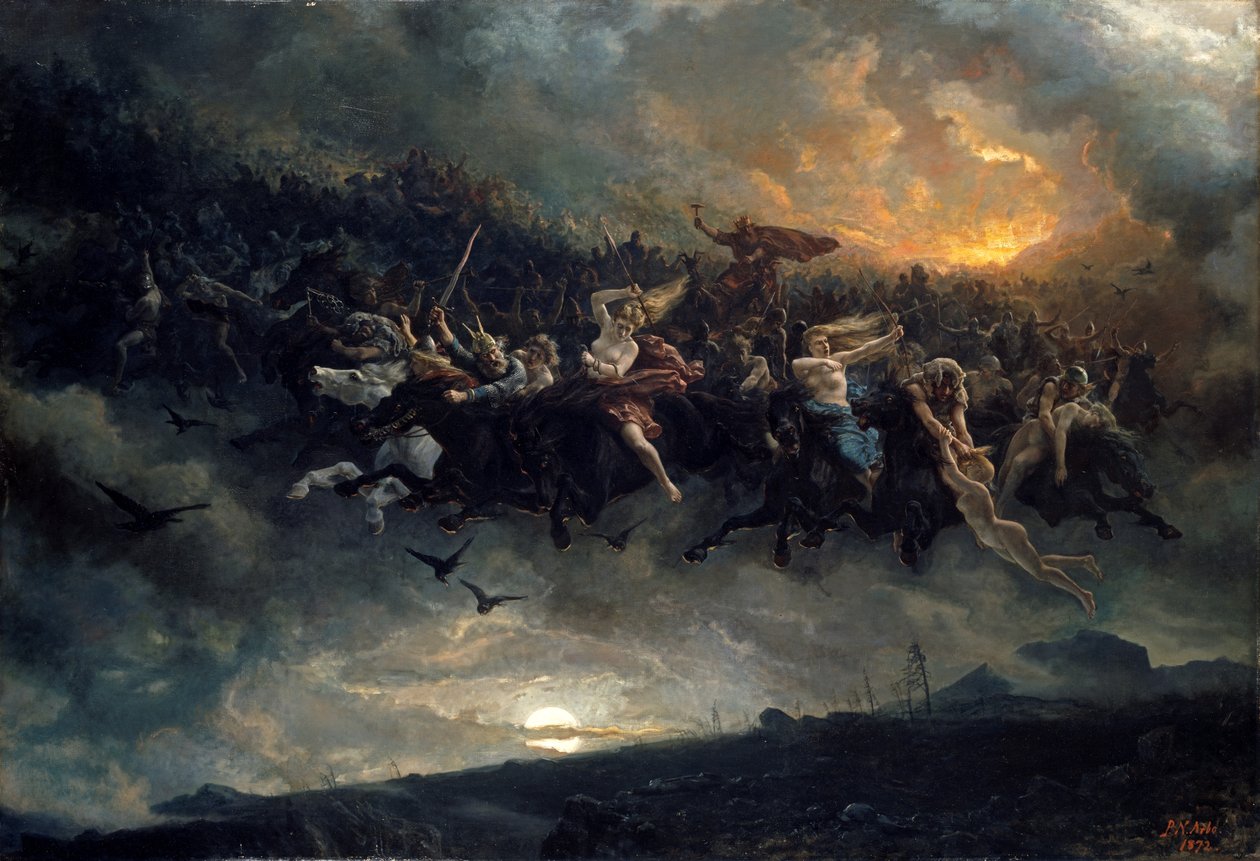
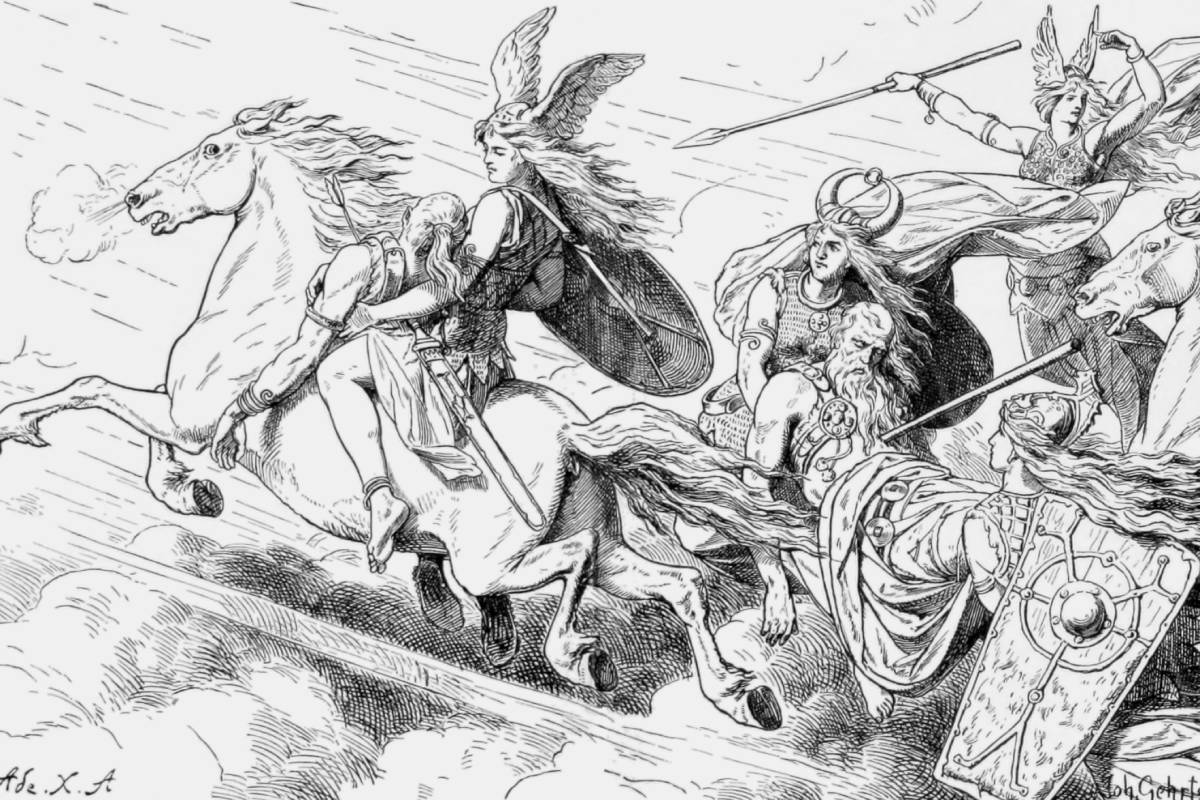
This was the tale of Ragnarök, the cataclysmic end of times, wherein the Norse deities would battle mythical monsters and creatures, eventually leading to the destruction of this world and the rebirth of a new one.
As Neil Gaiman wrote in his 2017 book, Norse Mythology (available on Amazon here), what preceded the events of Ragnarök was said to be a great winter – Fimbulwinter – that lasted three entire years, a time of cold, darkness, and terror.
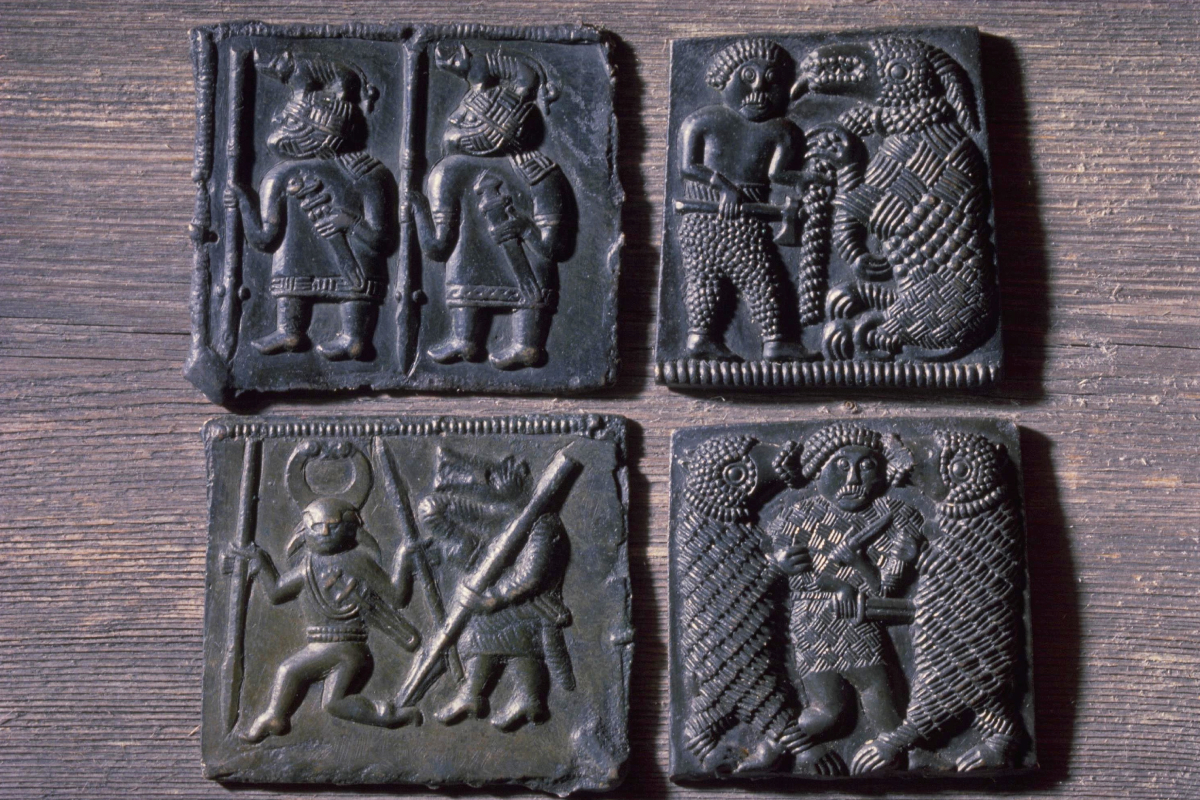
The Torslunda Plates are an example of early Germanic artwork that influenced Viking mythological and religious beliefs. Photo: Anställd vid Statens historiska museer, SHM
The evolution of Viking culture and society
The rich tapestry of Norse mythology, like the Old Norse religion itself, didn't – as U.S. presidential nominee Kamala Harris might put it – "fall out of a coconut tree."
These beliefs, legends, myths, and sagas very much existed – again, to borrow from Ms. Harris – in the context of "what came before them."
Much of the culture and religious beliefs of people in Viking societies evolved from earlier ancient Germanic cultures and societies.
The history of earlier Germanic societies shaped the culture, religious beliefs, and worldview of people in Viking societies throughout the Viking Age (c. 750 – 1100).
Though the Viking Age traditionally begins with the raid on Lindisfarne in 793, recent archeological discoveries have pushed that start date back a further half-century.
We know that the makings of the societies that produced Viking warriors hark further back still, into the very early medieval period.
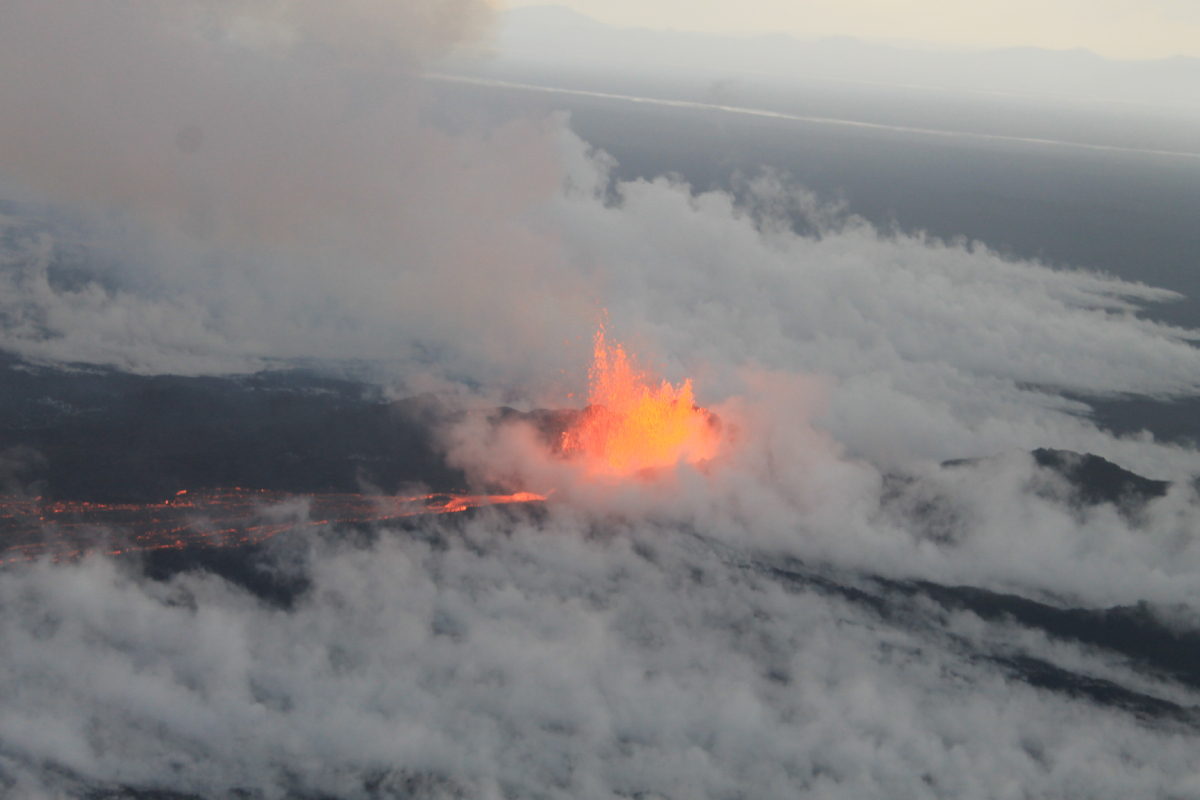
Massive volcanic eruptions in 536 caused ash clouds that led to years of darkness and cooling across Europe. Photo: peterhartree (CC BY-SA 2.0)
Worst. Year. Ever.
During this period, when much of the foundations of Viking culture and society, including religious beliefs, were being laid, a climatic event rocked the world – quite literally.
In the year 536 CE, three major volcanic eruptions led to a blanket of ash and debris that covered the sky and caused the most significant severe cooling episode of the past 2,000 years.
These eruptions caused temperatures in Europe to drop by as much as 2.5 degrees, meaning crops failed, and a never-ending darkness and winter gripped much of the world, from Constantinople to China.
Adding to this, a bout of deadly bubonic plague devastated much of Europe, North Africa, and West Asia a few years later, making the mid-6th century often noted as one of the worst periods in history for humanity.
Untold millions died from the effects of this harsh cooling of temperatures, which caused crops to fail and the skies to darken.
Whilst there were written records of people's reactions and panic everywhere from Constantinople to China, little research had been conducted on what happened in regions further north... until now.

Evidence of gold hoards from the 6th century suggests people offered treasure to the gods in hopes of ending the harsh winter. Photo: Erlend Bore / NTB
Eruptions led to a seemingly endless winter
A new study published in the Journal of Archaeological Science analyzed farming practices in Denmark during the year 536 CE. The research revealed that volcanic eruptions had a devastating impact on the people living in what is now Denmark.
By examining 100 pieces of oak from the 6th century, researchers discovered no tree ring growth between the years 539 and 541.
This lack of growth in trees meant no agricultural production – a disaster for 6th-century Danes, who were the direct ancestors of Viking society.
The research has painted a bleak picture. There was a steep decline in grain production, causing fields to be abandoned and forests to reclaim long-lost territory.
There is a theory that the famous (and might we add delicious) rye bread – found in kitchens, restaurants, and supermarkets throughout Denmark and other parts of Northern Europe – was born out of this time, as rye requires much less sunlight than other grains.
Evidence of vast amounts of gold and treasure in the archeological record is coupled with this collapse in food production.
One theory has postulated that this treasure was a sort of celestial insurance – a down payment of immense size to stop this seemingly endless winter and appease the gods.
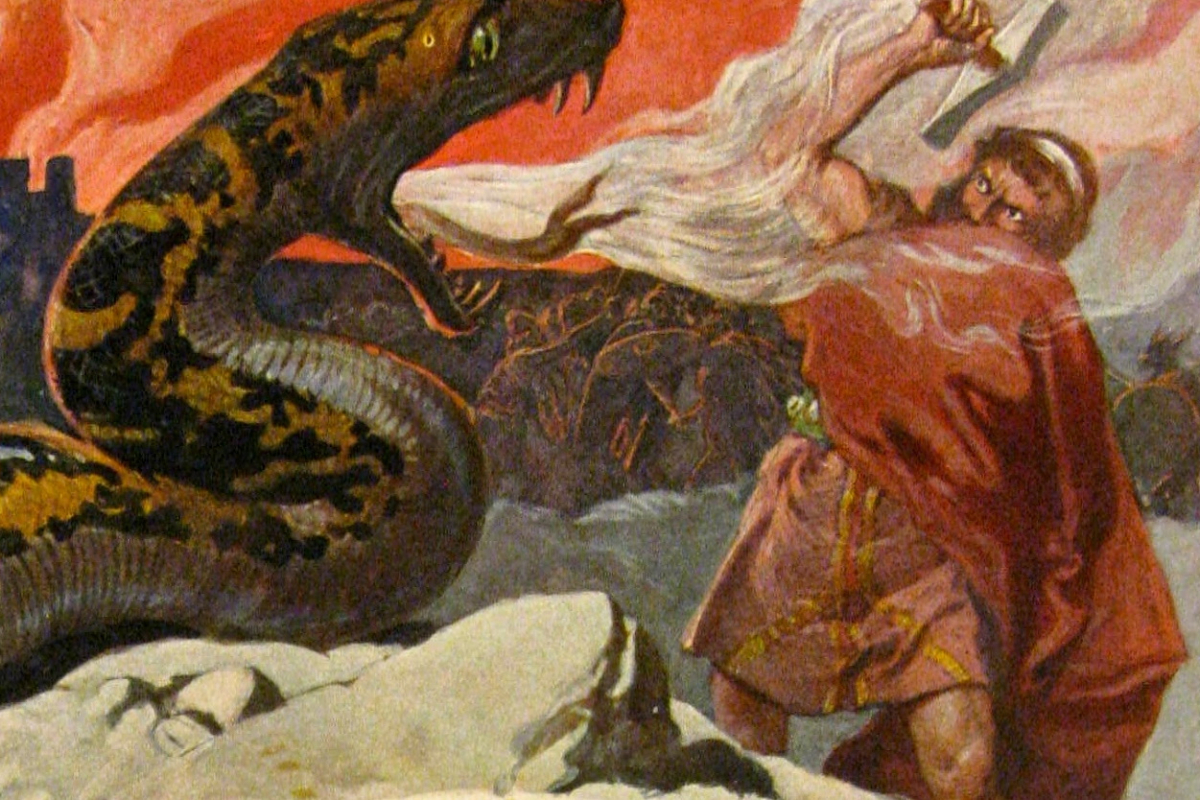
Thor’s clash with Jörmungandr during Ragnarök is a defining moment in Norse myth, leading to both of their deaths. Illustration: Emil Doepler (1855–1922)
Impact on later Viking mythology
Now, this very real endless winter sounds suspiciously like the Fimbulwinter described in Norse sagas, the precursor to Ragnarök.
The new study shows the environmental impact of these volcanic eruptions, but sadly, there is no way of analyzing the traumatic and emotional toll this endless winter had on the people living in Denmark during the mid-6th century CE.
We know that the Germanic societies – that were the cultural ancestors of people in Viking societies – had a largely oral culture, and surely tales of this endless winter would have been passed down through the generations to influence later Norse mythology and religious beliefs.
As Solheim, Steinar, and Frode Iversen wrote in their 2019 article in the journal Ruralia, tales of when the sky was dark and the crops failed for years may certainly have influenced the creation of Fimbulwinter, the dramatic precursor to Ragnarök.
Thanks to the recent COVID pandemic, where the whole world went crazy and our normal society seemed to collapse, we can certainly empathize with our 6th-century Danish ancestors who felt that their world was collapsing all around them.
The only silver lining to this traumatic period of Scandinavian history was that these events were transformed into stories and later myths and legends that have helped Norse literature and mythology remain popular long after the last Viking ship sailed.
For more information on what the Rok runestone tells us about the events of 536 CE, visit CNN here.
We get to provide readers with original coverage thanks to our loyal supporters. Do you enjoy our work? You can become a PATRON here or via our Patreon page. You'll get access to exclusive content and early access.
Feel free to reach out to discuss potential stories that may be in the public interest. You can reach us via email at [email protected] with the understanding that the information you provide might be used in our reporting and stories.