


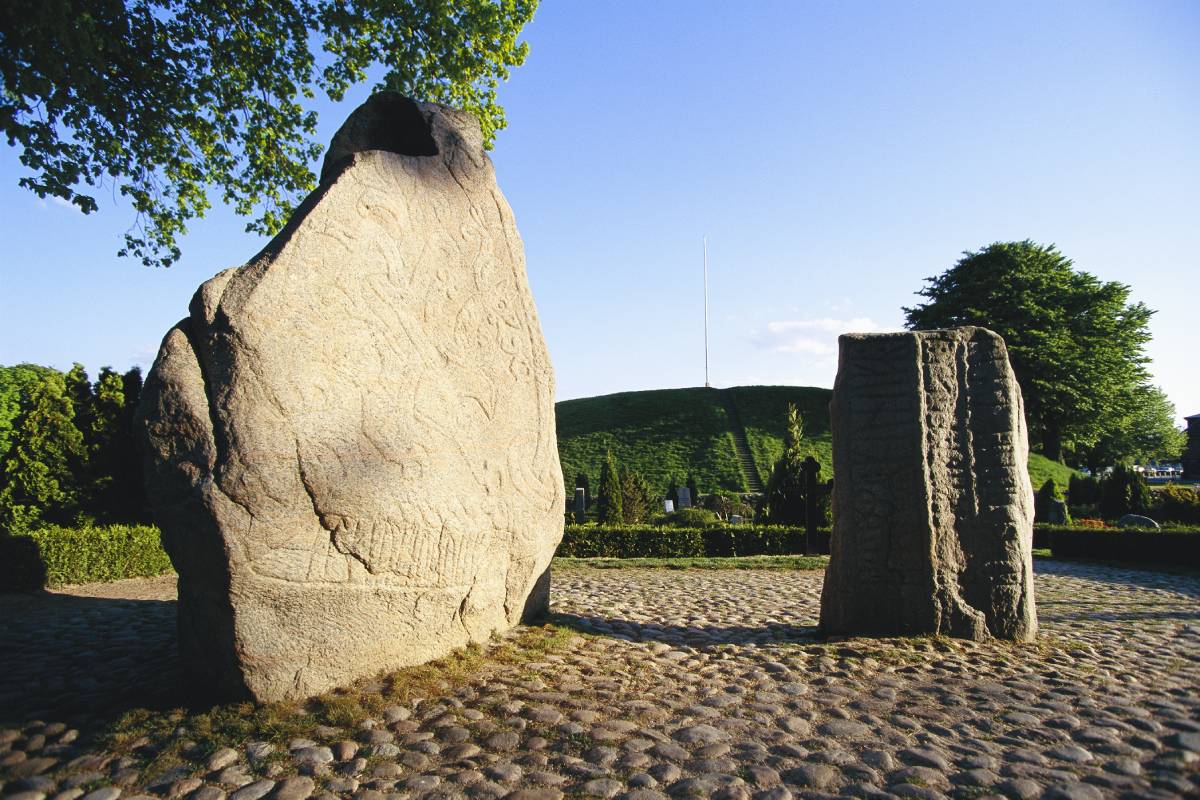
In a recently published scientific paper, the archeologist Håkon Glørstad has argued that one of the Jelling runestones, which is thought to have been raised by Harald Bluetooth in the late 10th century, was actually commissioned by a bishop in the 12th century, long after the end of the Viking Age.
If true, the revelations could potentially lead to a drastic reinterpretation of the burial mound area at Jelling, which is today officially recognized by UNESCO as a World Heritage Site.
Is Denmark's birth certificate legitimate?
King Harald had made these runes after Gorm, his father and after Thyra his mother, the Harald who won Denmark all and Norway and made the Danes Christian
(Runic inscription from the Jelling stone thought to have been raised by Harald Bluetooth.)
Together, the two stones found close to the Jelling burial mounds constitute one of the most well-known symbols of the Viking Age.
The older, smaller stone is thought to have been commissioned by King Gorm the Old in memory of his wife, Thyra. The larger of the two stones is believed to have been raised by King Harald Bluetooth Gormsson in memory of his parents.
Each stone contains runic inscriptions. The runes on the second stone appear to celebrate Bluetooth's conquest of Denmark and Norway and his conversion of the Danes to Christianity.
As the website of the National Museum of Denmark puts it, the Jelling stones are often seen as "Denmark's birth certificate" and are strongly identified with the creation of Denmark as a nation-state."
Håkon Glørstad, on the other hand, is a highly respected Norwegian academic and the former director of the Norwegian Museum of Cultural History.
The contents of his paper, Om dateringen av den store Jellingsteinen (On the Dating of the Great Jelling Stone), recently published by the Norwegian archeological yearbook Viking, argue that this long-held assumption could be entirely false.
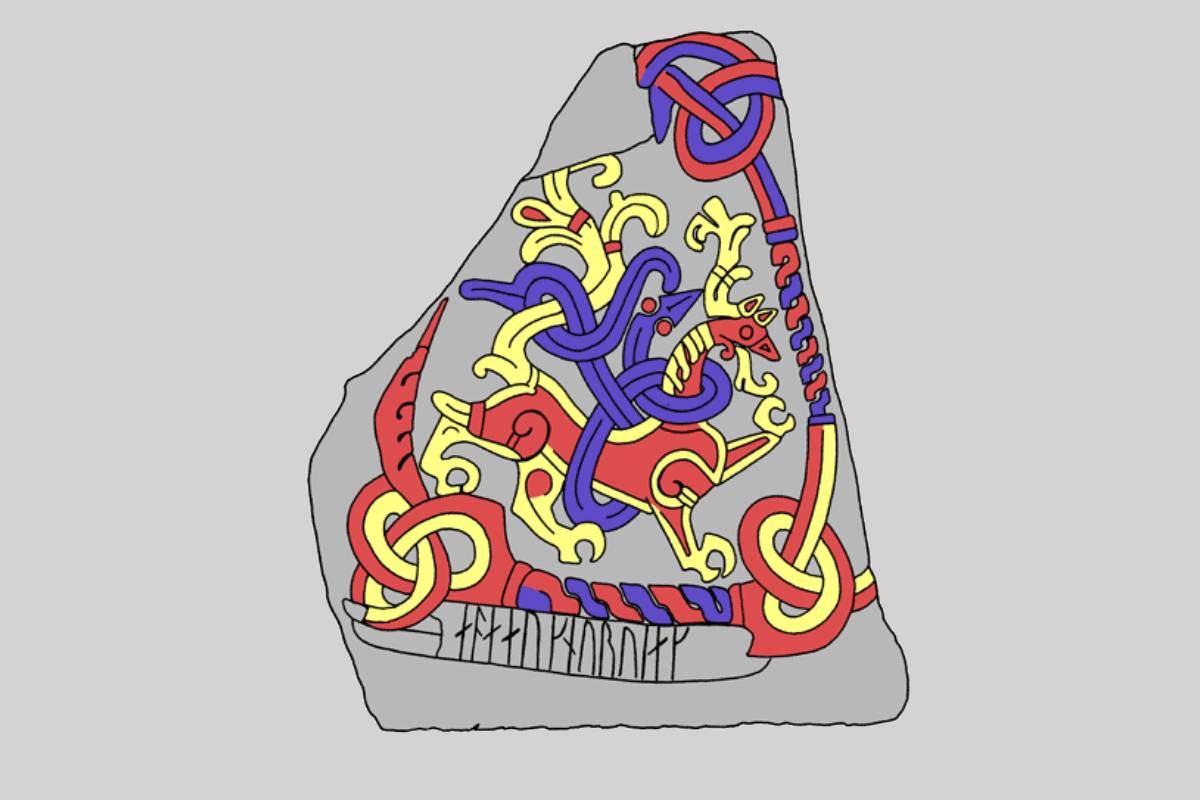
Glørstad’s research points to stylistic elements on Harald’s runestone that are more typical of the 12th century than the 900s. Source: Stefan Bollmann
A number of inconsistencies
According to an interview with Science Norway, Glørstad became interested in investigating the Jelling stones after reading a book about the subject.
Glørstad was soon struck by a number of disparities surrounding the Bluetooth stone in particular.
For example, the runic text on the stone is written horizontally, as we write today, not vertically, which was much more common in the Viking Age.
In the paper, which is available to read online (in Norwegian), Glørstad argues that a number of other elements, including the content of the writing, the type of rock used, and the style of carvings and figures, are also highly atypical for the 900s, when the runestone is said to have been raised.
The depictions of Jesus and a large animal believed to be a lion, for example, are much more reminiscent of a number of similar carvings from the 12th century.
Although Glørstad does acknowledge that there are several elements of Viking Age carvings on the rune, he notes that these are not of a single consistent style.
Instead, Glørstad posits that the patterns and figures more closely resemble a collage of various Viking Age styles, indicating the work could have been created by a person of influence at a later date who wanted to ape the style of the Viking Age.
- READ MORE: What are the six major styles of Viking art?

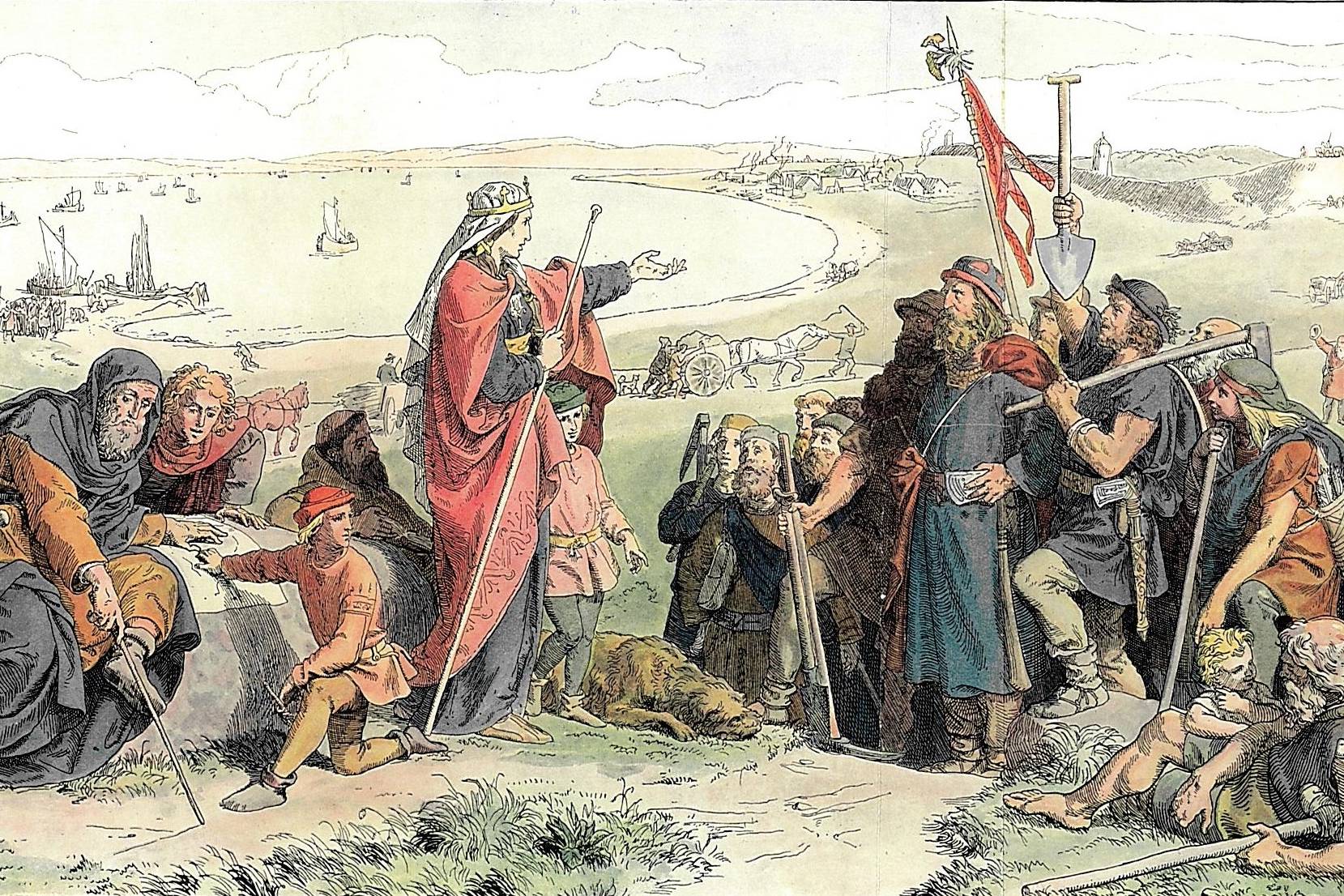
Glørstad links Harald's runestone to Bishop Absalon, a learned statesman with skilled stonemasons at his disposal. Photo: The National Museum of Denmark
A learned bishop
Glørstad is able to present a possible figure who could have conceivably commissioned the work in the 1100s: Bishop Absalon.
The bishop was thought to have been the most powerful statesman during the rule of Valdemar the Great (1146–1182), who took the throne around a century after the end of the Viking Age, and his son, King Knut, who reigned until 1202.
Glørstad argues that Bishop Absalon, who spoke Latin and studied in Paris, would have had access to the resources and education required to raise a stone of such complexity.
Among the Norse of the 10th century, on the other hand, this scholarly attitude and knowledge would have been severely lacking.
Absalon would also have had clear motivation in erecting a stone that spoke of the nation of Denmark and the spread of Christianity: the chance to help build up the nation and strengthen its legend.
Glørstad also notes that Bishop Absalon kept his own Norse stonemason, Åge, who was important enough to be mentioned in Absalon's will.
Many stonemasons at this time also had pattern books that contained examples of previous work or carvings and helped form the artistic basis for their own endeavors.
Many of these books are thought to have included carvings from the Viking era.
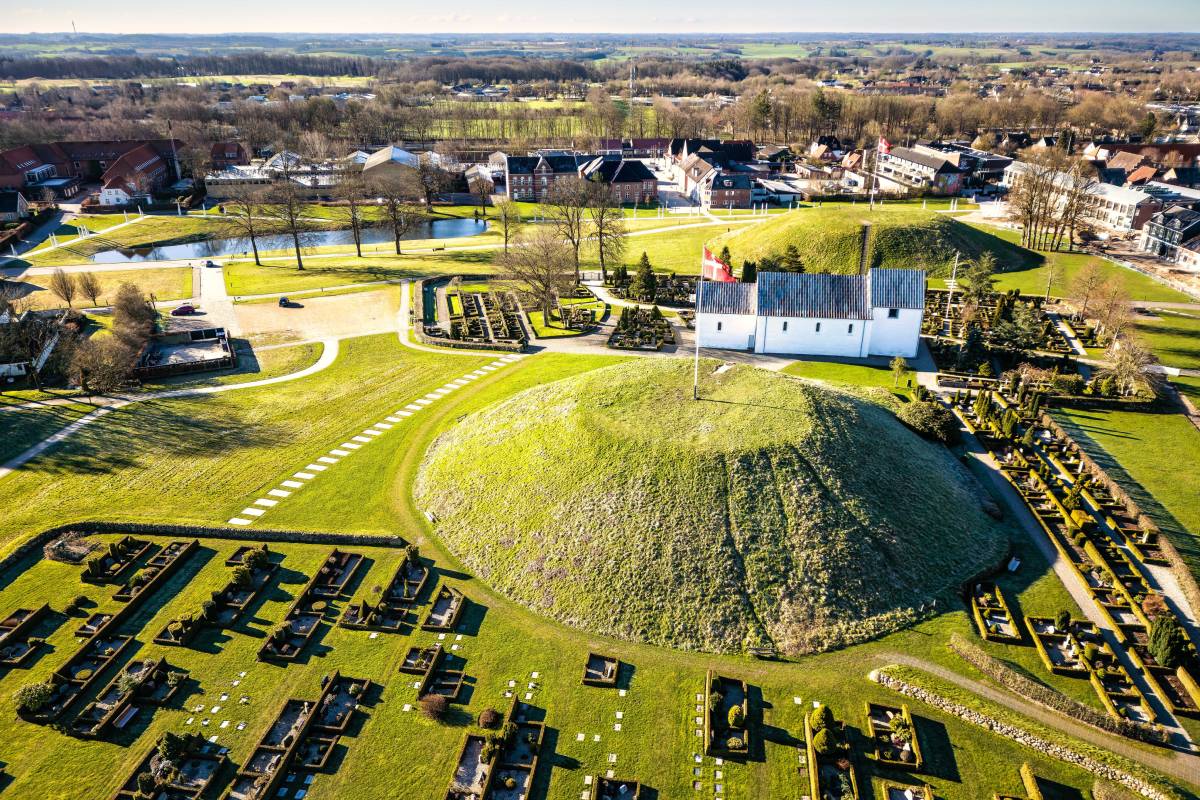
If Glørstad is correct, Harald Bluetooth’s runestone could be a deliberate 12th-century creation aimed at shaping Denmark’s national story. Photo: Frank Bach / Shutterstock
Rewriting history
If Glørstad's theory is correct, it would mean that what has long been considered one of the most unique and significant emblems of the Viking Age is not even of the Viking Age at all.
Instead, it would be an artifact consciously and deliberately commissioned centuries later to help legitimize the concept of Denmark as a nation.
A dispute regarding the origin of the Jelling stones could potentially have implications for modern-day politics, given their symbolic significance.
In addition to helping to establish the clear 10th-century foundation of the nation of Denmark in the public consciousness, the second Jelling stone also suggests that Harald Bluetooth successfully conquered all of Denmark and Norway – something that could arguably be seen as diminishing the national history of Norway.
Naturally, there will be some opposition to Glørstad's viewpoint.
Indeed, according to the article in Science Norway, Adam Bak, a museum curator at the Jelling visitor center, and Anne Pedersen, a senior researcher at the National Museum in Copenhagen, have both already disputed the claims.
However, one thing is for sure: we can expect this challenge to the legitimacy of the Jelling stones to generate plenty of debate in the archeological and historical communities in the coming months.
We get to provide readers with original coverage thanks to our loyal supporters. Do you enjoy our work? You can become a PATRON here or via our Patreon page. You'll get access to exclusive content and early access.
Feel free to reach out to discuss potential stories that may be in the public interest. You can reach us via email at [email protected] with the understanding that the information you provide might be used in our reporting and stories.



.jpg)