

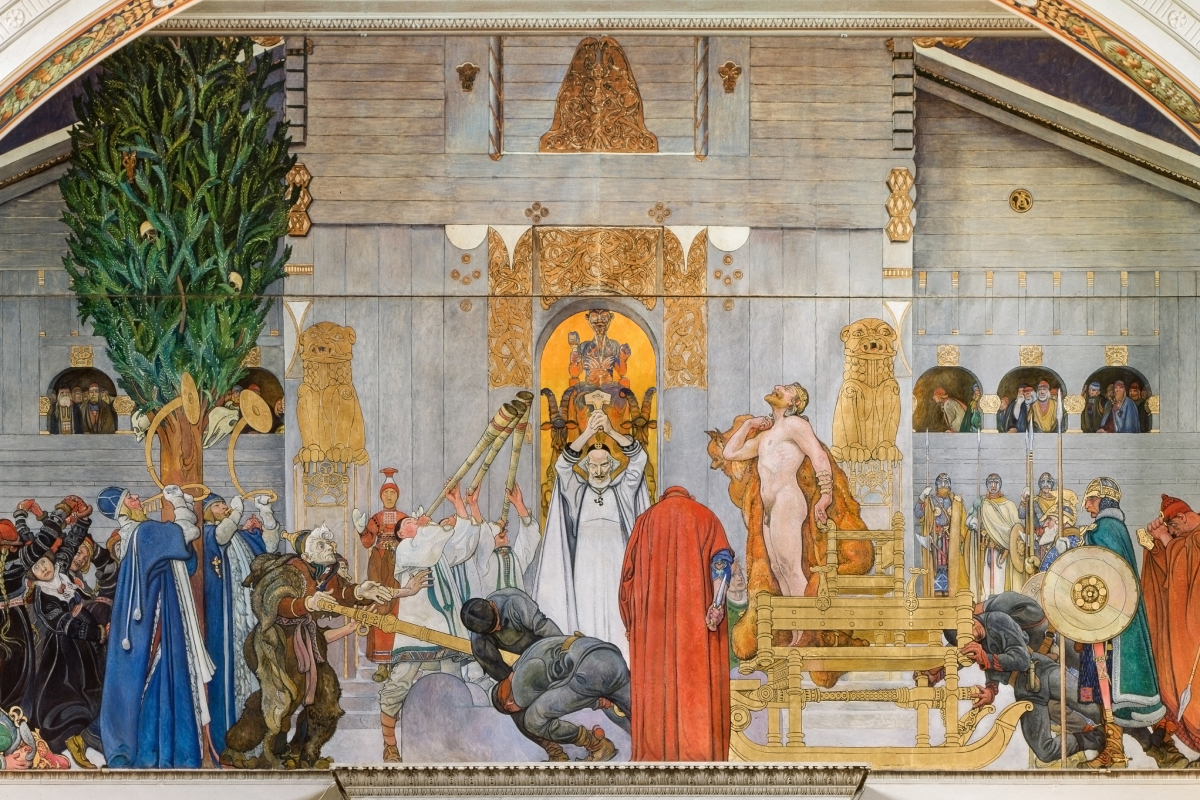
We have written widely on the symbiotic but mostly benign relationship between people from Viking societies and the animal world.
From pets to ward off loneliness to pack animals used for productive power, any Viking society had a plethora of furry friends living side by side with their human masters.
However, this relationship could, and often did, take a very dark turn when it came to the religious and spiritual beliefs of their masters.
We have only fragmentary records (mostly biased) and little archeological evidence of the rich spiritual and religious belief systems of people from Viking societies that we somewhat clunkily label the Old Norse religion.
As explored in the 2019 book Myth, Materiality, and Lived Religion in Merovingian and Viking Scandinavia (available on Amazon here), many aspects of this "religion" have been lost to the tides of history.
However, we do know that ritualistic animal sacrifices – the famous blots – were not only a significant part of this religion but were also widely practiced.
Whilst these blots were mostly performed to seek divine favor, they were also performed to strengthen the bonds of kith, kin, and community.
Let us delve first into why the pantheons of Norse gods would require, need, and want people in Viking societies to slaughter innocent animals.
Appease the gods
It is only in recent memory that the term "Dark Ages" has been swapped for the "Early Medieval Period" in much academic writing in the West.
Though there was, in parts of Europe, a civilizational shift following the collapse of the Western Roman Empire, many areas flourished (think the Iberian Peninsula under Islamic rule or the Byzantine Empire) and oversaw huge cultural, economic, political, and technical advances.
In the far north, in the Viking homeland of Scandinavia, unmolested directly by the Roman eagle, this was an economically and demographically sparse region.
Due to its unique geography and relative isolation from larger southern European empires, it saw a distinct culture evolve from its earlier Germanic ancestors.
Part of this culture was a diverse horde of deities divided into two pantheons.
The Norse gods, now popular thanks to the likes of the Marvel movie franchise (Anthony Hopkins as Odin was a divine choice, in our opinion), were jealous and vicious mythical beings.
They needed to be soothed and pleased; failing to do so could cause a whole range of misfortunes, ranging from widespread crop failure to pestilence, disease, and death, to name but a few.
Now, it must be stated that people in Viking societies had a perfect combination of both a deep-seated fear of and reverence for these gods. Animal sacrifices were the best way to appease the gods and curry favor.
These blots were aligned with the characteristics and spheres of influence of a particular god.
For example, Thor, the Norse God of Thunder, was associated with protection and strength. Sacrificing a healthy bull in his honor could ensure victory on a battlefield or ward off evil spirits.
Countless animals were sacrificed by people in Viking societies during the early medieval period to appease the pantheons of Norse gods.
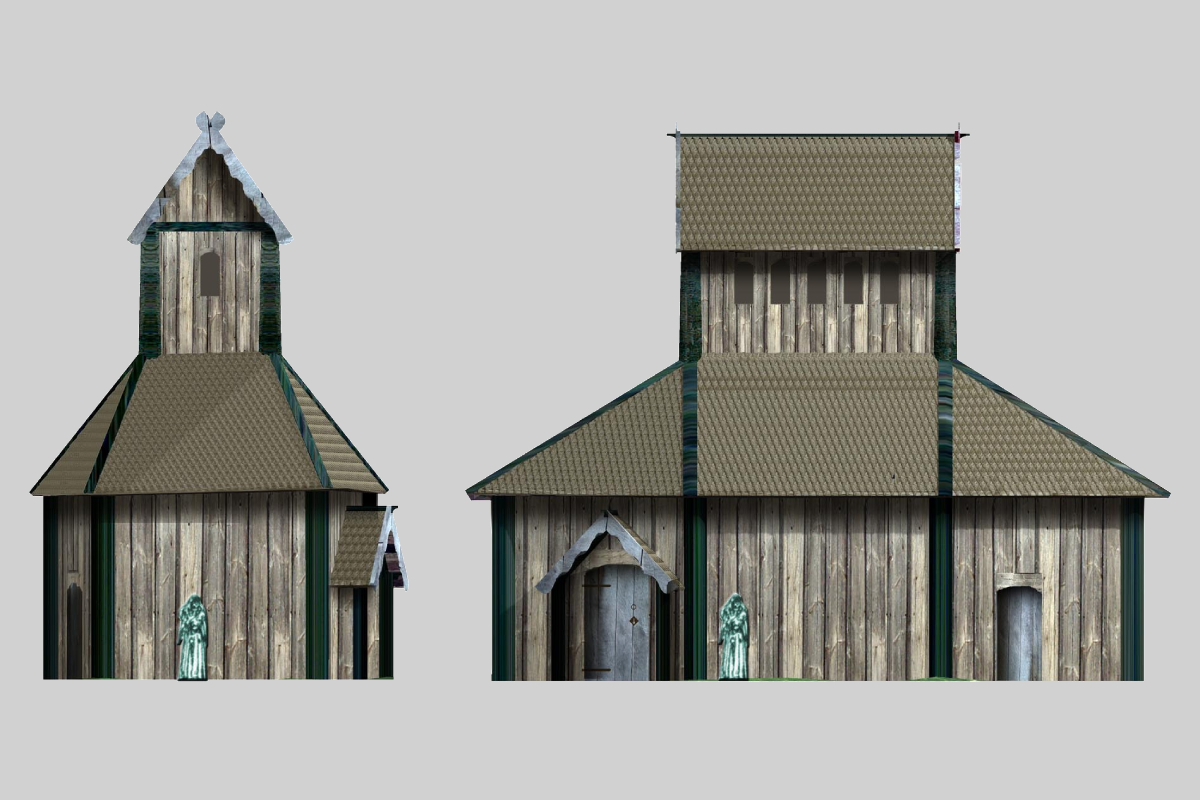
Archeologist Sven Rosborn's reconstruction of the temple of Uppåkra in Sweden brings to life one of Scandinavia's most significant pre-Christian sites. Source: Sven Rosborn
Communal cohesion and political power
Aside from appeasing the gods, animal sacrifices were intrinsic to fostering good communal relations and building social cohesion. Blots were often communal events in which an entire village would take part.
Whilst it was only political or religious leaders who would make the actual sacrifice, often all those in the community would either witness the sacrifice or, should the unlucky animal be edible, share it in a sacred meal.
This helped reinforce social, political, and religious hierarchies within the community.
Any good political leader within Viking society knew that to perform a blot was a symbolic act that went beyond simply showing religious belief and devotion.
This act demonstrated great power, wealth, and influence, as one needed to be allowed to oversee the blot and to have the means to acquire animals for it.
Leaders and religious elders were responsible for organizing these communal events, which often served to solidify political allegiances, patronage, and relationships.
There's nothing like killing a goat for Thor to solidify your role as your village's numero uno and big boss.
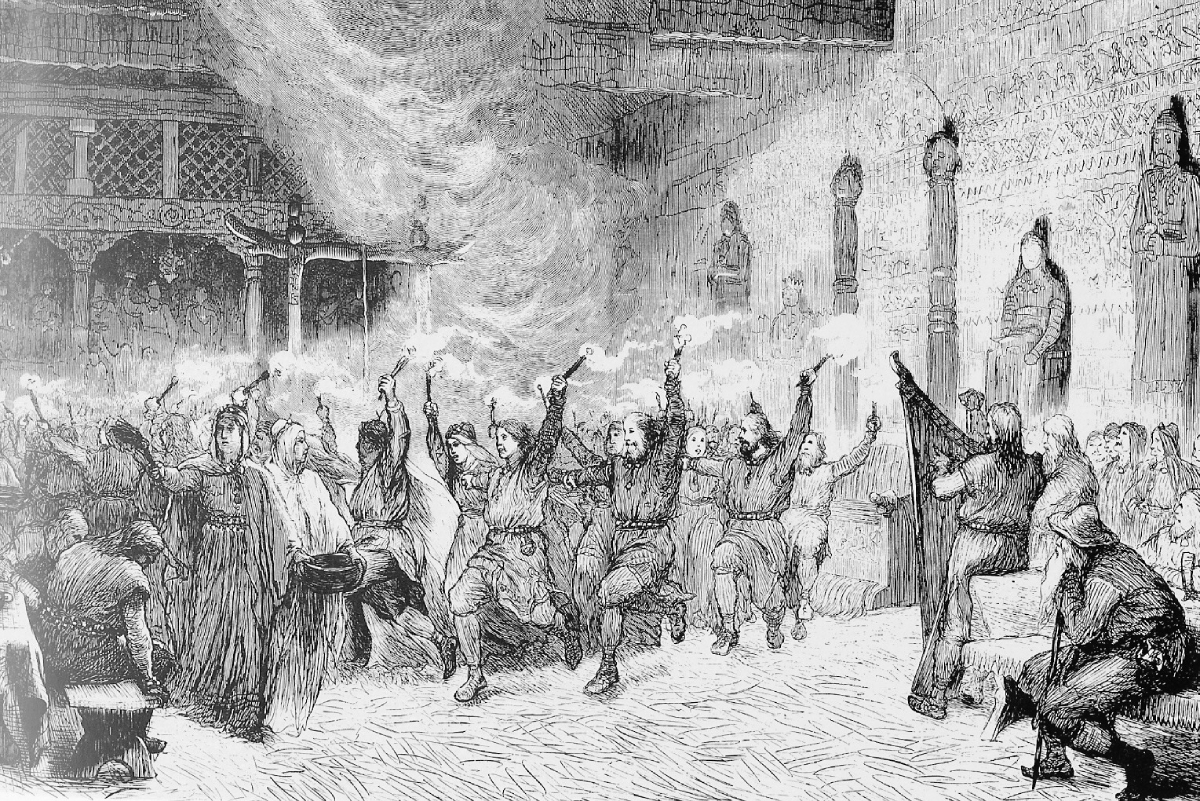
The painting "The Dísablót" depicts a Norse ritual sacrifice to honor the dísir, female deities, for an abundant harvest. Source: August Malmström (1829–1901)
Which animals were unlucky, and how were they sacrificed?
A whole menagerie of animals had the severe misfortune of ending up as the bloody centerpiece of a blot.
Unfortunately, it was often farmyard animals that bore the brunt of most animal sacrifices, including cattle, goats, pigs, and horses, whilst more exotic animals like wild boars and deer could be killed, too.
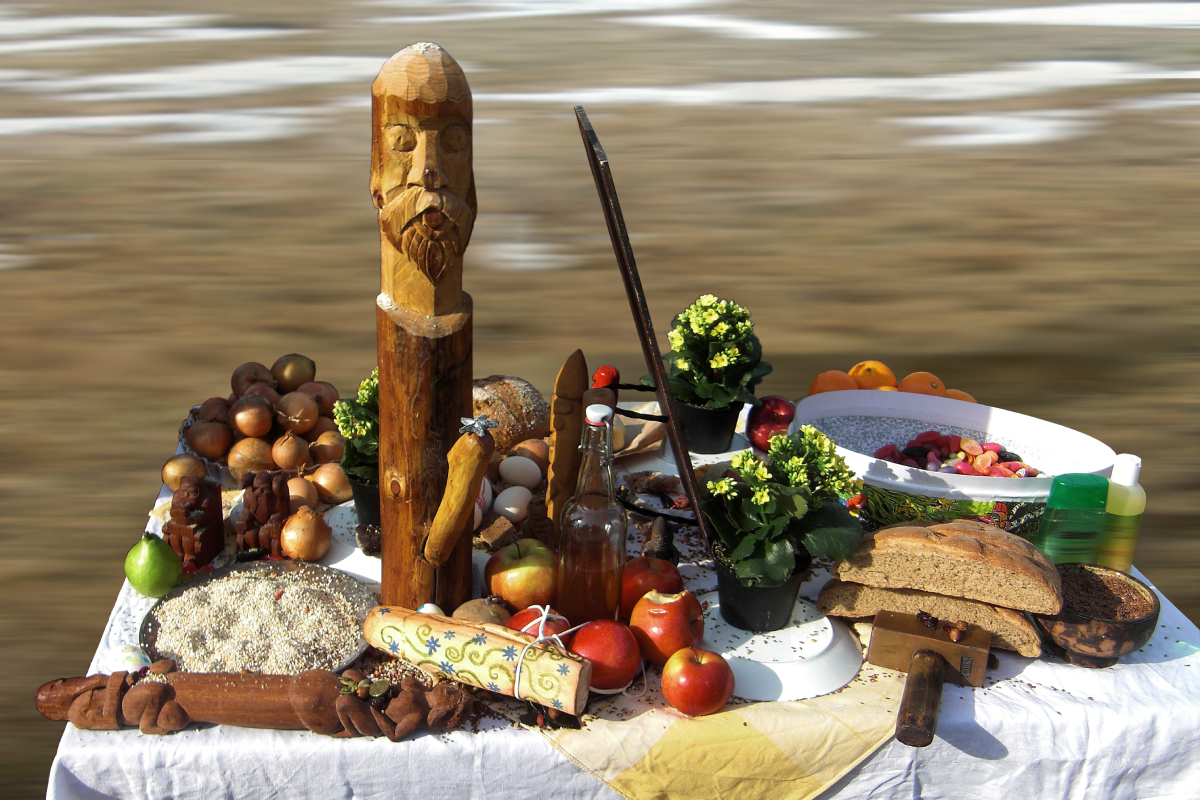
The ritual involved the slaughter of the animal, with its blood sprinkled on participants, idols, and the "altar" (wherever the sacrifice was taking place).
The meat was often cooked and shared among the participants or, if it was a communal event, as the centerpiece of a great feast. This helped to solidify the link between the worldly and the divine, between the Norse gods and their human servants.
For those wanting a great modern take on a Viking blot, the sacrifice of an animal, watch the 2022 Robert Eggers film The Northman. Without giving too much away (you'll need to see it yourself as it is a feast for the senses), Eggers stressed that his team went to great lengths to make the movie as historically accurate as possible.
This is evident from this bloody, dark, and adrenaline-inducing scene.
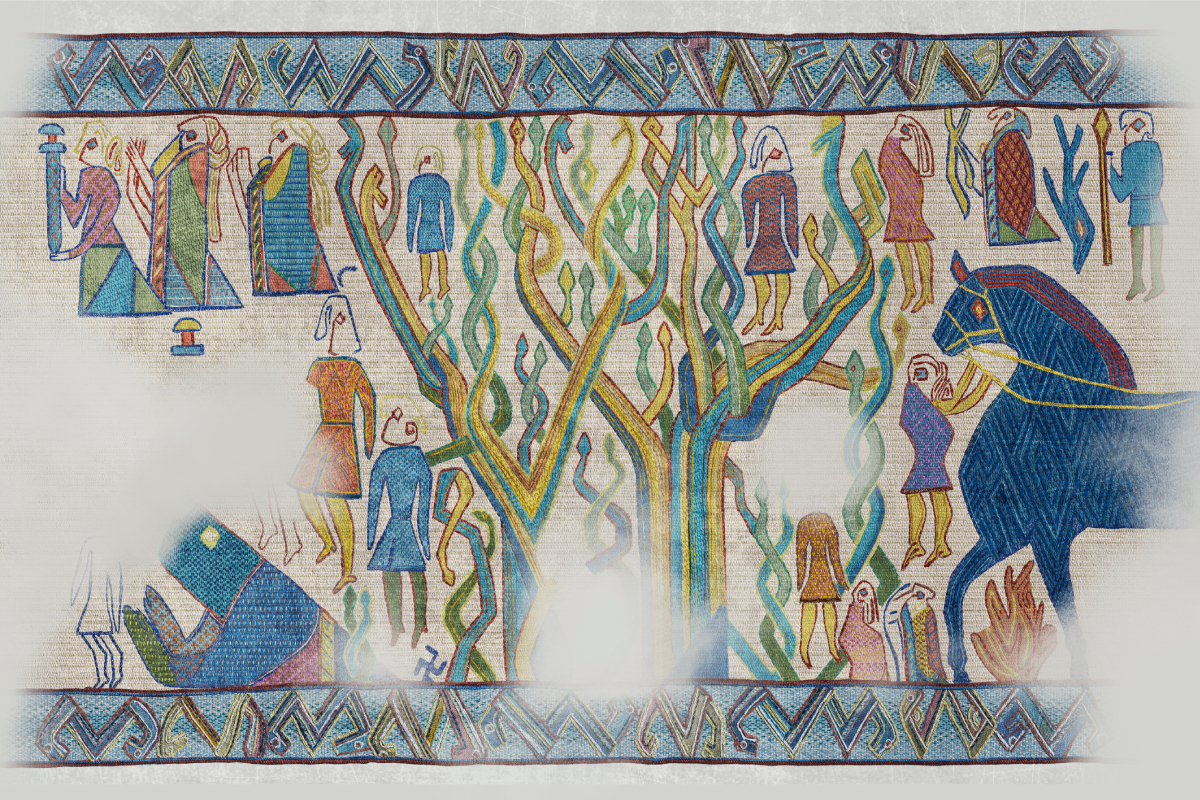
One fragment of the Oseberg tapestries portrays a tree with hanged men, potentially representing the importance of sacrifice in Viking culture. Source: Stig Saxegaard / Museum of Cultural History
The later influence of Christianity
By the end of the Viking Age, Christianity had firmly established its influence over Viking societies across the Viking world, spanning from the Baltic to the Black Sea, from Scandinavia to Iceland, and everywhere in between.
Belief in and practice of the Old Norse religion did not die overnight, but by the early 12th century, aspects of it – like animal sacrifice – were becoming less and less practiced and were increasingly things of the past.
Unlike the Norse gods, this new Christian god did not have a bloodlust, and his appeasement was achieved through morally right actions and thought.
Furthermore, what little we know of animal sacrifices comes from this era, when Christianity was growing in its primacy over Viking hearts, minds, and souls.
One of the most famous descriptions of animal sacrifices comes from the 11th-century priest and scholar Adam of Bremen, who famously described nine male individuals of "every living creature" – including horses and humans – being sacrificed as part of a great blot held at the temple in what is now Uppsala, Sweden.
The bodies were then strewn in a sacred grove near the temple.
As Mari-Britt Näström points out in her 2004 article in The Journal of the Traditional Cosmology Society, modern historians, however, tend to pour cold water on this bloody description by pointing out the obvious bias Adam had as a Christian scholar to portray the Old Norse religion as bloody and "barbaric" as possible.
It was true, however, that the people who built and worshipped in the temple at Uppsala sacrificed animals for several communal, political, and religious reasons.
By the time Adam of Bremen compiled this fanciful description of a blot in 1072, this practice was almost consigned to the historical dustbin.
For more information on animal sacrifices undertaken by people in Viking societies, visit the National Museum of Denmark here.
We get to provide readers with original coverage thanks to our loyal supporters. Do you enjoy our work? You can become a PATRON here or via our Patreon page. You'll get access to exclusive content and early access.
Feel free to reach out to discuss potential stories that may be in the public interest. You can reach us via email at [email protected] with the understanding that the information you provide might be used in our reporting and stories.