

When European explorers set out to explore all corners of the world in the Age of Discovery, one danger loomed above all others: scurvy. According to one estimate, the disease killed up to 2 million sailors from the 16th to 18th centuries alone.
In 1747, a controlled experiment by James Lind for the British Royal Navy found that citrus fruits cured sailors aboard HMS Salisbury of the illness. Although it took time for the idea to gain acceptance, within half a century the dark shadow of scurvy was finally eliminated from long-distance voyaging.
It is possible, however, that these sailors may have benefited from asking the Norse for advice. Evidence suggests that as far back as the Viking Age, Scandinavians had several powerful recipes against the onset of this terrible disease.
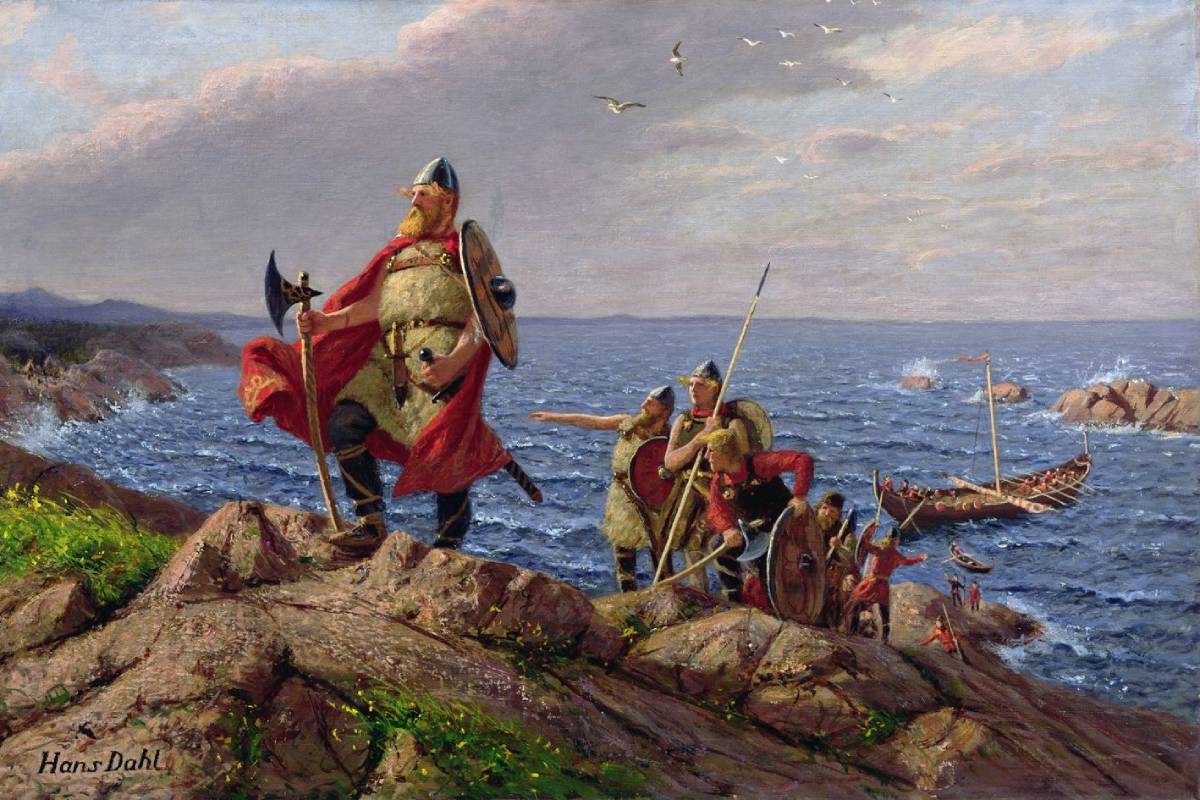
The 19th-century painting "Leif Erikson Discovers America." Author: Hans Dahl (1849–1937)
The scourge of skyrbjugr
“It is a great pity that such a fine man should be so stricken with skyrbjúgr, for it seems he will never be the man he once was.”
Thorstein the White’s Saga
The Vikings, of course, had no idea what actually caused scurvy. This knowledge would only arrive much later, when the Hungarian biochemist Albert Szent-Györgyi identified the existence of Vitamin C. Szent-Györgyi helped us understand that the absence of Vitamin C in someone’s diet causes the terrible symptoms of scurvy – including swollen and bleeding gums, internal bleeding and ultimately death.
One 2011 academic paper, Scurvy and Cloudberries: A Chapter in the History of Nutritional Sciences, examines the treatment of scurvy in Scandinavia. The authors Luigi M. De Luca and Kaare R. Norum argue the Vikings thought scurvy – or skyrbjugr in Old Norse – was due to the intake of too much sour milk, or skyr. (Other scholars believe the first part of the word derives from skur, meaning either ‘downpour’ or possibly ‘ulcers’.)
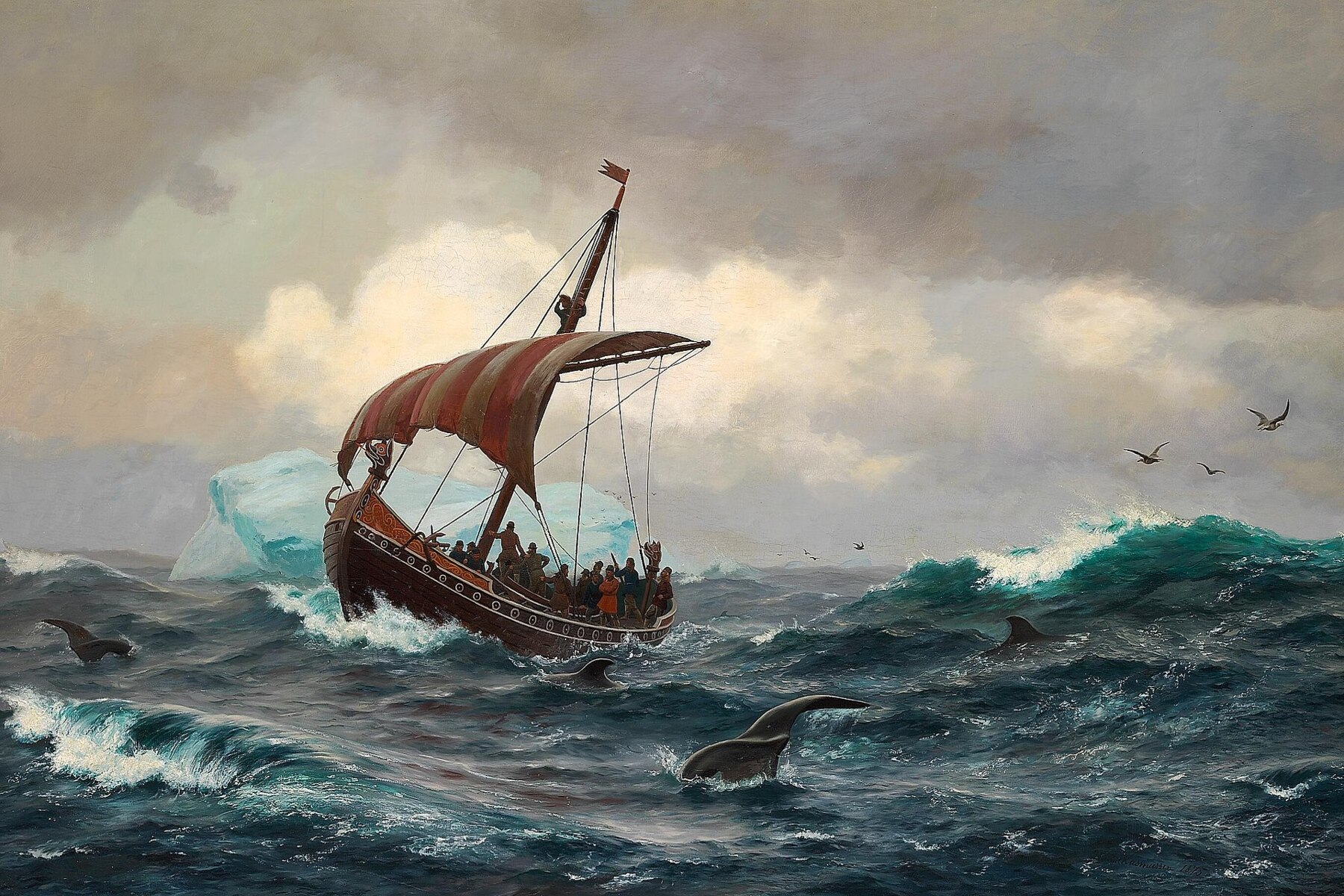
The Norse, of course, often embarked on longer journeys, traveling as far afield as Spain and Portugal or Greenland and Newfoundland. They also spent long winters without access to fresh food. This meant that, just like the Sami people of northern Norway, the Norse had to find other ways to access vital nutrients.
According to De Luca and Norum, the Vikings likely developed an understanding of what could help combat scurvy through a process of trial and error. Over time, it seems that seaweed and cloudberries emerged as two of the most effective solutions.
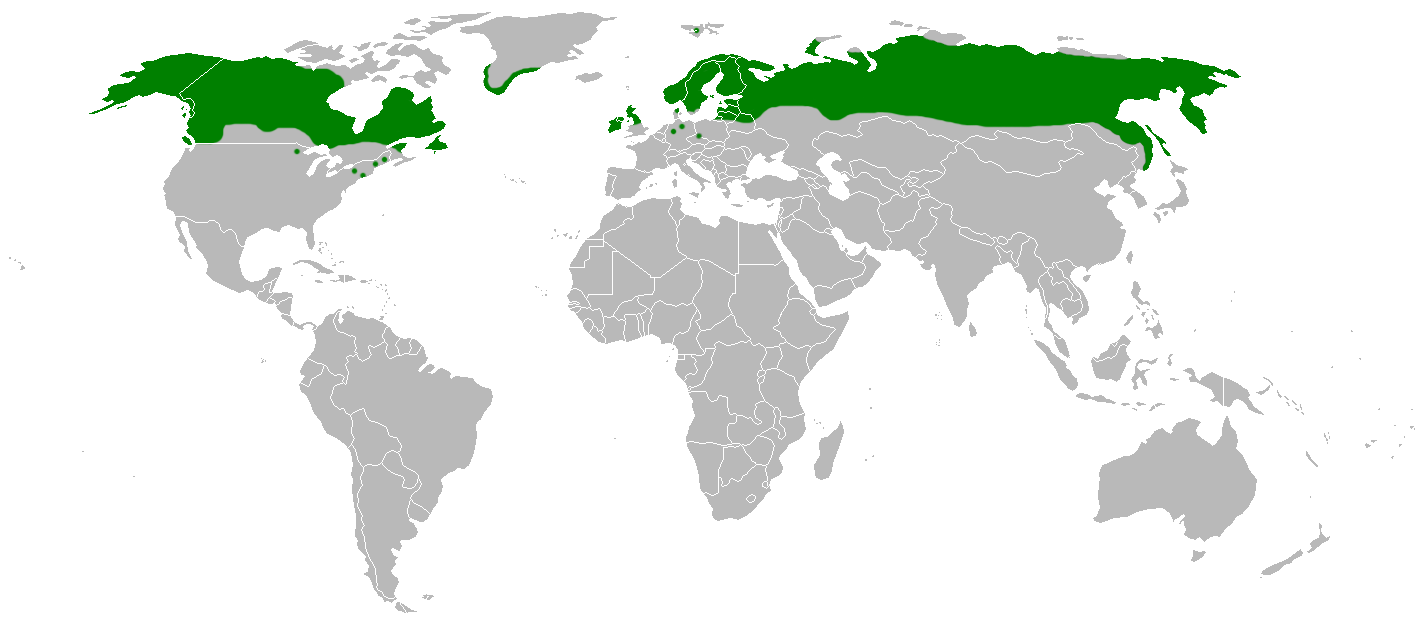
Global distribution of cloudberry (Rubus chamaemorus). Image: Vzb83 (CC BY-SA 3.0)
Arctic gold
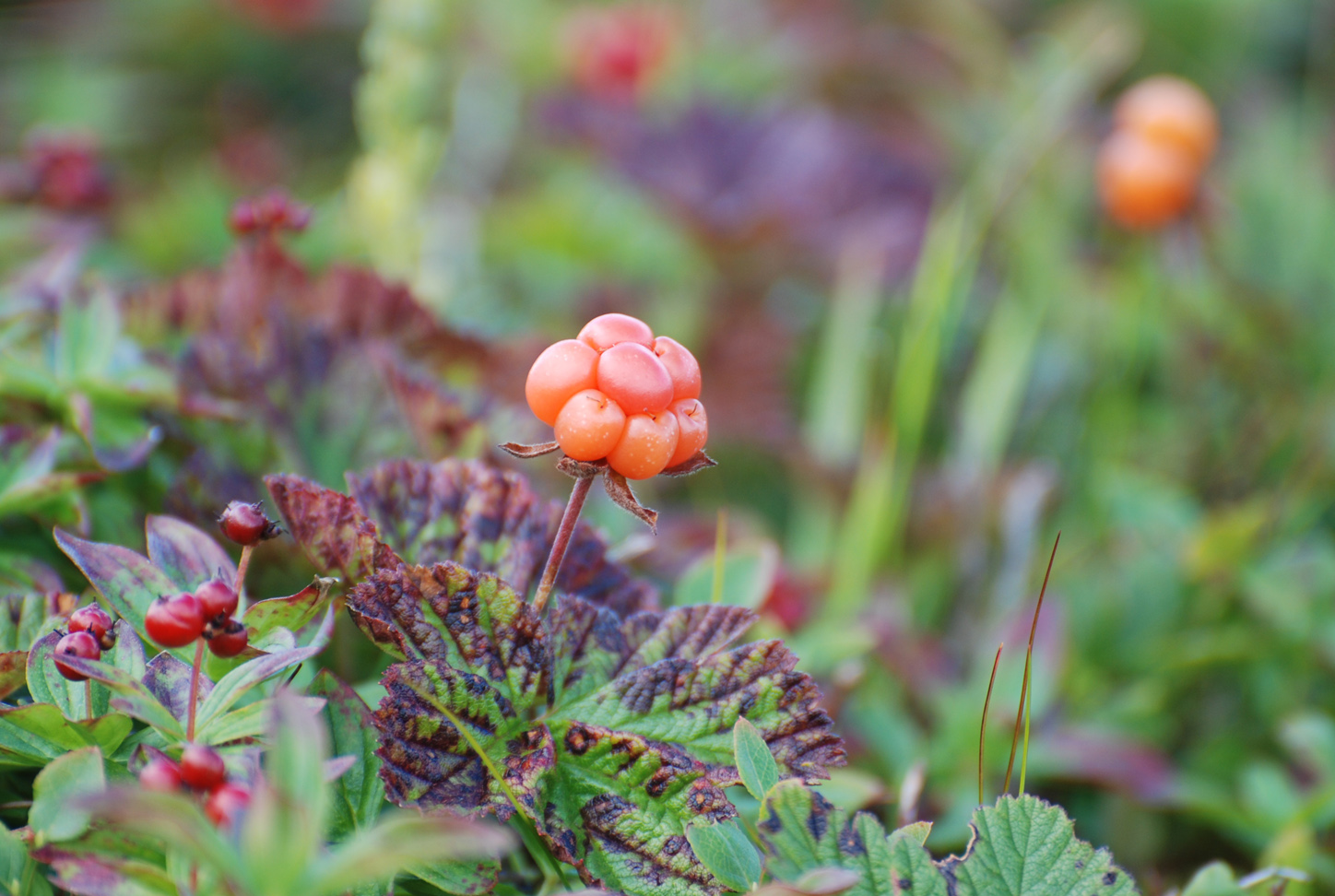
Cloudberries are edible amber-coloured berries which are exceptionally high in Vitamin C – containing up to four times as much vitamin C as oranges. Found predominantly in northern regions, they are sometimes referred to as ‘Arctic gold’. As De Luca and Norum note, there is a clear reference to the use of cloudberries to treat scurvy in a 1593 paper written by Henrik Høyer, a German physician in Bergen, Norway.
It should be noted, however, that hard evidence of their use in Viking Age Scandinavia is somewhat limited. The 10th-century Persian explorer Ibn Rustah did suggest that Rus sailors of Viking origin often carried berries on long journeys along the Volga and into the Caspian Sea – one possible sign that the practice mentioned by Høyer was a long-standing one.
It is also likely that the Vikings ate seaweed on long voyages. Seaweed has been a staple food in Scandinavia for centuries, is easily preserved, and many varieties contain a significant amount of vitamin C. Other potential sources of Vitamin C thought to have been consumed by the Vikings include scurvy grass, angelic and cabbage.
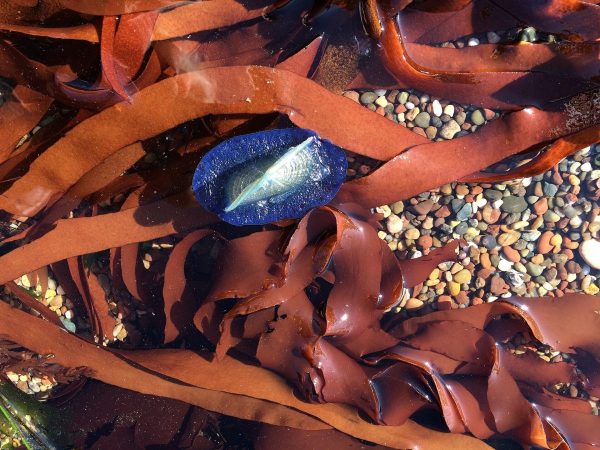
Dulse (seaweed) with velella, a type of seaweed. Image: Peter D. Tillman (CC BY-SA 2.0)
Preparation is everything
Crucially, the Norse also developed effective methods of preserving these foods both for long winters and extended sea voyages. As noted above, this is probably due to the extremely cold winters in northern Scandinavia, when it was crucial to find ways of preserving food throughout the winter months. Indeed, it is thought that at home berries and plants were often preserved by simply freezing them outside.
On long sea voyages, of course, this was not an option. Instead, the Norse used reindeer milk or sour whey to create a fermentation process. Casks were filled with cloudberries or other plants and milk or whey was poured over them.
The mixture would ferment. Over a shorter period, this fermentation could help to preserve valuable nutrients, including vitamin C. It is possible this process helped the Vikings enjoy a stable supply of Vitamin C even when spending weeks or months away from land.
Island hopping
The Vikings also enjoyed one other advantage over later European sailors – stop-off points. Explorers such as Christopher Columbus and Ferdinand Magellan often traveled vast distances across the open ocean. To do so, they were forced to rely heavily on a diet of dried biscuits and salted meat.
The Vikings, on the other hand, tended to travel relatively close to land. This meant they could forage for supplies and maintain a fresher diet. Another saga, the Saga of Grettir the Strong, notes that the Vikings would stop off at “scurvy-grass islands”. As the name suggests, scurvy-grass, or scurvy-kale, was known to help cure the disease.
It is also worth noting that not even Leif Erikson sailed for vast distances at a time on his expedition to North America. Erikson is thought to have essentially hopped from island to island, traveling first to Baffin Island in the north before sailing down and eventually landing in Newfoundland. We can presume Erikson and his crew were always on the lookout for plants and berries that could help stave off illness.
A crucial advantage?
It should be admitted that our knowledge of this area remains limited. Despite De Luca and Norum’s important research, we still do not know the true extent of Norse efforts to combat scurvy in the Viking Age. Indeed, much of the theories are primarily based on the sagas and later dietary habits in Scandinavia.
Nevertheless, it seems safe to say that the Vikings did find ways to combat scurvy many centuries before James Lind’s famous experiment. These techniques were likely formed over a period of centuries, possibly aided by the necessity to survive long winter months without access to fresh food. (The Inuit, for example, ate raw, fresh, and fermented marine mammal meat that provided them with the Vitamin C intake they needed in the Arctic Circle.)
By identifying the value of native plants such as cloudberries and also utilising effective preservation techniques, the Norse were able to embark on long voyages by ship that would otherwise have surely been impossible. Indeed, without cloudberries, seaweed and other sources of Vitamin C, the Vikings’ amazing seafaring exploits may never have happened at all.
This article was written in collaboration with our new sister site, The Age of Exploration.
We get to provide readers with original coverage thanks to our loyal supporters. Do you enjoy our work? You can become a PATRON here or via our Patreon page. You'll get access to exclusive content and early access.
Feel free to reach out to discuss potential stories that may be in the public interest. You can reach us via email at [email protected] with the understanding that the information you provide might be used in our reporting and stories.