

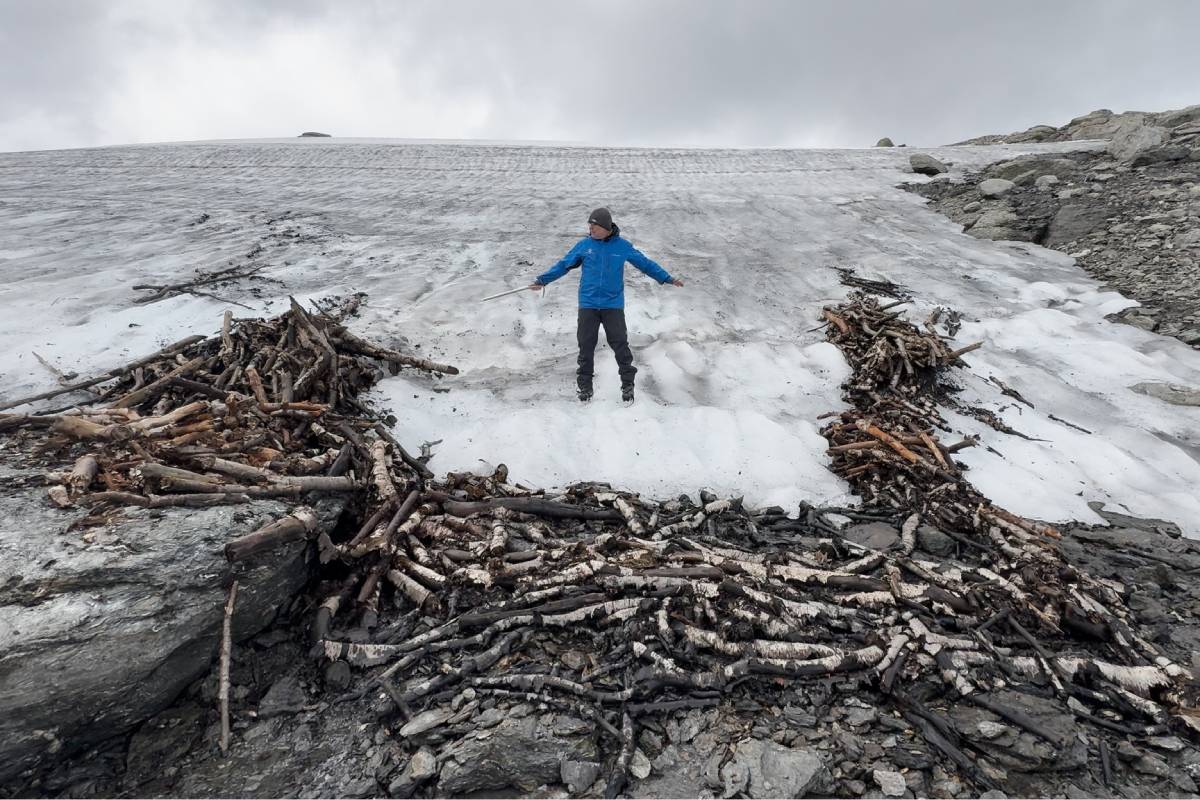
Archeologists in Norway have helped uncover evidence of a mass reindeer trapping system.
Experts from the University Museum of Bergen and Vestland County Municipality have succeeded in mapping out a 1,500-year-old system that was likely used to trap larger groups of reindeer.
It's a trap!
Last year, archeologists from the University Museum in Bergen were alerted to an unusual find by Helge Titland, a hiker in the mountain plateau of Aurlandsfjellet in western Norway.
Titland, who has a keen interest in cultural heritage and had already discovered other artifacts in the area, came across several logs that had been revealed by melting ice and clearly had been cut by human hands.
Before the experts were able to investigate, however, the snow returned to the site and covered up the finds.
According to a recent press release, the archeologists were finally able to access the site this summer and examine Titland's discovery.
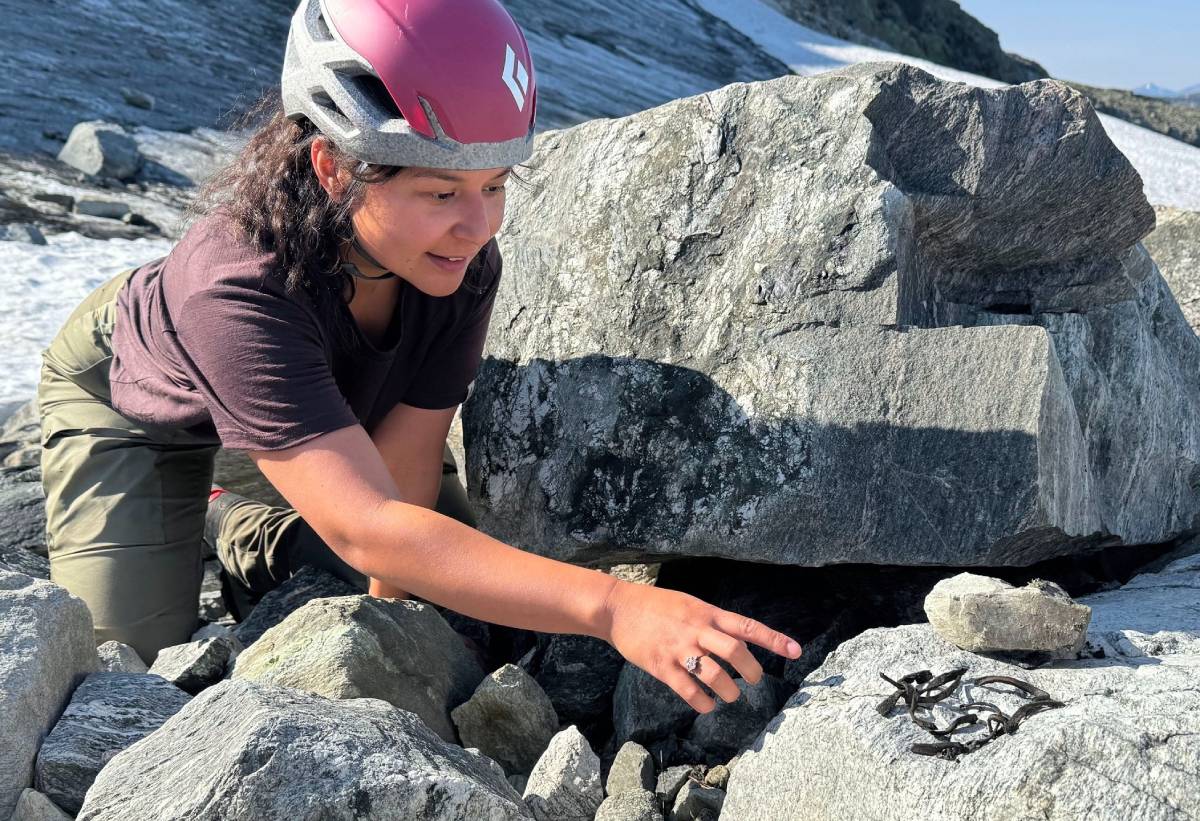
The team identified hundreds of logs in and around an ice floe, as well as two wooden fences and a number of well-preserved reindeer antlers.
These findings have since been investigated by archeologists at both the University of Bergen and Vestland County Municipality, who concluded that the structures form an intricate reindeer trap.
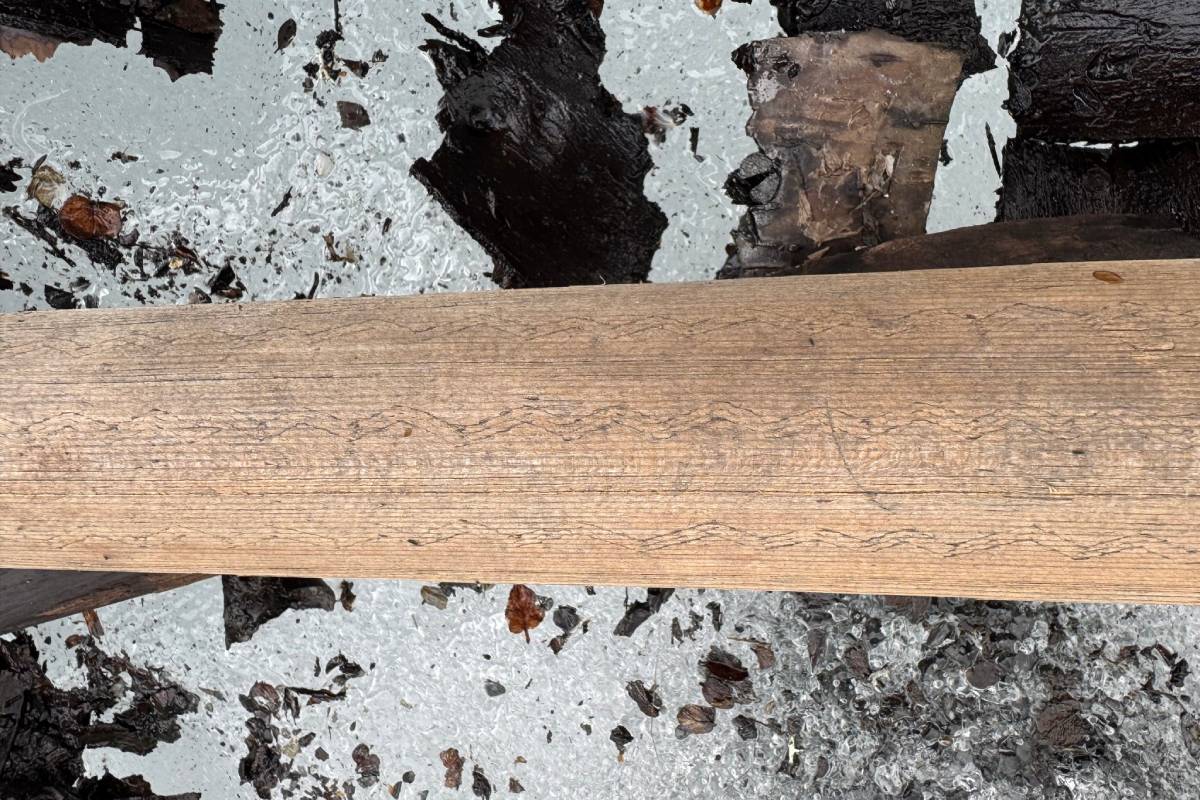
Wooden oar-shaped object with carved decoration found at the site. Photo: Thomas Bruen Olsen / University Museum of Bergen
Something unique
Reindeer hunting was an important source of food and a key part of the economy in southern and western Norway for many centuries.
It is no surprise, then, that in recent years the Secrets of the Ice archeologists have uncovered many artifacts related to the hunting of reindeer.
In particular, the archeologists have found a number of "scaring sticks" (skremmestaur in Norwegian). These sticks were typically planted in a V-shape and used to guide the reindeer to carefully laid traps.
The structure found at Aurlandsfjellet, however, is larger and more sophisticated – the fences were used to lead the reindeer into a pen made from large logs, where they would have been slaughtered.
It is believed that this system, built approximately 1,500 years ago, would have been suitable for capturing large groups of reindeer. As such, it is a truly unique find.
"This is the first time a mass-capture facility made of wood has been revealed from the ice in Norway, and the facility is probably also unique in a European context," commented the archeologist Øystein Skår in the press release published on the Vestland County Council website.
"Finding the antlers makes us certain that the facility was used for mass hunting. All antlers have markings, which gives us deeper insight into the hunting activity itself."
Encased in ice across the centuries
The Aurlandsfjellet trapping facility remained intact for more than 1,500 years thanks to the unique climatic conditions. "The mass trapping facility on Aurlandsfjellet is very well preserved," Skår commented.
"The reason for the unique preservation conditions is that the trapping facility was in use at the beginning of a cold period around the middle of the 6th century."
"Colder temperatures led to the facility being covered in snow year-round, and it was probably no longer functional or possible to hunt in the area. Gradually, the facility became encased in ice."
"The very well-preserved antlers show this must have happened quite shortly after the facility was in use."
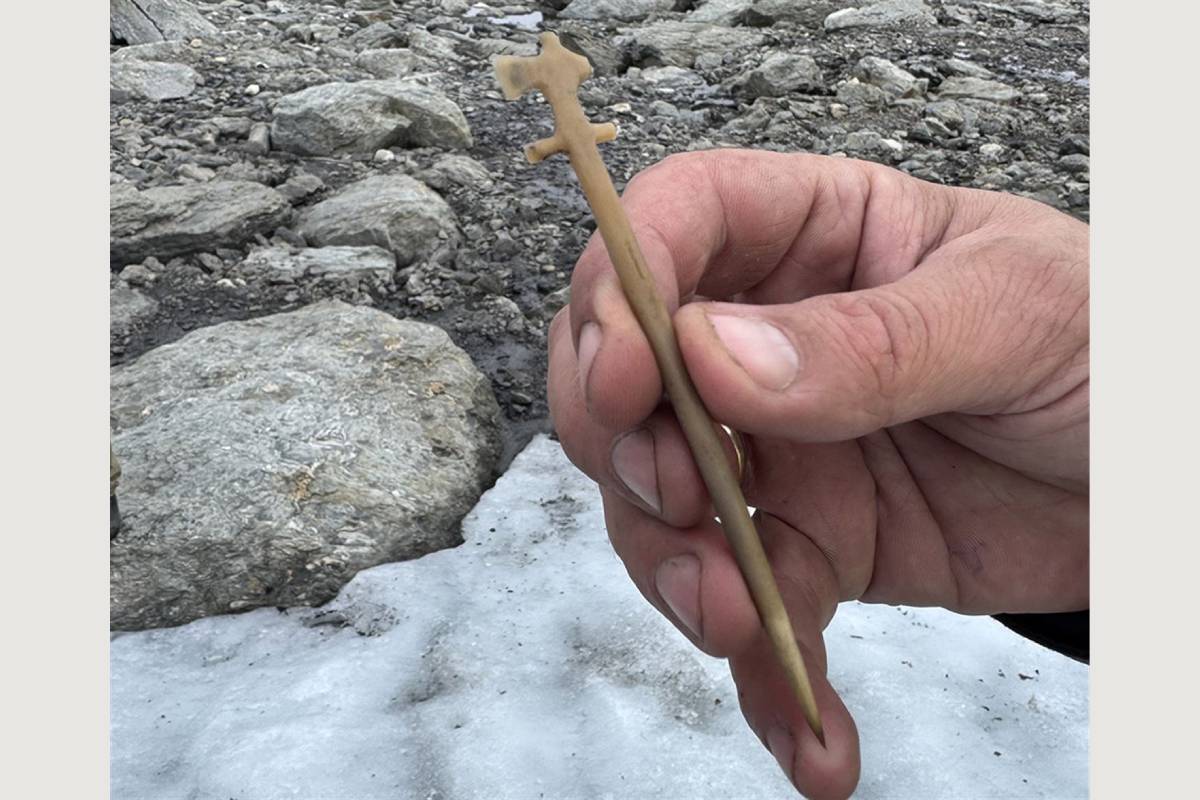
Small antler artifact found at the site that may be a clothing pin, but its exact use is unknown. Photo: Thomas Bruen Olsen / University Museum of Bergen
Under protection, under threat
In addition to the trapping system itself, the archeologists have also retrieved a number of other intriguing items, including iron spearheads and several vessels with intricate ornamentation.
"What these vessels were used for, and why they were taken to the mountains 1,500 years ago, is still a mystery," admitted Skår. "We have also found a wonderfully crafted antler brooch, which was probably lost by a hunter in the heat of battle."
The main finds are now being kept frozen at the conservation department of the University Museum of Bergen. There, they will be given time to slowly dry out and will only be placed on display at a later date.
The mountain area where the trapping system was found is also under protection. There is little, however, that the archeologists can do if the weather continues to warm, or if opportunists decide to take home a souvenir.
"The problem going forward is that things disappear because people take objects with them," Skår stated. "In addition, all the wood will quickly weather away if the ice disappears further."
As further analysis takes place over the coming months, there remains hope that at least some parts of the remains of the trapping system still left on the mountain will eventually be preserved for posterity.
We get to provide readers with original coverage thanks to our loyal supporters. Do you enjoy our work? You can become a PATRON here or via our Patreon page. You'll get access to exclusive content and early access.
Feel free to reach out to discuss potential stories that may be in the public interest. You can reach us via email at [email protected] with the understanding that the information you provide might be used in our reporting and stories.