


From the smugness of the safety and security of the 21st century, it can be hard to fathom the permeating specter of death in Viking societies.
Without modern medicine and medical technology, something as simple as catching a cold could be life-ending.
Add to that the political insecurity of the early medieval period, especially in the Viking homeland of Scandinavia, where great Viking chieftains – little more than warlords – were constantly battling and fighting for control of territory and limited resources.
Further afield, these warlords led great Viking expeditions over the seas, from the Iberian Peninsula to the Caspian Sea and seemingly everywhere in between.
Needed for these raids were warriors, and many did not live to return to their home villages.
So, with death constantly looming over personal relations like the sword of Damocles, how did this influence the concept of death for people in Viking societies?
In Norse mythology – much of which was drawn from the spiritual and religious beliefs of what we call the Old Norse religion – death was a complex concept influenced by the beliefs surrounding the afterlife, destiny, and the natural cycles of life and death.
As Neil Price writes masterfully in his 2008 book, The Viking World (available on Amazon here), death was not seen as a straightforward journey to a final destination. Instead, people in Viking societies believed that where a person went after death depended on how they lived and died.
The most glorious warriors who died on the battlefield would be whisked away by Valkyries to feast with Odin in Valhalla, whilst others would end up in less glorious locations.
The permeating presence of death in Viking-era life touched every relation, every household, and family.
Its presence can also be found in the rich tapestry of Norse sagas, where the concept of death was constantly being reexamined.
For one of the most interesting examinations of death by people in Viking societies, we turn to the Eyrbyggja Saga.
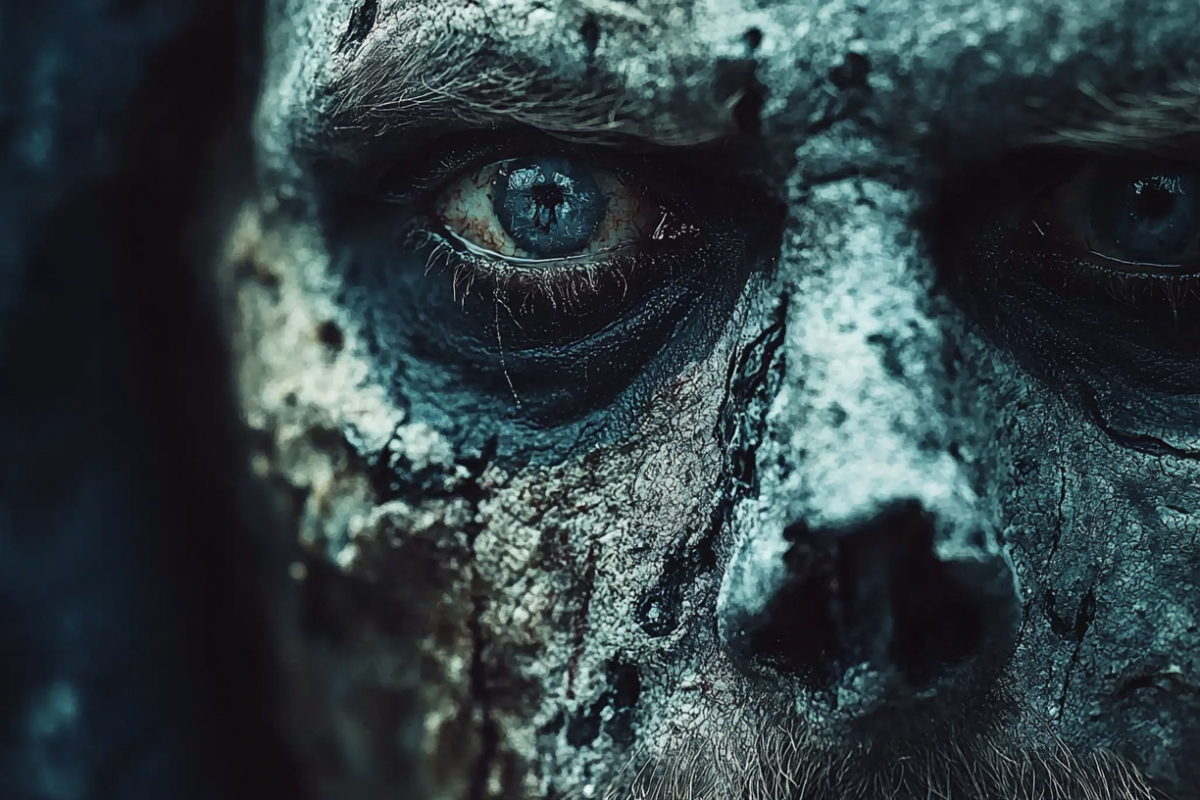
Draugar were undead beings in Norse mythology believed to rise from improper burials or unresolved anger. Illustration: The Viking Herald
The Eyrbyggja Saga
The modern island nation of Iceland can trace its ancestry directly back to the early medieval period when people from Viking societies took to the seas and settled the land of fire and ice.
As Hermanns-Auðardóttir, Margrét writes in her 1992 article in Acta Borealia: A Nordic Journal of Circumpolar Societies, legend has it that malcontents fleeing Harald Fairhair's bloody unification of Norway settled Iceland, and the life of the first half-century of settlement was recorded in a series of sagas.
One such tome was the Eyrbyggja Saga, which details a long-running feud between two Viking chieftains in Iceland, Arnkel Goði and Snorri Goði.
Whilst perhaps not the most entertaining or educational of the Norse sagas, it is of particular interest as it is littered with references and examples of old lore, folkloric and pagan beliefs, and practices, as well as elements of the supernatural.
The saga portrays – like many of the other sagas from the Icelandic Age of Settlement (c. 872–920) – the lives and struggles of many Viking families turning to the two rival chieftains for advice, guidance, protection, and wisdom.
Yet it is the supernatural elements, especially mentions of the draugar – undead creatures – that have made this saga one of the most read, especially around Halloween or when people need a good scare.
For in this saga lies the story of Thorolf, whose death was certainly not a final destination but a mere excuse to terrorize his neighbors.
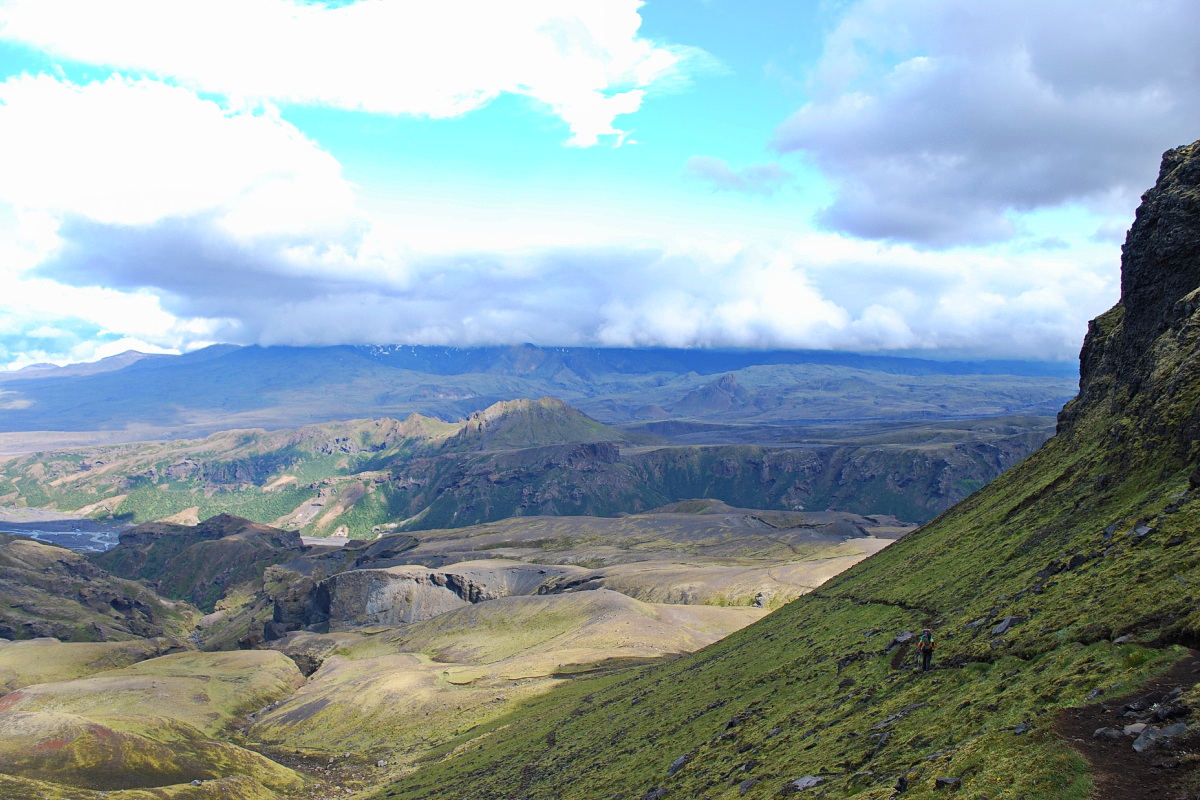
Thorolf was buried on these hills in southern Iceland after his death, but his anger and cruelty in life caused his spirit to haunt the area. Photo: Chmee2 (CC BY-SA 3.0)
Thorolf's life after death
If we turn our gaze to Chapters 31–34 of the Eyrbyggja Saga, it is in these that we are regaled with the life, death, and afterlife of Thorolf Twist-Foot.
Having been a feared and fierce warrior all his life, Thorolf had amassed a considerable estate in Iceland, where he ruled with an iron fist.
Despite a lifetime of war and battle – which saw him suffer a battlefield injury, a lame foot – he was still full of bitterness and rage in his old age.
When he eventually died, he was laid to rest with full respect and ritual, but his rage took a dark turn. This bitter anger and violence prevented him from resting in peace, and eerie events began to unfold after his death.
Crops soon began to fail, animals who neared Thorolf's burial mound began to wail and die, and a general dark shadow hung over the community.
Soon after this, things took a turn for the spooky as Thorolf himself rose from the dead and was seen haunting the estate.
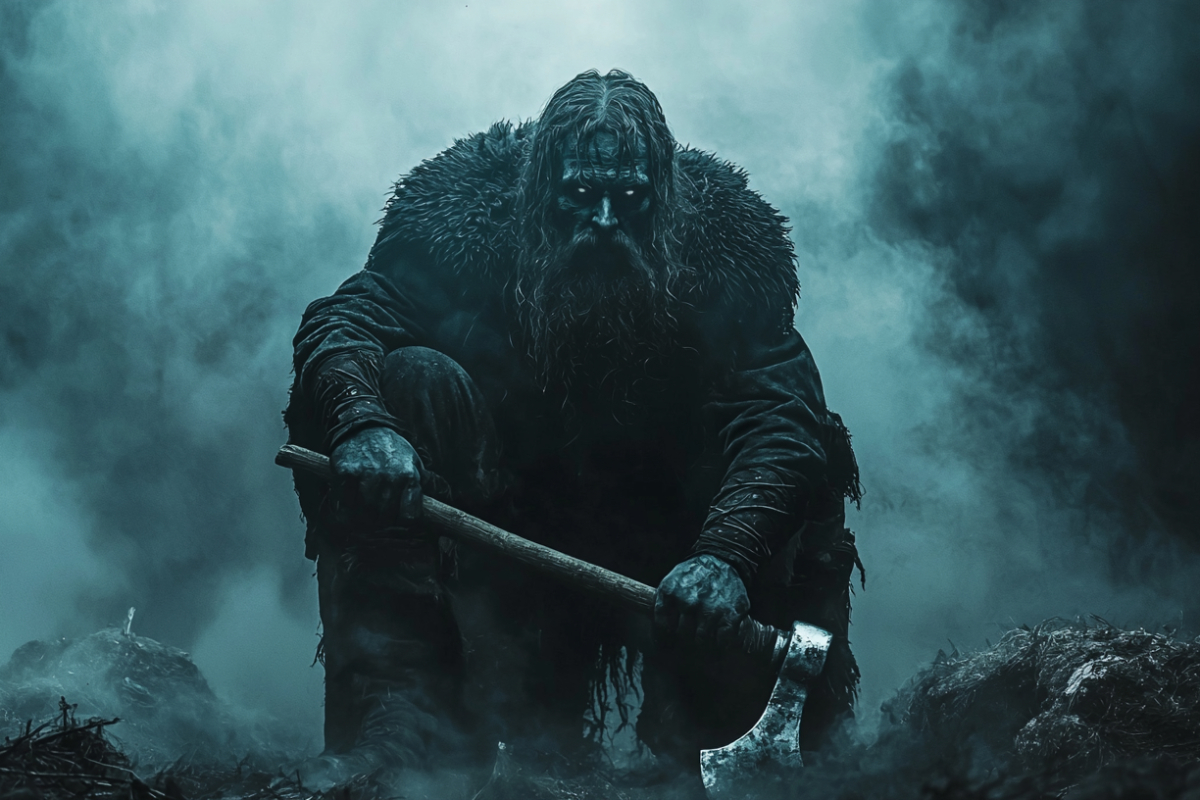
He was described as unnaturally tall and fearsome, with a decayed and ghastly appearance – his eyes burning with a supernatural rage.
Thorolf was now what was called a draugr, a malevolent undead being with both supernatural strength and an insatiable hunger for revenge.
Despite the best efforts of the community to stop Thorolf's afterlife reign of terror – including a decision to rebury Thorolf's corpse entombed by a supposedly insurmountable high wall (which fails – take note, Mr. Trump) – followed by burning the body and scattering the ashes, even this does not stop him.
Thorolf's spirit is reincarnated as a bull, continuing to terrorize the locals.
During this reign of terror, Thorolf's beloved wife and other members of his family were so overcome by fright, horror, and shock that they ultimately died as a result of the fear brought on by this stern warrior's return from death.
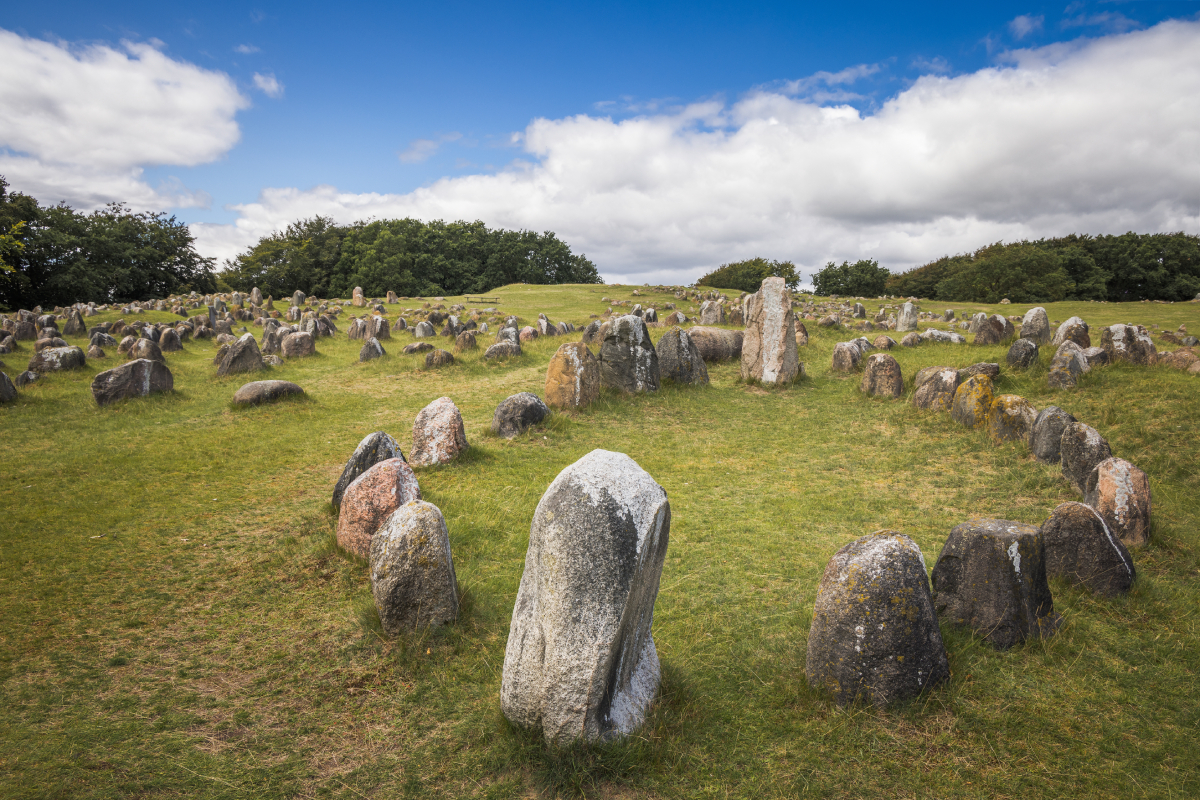
In Viking societies, tales of the undead like Thorolf’s emphasized the importance of burial rituals and maintaining the natural cycle of life and death. Photo: peresanz
What can Thorolf, the zombie Viking, teach us?
Whilst Thorolf the zombie Viking may sound like a character ripped straight from a Hollywood B movie, his tale sheds light on the fears that gripped people in Viking societies.
For many throughout the Viking world, whilst death was an everyday part of life, it had to be treated with respect and reverence.
This was why elaborate burial mounds with prized possessions were constructed to honor the high and mighty. Even for those less well-off, there were rituals to ensure the dead were properly honored.
Neglecting these rituals meant that the deceased might not, like Thorolf, find peace in death.
Belief in physical resurrection after death was widespread among people in Viking societies. These beings – the dreaded draugar – were thought to return due to unresolved anger, lingering grudges, or improper burials.
Unlike the Christian idea of resurrection – preached by missionaries as a benevolent act symbolized by Jesus Christ rising from the dead – the draugar embodied destruction and terror.
They served as cautionary figures, reminding the living of the importance of fulfilling one's earthly duties and resolving conflicts before death.
The fear of the undead often stems from the idea that disrupting the natural order brings calamity.
In the 1986 film Highlander, when Connor MacLeod miraculously survives what should have been a mortal wound, he is shunned by his community, including his loved ones.
His survival defies the natural end and becomes a source of fear rather than wonder, much like the tales of Thorolf and the draugar.
It is not the afterlife itself that terrifies, but the unnatural failure of death to act as the ultimate conclusion to life.
Finally, the tale of Thorolf, the zombie Viking, serves as a lesson about the destructive power of unresolved anger and cruelty. In life, Thorolf's bitterness harmed those around him, but in death, it transformed him into a terror to those he once loved.
His story reminds us that how we live can have consequences far beyond the grave.
For more information on the Viking afterlife, visit History.com here.
We get to provide readers with original coverage thanks to our loyal supporters. Do you enjoy our work? You can become a PATRON here or via our Patreon page. You'll get access to exclusive content and early access.
Feel free to reach out to discuss potential stories that may be in the public interest. You can reach us via email at [email protected] with the understanding that the information you provide might be used in our reporting and stories.



.jpg)