

As reported by The Viking Herald, a new study has provided valuable fresh insights into the military defenses used in Norway during the Viking Age.
Below, the lead author of the international research, the archeologist Marie Ødegaard of the University of Stavanger, explains how beacons were used to protect local inhabitants in Norway from attack for more than 1,000 years.
Years of research and exploration
As Marie Ødegaard informs The Viking Herald, she has been working on an in-depth investigation into the use of beacons as an early warning system in Norway.
"Viking beacons – Militarism in northern Europe is a four-year research project that began in 2021 and finished this year," Marie explains.
"Funded by the Research Council of Norway, the project looks at fire beacons and people's responses to fear and war in the period between 500–1600 CE."
While we have long known that beacons, fires set up in a high or prominent position, were a part of defense in Scandinavia, we did not know the true extent of their development and use.
"The reason for studying beacons is because of a previous lack of research on them," Marie confirms. "This is despite the fact that beacons are mentioned in a lot of different sources, such as place names, medieval laws, sagas, and historical maps and registers."
"I was particularly interested in how the beacons (and connected naval defense, leiðangr in Old Norse) were organized in practice in local communities, as well as the cost and resources associated with it."
In other words, how did the Norwegians defend their territories, and what role did the use of beacons play in this defense?
"To find out, we have used data analysis (GIS analysis) to map and study beacons in comparison with ancillary structures," Marie explains. "These include mustering sites, boathouses (known as naust) for the warships, and administrative districts."
- READ MORE: A Viking history of Norway – Part 1
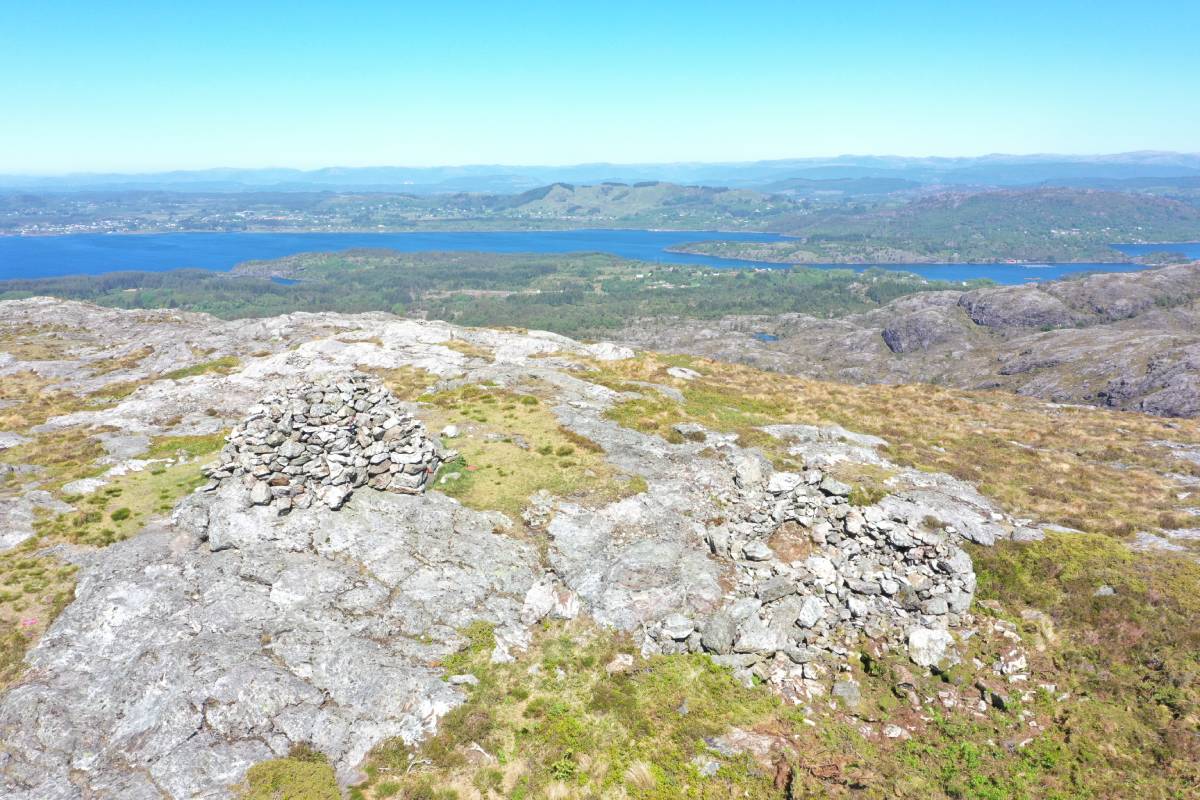
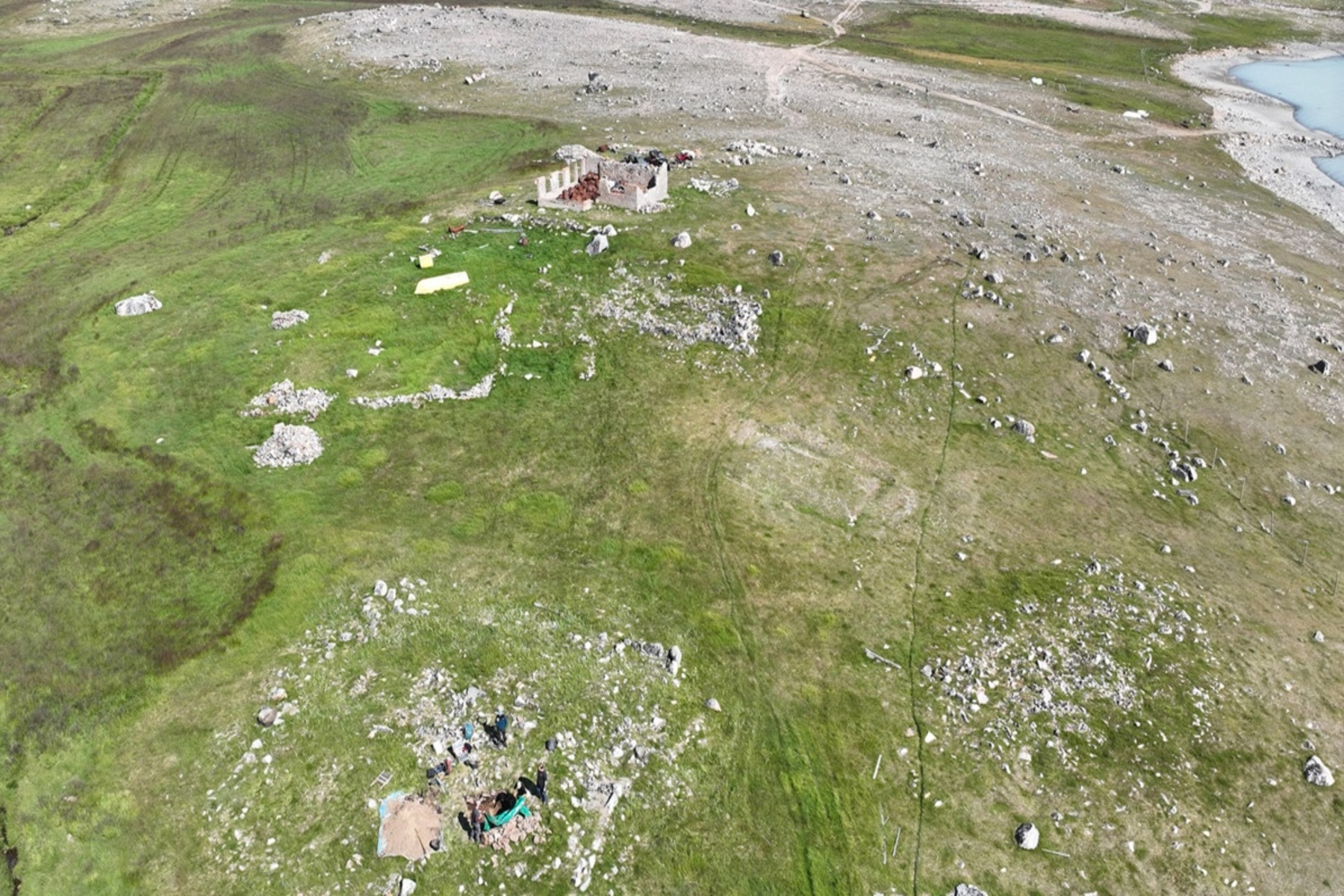
Drone view of Eldsfjellet on Holsnøy with beacon cairns in the foreground. Photo: Theo Gil / Museum of Archaeology-University of Stavanger
A comprehensive system
The extensive efforts of an international team of researchers, aided by citizen science, have enabled the mapping of a remarkable number of beacon sites in all parts of Norway in the Viking Age and beyond.
Dating the sites, however, is far from easy. "There are around 700 place names that can be related to the beacon organization," Marie tells The Viking Herald.
"Beacons were in use between approximately 950 (according to the sagas) and 1814. The long usage period makes it difficult to find the Viking and medieval beacons."
"The place names might give some clues," Marie adds. "There are three types of names that might be connected to beacons."
"The oldest names have the Old Norse element -viti in the name. We find approximately 300 names of that type."
"These were mostly found along the coast of Norway, which fits well with the system originally being a coastal organization, since most attacks came from the sea."
It is not clear whether this network was initially operated on a national scale. "The sagas describe it as a connected and national system," Marie admits.
"However, the sagas were written down several hundred years after the event. It is likely that in the late Viking Age and the 11th century, it was a series of regional and local systems under the command of local chieftains (see Niels Lund and Geir Atle Ersland)."
"In 1274, however, it was described as a national system in Magnus the Lawmender's Laws of the Land. These laws described a process in which smaller districts were gradually incorporated into, or came under the authority of, increasingly larger law provinces," Marie continues.
"This was part of the state formation process in Norway (and in Scandinavia more broadly). In this way, both the territories and, consequently, the beacon system were expanded."
"At the same time, it is reasonable to assume that some degree of cooperation in matters of collective defense and security existed across legal boundaries even prior to this development, although the lack of written sources makes this difficult to trace."
"For instance, large boathouses along the Norwegian coast, dated as far back as around 50 CE, suggest that local and regional defense systems may have existed before the organized beacon system, which only became visible in the sources toward the end of the Viking Age."
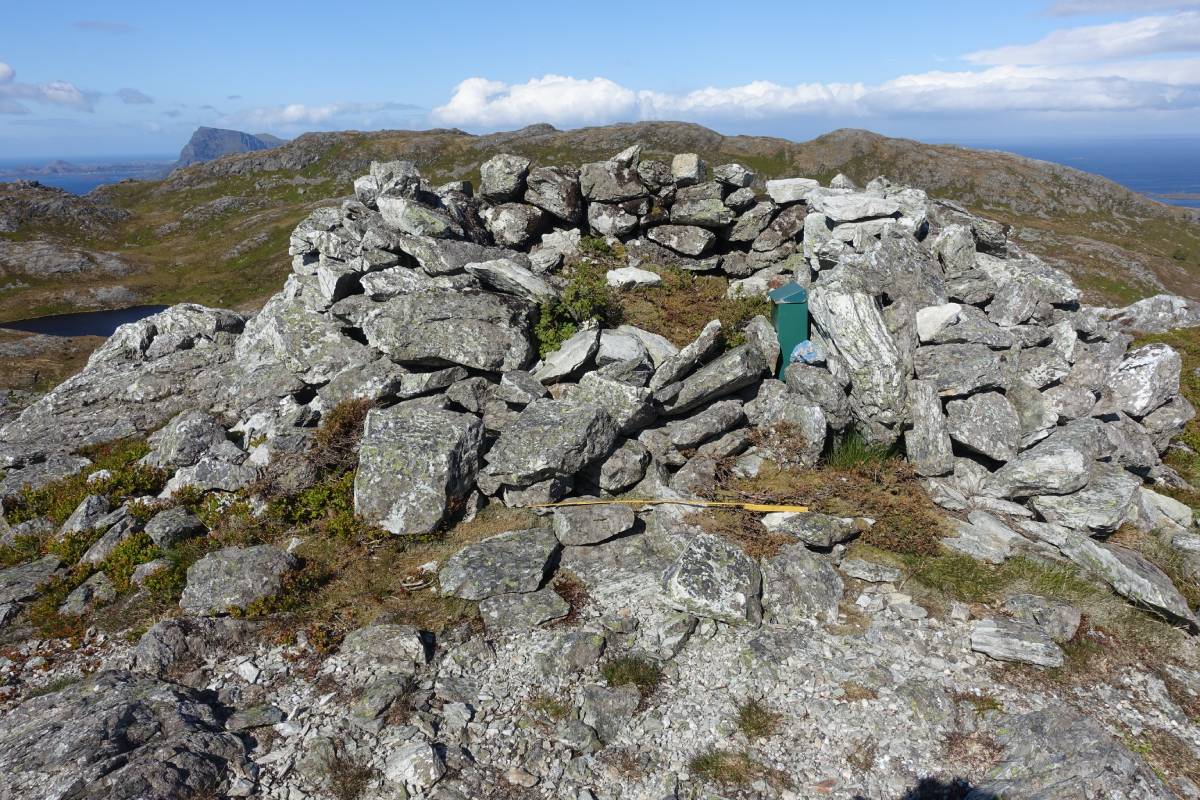
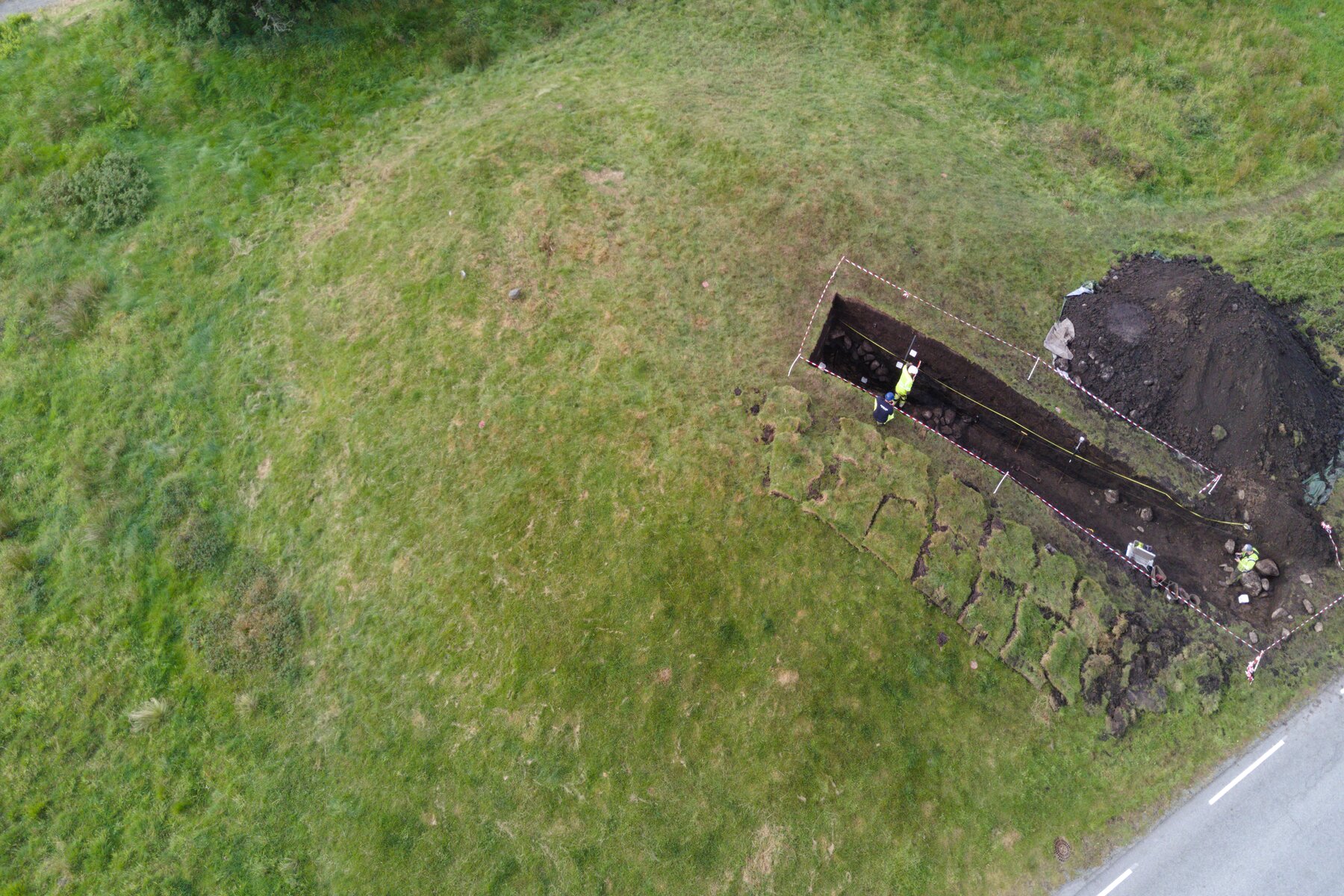
Stone remains of the beacon on Veten, Atløyna, Askvoll Municipality. Photo: Marie Ødegaard / Museum of Archaeology-University of Stavanger
An ancient technique
Indeed, Marie acknowledges that the practice of lighting beacons is an ancient one.
"For thousands of years, fires on mountain tops and hills were the best way to communicate between areas," Marie tells The Viking Herald.
"The first beacon systems were recorded in antiquity, and similar systems have been found all over the world. It is cross-cultural and not specific to particular 'levels' of social complexity."
"It is therefore a subject that can help us understand cooperation, alliances, leadership, and strategic decision-making in many past societies."
"Long-distance communication was usually done by sight, commonly using fire or smoke, but also by raising flags or signaling by other physical means," Marie adds.
"The distance varies between topographies and weather conditions. Most beacons are used in relation to war and warnings, but in some regions they could also signal observations of many animals to be hunted, for example."
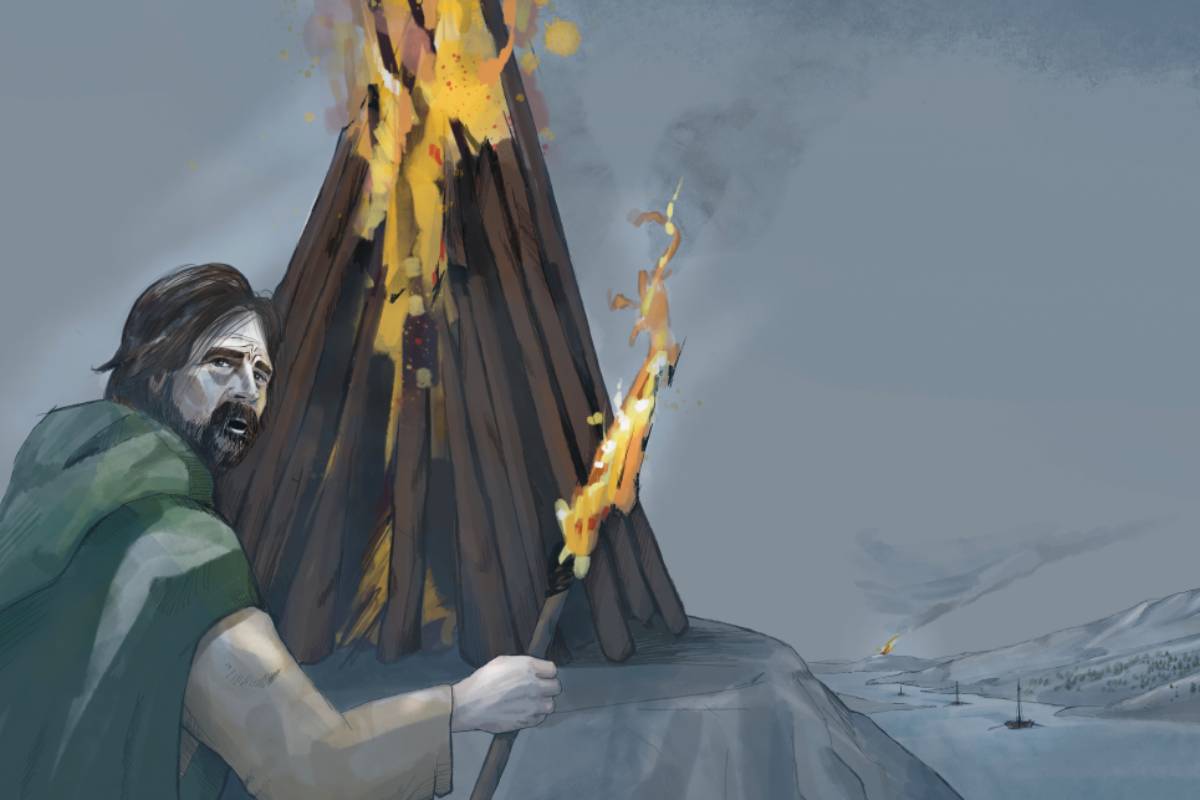
"Beacons could be connected to a system (a net or chain of beacons) in smaller or larger systems. The fires had to signal to someone to get a response."
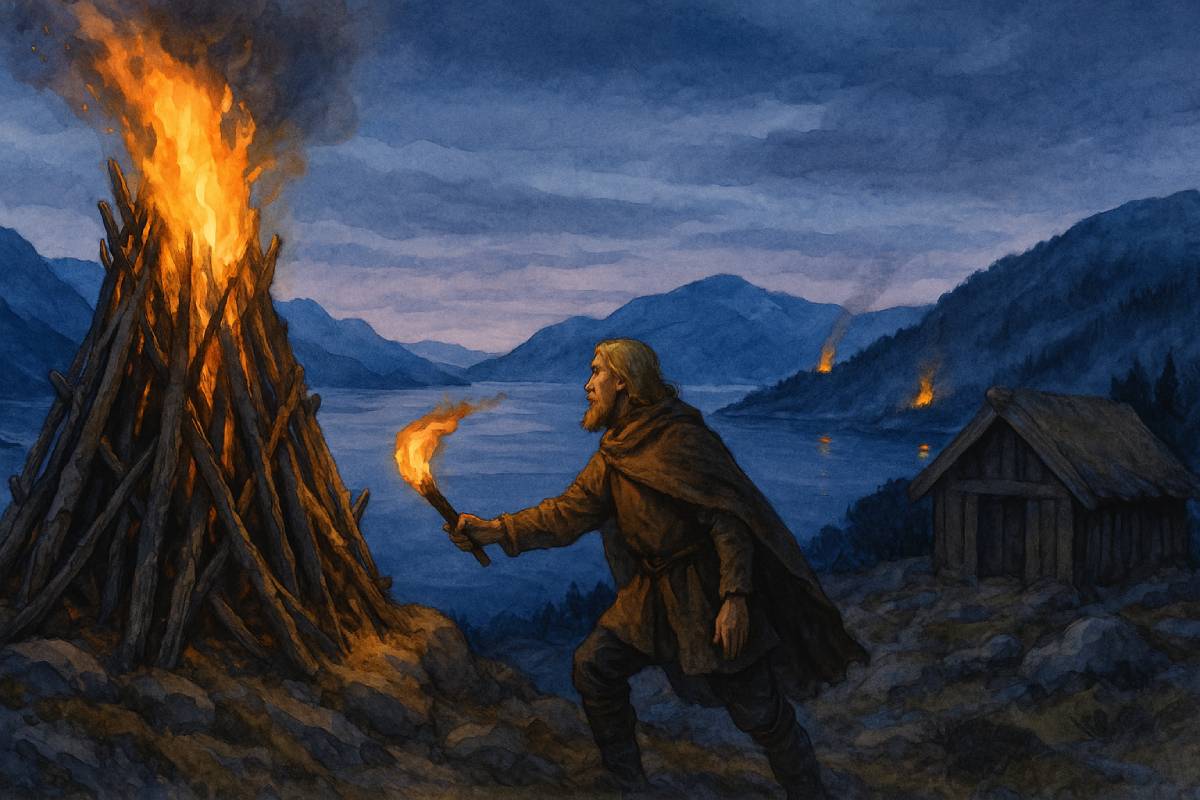
"In Scandinavia, beacons were used to signal to chieftains – or later kings – and local communities," Marie adds. "In Norway, people had to mobilize and get warships out to face the enemy and protect the land."
"There were also messengers and runners to bring information to people and between (royal) ombudsmen. Some systems also used sounds, such as horns, to send messages and alarms, as well as to command troops during battles."
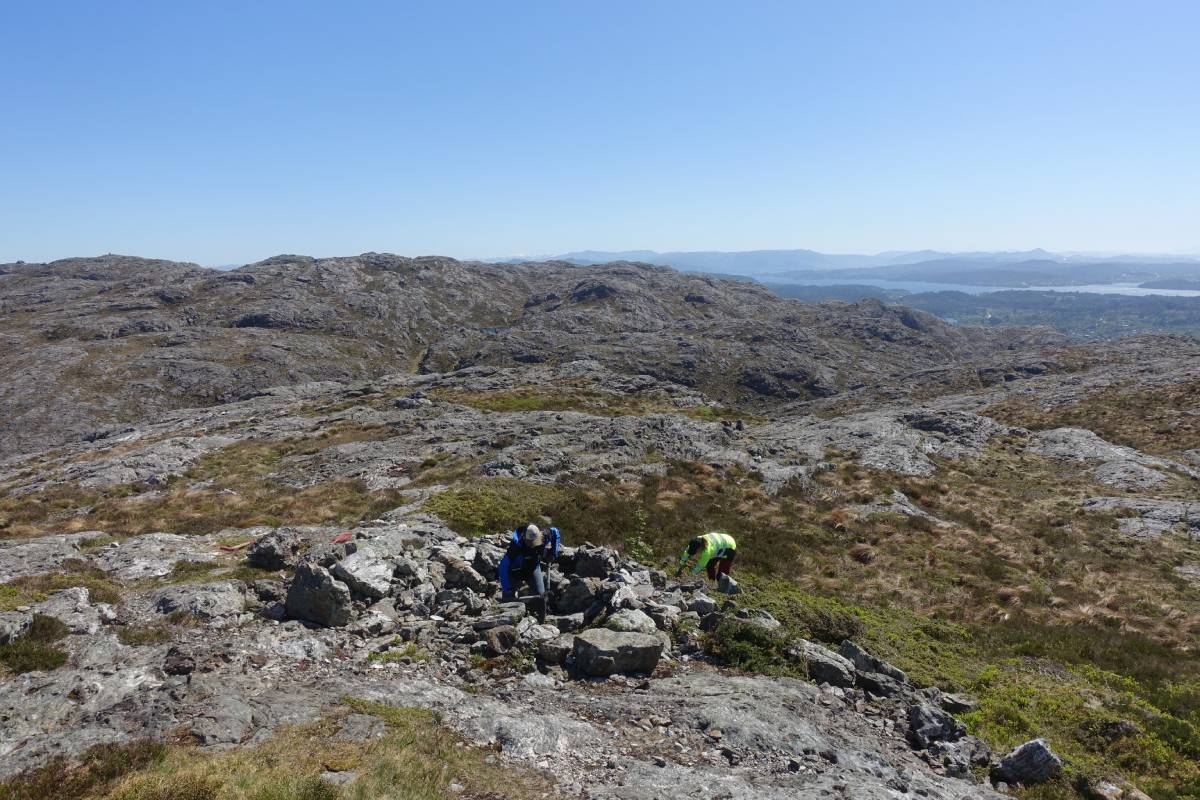
Remains of a guardhouse at the Eldsfjellet beacon site, Holsnøy. Photo: Theo Gil / Museum of Archaeology-University of Stavanger
Evolving technology
Over the last four years, the study has enabled Marie and her colleagues to gain a sophisticated understanding of how and when beacons were used in Norway and the wider region.
"The Scandinavian systems were only manned in times of crisis and when an army was expected," Marie points out to The Viking Herald. "War was conducted in the summer months, so the beacons were not manned at all during wintertime."
"One difference from other networks is that the Scandinavian systems did not consist of a standing army. Instead, it was based mostly on farmers in local communities under the command of local chieftains, and later royal leaders."
Although communication in the region became more sophisticated over the centuries, the beacon system continued to be a vital tool for several hundred years.
"In Norway, the beacon system underwent significant changes over time," Marie admits.
"While the naval levy gradually fell out of use between the 14th and 15th centuries, the beacons remained an active part of the national defense system until the end of the Napoleonic Wars."
"However, the system itself evolved in accordance with broader societal transformations, as well as developments in military technology, administrative organization, and modes of communication."
"By the early modern period, the beacon networks became increasingly centralized and integrated into the military and administrative structures of the emerging state," Marie adds.
"However, the system was still organized regionally in accordance with current military administrative districts and commanders."
"The introduction of gunpowder weaponry and new forms of coastal defense altered both the strategic purpose and the practical operation of the beacons."
"In some areas, older beacon hills were reused or replaced by permanent watch posts, signal guns, or telegraph systems, reflecting the gradual transition from a medieval to a modern military infrastructure."
We get to provide readers with original coverage thanks to our loyal supporters. Do you enjoy our work? You can become a PATRON here or via our Patreon page. You'll get access to exclusive content and early access.
Feel free to reach out to discuss potential stories that may be in the public interest. You can reach us via email at [email protected] with the understanding that the information you provide might be used in our reporting and stories.