

We have a confession to air here at The Viking Herald. Often, when we talk with friends or family about our love of the Viking Age, we garner about as much excitement and enthusiasm from them as if they were taking a cold shower.
For the general population (or the unconverted, if you will), professing a passion for early medieval Europe's most feared warriors can often be met with a combination of confusion and incredulity.
For much of the public, the study of Viking societies is something reserved for armchair experts, very much a stuffy academic sort of thing.
Whilst it may be armchair academics that study this period nowadays, the adventures and exploits of people from Viking societies were anything but cerebral.
In fact, even the tales they told themselves to while away a cold Nordic night—what we now call the Norse sagas—are dripping with so much action and adventure that they will keep your heart racing for a long time.
However, we do not often come across a tale in the Norse sagas that deals with something many of us consider a blue-collar job: construction.
Seen as an industry that is the very antithesis of early medieval studies, we find a tale in the Norse sagas that not only involves a horse, a builder, and a trickster, but also manages to blend the mythological and the visceral, blue-collar work and high fantasy.
Given that wall building seems all the rage nowadays, this tale also has the added bonus of involving one of our favorite characters from Norse mythology, Loki.
So, leap off your armchairs and load up your favorite cement mixer, because we are to delve into the tale of how Asgard got its walls.
Life before walls
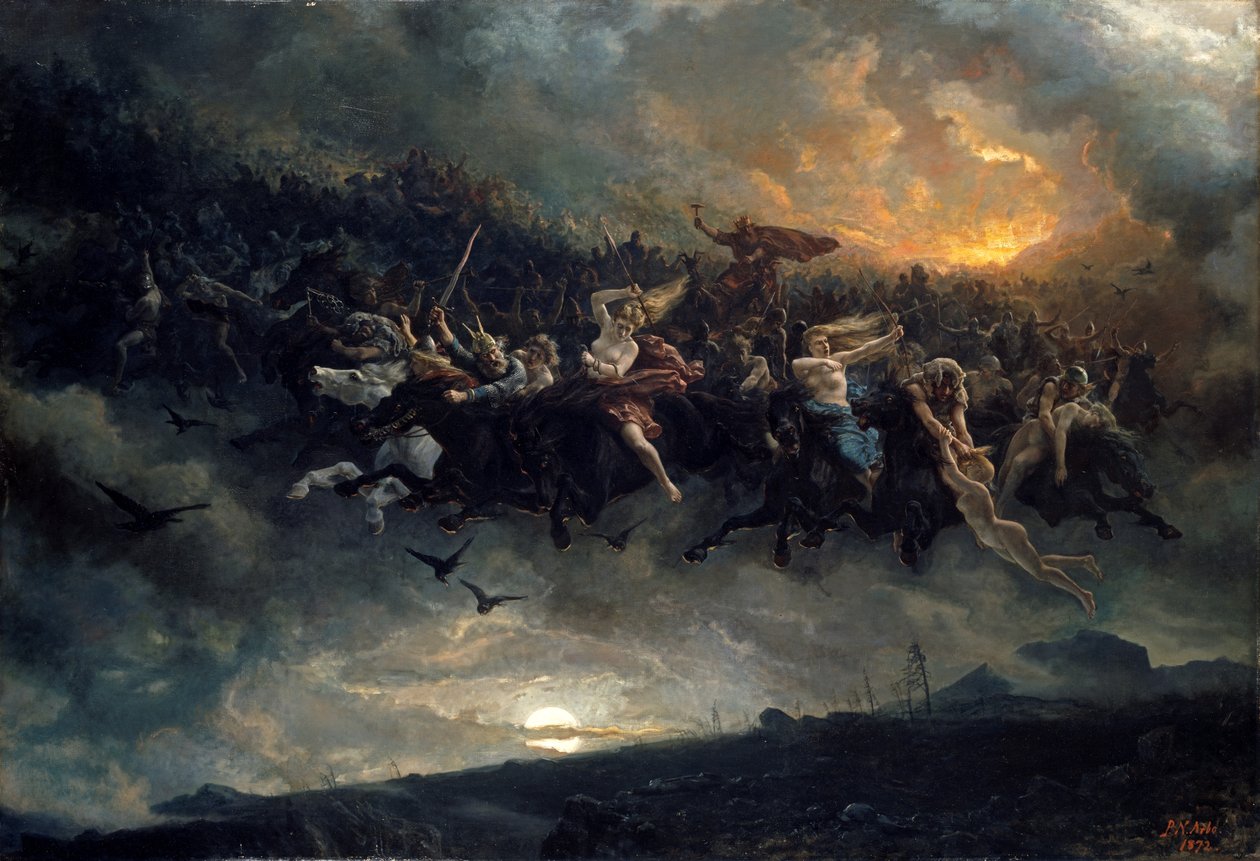
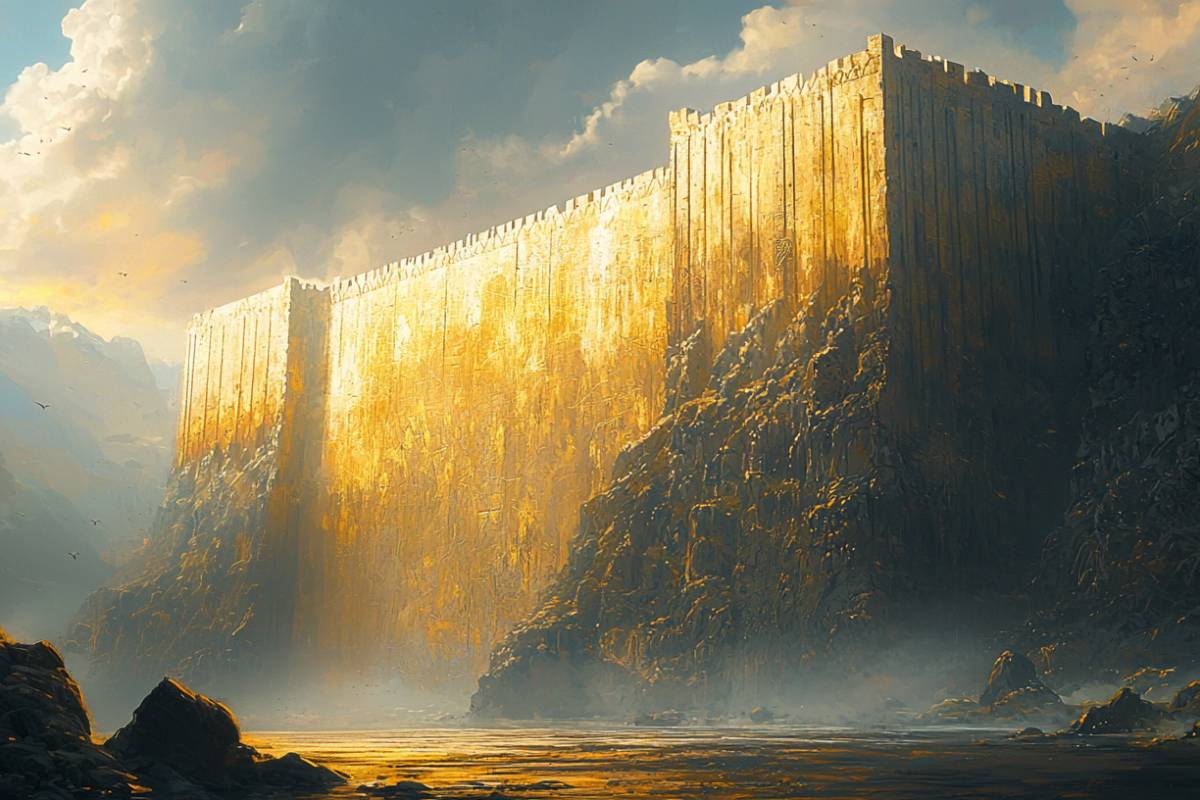
Many cultural depictions of Asgard, the realm of some of the Norse gods, depict it as a great fortress in the sky. The very name itself, Asgard, contains an element of the Old Norse word for walls, garðr.
Yet if we scour the rich tapestry of Norse mythology, we find that, in the very beginnings of the Norse cosmos, Asgard was largely an unprotected realm.
A whole host (or should that be horde) of nasty ne'er-do-wells could easily attack this magical realm of the Norse gods.
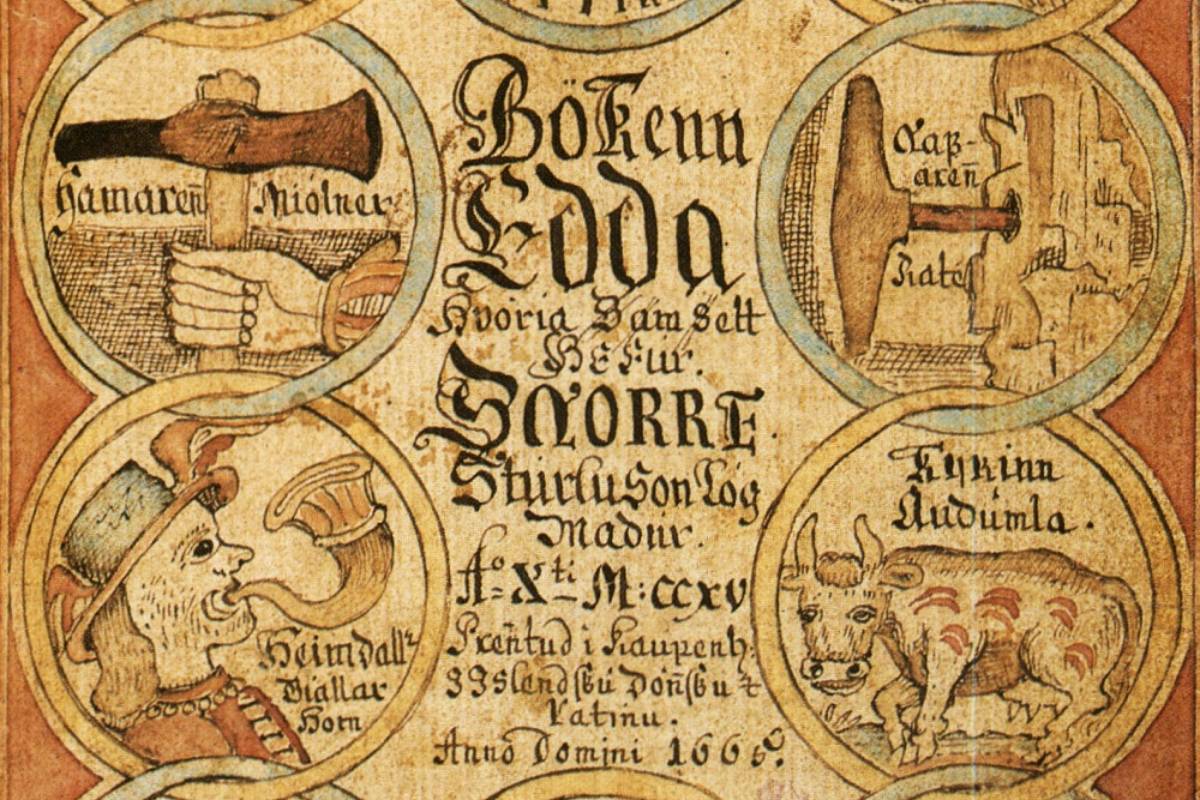
If we scour the Prose Edda, a collection of legends, myths, and poems compiled by 13th-century CE Icelandic poet and politician Snorri Sturluson, specifically the Gylfaginning (The Beguiling of Gylfi), we find that one day a mysterious builder arrives in Asgard.
Though this builder, who is referred to in the text as a verkrmaðr, a workman or builder, may be mysterious, the Norse gods become convinced he is a jötunn after seeing the speed and strength of his work.
He strikes a deal with them: he'll build walls to protect the gods from whoever wishes them harm, and have it done in record time (in only three seasons!).
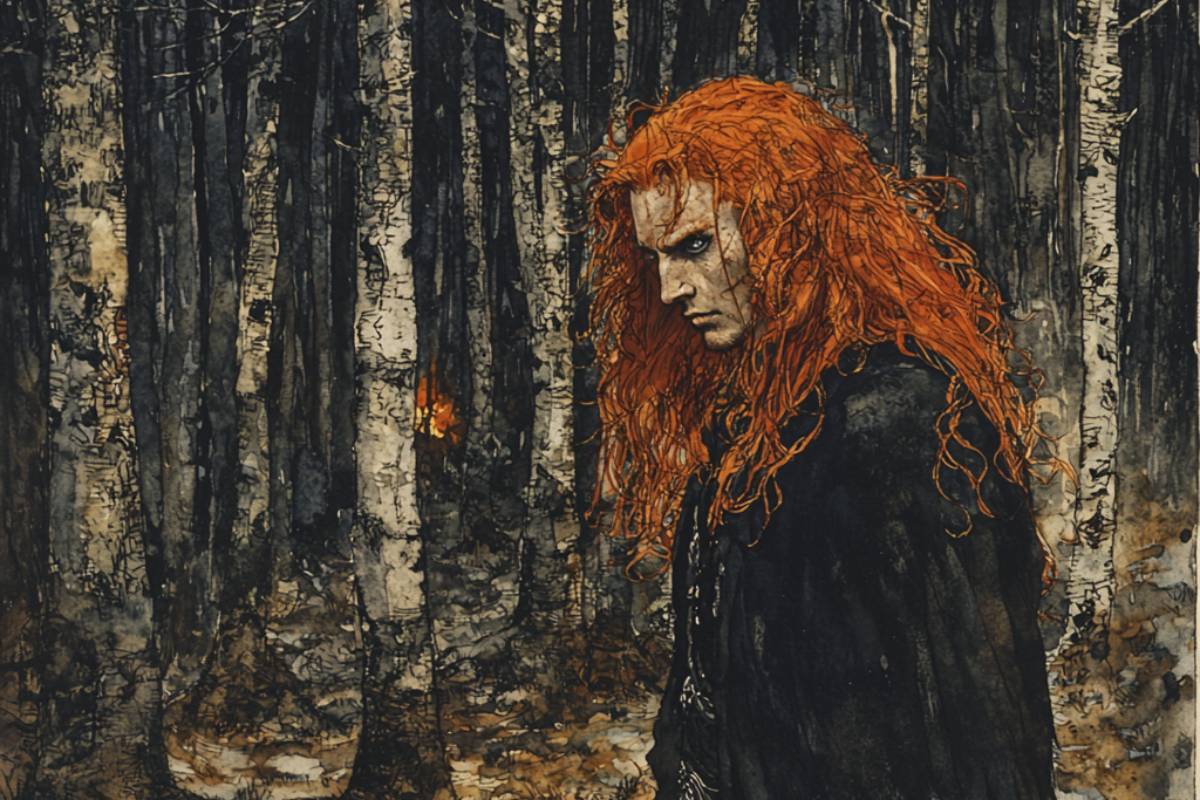
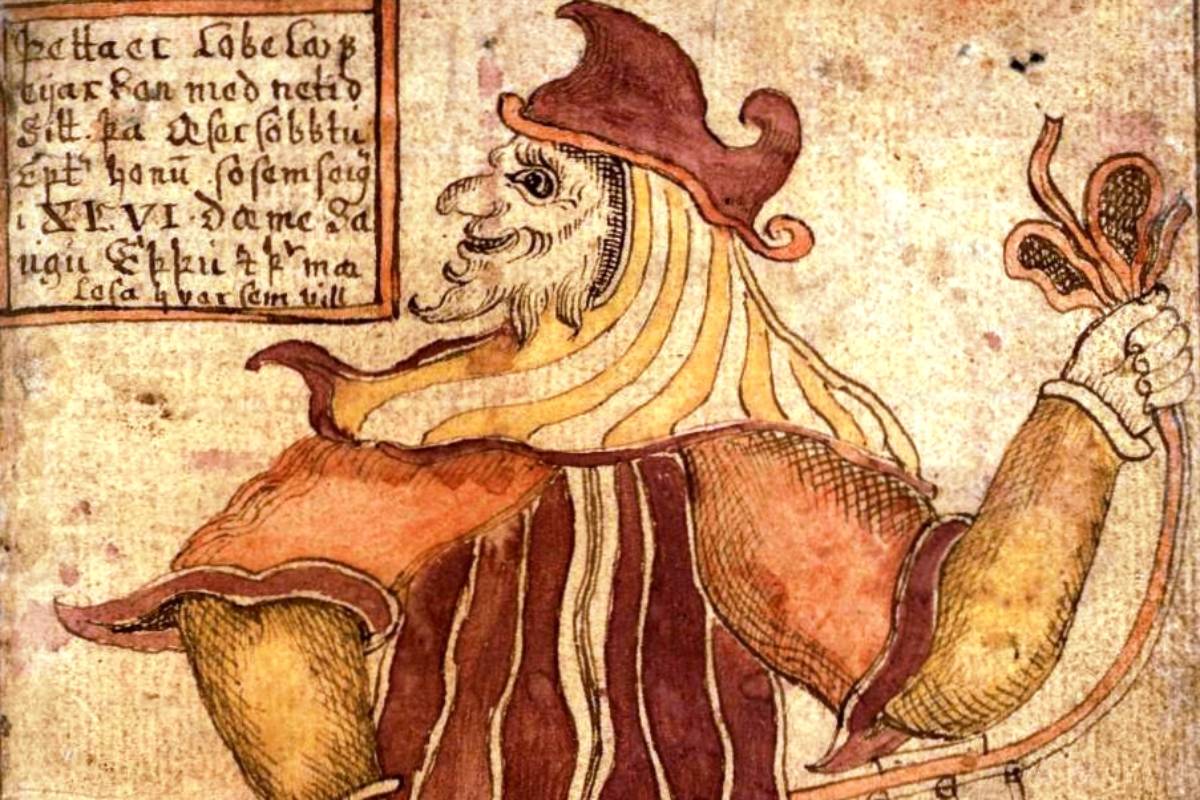
In the tale, Loki both causes the problem and solves it, first making the deal and then sabotaging the builder. Illustration: The Viking Herald
A bride, the sun, and the moon
There is, however, the small issue of his payment. A minor issue, you may assume. Incorrect. This is the Norse sagas we are talking about, after all, and what we love about them is the high drama and entertainment.
The issue of the builder's compensation is not only the hand of the goddess Freyja, associated with beauty, death, fertility, and war, but also the sun and the moon.
I mean, if you've ever had to do any home renovation work, you'll know some tradespeople charge an arm and a leg, but never the sun and the moon!
After much internal discussion, with the most obvious naysayer to this proposal being Freyja herself, the gods listen to Loki, who wants to change the duration of the work down from three seasons to a single winter, with only the help of his trusty steed.
Now, for anyone who has experienced a Scandinavian winter, the last thing you'd want to do is be outside for large amounts of time doing manual labor... much safer curled by a fire with a hot chocolate and a good book, am I right?
The builder agrees and makes the gods swear an oath that they will uphold their bargain.
Which they did, despite the fact they thought this was an impossible task—building impenetrable walls around such a magical and mythical fortress.
As Wilhelm Wägner and M. W. Macdowall write in their 1884 book, Asgard and the Gods: The Tales and Traditions of Our Northern Ancestors, Asgard was a place that "shone with gold and precious stones, and where eternal spring reigned." A place worthy of some serious fortifications.
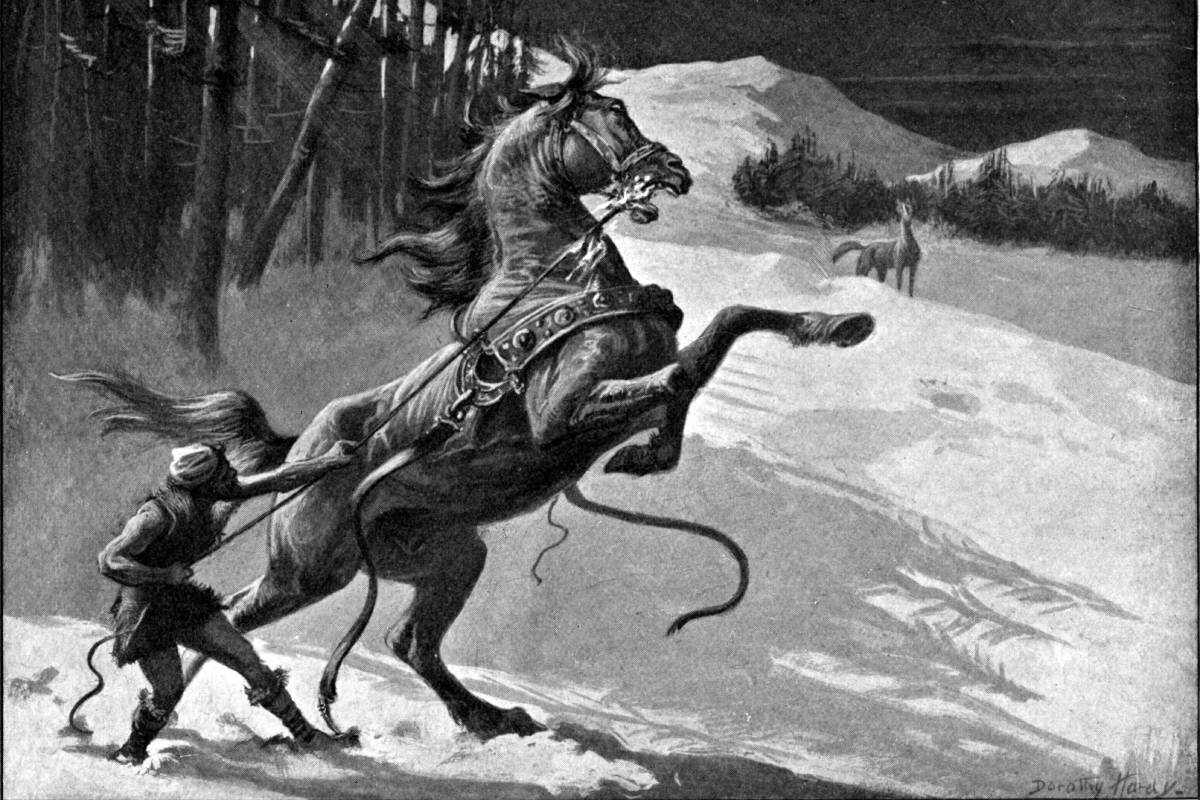
This scene shows the stallion Svadilfari as he is distracted by Loki in the form of a mare. Illustration: Dorothy Hardy (fl. 1891–1925)
The horse appears
The builder then set to work, preparing giant blocks that would lay the foundation for the walls.
However, the gods soon noticed that this builder had a trusted steed helping him, a stallion named Svadilfari (or in English, "Unlucky Traveler").
As is always the case in the Norse sagas, things are certainly not what they seem, and Svadilfari is an employer's dream, hauling the stones up twice as fast as his boss.
You can imagine the look on the gods' faces when they realize—shock, horror—that with only three days of winter left, all that was left was a few stones around the gate.
This shock turned to visceral anger as they chided, goaded, and harassed Loki for tricking them into changing their terms.
Loki, you know, being the eternal trickster of Norse mythology, assures them that he will fix it and everything will be OK.
The Norse gods, figuratively burnt by Loki before, made him swear an oath that he would prevent the giant from finishing under the pain of death.
Oaths were a serious undertaking for people in Viking societies. As John Lindow writes in his 2020 book, Old Norse Mythology, "...in the Old Norse world, men guarded their reputations carefully."
Even scheming deities did too! You can imagine Loki's nefarious delight when he is presented with this chance to redeem himself... and his life.
That night, whilst Svadilfari is searching the forests for more stone, he comes across a beautiful mare. Needless to say, all work and no play makes for a very dull life, and Svadilfari gives in to his animal instincts and wants to do what horses do when hot, heavy, and horny.
He is so overcome with lust that he breaks free from his reins and gallops after this beauty, running all night.
However, this mare is none other than Loki in disguise! No matter how fast Loki ran, he (sorry, she) could not outrun Svadilfari, who eventually fulfilled his lustful ambitions.
The result of this unusual union was an eight-legged horse, Sleipnir, chosen steed of Odin.
- READ MORE: The Hávamál – Odin's advice on living wisely

The story of how Asgard got its walls also explains the origin of Odin's eight-legged horse Sleipnir. Photo: Berig (CC BY-SA 4.0)
A bloody end: What can it teach us?
We've all been in a situation at work or school where we're working as a team, but not everyone on the team is pulling their weight.
Sadly, for the mysterious jötunn builder, he could not finish the project on time (never heard a builder blame their tardiness on a horny horse, though!) and was rewarded with... his head being smashed into pieces by Thor's magical hammer, Mjöllnir.
Construction is a tough gig, they say.
While many of the Norse sagas have inbuilt moral lessons—remember that they were compiled in a society that had been Christian for centuries—it is hard to see what the tale of Asgard's walls can teach us.
It is an origin story for Sleipnir, the eight-legged horse that Odin loves. It also speaks to fluid gender roles—Loki is both a man and a mother—that permeated Viking societies before Christianity, with all its (by our modern standards) patriarchy and sexism, gained supremacy over hearts, minds, and souls.
Ultimately, though, this tale puts Loki front and center and speaks to his scheming nature. It is this scheming, malevolent, and mysterious nature that sees him able to shapeshift and thus shift out of deadly situations.
Whilst the walls would be finished, the tale of their early construction speaks to one of the more adult tales in the Norse sagas, full of what we love—blood, sex, and violence.
For others, its appeal lies around the first mention of tardy construction workers in Norse mythology, something that frustratingly echoes down through the ages today!
For more information on Norse mythology, visit Science Norway here.
We get to provide readers with original coverage thanks to our loyal supporters. Do you enjoy our work? You can become a PATRON here or via our Patreon page. You'll get access to exclusive content and early access.
Feel free to reach out to discuss potential stories that may be in the public interest. You can reach us via email at [email protected] with the understanding that the information you provide might be used in our reporting and stories.