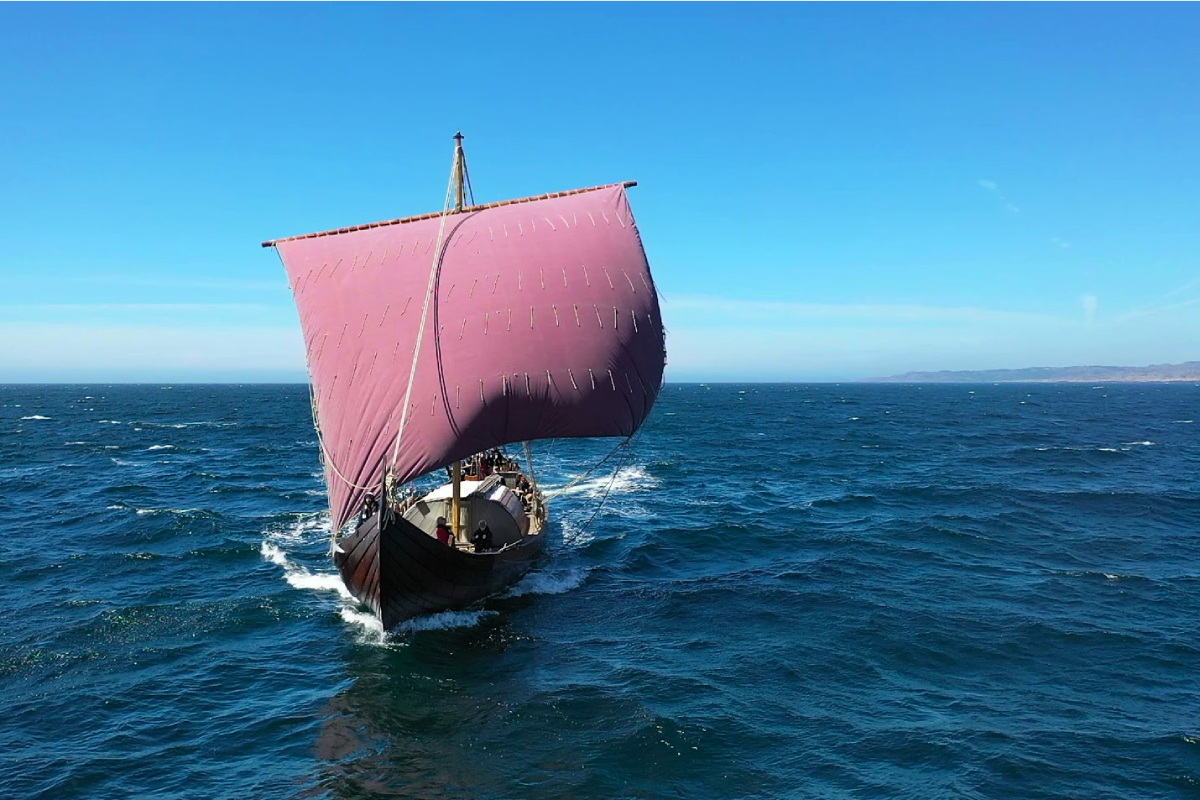


Any look at a world map and you'll notice the Scandinavian peninsula is surrounded by water. It should not come as a surprise that the people who inhabit that peninsula, whether in the early medieval period or today, have an affinity with sailing.
The current King of Norway, Harald V, is a former Olympic and world champion sailor. Add to this that the Norwegian merchant fleet was once one of the world's largest, and that Denmark, along with the cities of Oslo and Stockholm, has long been an important center of world shipping and trade.
Where, then, did they get this love of sailing? Well, given the geography of the Scandinavian peninsula, sailing was a necessity for travel, sustenance, and trade for much of the region's history.
It has only been in the past few decades that overland transport networks have improved, and the availability of cheap flights has overtaken the integral nature of sailing for Scandinavia.
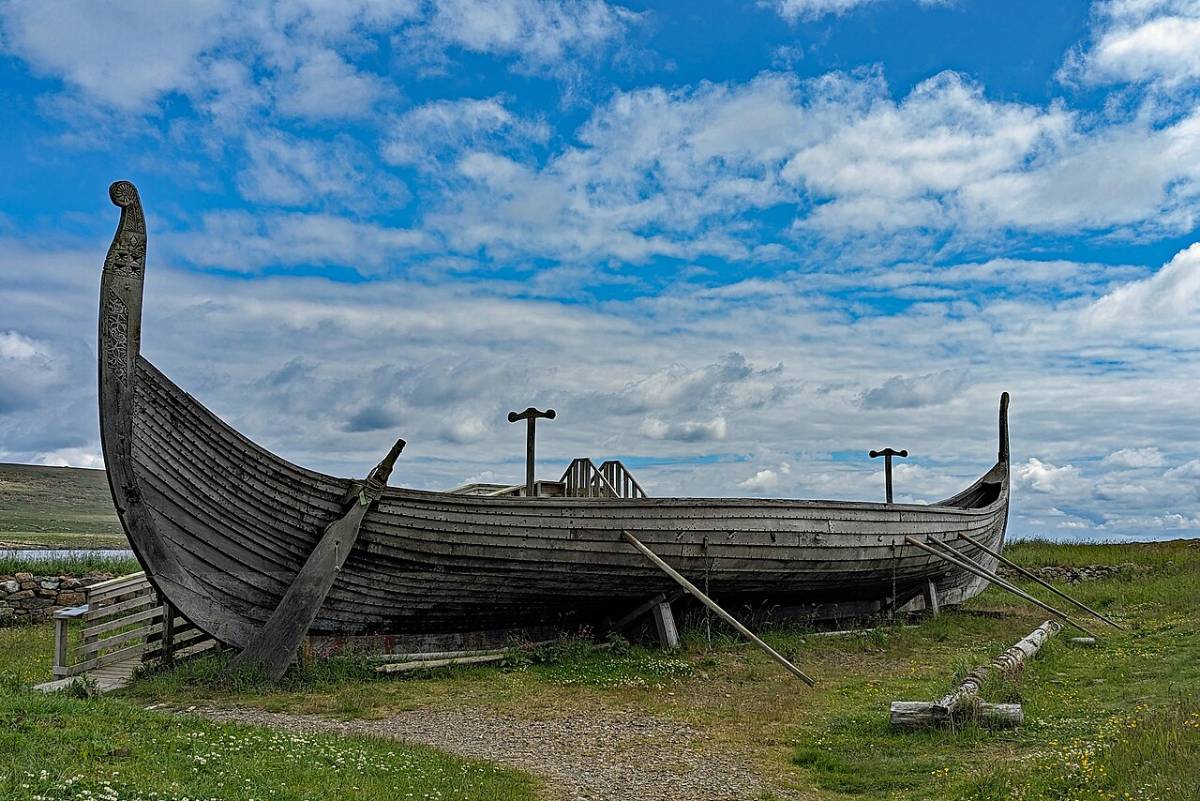
Whilst people living in this region have sailed for thousands of years, it was during the early medieval period that they reached a sort of military and technological peak with the use of the glorious longships.
As Bill Cooke and Carol Christiansen write in the 2005 book Northern Archaeological Textiles, people from Viking societies were, "the first European merchant adventurers, and the technological key to their success was the longship."
This perfect piece of maritime technology enabled people from Viking societies to sail from the shores of modern-day Canada to the Caspian Sea, from Iceland down to the southern Italian peninsula, and seemingly everywhere in between.
Centuries before any sort of modern navigational equipment, people from Viking societies used the currents and even the sun to crisscross the Atlantic Ocean.
Whilst these longships carried the feared Viking warriors, most people who sailed on them were just simple sailors, the ordinary but very skilled majority that underpinned Viking expansion throughout the early medieval period. Let us look at what their experiences were like on the high seas.
- READ MORE: All you need to know about Viking ships
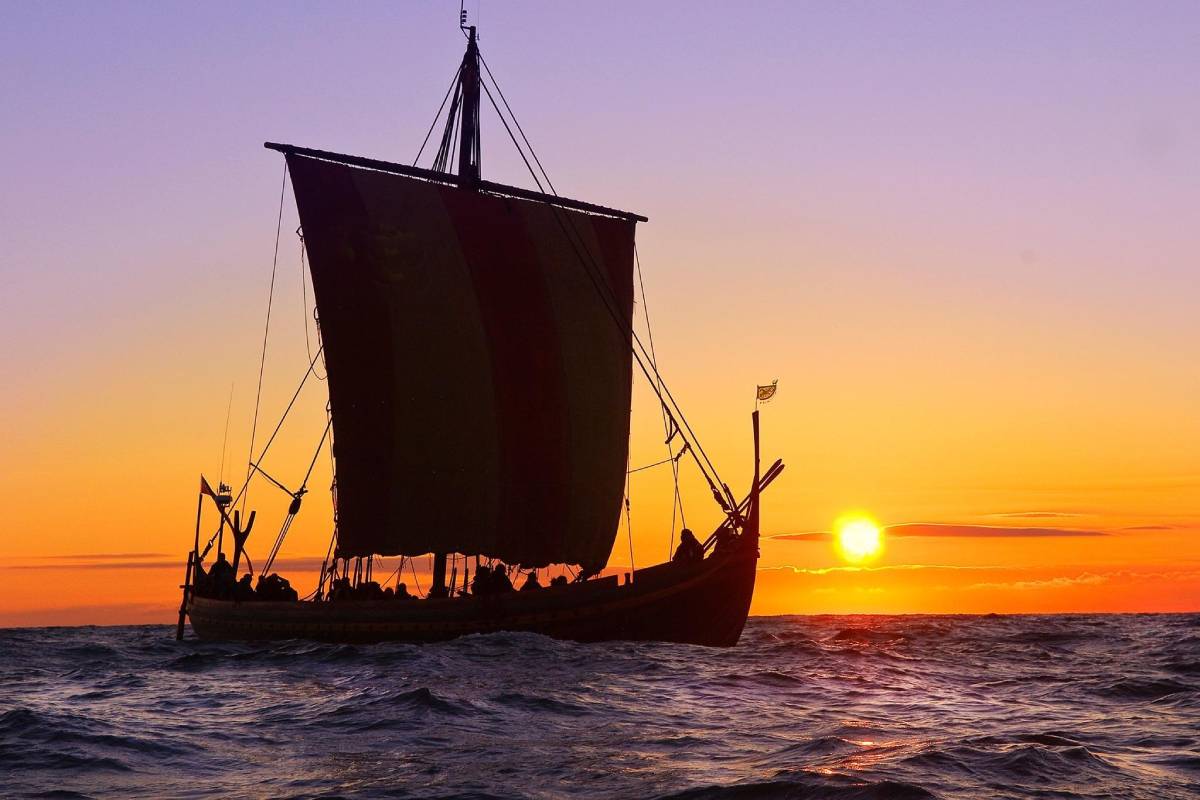
To see the risks Viking sailors faced, the Sea Stallion from Glendalough retraced historic routes under sail and oar. Photo: Viking Ship Museum in Roskilde
Many skills required
Navigation for Viking-era sailors was largely done through the natural world. Sailors had to know the lie of the land, every nook, cranny, or fjord of coastlines throughout the Scandinavian peninsula and beyond.
For those further expeditions that involved crossing vast seas or oceans, the patterns of waves were used to gauge the direction and flow of the tides and currents.
As Dénes Száz and Gábor Horváth revealed in their 2018 paper, published in the journal Royal Society Open Science, much of the success of people from Viking societies is attributed to the use of a genuine sun compass with which they could determine the geographic north direction.
Using the climate and environment to navigate upon the water underpinned Viking Age exploration, trade, and warfare.
Onboard, sailors were a sturdy bunch. This was not a cruisy afternoon pleasure ride but a full-body workout as water had to be constantly bailed overboard, sails had to be furled and unfurled depending on the wind, and rowing had to be fast, furious, and in rhythm.
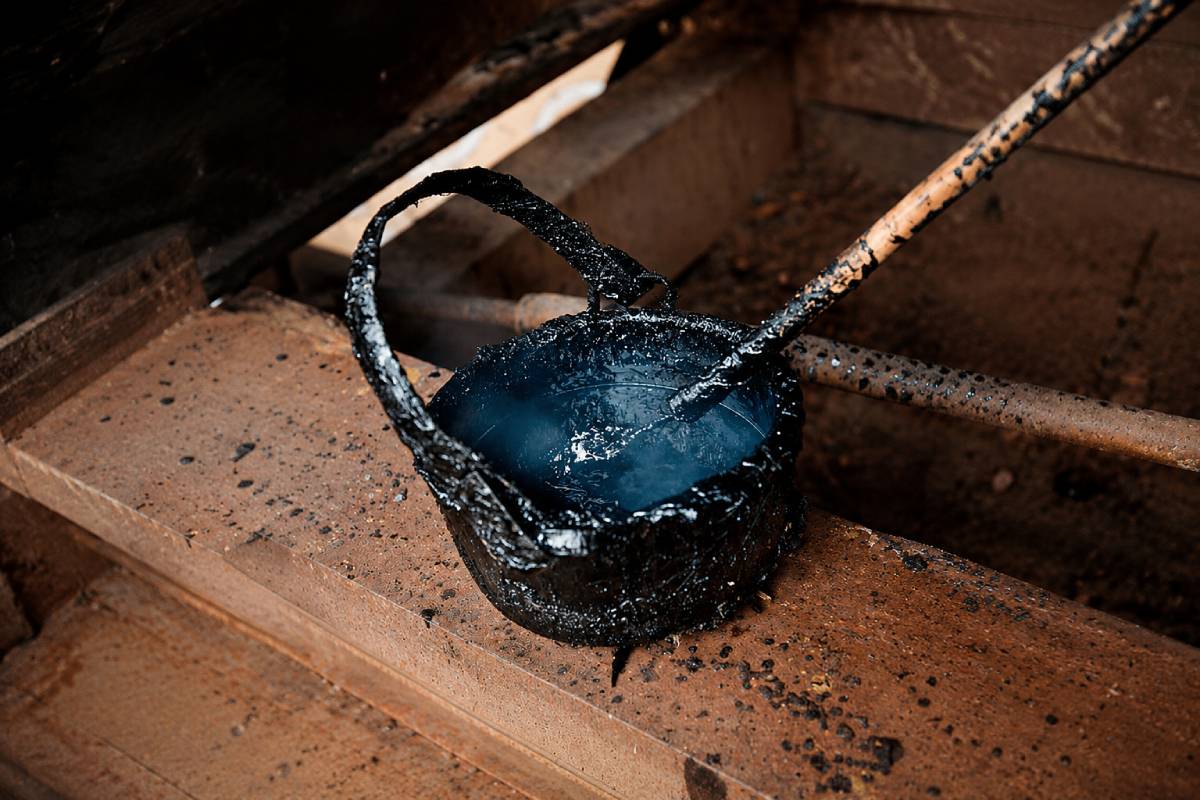
Sailors also had to know a thing or two about repairs and maintenance, often doing much of this work while actively sailing.
Should the ship be used for military purposes, then the sailors who were not warriors had to grab a shield or an axe and join in the carnage. Some form of basic martial skill had to be learned, even if the sailor was not a Viking warrior.
All hands very much made light work, and there was a degree of egalitarianism to sailing whereby everyone had to chip in and row, repair, and raid.
- READ MORE: How did the Vikings navigate?
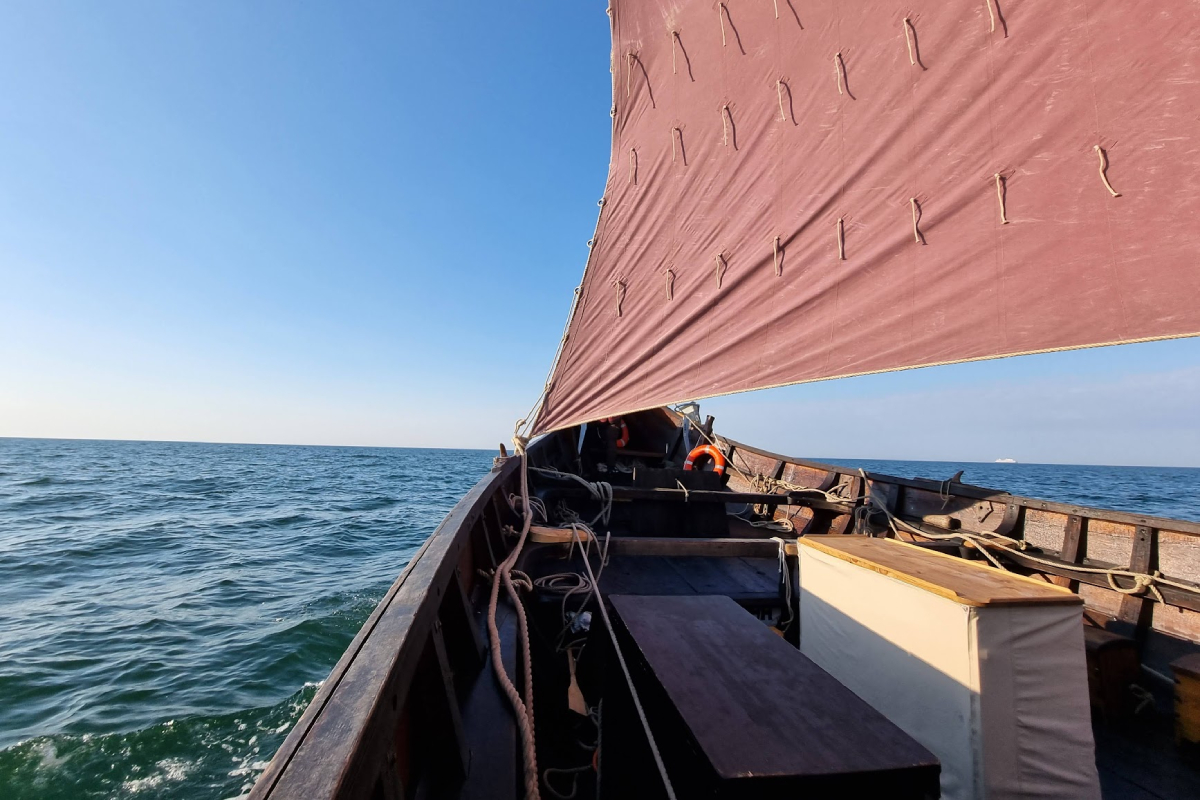
A look along the Saga Farmann, a replica based on the Klåstad ship, shows the tight space Viking sailors worked in. Photo: Oseberg Viking Heritage Foundation
Riches, fame and fortune
Whilst money does indeed make the world go around, payment for sailors was a thorny issue, as they were not paid a fixed wage. Any payment was often erratic and irregular. However, the promise of life-changing riches kept them motivated.
Should they be lucky enough to survive a Viking raid, say plundering an isolated monastery, then the loot would be divided up equally amongst all the crew... after the expedition leader got the lion's share of it. Rich jewels, silks, or even slaves could be acquired.
As the early medieval period progressed, these Viking raids evolved into something more permanent, namely conquest and subsequent settlement.
Sailors who accompanied these raids may have been given land or even titles as a reward for their efforts. The best example of this is Rollo, the famed Viking raider who plagued much of what is now northern France during the early 10th century CE.
Frankish ruler Charles the Simple decided to use Rollo and his Viking crew as a buffer zone against further northern attacks and ceded a huge swathe of land between the rivers Seine and Loire to these Vikings.
Soon, others joined, and this became known as the land of the Northmen, or in the local tongue, Normandy.
Across the English Channel, there was opportunity aplenty for farmland and social mobility as Vikings conquered huge swathes of Anglo-Saxon England and established the Danelaw.
Speaking of social mobility, a much-prized payment was in the form of fame and honor. Going on a successful expedition—be it raiding or exploring—could give the sailor a certain amount of notoriety and help raise their social standing.
We know that people in Viking societies loved entertaining tales, and being a part of a heroic saga of derring-do could win friends and influence people.
Not every sailing expedition brought fame and fortune; sometimes, the definite risks outweighed any potential reward.
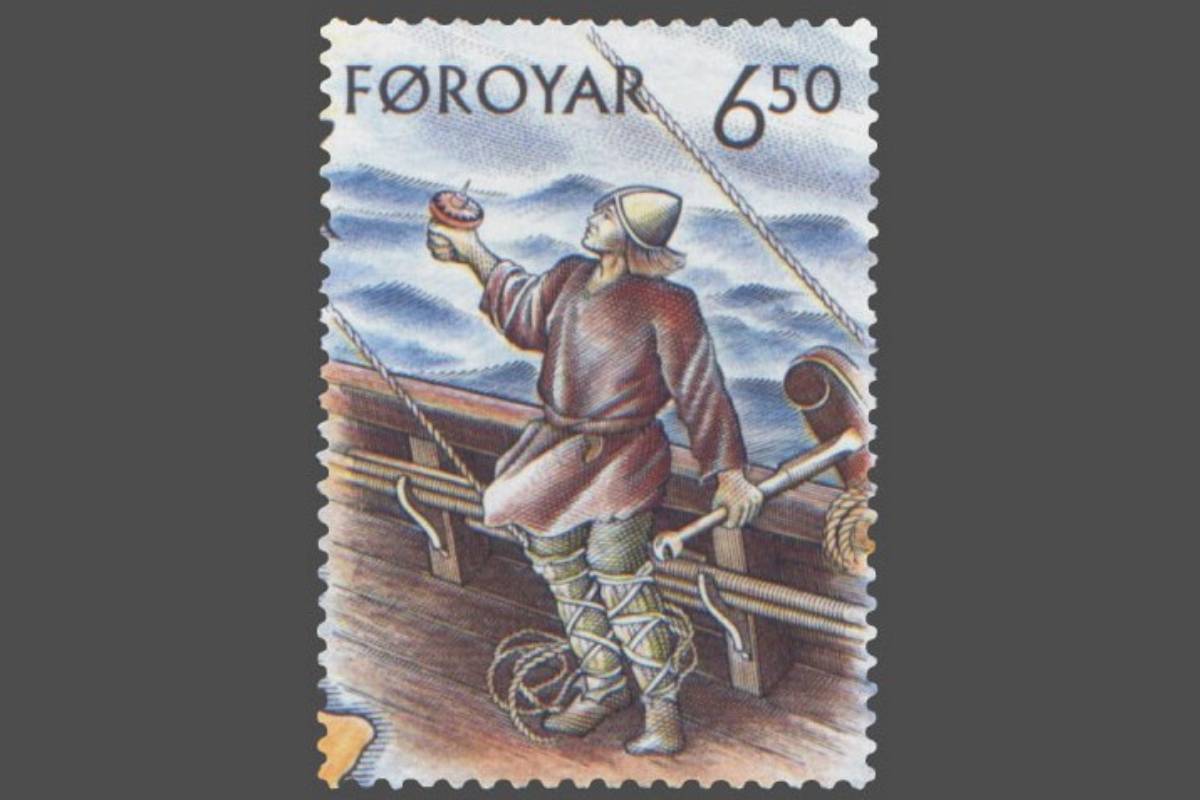
A Viking helmsman in traditional vaðmál clothing appears on a Faroese postage stamp by artist Martin Mörck. Source: Postverk Føroya - Philatelic Office
Significant risks
A sailor's life was not all slaves, silver, and sunshine. Ordinary Viking-era sailors went aboard knowing that they might very well never see their family, friends, and community again.
Death stalked every sailing expedition at every turn. A lack of maps and modern navigational equipment, coupled with the harsh climatic conditions of the many rivers, seas, and oceans, made shipwrecks frequent.
When crossing the North Atlantic Ocean, whether to the Viking settlements at L'Anse aux Meadows, Iceland, or Greenland, cold conditions were to be expected.
This made frostbite and even hypothermia part and parcel of the journey. Add to this the exceptionally small living quarters on a longship, and communal sickness or disease was frequent, too.
Finally, should the longship be part of a military expedition, then potential death or enslavement by enemies was a strong possibility, particularly if they were outnumbered or outfought.
The backbone of Viking success
Sailing was integral to the Viking expansion of the early medieval period.
Underpinning this expansion were the ordinary, everyday sailors who possessed a wealth of skilled maritime and naval knowledge, along with the ability to repair and maintain their ship, wield an axe or a shield, and avoid death or sickness at every turn.
Yet untold wealth, riches, and rewards could be acquired if they navigated all these hurdles.
Driven by skill and courage and lured by the prospect of fame and fortune, these ordinary sailors were the backbone of what made the Viking expansion of the early medieval period so successful.
For more information on a modern Viking sailor, visit the Cosmos website.
We get to provide readers with original coverage thanks to our loyal supporters. Do you enjoy our work? You can become a PATRON here or via our Patreon page. You'll get access to exclusive content and early access.
Feel free to reach out to discuss potential stories that may be in the public interest. You can reach us via email at [email protected] with the understanding that the information you provide might be used in our reporting and stories.