


We explore three mythological figures whose stories help to shed light on this deep connection to the sea.
The sea and Viking identity
We moderns are in awe of the deep and reverent relationship that people in Viking societies had with the sea.
This enabled them to become some of the most skilled sailors and shipbuilders of the early medieval period. Theirs was a culture deeply ingrained with a maritime and nautical tint.
Given the geography of the Scandinavian peninsula, where Viking societies developed and then expanded outwards during the early medieval period, this relationship with the sea became an intrinsic part of Viking identity.
As J.H. Barrett and S.J. Gibbon write about in their chapter in the 2016 book Maritime Societies and the Transformation of the Viking Age in the Medieval World, people in Viking societies drew their identity and livelihood from relations with water.
Part of this identity was expressed through cultural and religious characters that we know today thanks to the rich tapestry of Norse literature and lore.
We turn our focus to three figures that embodied the deep relationship that people from Viking societies had with the sea.
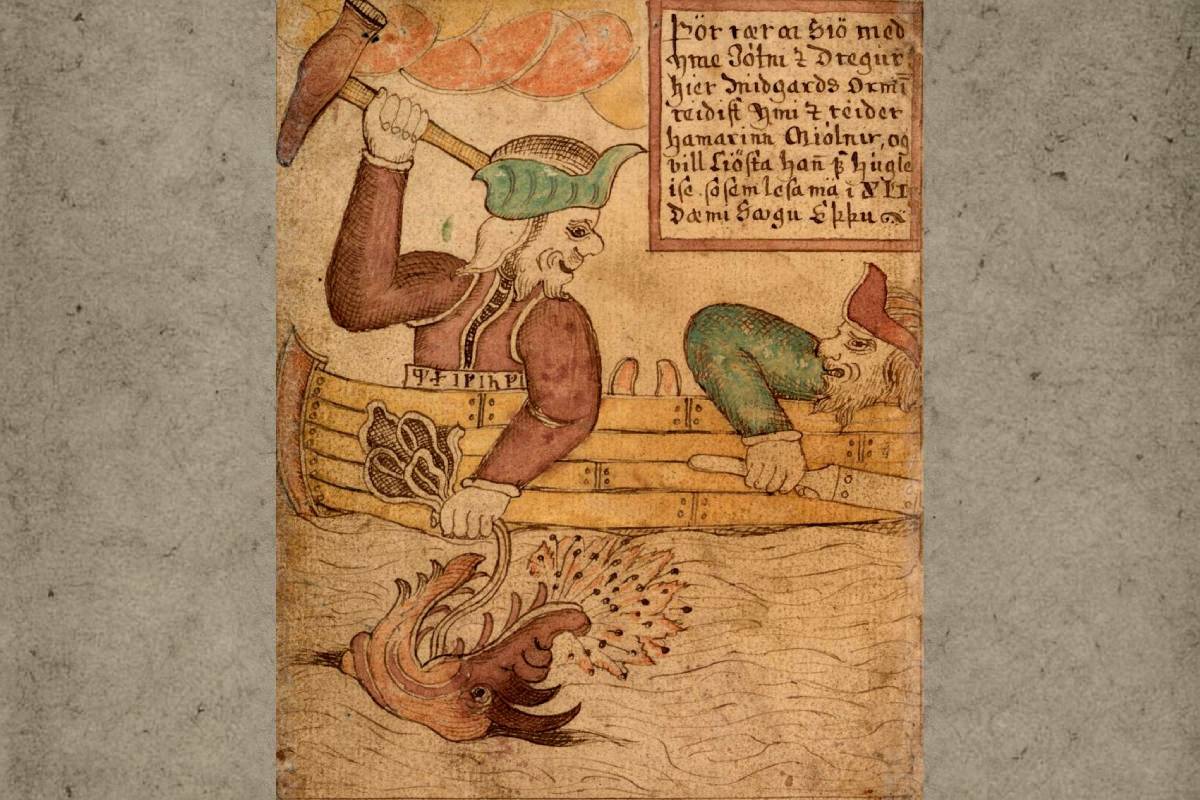
Illustration from an 18th-century Icelandic manuscript showing Thor and Hymir fishing for Jörmungandr, the Midgard Serpent. Source: Public domain
A great serpent lurking beneath
When people in Viking societies thought about the deep and dark depths of the sea, they knew that living there was a dark force: the great world serpent Jörmungandr.
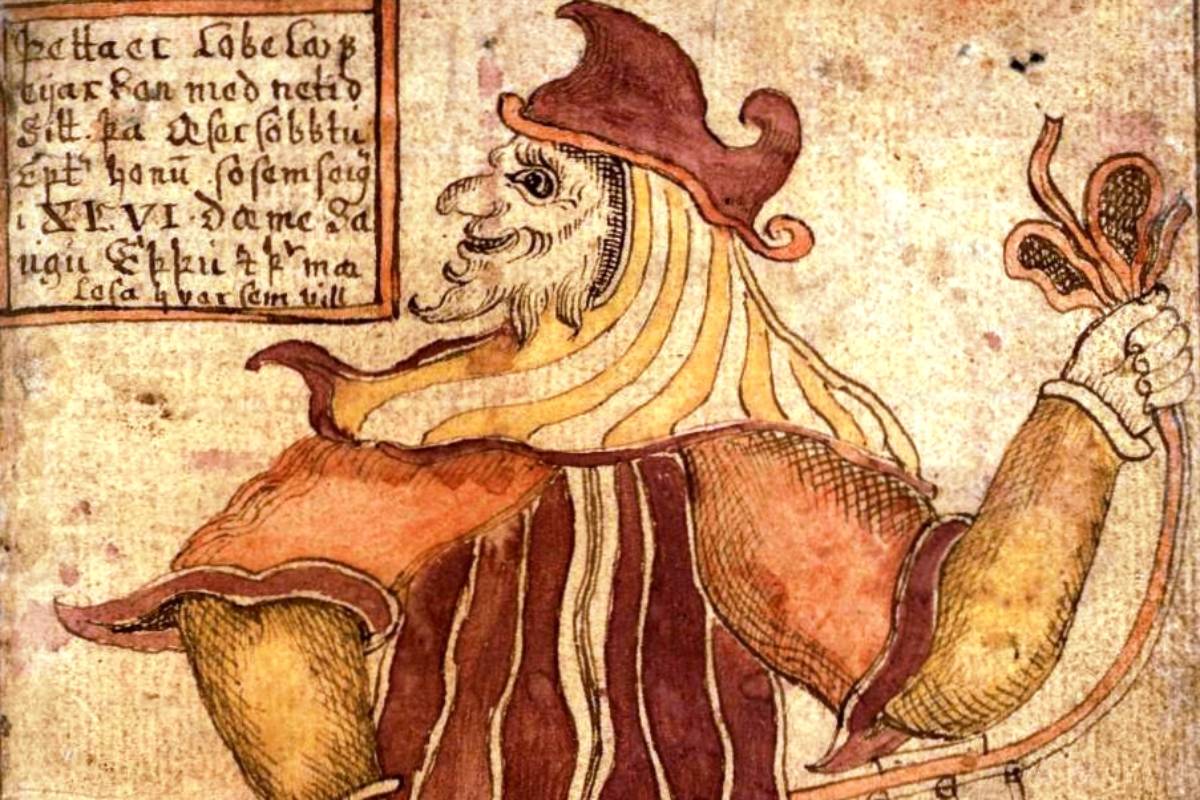
This serpent was the offspring of the eternal trickster, Loki, and the giantess Angrboða. It is safe to say that the Norse gods did not greet the news of the arrival in the world of Jörmungandr with much enthusiasm.
Turning to the Prose Edda – specifically Gylfaginning (The Beguiling of Gylfi) – we find that Jörmungandr was cast into the sea by none other than the mighty All-Father himself.
Using an online version of the 1912 English translation by Arthur Gilchrist Brodeur, we find the scene described as follows:
"...when the gods learned that this kindred was nourished in Jötunheim, and when the gods perceived by prophecy that from this kindred great misfortune should befall them...he [Odin] cast the serpent into the deep sea, where he lies about all the land; and this serpent grew so greatly that he lies in the midst of the ocean encompassing all the land, and bites upon his own tail." [Stanza 34]
We know that people in Viking societies were some of the most skilled sailors in the early medieval period and plied waters stretching from the shores of North America through to the Arctic and across to the eastern edges of the Caspian Sea.
For those that ventured out from land, the lurking presence of Jörmungandr was noted as a sort of boundary marker, signaling the edges of the known world itself, as well as the omnipresent yet unseen dangers hidden beneath the waves.
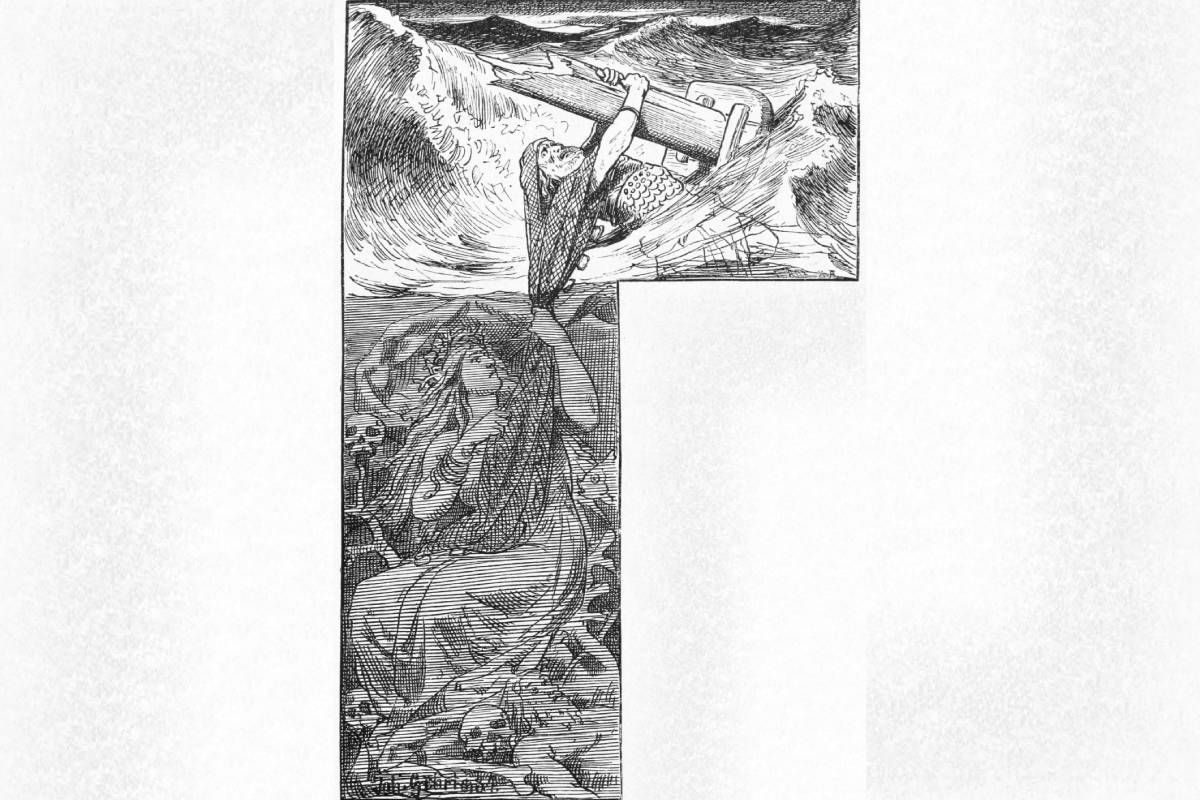
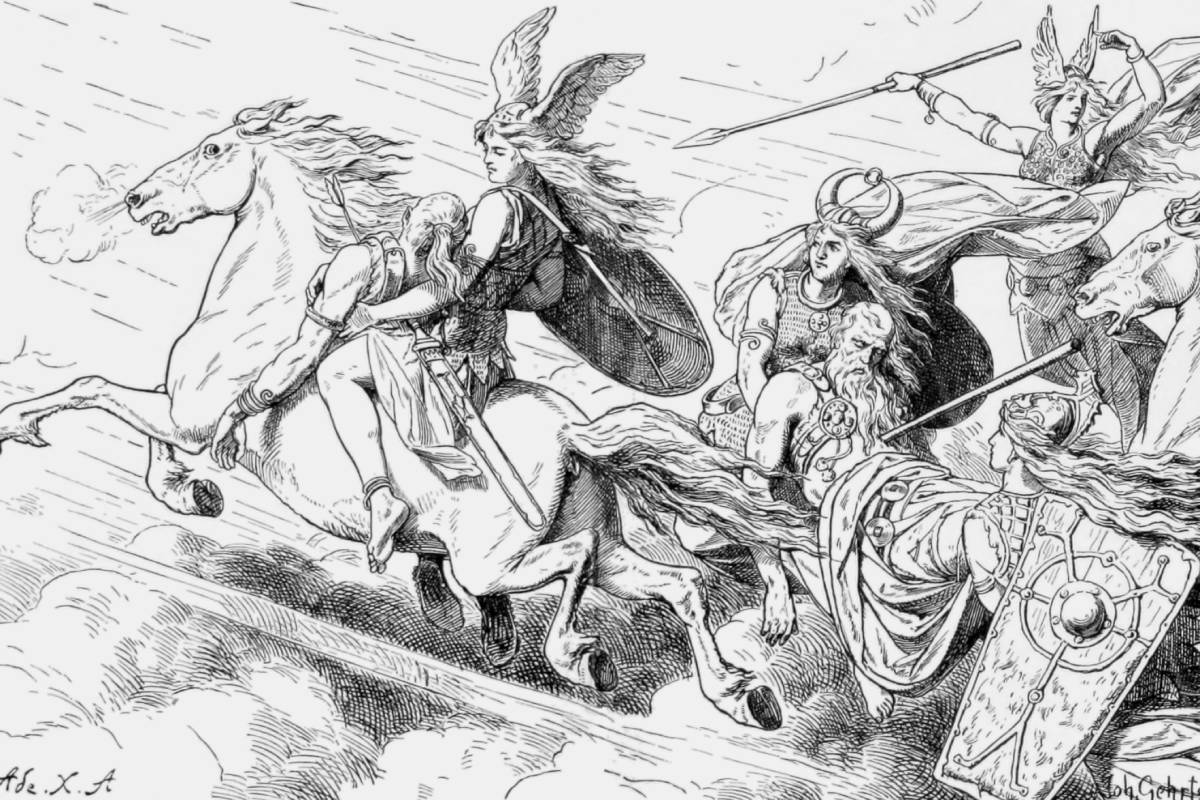
Rán, the Norse sea goddess associated with drowning and shipwrecks, pulls a sailor down in this 1888 illustration. Author: Johannes Gehrts (1855–1921)
A watery keeper casting her magical net
Whilst people in Viking societies were some of the most skilled sailors in early medieval history, many simply set off seaward and never returned.
Due to the dangers of sailing in an era before GPS positioning, safety equipment, or even the widespread knowledge of swimming, setting out to sea could often be a death sentence.
As many sailors never returned home, there was a psychological need to develop a mythology surrounding their watery graves. This need morphed into one of the personifications of the sea, Rán.
This aquatic Norse jötunn (whose name in Old Norse is something akin to "robbery") was said to reside deep beneath the waves.
Married to Ægir, who was another Norse mythological being, she was said to cast a magical net that captured sailors and dragged them down to their watery graves.
One of the most poignant poems penned (sorry, that should be "quilled") during the Viking Age was by famed Viking personality and poet, Egil Skallagrimsson.
Entitled Sonatorrek (translated into English as "The inseparable loss of sons"), it laments the death of the poet's two sons, one of whom drowned. Using an online version of the 1893 English translation by the Reverend W.C. Green, here Skallagrimsson relates that:
"...Ran, the sea-queen,
Roughly hath shaken:
I stand with beloved ones
Stript and all bare.
Cut hath the billow
The cord of my kin,
Strand of mine own twisting
So stout and strong...
Sure, if a sword could venge
Such cruel wrong...
Were I strong to slay,
Against him [the husband of Rán, the Norse god Ægir]
and his sea-brood
Battling would I go." [Stanzas 7–8]
In this poem, Skallagrimsson blames Rán for "shaking" the sea and stripping him of his beloved son.
For people in Viking societies, to suffer drowning was to be seized by Rán and her deathly net, brought down beneath the waves for eternity. However, despite her association with death, she was not thought of as a malicious deity but one that represented the cold and ever-present danger of the sea.
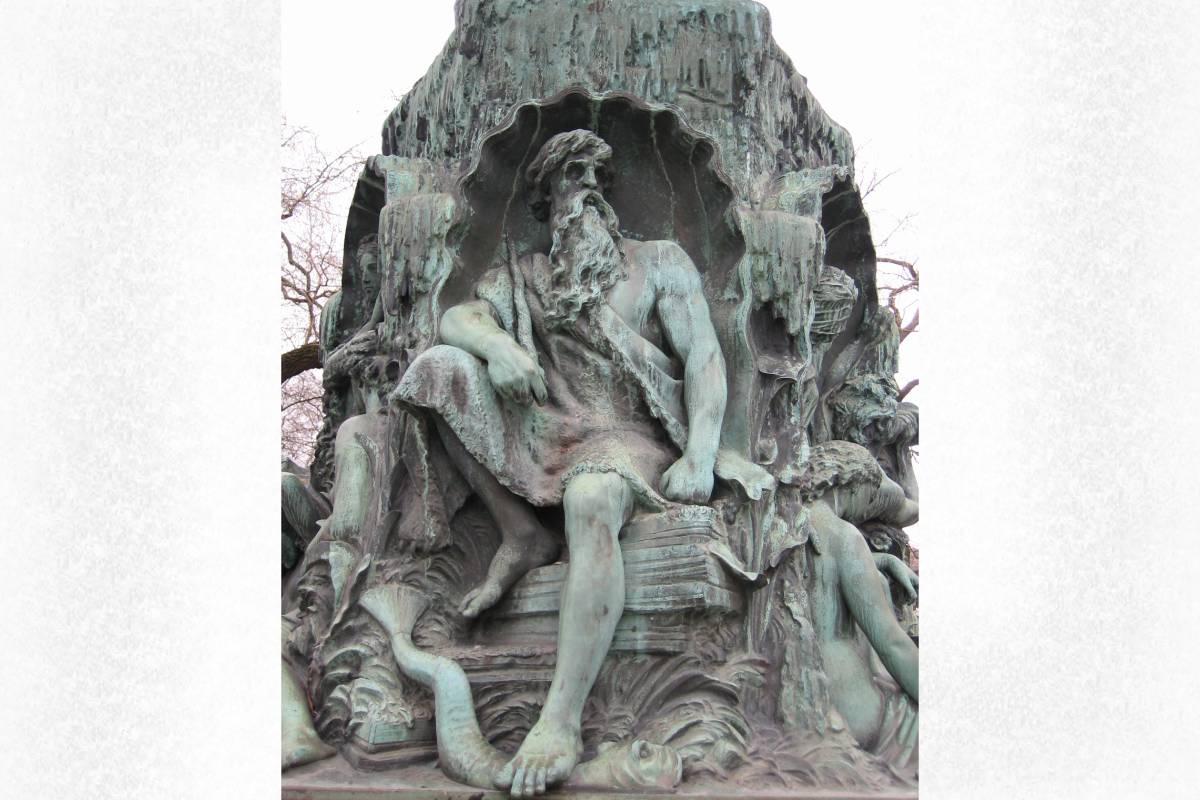
Detail from a Stockholm fountain showing Ægir, the Norse sea deity, surrounded by his nine daughters. Photo: Hedning (CC BY-SA 3.0)
The glittering hall of a famed host
We now turn to Rán's husband, and yet another personification of the sea, the Norse deity Ægir, for our final analysis of how people in Viking societies viewed the sea.
Contrary to his wife's association with the dark and sad side of the human psyche, Ægir (like his wife, a fellow jötunn) is portrayed in a far different manner, as a generous host who loves nothing more than the delicious hobby of brewing beer and feasting.
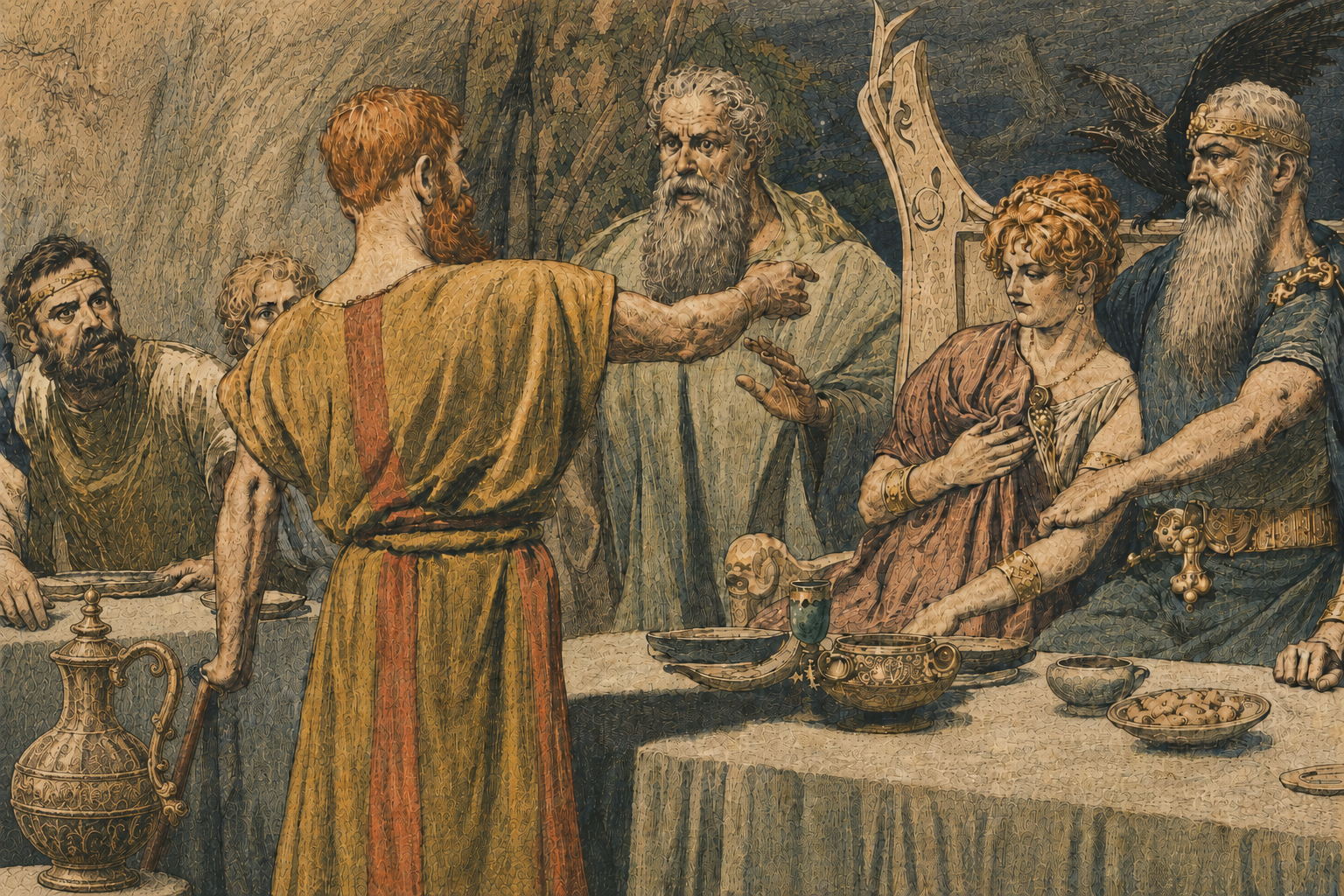
Ægir and his wife Rán are said to reside in a wondrous, glittering hall, which was famed among the Norse gods as a place of feasting and merriment.
Turning to the Lokasenna poem, found in the Poetic Edda, we find a colorful description of the feasting hall. Using an online version of the 1936 English translation by Henry Adams Bellows, we find that this hall possessed:
"...Glittering gold they had in place of firelight; the ale came in of itself, and great was the peace. The guests praised much the ability of Ægir's serving-men." [Stanza 1]
The glittering and fun-filled nature of Ægir's hall was a metaphor for how people in Viking societies saw the sea itself.
Whilst the sun shone and its golden rays glittered on the surface, and all appeared peaceful and calm, they knew that there was a concealed danger beneath the surface.
Found throughout the rich tapestry of Norse literature is also the use of Ægir as a poetic "kenning." For example, the waves were often referred to as "Ægir's daughters" as he was said to have fathered 9 with Rán.
Whilst he was renowned for his feasting in a glittering hall, Ægir personified the dual nature of the sea – when conditions were good, it made for an entertaining and fun-filled setting – yet when conditions turned sour, that same sea became unpredictable and dangerous.
When this happened, it appeared to Viking sailors that Ægir's hospitable nature disappeared in an instant.
These three mythological figures show the complex relationship that people in Viking societies had with the sea and are also fascinating characters and part of what has made Norse mythology so enthralling to many down the centuries.
For more information on how modern archeologists are taking to the sea on Viking ships, visit Popular Science here.
We get to provide readers with original coverage thanks to our loyal supporters. Do you enjoy our work? You can become a PATRON here or via our Patreon page. You'll get access to exclusive content and early access.
Feel free to reach out to discuss potential stories that may be in the public interest. You can reach us via email at [email protected] with the understanding that the information you provide might be used in our reporting and stories.



.png)
