

A quick scroll on social media nowadays and you'll sadly see countless keyboard warriors hurl a mother's nightmare worth of bad words and insults at one another.
Surely one of the problems of modern society is that we can hurl insults at each other, safe and snug from the comfort of a couch or bed, and suffer no real-life consequences.
Our ancestors, however, took a very different approach. If we look back to the early medieval period, when Vikings roamed, words had to be measured far more carefully, as insults and verbal barbs had real-life, sometimes physical, consequences.
We know that Viking societies were permeated by a degree of violence unheard of in modern societies, aside from those ravaged by warfare. This violence also permeated people's speech, as insults and verbal barbs intended to do serious reputational harm to one's honor and pride could often result in legal ramifications or even violent conduct.
Let us turn first, then, to the most theatrical form of insults used by people from Viking societies, those that were often performed in front of a crowd.
Crowd-fueled verbal combat
It is not often that we see a crossover between Viking history and rap, but people in Viking societies could engage in something akin to an early medieval spoken-word stoush.
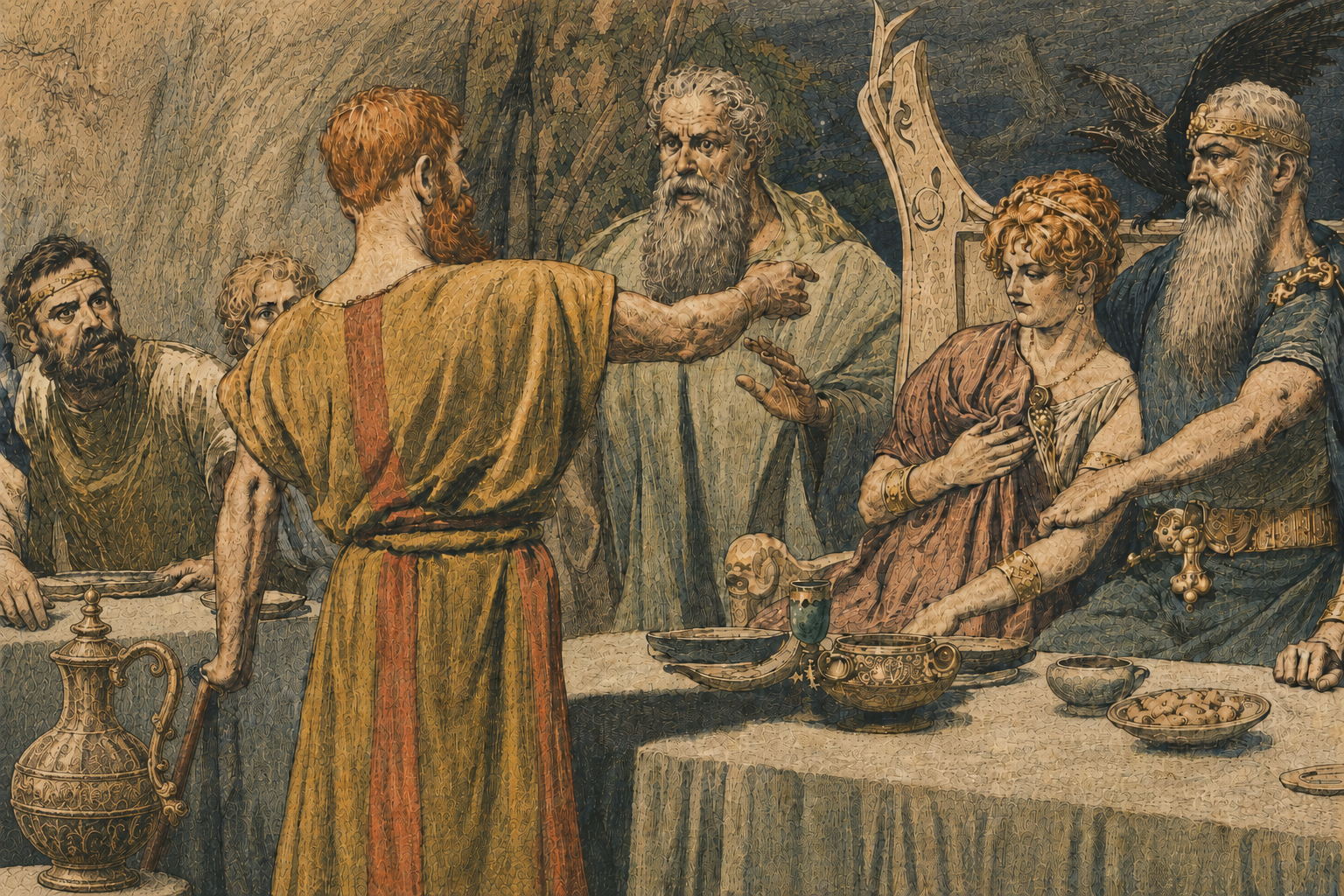
A flyting was a verbal contest between two people, which could often take the form of verse. One of the most famous examples, albeit mythical, comes to us from the Lokasenna, a poem found in the Poetic Edda. In it, Loki gatecrashes a feast in Ægir's hall and insults the assembled gods.
Using an online version of the 1936 English translation by Henry Adam Bellows, we find numerous examples of the power of a good flyting. When stoushing with the Norse god Bragi, Loki exclaims:
"Bragi ... Of the gods and elves here together met
Least brave in battle art thou,
And shyest thou art of the shot." [Stanza 13]
Here, Loki is questioning not only Bragi's martial valor but also his courage. They are fighting words indeed for any warrior in Viking societies, even one who is a deity. In retort, Bragi states that if he weren't in Ægir's hall, and thus a guest, he would bear Loki's head in his hands and "pay thee the price of thy lies." Snap!
The rest of the poem sees Loki continue his insults and accusations against all of the Norse gods assembled, including the mighty All-Father, Odin. Yet it is for Freyja that he reserves much of his scorn.
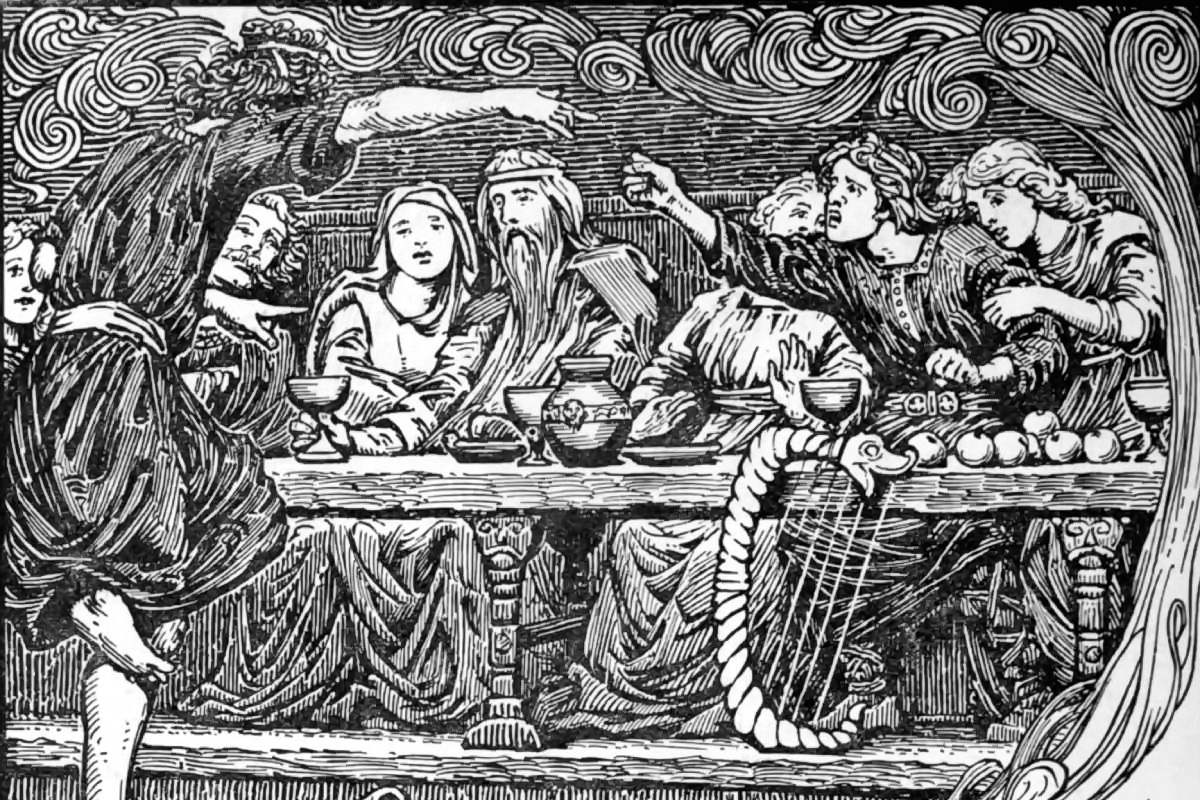
The illustration "Loki Taunts Bragi" depicts a moment from Lokasenna in which Loki engages in verbal sparring with Bragi. Source: W. G. Collingwood (1908)
Fighting Freyja as an example of a senna
Similar to a flyting but far more serious in nature was a senna. Whilst it, too, was a theatrical verbal duel between two opponents, the insults and language were considered far more severe.
In the Lokasenna, for example, Loki saved his most serious insult for Freyja, the Norse goddess of love. Here, in Stanza 30, Loki questions her sexual behavior and thus moral character:
"Be silent, Freyja! for fully I know thee,
Sinless thou art not ...
Of the gods and elves who are gathered here,
Each one as thy lover has lain."
Ouch. Not to be outdone, in the next stanza, Freyja fights back with a rather violent insult:
"False is thy tongue, and soon shalt thou find
That it sings thee an evil song;
The gods are wroth, and the goddesses all,
And in grief shalt thou homeward go."
While it shared similarities with flyting, a senna was viewed as much more serious, involving harsh accusations, for example, sleeping with all the gods and elves of Norse mythology, which attacked a person's honor and reputation, often using more direct and offensive language.
PLEASE NOTE: The rest of this article is only available to our paid Patreon subscribers.
The topic was selected by our Patrons in a weekly poll. Support The Viking Herald on Patreon to read the full article and help choose future topics.
If you would like to learn more about Patreon and why we have decided to restrict access to some content, please take a look at this article.
Feel free to reach out to discuss potential stories that may be in the public interest. You can reach us via email at [email protected] with the understanding that the information you provide might be used in our reporting and stories.