

A significant aspect of the recent revival in all things Viking has been the success of series like Vikings and Vikings: Valhalla, available to stream at the swipe of your thumb.
While parts of these series are set in Anglo-Saxon England, they have a strong Viking bias.
The shows focus on the exploits and adventures of many famous Viking characters, legendary or historical, including Lagertha, Ragnar Lothbrok, and Harald Fairhair.
Whilst perhaps not having the name recognition of Vikings, the series The Last Kingdom is still widely popular and takes a different view.
Set during the Danelaw period of Anglo-Saxon England – after several Viking invasions that established their control over a vast swath of the British Isles – this show is based on Bernard Cornwell's novels, The Saxon Stories (available for purchase on Amazon here).
The show follows the life of Uhtred, a Saxon nobleman captured and raised by the Vikings.
Much is made, throughout the show, of Uhtred being able to walk in two worlds, torn between his Saxon upbringing and his newfound life in Viking society.
Rich in historical detail and artistic flair, the success of the show is based upon this turbulent time in English history, full of Viking invasions, struggles for power, and historical characters given a breath of fresh life.
There is no more impressive character in this show, however, than the force of nature, Æthelflæd, Lady of the Mercians.
Given that these shows can often be full of masculine brawn, it is refreshing not only to see a fully-formed female character – not just a femme fatale or wife – but one that kicks some serious Viking ass.
To understand Æthelflæd, we must first understand the context she was born into.
Viking Invasions and the Danelaw
Following the famous raid on Lindisfarne, which traditionally signaled the start of the Viking Age, the British Isles experienced almost a century of similar predatory raids on coastal communities.
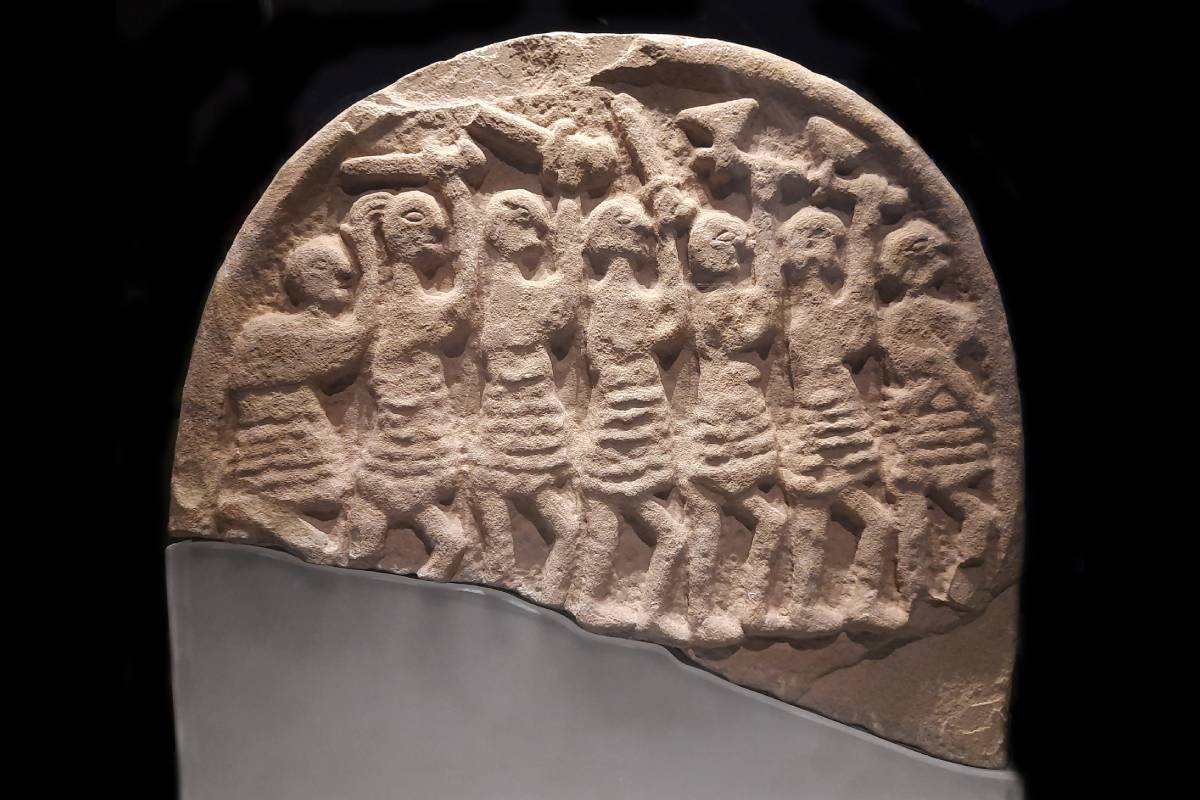
However, a series of invasions, starting around 865, saw people from Viking societies flooding across the North Sea not to raid but to fight, conquer, and eventually settle.
These invasions – undertaken by what was dubbed the Great Heathen Army (which was probably never a singular army and not entirely heathen) – marked a new epoch in British history.
As Vikings tramped all over much of what is now England, they came across seven Anglo-Saxon kingdoms.
By picking them off one by one, the Vikings left only one kingdom by the 870s, the Kingdom of Wessex (the eponymous "Last Kingdom" of the series).
Vikings then became overlords of the six Anglo-Saxon kingdoms, including one that was centered in what is now the English Midlands, the Kingdom of Mercia.
This area, where Viking law and rule reigned supreme, was soon settled by the new colonizers and became known as the Danelaw.
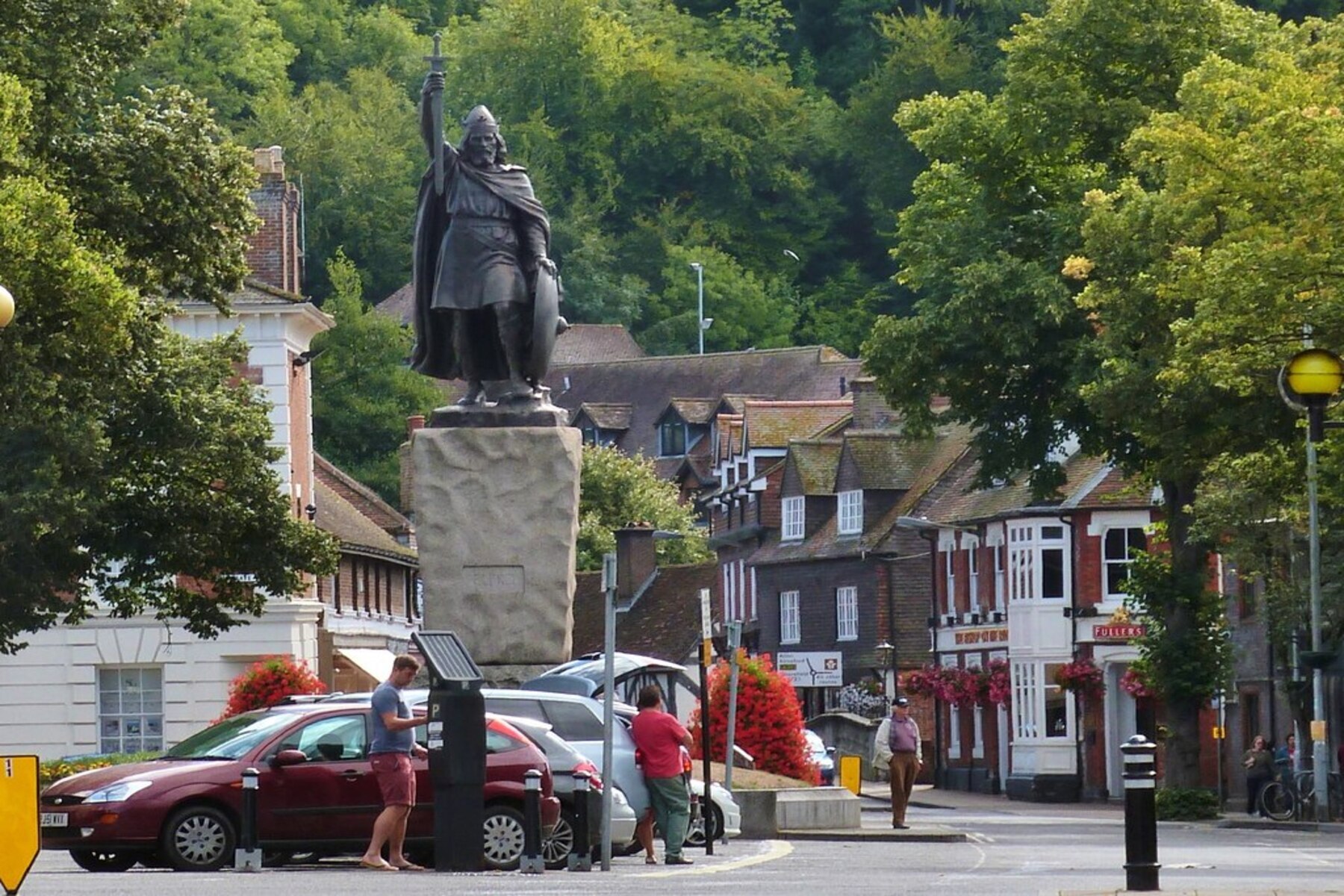
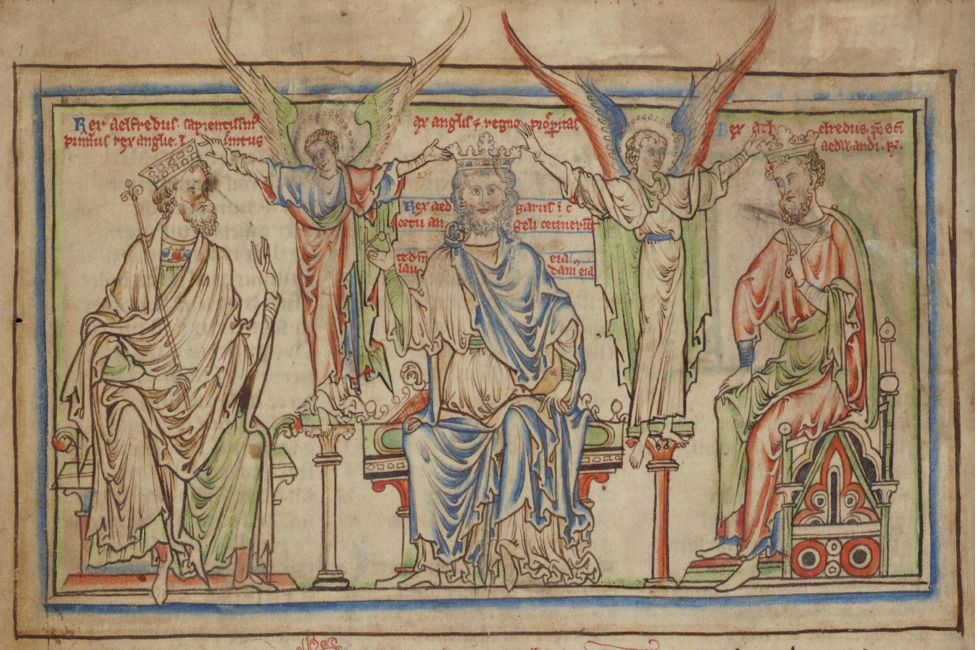
However, not all hope was lost for the locals. Further south, there was a ruler who spent most of his life doing his best to defy the Viking threat: King Alfred of Wessex.
Over the course of Alfred's long reign (28 years was an eternity for political rulers in the early medieval period), Wessex's resistance to these heathens waxed and waned, but he managed to stiffen the resolve and eventually win a great victory at Edington.
This secured not only the kingdom's survival but also marked the first time that the local Anglo-Saxons had stopped the Viking juggernaut.
His daughter, Æthelflæd, was born at the height of the Viking invasions when all hope seemed lost, and Alfred was hiding in the marshes.
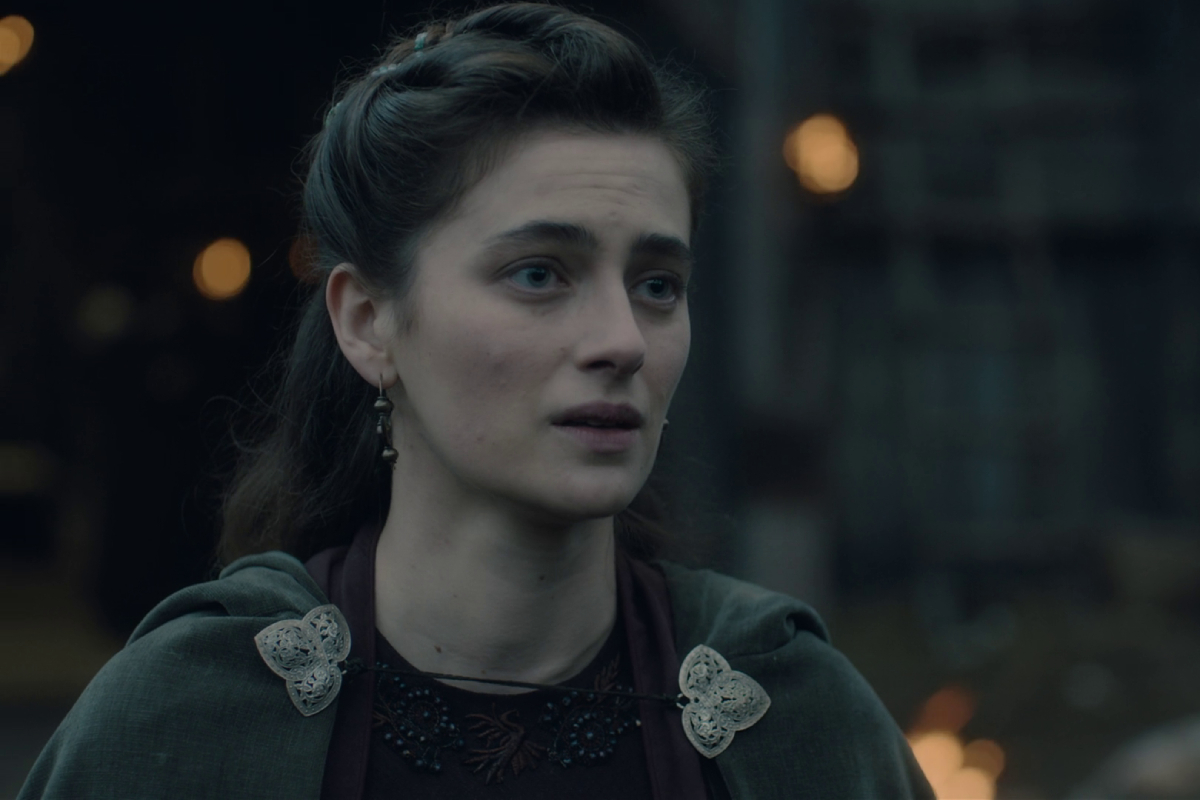
"The Last Kingdom" fictionalizes Æthelflæd's life by adding her relationship with Uhtred but accurately portrays her as a formidable leader. Source: Netflix, screenshot (Copyright, fair use)
Powerful parental influences
The marriage of Alfred to a Mercian wife, Ealhswith, occurred in 868 and was seen as much as a political marriage – linking the kingdoms of Mercia and Wessex together – as a love match.
In all, this marriage produced five children, of whom the oldest, Æthelflæd, exceeded the expectations of all around her and, in the eyes of many historians, was the true heir to her father's legacy. Yet it was their second child, Edward, who succeeded his father as ruler.
The scion of two powerful figures, Æthelflæd's depiction as a fierce and independent woman influenced by her parents is historically accurate.
Given her father's refusal to submit to his Viking enemies, even when he was literally hiding in the marshes of southern England, his defiance must have been a powerful influence on young Æthelflæd.
As Joanna Arman writes in her 2017 book, The Warrior Queen: The Life and Legend of Æthelflæd, Daughter of Alfred the Great (available for purchase on Amazon here), Æthelflæd would have heard stories growing up in this court about how her father led the Anglo-Saxon resistance against the Norse invaders.
Whilst her mother's kingdom, Mercia, had been subjugated by the Viking yoke, her mother's spirit had not been, and much of Æthelflæd's indomitable nature seems to come from her parents.
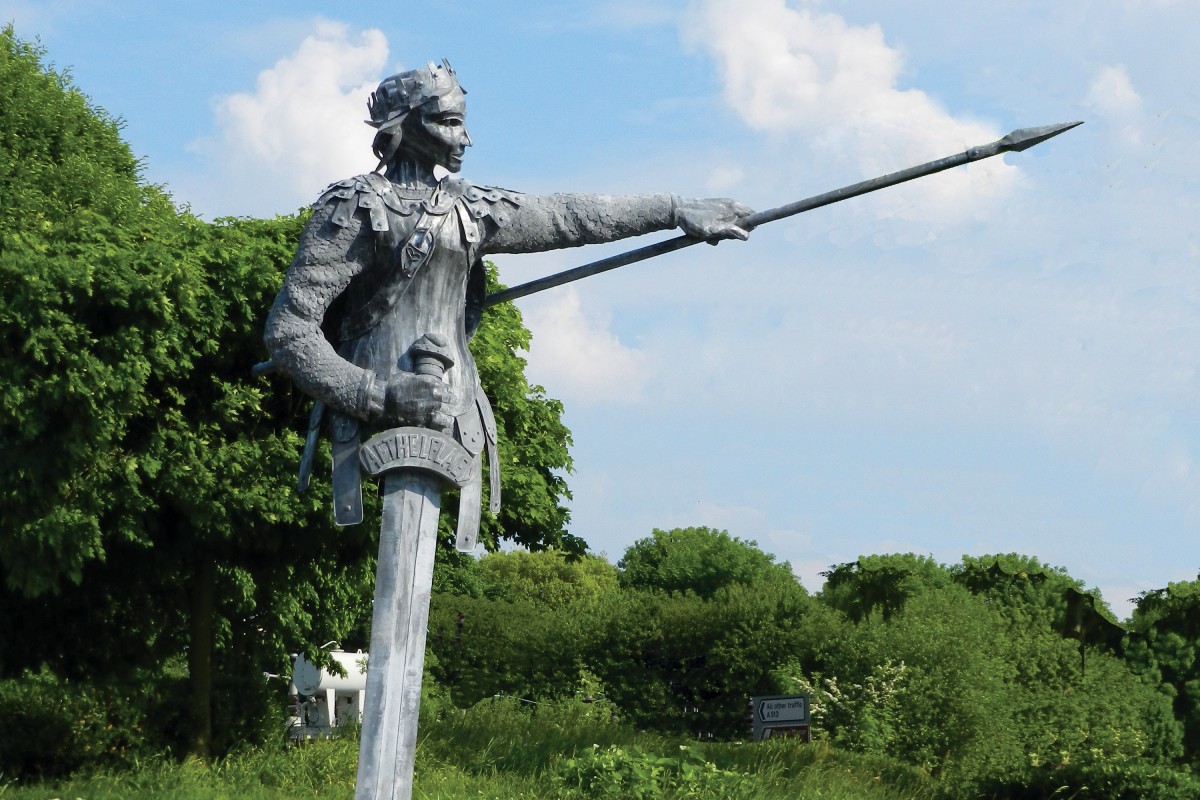
A statue of Æthelflæd, erected to commemorate 1,100 years since her death, stands outside Tamworth Railway Station in Tamworth, England. Source: Annatoone (CC BY-SA 4.0)
Marriage and rise to power
We know little of her early life, and Æthelflæd enters the historical record in 887 as the wife of Æthelred, a Mercian noble who may have been her cousin.
According to Tim Clarkson, in his 2019 book, Æthelflæd: Lady of the Mercians (available for purchase on Amazon here), this match became a partnership in every sense of the word.
Over the next 20 years, the couple focused on strengthening the foundations of Mercia. They established military fortifications (burhs) and stimulated the cultural and intellectual life of Mercia in the towns of Worcester and Gloucester.
With her father having died and Edward succeeding to the throne of Wessex, Æthelflæd was able to use vital familial connections to help rebuild and fortify much of Anglo-Saxon England.
This effort began the slow process that would ultimately see the Norse invaders expelled from England.
Æthelred, ruler of Mercia, experienced a decline in health starting around the beginning of the 10th century, and modern historians believe that Æthelflæd ruled as a de facto leader from about 902.
Upon his death in 911, she became the sole ruler of Mercia and was given the title "Lady of the Mercians."
This part of her life is brilliantly depicted in The Last Kingdom. She struggles to maintain power as a woman in a man's world, where almost all societies within the British Isles at this time were deeply patriarchal and misogynistic.
It was hardly a place where a woman could rule, let alone rule in peace.
- READ MORE: Women and power in the Viking Age - A primer
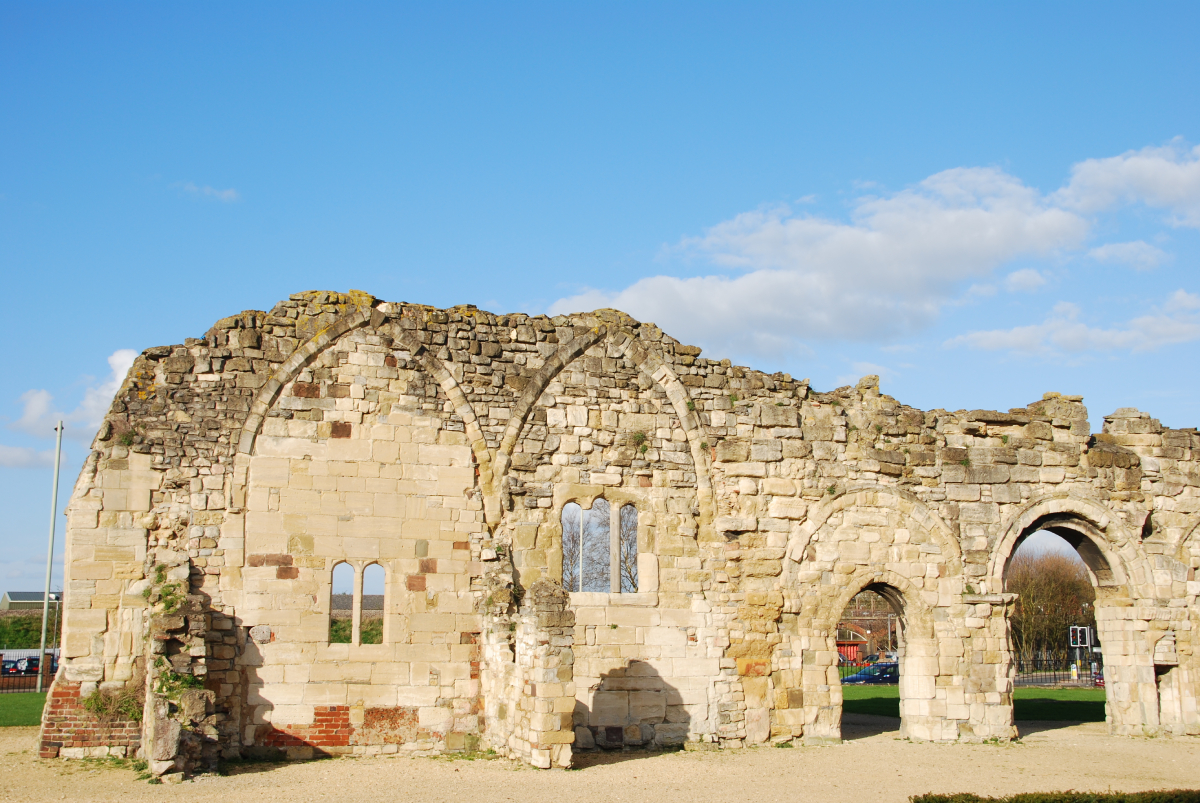
Æthelflæd and Æthelred were buried at St. Oswald's Priory in Gloucester, where twelfth and thirteenth-century arches still stand. Source: Pedal to the Stock / Shutterstock
What are some of the key differences between fact and fiction?
Despite her role as a Mercian ruler, a noblewoman, and a leader of the Anglo-Saxon resistance, much has been made about the lack of a historical record of Æthelflæd's life.
Contemporary chronicles – like the Anglo-Saxon Chronicle – give her the briefest of mentions despite her royal lineage and important political role.
Was this a "conspiracy of silence" based upon the misogyny of early medieval chroniclers and historians?
The current historical consensus seems to point to yes. As such, we have only mere fragments of her life and rule.
Her portrayal in The Last Kingdom is heavily based on a fictional account of her life, trying to fill in these "gaps of silence."
Much is made in the show of her relationship with Uhtred, who, being a completely fictional character, serves as a narrative device and is not grounded in historical truth.
She no doubt had to collaborate with other Anglo-Saxons, most notably her brother Edward in Wessex, and would have had to meet Viking leaders and elites, but little historical record survives of these encounters.
What the show does get correct, however, is her formidable presence as a military and political leader.
Whether she led a force against Viking foes is open to debate, but her role in defending and expanding Mercian territory against existential threats is accurately depicted in the show and on the pages of historical chronicles.
She inherited an indomitable spirit from her parents, and this is also depicted accurately in the show as in real life.
Yet we must remember that, ultimately, her depiction in The Last Kingdom is for entertainment purposes.
Whilst the fictional Æthelflæd shares many characteristics with the real-life one – her military and strategic prowess and fierce determination – her depiction on the small screen should be treated as a work of fiction and not an accurate historical representation.
Legacy and beyond
By the end of her reign, she had won back towns and villages in Mercia for the Anglo-Saxons and began to take the fight to the Vikings, leading a force north to try to take the strategic Viking capital of Jorvik (modern-day York).
Following her death in 918, her familial legacy would be continued by members of her family both in Mercia and Wessex.
Her nephew, Æthelstan, would reap the rewards of her family's fight against the Vikings by being crowned the first "King of the English" in 927, but that is a story for another series...
For more information on The Last Kingdom, visit The Guardian here.
We get to provide readers with original coverage thanks to our loyal supporters. Do you enjoy our work? You can become a PATRON here or via our Patreon page. You'll get access to exclusive content and early access.
Feel free to reach out to discuss potential stories that may be in the public interest. You can reach us via email at [email protected] with the understanding that the information you provide might be used in our reporting and stories.