


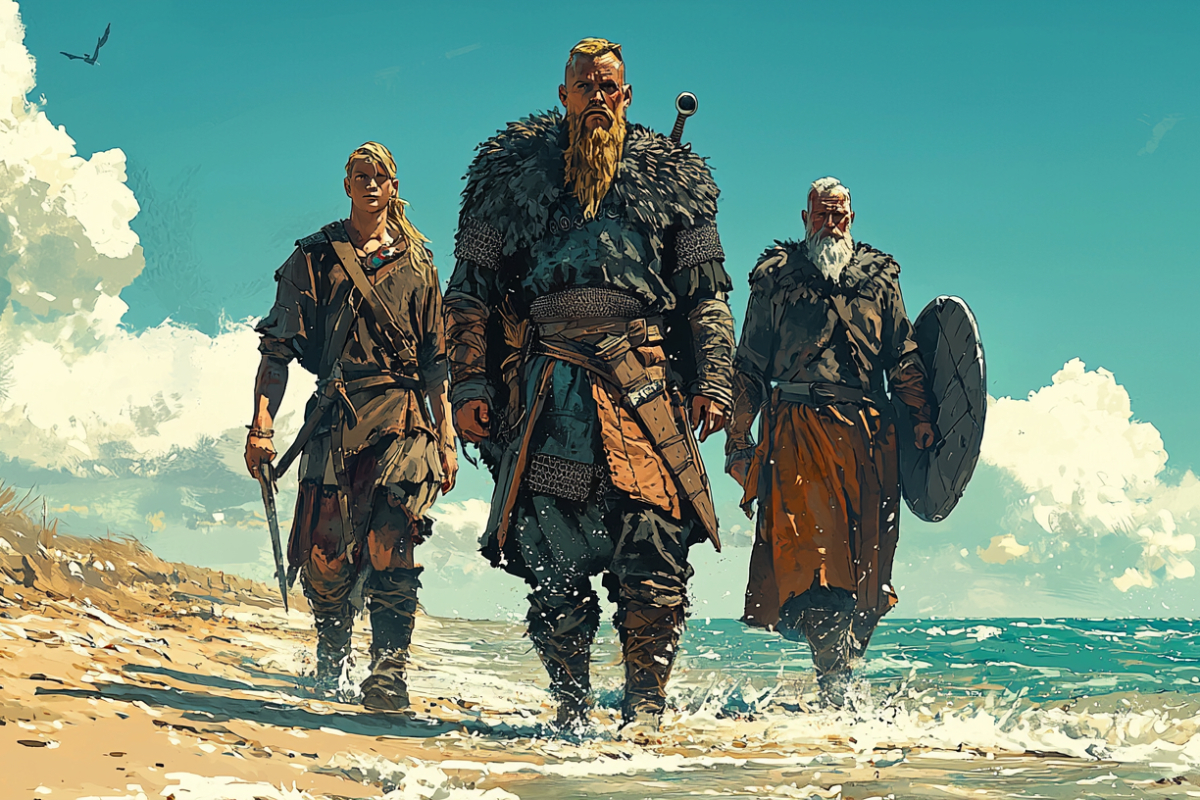
Here at The Viking Herald, we are great sticklers for historical accuracy – which is, of course, part of the reason why you love us. What really gets our goat is hearing people, whether in person or online, referring to early medieval Scandinavians as Vikings.
In our humble opinion, "Viking" has mistakenly become a catch-all term for everyone who lived in early medieval Scandinavian societies between the mid-8th and late 11th centuries.
The word "Viking" should be reserved exclusively for the warriors and pirates who terrorized much of medieval Europe.
As Clare Downham notes in her 2012 article in History Compass, these ne'er-do-wells made up only a tiny fraction of the Scandinavian societies that produced them.
Perhaps the best way to understand the term "Viking" is by considering one of the first countries they terrorized: England.
Hooligans & Vikings
Now, a very tiny fraction of English society consists of football hooligans. Similarly, using the term "Viking" to describe all early medieval Scandinavian societies and people is problematic.
It would be like future historians dubbing all English people – the old, the young, nurses and doctors, taxi drivers and CEOs, and everyone else – as "hooligans," even though only a small fraction of society is involved in alcohol- and often drug-fueled football shenanigans and violence.
Like football hooligans on a cold Wednesday Champions League night, Vikings were often young men who made their (violent) presence felt throughout Europe, from the British Isles to the Baltic, from the Iberian Peninsula to Russia.
Vikings, driven by adrenaline and testosterone, spread out across Europe much like hooligans on a Champions League night. Unlike the Vikings, however, modern football hooligans fortunately do not carry weapons or aim for territorial conquest or settlement.
Like the Vikings, let's hope hooligans will also be consigned to the dustbin of history soon.
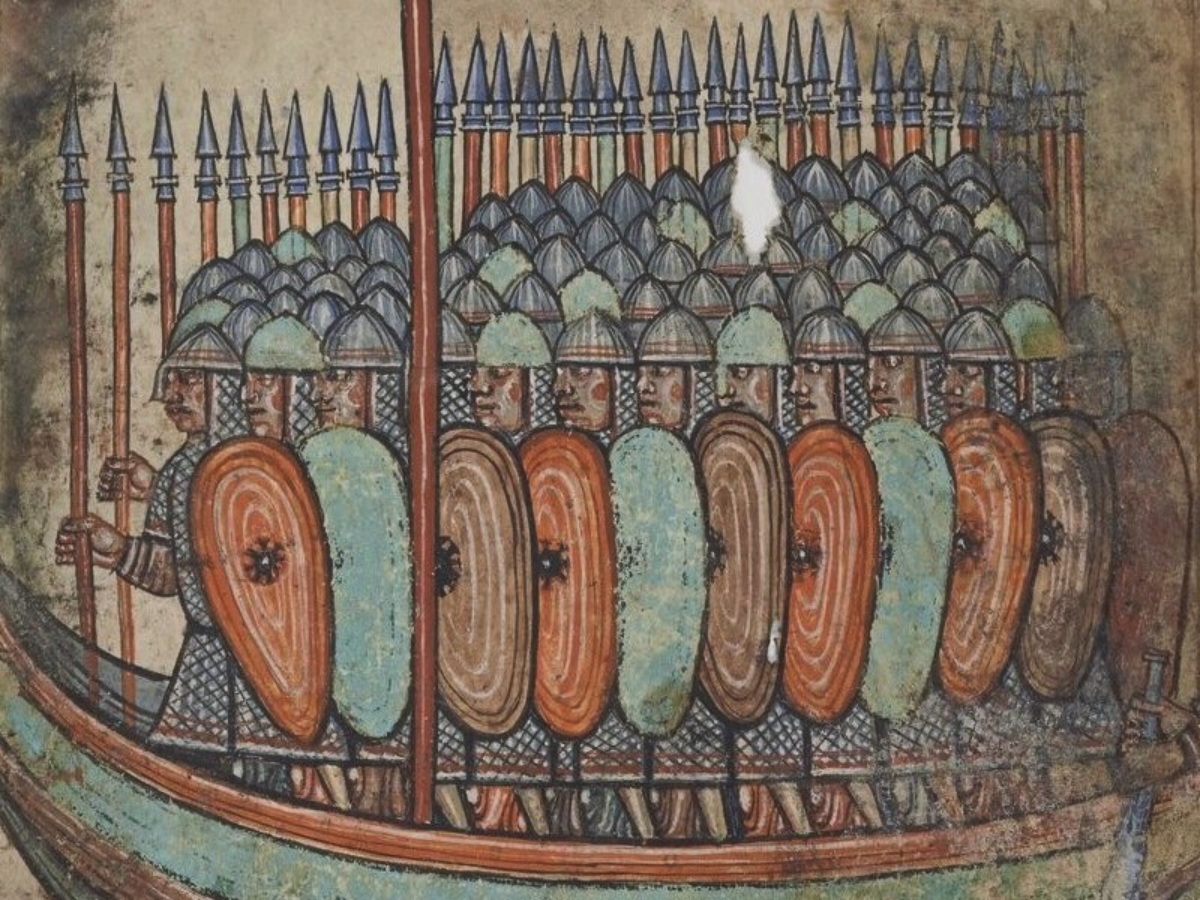
This depiction from around 1100 shows Vikings sailing a longship and attacking Guérande, as illustrated in the Abbey of Saint-Aubin in France. Source: Public domain
Linguistic definitions
Ok, so if we know what a Viking is – where did that term come from?
The term itself has its origins in Old Norse, the Germanic language that developed throughout the Scandinavian peninsula during the early medieval period.
By the medieval period, Old Norse had evolved into Old West Norse – spoken in places like the Faroe Islands, Iceland, and Norway – and Old East Norse, the ancestral language of Danish and Swedish. It should be noted that Norwegian is heavily influenced by Old East Norse.
The term "Viking" could refer to two things in the Old Norse spoken by many early medieval Scandinavians.
For some linguists, the root of "Viking" comes from the Old Norse word vik, meaning an inlet or bay. A vikingr was thus someone who went on expeditions from coastal inlets to raid or trade.
A glance at the Scandinavian peninsula reveals a huge number of bays, inlets, and coastal regions from which these expeditions could have set sail.
The historical region that encompassed much of southeastern Norway and western Sweden, including the Oslo fjord, takes its name from this term due to the abundance of bays and inlets.
Other linguists and historians point to a different usage of the word vikingr, this time as a verb rather than a noun. It was used to describe people either "raiding by sea" or "going on an expedition."
This suggests that going "a vikingr" was a specific activity, typically involving plundering, pillaging, and often great violence.
Linguists have also suggested that both definitions could be correct, meaning that (mostly) young men went out on expeditions from the coastal regions of Scandinavia to plunder, pillage, or trade.
Again, it should be noted that the term was used only to describe the people who went on these expeditions; it was not an ethnicity or a national identity.
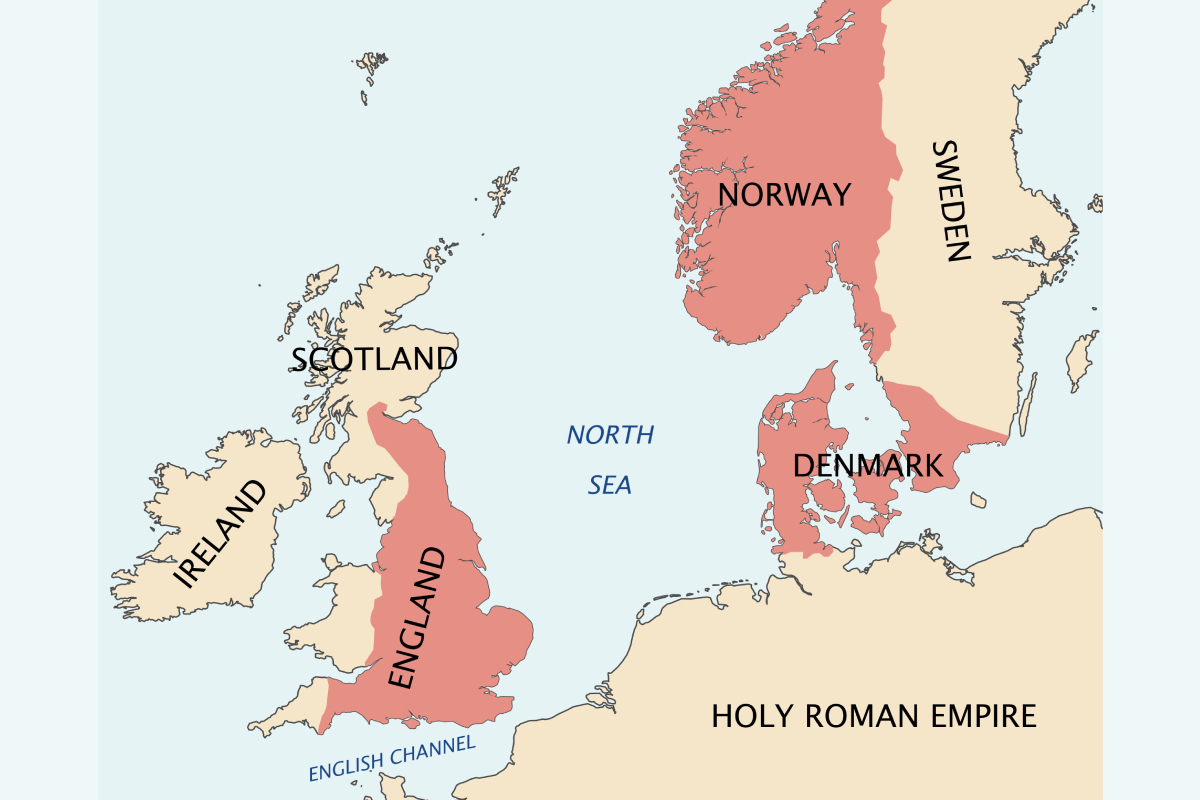
Between 1016 and 1035, Cnut the Great presided over a united English realm, integrating it into his expansive North Sea Empire that also encompassed Denmark, Norway, and portions of Sweden. Source: Hel-hama (CC BY-SA 3.0)
Spreading out from Scandinavia
Surely, one of the most remarkable features of the medieval period was how, from the late 7th century onward, people from societies in the Scandinavian peninsula (including Vikings) expanded outward.
This expansion – which started as initial raids for treasure and riches – soon developed into larger-scale military expeditions, conquests, and eventually colonization.
People from early medieval Scandinavia, the societies that produced the Vikings, first journeyed to nearby regions – the British Isles and across the Baltic Basin.
As Judith Jesch explains in her masterful 2015 book The Viking Diaspora, from there, they pushed further outward, dominating the Frankish realms and vast parts of Eastern Europe, resulting in the creation of Normandy and the Kievan Rus, respectively.
Journeying further south, the inhabitants of the Iberian and Italian peninsulas, as well as those living near the Black Sea and Bosphorus, soon began to experience this outward expansion.
In fact, people from early medieval Scandinavia were some of the first European colonizers. They sailed across the North Atlantic Ocean to settle Iceland and, for a time, established two settlements in Greenland.
They pushed further west and even managed to found a settlement on the present-day Canadian island of Newfoundland.
In the other direction, there is academic speculation that they plied the Silk Roads, the ancient trade routes that connected Europe with Asia. Not bad for an era when most of humanity died mere meters from where they were born!
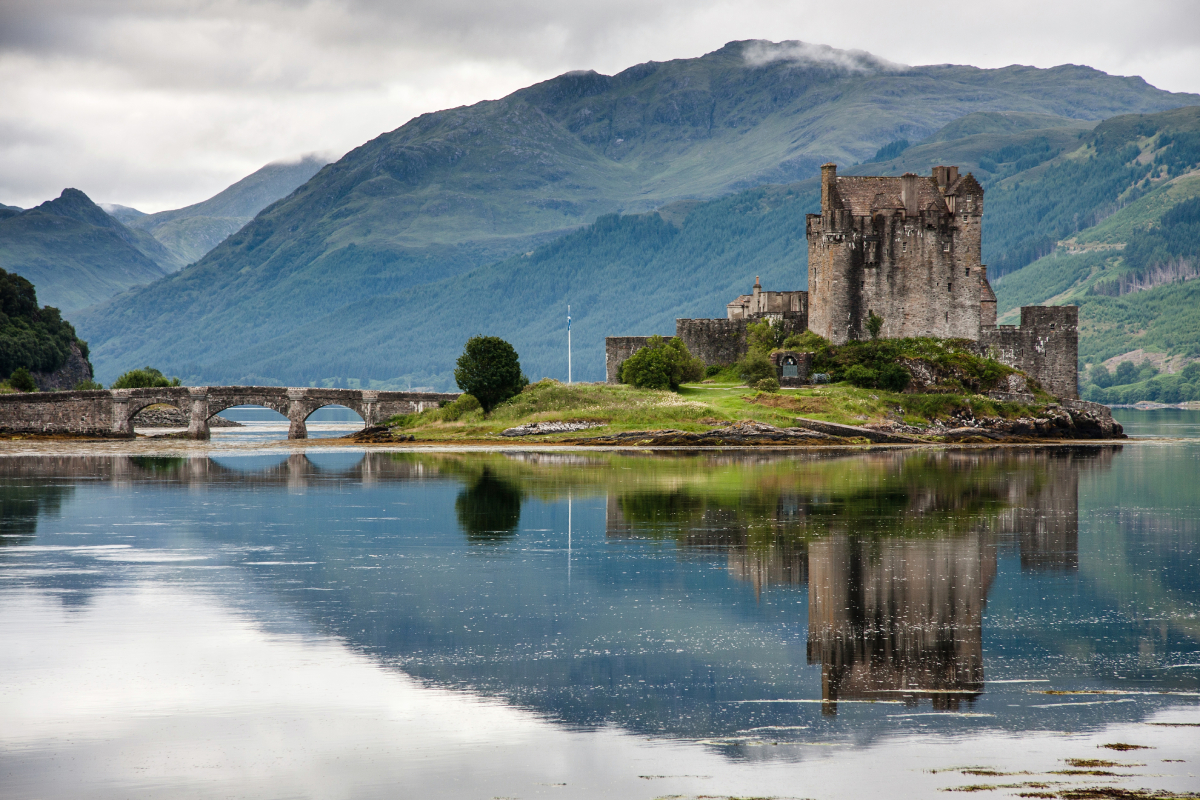
By the late 11th century, advances in military defense ended the Viking raids, and Scandinavian societies evolved into medieval kingdoms. Photo: duchy / Shutterstock
All bad things must come to an end
From the comfort and safety of the 21st century, it has been centuries since the last Viking ship sailed. So, what happened to the Vikings and the societies that produced them?
Let's look at the former first. By the late 11th century CE, European societies had endured centuries of Viking raids and attacks.
Developments in military technology, tactics, organization, infrastructure, and the economy enabled these societies to fend off these predatory raids more and more ruthlessly.
The golden age of hopping on a longship and sailing to a coastal community to plunder their treasure and inhabitants was over.
The transformation of early medieval Scandinavian societies into the medieval kingdoms of Denmark, Norway, and Sweden is worthy of a book, podcast, or Netflix series in itself, so we'll be brief.
By the end of the 11th century, Christianity had secured a grip on Scandinavia's political elite, who had spent centuries consolidating power, resulting in the creation of the medieval kingdoms of Denmark, Norway, and Sweden.
For those wanting to hear what Vikings sounded like, you'll need to head to Iceland. Thanks to the country's geographic isolation, Icelandic is the least changed linguistic descendant of Old Norse, the language spoken by early medieval Scandinavians.
For more information on where Vikings came from, visit the Jorvik Viking Centre's website here.
We get to provide readers with original coverage thanks to our loyal supporters. Do you enjoy our work? You can become a PATRON here or via our Patreon page. You'll get access to exclusive content and early access.
Feel free to reach out to discuss potential stories that may be in the public interest. You can reach us via email at [email protected] with the understanding that the information you provide might be used in our reporting and stories.



.jpg)
