

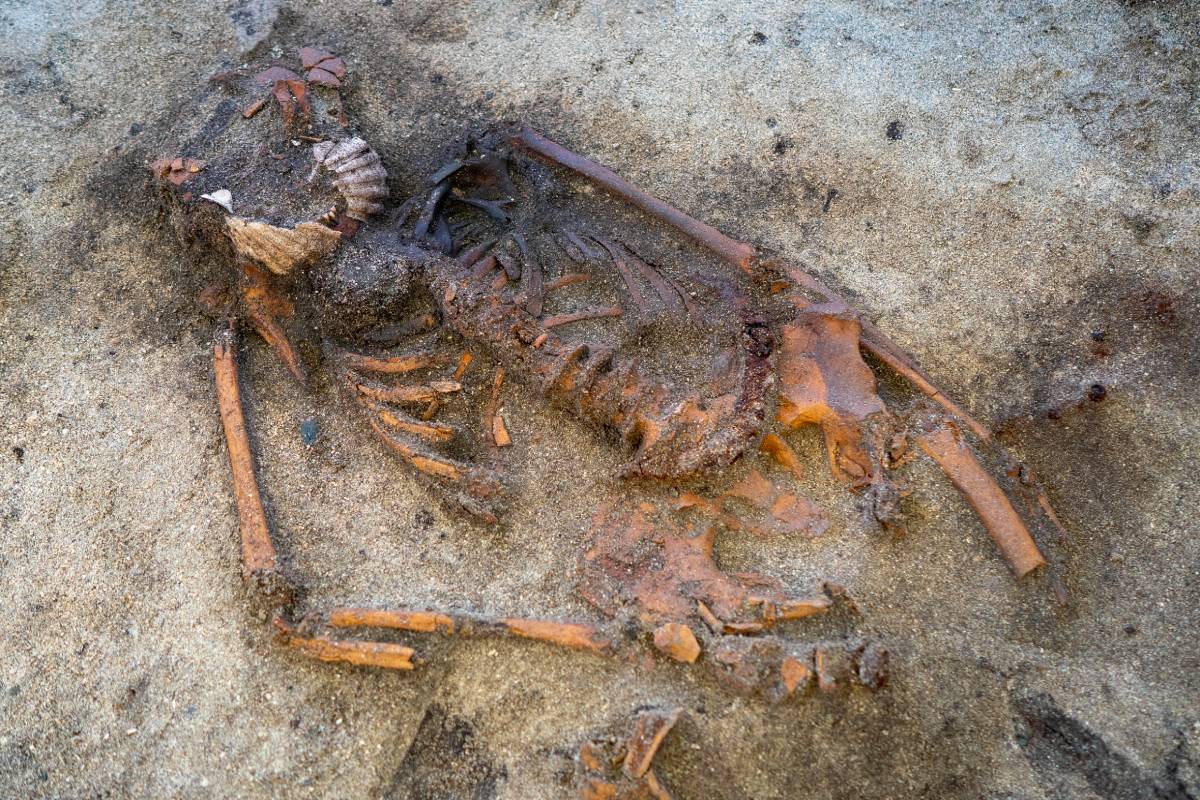
Two Viking Age graves have been unearthed near the small town of Bjugn in the central Norwegian county of Trøndelag.
One of the graves contains a highly unusual feature: two scallops placed on either side of the cheeks of a female skeleton. Experts working on the finds are already beginning to develop theories about the symbolism of the grave goods.
The diligent detectorist
As Knut Harald Stomsvik, a senior adviser and archeologist for Trøndelag County Authority, informs The Viking Herald, the find was made possible thanks to the careful work of a local metal detectorist.
"In the autumn of 2024, Roy Søreng found a Viking Age oval brooch while searching with a metal detector," Knut explains. "When he picked it up, he noticed another brooch still in the ground and suspected that it might be an intact grave."
"He left the second brooch in place and notified Trøndelag County Authority, as required by regulations. NTNU University Museum, which is responsible for excavations in our district, was also informed."
"In the spring of 2025, Roy Søreng again used his metal detector in the same field and found an object resembling a sword, along with what appeared to be a human thigh bone," Knut continues.
"Once again, he reported the find and left it untouched."
This was an important decision – while some metal detectorists cannot resist the temptation to disturb a potentially valuable site, Roy Søreng ensured that the archeologists, if they investigated further, would be able to understand the context of the find in full.
The archeologists, however, needed permission to excavate in Bjugn.
"In consultation with the County Authority, NTNU University Museum submitted an application to the Directorate for Cultural Heritage for extraordinary funding to investigate the find sites further," Knut explains.
"The main reason for this request was concern that the finds could be lost due to active farming in the area, as the field is plowed every year. The find with the sword and bone was prioritized because it was assumed that the brooch find might have been damaged by a nearby ditch."
- READ MORE: A Viking history of Norway (part 1)
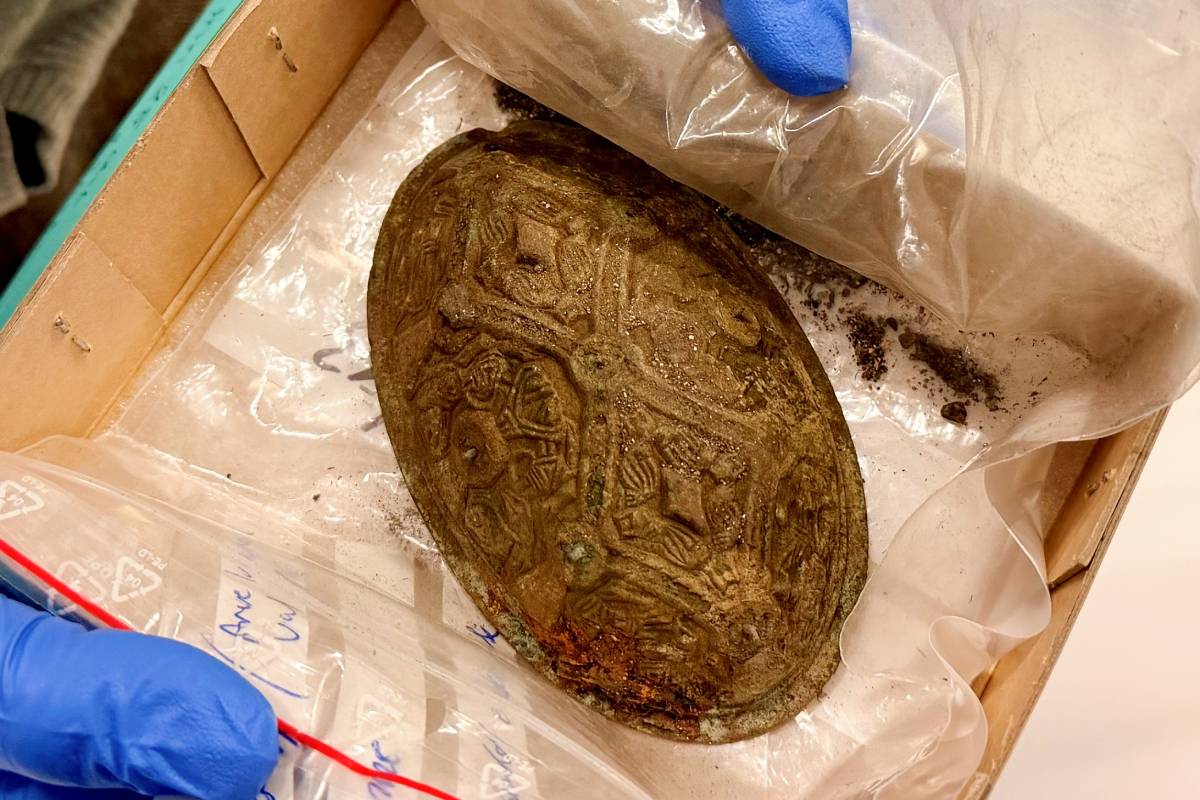
One of the oval brooches from the grave near Bjugn, interpreted as a high-status female burial. Photo: Raymond Sauvage / NTNU University Museum (CC BY-SA 4.0)
An unusual discovery
With everything in place, a team of archeologists was able to return to the site in an effort to retrieve the contents of the grave.
"Prior to excavation, the museum conducted a ground-penetrating radar survey of the field to map the conditions," Knut tells The Viking Herald.
"Then, in September this year, the first excavation was carried out, and it turned out to contain a well-preserved skeleton with a sword likely dating from the Merovingian period or early Viking Age."
"On the last day of the excavation, the brooch was also to be retrieved, and the museum's archeologists realized that this site also contained a preserved skeleton with objects in situ."
Despite this initial success, the team was eager to see if there was more material at the site.
"A new application was sent to the Directorate for Cultural Heritage, which processed it urgently and granted funds for another excavation," Knut adds.
"This was carried out in October this year. The dig resulted in the uncovering of a skeleton buried with scallop shells, bird bones, and an oval brooch."
This second grave is thought to be of a high-status woman from the Viking Age, with the placement of the scallop shells a notable feature.
"It must have been a beautiful and symbolic burial with scallops and bird wings around the body," Anne Bjørg Evensen Svestad, head of Trøndelag County Authority's Cultural Heritage Department, commented in a recent press release.
"The symbolism is unknown, but it shows that the burial was a ritual staging with elements we rarely see in pre-Christian graves in Norway."
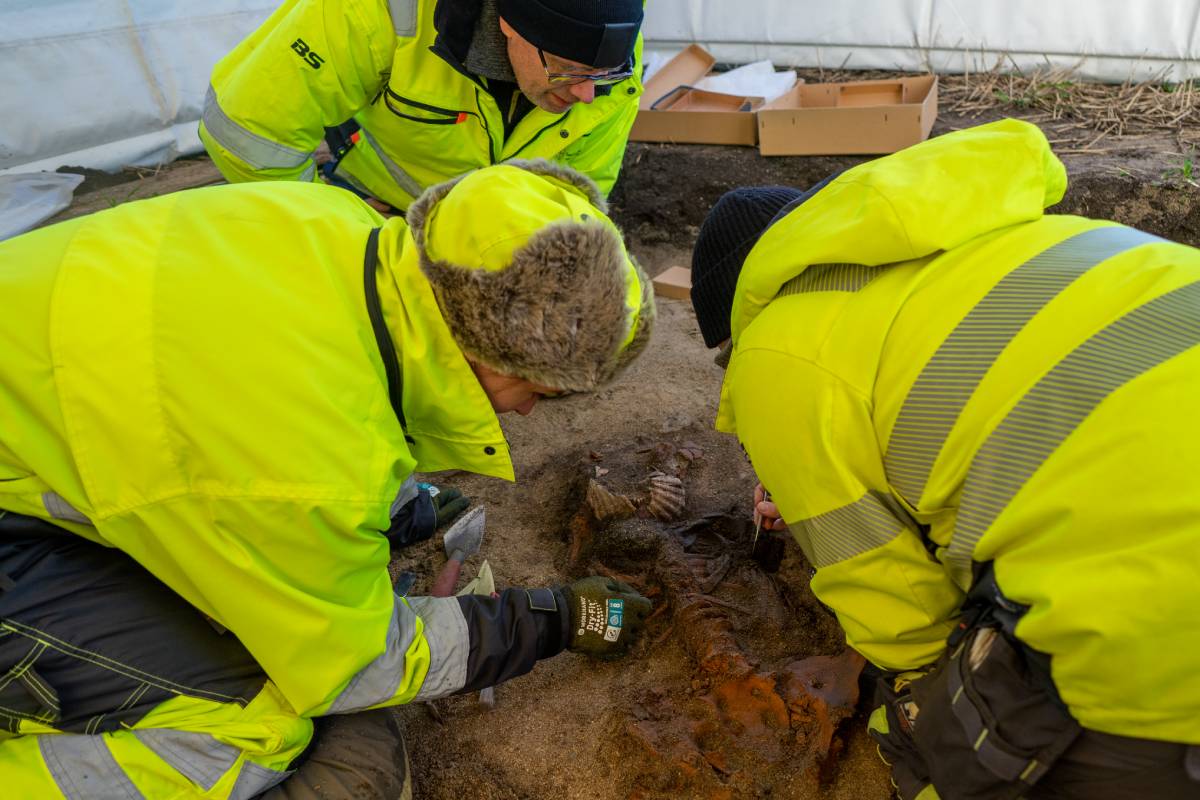
Specialists plan radiocarbon tests and DNA analysis to refine the date of the grave and its occupant. Photo: Raymond Sauvage / NTNU University Museum (CC BY-SA 4.0)
The investigations continue
While the burial site as a whole is of clear historic interest, the use of the scallops is particularly worthy of further investigation.
"This is a discovery that gives us a unique insight into Viking Age burial customs and symbolic use," Svestad added.
"The scallops and bird bones make the grave very special and show that the rituals could be both complex and open to new elements. We are pleased that the find was secured before it was lost."
Both the skeleton and the artifacts are now being held at the NTNU University Museum, where they will be cleaned and preserved. They will also be subject to extensive further examination, including carbon dating and DNA analysis.
In time, the team hopes to learn more about the person found at the site and also to try to determine if she was related to the other skeleton in the initial grave.
In the meantime, Knut Harald Stomsvik remains pleased with a job well done by all.
"We would like to emphasize the excellent cooperation between all parties involved in this case," Knut stresses to The Viking Herald.
"These include the finder, the landowner, the County Authority, the University Museum, and the Directorate for Cultural Heritage. This collaboration has enabled highly interesting investigations that have produced valuable results for further research."
We get to provide readers with original coverage thanks to our loyal supporters. Do you enjoy our work? You can become a PATRON here or via our Patreon page. You'll get access to exclusive content and early access.
Feel free to reach out to discuss potential stories that may be in the public interest. You can reach us via email at [email protected] with the understanding that the information you provide might be used in our reporting and stories.