

The man behind the throne, King Sigurd, had a life steeped in Viking lore and legend.
Not only was he the first European king to lead a crusade personally, but he was also one of the most prestigious and influential rulers of Scandinavia during the entire pre-modern period.
*Warning this tale is a long one, so buckle up your chainmail, Vikings*
End of the Vikings?
The history of Norway during the medieval period can be divided into two main periods: pre- and post-Viking.
The storied history of the Vikings, who raided, traded, and colonized everywhere from Newfoundland in modern-day Canada to Constantinople, from the Black Sea to the Iberian Peninsula, has been the subject of a thousand books, movies, plays and – dare we say – websites.
What happened after the Vikings set sail for the last time, especially in Norway, is a little bit less celebrated and less known.
The traditional history states that, by the mid-11th century CE (about the time of the Battle of Stamford Bridge and Hastings in England), the dual process of the growing consolidation of power by individual rulers coupled with the final stages of the Christianization of the Scandinavian peninsula, saw the formation of the medieval kingdom of Norway.
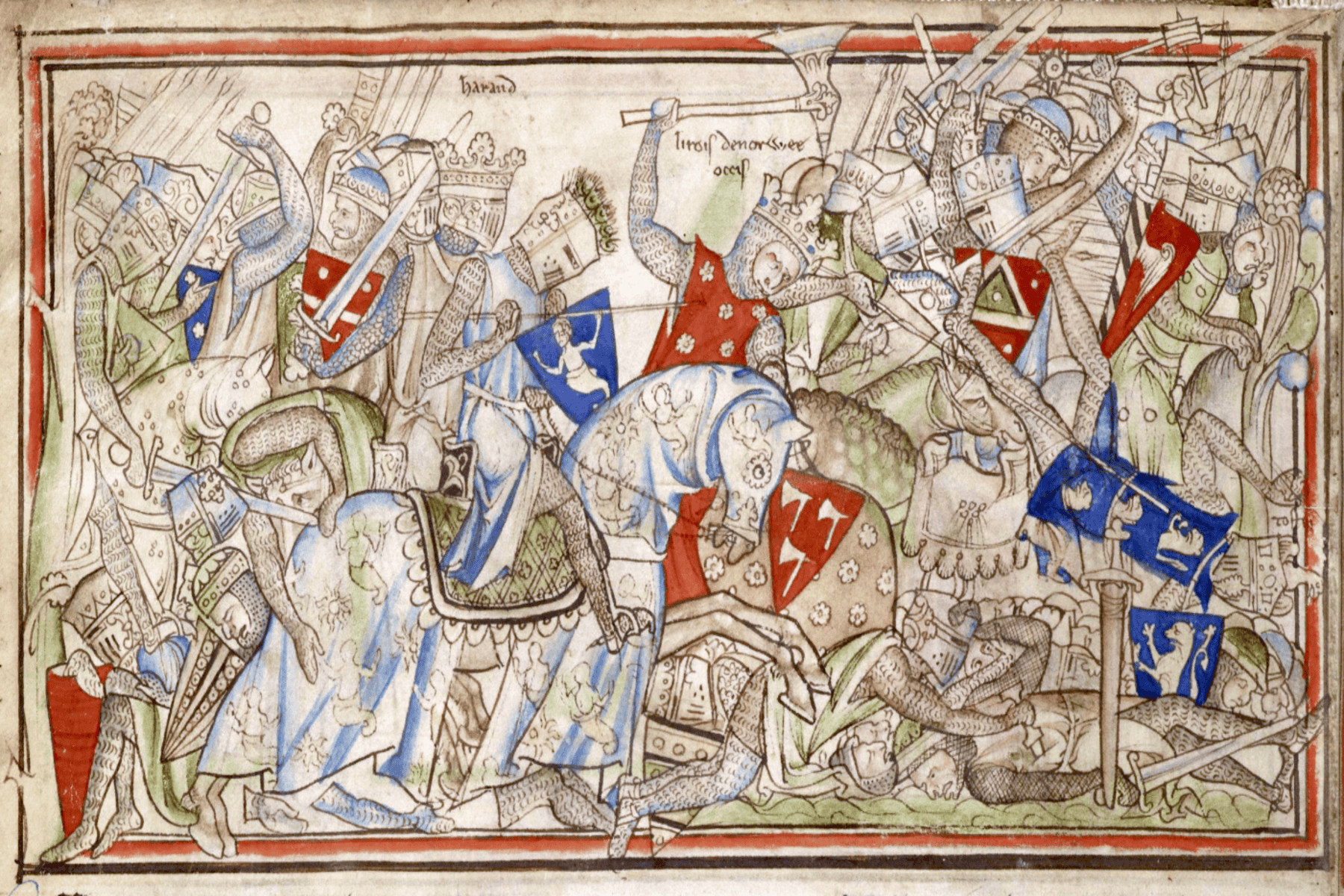
Yet history is not quite this neat. The last "Vikings" didn't suddenly disappear overnight following the defeat of Harald Hardrada or Harold Godwinson.
The political elite of Norway didn't suddenly swap their Viking helmets (without horns, of course!) for the armor of knights, their longships for noble steeds.
The early 12th century CE is a historical estuary, with the Viking era still very much in living memory whilst a paradigm shift in society, the transformation of Norway into a medieval kingdom, was still in its infancy.
Let us delve then into this estuary together as we will discover one of the more interesting personalities from Norway's pre-modern period.
Royal shoes to fill
Spare a thought for young Sigurd. The son of a Norwegian king, Magnus III, he not only had some big shoes to follow – his father had extended the Norwegian rule over much of the northern part of the British Isles (including the Hebrides, the Isle of Man, and islands in the Firth of Clyde and the new Viking settlement of Dublin) - but he was also competing for Norway's top job with two stepbrothers.
To add a degree of medieval prejudice, all were referred to as "bastards" as their father seemed to have a libido to match his political ambitions.
The formative years of our life, especially our teenage years, are full of life lessons and challenges, small social victories, and (sometimes) even bigger embarrassments.
Yet they help forge the adults we are now (for those teenage readers of The Viking Herald, we can categorically reassure you that there is no rush to be an adult, so enjoy your younger years!).
Imagine, however, growing up in an era where your formative years are defined by a power struggle with your three stepbrothers. Furthermore, your father had been, literally, chosen by God to rule.
The same God who had just inspired many of your father's contemporaries in other European kingdoms to go on a crusade and capture Jerusalem from the "heathen Saracens."
Young Prince Sigurd was born in 1089 CE, and by the time he was a mere nine years old (nine was probably the old 19 back in the medieval period - remember, not many lived to celebrate their 30th birthday in the 11th century CE), his father, obviously showing a degree of favoritism, had taken him on an expedition to tour the new territorial acquisitions including the Orkney and Hebrides islands.
Sigurd was then made the "Jarl of Orkney" (one of the most important aristocratic titles in medieval Norway) and was further elevated to "King of the Isles" (these isles being the Suðreyjar which his father had conquered in 1098 CE). Not bad for a prepubescent kid!
Despite the preference shown to young Sigurd, Magnus III had two other sons, Olaf and Øystein, so he devised a cunning plan for the three sons to co-rule upon his death.
Having such a bold plan organized before this expedition was a stroke of genius by Magnus (in a bid to avoid bitter civil war between the three presumed power-hungry teenagers) as he was assassinated during a visit, with Sigurd, to Ireland.
It was just as he had been proclaimed "High King of Ireland" and secured a young Irish bride for Sigurd that Magnus was jumped and ambushed by an Irish army and murdered.
Young Sigurd, barely only 14, had to leg it back to Norway, leaving his Irish bride – and the corpse of his father – on the Emerald Isle.
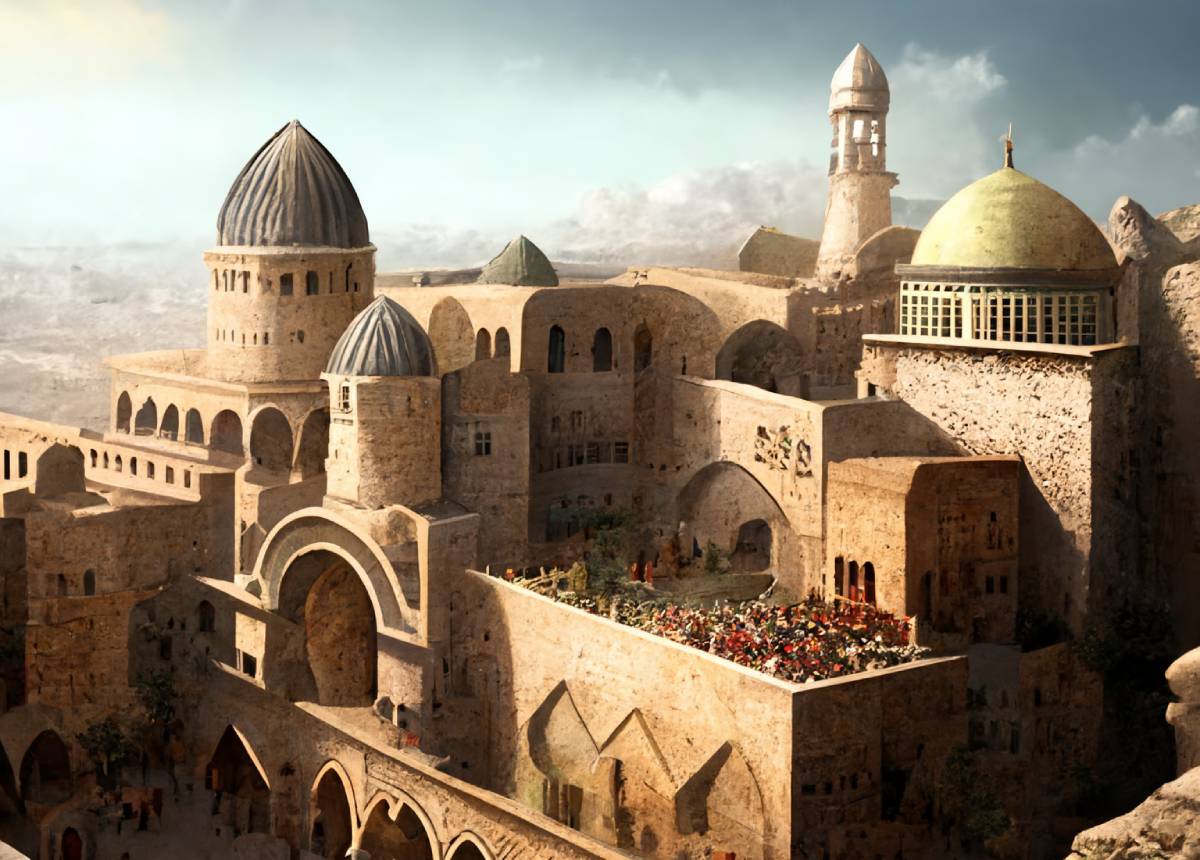
From 1107 CE, Sigurd focused his attention on the "Holy Land," Jerusalem. Illustration: The Viking Herald
Taking the cross
Can you imagine three teenagers ruling a country? Well, in 1103 CE, this is exactly the position Sigurd and his brothers found themselves in following their father's assassination.
The three stepbrothers seemed to have found a way to co-rule until Olaf's death in 1115 CE. One less brother, and one less co-ruler, may have calmed tensions a little, and it seems that a working relationship developed between the two Kings.
Having your stepbrother as a co-king must have been reassuring for Sigurd because he then focused his attentions, from 1107 CE, to the "Holy Land."
Though Jerusalem had been conquered by the Crusaders in 1089 CE, Sigurd "took the cross" and vowed to go on a pilgrimage to the holiest city in Christianity, Jerusalem.
What makes this crusade of King Sigurd particularly interesting is that his call to take the cross is that most of his population were either recently converted, their families had been converted within living memory, or were still followers of the Old Norse religion.
The Christianization of Scandinavia was still not yet totally complete, and Norway had not established its own archdiocese (this would occur half a century later in 1154 CE).
King Sigurd, however, was not perturbed. He was determined to make it to the "Holy City" and assembled (according to medieval sources, which are, let's face it, not the most trustworthy. You wouldn't want a medieval accountant doing your taxes...) between 3,000 - 5,000 men in as many as 60 ships.
Now, whether all these men were as devout as their king is debatable. Perhaps some wanted what most young medieval European men wanted– adventure, the redemption of all their earthly sins, a free ticket to see the ("known") world, get their hands on some gold, and kill the odd Saracen or two (not necessarily in that order though).
Chasing the sun and the Saracens
Their first port of call was the England of King Henry I. Giving the meeting between the two kings even more of a Viking flavor, Henry was the fourth son of William the Conqueror, whose ancestors, the Normans, were legendary Vikings who were such a nuisance to the Frankish Empire that they were eventually bought off with French "real estate" – Normandy – to form their own Duchy.
From here, Sigurd did exactly what his Scandinavian ancestors do annually when the temperatures rise: head southward to the Iberian Peninsula.
Amongst their Iberian exploits, they managed to loot a local's castle in Santiago de Compostella, sacking Portuguese towns and managing to defeat a "Saracen" squadron near the Strait of Gibraltar.
Sigurd and his men then sailed onward to the Balearic Islands and, like some of his 21st century CE Scandinavian ancestors after one too many drinks, found themselves constantly battling the locals on Ibiza and Menorca.
This was the first instance of a Christian force attacking the largely Almoravid Muslim-controlled Balearic Islands, perhaps foreshadowing a later Pisan-Catalan joint crusade in the 1130s CE - not the last time King Sigurd was a trendsetter.
Finally, after battling the "Saracens," sun and sea, King Sigurd and his men eventually landed in the Holy Land at the port of Acre in 1110 CE.
Jerusalem was but a short ride away...short being a somewhat misleading term in the medieval period as this ride could take anywhere from 3 to 6 days...
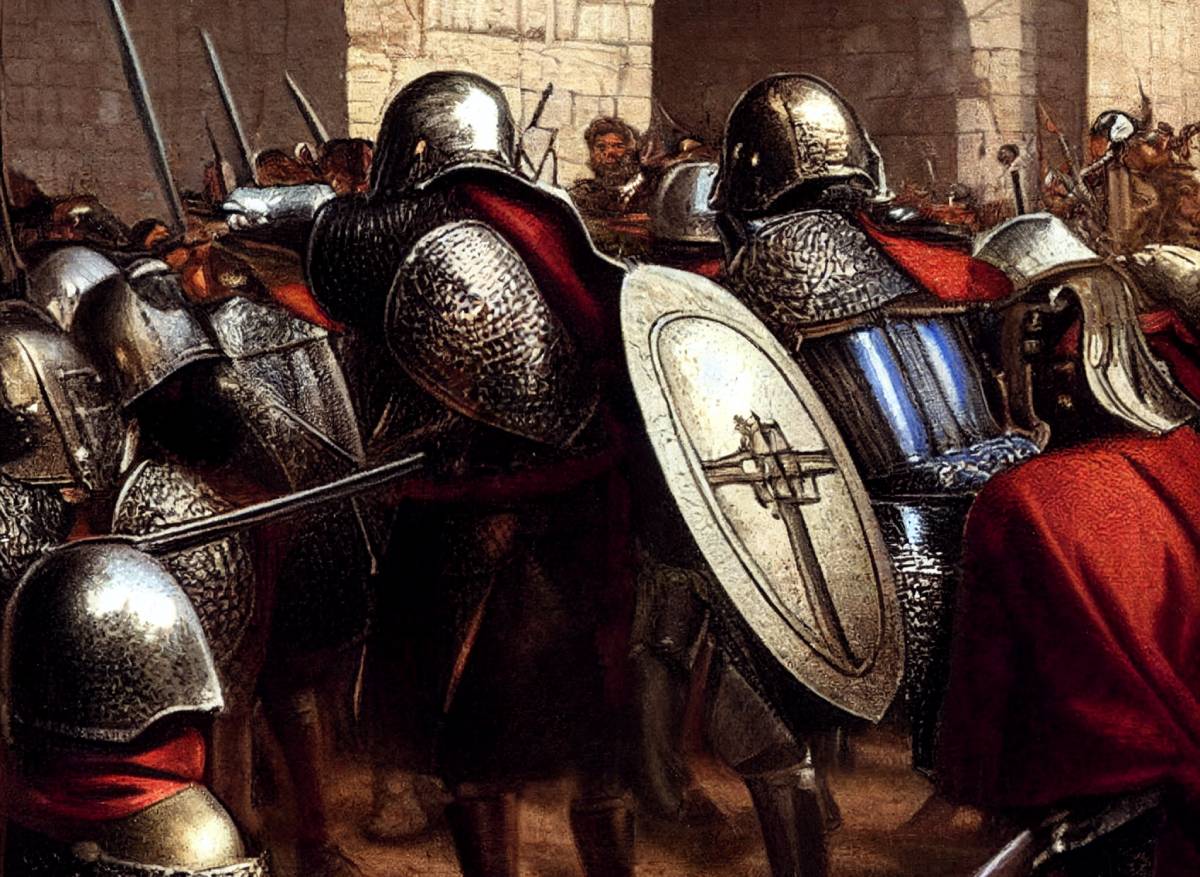
Sigurd helped King Baldwin lay siege to the town of Sidon, a holdout of the Fatamid Caliphate. Illustration: The Viking Herald
The Norwegian crusade (and/or pilgrimage)
Like so much of early Nordic history, we are indebted to Snorri Sturluson's compilation of the history of Scandinavian monarchs, the Heimskringla.
Sturluson relates that Sigurd and his men marched south, from Acre, to reach the Holy City to be greeted by the then "King of Jerusalem" (a recent creation thanks to the efforts of the First Crusade), King Balwin I.
In another Viking addition to this tale, Baldwin was married to a Norman, Godehile of Tosny.
Sigurd and his men were received warmly, and it was said that Baldwin oversaw Sigurd's baptism in the River Jordan.
This may have meant that Sigurd was not officially baptized beforehand – or was quite possibly a "second" baptism (predating the "Anabaptist" movement by about four centuries) - or, most likely, the event was added by Sturluson, for dramatic effect, and to draw parallels to the story of Jesus Christ's baptism in the same river, by his cousin, John the Baptist.
Regardless, Sigurd left Jerusalem with his men, not only a spiritually richer man but also one literally too.
His men were given vast treasures, and Sigurd himself with a splinter from the cross that Jesus Christ was crucified on.
This was given on the condition he promoted Christianity throughout his realm and placed the splinter at the shrine of Norway's patron saint and Rex Perpetuus Norvegiae, Saint Olaf.
Following Jerusalem, Sigurd and his men found time for more earthly pursuits. Upon returning to their ships docked in Acre, they helped new bestie King Baldwin lay siege to the town of Sidon, a holdout of the Fatamid Caliphate.
While Sigurd gets some credit for helping Baldwin end the siege and capture the city for the Crusaders, it was actually the Venetian fleet who sailed into the rescue as a Muslim fleet had destroyed many of Sigurd's ships.
The long way back
The loss of their naval route home proved a problem for Sigurd and his men, so they took the long way home – an overland journey via Cyprus and Constantinople.
It was in the "Queen of the Cities" that Sigurd was supposed to have struck friendly relations with the then Byzantine Emperor, Alexios I Kominos.
More religious icons and treasure were entrusted to Sigurd to accompany the "holy splinter," and horses and provisions were given for the long route back to Norway.
The overland route, from Constantinople (which was still referred to, in Norway, by its Viking name of Miklagard) was not taken by all of Sigurd's men as a significant number decided to stay in the grand city and find employment with fellow Viking warriors in the Varangian Guard.
This was the personal bodyguard of the Byzantine Emperor, which had been established in 988 CE between Emperor Basil II and his counterpart in the recently Christianized Kievan Rus, Vladimir I of Kiev.
The trip home took Sigurd and his remaining men more than three years. They did, however, travel extensively through the Balkans, Hungary, the spine of the Holy Roman Empire, and up to Denmark.
There, greeted by yet another monarch, King Niels, he was finally gifted ships to take his men home to Norway. The trip had taken four years and was seen as a high point of Norway's cultural, political, and military significance in the medieval world of Europe and West Asia.
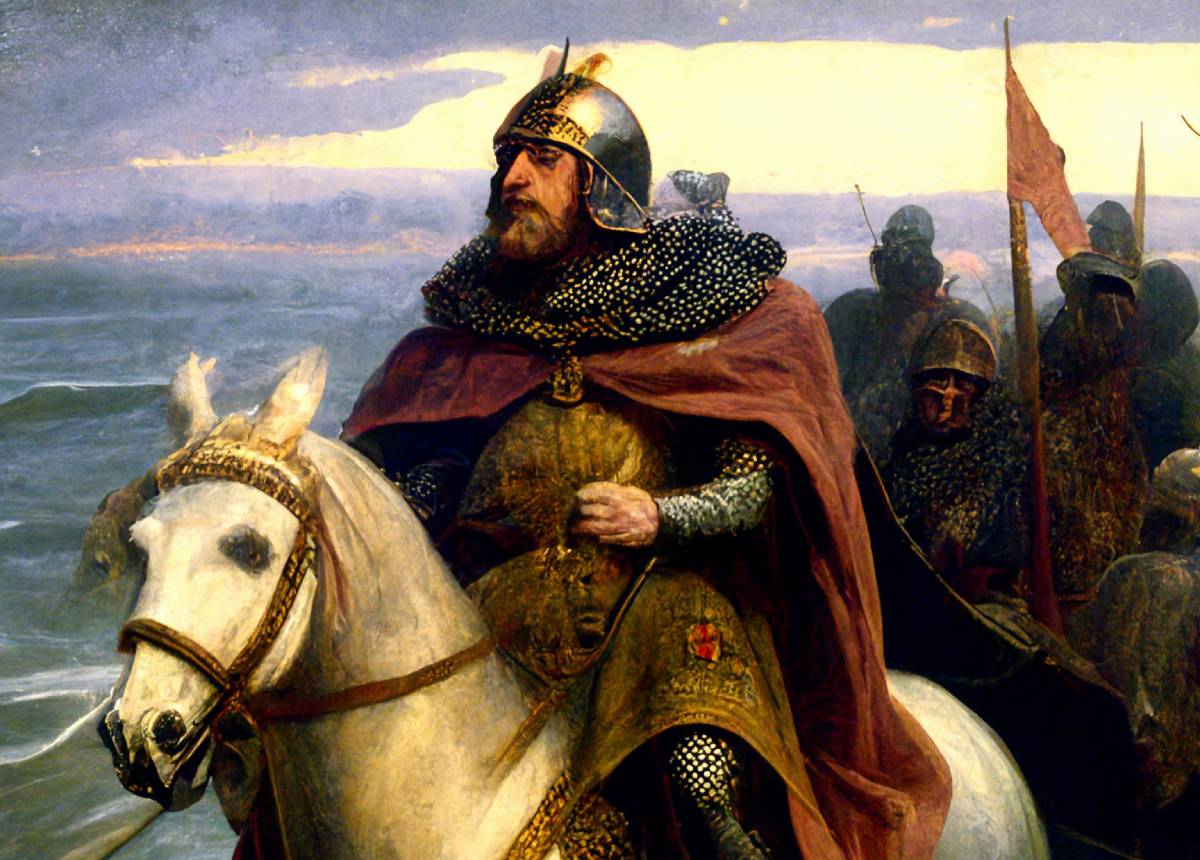
Like the English King Richard I, Sigurd returned home after years of campaigning and crusading in the Holy Land. Illustration: The Viking Herald
A prosperous kingdom, a trustworthy stepbrother
Many comparisons of Sigurd and his brother may be drawn from a later situation where English King Richard I (he with the heart of a lion) legged it off to lead the Third Crusade (c. 1189 - 1192 CE), placing his brother (he of the "Robin Hood" fame) John in charge of the kingdom.
However, unlike the disastrous King John, Sigurd's brother, and co-regent, Øystein was much more of a successful (and dare we say well-liked) monarch.
Like Richard, Sigurd returned after years of campaigning and crusading in the Holy Land, but unlike Richard, Norway was in much better political and financial shape than England would be.
Something of their old man's greatness must have rubbed off on all three sons, as Øystein had ensured a sense of stability and security in the Norwegian realm.
What was particularly interesting was church reforms that included Norway's first ever tax – a tithe % tax (tithe) - which saw Sigurd return to a royal coffer that was overflowing.
Interestingly, this tithe also increased the power and scope of the Catholic Church in social and political affairs in Norway.
What is interesting is other than all the monarchs he met, he was also intertwined with royals from the peripheries of "civilized" Europe.
He was married to a daughter, Malmfred, of a Grand Prince of Kiev who was also the granddaughter of a King of Sweden.
We can add both Malmfred's father and grandfather to the list of rulers Sigurd met in his lifetime.
His death sparked the end of a "Golden Age"
What do we make of a Norwegian king who traveled halfway around the world to make a pilgrimage / go on a crusade, taking more than four years and showing off the prestige and power of the Norwegian realm after the Vikings?
His legacy is mixed. Sigurd was a failure in one respect. Though his father had three "illegitimate" sons yet still worked out a succession plan, Sigurd did not.
A power struggle ensured after his death (in 1130 CE at the depressingly young – for us now in the 21st century but back then perhaps depressingly old – age of 41) between a son and another royal claimant, which would escalate into the civil wars that wrecked Norway for more than a century, from 1130 to 1240 CE.
Not only was he the first European king to participate in a crusade but, for this fun fact, he has been given the eponym "The Crusader" (or Sigurðr Jórsalafari in the Old Norse tongue that medieval Norway spoke).
He was, without any doubt, one of Norway's most important medieval monarchs, and his death ended a "Golden Age" for Norway.
The story of Sigurd, the Viking King who sailed to Jerusalem with an armada of 60 ships, is as impressive as his list of accomplishments on and off the battlefield.
The BBC History Extra website has an article on the "earthly" motives of the Crusaders, including King Sigurd, available to read here.
We get to provide readers with original coverage thanks to our loyal supporters. Do you enjoy our work? You can become a PATRON here or via our Patreon page. You'll get access to exclusive content and early access.
Feel free to reach out to discuss potential stories that may be in the public interest. You can reach us via email at [email protected] with the understanding that the information you provide might be used in our reporting and stories.