

You may be forgiven for thinking that people in Viking societies were the original inhabitants of Scandinavia.
However, the people who gave rise to the societies that produced the fierce and feared Viking warriors were largely descendants of Indo-European settlers who migrated to Scandinavia at some point during the late Neolithic Period (c. 4000–2000 BCE).
Influenced by societies and technology, especially in Central Europe, they began to develop bronze metalworking from c. 2000 BCE. By 500 BCE, iron had replaced bronze, and this led to greater agricultural output and, thus, larger settlements.
During the wide scope of the Nordic Iron Age, the foundations upon which Viking societies would build were established, including linguistic, cultural, and technological advancements.
The beginning of the early medieval period in Scandinavia, the next major historical phase, is traditionally marked by the Viking expansion from the mid-8th century CE.
Soon, people from Viking societies were expanding outward from their Scandinavian homeland to explore new lands, find new trade routes, seize treasure, and conquer new territories.
A steady stream of enslaved people – captured from unwitting coastal or riverbound communities, nabbed as spoils of war, or bought in the slave markets of Constantinople or beyond – flowed back into Scandinavia, adding to the genetic mix.
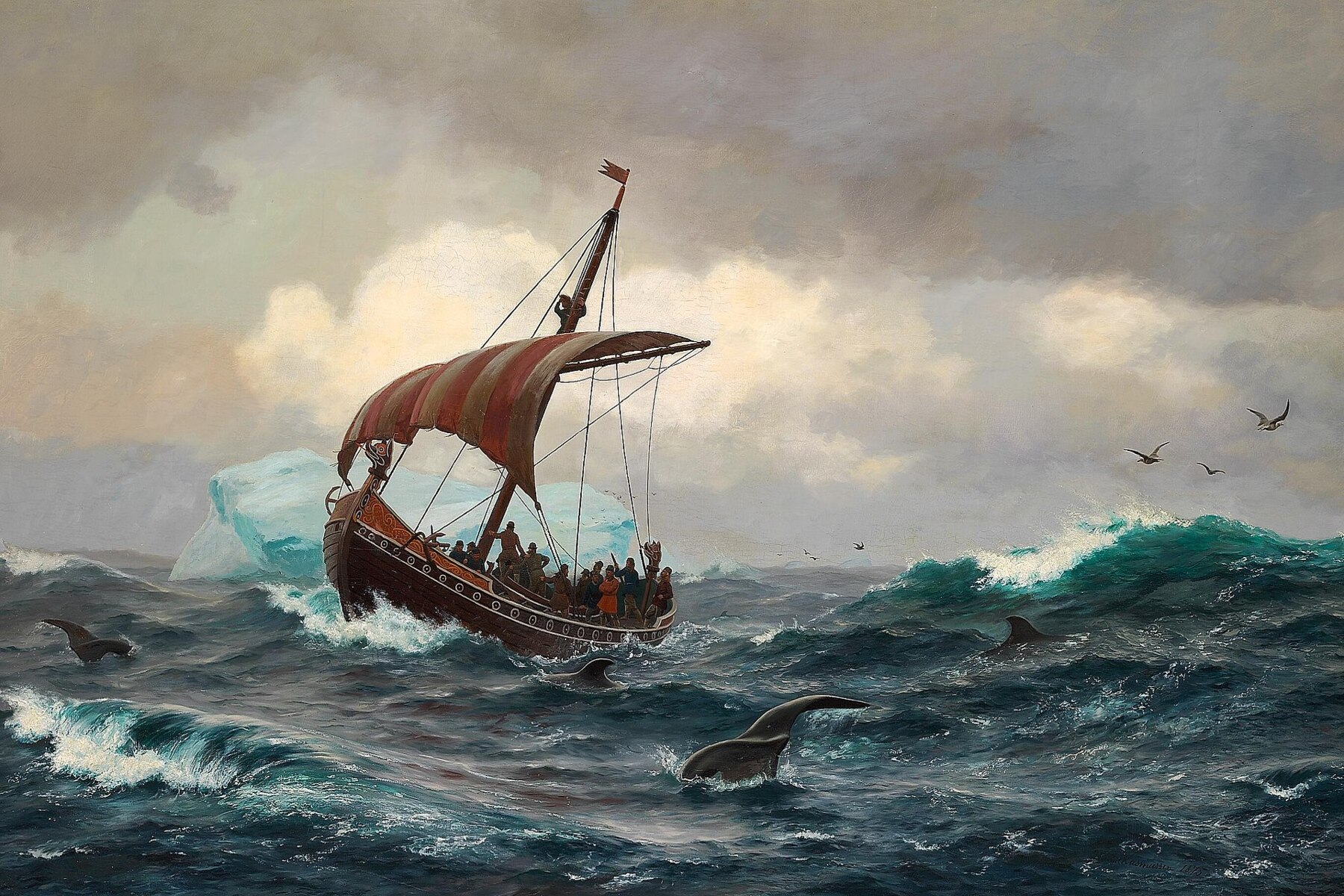
The Viking expansion enabled people from Viking societies to travel widely across much of the Northern Hemisphere.
Their journeys, driven by a mix of profitable, peaceful, or violent motives, took them from the shores of modern-day Canada to the eastern edge of the Black Sea and from Iceland down to the Italian peninsula and everywhere in between.
They encountered a wide variety of peoples, cultures, and civilizations. Yet, the first people they met, long before Viking ships ventured abroad, were much closer to home.
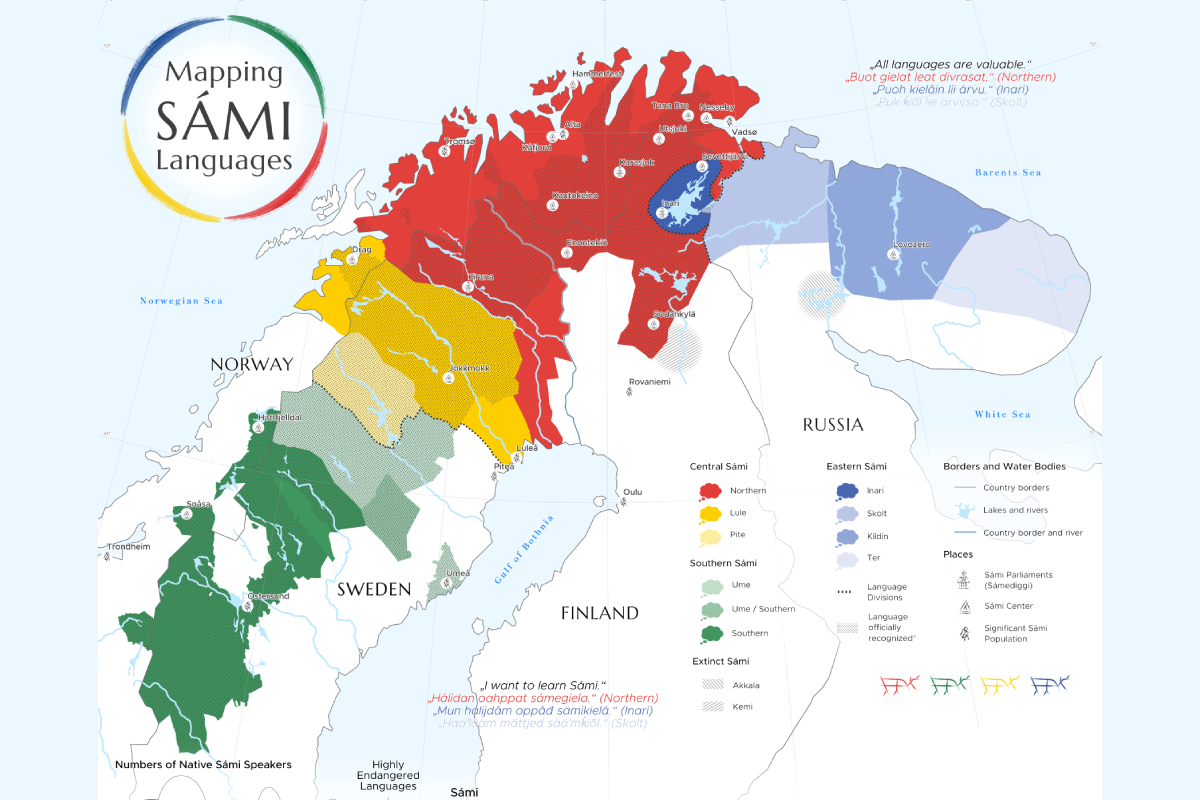
The map shows the traditional Sámi territory across Sweden, Norway, Finland, and Russia. Source: Eurogeographics (CC BY-SA 4.0)
Northern neighbors
The Sámi people are often considered the most direct link to the earliest inhabitants of northern Scandinavia. Today, they are a celebrated minority throughout northern Scandinavia, Finland, and Russia.
Like the modern Sámi, the early medieval Sámi lived side by side with a vastly different culture.
As settlements grew larger throughout the Nordic Iron Age, the descendants of people from Viking societies soon began to push further and further north up the Scandinavian peninsula to encounter the Sámi.
The Sámi lived in northern Europe's harsh and brutal Arctic and sub-Arctic regions. The ancestors of the modern Sámi adapted to this brutal environment and thus became skilled in reindeer herding, hunting, and fishing.
They also practiced a form of animistic shamanism, which some believe may have influenced the religious beliefs in Viking societies.
The most famous example of this potential religious synthesis was the Viking berserker – a skilled warrior believed to take on the raw strength and power of an animal whose skin was worn into battle.
Throughout the early medieval period, there were frequent interactions between people from Viking societies and the Sámi.
Given medieval Europe's thirst for furs, pelts, and hunting birds (as well as bears!), trade quickly flourished. Fish and walrus ivory were also much-prized commodities that contributed to this cross-cultural trade.
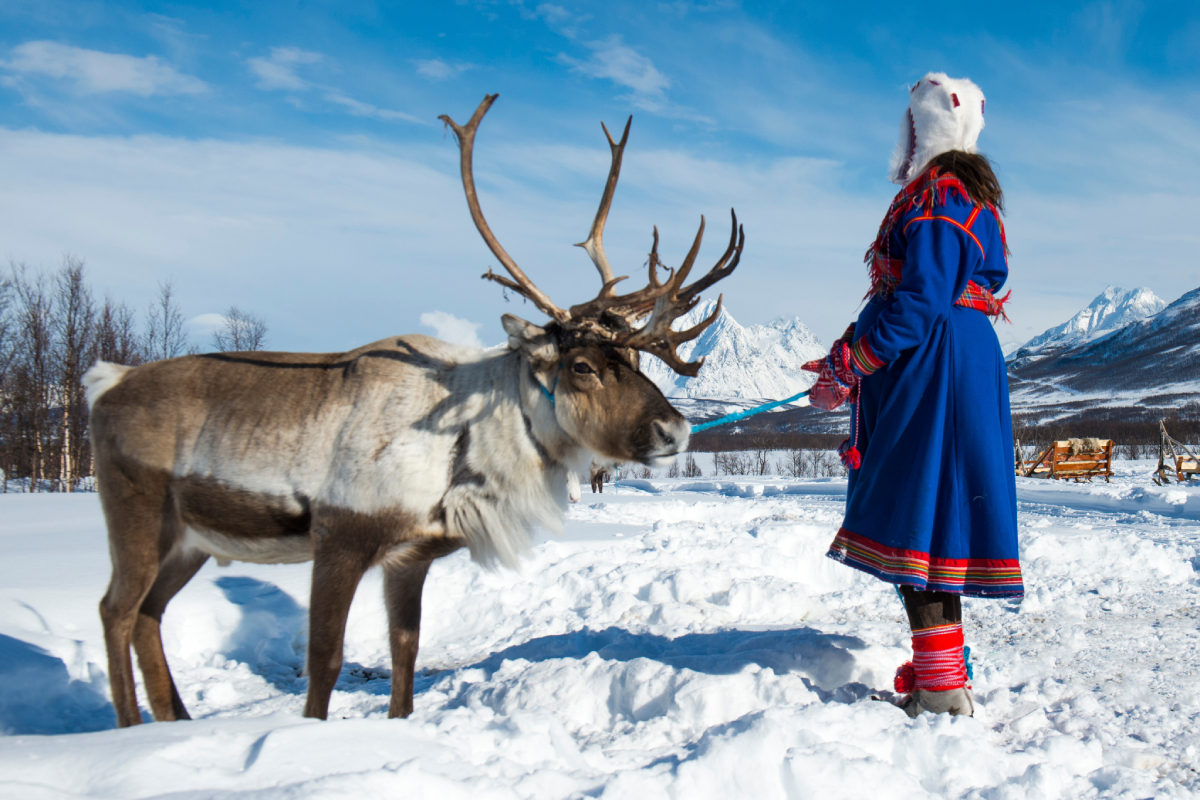
Viking societies adopted key survival techniques from the Sámi for life in northern Europe’s cold climates. Photo: V. Belov / Shutterstock
Survival techniques and peaceful coexistence
Aside from religious influences and trade, people in Viking societies also learned about climatic adaptation from the Sámi.
The Sámi knowledge of the northern landscapes and how best to survive Arctic winters was invaluable as people from Viking societies encroached further and further on their traditional lands.
As Tette Hofstra and Samplonius Kees point out in their 1995 article in the journal Arctic, this survival knowledge was instrumental in the establishment of settlements throughout northern Europe, including what is now Scandinavia, Finland, Iceland, and northwest Russia.
Whilst there were tensions, probably resulting in occasional conflicts and battles over things like hunting and fishing rights, these two cultures seemed to live in relatively peaceful coexistence with one another.
Unlike later Scandinavian cultures, people in Viking societies did not take a paternalistic or ethnocentric view of their northern neighbors.
As John Weinstock points out in his 2013 article in the journal Scandinavian Studies, the three kingdoms that make up Scandinavia (which are now very much beacons of social and egalitarian democracy and harmony) carried out official government policies between the 18th and mid-20th centuries.
These policies aimed to "assimilate" Indigenous peoples, such as the Kven and Sámi, into the dominant ethnic and cultural population.
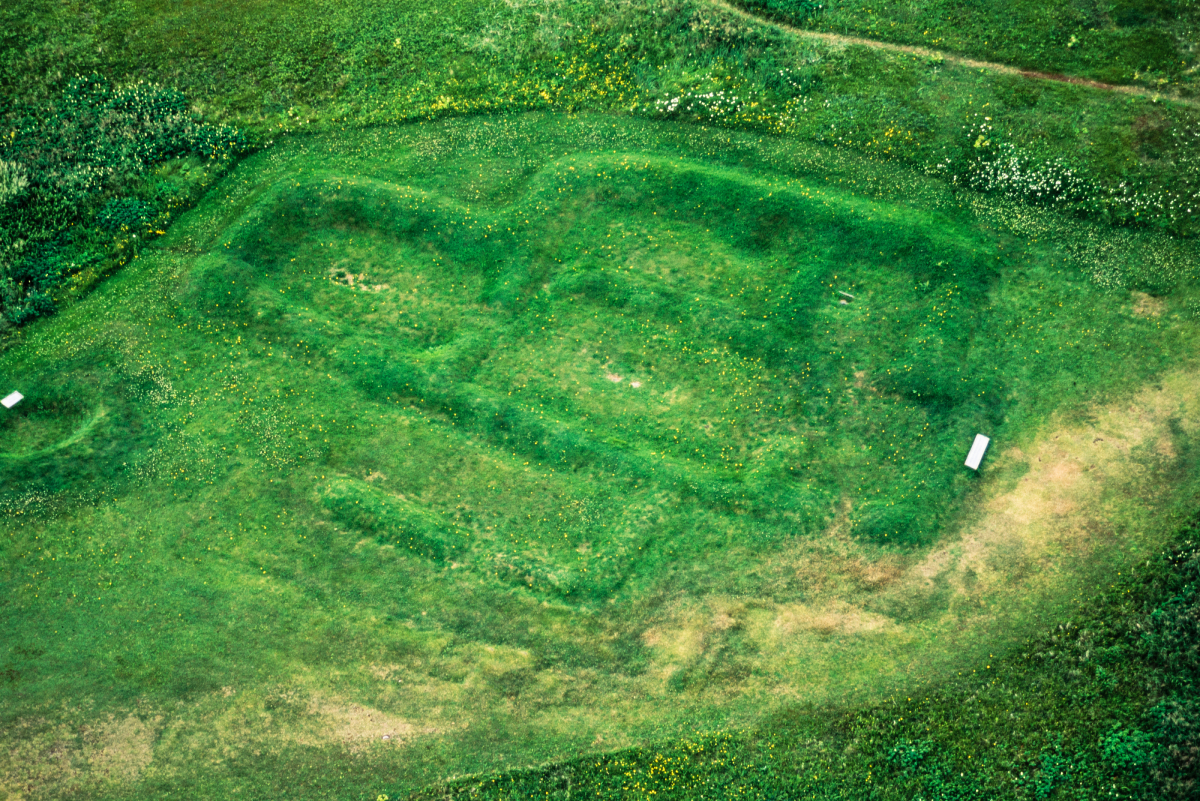
The discovery of L'Anse aux Meadows in Newfoundland confirmed that Vikings reached North America around the year 1000. Photo: Russ Heinl / Shutterstock
The Skrælingar: Blending fact and fiction
For centuries, it was assumed – or so traditional European histories taught us – that Christopher Columbus was the first European to "discover" the New World.
These histories largely ignored the rich tapestry of Norse literature – particularly the sagas – that seemed to point to a possible Viking settlement somewhere on the North American continent centuries before Columbus sailed the ocean blue.
Archeological evidence of a Viking settlement was uncovered at L'Anse aux Meadows, on the northern tip of the Canadian island of Newfoundland, in 1960.
As Martyn Whittock points out in his 2023 book American Vikings: How the Norse Sailed Into the Lands and Imaginations of America, it appeared that people from Viking societies had beaten the later Europeans to North America by about five centuries. Recent radiocarbon dating showed a probable occupation of the settlement between 980 and 1020.
Scouring these same sagas – the Saga of the Greenlanders and the Saga of Erik the Red – makes mention of these new settlers' interactions with what they called the Skrælingar.
Academics have yet to unlock the exact definition of the word, but the current hypothesis is that it is a dismissive term, perhaps akin to something like "barbarian."
These were believed to be the Indigenous population of Newfoundland and far northeastern America, the ancestors of the Beothuk or Inuit people in Canada today.
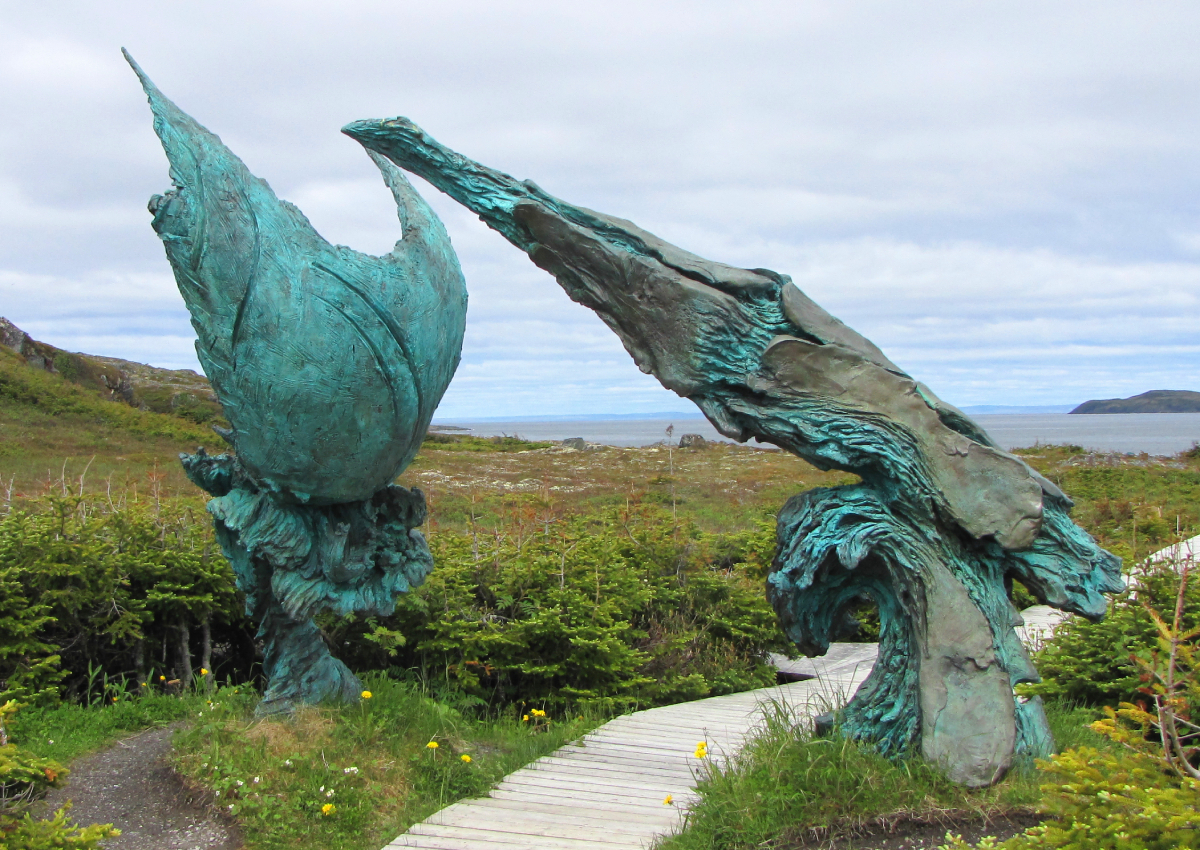
Violent interactions led to the abandonment of a Viking settlement
A rudimentary settlement was established on what people in Viking societies dubbed "Vinland," led, in part, by legendary Viking figures like Leif Erikson.
Unlike their interactions with the Sámi, it appears that the relationship between the Viking settlers and the Skrælingar was markedly more violent.
The first mention of cross-cultural interaction comes from the Saga of the Greenlanders.
Things started off well, with the Viking settlers attempting to trade milk, red cloth, and fur. However, the appearance of cattle – an animal not native to the Americas – seemed to have spooked the Skrælingar, leading them to flee in panic.
This initial interaction did not bode well for the two cultures. Turning to the Saga of Eirik the Red, we learn of an expedition to Vinland led by Thorfinn Karlsefni.
What began as a peaceful barter for goods soon turned violent when one of the Skrælingar touched a weapon belonging to a Viking settler. The settler felt threatened and killed in revenge.
In response, the Skrælingar led a brutal attack on the Viking settlement, resulting in the deaths of several people. The Skrælingar were eventually scared off when a woman, Freydis, bared her chest, beat it, and screamed at the attackers.
It appears that these violent encounters became common, and the Viking settlement in Vinland suffered more attacks.
This ultimately led the Vikings to abandon their settlements in this strange new land and sail back across the North Atlantic to the safety of their settlements in Greenland and further east.
It is worth noting, however, that although there is a large amount of historical detail and information in these sagas, they should not be treated as precise historical records. People from Viking societies never let the truth get in the way of a good story.
These interactions between people from Viking societies and Indigenous populations are only known to us because of the existence of archeological or written records.
Like so much of the history of the early medieval period, we have only fragments of what happened. Much of the daily interactions between these vastly different peoples are lost in the tides of history.
For more information on the Sámi, visit the website of their National Museum here.
We get to provide readers with original coverage thanks to our loyal supporters. Do you enjoy our work? You can become a PATRON here or via our Patreon page. You'll get access to exclusive content and early access.
Feel free to reach out to discuss potential stories that may be in the public interest. You can reach us via email at [email protected] with the understanding that the information you provide might be used in our reporting and stories.