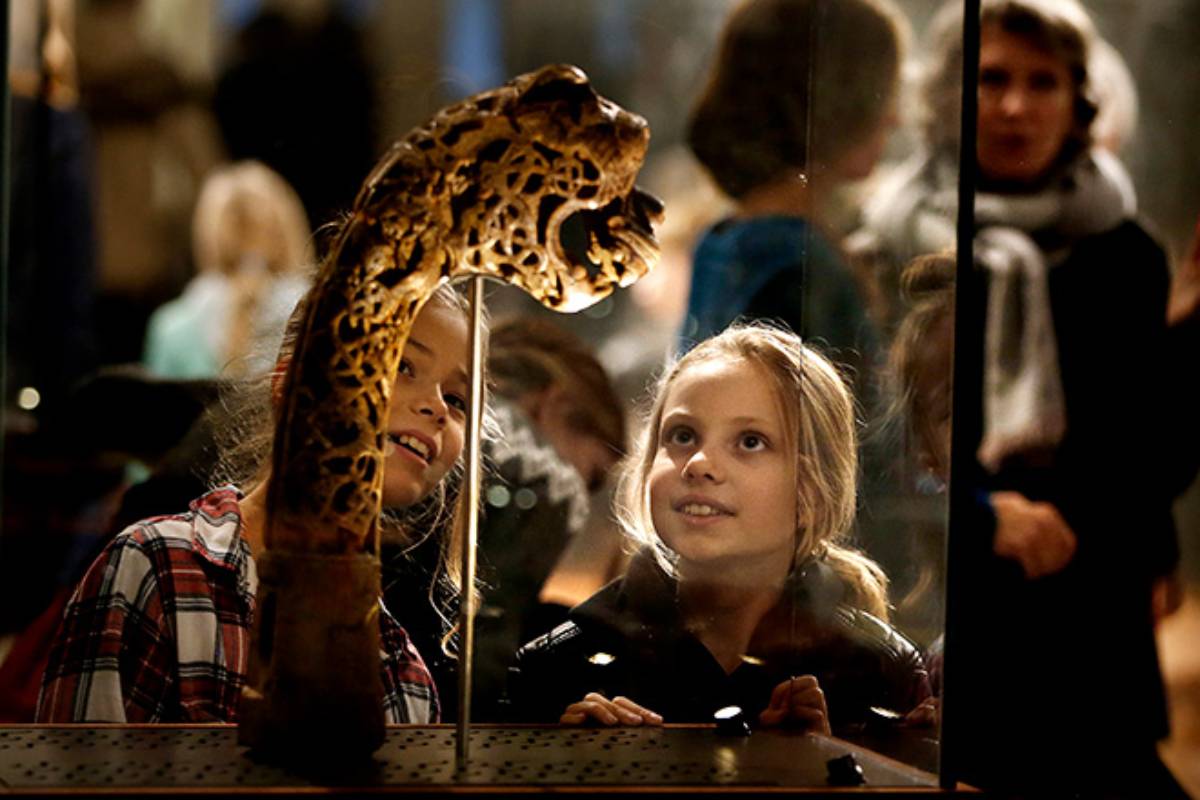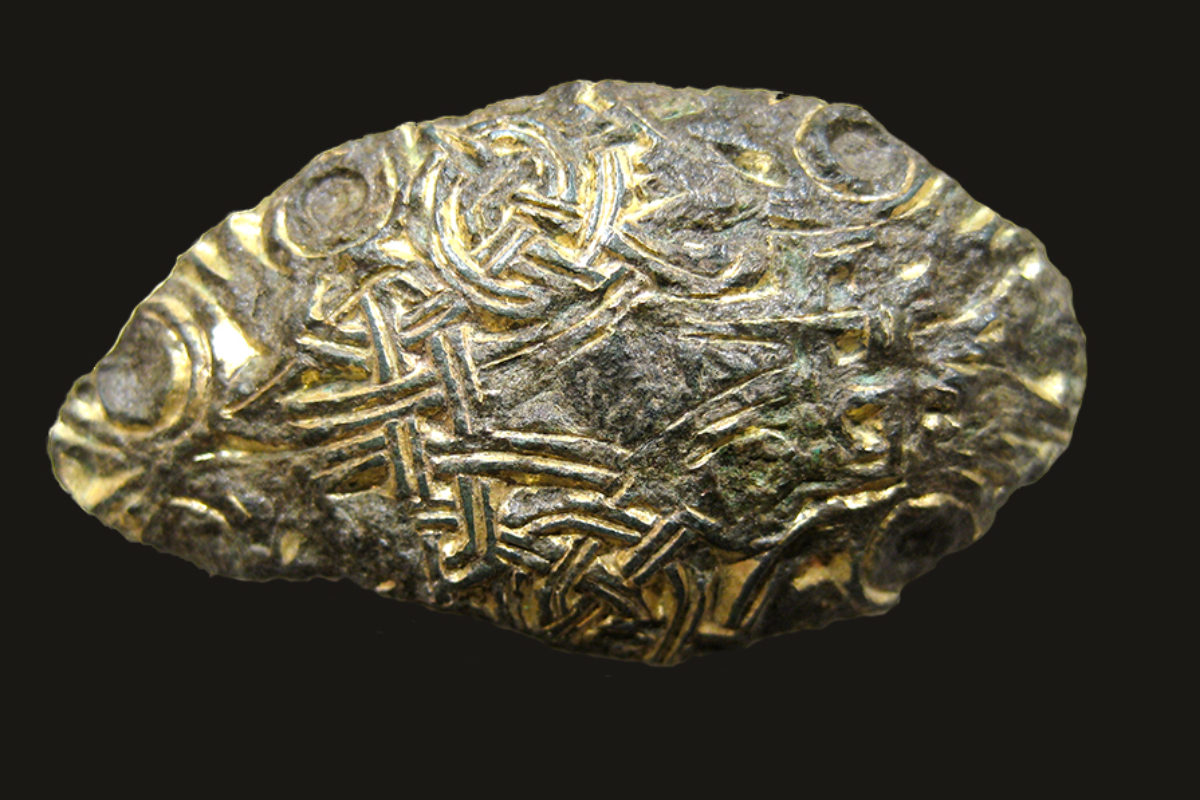


From April until October, a collection of rare artifacts from the Viking era is free to see in a historic church in the center of Glasgow.
The Govan Stones, so called because they were discovered at the Govan Old Parish Church near the former shipyards beside the River Clyde in the heart of the Scottish metropolis, are open to the public every afternoon.
Carefully arranged for display alongside informative documentation, these precious relics from 1,000 years ago can also be viewed as part of a guided tour or group visit.
What are the Govan Stones?
Far more impressive than their name implies, the Govan Stones comprise a sarcophagus delicately carved with animal figures, five arched gravestones known as hogbacks because of their shape, and two-dozen patterned crosses and slabs that would have been used to adorn and cover the resting places of the elite.
The reason they are there at all is thanks to the Govan Heritage Trust. Formed after the church, referred to as Govan Old, was threatened with closure in 2005, the group drew up a rescue plan and created a charitable trust to protect Govan's prime historic asset.
While the church, where 1,300 parishioners once congregated, is no longer a working house of worship, it now operates as a heritage center and home for the Stones.
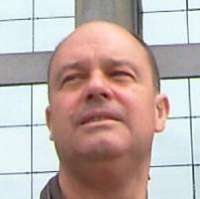
A key member is a man who has led modern-day excavations of the churchyard, Professor of Historical Archaeology at the University of Glasgow, Stephen Driscoll: "One of the ways to understand the area," he tells The Viking Herald, "is to appreciate that this was a center of power from the ninth century onwards.
Previously, it had been Dumbarton, 'Fort of the Britons', until the Vikings destroyed it in 870. A new kingdom was established by the Clyde, centered on Govan, although you don't hear of a great fortress. This represents a shift away from fortress cities".
Strathclyde gradually developed from the post-Roman era onwards. Locals spoke a Gaelic language, not dissimilar to Old Welsh, and after the sacking of Dumbarton, were joined by Norse and Norse-Gael settlers.
Their presence is reflected in place names still used in the Firth of Clyde, and those five hogback grave markers, a Scandinavian burial tradition prevalent in the tenth and eleventh centuries.
Their shape is thought to resemble a house for the departed concerned, often a Viking warrior, a trend possibly set by Danish settlers in northern England in the 870s. Those found in Scotland follow a route down the Forth of Clyde.
The four largest-known examples in Britain form part of the Govan Stones, which stood in the early medieval churchyard here until being unearthed in the mid-1800s. "They are two meters long," says Driscoll, "big enough to cover a human body. The ones in England are half the size".
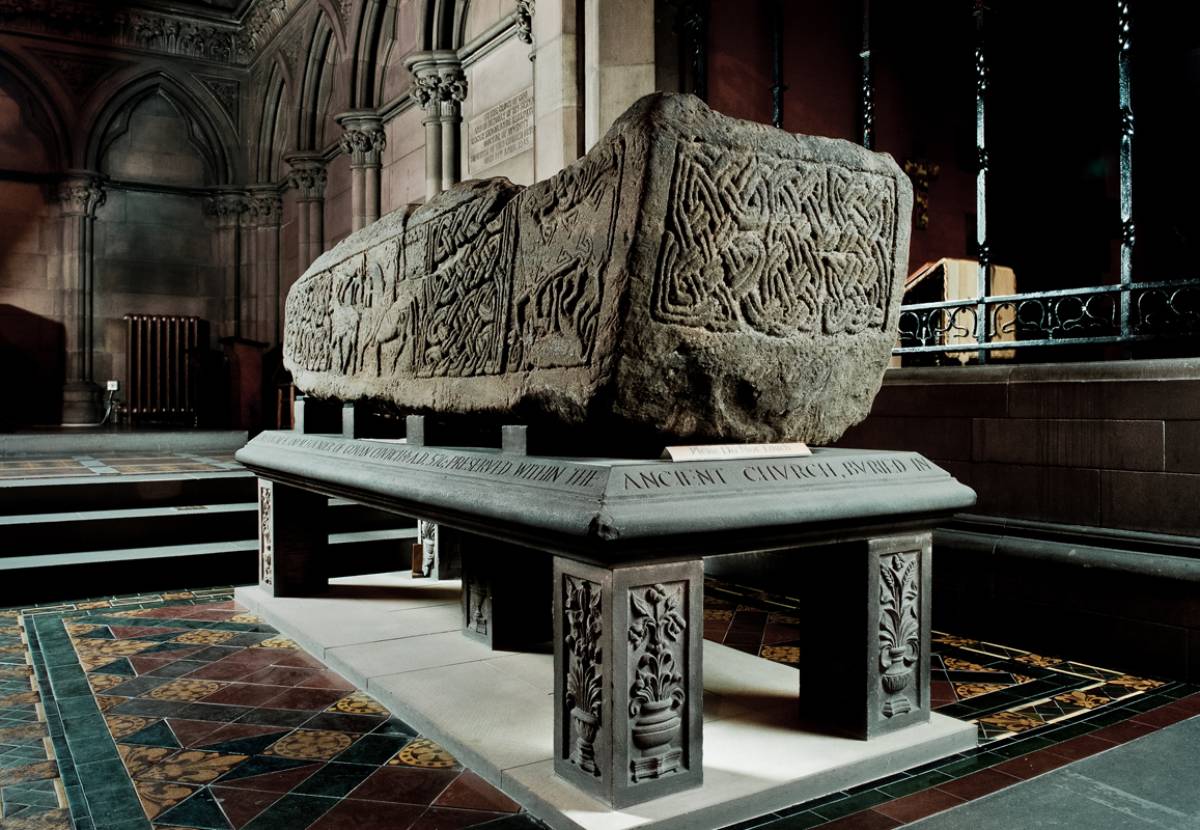
Aside from the gravestones and crosses, the Govan Stones also comprise an ornated sarcophagus. Photo: Stephen Driscoll
A mystery disappearance
In 1855, gravediggers were creating a new plot when they discovered a sarcophagus. Like the stones later discovered, it was carried into the church and put out on display.
As there wasn't enough room for the whole collection, 14 of them, about two-thirds of the total find, were left outside against a churchyard wall. When the nearby shipyard was knocked down in 1973, the stones disappeared.
Along with exploring a site that was used as a burial ground as far back as the 400s, part of the reason for the regular archaeological digs since the 1990s has been to discover these missing pieces. Recently, Stephen Driscoll and his team found three, and more digging in the months to come may uncover the missing 11.
It is hoped that these activities will involve the wider Govan community, reconnecting them with a shared history partly lost since the closure of the parish church for services. "We want to make our activities as inclusive as possible," says Driscoll, looking forward to more fieldwork in the summer.
Visitors, meanwhile, will first be drawn to the sarcophagus. "We think it may have been made for the Pictish King Constantine I," says Driscoll. "The carving detail and motifs alongside the hunting scenes, animals, and weapons are common to other Pictish sculptures."
While Norse society had mainly embraced Christianity by then, "there were Pagan things going on," as Driscoll phrases it.
The monarch, also known as Causantín mac Cináeda, was slain by the Vikings in 877 when Norse attacks around Scotland were at their height.
Few other details are known of his demise, thought to have occurred in Dollar, east of Stirling, but, as Driscoll also points out, "Constantine's sister married the King of Strathclyde, so there was already a connection."
Part of a Viking exhibition at the British Museum in 2014, the Govan Stones are only now getting the care and attention they deserve as unique relics of a little-known kingdom. Strathclyde was overrun by the Scots, probably in the 1020s or 1030s.
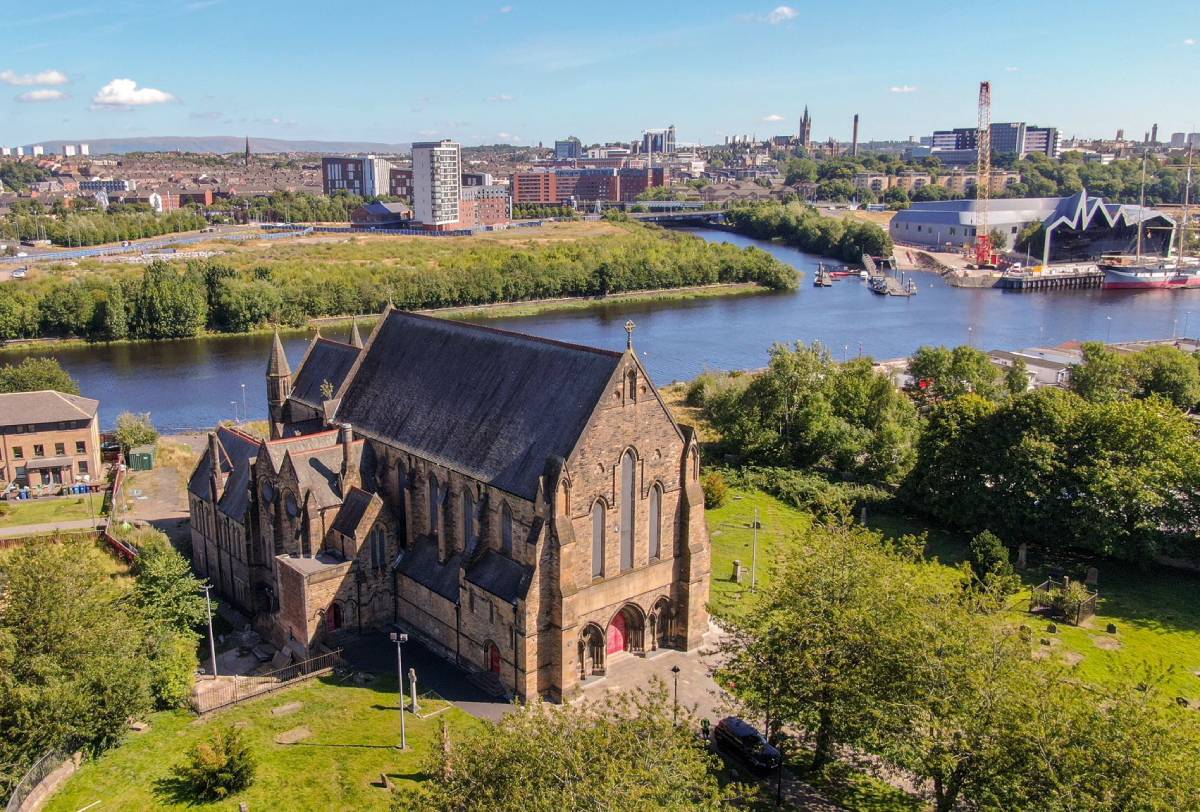
The majestic Govan Old church viewed from the sky. Photo: eyeintheskyglasgow.com
Reconnecting Govan
Shortly before the pandemic, the heritage trust raised enough funds to make Govan Old more visitor-friendly, with toilets and wheelchair access.
During the unexpected hiatus, prices have risen, and now more money is required, which Driscoll is confident of finding. In the meantime, while continuing to explore on the ground, his team is making connections with nearby Fairfield Heritage, where the history of Govan's shipbuilding industry is on display.
Both are a short walk from Govan subway station, on Glasgow's charming Clockwork Orange metro network. This also takes you across the Clyde to Partick, where the award-winning Riverside Museum also focuses on the history and development of the city's waterway. By 2024, a pedestrian bridge will link the two communities.
Given the fact that Govan Old has already been attracting 15,000 visitors in previous summers, and the huge rise in interest in Viking culture, this group of local enthusiasts and volunteers seem to have timed their rescue mission perfectly.
Govan Stones, 866 Govan Road, Glasgow G51 3UU. For tours and other information, contact +44 141 445 2340/[email protected]. Govan subway station. Open April 1-October 31, daily 1pm-4pm. Admission free, donations welcome.
We get to provide readers with original coverage thanks to the support of subscribers to The Viking Herald's Facebook page. Do you enjoy our work? You can SUBSCRIBE here or via our Facebook page. You'll get access to exclusive content and behind-the-scenes access.
Feel free to reach out to discuss potential stories that may be in the public interest. You can reach us via email at [email protected] with the understanding that the information you provide might be used in our reporting and stories.