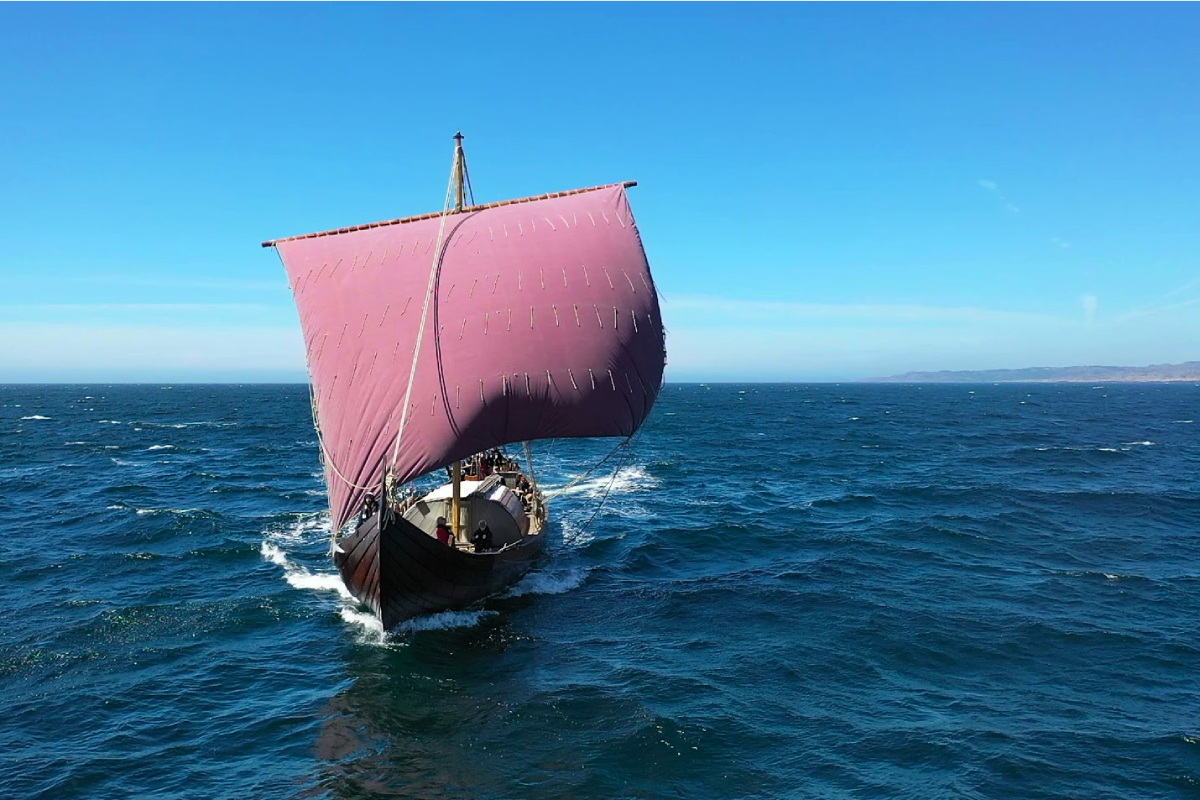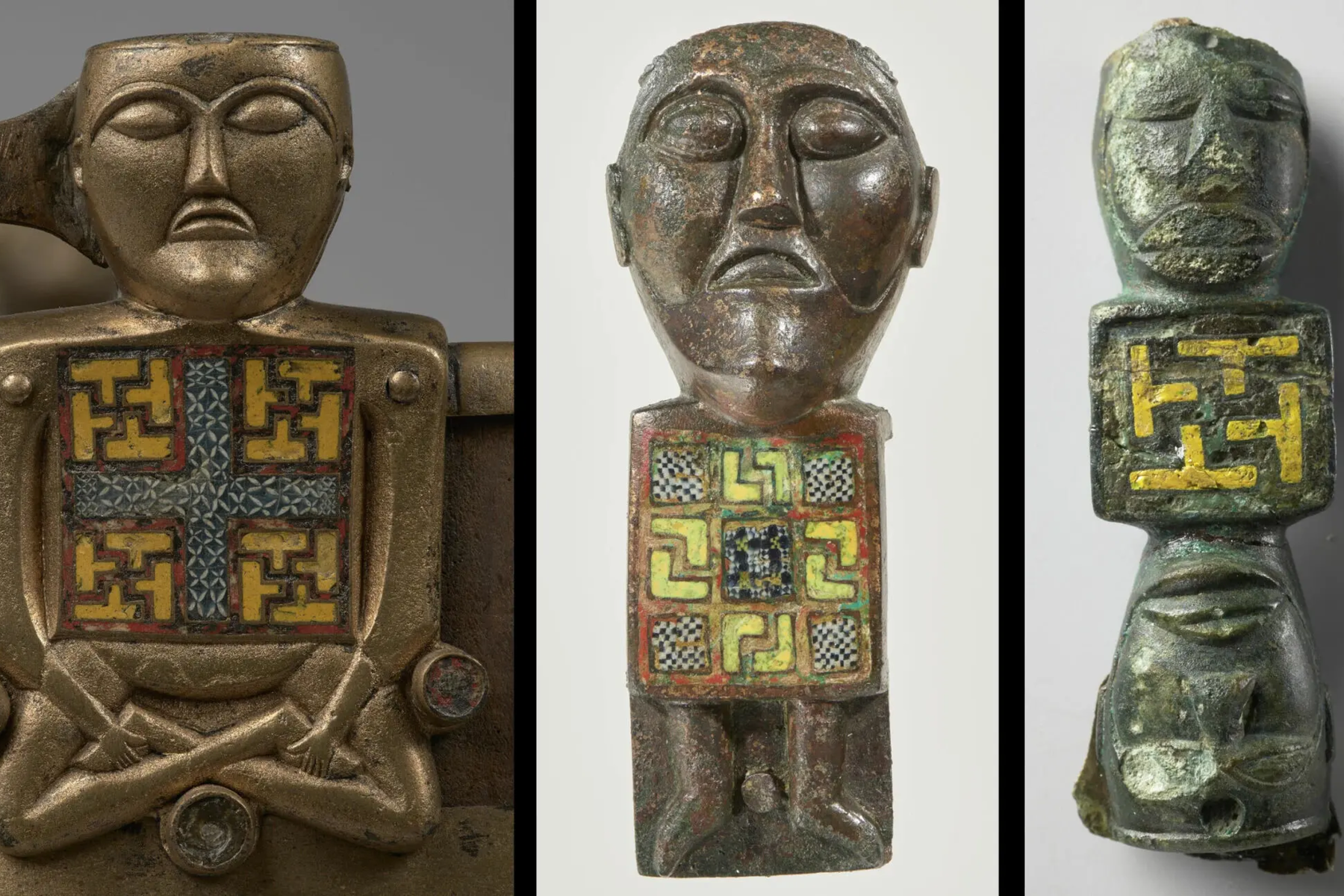


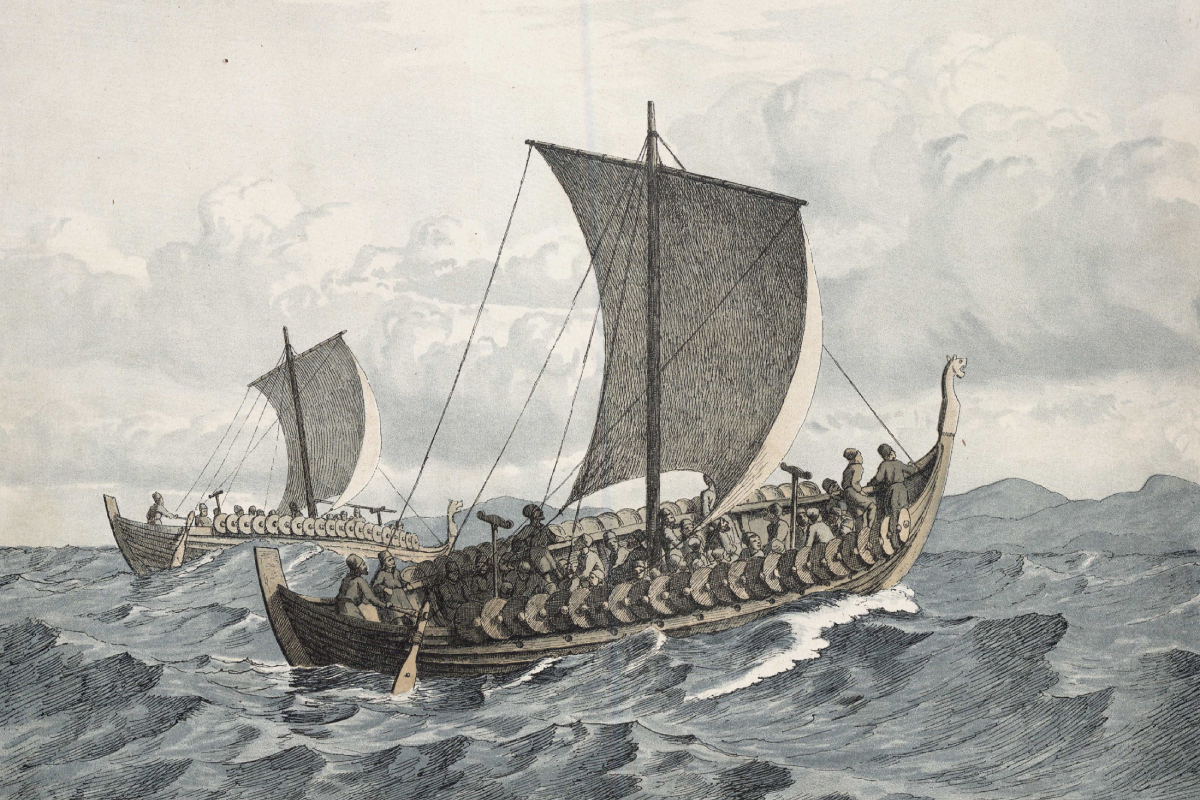
In 1867, Professor Oluf Rygh found himself on a farm in what was then a small village called Tune, located in southeastern Norway.
This area of the then-union of Norway and Sweden was renowned for its agricultural output and not exactly the sort of place you’d expect to find an early medieval artifact.
However, nestled among the cows and chickens, Professor Rygh began the excavation of a Viking-era burial mound. He soon uncovered the remains of a type of Viking longship, a karvi (sometimes spelled karve in modern Norwegian), that was believed to have been built in the early 10th century CE.
At first glance, Tune, nowadays part of the bustling tourist-favorite city of Fredrikstad, may not have seemed like a likely Viking hotspot.
However, looking at a map of Norway, you’ll see that this region of the country lies on the shores of the Oslofjord and is within striking distance of Viking settlements on the other side of the fjord, as well as further south in what is now Sweden.
This strategic location saw it become a place where a local ruler could amass enough wealth and fortune to warrant the ritualistic burial of a Viking ship in their honor.
Whilst the identity of who authorized the burial of the ship is lost to the tides of history, the Tune ship uncovered by Professor Rygh remains one of the finest examples of a karvi, a small but versatile Viking vessel.
Though ship classification is not always precise, both the Gokstad and Oseberg ships are sometimes categorized as larger karvi.
- READ MORE: All you need to know about Viking ships

Discovered in 1867, the Tune ship was the first Viking ship to be excavated and documented by archeologists. Photo: China Crisis (CC BY-SA 2.5)
The perfect piece of naval technology
The Viking expansion, during the early medieval period, was one of the most unlikely yet remarkable events in world history.
That a seafaring people from the far north, viewed by Christian chroniclers as barbarians and pagans, could suddenly and often violently appear on the horizon struck fear into coastal and river-bound communities from the Iberian Peninsula to the Black Sea and everywhere in between.
Carl Olof Cederlund points out, in his 2011 article in the Journal of Maritime Archaeology, that the unfortunate communities suffering at the hands of the Vikings saw these warriors as fierce sea wolves, striking like lightning to raid, ransack, and pillage communities of their riches and their weak.
Not only did this lead to deep spiritual and religious anxiety, with a general consensus among scholars and clergy that these warriors were instruments of God’s wrath for the sins of Christian Europe, but it also caused puzzlement over their ability to carry out rapid raids and vanish in the blink of an eye.
The secret to their success lay not in any celestial makings but in the handiwork and design of the shipbuilders in Viking societies.
A particular ship, the karvi, was a perfected and highly advanced piece of naval technology that not only allowed Viking warriors to launch lightning raids and attacks all over Europe and beyond, but also fostered economic trade and commerce in the very societies that produced these feared warriors.
The secret to its success lies in its very structure.
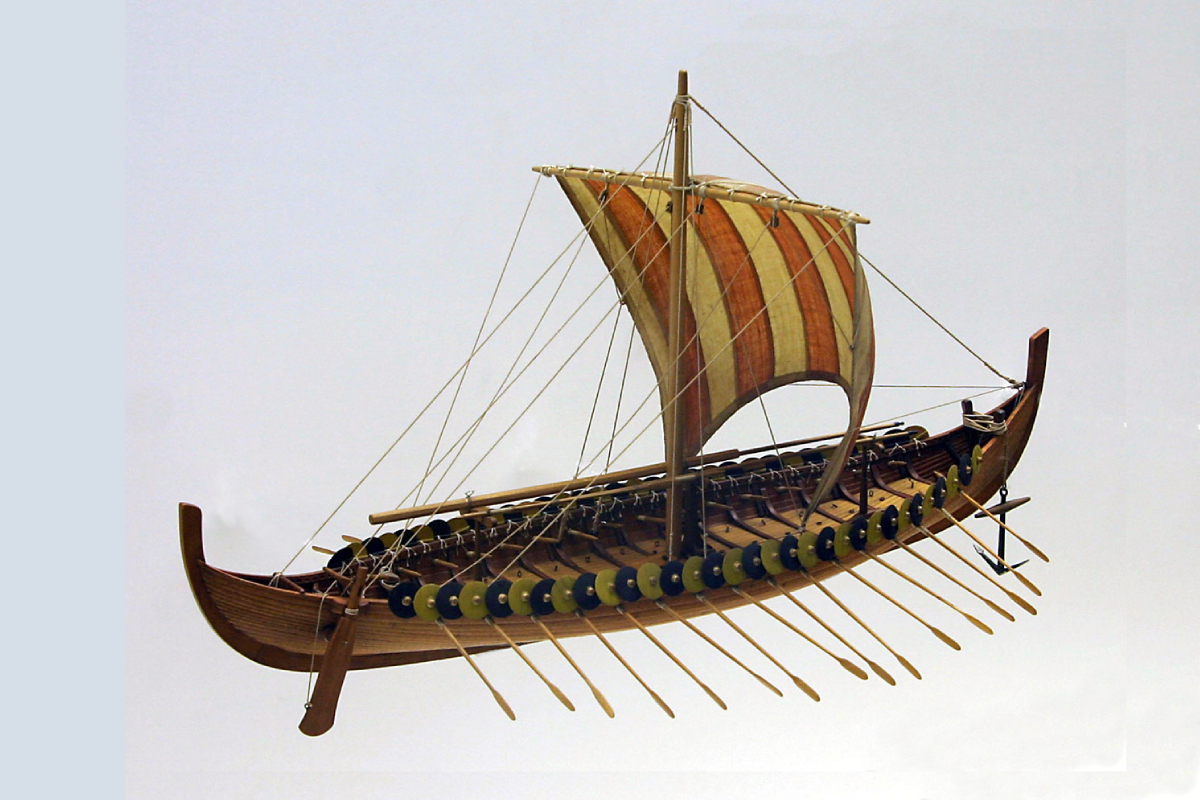
A scale model of the Gokstad ship, commonly interpreted as a large example of a karvi. Source: Softeis (CC BY-SA 2.5)
A versatile mode of transport
Like all Viking-era longships, the karvi was “clinker built.” This construction method, unique to Scandinavian boat and shipbuilding, involved the deliberate overlapping of planks of wood, mostly oak or pine.
The resulting design gave the ship a lighter weight (as it had less internal framing than other ships), along with a lower center of gravity and greater stability.
With ample space for rowers as well as a square sail, a karvi could harness both wind and manpower to move swiftly.
Depending on its size, a karvi typically featured between 6 and 16 pairs of oar holes, allowing it to be rowed efficiently when winds were unfavorable or during inland navigation. Its ability to travel against the tide or upstream made it capable of penetrating deep into enemy territory.
Thanks to this blend of speed and stability, many karvi vessels reached destinations ranging from the rough seas of the North Atlantic Ocean to the shallow, rocky rivers winding between the Baltic and Black Seas.
Adding to the ship’s adaptability was its size. It was never meant to be an imposing Viking ship like a drakkar, and was always constructed between 6 and 22 meters (20 to 71 feet).
As Knut Paasche wrote in his 2020 article in the International Journal of Nautical Archaeology, the karvi uncovered in Tune by Professor Oluf Rygh more than a century ago, for example, was on the larger side, being about 21 meters (71 feet) long.
Whoever had it commissioned and/or buried must have been a person of immense status and wealth, a true Viking Age elite.
The design of the ship allowed the karvi to be one of the most versatile modes of transport in the Viking Age, somewhere between a modern truck and an armored personnel carrier.
It was just as at ease ferrying livestock or goods on the ocean or downstream as it was carrying heavily armed Viking warriors hellbent on marauding and looting.
That same versatility helped make the karvi one of the most commonly constructed styles of Viking ships throughout the entire early medieval period.
Symbolic as well as a practical value
Whilst you may be forgiven for thinking that such a ship, probably a common sight for many Viking communities throughout the early medieval period, was rather mundane and overlooked, the exact opposite is true.
These ships were essential to the functioning of Viking societies, allowing immense wealth—stolen or earned—to flow back into the Viking heartland of Scandinavia.
It was with this great respect and reverence that the karvi was buried near Fredrikstad more than a millennium ago. Aside from its daily functioning as a mode of transport for either goods or warriors, the ship was also steeped in Viking spirituality.
Whoever commissioned the ship to be buried in that mound in Tune was also using it as a symbol for the journey into the great unknown—the afterlife. Whilst we may never know who commissioned the Tune karvi or sailed upon it, we can admire the beauty and design of the vessel that was the backbone of the Viking expansion.
For more information on the archeological excavations of Viking ships, including the one at Tune, head to the Viking Ship Museum in Roskilde’s website here.
We get to provide readers with original coverage thanks to our loyal supporters. Do you enjoy our work? You can become a PATRON here or via our Patreon page. You'll get access to exclusive content and early access.
Feel free to reach out to discuss potential stories that may be in the public interest. You can reach us via email at [email protected] with the understanding that the information you provide might be used in our reporting and stories.