

Who doesn't love a good story, right? Well, one man who certainly did was a 13th-century Icelandic poet, politician, and saga extraordinaire, Snorri Sturluson.
He is credited with the rich tapestry of the Norse legends, myths, stories, and sagas. Whilst he did not originate the sagas, he was responsible for their transcription onto the page... well... parchment.
He was the man who helped compile the sagas into broad thematic collections. We have his famous Eddas—one mainly focusing on poetry and the other on prose.
He also bequeathed us the Heimskringla—a potted history (heavy on literary color but not necessarily on truth) of many of the legendary and historical monarchs of Scandinavia, harking back to the early medieval origins of these kingdoms.
Whilst we are indebted to Sturluson for collecting these once-oral tales and overseeing their transcription—especially we who write at The Viking Herald—Sturluson left a surprising amount of detail out of these sagas.
As Theodore M. Andersson writes in his 1994 article in the Journal of English and Germanic Philology, Sturluson had a "predominant position in the classic saga writing of medieval Iceland."
Often, the Norse sagas that have been handed down to us, thanks to Sturluson, are seen as a complete collection. This is not the case, however, and we need to think of the sagas as sort of "Sturluson's Greatest Hits."
Whilst the Viking era tales and stories Sturluson helped compile have survived the test of time and enthralled countless generations, we now focus on what Sturluson left out and what this tells us about the man behind the myths.
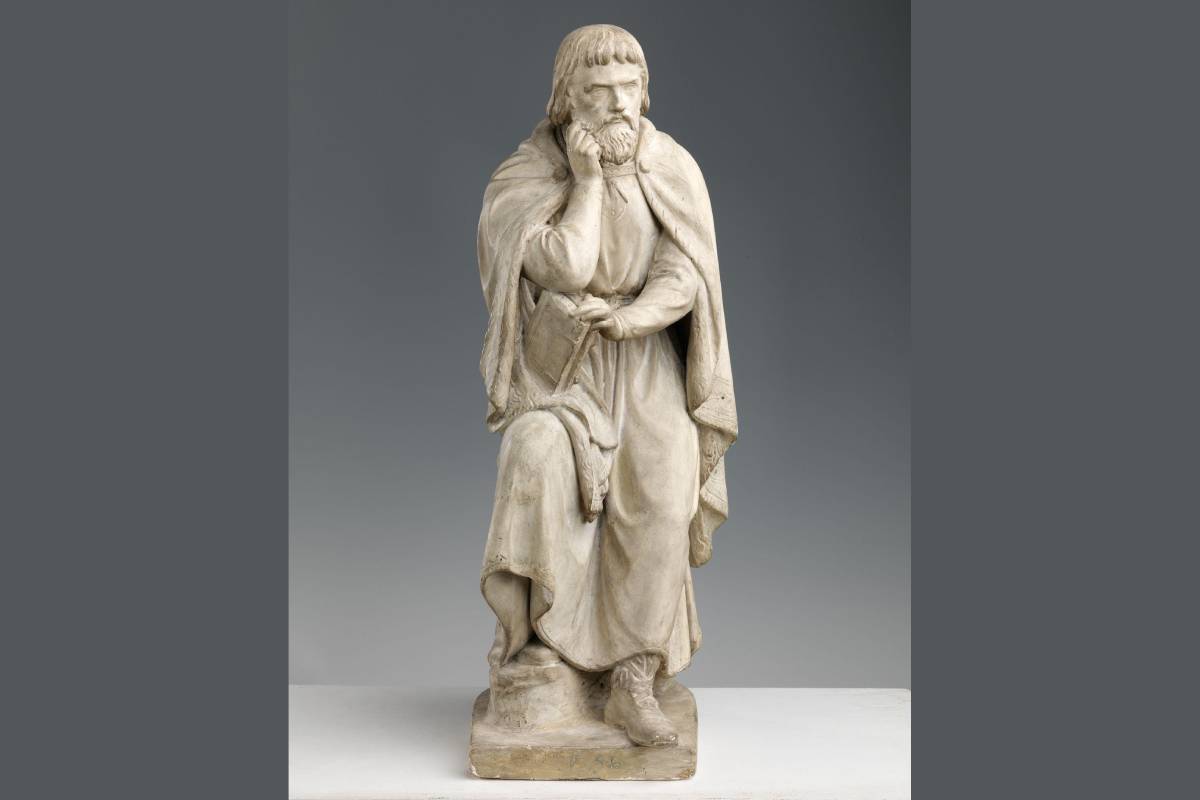
A plaster figure of Snorri Sturluson by Norwegian sculptor Christopher Borch. Source: National Museum of Art, Architecture and Design (CC BY-SA 4.0)
The heavy influence of Christian "whitewashing"
The myths that Snorri Sturluson helped to compile and popularize were based upon oral traditions that stretched back into the early medieval period.
Sturluson was compiling these legends and myths in the 13th century. Now, depending on how you date it, this was at least, a good century and a bit after the end of the Viking Age.
Running concurrently with the history of people from Viking societies was the advent and proliferation of Christianity in these societies.
Many scholars have pointed out that it was the Christianization of Scandinavia, specifically the elites, that put a stop to all that Viking raiding, ransacking, and ravaging.
Sturluson was overseeing the compilation of the Norse sagas in 13th-century Iceland, which was a Christian society.
As such, he had a vested interest in either portraying the Old Norse religion or the spiritual beliefs of people from Viking societies as barbaric and gruesome.
Christian values—like monotheism and sexual restraint—flew in the face of the old ways of Viking society. Furthermore, any sort of pagan ritual or magic—think the mysterious Seiðr that was said to be a feature of Viking society—was seen as unholy.
In response, Sturluson produced a watered-down version of many of these aspects in the sagas.
There are sexual, magical, and ritualistic overtones in the sagas, but Sturluson knew his audience and thus had to tone much of the content down.
Not for the first time in history, Christianity proved a whitewash over many of the much more lascivious, juicy, and (dare we say) interesting tales of old.
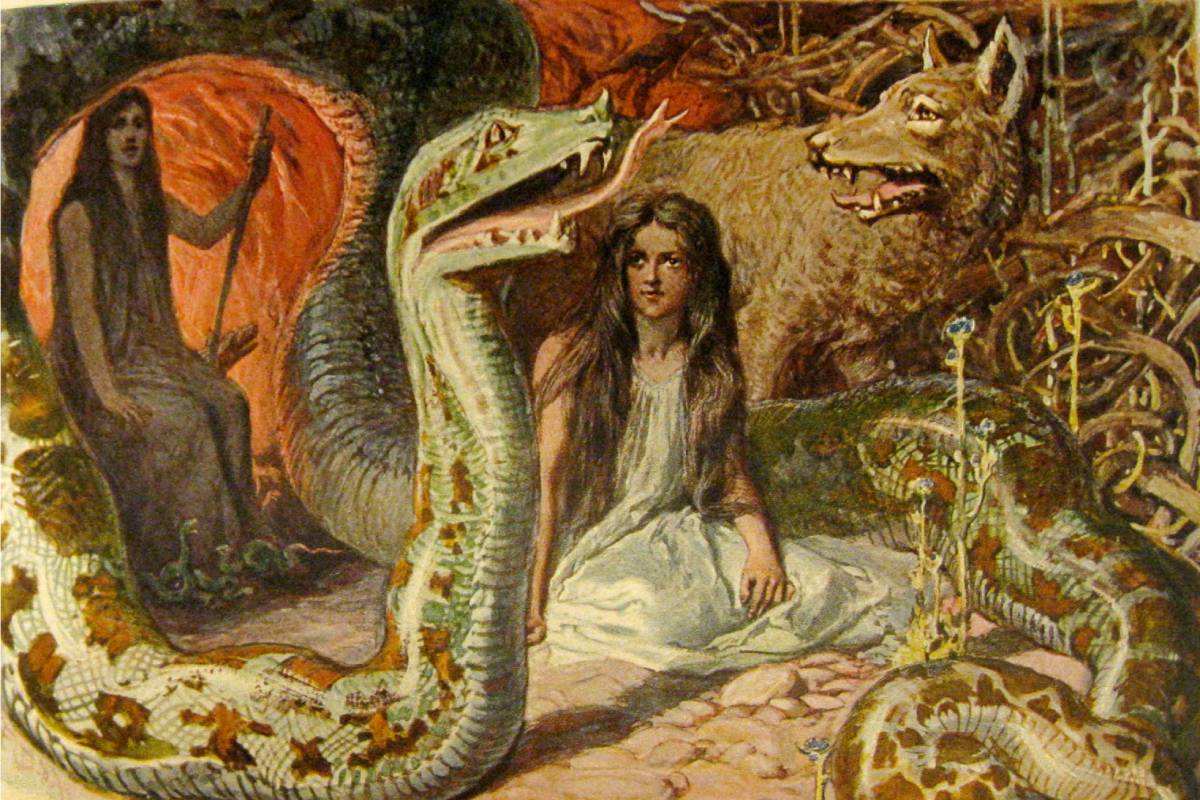
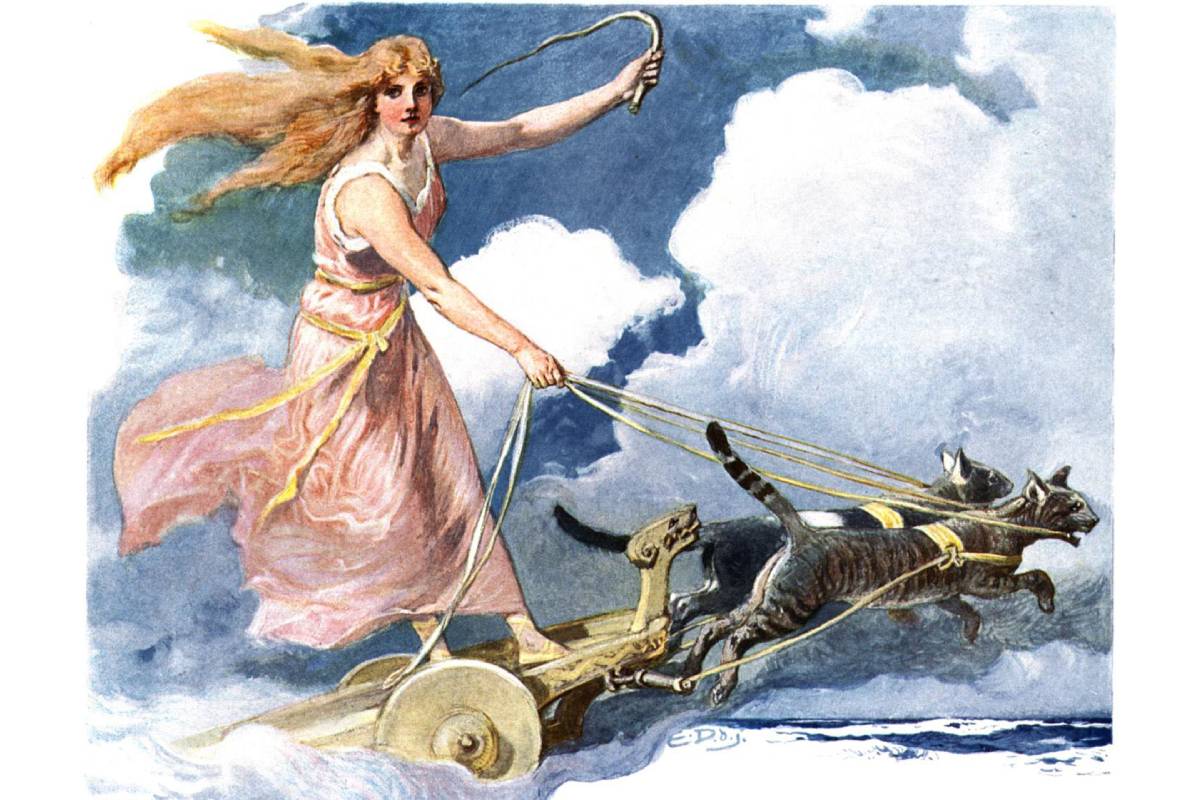
Depicted here with her monstrous siblings, Hel's complexity and authority were downplayed in Snorri's retellings. Source: Emil Doepler (1855–1922)
Editing her story
There is no doubt that any medieval Christian society was, by our modern standards, deeply misogynistic and sexist. Sadly, history tells us that being a woman in any era, even our own, is a hard task.
The early medieval period, however, was one in which women had little agency or power.
The powerful political and religious leaders in this period, all male, saw to it that this would remain the case for centuries, and women remained marginalized members of society.
Let us look at the example of a rare, powerful female figure in the sagas, the goddess Freyja.
Aside from her more ancient role as a fertility deity, she was often associated with a potent mix of sexuality, war, and death. Her magical abilities are downplayed by Sturluson, and she becomes little more than a passive object of desire.
Another female character he changed was Hel, the ruler of the Norse underworld. She was said to represent death as an inevitability, a far more ambiguous fate than that of Christian doctrine.
Sturluson appears to twist her role and sovereignty. He makes her kingdom—Helheim—appear as a shameful place for the dead while minimizing her power as a ruling monarch.
The list goes on and on, as Sturluson has minimized or edited powerful female figures in his compilation of Norse sagas.
Imagine if we knew more about the role of Idunn as a life-giver, a sacred deity whose magical apples are sadly more known than she is, or if we knew more about Gullveig, whose thrice death and rebirth sparked the Æsir–Vanir war.
As Auður Magnúsdóttir writes in her 2017 article in the journal The Northern World, "women seldom figure as political agents in the saga..."
This reduction of female figures helped ensure that these tales reflected the patriarchal view of the society Sturluson was writing in.
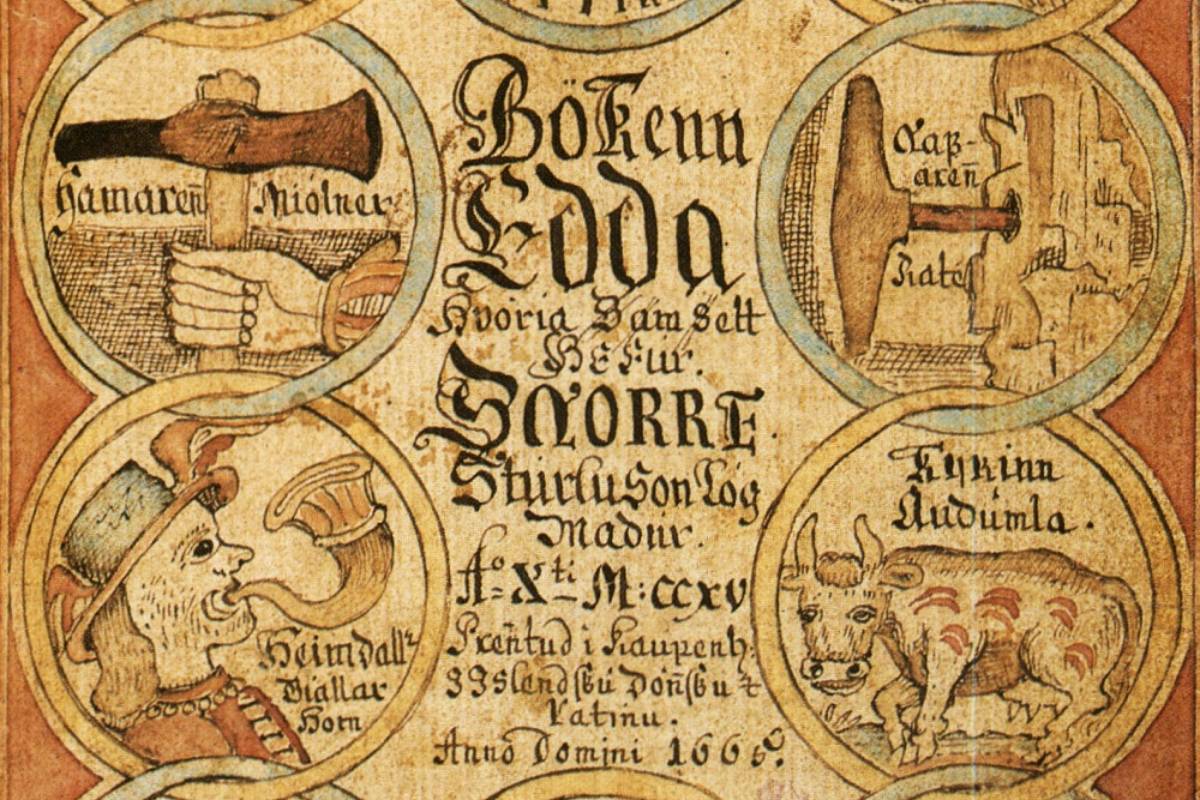
Snorri's Edda became a cornerstone of Norse literature, but not all stories made it through his editorial filter. Source: Public domain
The rich tapestry is poorer for the omissions and edits
Little did Sturluson know that so much power lay in his hands.
With the benefit of foresight, we can see that Sturluson became the ultimate judge of which sagas would be passed down through posterity and how the characters therein would be presented.
Writing in a heavily Christian and patriarchal society, he likely adjusted these sagas to fit in with contemporary views, attitudes, and morals.
Who knows what other sagas and stories didn't make it into "Sturluson's Greatest Hits"?
It is likely that there were many other tales that people in Viking societies told one another to while away those long, cold Scandinavian winters.
As much as we praise Sturluson for all his work, we should also softly chide him for what he left out and what he edited. The rich tapestry of the Norse sagas is all the poorer for it.
For more information on Norse mythology, visit Science Norway here.
We get to provide readers with original coverage thanks to our loyal supporters. Do you enjoy our work? You can become a PATRON here or via our Patreon page. You'll get access to exclusive content and early access.
Feel free to reach out to discuss potential stories that may be in the public interest. You can reach us via email at [email protected] with the understanding that the information you provide might be used in our reporting and stories.