


Modern historians get into heated debates, as heated as historians' debates can get, about the origins of the Viking Age.
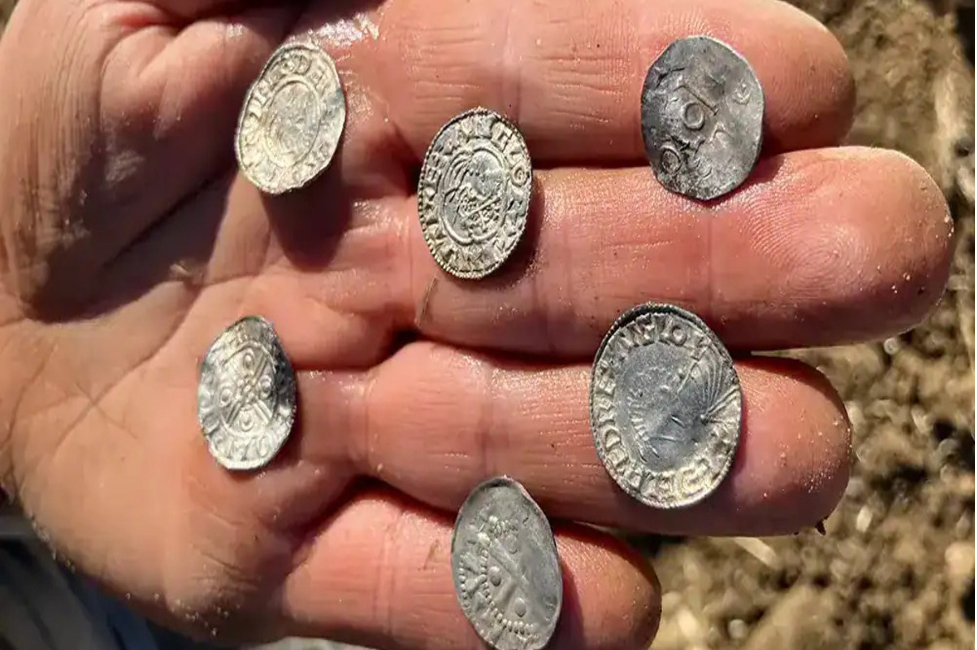
Recent archeological excavations have uncovered the transportable wealth that was looted and pillaged by Vikings, then buried for safer times, but never reclaimed.
Their loss is our historical gain, as this buried treasure offers rare insight into the material culture of people from Viking societies.
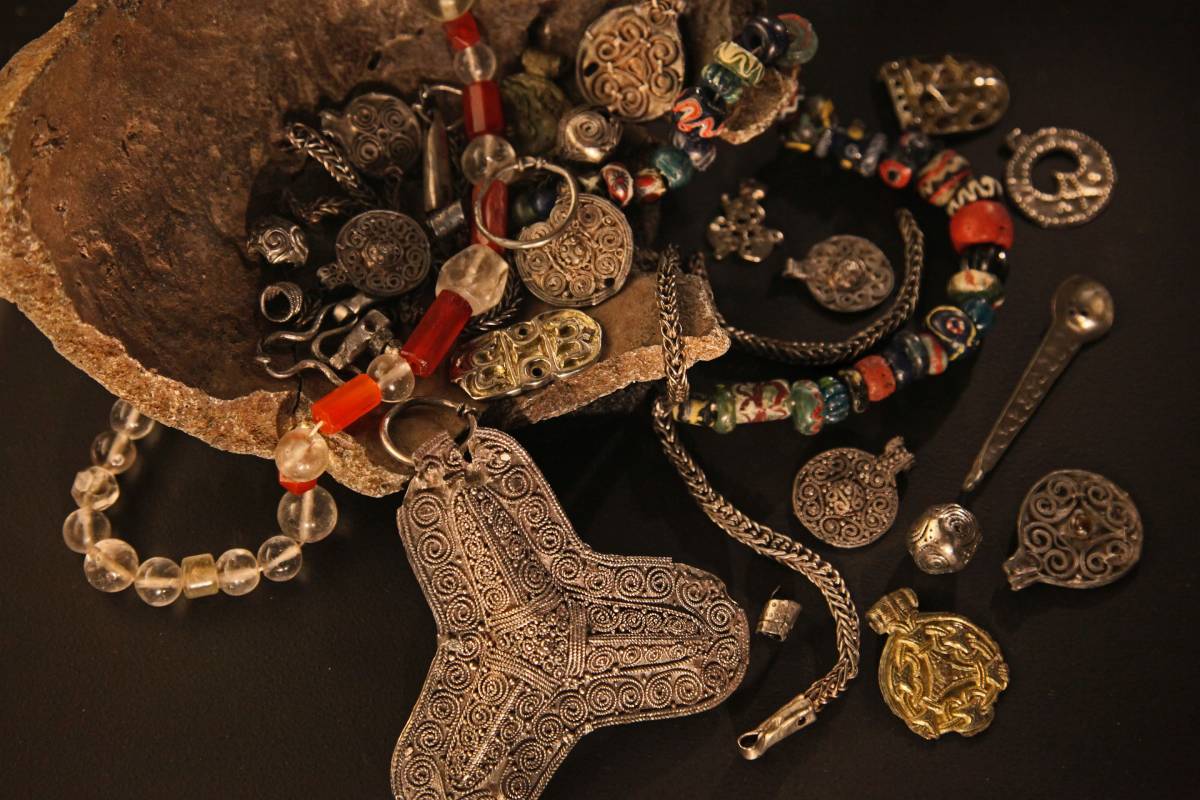
Aside from coinage, jewelry is the most frequently dug up precious item that speaks to us from the early medieval period.
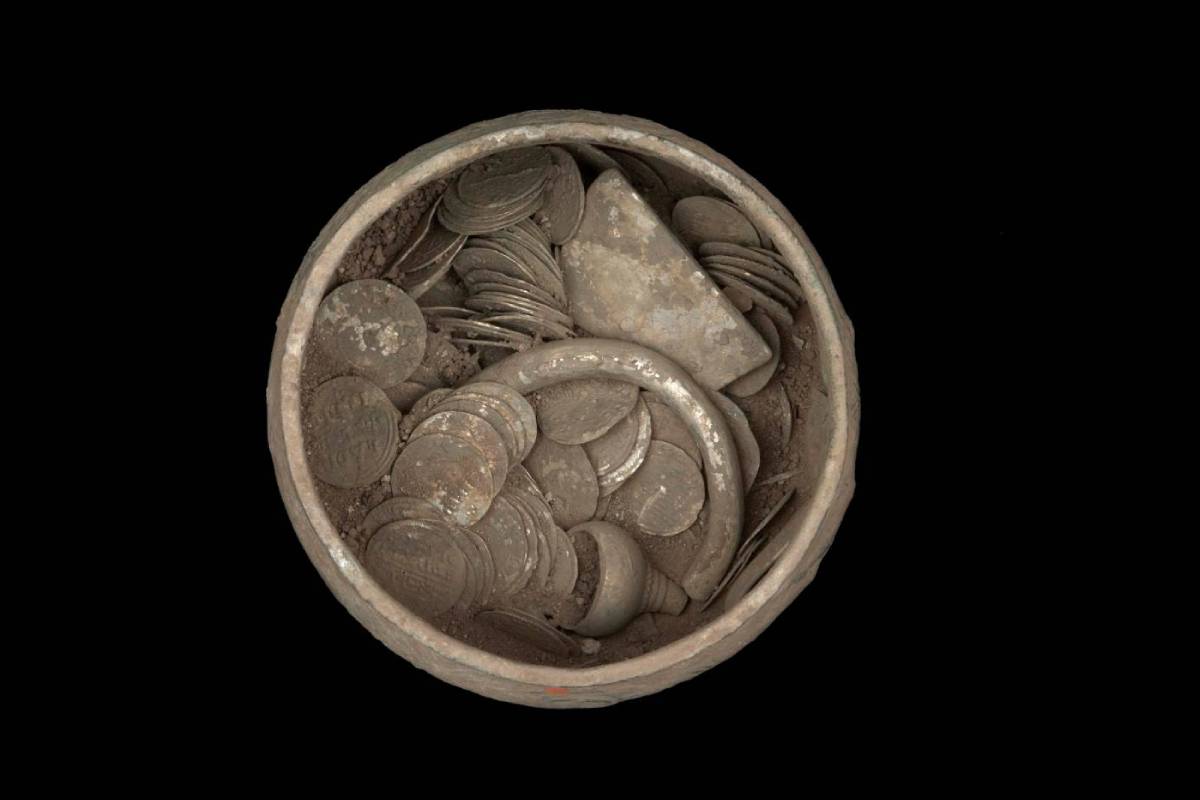
Some of the clearest snapshots come from hoards, such as the Spillings Hoard on Gotland, Sweden, and the Cuerdale Hoard in Lancashire, England, which preserve coinage, ingots, and jewelry together in one deposit.
The Oseberg ship burial yielded a remarkably preserved ship, the last resting place of two women whose identities remain unknown, and a large set of grave goods.
A key-object list for the upcoming Museum of the Viking Age notes 61 beads made of glass, amber, carnelian, jet, and rock crystal from the Oseberg burial. This spoke to the high status, wealth, and power of the individuals buried here and how power and prestige were not limited solely to men.
Across the border in Sweden, at Birka, necklaces, a tortoise brooch, and silver pendants have been uncovered, which speak to the international trade links with the wider world that saw precious materials sourced from across the Baltic, southern Europe, and even as far as the Silk Roads.
These finds illustrate how jewelry was not only important to be worn in life but could also be carried into death.
For people in Viking societies, jewelry functioned not only as portable wealth and fashion items but as societal signals, educating us moderns from the distance of more than a millennium.
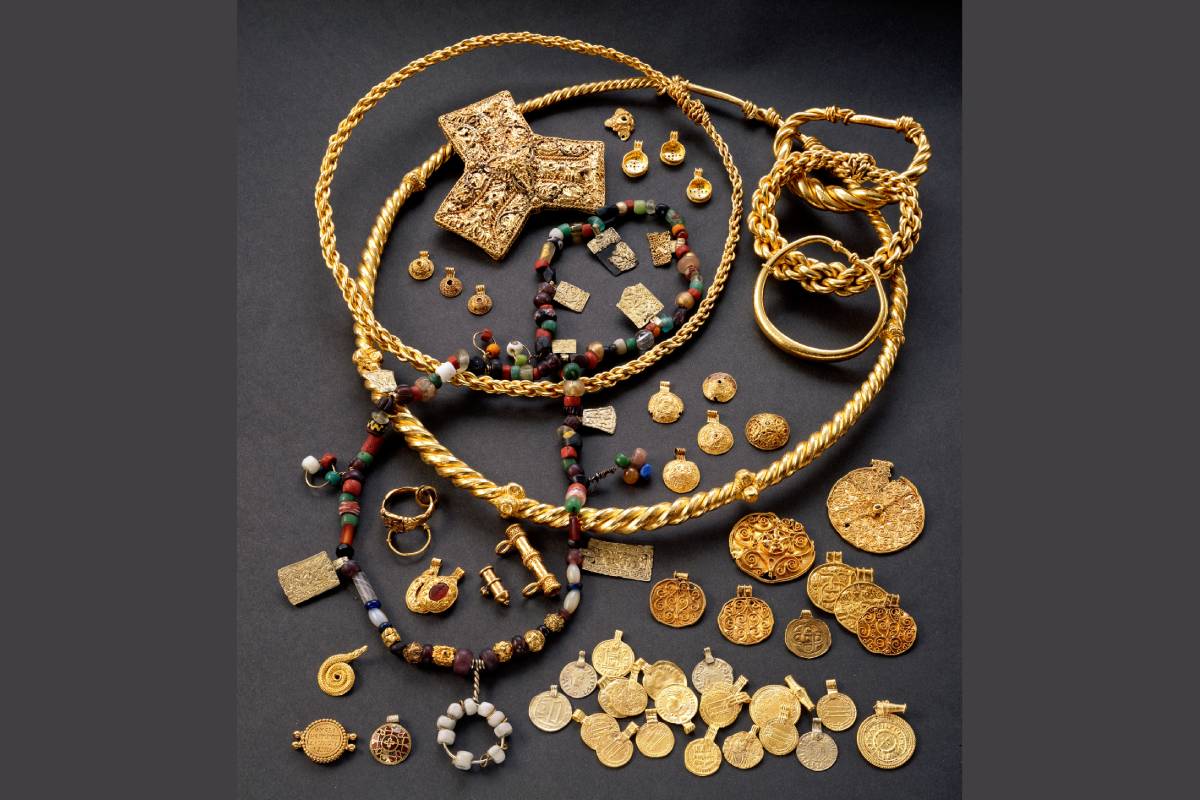
Selected objects from the Hoen hoard, Norway's largest known Viking Age gold hoard. Photo: Ove Holst / Kulturhistorisk Museum (CC BY-SA 4.0)
Materials often defined social standing
In an era long before Amazon, Shein, or Temu, the jewelry that people from Viking societies wore was anything but fast fashion.
To understand what it was made of, we must first look at social status. As evidenced by archeological digs across much of the Viking world, jewelry appears across a wide range of contexts and social levels.
For those at the very top of society, they had the best access to expensive imported jewelry, obtained through trade, gift exchange, or force, with some materials and styles reflecting links that reached as far as the Byzantine Empire and parts of the Islamic world.
Elite jewelry also turns up as complete gold ensembles, such as the Hiddensee treasure, which includes pendants, a brooch, and a neck ring, with both Thor's hammer and cross motifs in the set.
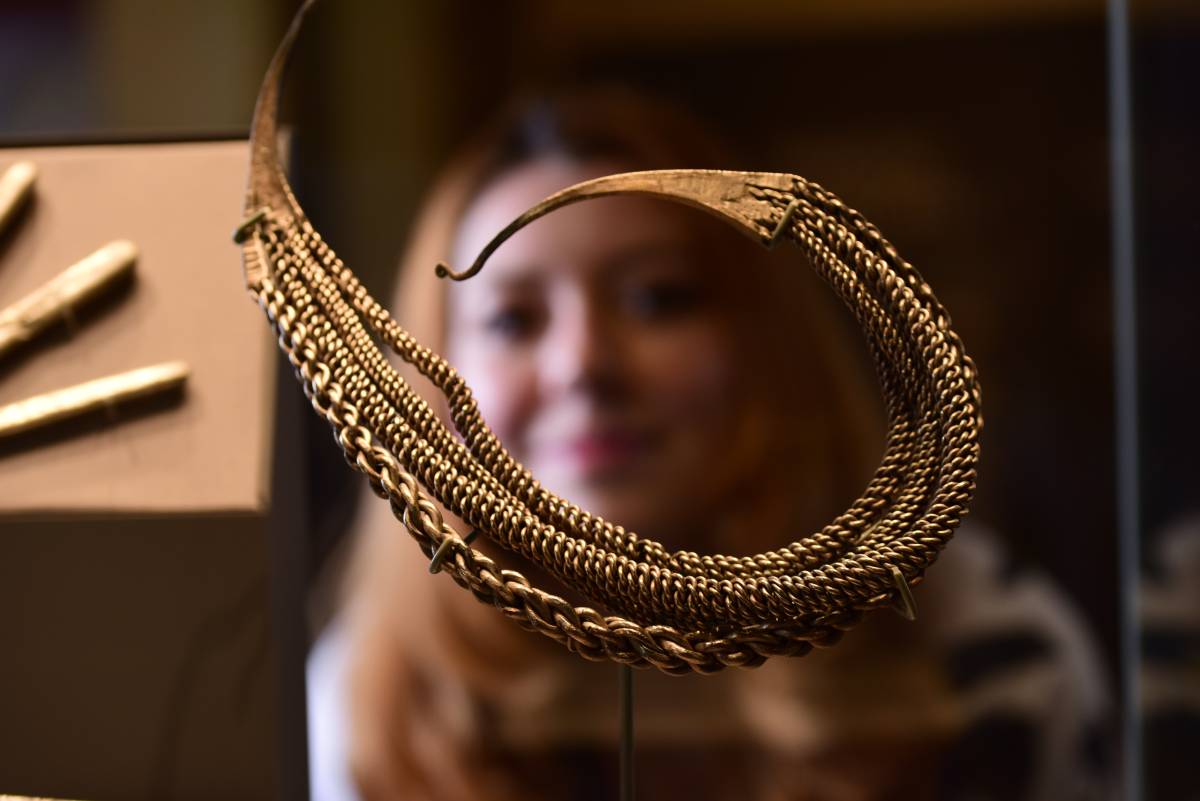
Elite items could also be crafted in precious metals, sometimes with imported beads and costly stones. From heavy arm rings to intricate pendants and rings, these were items made to impress and assert authority and power.
Those less well-off often owned less expensive silver or bronze jewelry, like brooches or pendants, and more plainly designed rings.
These items tended to show a sense of something akin to an early medieval version of middle-class respectability rather than overt displays of wealth and power.
Here may lie the origins of Scandinavian minimalist design that we all know and love today.
Finally, those scratching around at the very bottom of the Viking social hierarchy still wore a surprising amount of jewelry. These were often handcrafted from simple materials, like wood or bone.
Inorganic materials were also used and recycled, like metal from weapons or nails. These could be fashioned into simple items like pendants or used to signify their religious beliefs or spiritual outlook, whether Norse (Thor's hammer) or Christian (crucifixes).
Despite their rough character, jewelry was as important for these less powerful members of Viking societies.
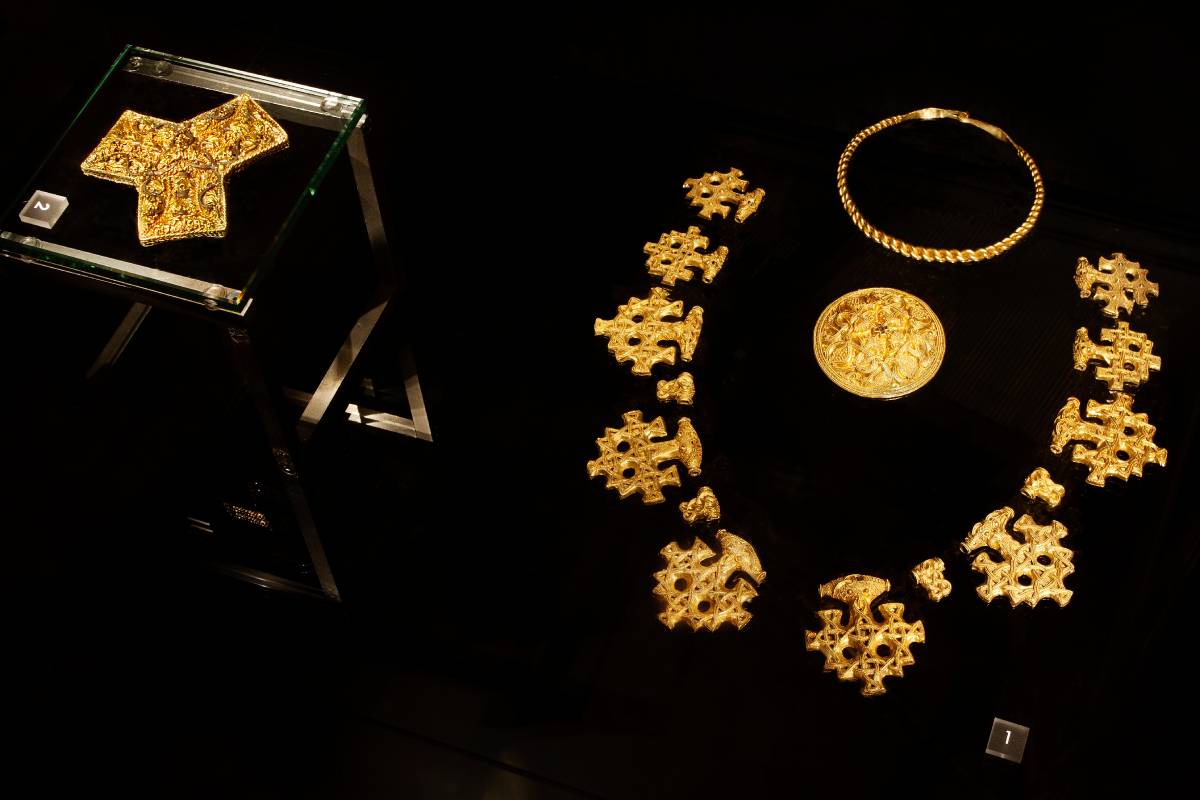
A selection of items from the Hiddensee treasure, with pendants laid out beside other gold fittings. Photo: The National Museum of Denmark (CC BY-SA 2.0)
The relationship between jewelry and power
Now that we have covered the materials of Viking jewelry, we must turn to the meaning.
We know that the rich and powerful in Viking society, like any society in world history, including contemporary ones, liked to assert their power and influence through ostentatious displays of expense and wealth.
As Jane F. Kershaw writes about in her 2013 book, Viking Identities: Scandinavian Jewellery in England, the "...form, decoration and distributions of ... [jewelry] can ... reveal social and cultural values."
Whilst Viking rulers, and later monarchs, could not shut down Venice for their wedding or fund space exploration (think Jeff Bezos), they could wear items of jewelry that showed power, wealth, and authority.
The display of expensive jewelry meant that a ruler controlled wealth either through resources, trade, or tribute. Or it could also mean they were handy with a sword or an axe and had acquired the jewelry through less peaceful means.
Yet there was another side to the acquisition of expensive jewelry by the powerful and elite of Viking society. It could be used to forge friendships and political alliances and to shore up support.
The pursuit of precious jewels was one factor that helped drive Viking expansion throughout the early medieval period.
The booty taken was divided up by the warriors, albeit after the ruler or man in charge (and it was almost always a man in this hyper-masculine society) had taken the best parts.
Jewelry was then often redistributed by the ruler (or later monarch) as gifts, and this bound the ruler to the receiver. Alliances could be formed between political rivals or powerful warriors through this redistribution of jewelry.
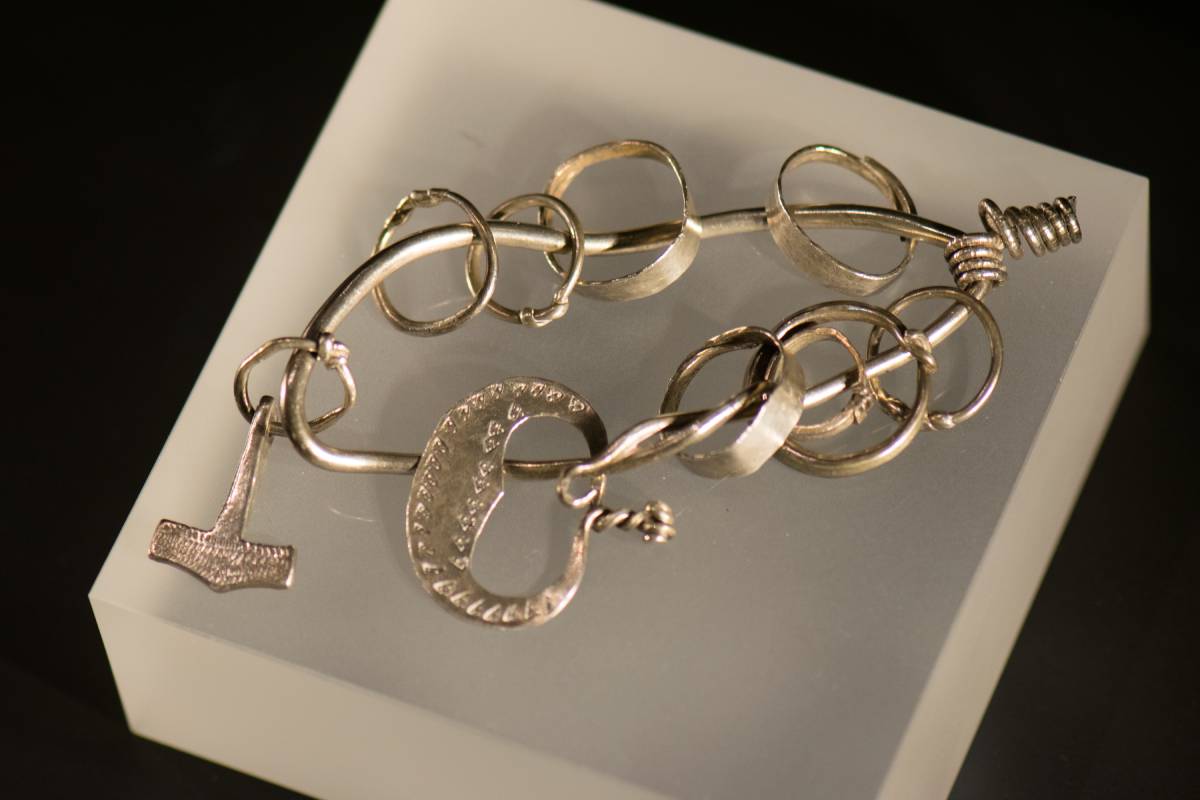
A bracelet with a Thor's hammer charm, a common Norse symbol used in personal jewelry. Photo: Thomas Quine (CC BY-SA 2.0)
The gift-giving of Olaf Tryggvason
A great example of this, and an interaction between the social classes, can be found in the Saga of Olaf Tryggvason.
In an online version (based upon the 1844 English translation by Samuel Laing), Olaf Tryggvason, whilst conducting a raid in Ireland, forages for resources and comes across a peasant when:
"Olaf then asked the peasant if he would sell him the dog. 'I would rather give him to you,' said the peasant. Olaf immediately presented him with a gold ring in return and promised him his friendship in the future. This dog was called Vige, and was the very best of dogs..." [Chapter 35]
Aside from confirming his status as a great human being by being a dog lover, this passage shows how the giving of expensive jewelry, here a gold ring, by a powerful Viking ruler, functioned as a political act.
Here, a simple exchange creates a social bond, illustrating how expensive jewels could be used to secure friendships and alliances.
Played a central role in everyday life in Viking societies
More than merely fashionable decorations, jewelry in the Viking world was used to express status, loyalty, and power, or lack thereof.
Jewelry was integral to the everyday life of people from Viking societies, regardless of their social standing, as it was used as a social currency to signal wealth and identity, even in death.
From the most expensive ornate gold jewelry to humble wooden beads, jewelry played a central role in the everyday life of people from Viking societies and continues to educate us long after the last piece of Viking jewelry was worn.
To see some examples of Viking jewelry, visit the BBC here.
We get to provide readers with original coverage thanks to our loyal supporters. Do you enjoy our work? You can become a PATRON here or via our Patreon page. You'll get access to exclusive content and early access.
Feel free to reach out to discuss potential stories that may be in the public interest. You can reach us via email at [email protected] with the understanding that the information you provide might be used in our reporting and stories.



.jpg)