

In fact, Norway is home to the current Chess Grandmaster, Magnus Carlsen, and several other International Masters. It punches above its weight in chess, and the nation has experienced a chess craze in recent years.
However, this love affair with the board game can be traced back more than a millennium to the early medieval period when it was brought to the country in a very different form from the game Norwegians love today.
Indian and Persian beginnings
Chess has a rich and vivid history with a global footprint that reaches back more than a millennium and a half.
During the 6th century CE, the Gupta Empire ruled over much of the Indian subcontinent and was considered a "Golden Age" (one of many such in India's long and storied history) due to the cultural, scientific, political, and philosophical achievements that took place.
One of these cultural achievements was a strategy game called Chaturanga, played on a board and designed to sharpen the skills of the warrior class and political elites who forged and ruled the Empire.
Despite the Eurocentric view that this period of history was a "Dark Age," this was a time of great empires and civilizational output in Asia.
Neighboring parts of the Gupta Empire was the last pre-Muslim conquest royal house that ruled over what today is Iran, the Sasans who forged the Eranshar (commonly known as the Sassanian Empire).
Trade links between the economic wealth of the Indian subcontinent and their western Persian neighbors flourished during this era, and along with the caravans and merchants came the game of Chaturanga.
This was adopted by the Persian royal court and soon evolved into Shatranj, a Persian alliteration of Chaturanga with a slightly different appearance and rules.
According to Persian folklore, the game was a gift to the Sassanid King Khosrau (531–579 CE) from the King of Kannauj, who ruled over much of the modern-day Indian state of Uttar Pradesh.
Muslim conquests and beyond
One of the most consequential and remarkable periods of early medieval history was the Islamic expansion between 610 and 750 CE.
These early Muslim conquests saw the Islamic religion reach as far as the Pyrenees in one direction and deep into Central Asia in the other.
Following the Arab conquest of the Sassanian Empire in 651 CE, Shatranj was adopted by the new Muslim elite.
It kept its Persian name but was exported throughout the Muslim world, spreading across the Rashidun and then Umayyad Caliphates, from the heart of the Frankish Empire to the banks of the River Ravi, separating modern-day India and Pakistan.
We can thank the Moors, who were responsible for the Muslim conquest of the Iberian Peninsula, for giving the game its modern name.
Rendering the Persian term in their tongue as Shaterej, when it crossed the Straits of Gibraltar to Al-Andalus, the locals there called it Ajedrez.
On the other side of the Mediterranean, the game entered through the Byzantine Empire, where it was called Zatrikion. Eventually, it spread further north, where local languages adapted it with local versions of the Persian name for king, "Shah."
This became Sacchi in Latin, Echecs in Old French, and Chess in modern English.
However, it was not just through the Mediterranean that the game was introduced to Europe.

Vikings used numerous river systems in their expansion into Eastern Europe. Photo: Denis Kabanov / Shutterstock
Varangian trade networks
Almost running concurrently with the Islamic expansion throughout West Asia and the Mediterranean basin was the Viking expansion further north.
Peoples from Viking societies expanded, mostly violently, from the late 8th century CE as far away as Newfoundland, in modern-day Canada, to the shores of the Caspian Sea.
Whilst the westward voyages of these Vikings often get more of the spotlight, the eastern exploits of Vikings across the Baltic Sea and into the many river systems of Eastern Europe deserve just as much attention and credit.
Utilizing these river systems (the focus of a new book by Dr. Cat Jarman, River Kings: A New History of Vikings from Scandinavia to the Silk Roads), they began to dominate a huge swathe of Eastern Europe between the Baltic and the Black Sea.
From the shores of the Black Sea, it was only a short sail to the two economic powerhouses of the Byzantine Empire and the Abbasid Caliphate.
By the early 11th century CE, these economic links and networks saw the northern Viking world connected to southern Europe, West Asia, and beyond to the many Silk Roads that led to India and China.
One of the most important trade routes between the Vikings and their subjugated peoples was the Volga-Caspian trade route that passed through much of what is now Russia.
Here, the Vikings had direct economic and cultural links with the Byzantine Empire, which saw precious metals and silver flow northward while commodities (including slaves) flowed in the opposite direction.
As chess had been introduced to the Byzantine Empire via the Islamic world, it was only a matter of time before these "Varangians" (as the Byzantines called the Vikings) would pick up the popular game and take it northward.
A very Viking version of chess
Not only would the game remain popular in the lands that the Vikings had conquered in Eastern Europe (especially in what would become Russia and Ukraine), but it also became the game of choice for many Viking warriors and elites.
In fact, the Vikings loved it so much that they developed a whole new board game – bearing a striking similarity to chess (a strategy game played on a board consisting of two opposing armies and a "King" piece) – which they dubbed Hnefatafl.
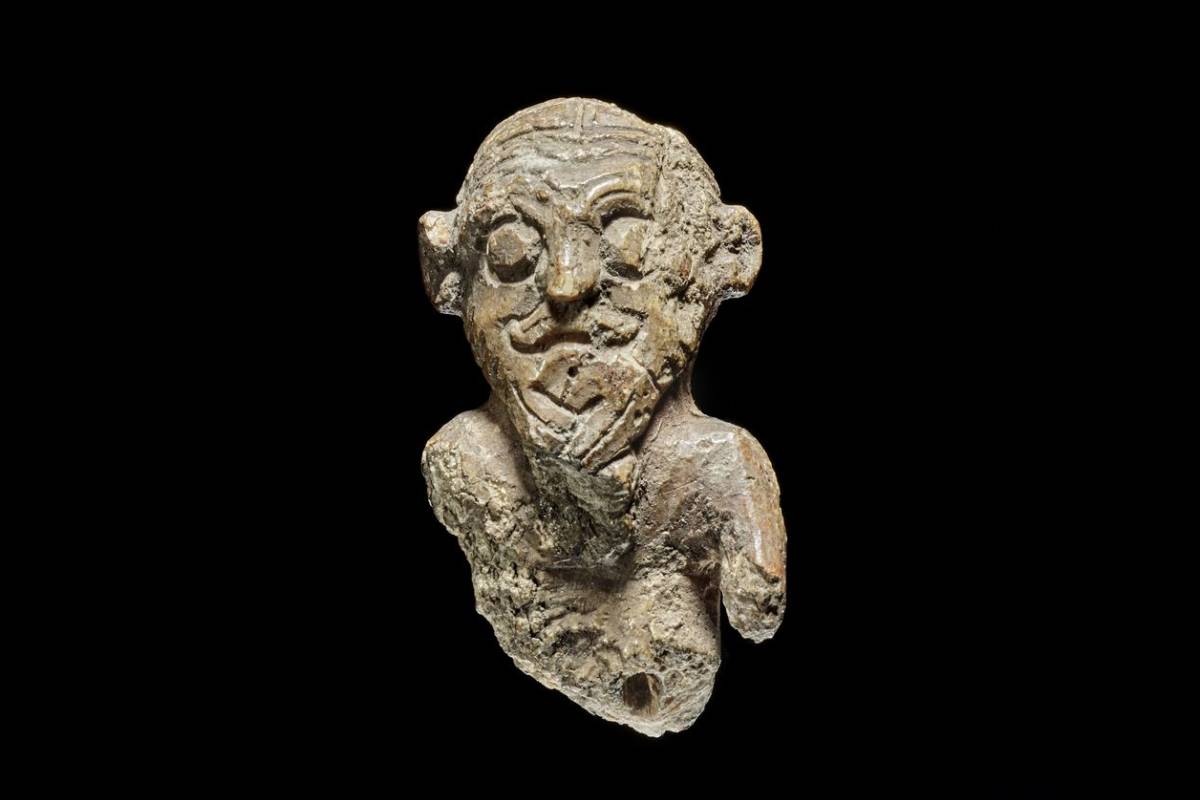
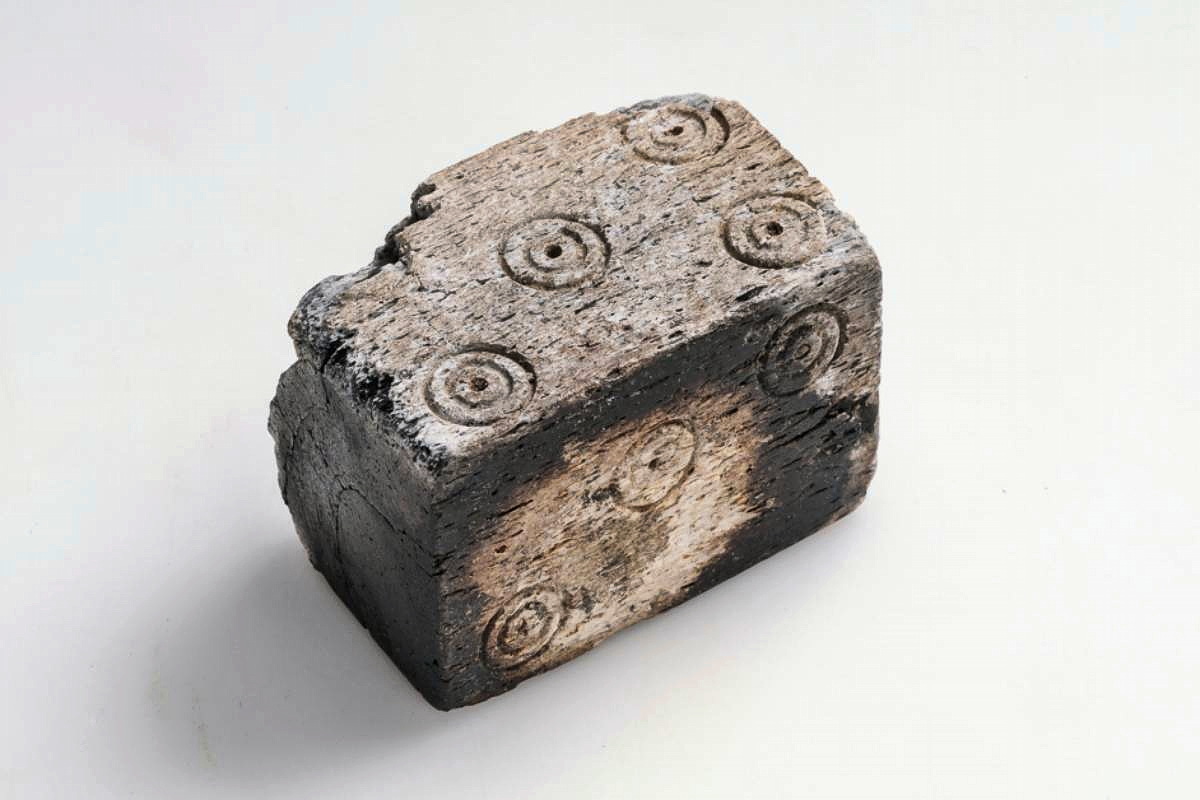
Archeologists have uncovered a wealth of chess pieces buried in Viking-era graves, including some on the Orkney Islands and most recently in Oslo, Norway.
Yet the most famous version of Viking chess was uncovered on the Isle of Lewis, in Scotland, in the mid-19th century CE.
The so-called "Lewis Chessmen" are a collection of 93 pieces elaborately carved from whale ivory, dating from the medieval period.
Radiocarbon dating has only been undertaken on one piece – the warder – which has given a broad estimate of it being carved sometime between the late 13th and mid-15th century CE, centuries after the "end" of the Viking Age (c. 793–1066 CE).
Yet this has not stopped debate on their age. A 2013 article published in the journal Medieval Archeology argued that perhaps four sets of these chess pieces were constructed in one workshop during the early 13th century CE.
Aside from their old age, what makes them so famous is their decorative and aesthetic appeal. Not only is each piece masterfully carved, but the whole set is a marvelous blend of Christian and pagan elements.
This synthesis of elements harks back to a time during the early medieval period when Viking societies saw their inhabitants believe in either the Old Norse gods or the new Christian God or a combination of the two.
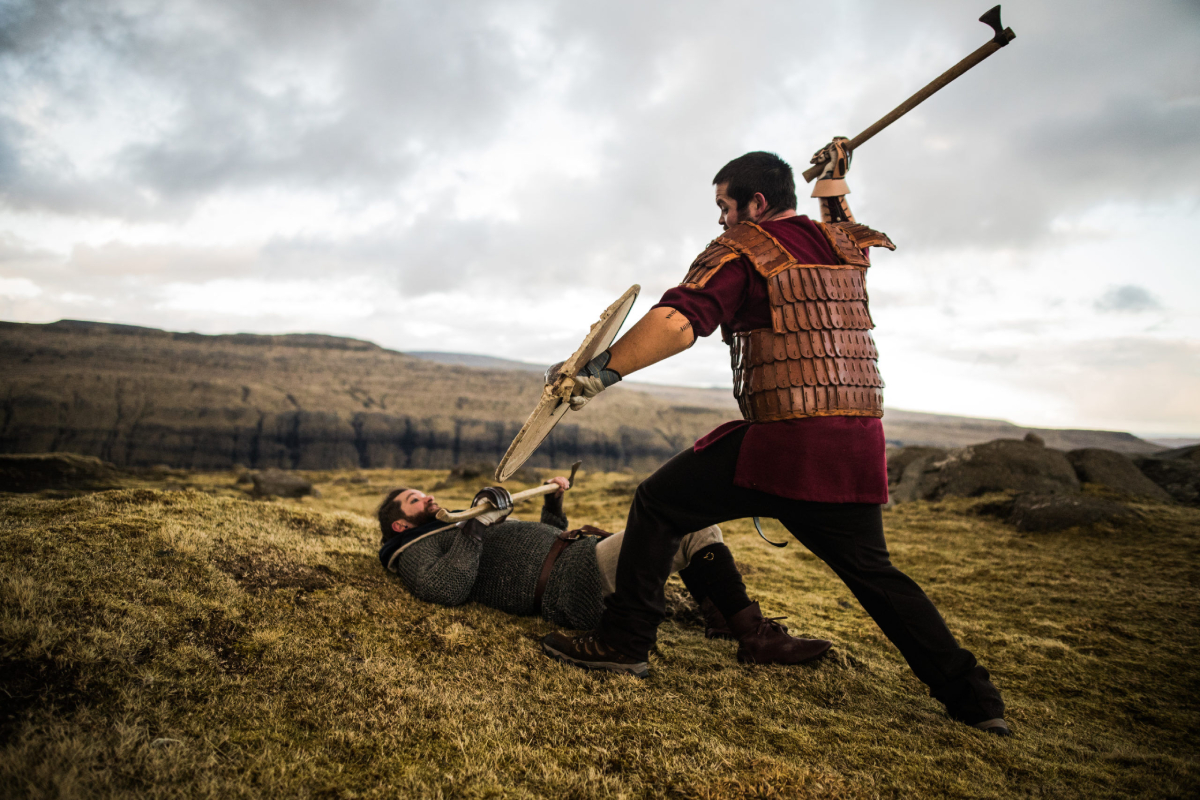
Whilst there are some Christian elements in the Lewis Chessmen – there is a "Bishop" piece (very much a Christian position of influence and authority) – there are also pieces that bear a striking resemblance to "berserkers."
These were unruly and wild warriors who worshipped the Norse god Odin and were very much embedded in the Old Norse religion.
So, perhaps next time Magnus Carlsen wins a professional chess match, he should at least acknowledge his Viking ancestors who helped introduce the game that has seen a recent boom in Norway.
For more on the Lewis Chessmen, visit the website of the British Museum here.
We get to provide readers with original coverage thanks to our loyal supporters. Do you enjoy our work? You can become a PATRON here or via our Patreon page. You'll get access to exclusive content and early access.
Feel free to reach out to discuss potential stories that may be in the public interest. You can reach us via email at [email protected] with the understanding that the information you provide might be used in our reporting and stories.