

For many countries in the Northern Hemisphere, January and February are the longest and bleakest months of the year.
Winter is in full swing, with freezing cold days and endless nights, the anticipation of the holiday season long since passed, and spring still only a distant spot on the horizon.
There is even a phrase, "Blue Monday," that pinpoints what is apparently the most depressing day of the year – the third Monday in January.
So who better than the Vikings to help us get through this tricky time, given many parts of Scandinavia experience a striking scarcity of sunlight for much of the winter?
Using the admittedly limited historical records, the legends of the sagas, and the wealth of archeological research available to us, The Viking Herald has pieced together five ways in which the Vikings lived and thrived in the coldest part of the year.
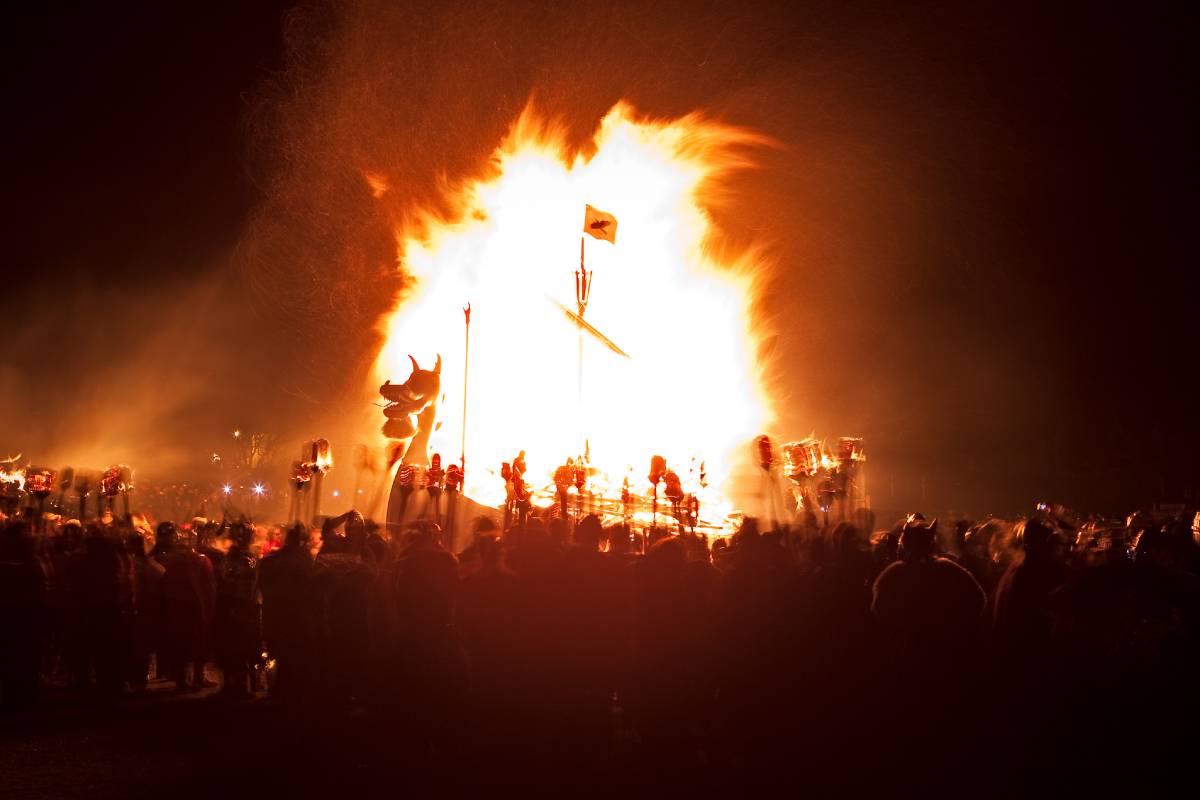
The biggest bonfire outdoors is your ticket to channeling the Viking spirit this winter. Photo: Andrew J Shearer / Shutterstock
Tip one: Light a fire
Well, this one is no secret: the hearty hearth has long been a symbol of winter coziness across pretty much all cultures.
In a Viking longhouse, however, the fire was truly the center of living. In addition to providing the much-needed warmth to survive the harsh Scandinavian winter, the hearth served as a place for family and friends to congregate, break bread, and share their lives and stories.
Of course, most households these days have to make do with central heating and perhaps a YouTube video of a crackling fire – complete with annoying ad breaks – but that's not to say you can't still savor the warmth of home.
For true impact, however, we recommend going outside and building the biggest bonfire possible.
Just like the Vikings, you are sure to find a magical power in the juxtaposition between the dark sky and the raging light of the fire.
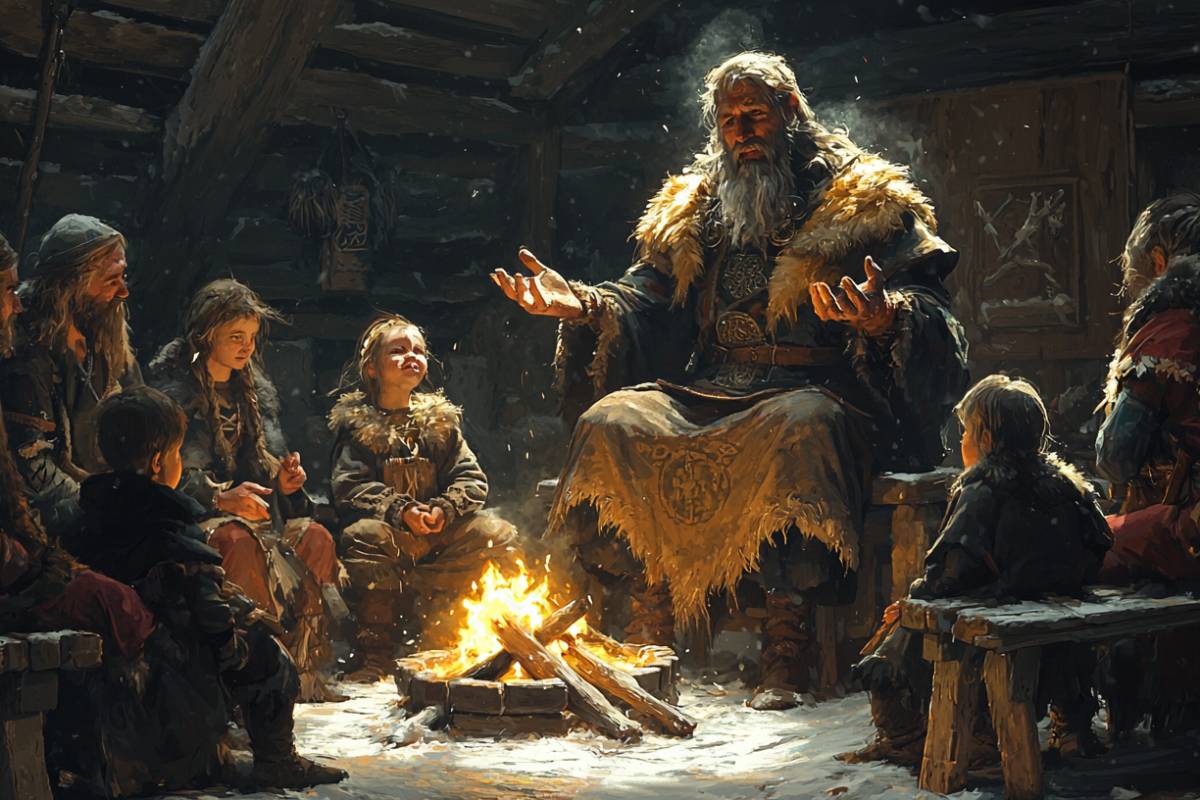
Gather around with friends or family and share imaginative tales – just as the Vikings once did. Illustration: The Viking Herald
Tip two: Tell stories
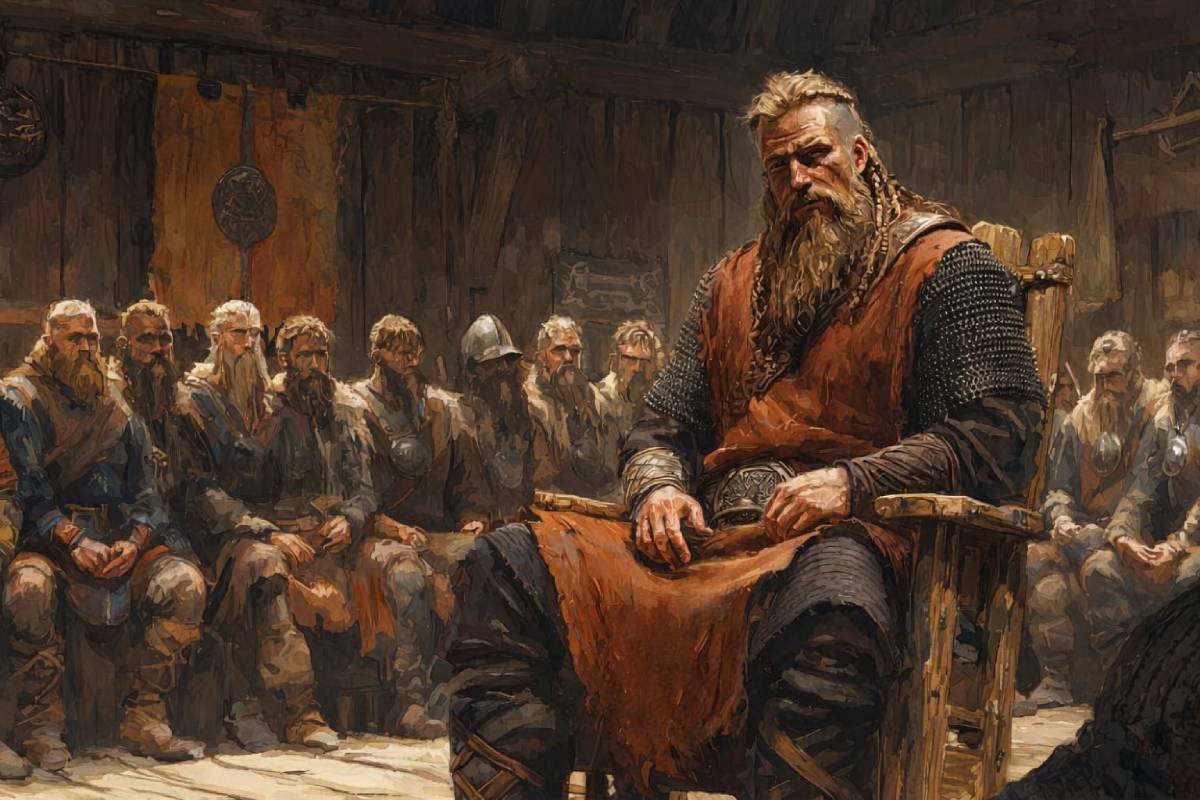
Storytelling would certainly have been a popular pastime as the Norse gathered around the fire.
Just like all ancient cultures, the Norse are thought to have been highly adept storytellers, weaving not only myths and tales of the gods but also elaborate recountings of the heroic deeds of their forefathers.
Indeed, it is likely the famous sagas that were eventually written down in Iceland in the 13th century were forged at the winter fire and passed down through the generations by a series of captivating narrators, who would all have added their own flavor to the tale.
We may have somewhat lost touch with this noble tradition, yet that doesn't mean it is gone forever.
As children well know, most of us still love to hear improvised stories of great beasts or feats of derring-do.
Perhaps it is worth turning away from screens and even books from time to time and delving into the depths of our imaginations and experiences.
Winter, when it's easy to find yourself stuck indoors for long stretches, is the perfect time to kickstart the habit.
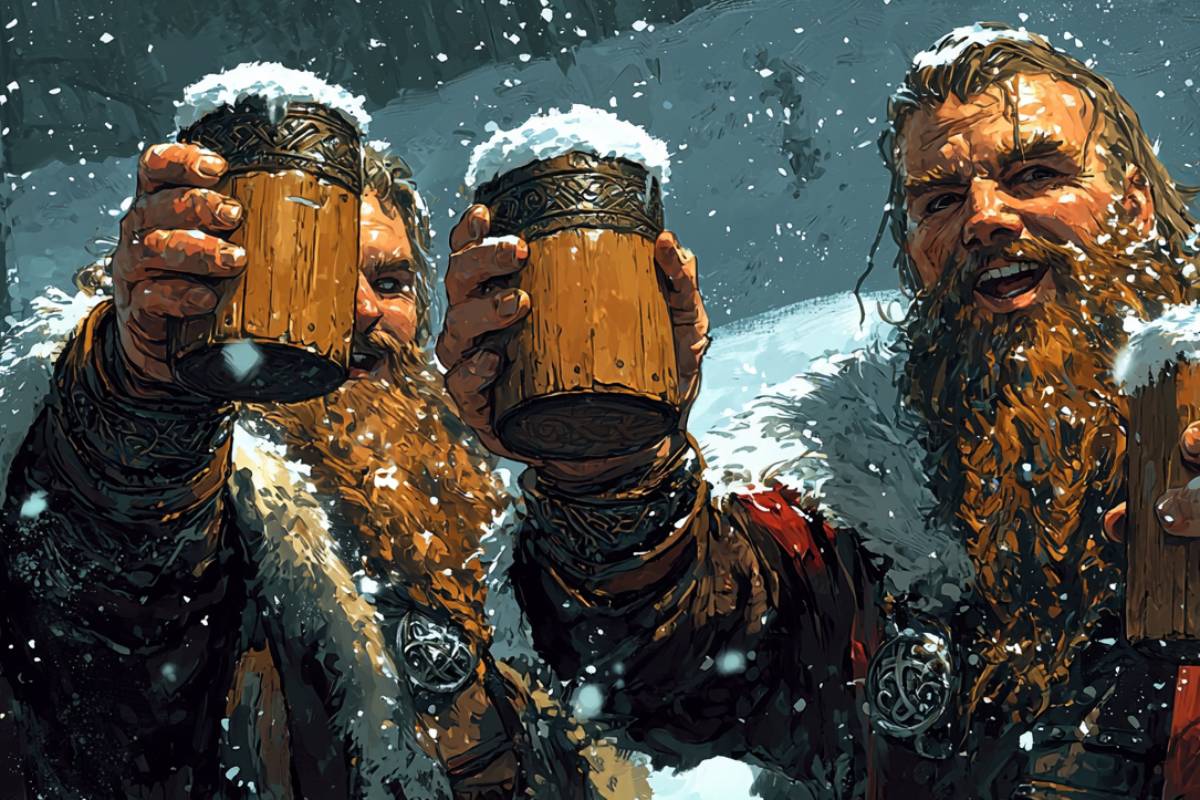
Make the cold months festive by hosting a celebration filled with meat, mead, and laughter. Illustration: The Viking Herald
Tip three: Make merry
Naturally, the Vikings also indulged in that timeworn custom of finding joy in the dead of winter: feasting and drinking.
Yet, while the Nordic Yule tradition is now conventionally associated with Christmas and the Winter Solstice, the Vikings are actually thought to have enjoyed a series of festivals and celebrations throughout the winter that provided multiple high points in the calendar.
The idea of continuous or at least regular celebration has actually been the inspiration for a couple of modern events, including the Michigan Nordic Fire Festival, which was consciously scheduled in the depths of February to help pull residents of the American Midwest through to spring.
What's to stop you from creating your own celebration around the same time? Ideally, one that comes with plenty of meat, mead, and merriment to ensure a true Viking spirit!
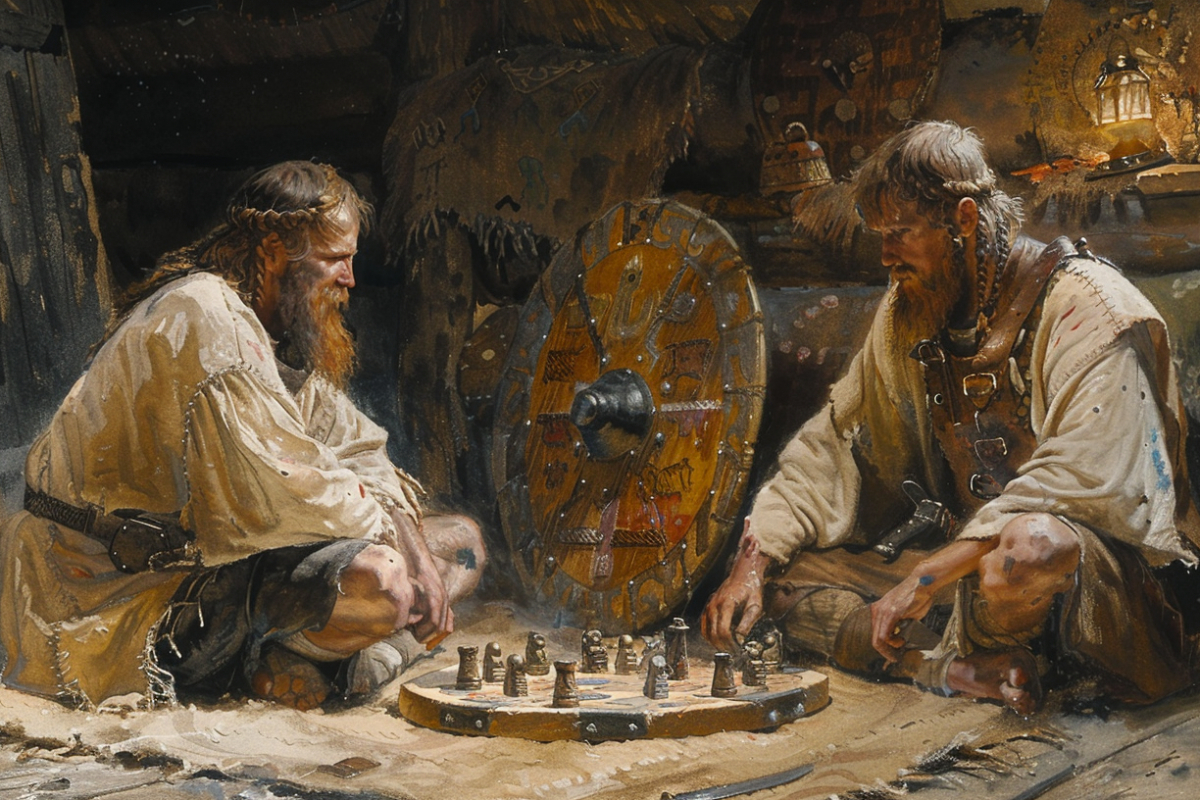
Whether chess, Hnefatafl, or a modern RPG, winter is the perfect time to embrace the Viking gaming spirit. Illustration: The Viking Herald
Tip four: Play games
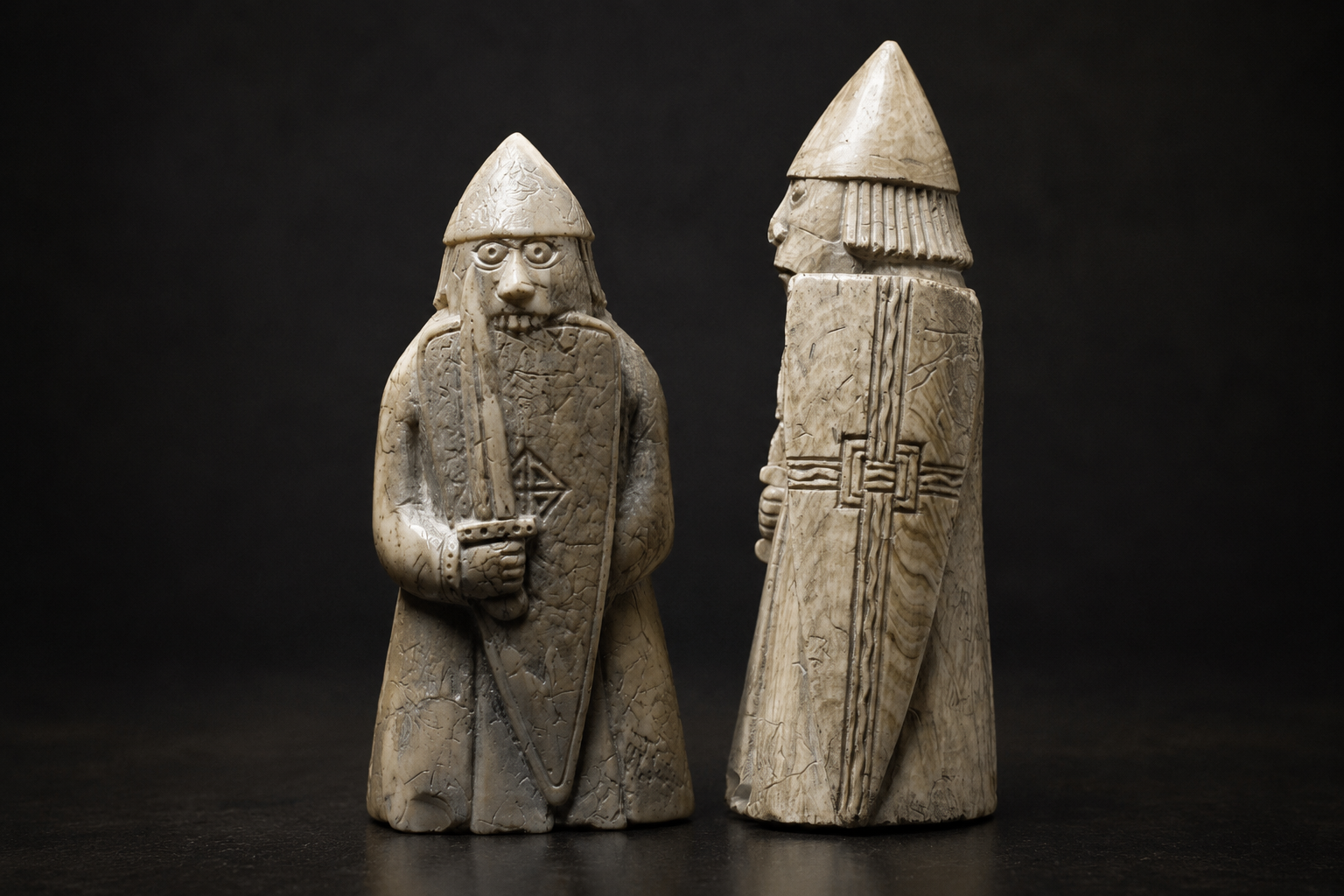
As discoveries such as the Lewis Chessmen and the archeological excavations at Fjörður in Iceland appear to reveal, gaming became a big part of activities in the colder months.
In fact, the Vikings are thought to have played a number of indoor games, from chess to Hnefatafl, a board game played with dice and black-and-white pieces.
While there's nothing wrong with video games, again, The Viking Herald recommends going for more tactile options – yes, chess and Hnefatafl are great, but really anything goes, from World of Warcraft to Monopoly to Twister.
You could even try out a Norse-themed role-playing game such as When the Wolf Comes, recently featured in The Viking Herald.
In each case, the principle remains the same – if the weather forces you to stay indoors most of the day, it's better to see it less as a chore and more as the perfect chance to enjoy some unadulterated fun.
Which brings us to our final tip...

Bone skates found in archeological digs show how Vikings made the most of icy landscapes. Photo: Courtesy of York Archaeology
Tip five: Get outdoors and keep working
The best way to fully savor the warmth and coziness of home in the winter is to spend some time outside first.
With much of their lands covered in snow for most of the winter, the Vikings were likely cautious about venturing too far afield.
Yet they would have needed to hunt and did so frequently, often aided by snowshoes of one form or another.
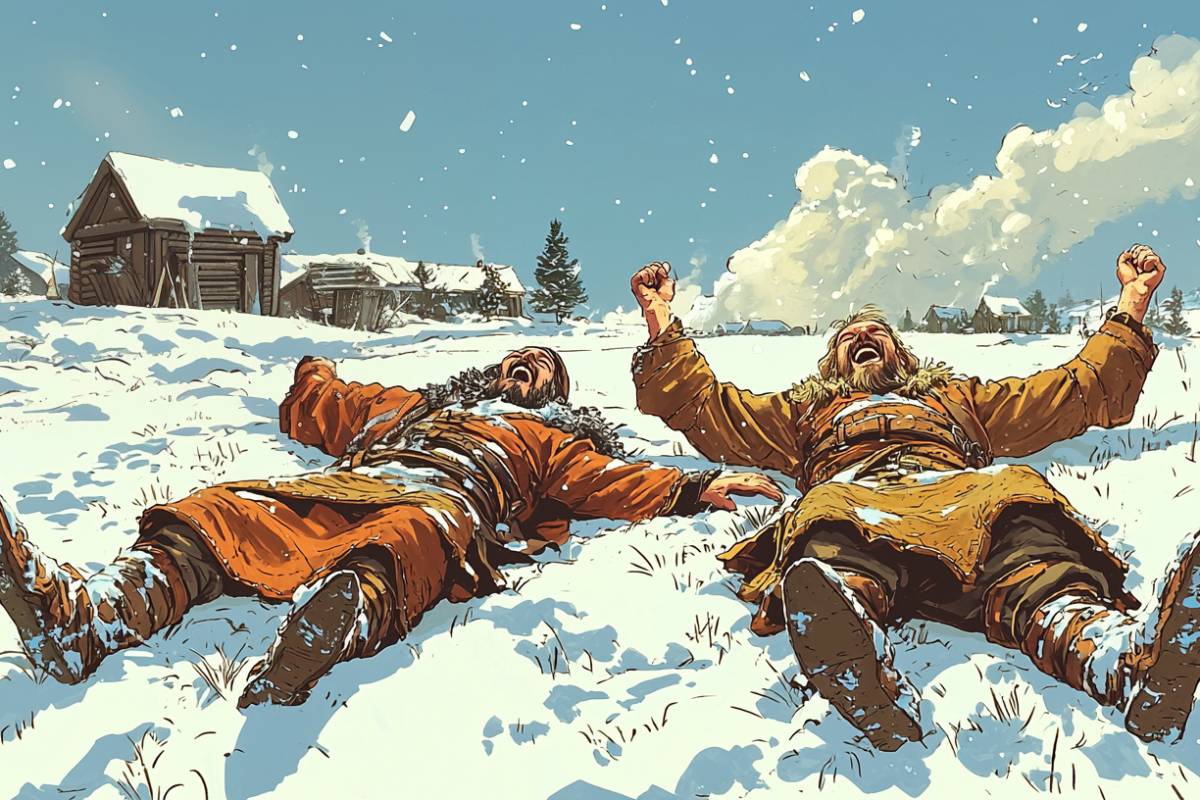
There is evidence they also indulged in recreation. Viking bone skates have been found everywhere from Birka to York, while one later account from the Heimskringla, referring to a period just after the end of the Viking Age, indicates snowball fights may also have been a viable leisure pursuit:
Ottar Birting was killed north in the merchant town, in an assault upon him in the twilight as he was going to the evening song. When he heard the whistling of the blow he held up his cloak with his hands against it; thinking, no doubt, it was a snowball thrown at him, as young boys do in the streets.
So whether wrapped in ancient Viking furs and cloaks or modestly clad in a modern-day puffer jacket, we advise you all to embrace the cold and head out into the wilderness – be it urban or rural.
After all, the flame-roasted hog, warm mead, and mythical tales by the fire will be all the better for a little adventurous trip to the outside world.
We get to provide readers with original coverage thanks to our loyal supporters. Do you enjoy our work? You can become a PATRON here or via our Patreon page. You'll get access to exclusive content and early access.
Feel free to reach out to discuss potential stories that may be in the public interest. You can reach us via email at [email protected] with the understanding that the information you provide might be used in our reporting and stories.