

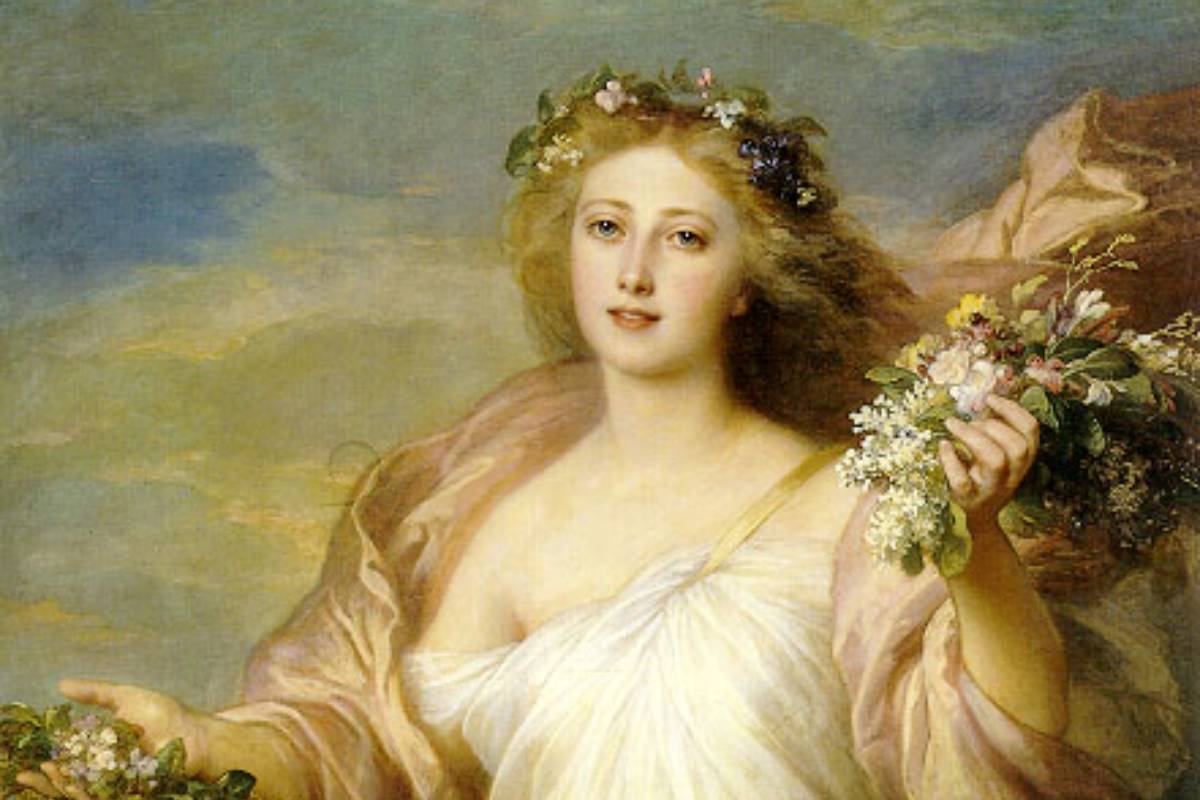
It is often claimed that the English name for Easter derives from Ēostre, or Ostara, a goddess in the Germanic pagan tradition who represents youth, fertility, and the arrival of spring.
To some, this association indicates a direct link between the spring celebrations of the pagan-era Vikings and the modern Christian holiday.
But what basis does this idea have in fact? The Viking Herald examines the available evidence.
Bede the Venerable: The lone reference
"Eosturmonath has a name which is now translated 'Paschal month', and which was once called after a goddess of theirs named Eostre, in whose honour feasts were celebrated in that month. Now they designate that Paschal season by her name, calling the joys of the new rite by the time-honoured name of the old observance."
(Bede the Venerable, The Reckoning of Time)
The idea of a connection between the Norse and the origins of Easter is largely rooted in a passage by Bede the Venerable, an 8th-century Anglo-Saxon monk and scholar.
In the above passage, Bede provides an explanation for the name of the month of April in Anglo-Saxon England.
As Bede states, rather than calling it "Paschal month," derived from Passover, the Jewish holiday that lends its name to Easter in several European languages, the Anglo-Saxons apparently called it "Eosturmonath," after the goddess Ēostre.
From Bede's words, it follows that before the spread of Christianity in England, Anglo-Saxons—and, by extension, other Germanic cultures such as the Norse—celebrated the arrival of spring by paying tribute to Ēostre, a goddess of fertility.
This idea was later picked up by one of the Grimm brothers, Jacob, in the 19th century, who adjusted the name of the goddess to Ostara.
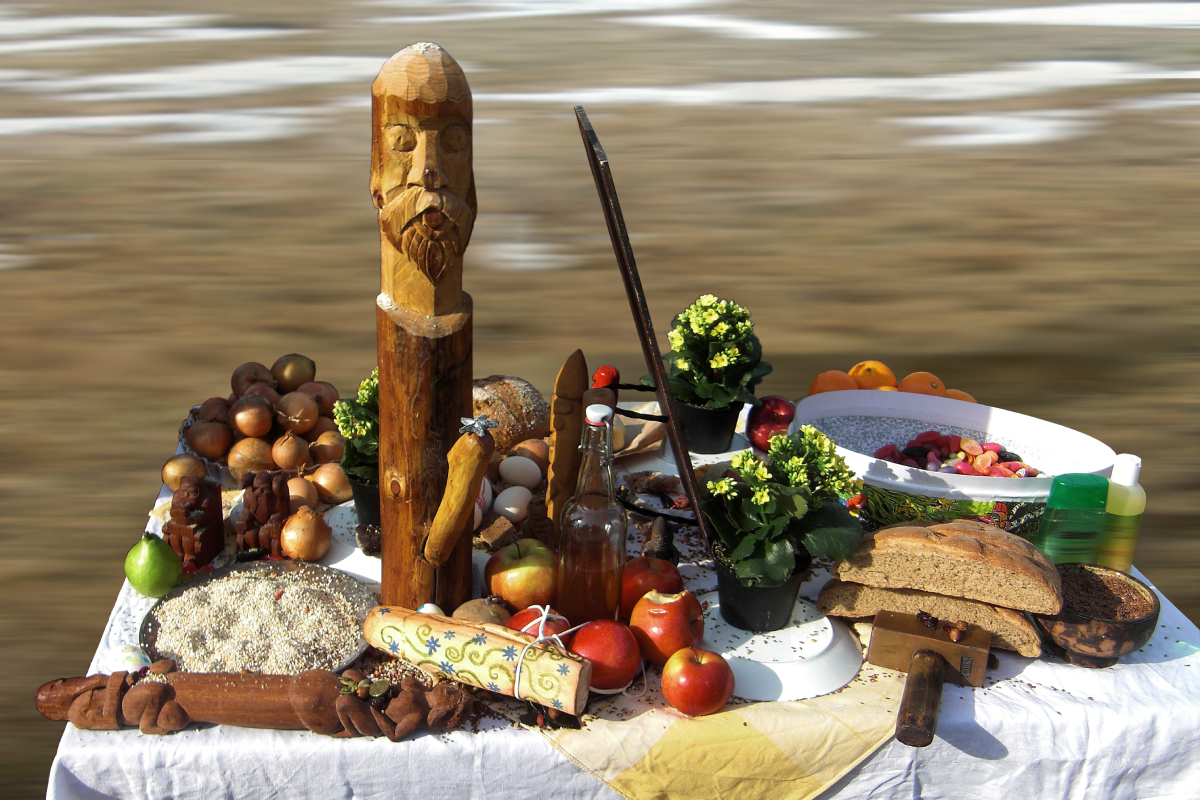
Today, pagans around the world celebrate the modern festival of Ostara, held on the spring equinox—the point where the sun crosses above the Earth's equator, moving from south to north.
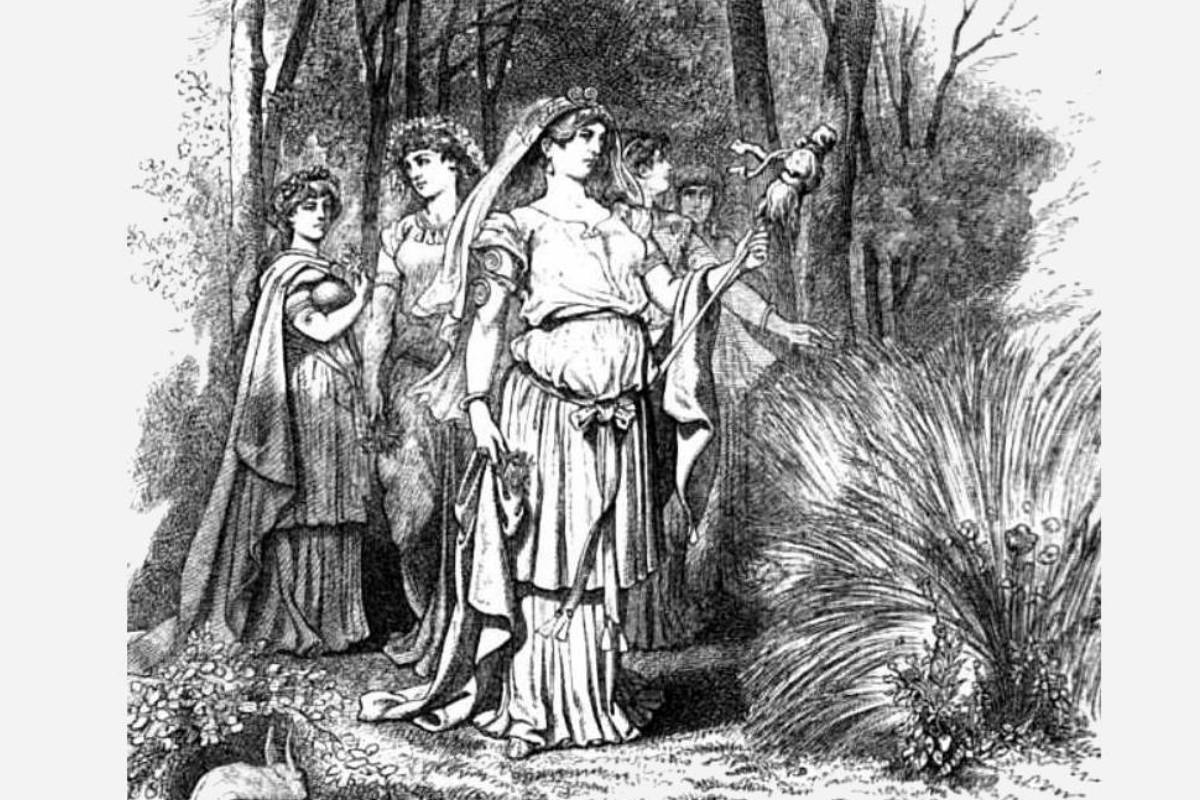
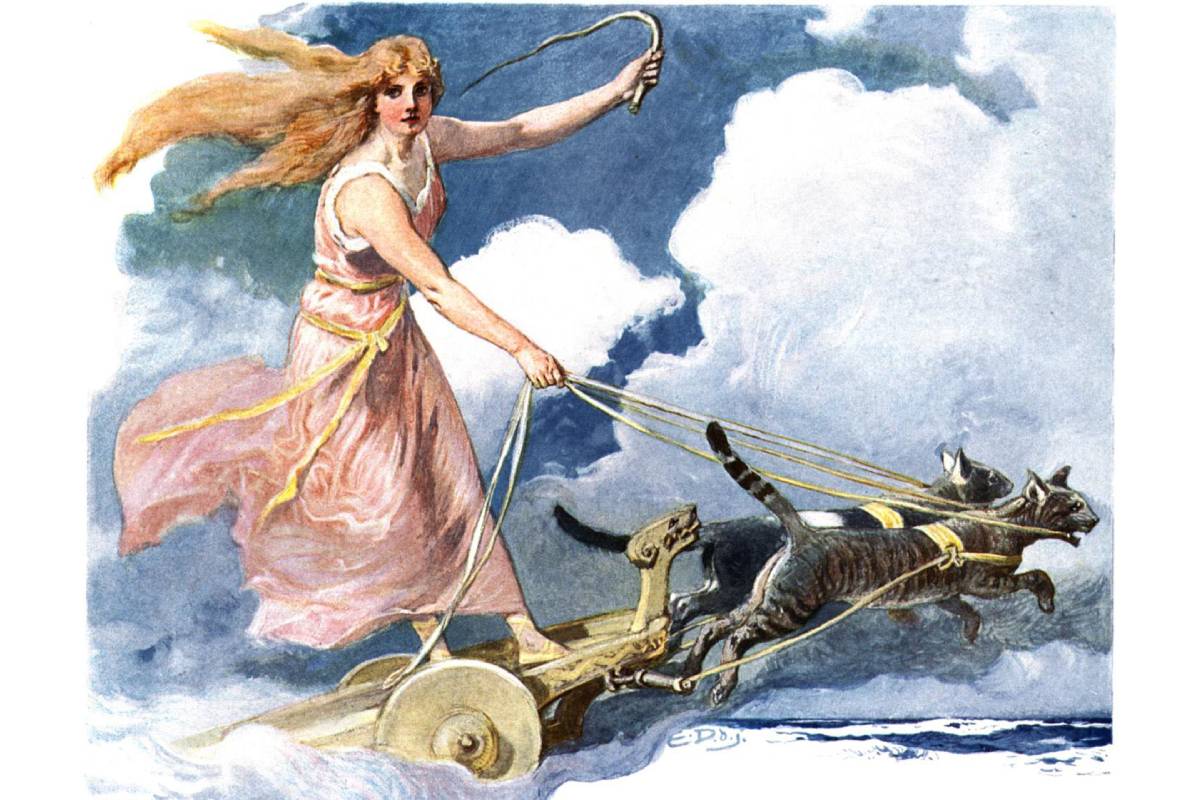
This 1882 illustration of the Norse goddess Frigg as Ēostre reflects later interpretations rather than historical sources. Source: Carl Emil Doepler (1824–1905)
A tenuous hold
The problem is, however, that there are very few additional sources to confirm Bede's claim.
Indeed, while there are several historical accounts of midwinter and midsummer pagan festivals taking place, there are few reliable accounts that point definitively to a spring celebration in Germanic pagan cultures, or to the existence of a goddess named Ēostre.
It has also been noted that there are some historical place names in both England and on the European mainland that resemble the name Ēostre. Yet again, the links to the goddess have never been clearly established.
This lack of corroboration has led some academics to argue that Bede simply invented Ēostre—their position being that there was simply no such goddess in the Germanic tradition, or at least not with that name.
Instead, the scholar Richard Sermon argued in a 2022 paper that Eosturmonath, meaning "Easter-month," was more likely a reference to the sunrise.
Here, "east" references the fact that during the spring equinox, the sun and the moon both rise in their most easterly positions on the horizon.
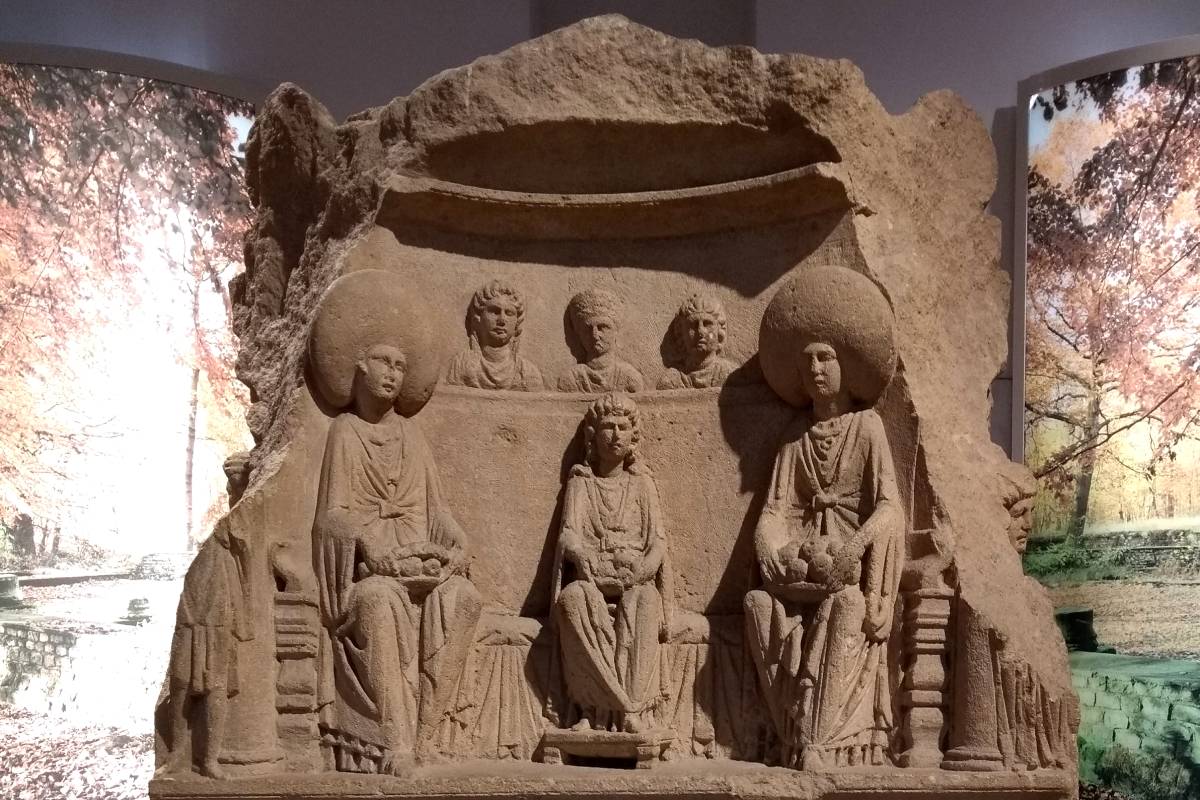
This Roman-era altar from Bonn, Germany, dedicated to the matronae Austriahenae, is sometimes cited in connection with Ēostre. Source: Heiko Fischer (CC BY-SA 4.0)
The limits of our understanding
These observations do not conclusively prove, of course, that Bede truly did invent the goddess or that the Norse did not celebrate the March equinox.
Nor does it mean there is no link at all between the Germanic pagan traditions and Easter itself. After all, the absence of (significant) evidence is not evidence of absence.
And it is also worth noting that other celebrations, such as Christmas and Halloween, have slightly more tangible links to older pagan traditions.
Given the propensity of pagan religions to focus on the movements of the sun and the moon, it is entirely possible that the Vikings and other Germanic cultures did celebrate the spring equinox.
There have even been some connections made between the goddess Ēostre and the discovery of more than a thousand inscriptions in Germany dedicated in Roman-era Latin to a similarly named goddess, the matronae Austriahenae, suggesting possible support for Bede's assumption.
Nevertheless, we must acknowledge the limitations of our understanding. For now, the links between pagan traditions and the origins of Easter remain inconclusive.
We get to provide readers with original coverage thanks to our loyal supporters. Do you enjoy our work? You can become a PATRON here or via our Patreon page. You'll get access to exclusive content and early access.
Feel free to reach out to discuss potential stories that may be in the public interest. You can reach us via email at [email protected] with the understanding that the information you provide might be used in our reporting and stories.