

Let us then land the first blow for the (historical accuracy) resistance by debunking some common Viking myths.
The shield wall: A common military tactic, not a Viking invention
According to modern depictions, specifically in the smash hit series Vikings, it appears that Viking warriors invented the "Viking Wall."
Here, a group of Vikings, upon the battlefield, formed a close and tight-knit wall by interlocking their shields. This gave them a solid defensive foundation to repel any would-be attacks from the enemy.
Whilst it certainly looks good on the silver or streaming screen, this certainly wasn't a Viking invention.
In fact, by the time the first Viking ship had sailed, the "shield wall" had been used for centuries and traces its origins back to, in Europe, at least, the armies of Ancient Greece with their Hoplite warriors.
The Romans, as they often did, borrowed much from Ancient Greece, including this defensive formation, but gave it the rather cute name, testudo ("tortoise" in English).
Fast forward some centuries after the Fall of Rome, right smack back in the Viking Age, and we see one of the most famous uses of a shield wall by Harold Godwinson at Hastings.
According to legend and lore, this Anglo-Saxon noble, whose ancestry stemmed from Viking societies, was fending off the Norman forces of William, Duke of Normandy, from the heights of a hill.
However, a feigned retreat by the Norman forces led to the Anglo-Saxon force breaking formation and the rest, they say, is history.
Given that Vikings spread across Europe and its surrounds, they incorporated the military strategic and battlefield tactics of their enemies, like the shield wall. This wasn't, however, their unique invention.
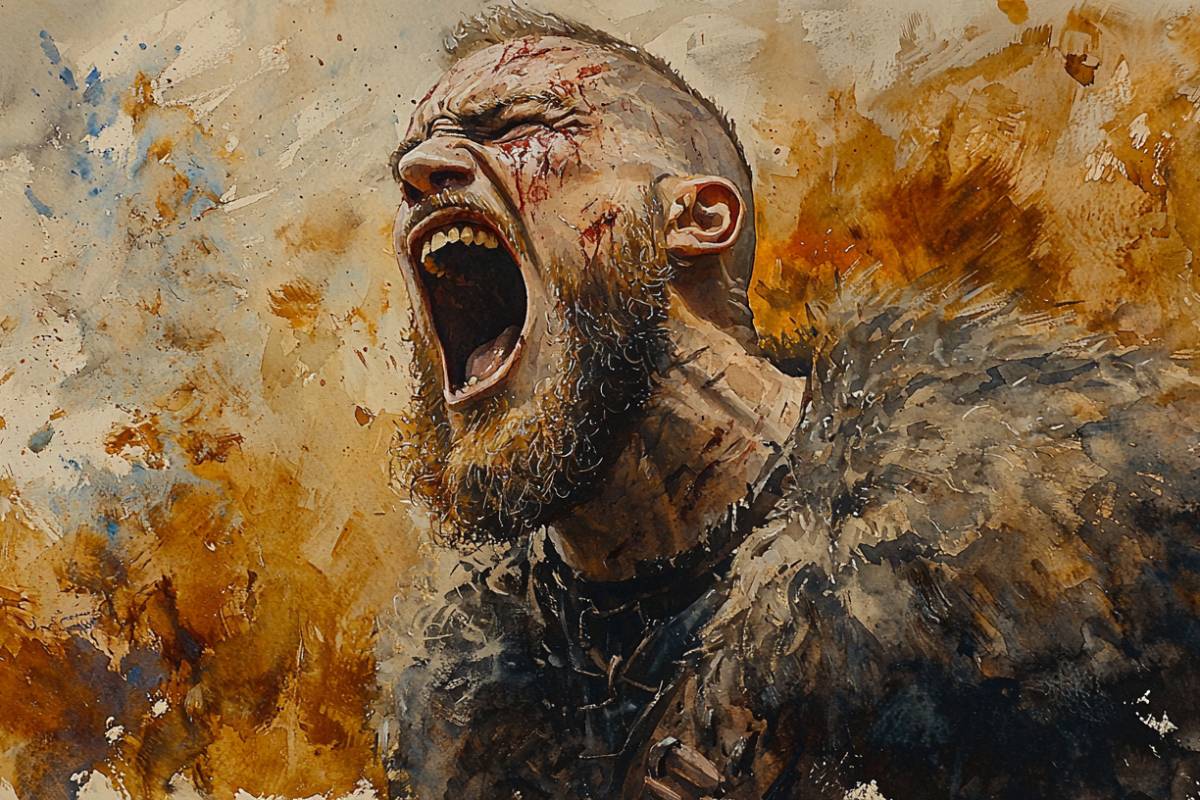
Though the Vikings praised valor and dying with honor, death was a harsh reality in their world, not a goal. Illustration: The Viking Herald
Vikings were obsessed with death and sought glorious ends in battle
People in Viking societies indeed had a warrior ethos that glorified valor and bravery on the battlefield, instilled a martial spirit throughout the community, and revered those who met their end in a way that would please Odin.
However, to say that an entire society was "obsessed" with death is going a little far.
The early medieval period was indeed a time of widespread political insecurity and violence, and often the only way to get ahead in life was by cutting off a few heads.
This era has been described by Ben Raffield in his chapter in the 2024 book, Perspectives from Archaeology, History, and Anthropology, as a period "sometimes sensationalized" but no doubt, "a time of profound violence."
Military exploits, be they raids or more organized military expeditions (think the Great Heathen Army or Sweyn Forkbeard's invasion of England), were often the only way for young men in Viking societies to escape poverty.
The great rulers of the age, from Harald Fairhair to Cnut the Great, were not elected by a vote but seized power with a sword or axe in hand.
Add to all this military might the fact that people in Viking societies had a complex and rich view of the afterlife, ranging from an eternal feast with Odin in Valhalla to a more dreary existence with Loki's daughter, Hel, in Helheim.
People from Viking societies were not obsessed with death. However, given that their warriors went all around Europe and its surrounds, raiding, fighting, and ravaging, their child mortality rates were shockingly high.
They possessed a lack of modern medical knowledge or hygienic practices. And, you know, living in an era of widespread personal and political violence, they can be forgiven for dwelling on death more than we in the modern era do.
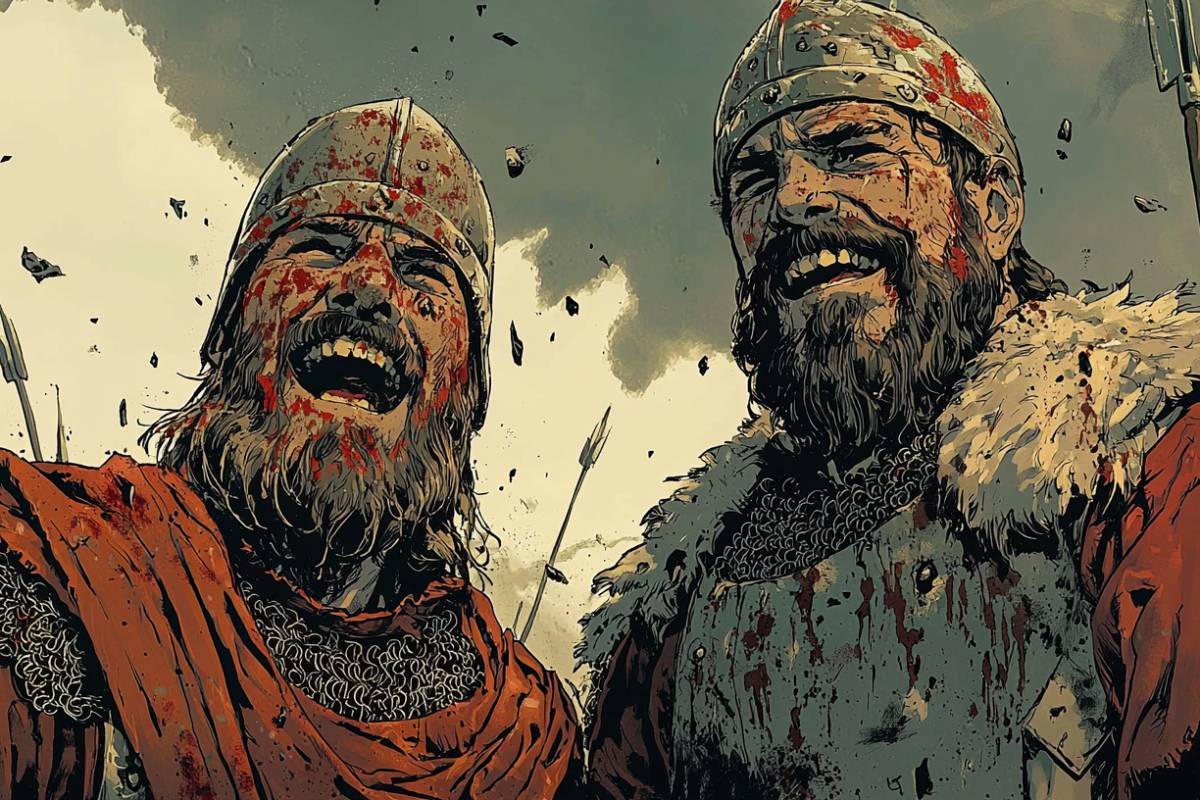
Viking raids were violent, but their real motive was profit, not mindless bloodshed. Illustration: The Viking Herald
The only motive behind a Viking raid was violence
On the surface, we would all agree that this statement is 100% historically accurate and verifiable.
Take, for instance, the Anglo-Saxon scholar Alcuin who, from the safety of Charlemagne's court, wrote about the apocalyptic Viking raid on Lindisfarne in 793 CE.
We find a modern English translation of his letter to Ethelred, the Anglo-Saxon King of Northumbria (who would soon feel the might of the Vikings), in the 2012 book by Douglas Dales, Alcuin: His Life and Legacy. In it, Dales shows that Alcuin wrote to Ethelred describing the raid on Lindisfarne by stating that,
"...never before has such terror appeared in Britain as we have now suffered from a pagan race... Behold, the church of St. Cuthbert spattered with the blood of the priests of God, despoiled of all its ornaments; a place more venerable than all in Britain is given as a prey to pagan peoples."
Whilst this does sound like a bloody and violent affair (count us, the current author, out from witnessing this event should a time machine ever be created), there were other motives for the raid.
The clue lies in Alcuin's erudite condemnation of the Vikings. He said that the church on the island was "despoiled of all its ornaments."
If there is one thing everyone knows about Viking warriors, it is that they loved a bit of loot, and a defenseless Christian church, filled with elaborate and bejeweled paraphernalia, was a prize too easy to plunder.
Monasteries were soft targets, rich in treasure but light on defense. Their goal was profit and not religious warfare.
They cared little for the creed or religion of the next place they were to raid and plunder but were often most interested in the profit motive.
Yes, they used violence to an end, and there were no doubt some absolute sadistic warriors that went on Viking raids, but the real goal was to secure loot for themselves, their chieftain, and, later in the Viking Age, their king.
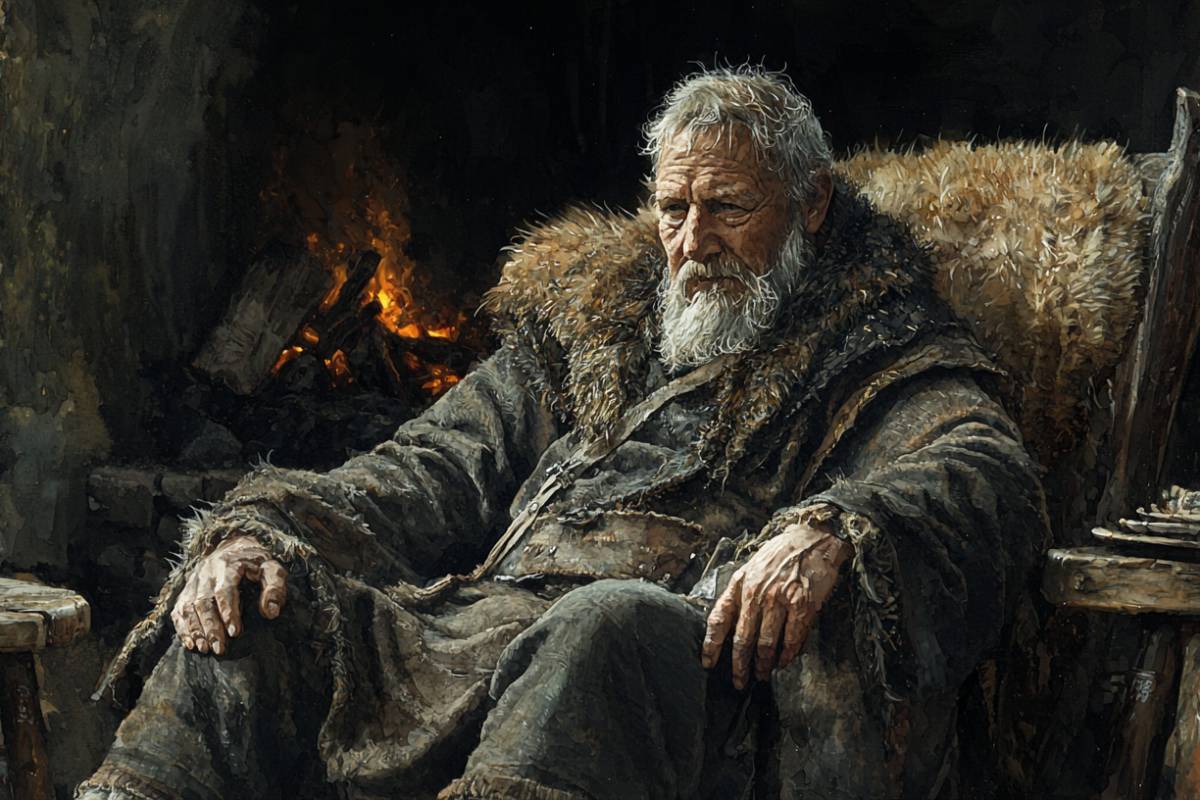
Snorri Sturluson and his Christian peers recorded the Viking sagas centuries later, often twisting them to suit their faith and moral values. Illustration: The Viking Herald
Viking warfare and mythmaking
Who else absolutely adores the Norse sagas?
Whilst there is a great deal of historical detail in them, they certainly should never be treated as an accurate historical record or chronicle. In fact, what is most interesting about the sagas is that they were first compiled and transcribed centuries after the last Viking ship ever sailed.
We have 13th-century CE poet and politician Snorri Sturluson to thank for their compilation.
Yet Snorri and his colleagues, who tirelessly ensured we have a record today of the stories and tales of people from Viking societies, lived in a deeply different society from those in which these sagas were once told.
For a start, later medieval scholars like Snorri were living in a Christian society dominated by the Catholic Church. As such, they had a vested interest in portraying their Viking forebears in a rather dim light, particularly their religious and spiritual beliefs.
The sagas, as passed down to us, combine memory and morality with more than a shred of entertainment in there.
Overtly Christian symbolism, imagery, and motifs were added to the stories by scholars whose work was either directly funded, overseen, or important to the Catholic Church.
Regardless of their historical unreliability or subtle Christian insertions, the rich tapestry of the Norse sagas is certainly entertaining, and we here at The Viking Herald wouldn't have it any other way!

Vikings were independent groups whose shared activity was raiding, not national unity. Photo: BTBScanpix (CC BY-SA 4.0)
Vikings were a unified nation
Indeed, we often speak of Viking societies here at The Viking Herald. Why don't you just say Vikings? I can hear you ask.
Well, for a start, Viking was an activity—think of it as a sort of very muscular "gap year" for young Viking men.
Add to this the fact that these warriors who went "Viking" were only a small minority of the societies that produced them.
To use the term "Viking" as an ethnic label is simply wrong, as there was, despite popular misconceptions, a large amount of genetic variation within Viking societies.
The early medieval period saw small communities, rarely more than a collection of villages at most, transform, in part through the adventures and exploits of Viking warriors, into the medieval nation-states of Denmark, Norway, and Sweden.
Before the first Viking ship sailed, there was only a myriad of small communities. After the final Viking ship sailed, there were three medieval nation-states to which the current Scandinavian nations trace their ancestry.
Whilst Sweyn Forkbeard did forge a North Sea Empire that united the Norwegian and Danish kingdoms (along with Anglo-Saxon England) and parts of Sweden, much of the former Viking world would not be more formally united and integrated until the Kalmar Union much later in the medieval period.
The only unified "Viking nation" nowadays is the fans of the professional American football team based in Minnesota.
As is always the case when studying early medieval history, the heavy weight of centuries of fabrication, simplification, bias, and omission has added to the spread of false information.
Yet it is up to all of us, including you, dear reader, to make sure some of these fake myths about people in Viking societies don't get passed down to the next generation.
The BBC has busted some other Viking era fabrications and lies, available to read here.
We get to provide readers with original coverage thanks to our loyal supporters. Do you enjoy our work? You can become a PATRON here or via our Patreon page. You'll get access to exclusive content and early access.
Feel free to reach out to discuss potential stories that may be in the public interest. You can reach us via email at [email protected] with the understanding that the information you provide might be used in our reporting and stories.