

America's Midwest has suffered a lot in recent years. The once-proud manufacturing heart of the world's largest economy, Minnesota, like other nearby states, has been ravaged by the effects of globalization and America's post-industrial shift, some would say "decline."
Add to this the devastating impact of the opioid crisis, and you have a state that is struggling to stay afloat, much like an injured loon, the state's official bird, trying to keep afloat.
Yet all hope is not lost in the land of 10,000 lakes. The small town of Moorhead, population 45,000, is one of those small towns that is nimbly managing its transformation from an industrial past.
As J. M. Manicini wrote in her 2002 article in the journal Critical Inquiry, the region had a large Scandinavian ancestry thanks to immigration from Norway and Sweden during the late 19th century CE.
These Scandinavian immigrants, leaving home to chase the "American Dream," inspired the town to establish a museum with a nod to its Scandinavian roots in 1985, the Heritage Hjemkomst Interpretive Center.
This museum was originally built to house the replica Viking ship Hjemkomst, which crossed the Atlantic Ocean on a voyage to Norway in 1982, but has since branched out to include a visitor center and a replica of a stave church.
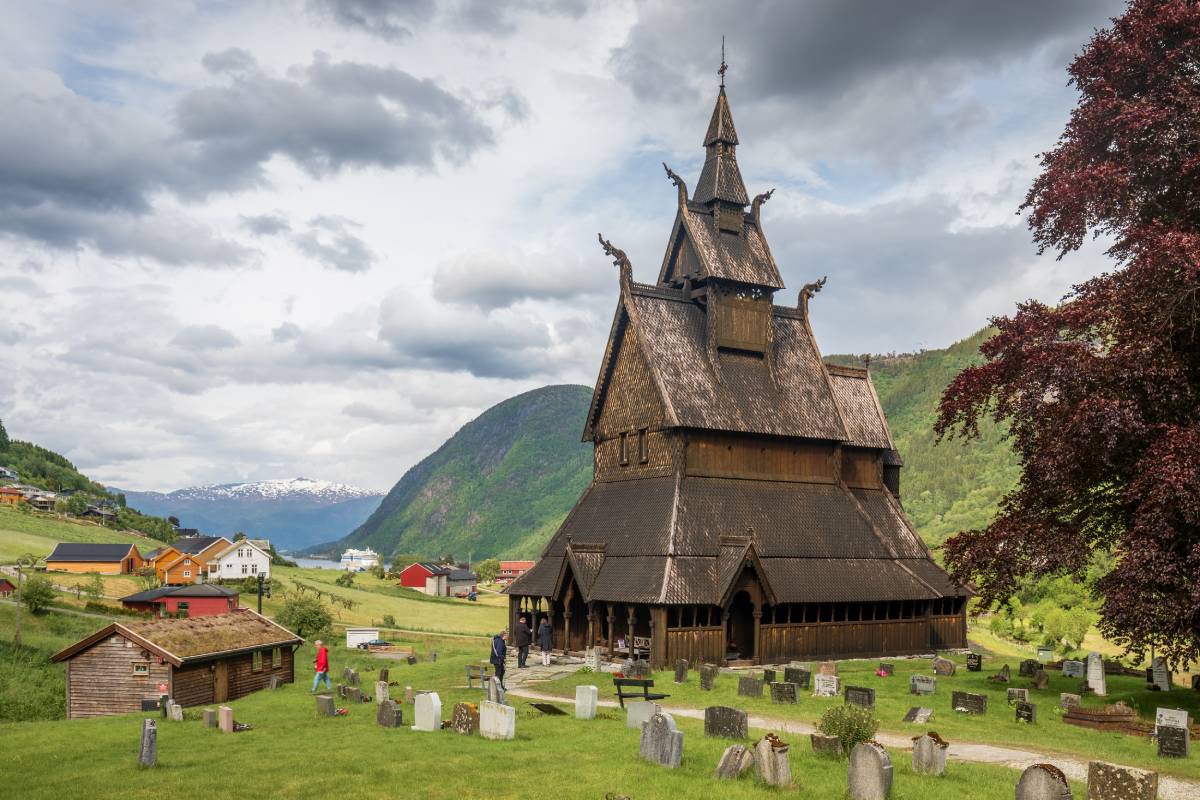
Yes, taking pride of place alongside the full-scale replica of the Oseberg Viking ship is a faithful reproduction of a stave church situated in Hopperstad, a village in what is now the fylke (province) of Vestland, Norway.
Before we look at why this stave church was reproduced a world away, let us look at the construction of the original nearly a millennium ago.
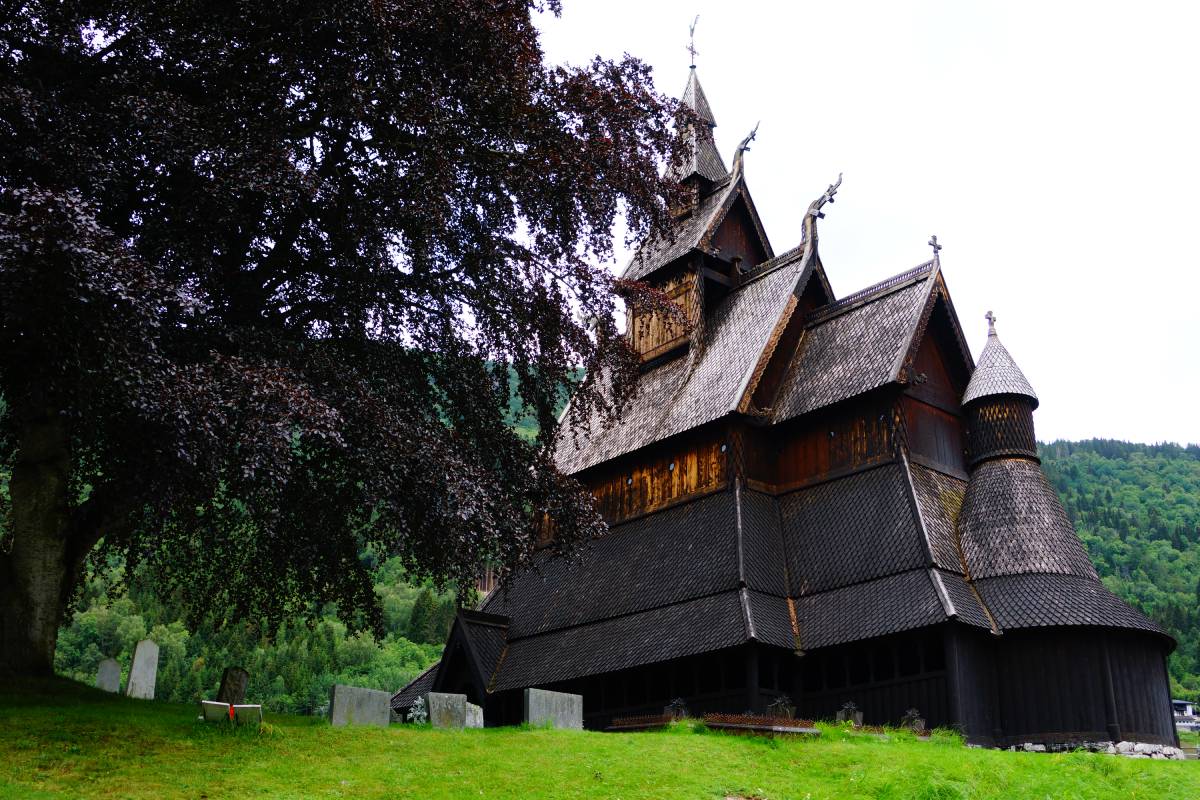
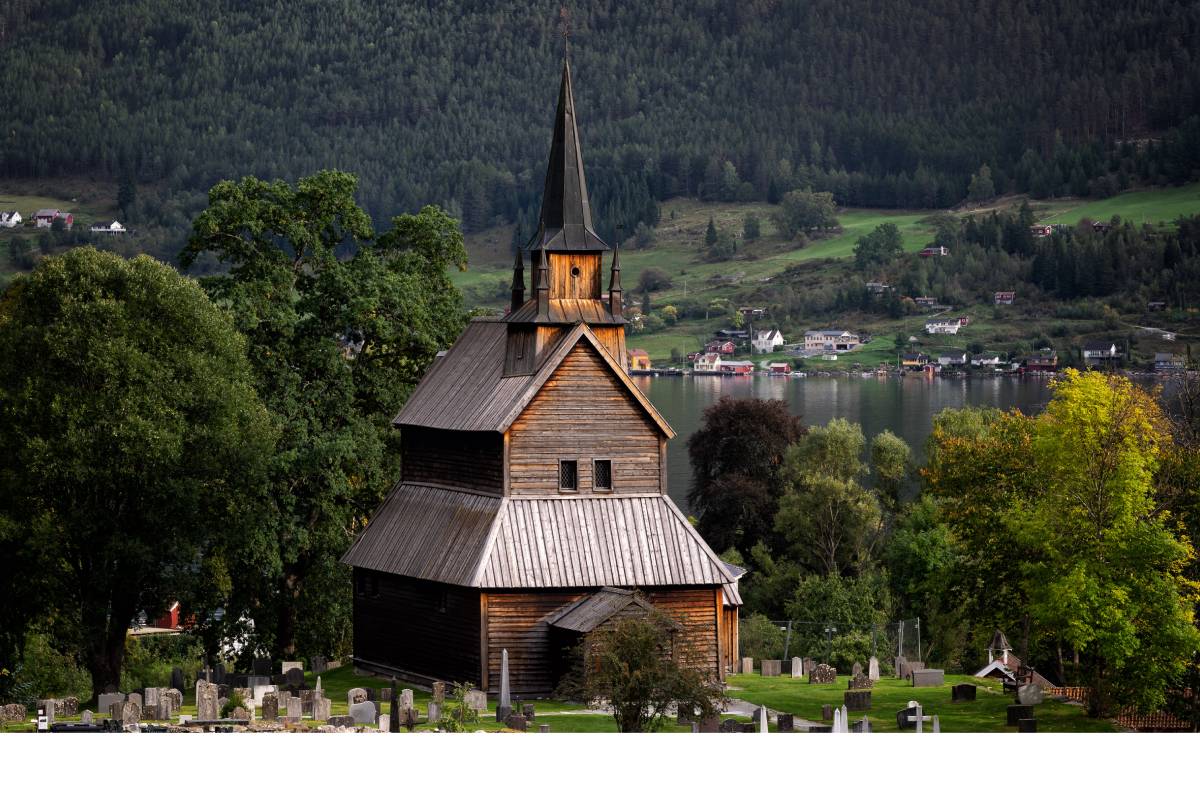
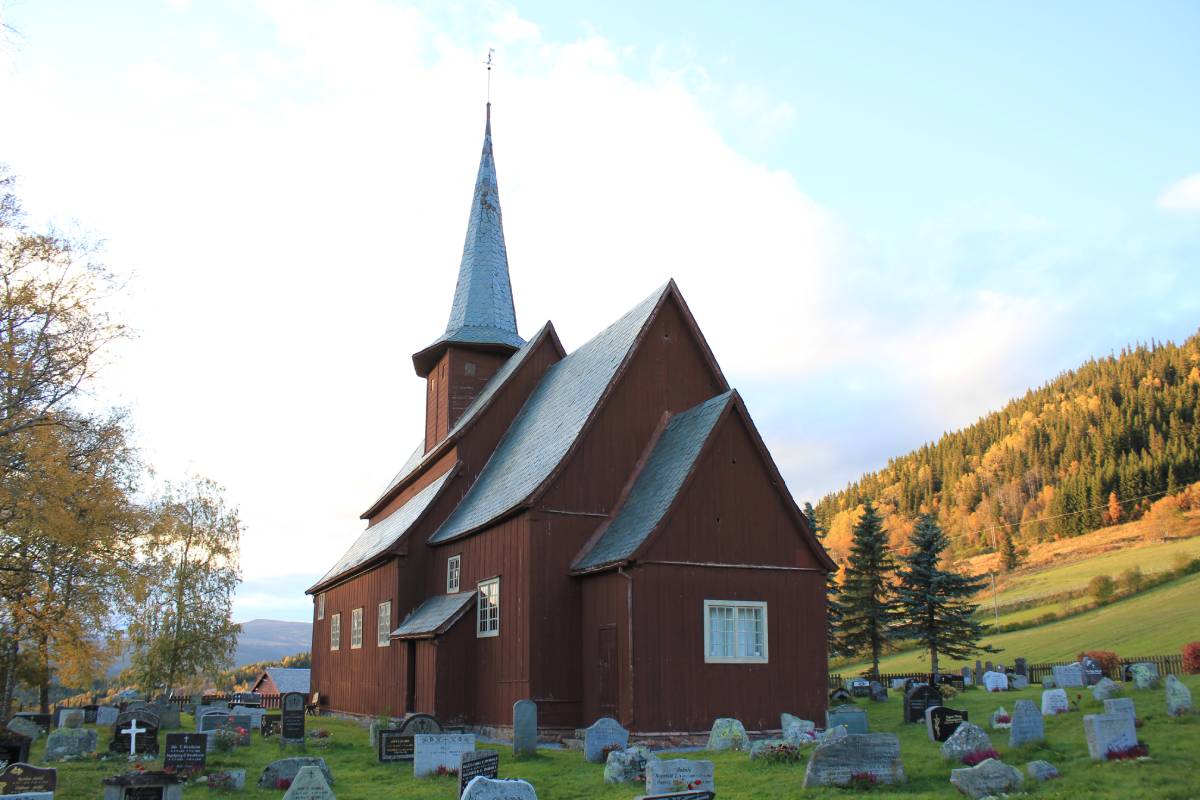
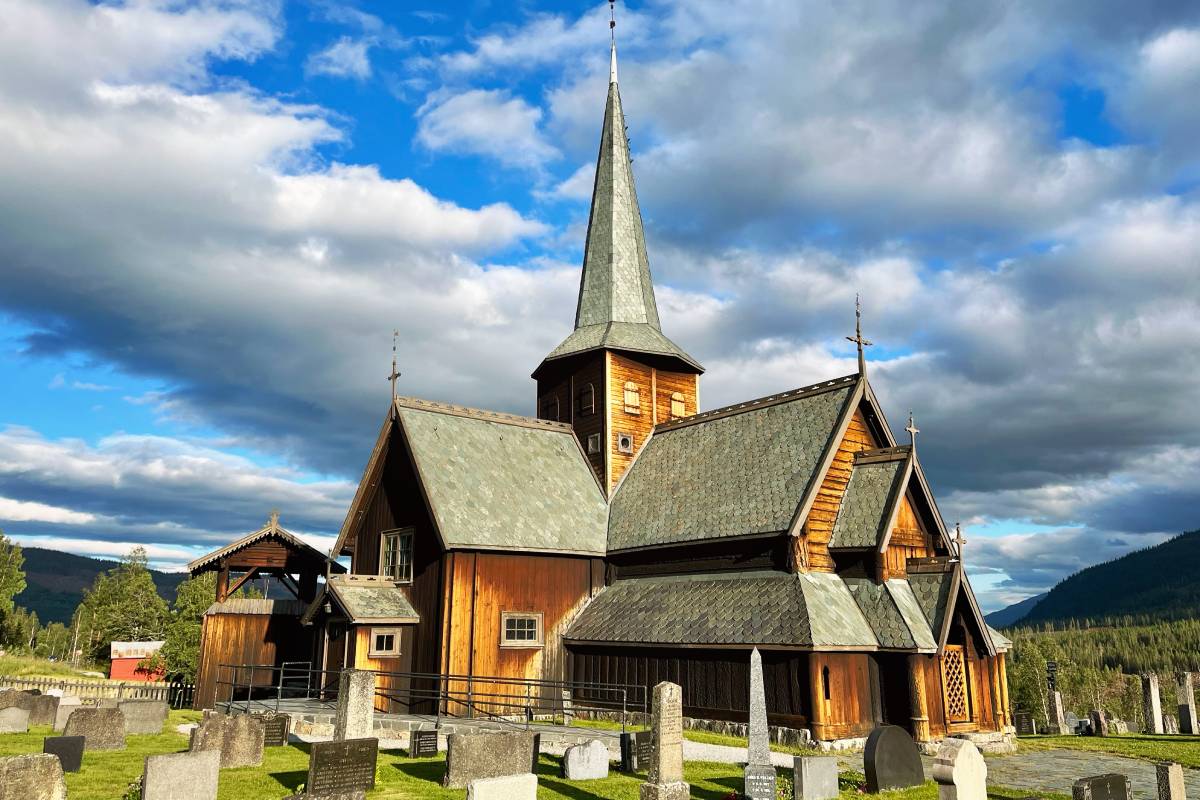
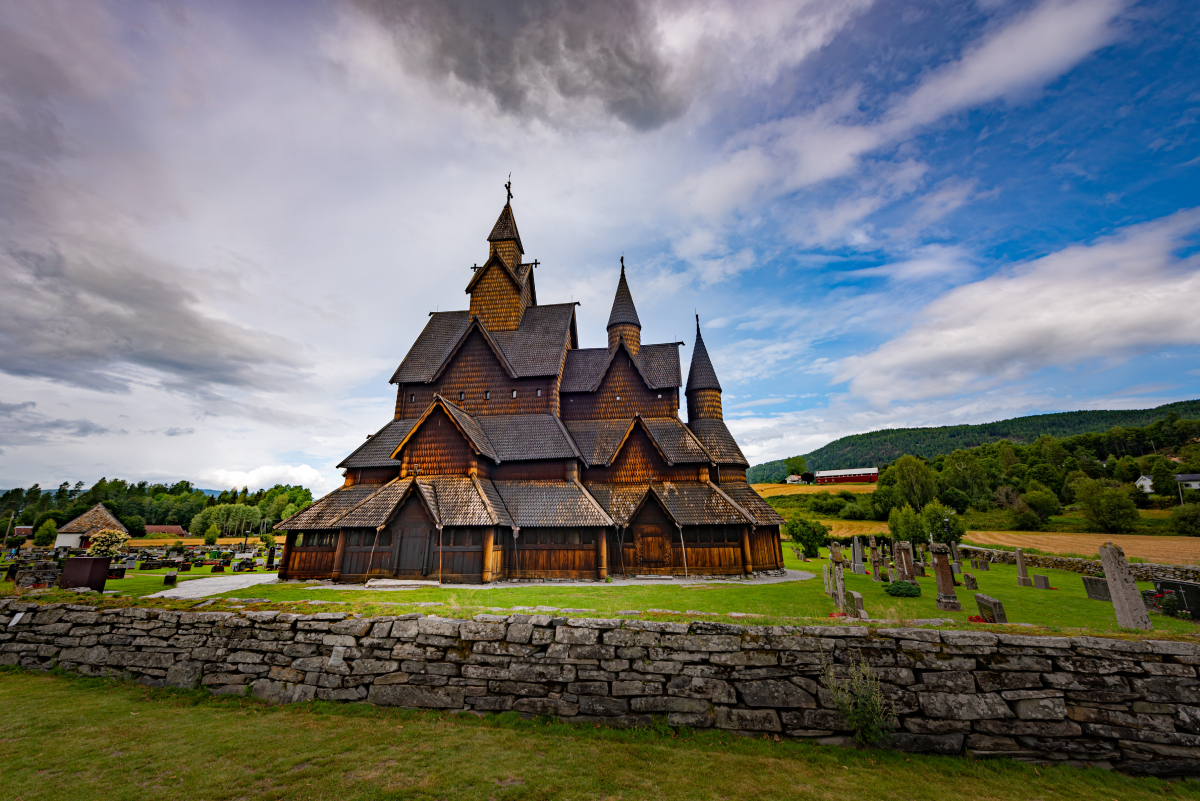
Hopperstad Stave Church underwent major restoration work in the early 17th century. Photo: DeServian1431 (CC BY-SA 4.0)
Hopperstad Stave Church
Like so many other early medieval pieces of architecture, we do not exactly know when the stave church in the Norwegian village of Hopperstad was built. Our best guess is about 1130 CE, within living memory of what later historians have dubbed the Viking Age (c. 750–1100 CE).
As Sverre Bagge writes in his 2005 article in the Scandinavian Journal of History, by this period, the inhabitants of Hopperstad had been exposed to Christianity for centuries.
Given the village's location close to the Sognefjord, which would have allowed access to the North Sea and beyond, the village was strategically located to exploit trade networks that linked the Viking world to the surroundings of the North Sea.
The village must have been of a significant size and importance during the first half of the 12th century CE to warrant the construction of a church, a significant expenditure of village labor, resources, and time.
Archeological excavations in the 1980s uncovered evidence that there may have been an earlier stave-style church constructed on this site.
By the mid-12th century CE, however, there was clearly a need for a new church and, like other churches constructed in Scandinavia at the time, a stave-style construction was favored. Sadly, there are no contemporary accounts of what the medieval church looked like.
The sturdiness of this method of construction proved invaluable, as major restoration work was not needed until the early 17th century CE. It was during these restoration works that the church took on its current form, with a bell tower added and a large east wing.
Yet inside, the church still retained some of its medieval charm, with much graffiti, scrawled in runic symbols, harking back to the church's construction during the glowing embers of the Viking Age.
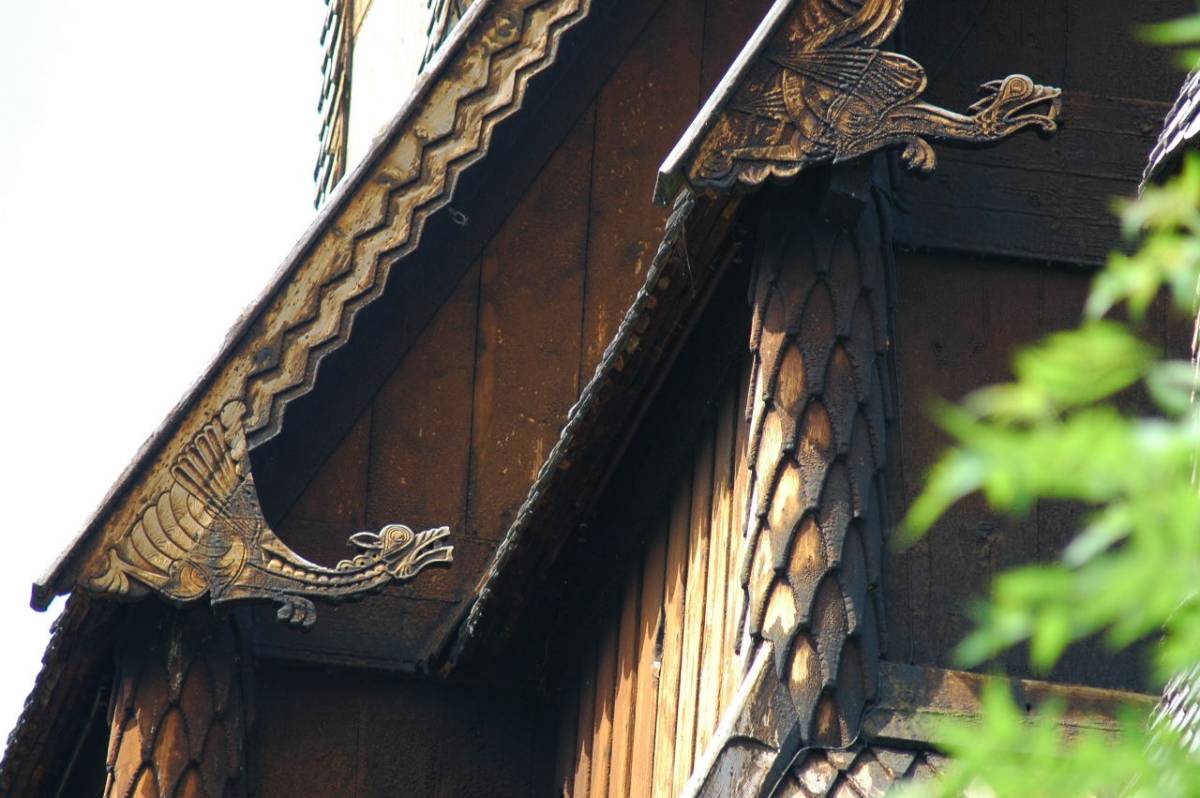
Hopperstad Stave Church reflects the transition from Viking Age society to Christian Norway. Photo: Jean-Louis MALPERTU
Later restoration, political importance, and disrepair
The early modern period was a time of immense change for Norway and especially the Hopperstad Stave Church.
Like other churches in the country, it was sold by the monarchy in the early 18th century to pay off the debts incurred by the Kingdom of Denmark-Norway during the Great Northern War. However, it would eventually be bought back by the Church of Norway.
The 19th century saw the Hopperstad Stave Church gain national importance. It was one of 300 churches selected to take part in the election of a constituent assembly in 1814.
This great honor saw the church play a pivotal role in the creation of a modern Norwegian constitution, which helped lay the foundations of a modern and independent Norwegian nation.
Following this political high point, the church fell into a state of disrepair. By the 1870s CE, it was in dire need of major restoration and repairs after more than seven centuries of communal celebrations, worship, and use.
The church fell under the remit of the recently established Society for the Preservation of Ancient Monuments. Here, under the eye of architect Peter Andreas Blix, the church was remodeled using the Borgund stave church as a guide.
Much of the structural foundation of the church was repaired, allowing the church to take pride of place well into the 21st century CE. Whilst it is nowadays a museum, the local church authorities still use it for special occasions and events.
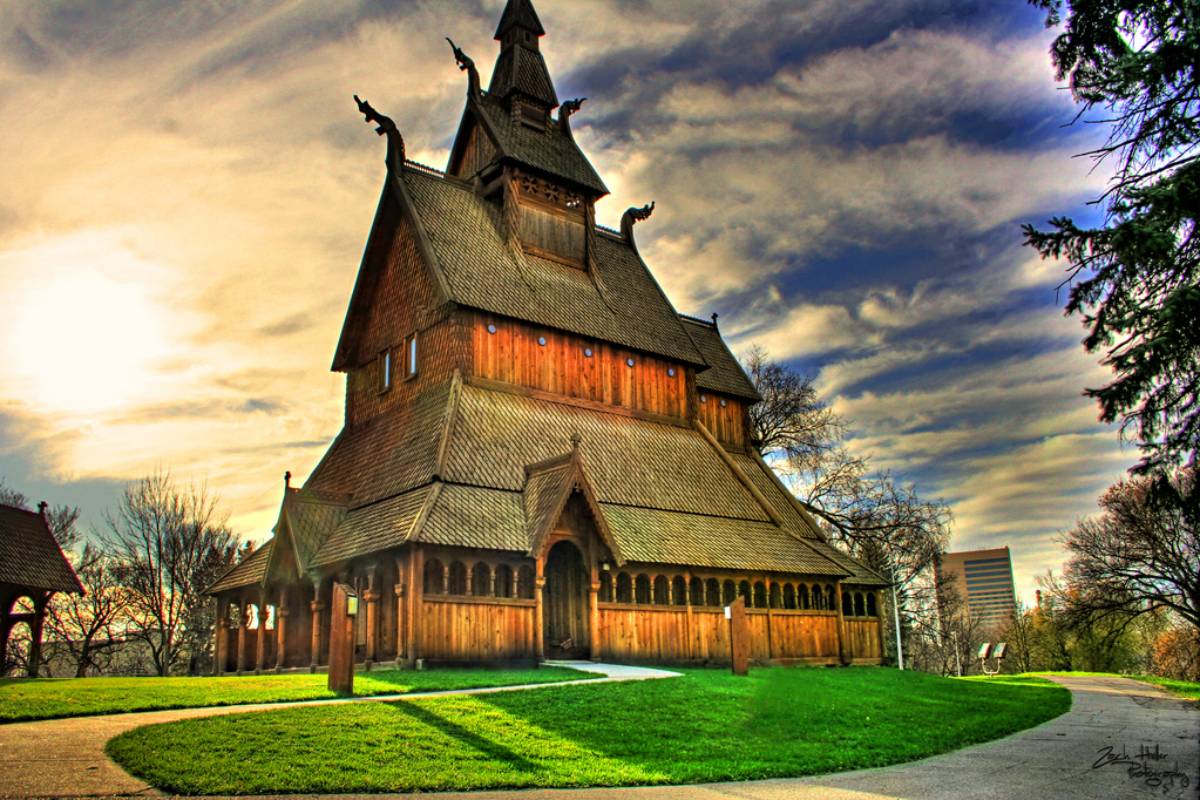
The Hopperstad Stave Church Replica stands at the Hjemkomst Center in Moorhead, Minnesota. Photo: Zach Heller (CC BY-SA 2.0)
Connected by the Viking spirit
Following the initial construction of the Hjemkomst Center in 1985, the runaway popularity of the institution soon saw it become a statewide cultural attraction.
The hordes of tourists coming to witness the majestic workmanship of the replica Viking ship sparked a cultural flowering and increased revenue for the working-class town of Moorhead, Minnesota.
After more than a decade of tourism dollars flooding in, more work was needed to expand the museum. In 1998, local artist Guy Paulson constructed a full-scale replica of the Hopperstad Stave Church using local wood, including pine, redwood, and cedar.
Paulson decided to construct this church not only as a tribute to his familial heritage, as his grandfather emigrated from Norway in 1904, but also as a nod to the region's broader Scandinavian heritage and ancestry.
More than five and a half years of blood, sweat, and toil went into the construction of the church, with the church finally completed in 2001. All the carvings were meticulously done by hand, as they had been done for the original church centuries ago.
The Hopperstad Stave Church thus connects a small village on the west coast of Norway to a small town in America's Midwest. This is just one more reason why Viking history can continue to inspire us well into the modern period, centuries after the last Viking ship ever sailed.
For more information on Viking settlements in North America, visit National Geographic here.
We get to provide readers with original coverage thanks to our loyal supporters. Do you enjoy our work? You can become a PATRON here or via our Patreon page. You'll get access to exclusive content and early access.
Feel free to reach out to discuss potential stories that may be in the public interest. You can reach us via email at [email protected] with the understanding that the information you provide might be used in our reporting and stories.