

One of the most popular Scandinavian cultural exports of the past decade has been the hit series Bron/Broen (The Bridge in Danish and Swedish, respectively).
In a classic Scandi-noir crime thriller, a woman is found murdered in the middle of the Øresund/Öresund (again spelled in Danish and Swedish, respectively, but we will stick with the Danish spelling for the rest of this article) bridge that connects Denmark with Sweden.
Police officers from the two countries must work together to try to find a ruthless killer.
Now, for those who have driven across the Øresund Bridge and the connecting underwater tunnel, you know it is one of the most striking pieces of Scandinavian design constructed recently, and dead bodies are few and far between.
The bridge took more than five years to construct and involved the construction of the Drogden Tunnel under the Øresund, the strait of water that separates the Danish island of Zealand and the Swedish län (county) of Skåne (Scania).
This modern attempt to bridge the two Scandinavian countries comes after a millennium of the tale of their separation.
Back in the early medieval period, people from Viking societies on both sides of the Øresund revered a goddess, Gefjun (Old Norse Gefjǫn; also spelled Gefjon or Gefion), who was said to be responsible for their separation.
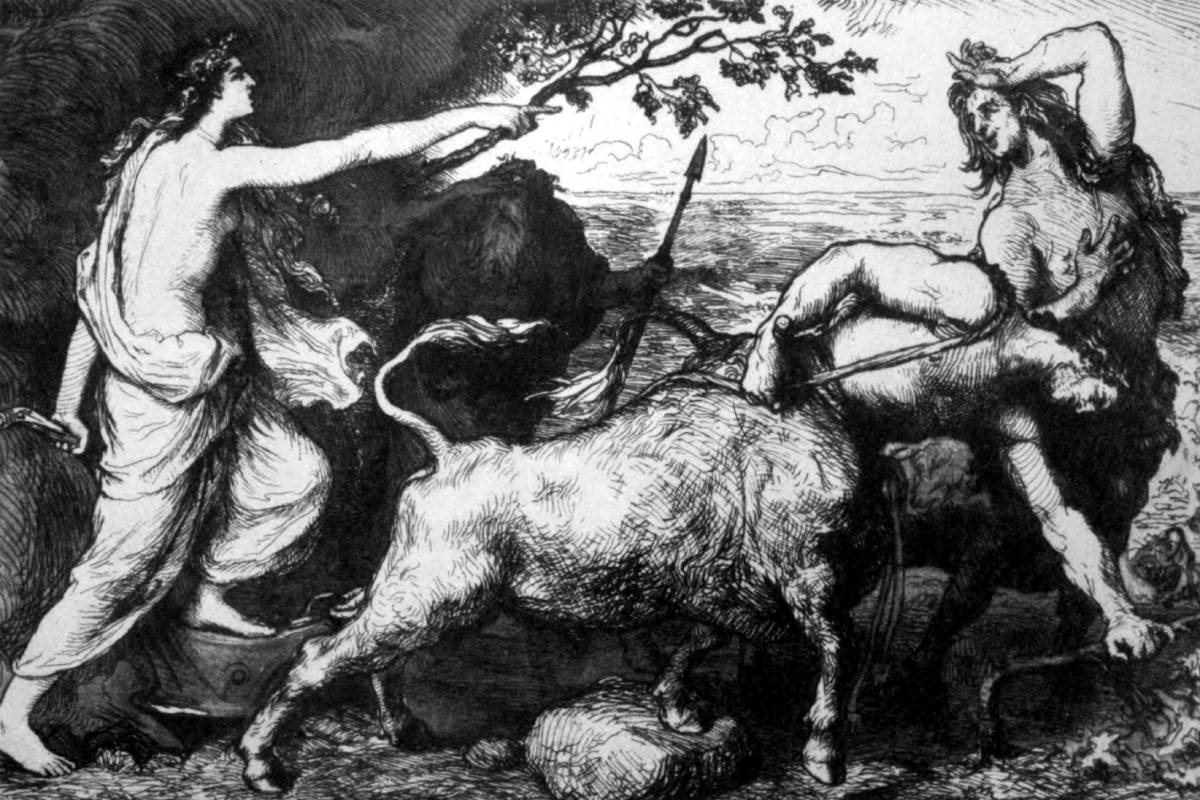
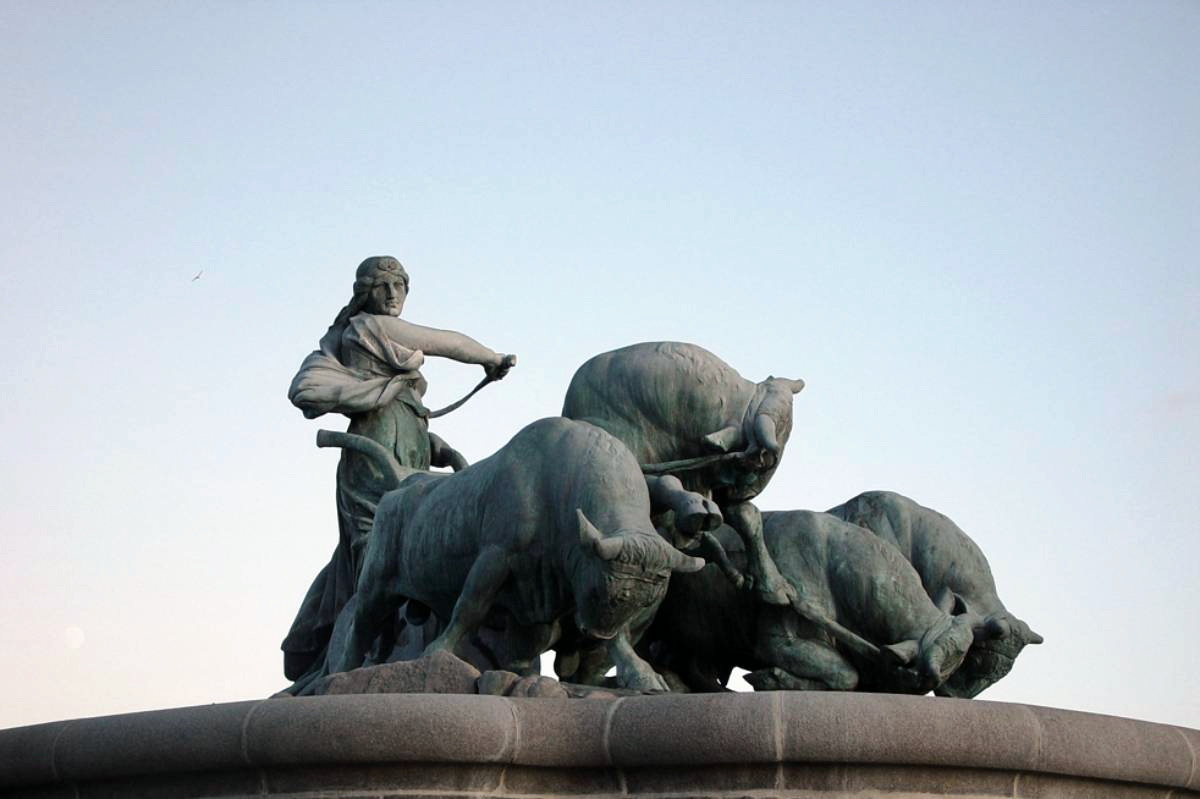
This 1906 illustration depicts the Norse goddess Gefjon driving her oxen, having just accepted land from King Gylfi. Illustration: Lorenz Frølich (1820–1908)
Getting to know the Gylfaginning
So then, where do we find a tale of a Norse goddess that was told more than a millennium ago, when Viking ships plied the Øresund? Luckily for us, and especially lucky for The Viking Herald writers, such tales are only a click away.
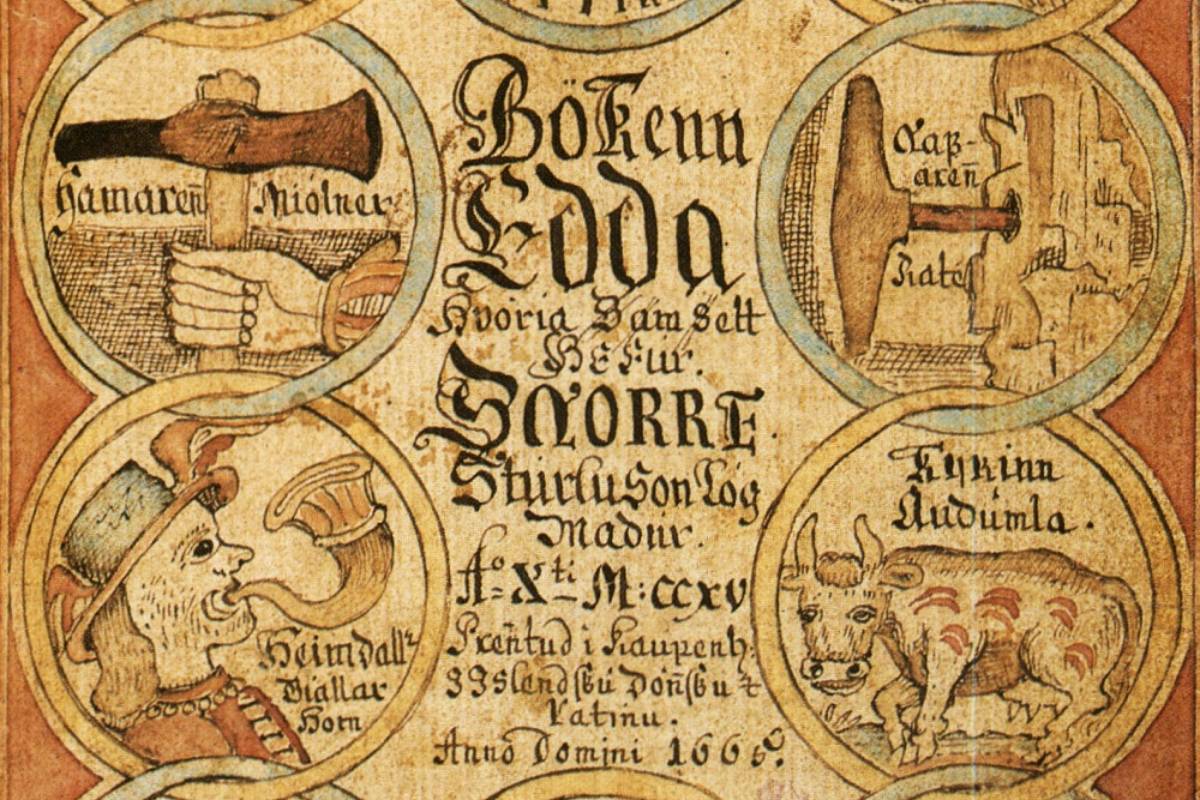
The most extant and exhaustive work of Norse mythology has been passed down thanks to the tireless work of 13th-century CE Icelandic poet and politician (and friend of The Viking Herald) Snorri Sturluson and came to be known as the Prose Edda.
This is, as Sigurður Nordal and Jean I. Young write in their 1956 article in the journal Medium Ævum, famed for "the lucidity of the prose... and wit."
In the second section of this compilation of Norse poems, sagas, and tales, we find the Gylfaginning, or in English, The Beguiling of Gylfi.
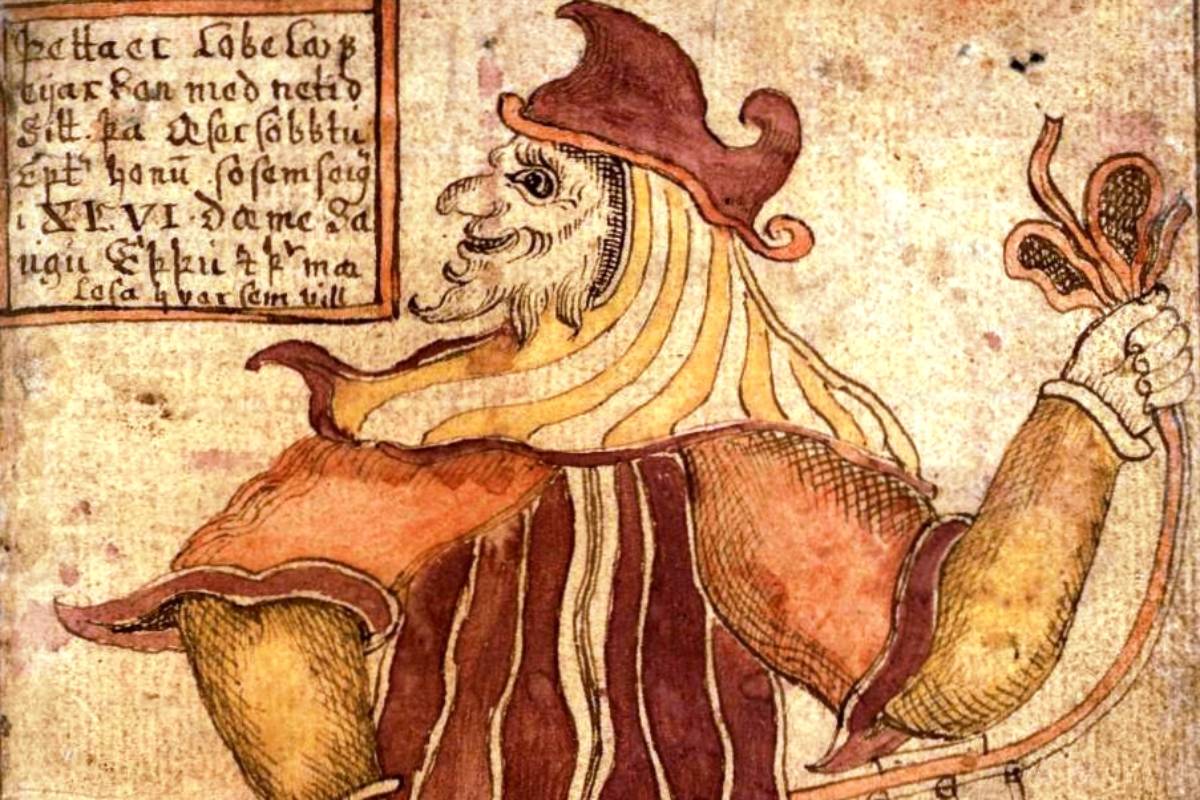
This tale is very much a question-and-answer style session between the Swedish king Gylfi and three men who sit on thrones in Asgard: High (Hár), Just-As-High (Jafnhár), and Third (Þriði), all names traditionally interpreted as aspects of Odin himself.
Using an online version of the Gylfaginning, based on the 1916 English translation by Arthur Gilchrist Brodeur (which uses the spelling “Gefjun”), we find that:
"King Gylfi ruled the land that men now call Sweden."
[Gylfaginning I]
Seems harmless enough, right?
We know that people from Viking societies had, by the early medieval period, established a nascent Swedish state which would, by the end of the Viking Age, be transformed into the medieval Kingdom of Sweden, the modern nation-state's ancestor.
Now, it appears that King Gylfi was a generous man, as:
"It is told of him that he gave to a wandering woman, in return for her merry-making, a plow-land in his realm, as much as four oxen might turn up in a day and a night."
[Gylfaginning I]
Quite what this "merry-making" was is probably best left to your wild imagination, dear reader, but remember that we are a family-friendly operation here at The Viking Herald, so let's quickly move on. It appears then that this woman wasn't just a mere mortal like you and me, dear reader, but:
"...was of the kin of the Æsir; she was named Gefjun."
[Gylfaginning I]
Throughout the myriad mythologies of the world's past, from the Ancient Celts to the Chinese, the general rule is that when we mere mortals get involved with mythical deities, things don't work out well for us. The Gylfaginning is no exception to the rule, as we shall see.
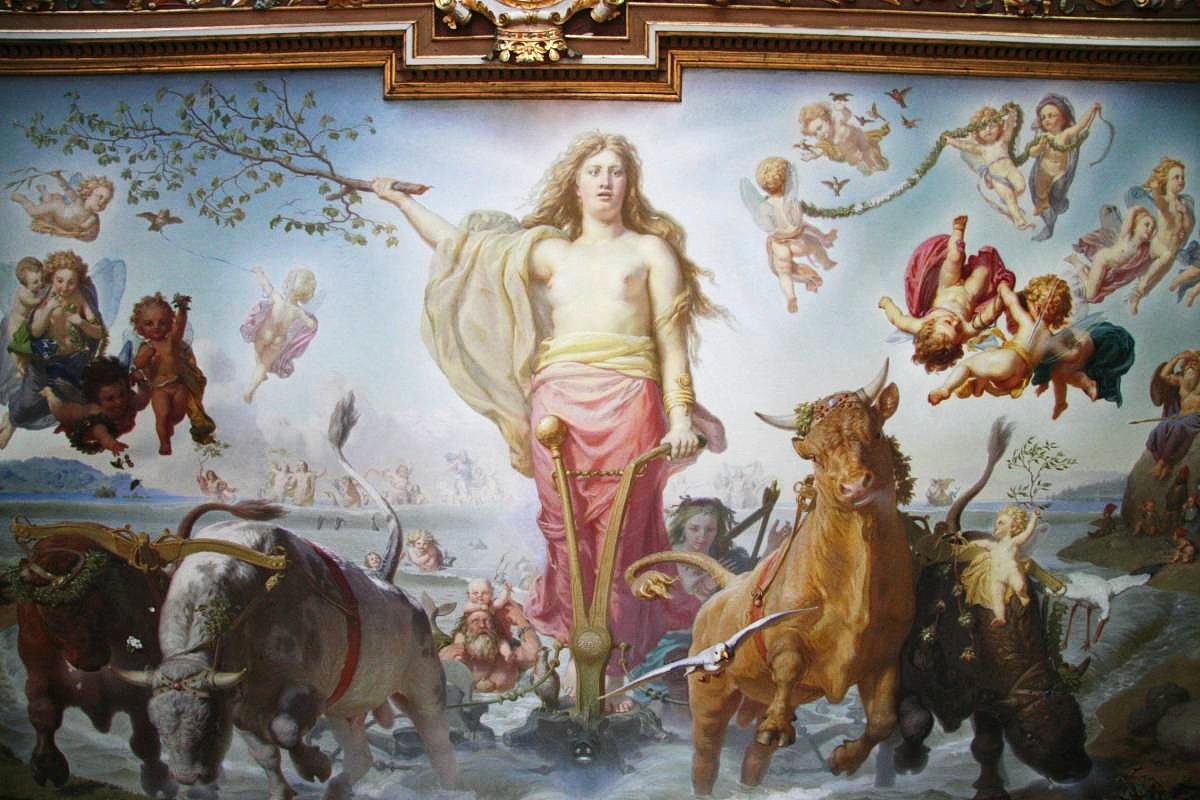
Gefjon is shown plowing land from Sweden to create Zealand in this ceiling painting at Frederiksborg Castle in Denmark. Author: Lorenz Frølich (1820–1908)
Plying the land
We have a generous land grant from the Swedish king to Gefjon. Now, this goddess is associated with agriculture and fertility, as the two were interlinked for people in Viking societies.
As Karen Bek-Pedersen writes in her 2018 article in the journal Quaestiones Medii Aevi Novae, Gefjon, as the early medieval period progressed, soon became "a divine female figure representing the land as well as sovereignty" for people in Viking societies.
Given her reverence and this generous land grant, Gefjon did not simply rest on her laurels or become a land speculator—she got to work, as:
"She took from the north, out of Jötunheim, four oxen which were the sons of a certain giant and herself, and set them before the plow."
[Gylfaginning I]
Four great giant oxen were exactly what Gefjon needed to work the land and make this slice of soil her own. As she got to work with the oxen, she noticed that:
"...the plow cut so wide and so deep that it loosened up the land; and the oxen drew the land out into the sea and to the westward, and stopped in a certain sound."
[Gylfaginning I]
This sound, of course, we know is the Øresund. This strait of water would become integral throughout the Viking Age, as many longships sailed through to transport a whole horde of people from Viking societies, including their wares and warriors.
It would later become integral to the economy of the medieval Kingdom of Denmark, as tolls collected here—particularly from ships from members of the Hanseatic League—became a substantial amount of the state's income.
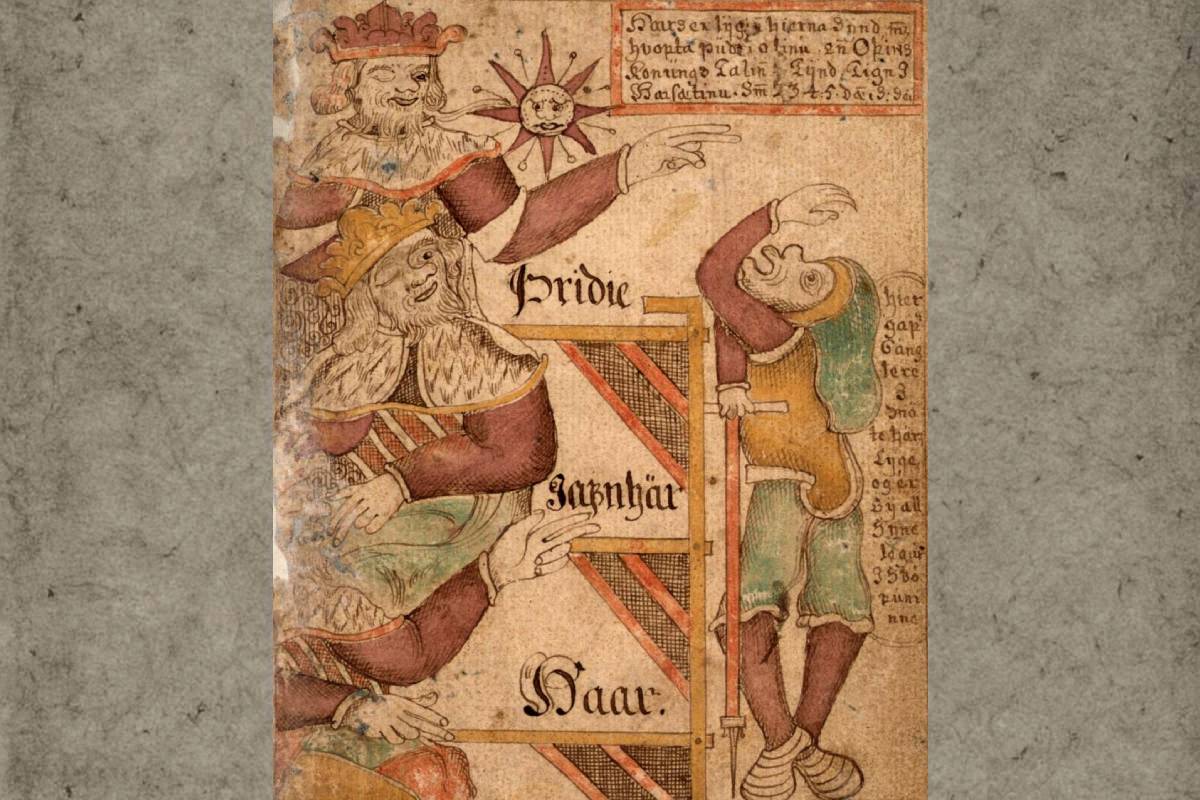
An image from manuscript SÁM 66 depicts Gylfi engaging with High, Just-As-High, and Third, three figures often interpreted as Odin. Source: Public domain
The creation of a Sea-land
Having separated a part of Sweden, Gefjon continued with her magical work. She was said to be responsible for the naming of the Danish island of Zealand (Sjælland in Danish):
"There Gefjun set the land, and gave it a name, calling it Selund."
[Gylfaginning I]
Don't be fooled by modern Danish historians or linguists who will give you an "official" reason as to why this island is called Zealand—we know that it was all down to the naming preferences of this Norse goddess of agriculture and fertility.
In fact, Danish and Swedish cartographers should acknowledge Gefjon's role in the naming of the region, as:
"...from that time on, the spot whence the land had been torn up is water: it is now called the Lögr in Sweden, and bays lie in that lake even as the headlands in Selund."
[Gylfaginning I]
A poetic end
Now we are all aware of the mighty goddess Gefjon, whose plow helped to shape Denmark. Yet this story ends on a poetic note, as we find a poem regaled by the famous skald, Bragi.
Despite his namesake, who was a historically verifiable skaldic poet, we leave the last word to the Norse god of poetry and eloquence. He best sums up this tale as how:
"Gefjun drew from Gylfi gladly the wave-trove's free-hold, Till from the running beasts sweat reeked, to Denmark's increase;
The oxen bore, moreover, eight eyes, gleaming brow-lights, O'er the field's wide: booty, and four heads in their plowing."
[Gylfaginning I]
We feel that the producers of the hit series Broen have missed a beat here by not including any references to the magical story of how the Norse goddess Gefjon helped create the island of Zealand with her four oxen and a plow.
Oh well, we'll just have to wait for the series to be rebooted sometime in the future...
For more information on Danish Viking history, visit Forbes here.
We get to provide readers with original coverage thanks to our loyal supporters. Do you enjoy our work? You can become a PATRON here or via our Patreon page. You'll get access to exclusive content and early access.
Feel free to reach out to discuss potential stories that may be in the public interest. You can reach us via email at [email protected] with the understanding that the information you provide might be used in our reporting and stories.