


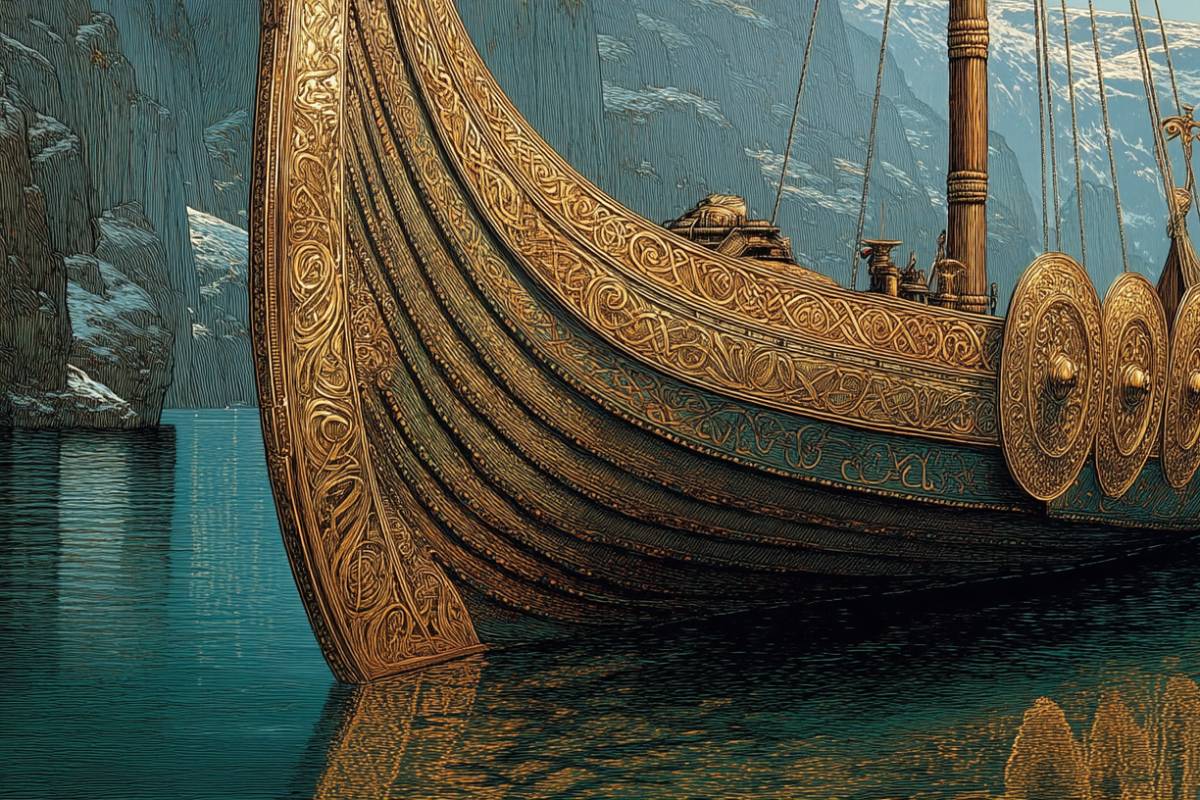
We know that people from Viking societies were some of the most skilled sailors in world history.
From the frozen depths of the far north, they sailed from the shorelines of what is now Canada to the edges of the Caspian Sea, and almost every ocean, river, and sea in between.
Given the importance of the ship as a mode of commerce, colonization, trade, transport, and warfare, the tales that they told each other were littered with ships and imagery from life at sea.
One of the most magical of these ships is Skíðblaðnir, the ship of the Norse God Freyr. Norse tradition treats it as a kind of perfect creation: the ship is said to be large enough to carry all the gods fully armed, yet it could fold down to be carried like a cloth, and it always had a fair wind as soon as the sail was raised.
Its name is often glossed as something like "assembled from thin boards," and the ship itself is credited to dwarf-smiths, made as a gift for Njördr's son.
If this seems all a bit fanciful for a ship, think again. According to Norse legend and lore, this is a mighty and magical vessel, counted among the “foremost” things in the world.
In Gylfaginning (chapter 41, XLI) in Arthur Gilchrist Brodeur's 1916 English translation of the Prose Edda, the text quotes a stanza from Grímnismál (Poetic Edda), and the text reads:
Odin is of great might. Many examples are found in proof of this, as is here said in the words of the Æsir themselves:
Ash Yggdrasill's trunk of trees is foremost,
And Skídbladnir of ships;
Odin of Æsir, of all steeds Sleipnir,
Bifröst of bridges, and Bragi of skalds;
Hábrók of hawks, and of hounds Garmr.
We know that, for people in Viking societies, Freyr was an important deity. As William P. Reaves writes in his 2008 article "The cult of Freyr and Freyja":
"Together with Odin and Thor, Freyr is the most prominent god of the Viking era... He is not merely the fertility god of a farming population, but possesses all of the prerequisites of an ideal king: virility, military prowess, and wealth..."
How then did this important Norse God, he of halls of power and harvests, end up with such a mighty vessel? As always, whenever we have a question about Norse mythology, our best bet is to turn to the Eddas and related sources.
- READ MORE: All you need to know about Viking ships
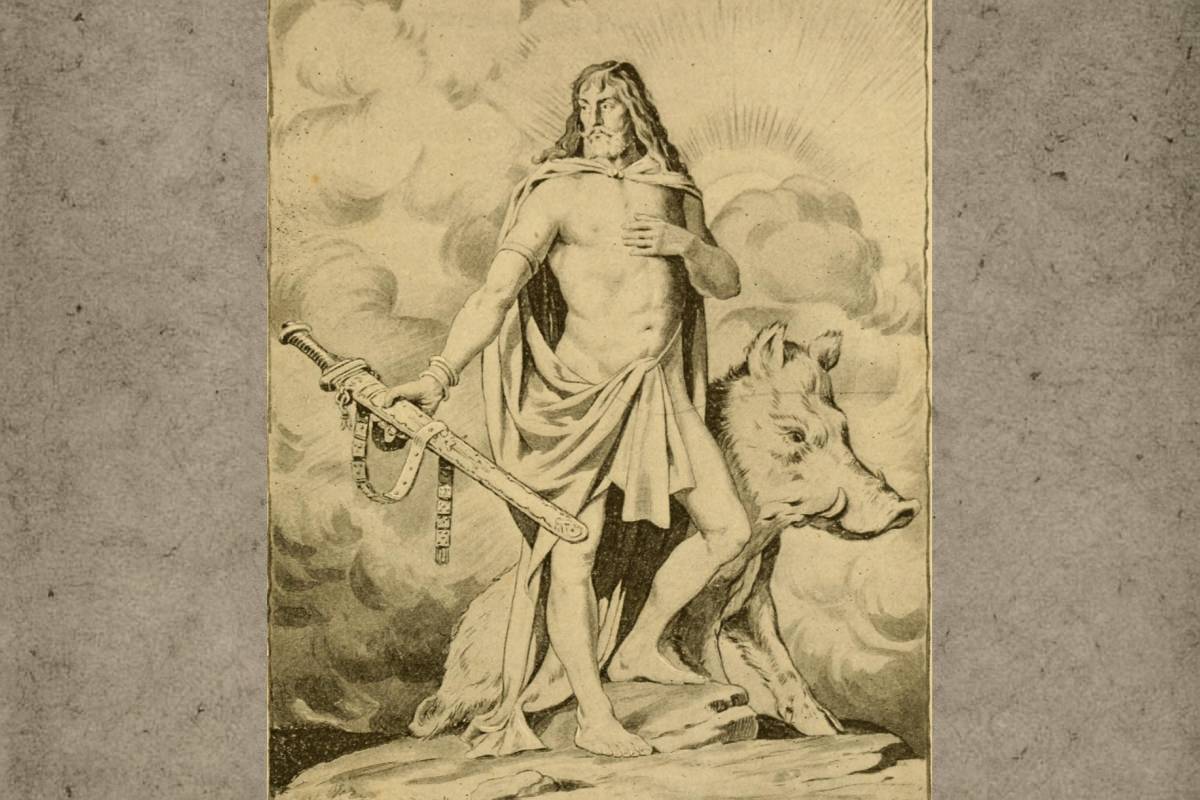
A 19th-century illustration shows Freyr, the Norse god tied to fertility and prosperity, beside his boar Gullinbursti ("Golden-bristle"). Author: Johannes Gehrts (1855–1921)
Definitely not your Disney depiction
There is no better source to understand the rich tapestry of Norse mythology than Old Norse texts such as the Eddas and the sagas.
This heady mix of accounts, chronicles, stories, and tall tales has remained popular for centuries due to the wide variety of magical and mythological beings and creatures that leap out of every page.
Long before Walt Disney gifted the world a saccharine version, dwarves were found in these stories, portrayed as seriously skilled smiths and metalworkers.
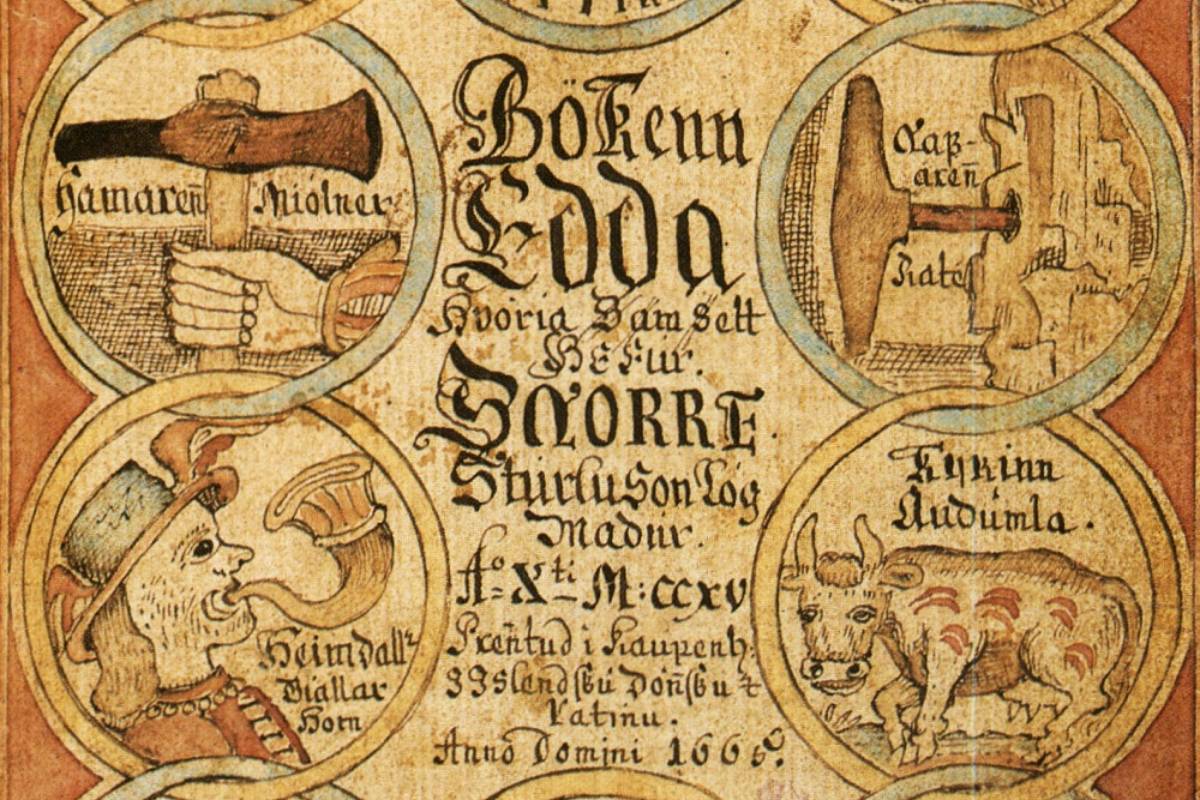
Skáldskaparmál is one of the three main sections of the Prose Edda, compiled by Snorri Sturluson in the 13th century CE, but based upon the oral traditions that people in Viking societies once regaled one another with.
In this section, we find the origins of Freyr's ship. Turning to an online version of the same 1916 English translation by Brodeur we used earlier, we find that:
"Ívaldi's offspring
In ancient days
Went to shape Skídbladnir,
Foremost of ships,
Fairly for Freyr,
Choicely for Njördr's child."
Here, "Ívaldi's offspring" are a group of dwarves who fashion some of the most legendary items for the Norse Gods.
Aside from constructing the "foremost of ships," they also create a spear for the Norse All-Father himself, as well as a sort of proto-wig for Sif, following naughty Loki's mischievous haircutting antics.
Yet it was the magical properties that the dwarves endowed the ship with that we turn to next.
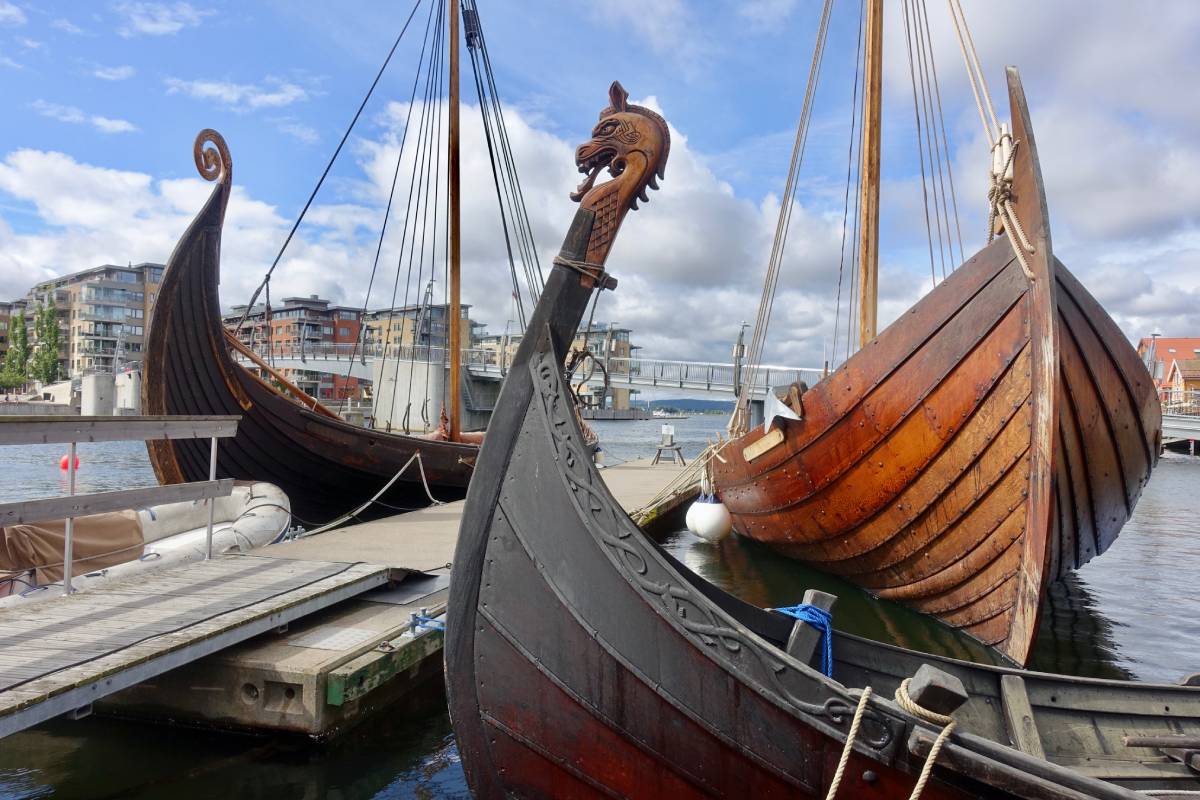
Prows of modern Viking ship replicas and medieval-style boats moored at a pier in the harbor of Tønsberg, Norway. Photo: Wolfmann (CC BY-SA 4.0)
Imbued with magical properties
Given that these dwarves had forged many a magical item for the Norse Gods, we learn later in Skáldskaparmál of the mystical properties that lay within Skíðblaðnir.
In Skáldskaparmál (section 35), we find a vivid description of the ship's qualities:
"... a favoring breeze as soon as the sail was raised, in whatsoever direction it might go, but could be folded together like a napkin and be kept in Freyr's pouch if he so desired."
Not only was this ship a piece of marvelous engineering, always able to have a favorable wind as soon as the sail was raised, but its compact size also made it a handy gift for this Norse God.
We can see the magical properties of Skíðblaðnir mirror some of the core values that people from Viking societies held in high regard, including their control over nature, by mastering the high seas on their Viking ships, and maritime mobility.
Their ships again allowed them to expand outwards into the wider world for much of the early medieval period.
An embedded maritime culture
The mythical majesty of Skíðblaðnir is not only proof of the vivid imaginations of people from Viking societies but also of the importance they placed on seafaring vessels.
Whilst Freyr did not commission the ship, it became one of his many magical possessions, but surely the one that was the most practical.
Forged by dwarves and always able to have a favorable wind, Skíðblaðnir reflects the deeply embedded maritime culture that people from Viking societies possessed.
For more information on how recent archeology has helped the search for Norse mythological locations, visit Smithsonian Magazine here.
We get to provide readers with original coverage thanks to our loyal supporters. Do you enjoy our work? You can become a PATRON here or via our Patreon page. You'll get access to exclusive content and early access.
Feel free to reach out to discuss potential stories that may be in the public interest. You can reach us via email at [email protected] with the understanding that the information you provide might be used in our reporting and stories.



_(14801561533).jpg)