

An ongoing exhibition at Árni Magnússon Institute for Icelandic Studies in Reykjavík, Iceland, presents a series of manuscripts central to our understanding of Viking history and mythology.
With only two weeks remaining of the first version of the exhibition, The Viking Herald speaks to two of the organizers, research professor Svanhildur Óskarsdóttir and curator Sigrún Kristjánsdóttir, about what visitors can expect.
A fitting home for the sagas
As Svanhildur and Sigrún explain, the exhibition is linked to the institute's relocation to the spectacular Edda building in the heart of Reykjavík.
"The Árni Magnússon Institute moved into its new premises, Edda, in 2023," the pair inform The Viking Herald.
"The building was designed to include an exhibition area that enables us to showcase the treasures of the manuscript collection. Those medieval manuscripts are considered to be some of Iceland's most significant cultural assets."
The Icelandic sagas, in particular, have provided countless insights into the Viking era.
Although they were written in the 13th and early 14th centuries, the sagas detail many of the key legends and feats of the Viking Age.
The most detailed passages also provide glimpses into the everyday lives of Viking people and Scandinavia's pagan belief system prior to the Christianization of the region.
Visitors to the World in Words exhibition can see the original copy of Möðruvallabók, a manuscript from 14th-century Iceland.
It contains a number of well-known sagas, including the popular Laxdæla Saga and Egil's Saga.
Many believe Egil's Saga was written by the Icelandic historian and poet Snorri Sturluson. The manuscript also includes the Njáls Saga, widely considered one of the most highly developed of the Icelandic sagas.
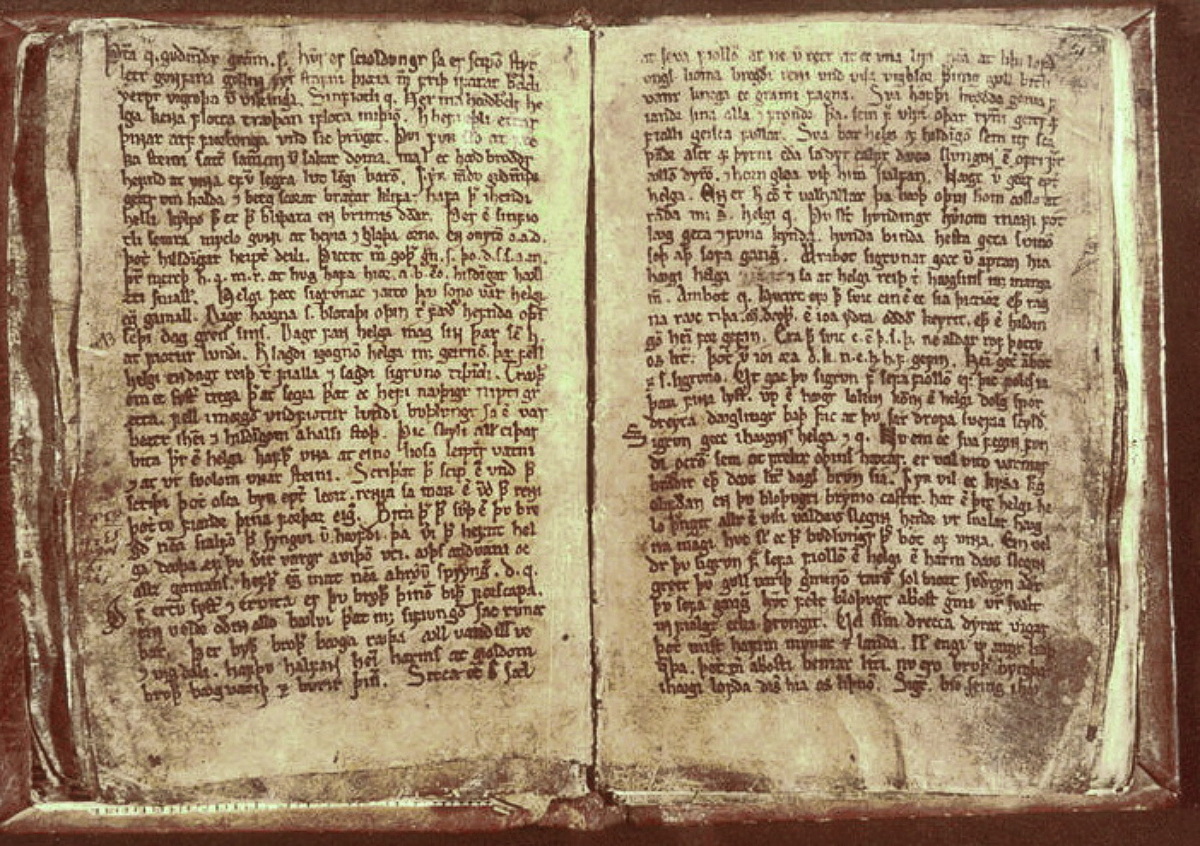
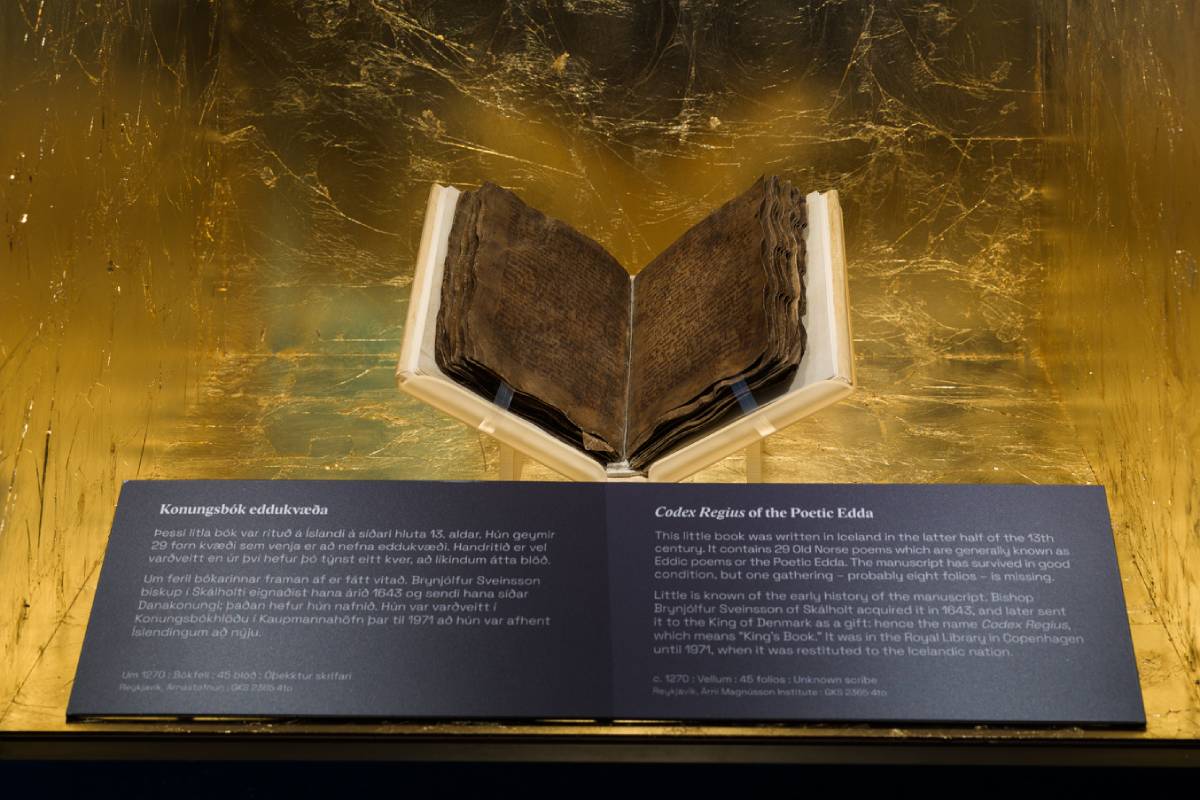
Visitors can see an original copy of the Codex Regius, a manuscript containing 29 Old Norse poems central to Viking lore. Source: Public domain
A glimpse of the Poetic Edda
Yet it is another manuscript related to the Viking Age that the pair consider the real jewel of the exhibition. Visitors can view an original copy of the Codex Regius of the Poetic Edda.
The Poetic Edda is a name for a collection of Old Norse poems that tell us much about the world of Norse mythology.
"In terms of manuscripts exhibited, the Codex Regius of the Poetic Edda is in a league of its own because of its significance for our knowledge of Old Norse mythology," explain Svanhildur and Sigrún.
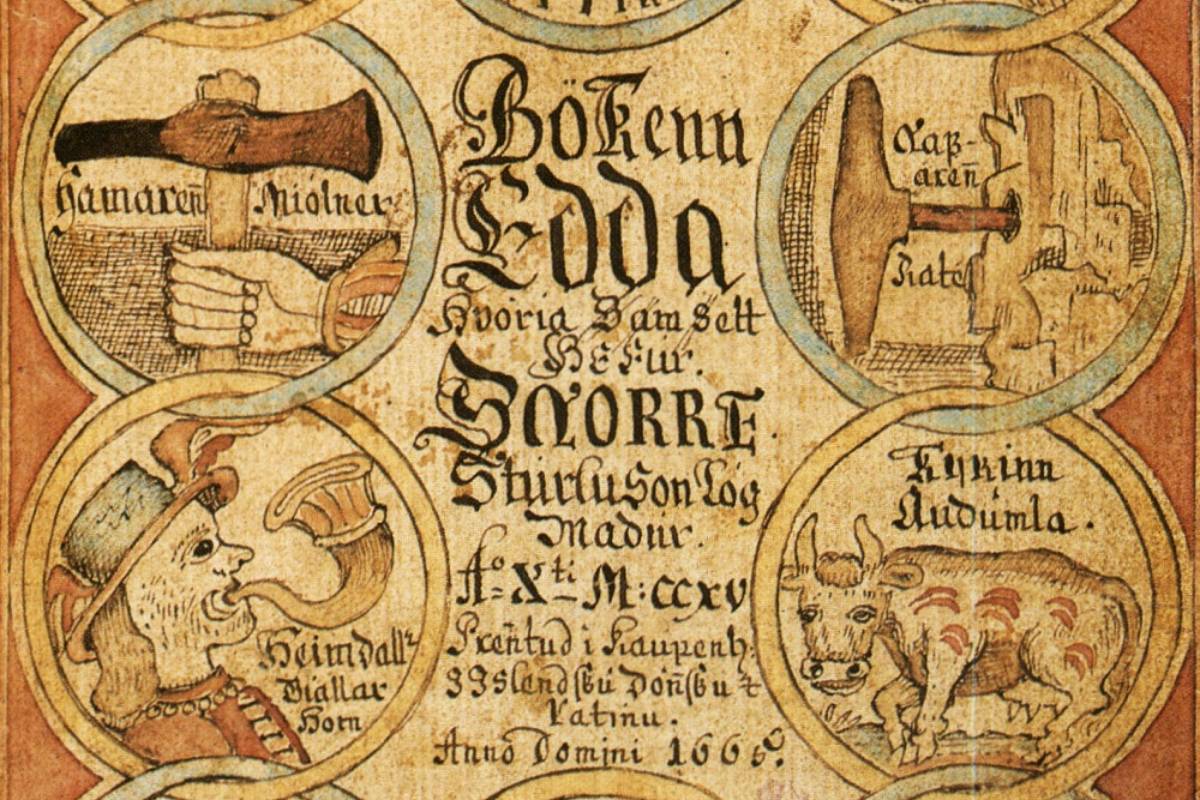
"In terms of novelty, we are also particularly pleased with the way illuminations from the manuscripts are highlighted throughout the exhibition."
Indeed, the Codex Regius, or Konungsbók, receives a special display at the exhibition.
The manuscript contains 29 poems that narrate some of the most important elements of Norse mythology.
The poems include Völuspá, which describes the beginning and the end of the cosmos; Lokasenna, in which Loki insults and taunts the Æsir; and a cycle of poems that describe the adventures of Sigurd, the dragon slayer.
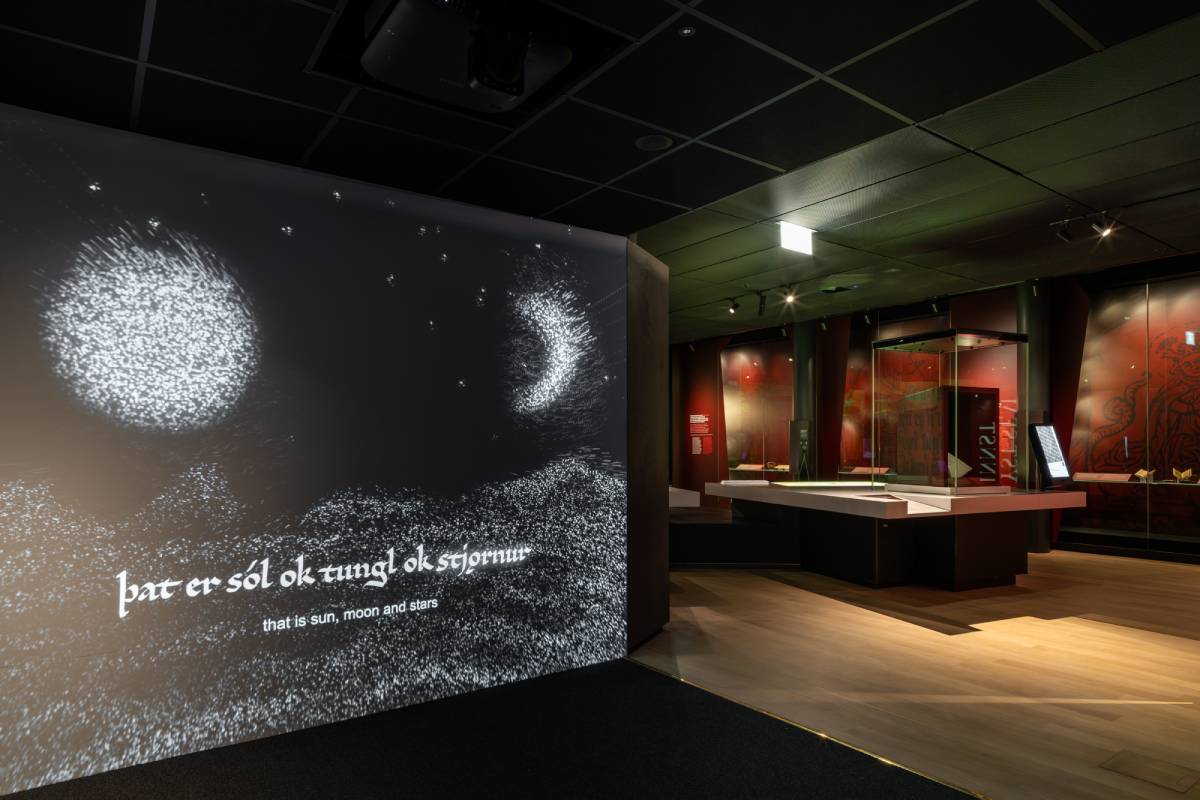
Visitors can explore the exhibition’s rich and varied content, which highlights themes like life, death, faith, and honor. Source: Árni Magnússon Institute for Icelandic Studies
"Rich and varied content"
As Svanhildur and Sigrún tell The Viking Herald, the Árni Magnússon Institute for Icelandic Studies – which is tasked with preserving Iceland's rich heritage – was keen to help the general public enjoy some of these incredibly precious texts.
"The exhibition focuses on manuscripts preserved by the institute, which are part of UNESCO's World Cultural Heritage," Svanhildur and Sigrún point out.
"It was designed to be innovative, exciting, sophisticated, beautiful, and informative all at once, and for visitors of all ages and different origins."
"The main focus of the exhibition is to open up the closed world of the manuscripts and show their varied and rich content, where life, death, emotions, faith, power, and honor come into play."
"Fascinating ancient manuscripts are displayed, and their content is explored in a variety of ways."
"The exhibition aims to engage all the senses of the visitor. Guests can see animated films and illustrations, play games, listen to audio recordings of different kinds, read texts, and delve into interactive content on touchscreens."
"It also highlights the significance of Old Norse literature in modern times."
- READ MORE: The Viking history of Iceland – A primer
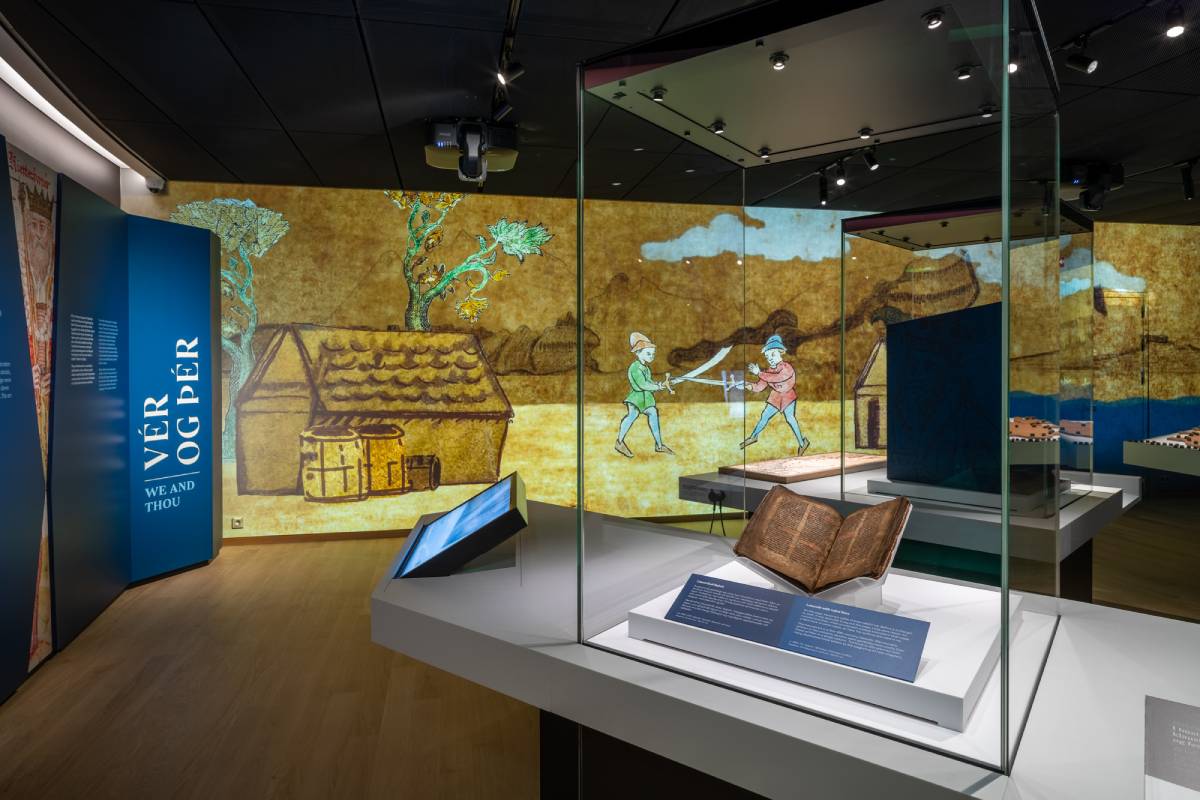
Manuscripts on display change every three months to ensure conservation and to showcase different aspects of Icelandic heritage. Source: Árni Magnússon Institute for Icelandic Studies
The exhibition cycle continues
The exhibition, which is open on Tuesdays to Sundays from 10 am to 5 pm, is divided into five sections: the beginning of the world, human life, worldviews, law and order, and the end of the world, with manuscripts allocated to each theme.
As indicated above, the exhibition is housed at the Edda. This spectacular new building houses both the Árni Magnússon Institute for Icelandic Studies and the Faculty of Icelandic and Comparative Cultural Studies of the University of Iceland.
Although the first edition of the exhibition will come to an end on February 9, visitors will be able to attend further versions in the coming months and years.
"For conservation reasons, we change the selection of manuscripts every three months. This also gives us opportunities to highlight different manuscripts," Svanhildur and Sigrún inform The Viking Herald.
"Events will be held regularly in connection with the exhibition, in the form of lectures, guided tours, informal talks, concerts, and workshops for families."
You can read more about the exhibition on the official website here.
We get to provide readers with original coverage thanks to our loyal supporters. Do you enjoy our work? You can become a PATRON here or via our Patreon page. You'll get access to exclusive content and early access.
Feel free to reach out to discuss potential stories that may be in the public interest. You can reach us via email at [email protected] with the understanding that the information you provide might be used in our reporting and stories.