

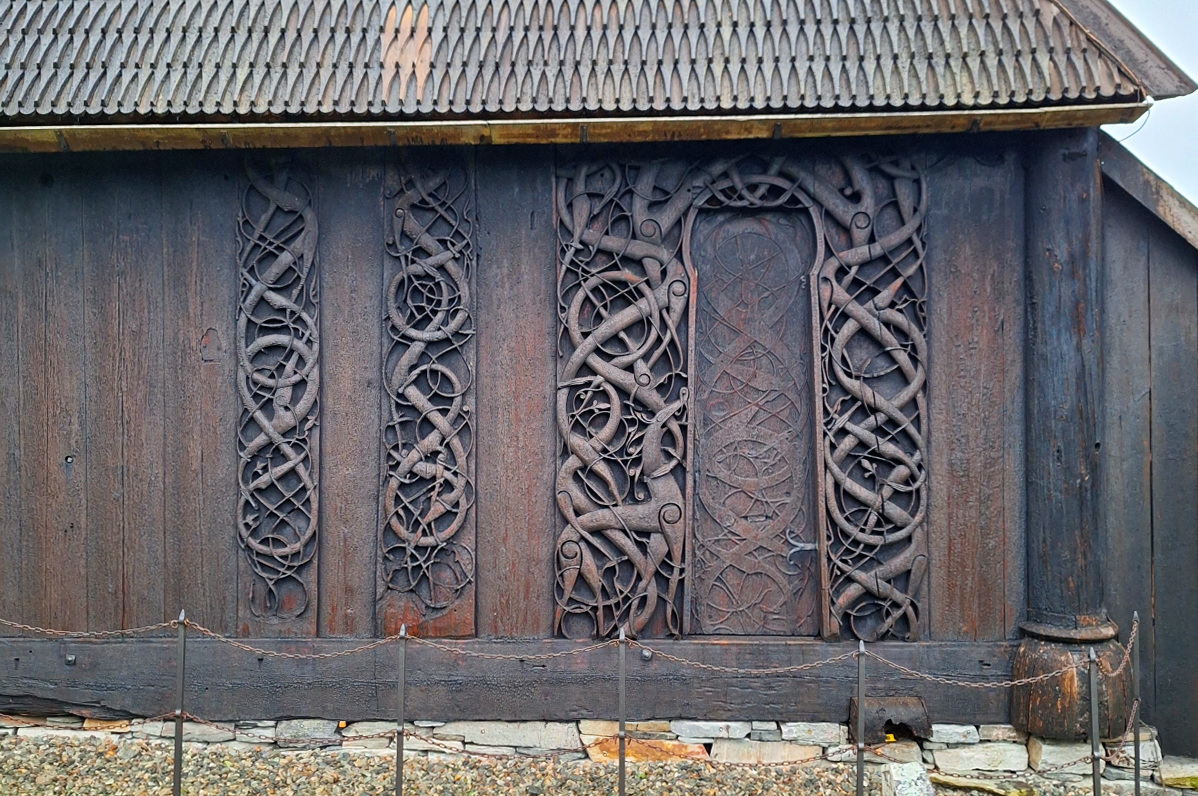
At Ornes, a small town in Sognefjorden on Norway's west coast, a unique restoration project has drawn to a close.
The Treets Meister project was designed to explore the techniques used to create the North Portal found at Urnes Stave Church, one of the oldest stave churches in Norway and a UNESCO World Heritage Site.
A group of wood carvers from three Norwegian workshops has created an enormous portal that will form part of the new World Heritage Center to be built at Ornes.
Boni Wiik, director of the Treskjærerverkstedet A/S workshop, speaks to The Viking Herald about this truly inspirational project.
An iconic portal
"Treets Meister was initiated by the Norwegian National Trust (Fortidsminneforeningen), which owns the Urnes Stave Church," Boni begins.
"They needed a reconstruction of the portal for the new UNESCO center they are building."
"Rather than use something like 3D printing, they wanted to give Norwegian woodcarvers the opportunity to do it, to really dive into this kind of carving and learn as much as possible about it, and also reveal some of the many mysteries around this iconic portal."
Boni explains that while the famous church at Ornes was built in 1130, the portal actually dates to an earlier church from around 1060–70. The portal was then incorporated into the reconstruction of the later building.
"The aim was to find out as much as possible about how projects like this were carried out in the 11th century," Boni continues.
"By following the process as accurately as we could imagine it was executed, we were able to learn a lot about the tools. We forged them especially for this project, based on tool marks, archeological finds, and medieval illustrations."
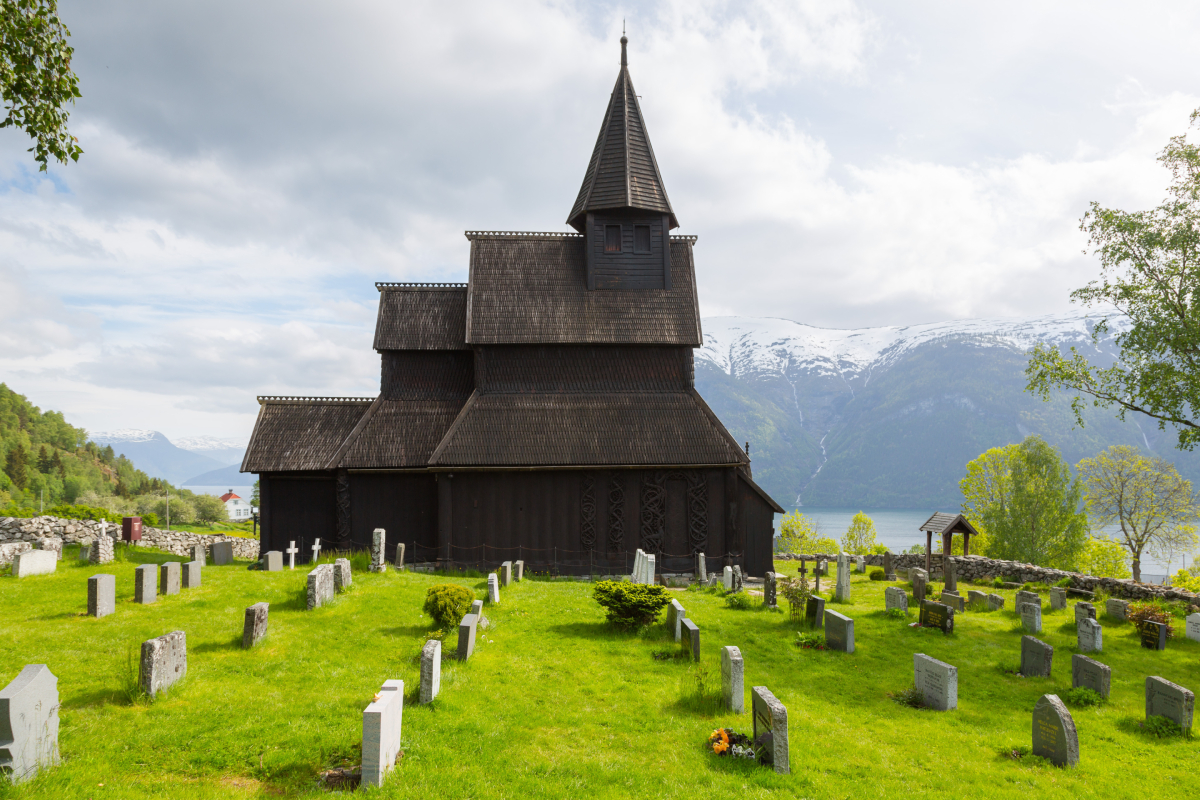
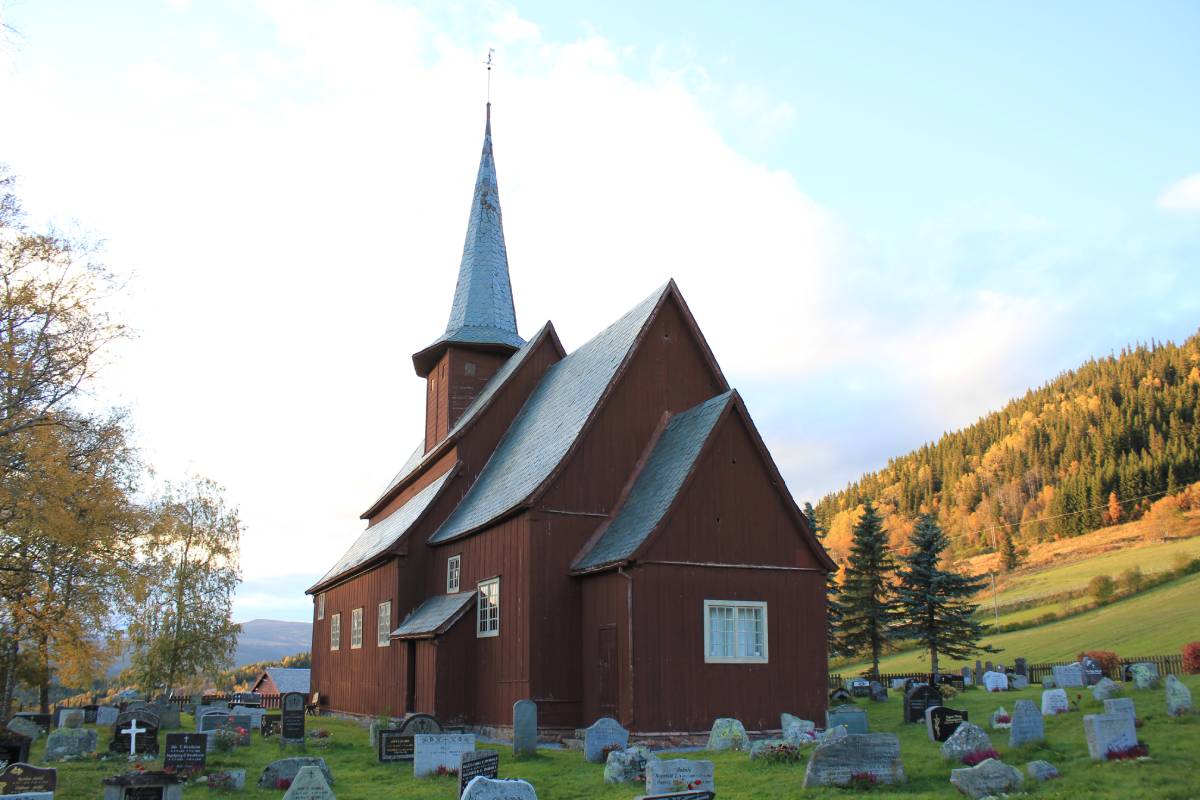
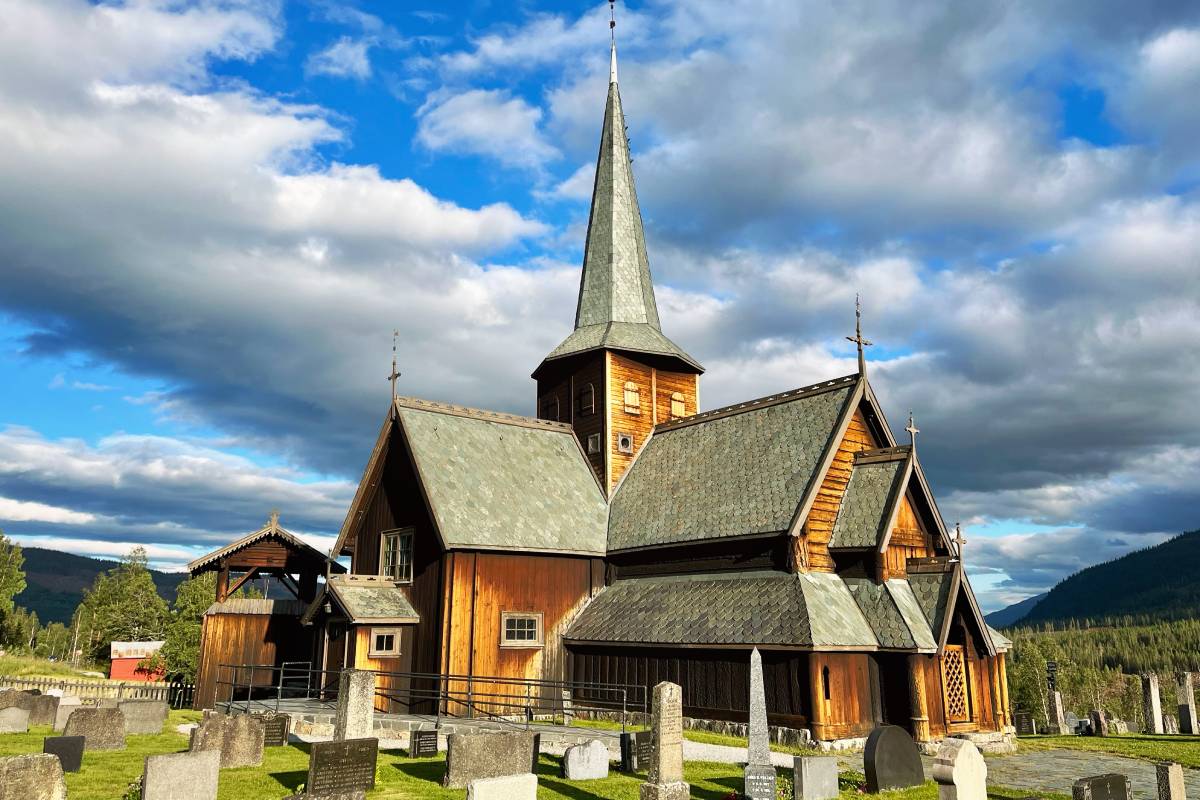
Urnes Stave Church, one of Norway's oldest stave churches, dates back to 1130 and contains carvings from an earlier Viking Age structure. Photo: Alexander A.Trofimov
A church like no other
Stave churches represent a type of wooden Christian church that was relatively common in northwestern Europe during the Middle Ages.
Unfortunately, very few have survived to the present day. Most of the remaining churches are found in Norway, but Urnes is one of the only ones with links to the Viking Age.
"Lots of pieces from the old church at Urnes were reused in 1130," Boni tells The Viking Herald. "These include not only the portal but also two large gables, a column, and some wall planks."
"The stave church from the 11th century had an incredible composition of exterior decorations."
"All the other preserved stave churches in Norway are from the 12th century or later, and none of them have anything even close to what we can see from the fragments of the late Viking Age church at Urnes."
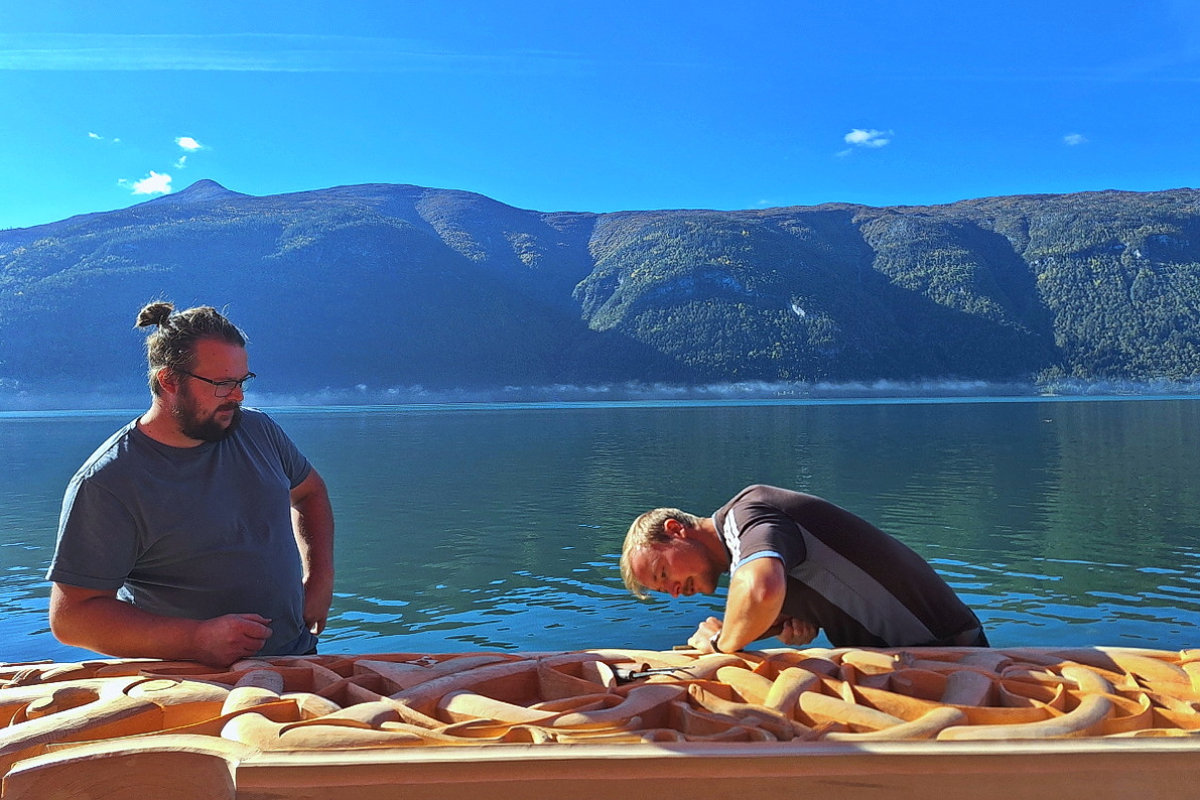
Norwegian woodcarvers spent four years recreating the historic Urnes Stave Church portal from a giant pine tree. Photo: Boni Wiik / Treskjærerverkstedet A/S
Towering pine and intricate carvings
Unsurprisingly, the attempt to recreate the portal has required a tremendous collective effort from the three workshops over the last four years.
"At the start, we recreated the whole process of finding a huge pine tree," Boni tells us.
"We cut it down and split the trunk into all the different pieces of the portal. The left-side plank of the portal is the largest pine tree plank in all of Norwegian architectural history."
"We discovered how the masters of the portal had designed the ornaments on the planks themselves, avoiding knots and other difficult irregularities in the wood, most likely by painting the design with a brush and then carving it deep into the material."
"The backgrounds on this portal are 8 cm deep and extremely difficult to clean out."
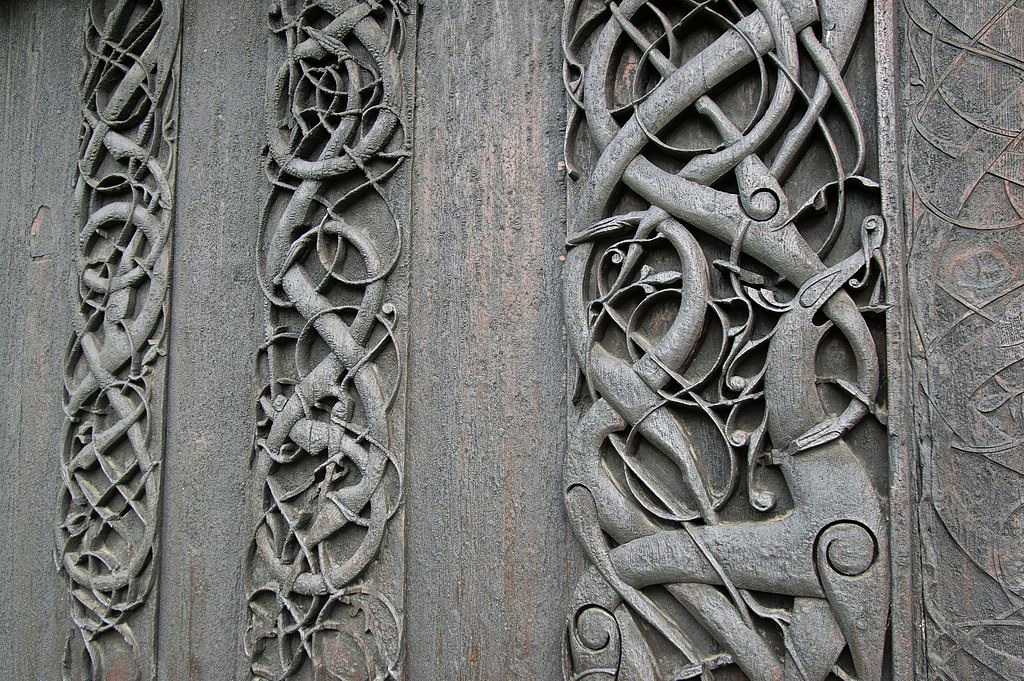
The intricate carvings on the North Portal are made in the distinctive Urnes style, which features elongated proportions and spiral shapes.
"There are thin serpents, which are around 10 mm wide and 8 cm deep," Boni tells us. "The top ridge that we see at the surface is cut with a razor-sharp edge. This is a very complicated carving and gives a beautiful play between light and shadows."
- READ MORE: What are the six major styles of Viking art?
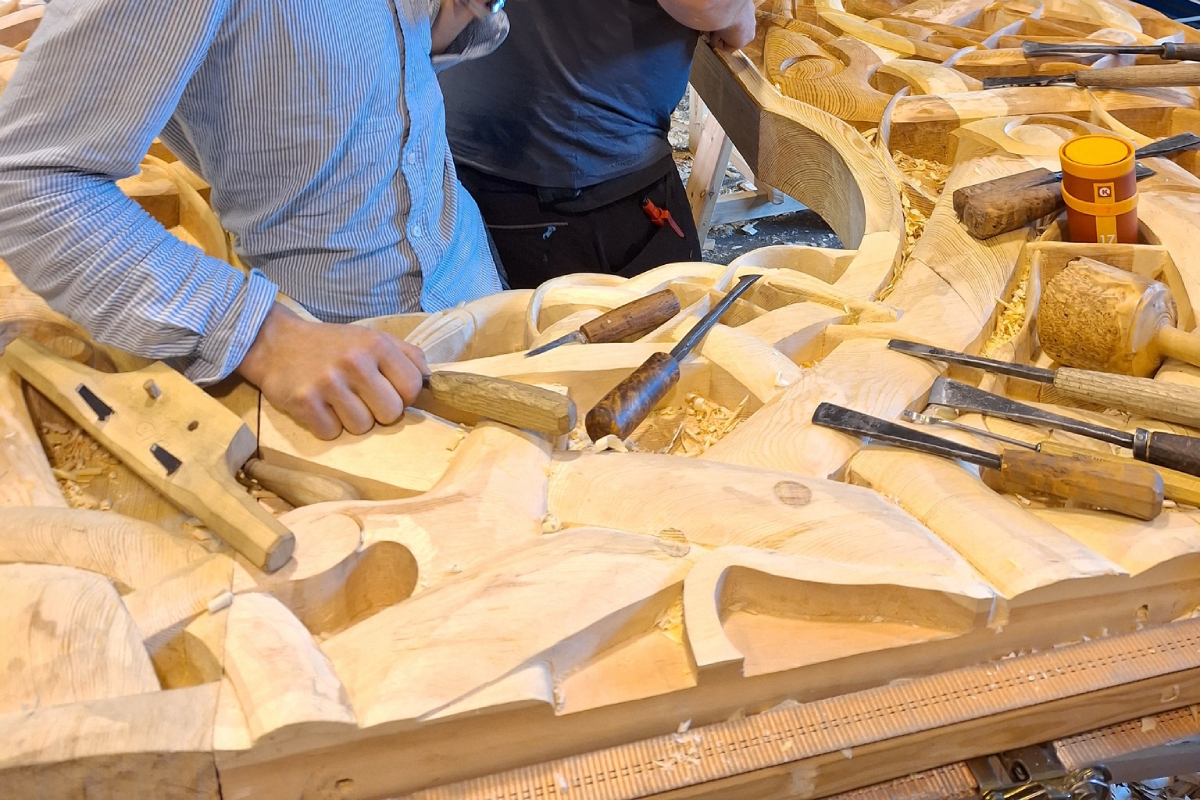
The portal was crafted by three workshops in Norway, each responsible for a different part of the structure. Photo: Boni Wiik / Treskjærerverkstedet A/S
A widespread team
The work on the portal was shared across the three Norwegian workshops to ensure as many craftsmen as possible could be involved in the project.
"Our workshop, Treskjærerverkstedet A/S, made the large left-side plank, Auskin Kreative Center made the door, and Motved A/S made the right-side plank," Boni confirms.
"The workshops are located in different parts of Norway. The elements were reunited last week at Urnes for the first time since they were all part of the big pine tree at Fresvik four years ago," Boni continues.
"I enjoy working together with other craftspeople, and most of the guys in this project are my old apprentices from throughout the years – it's always a pleasure working with them."
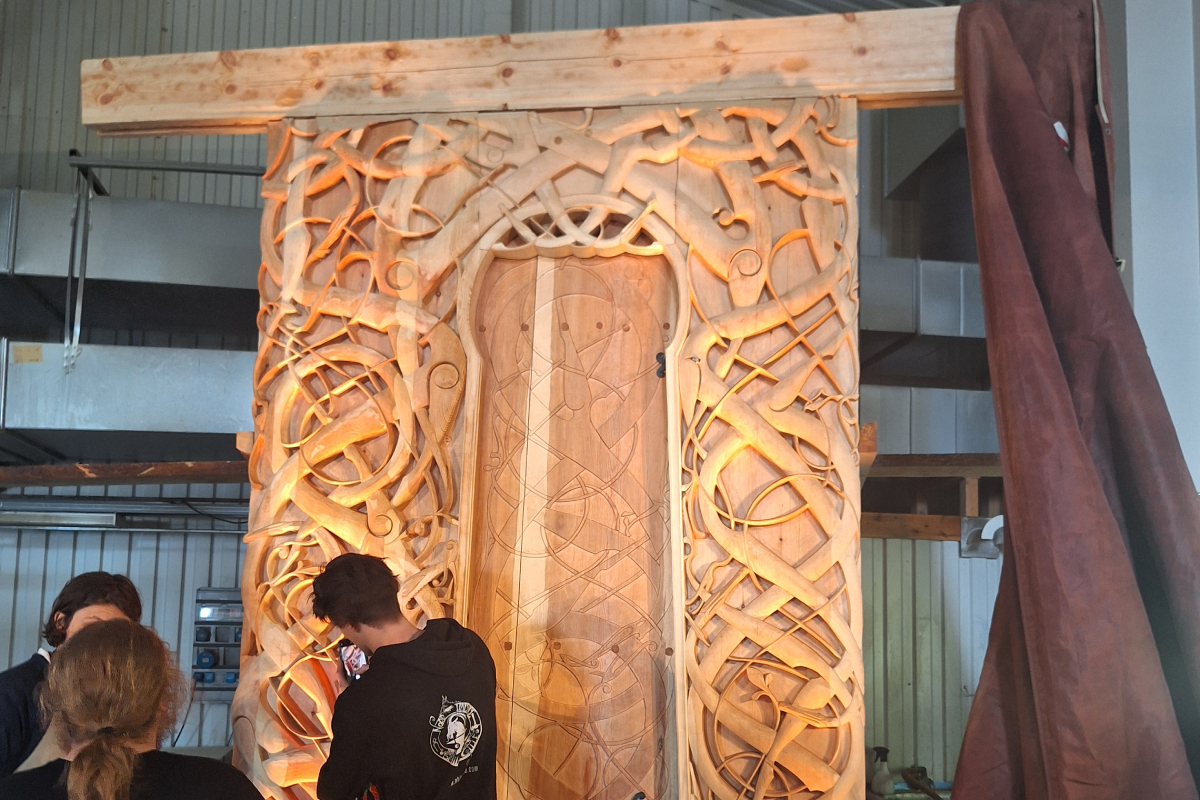
The recreated portal will become part of the Urnes World Heritage Center, telling the story of the church to visitors worldwide. Photo: Boni Wiik / Treskjærerverkstedet A/S
A piece of history
Though the project has reached completion, the portal itself will soon become another part of Norwegian history.
As indicated above, the completed portal will become part of the Urnes World Heritage Center, which will narrate the story of the church to visitors from around the world.
Naturally, Boni regrets the closing of such an exciting project, but remains enthusiastic about the future of the field. "I wish there were concrete plans for something similar to this project in the near future, but I don't know."
"There are people working hard to build a reconstruction of Borgund Stave Church in Setesdal. It will be placed on the spot where the legendary Hylestad Stave Church once stood, which had a portal depicting the saga of Sigurd the Dragonslayer."
"Our workshop, on the other hand, has been working on a reconstruction of a 13th-century sculpture of St. Olav, the famous Viking king."
We get to provide readers with original coverage thanks to our loyal supporters. Do you enjoy our work? You can become a PATRON here or via our Patreon page. You'll get access to exclusive content and early access.
Feel free to reach out to discuss potential stories that may be in the public interest. You can reach us via email at [email protected] with the understanding that the information you provide might be used in our reporting and stories.