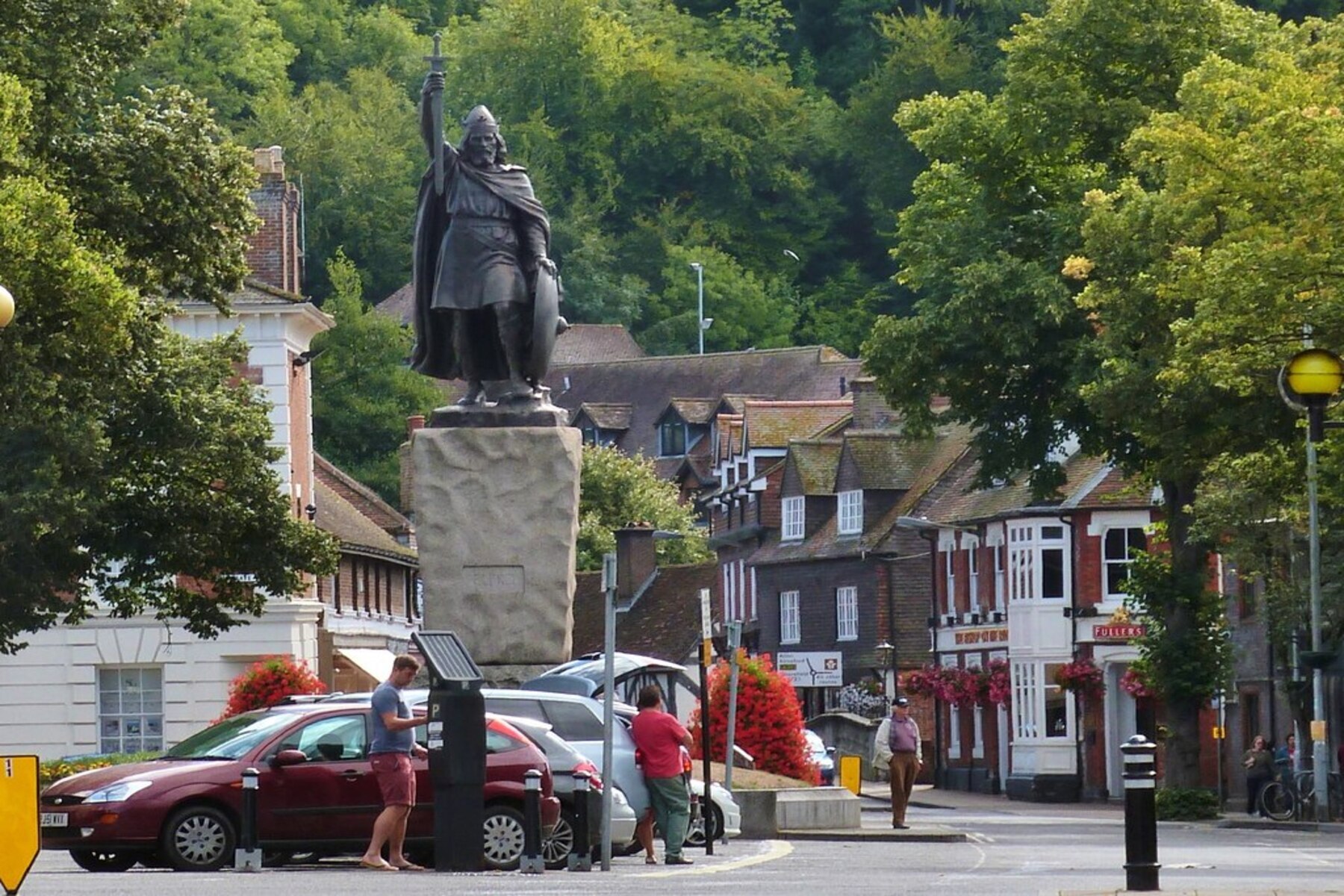


Today, Glastonbury is most famous for the pop and arts festival that attracts partygoers from around the globe to revel throughout the night in muddy fields.
Yet the town, which is situated on the outer eastern reaches of the mystical Avalon Marshes, also has a rich and varied history stretching back to the Stone Age.
With the help of a devoted team of volunteers, Avalon Archaeology has, for ten years, been exploring the area's Roman, Iron Age, Anglo-Saxon, and Viking past through a series of historical builds.
To find out more, The Viking Herald speaks to archeologist Richard Brunning, who has been with the project from the very start.
"Bringing archeology to life"
Richard is employed by Southwest Heritage Trust, an educational charity that provides professional archeology, archiving, and museum administration services for the local authorities in Somerset.
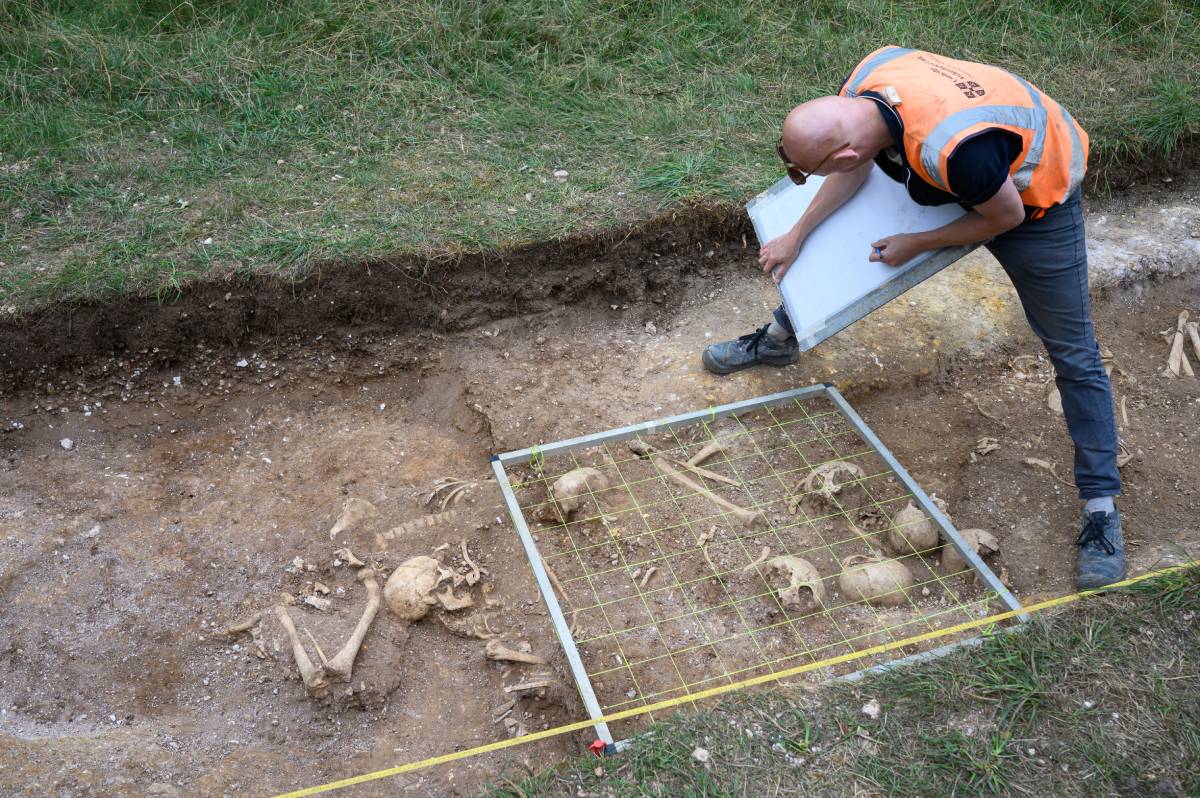
"One aspect of our work is community archeology," Richard informs The Viking Herald. "We regularly do small excavations with local volunteers. At the Avalon Archaeology site, we also have a series of reconstructions aimed at bringing archeology to life."
As Richard tells us, Avalon includes a Roman building with a working hypocaust, frescoes, and mosaics, an Iron Age roundhouse currently under construction, and the oldest excavation hut in the world – at least according to the website.
"So far, no one has come up with an older one, so it might be true!" Richard laughs.
"The hut was purchased in 1910 for two local archeologists to dig an Iron Age site nearby called Meare Lake Village," he continues.
"They had previously dug together on Glastonbury Lake Village, which is a bit like Oseberg for the Viking Age – a really well-preserved site on the wetlands, with lots of wooden materials.
The two archeologists used the hut for about 36 years, by which time one of them was dead, and the other one was 84 and should have retired long before!"
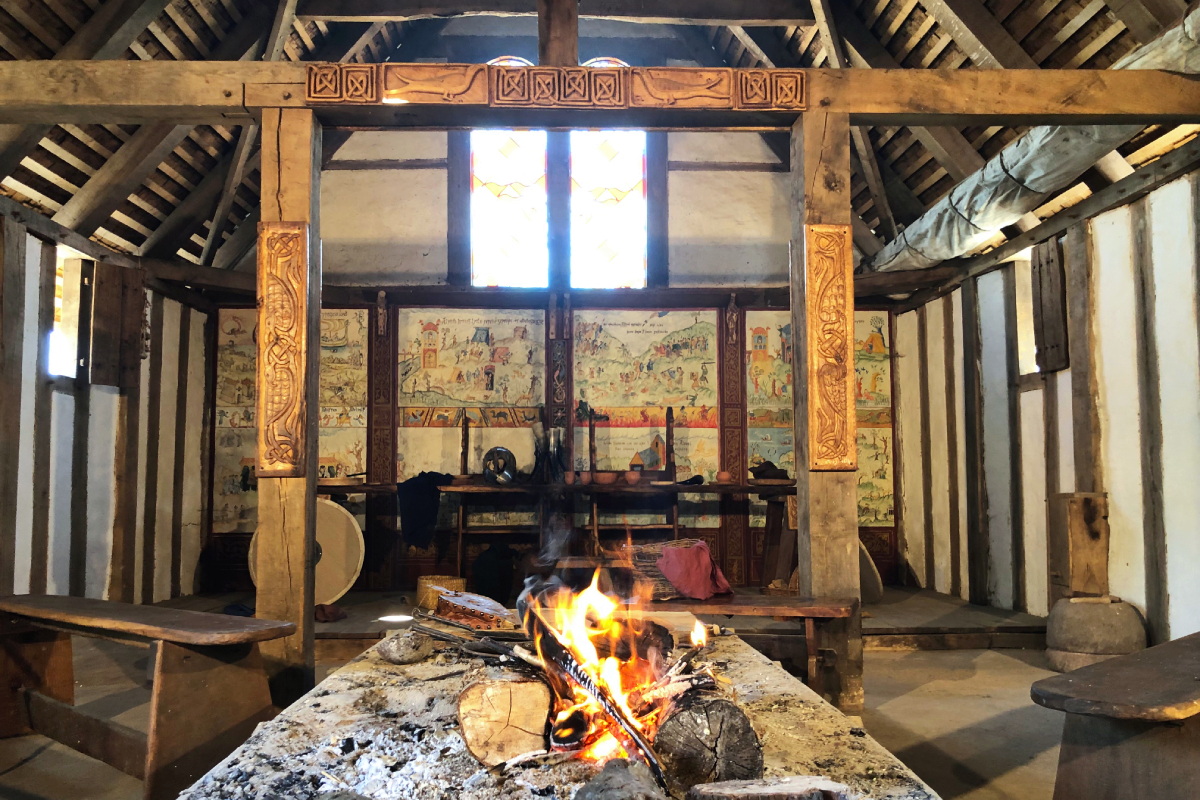
The 9th-century longhall combines Anglo-Saxon and Scandinavian influences in its authentic design and furnishings. Photo: Avalon Archaeology
Anglo-Scandinavian traditions
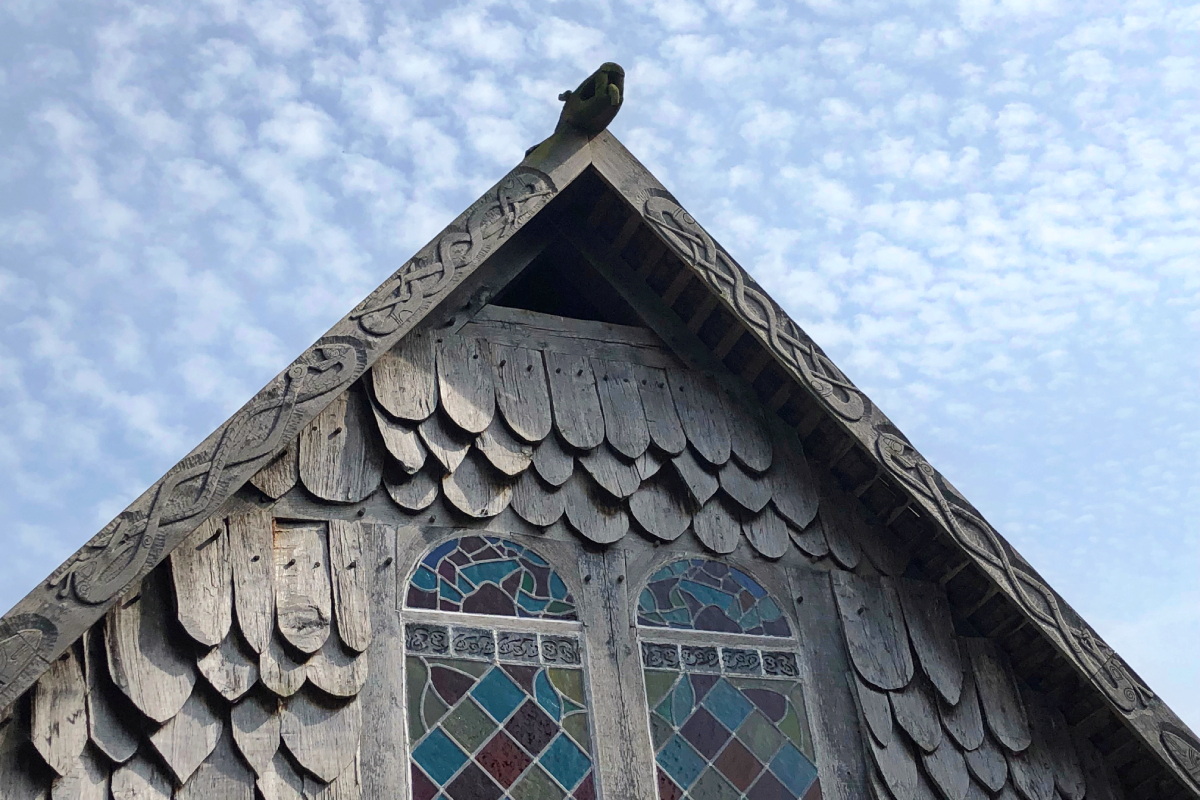
However, one of the most popular builds at the site is a longhall from the 9th century built by volunteers using authentic designs and traditional methods.
While the building itself is based on an Anglo-Saxon find from a site at nearby Cheddar, Richard admits the team has also relied on more Nordic inspiration for many of the internal fittings.
"Our evidence of Anglo-Saxon furniture is really slight, but the Scandinavian woodworking tradition is very similar, so it probably gives a very good guide," Richard says.
"We've done a reconstruction of a bed, chair, and weaving tablet from the Oseberg boat burial. There's such a vast amount from Oseberg."
"It's an amazing site – the level of preservation is so rare, which makes the objects very precious. We've also built a low table and three-legged stool based on evidence from Sweden."
"We're eventually planning to have a separate Viking room that reflects Anglo-Scandinavian England."
"We've also got a replica of the Skuldelev 3 wreck from Roskilde," Richard adds. "We didn't build that one – it was made for the National Maritime Museum in Falmouth for a temporary exhibition – we've just given it a home."
"Anglo-Scandinavian England is now part of our education, including Beowulf – we've even got Grendel's arm nailed up in the longhouse."
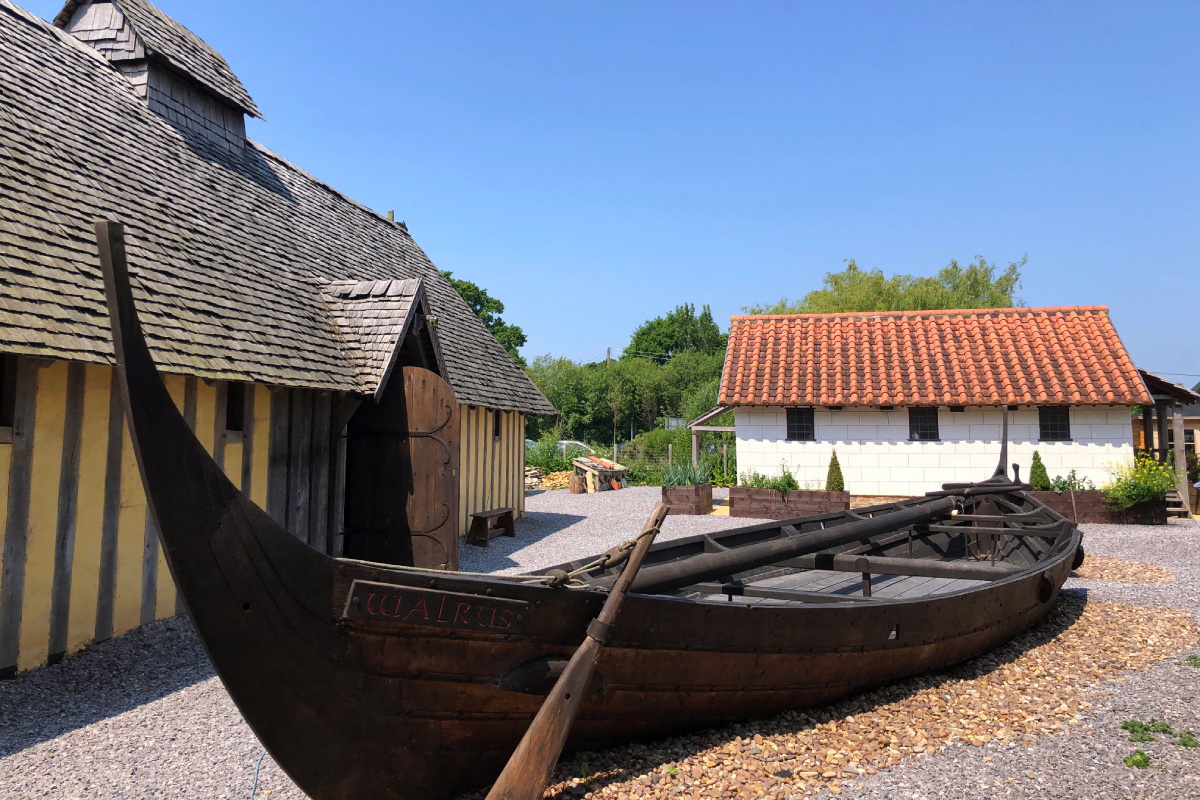
A replica of the Skuldelev 3 ship from Roskilde is housed at Avalon Archaeology as part of their Viking exhibits. Photo: Avalon Archaeology
A fleeting presence to a merging of culture
Although the early Viking warriors are known to have raided and then waged war in the southwest of England, they were initially unable to establish a more permanent presence.
"We've got a lot of good archeology from the Anglo-Saxons, but very little which is clearly Norse," Richard tells us. "This is the same for most of southern England."
"We know that lots of events happened in Somerset, but the archeological evidence for the Viking presence is really very slight," Richard admits.
"In terms of physical structures at the start, there was probably little that was permanent. Then, by the time you get to the end of the Viking Age, you have an Anglo-Scandinavian culture, and archeologically, it becomes merged."
"We do have the archeology of the Anglo-Saxon burhs in Somerset, such as Athelney, however."
Indeed, Somerset was a key point of access for Viking forces attacking by sea, particularly during the time of the Great Heathen Army in the 9th century.
To help counter the threat, Alfred the Great and his successors built a series of fortifications known as burhs.
Both Richard and other experts have been attempting to understand the link between the forts and the Viking invaders.
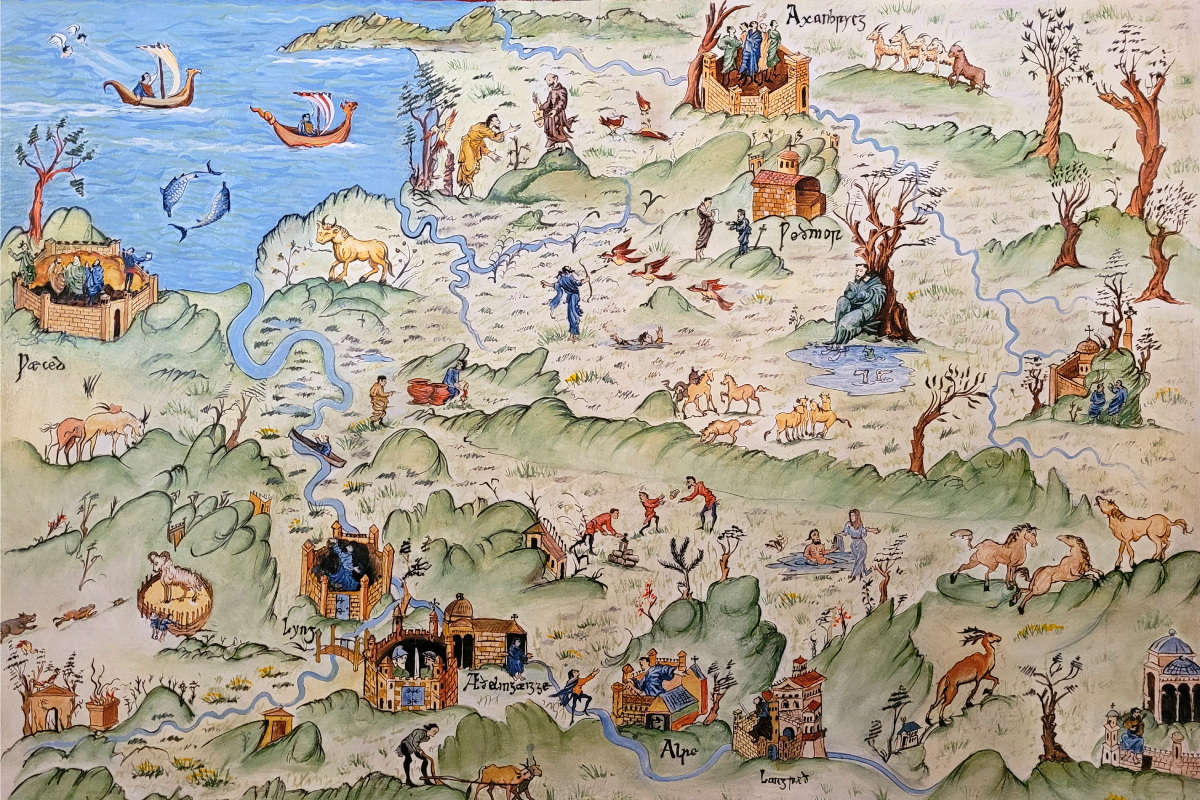
The project showcases Somerset's role in Viking and Anglo-Saxon history, including links to King Alfred's burhs. Photo: Avalon Archeology
Blocking the invaders
Some of the most important work has taken place at a site called Aller, close to the village of Lyng.
Aller is said to be the place where the Viking leader Guthrum was baptized – part of an agreement made after the Battle of Edington with King Alfred that also helped establish the Danelaw.
Guthrum would later go on to reign as king of East Anglia under his baptized name, Æthelstan.
"We've been trying to work out why this important event took place there," Richard adds.
"It was an island on the moors that had a bridge connection to Lyng, which is like a little finger of hard geology that sticks out onto the floodplain."
"Lyng was also connected by a bridge or causeway to Alphony. This means there were two fortresses connected by a bridge that cut off the first bridging point of the River Tone."
"Most of the burhs in Somerset seem to be across the first bridging point of major rivers," Richard continues. "This is presumably so they can stop a Viking fleet from coming further inland."
"The Vikings were so mobile in terms of where they could go with the fleet inland that it was the logical place to stop them."
"The burhs are also major communication points along the river. You can see the same with the Thames and other major rivers in southern England."
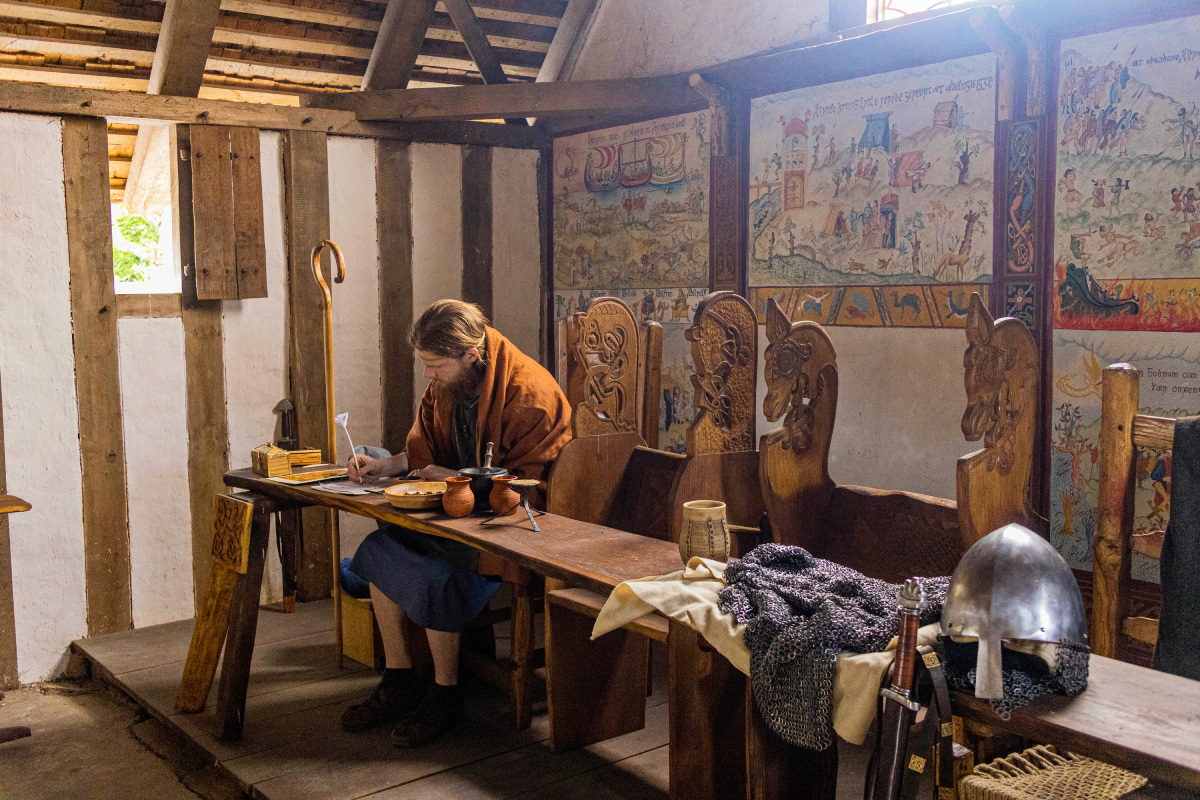
Guided tours demonstrate the techniques used in historical reconstructions, offering detailed explanations to visitors. Photo: Avalon Archaeology
Living history for all ages
As Richard tells The Viking Herald, the projects at Avalon Archaeology have enchanted people of all ages and also helped them learn more about local history.
"We're open to the general public on Sundays, while on other days, we do guided tours or visits from school groups," Richard explains.
"With the school groups, we do lots of hands-on activities, while the guided tours show people how the reconstructions were carried out."
The team at Avalon Archaeology, which has recently completed a mammoth five-year Roman mosaic project that included 140,000 stone and tile cubes, shows no signs of slowing down.
"We're just about to build an Iron Age roundhouse based on Glastonbury Lake Village, and we also want to make some glass beads using furnaces like those found in Birka," Richard says.
"We owe everything to the volunteers. They have effectively built the buildings and done everything inside them, from the mosaics to the wooden carvings and replica Viking beds," Richard explains.
"The community has been going for about ten years and has done all the hard work. I've just given them some archeological guidance and some tools and equipment. We've been very lucky!"
We get to provide readers with original coverage thanks to our loyal supporters. Do you enjoy our work? You can become a PATRON here or via our Patreon page. You'll get access to exclusive content and early access.
Feel free to reach out to discuss potential stories that may be in the public interest. You can reach us via email at [email protected] with the understanding that the information you provide might be used in our reporting and stories.